
Author: sznbone Release date: Mar 02, 2026
Control rooms serve as the core command centers for various industries, including power grids, transportation, public security, finance, and industrial production. The real-time display effect of the screen directly affects the efficiency of decision-making, the accuracy of monitoring, and the stability of overall operations. LED indoor fixed screens designed specifically for control room real-time display have become the preferred display equipment in such scenarios, thanks to their superior performance, stable operation, and high compatibility. Unlike ordinary indoor LED screens, these screens are tailored to meet the rigorous requirements of control rooms for real-time data presentation, long-term continuous operation, and visual clarity, making them an indispensable part of modern control room construction.
One of the core advantages of LED indoor fixed screens for control room real-time display is their excellent real-time response capability. In control room environments, data such as monitoring images, operation parameters, early warning signals, and scheduling instructions need to be transmitted and displayed without delay. Traditional display devices such as LCD screens may have problems such as image sticking, delayed response, or low refresh rates, which can lead to misjudgments by operators. In contrast, professional control room LED screens adopt high-speed driving chips and advanced signal processing technology, with a response time as low as a few milliseconds. This ensures that every frame of image is displayed in real time, and dynamic data such as video surveillance and parameter changes can be presented smoothly without blurring or trailing. For example, in a power grid control room, the screen needs to display the operation status of thousands of power nodes in real time. Any delay or distortion may lead to incorrect scheduling, resulting in large-scale power outages. The real-time performance of LED screens effectively avoids such risks and provides a reliable visual basis for operators.
High resolution and display clarity are another key characteristics of these LED screens. Control rooms often need to display multiple sets of data and images simultaneously, such as splitting the screen into multiple areas to show surveillance videos, data charts, and system interfaces. This requires the screen to have sufficient resolution to ensure that each detail of the content is clearly visible, even for small text and complex charts. LED indoor fixed screens for control rooms usually adopt small-pitch LED technology, with pixel pitches ranging from 0.9mm to 2.5mm. The smaller the pixel pitch, the higher the pixel density, and the clearer the displayed image. For instance, a 0.9mm small-pitch LED screen can achieve ultra-high definition display effects comparable to 4K or even 8K, allowing operators to easily distinguish tiny text, curve changes in data charts, and subtle details in surveillance images. In addition, these screens have a high contrast ratio, generally reaching 10000:1 or higher. The strong contrast between black and white makes the image layers richer, and the dark details are more prominent, which is particularly important for displaying night surveillance images or dark-mode system interfaces.
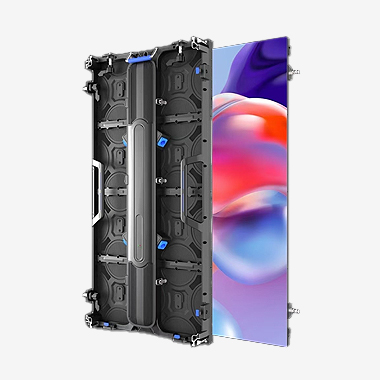
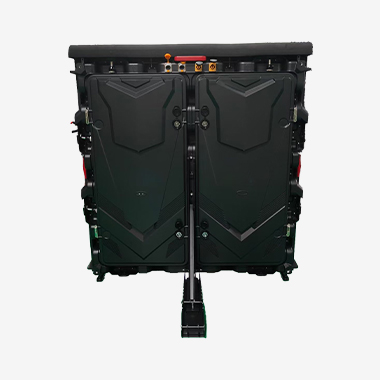
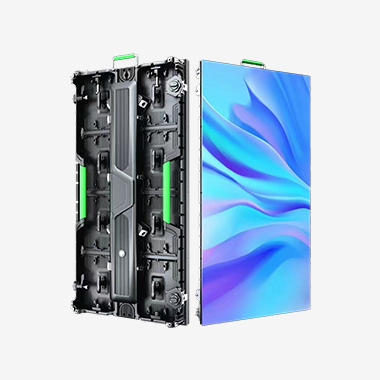
Stability and durability are crucial for control room LED screens, as control rooms usually require 24/7 continuous operation throughout the year. Ordinary display devices may experience overheating, screen flickering, or component failure after long-term continuous use, which will interrupt the normal operation of the control room. To solve this problem, LED indoor fixed screens for control rooms are designed with a number of stability-enhancing technologies. First, they adopt high-quality LED lamp beads with a long service life of up to 100,000 hours, which can ensure stable operation for more than 10 years under normal use conditions. Second, the screen body is equipped with an efficient heat dissipation system, including a heat-dissipating aluminum alloy shell, internal heat pipes, and silent fans. This system can quickly dissipate the heat generated by the screen during operation, keeping the working temperature of the components within a reasonable range and avoiding overheating damage. At the same time, the screen adopts a modular design, and each display module can be independently disassembled and replaced. If a certain module fails, it can be maintained without stopping the entire screen, ensuring the continuous operation of the control room. In addition, the screen has multiple protection functions, such as overvoltage protection, overcurrent protection, and short-circuit protection, which can effectively prevent damage to the screen caused by power supply abnormalities or circuit failures.
Compatibility and scalability are also important considerations for control room LED screens. Control rooms usually integrate multiple systems, such as video surveillance systems, data acquisition systems, and scheduling command systems. The display screen needs to be compatible with various signal sources, including HDMI, DVI, VGA, SDI, and network signals, to realize the seamless switching and display of multiple signals. Professional control room LED screens are equipped with a powerful signal processing unit, which can support multi-signal input and output, and realize functions such as screen splitting, merging, and roaming. Operators can freely adjust the display layout according to their needs, displaying different signal content in different areas. In addition, with the continuous upgrading of control room systems, the display screen needs to have good scalability to adapt to future function expansion. The modular design of LED screens allows for easy expansion of the screen size and resolution by adding display modules. At the same time, the screen supports remote control and management, and operators can adjust the screen parameters, switch signal sources, and perform fault diagnosis through a computer or mobile device, improving the management efficiency of the control room.
Eye protection performance cannot be ignored for LED screens used in control rooms, as operators need to stare at the screen for a long time. Traditional LED screens may have problems such as blue light radiation and screen flicker, which can cause eye fatigue, dryness, and even myopia after long-term viewing. LED indoor fixed screens for control rooms adopt low-blue light technology, which filters out harmful blue light waves and reduces the damage of blue light to the eyes. At the same time, the screen uses a high-frequency PWM dimming technology, with a refresh rate of more than 1920Hz, which eliminates screen flicker that is invisible to the naked eye and reduces eye fatigue. In addition, the screen's brightness can be automatically adjusted according to the ambient light intensity. When the ambient light is strong, the brightness increases to ensure the visibility of the screen; when the ambient light is weak, the brightness decreases to avoid glare, providing a comfortable viewing experience for operators.
In terms of installation and maintenance, LED indoor fixed screens for control rooms are designed to be convenient and efficient. The screen body is lightweight and thin, which saves installation space and is suitable for the limited space of control rooms. The installation method can be wall-mounted, embedded, or curved splicing, which can be adjusted according to the layout of the control room. The modular design not only facilitates installation but also simplifies maintenance. Each module is equipped with a quick-connect interface, and maintenance personnel can quickly replace the faulty module without professional tools. In addition, the screen is equipped with a self-diagnostic function, which can automatically detect the working status of each module, lamp bead, and circuit. When a fault occurs, the system will send an alarm signal and locate the fault position, helping maintenance personnel to quickly troubleshoot and repair, reducing the maintenance time and cost.
The application of LED indoor fixed screens for control room real-time display is widely distributed in various industries. In the power industry, power grid control rooms use these screens to display real-time data such as power generation, transmission, and distribution, as well as monitoring images of power stations and transmission lines, enabling operators to grasp the operation status of the power grid in real time and respond to faults quickly. In the transportation industry, traffic control rooms use the screens to display real-time traffic conditions of roads, bridges, and tunnels, as well as scheduling information of buses, subways, and trains, ensuring the smooth operation of the traffic system. In the public security industry, command and control centers use the screens to display real-time surveillance images of public areas, criminal investigation information, and dispatch instructions, providing strong support for public security prevention and control and emergency disposal. In the financial industry, trading centers use the screens to display real-time stock prices, exchange rates, and transaction data, helping traders make quick decisions. In the industrial production field, factory control rooms use the screens to display production line operation parameters, equipment status, and product quality data, realizing the intelligent monitoring and management of the production process.
With the continuous development of technologies such as artificial intelligence, big data, and the Internet of Things, control rooms are moving towards intelligence and informatization, and the requirements for display screens are becoming higher and higher. Future LED indoor fixed screens for control room real-time display will develop in the direction of higher resolution, faster response speed, more intelligent functions, and greener energy consumption. For example, 8K ultra-high-definition small-pitch LED screens will become more popular, providing more detailed display effects; the integration of AI technology will enable the screen to automatically identify and analyze key data, and send early warning reminders; energy-saving technologies will be further optimized to reduce the power consumption of the screen, in line with the concept of green development. In conclusion, LED indoor fixed screens for control room real-time display play an irreplaceable role in modern control room construction, and with the continuous advancement of technology, their performance and functions will be further improved, providing more reliable and efficient display solutions for various industries.



Copyright © 2026 Shenzhen Cogo Technology Co.,Ltd.
All Rights Reserved

 Previous article