




 Chat Now
The waterproof exterior LED display screen represents a pinnacle of modern advertising, information dissemination, and architectural enhancement technology. Designed to withstand the rigors of outdoor environments, these dynamic visual systems have transformed urban landscapes, sports arenas, and public spaces worldwide. Unlike their indoor counterparts, exterior LED displays are engineered as robust, sealed systems capable of operating reliably amidst rain, snow, dust, extreme temperatures, and direct sunlight. Their core function is to deliver bright, vibrant, and high-resolution content to a broad audience, 24/7, regardless of weather conditions.
The fundamental building block of any LED display is the Light Emitting Diode (LED). An LED is a semiconductor device that emits light when an electric current passes through it. By combining clusters of red, green, and blue (RGB) LEDs into a single package called a pixel, these displays can produce millions of colors by varying the intensity of each colored diode. Thousands or even millions of these pixels are assembled into modules, which are then tiled together to form a large, seamless screen. The "waterproof" quality is not an afterthought but an integral aspect of the entire design philosophy, encompassing the LEDs themselves, the module casing, the cabinet structure, and the overall installation.
The applications for these displays are vast and growing. They are the colossal billboards that animate Times Square and Piccadilly Circus, the giant scoreboards that electrify stadiums, the public information hubs in city centers, and the elegant digital signage on corporate headquarters. The driving force behind their adoption is their unparalleled impact. A static billboard can be ignored, but a high-definition, moving video display captures attention, engages viewers, and conveys messages with far greater memorability and effectiveness.
The evolution of outdoor LED technology has been rapid. Early versions were plagued by low resolution, poor reliability in bad weather, and high power consumption. Today, advancements in LED chip efficiency, manufacturing precision, and protective materials have resulted in screens that are brighter, more energy-efficient, incredibly durable, and capable of stunning 4K and even 8K resolution. The development of high-brightness LEDs, which can exceed 8,000-10,000 nits, ensures that the image remains perfectly visible even under direct sunlight, a critical requirement for outdoor functionality.
In essence, a waterproof exterior LED display is a sophisticated fusion of optoelectronics, structural engineering, software, and environmental science. It is a durable media canvas that brings digital vitality to the outside world, enabling communicators, marketers, and artists to engage with the public in powerful new ways. As cities become smarter and the demand for dynamic digital content grows, these displays are set to become even more integrated into the fabric of our built environment.
The design and construction of a waterproof exterior LED display are complex and multi-faceted, prioritizing durability, visual performance, and environmental protection above all else. Every component, from the smallest diode to the largest structural beam, is selected and engineered to create a cohesive, resilient system.
At the heart of the display are the LED modules. These are the self-contained units that house the arrays of RGB LEDs, the driver ICs (Integrated Circuits) that control them, and the printed circuit board (PCB) that connects everything. The front of the module is typically covered with a mask or faceplate that defines the pixel pitch (the distance between individual pixels) and provides a black background to enhance contrast. Crucially, the entire module is potted or conformally coated with a waterproof epoxy resin or silicone. This process seals the sensitive electronics from moisture, preventing short circuits and corrosion. The front of the module is also protected by a layer of laminated optical-grade glass or polycarbonate, which is treated with an anti-glare and anti-reflective coating to improve viewability and protect against UV degradation and physical impact.
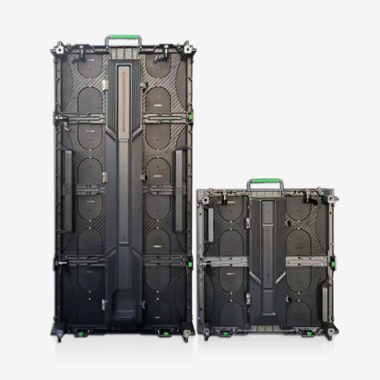
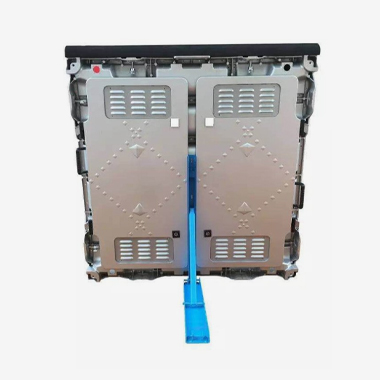
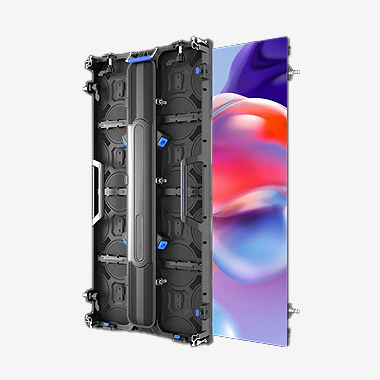
These modules are mounted into heavy-duty cabinets, which form the structural backbone of the display. Outdoor cabinets are typically made from die-cast aluminum or reinforced steel, materials chosen for their strength, light weight, and resistance to rust and corrosion. The cabinet design is fully sealed (rated IP65 or higher) and often features a front-access design, allowing for maintenance from the front without needing access behind the wall. The cabinets incorporate advanced thermal management systems. Unlike indoor screens that may use fans, outdoor displays primarily use passive convection cooling through extensive aluminum heat sinks. This fanless design is essential for maintaining the IP rating, as it eliminates any vents that could let in dust or water. The heat sinks efficiently draw heat away from the high-power LEDs and driver components and dissipate it into the surrounding air, preventing overheating that could reduce LED lifespan.
The power supply and receiving cards are also housed within these sealed cabinets. These components are themselves rated for outdoor use and are designed to handle wide voltage fluctuations and electrical noise common in outdoor installations. All wiring and data cables between cabinets are connected via waterproof, locking connectors (e.g., IP68-rated aviation connectors) to ensure a perfect seal at every junction.
Finally, the entire display structure must be engineered to withstand significant environmental loads. This includes wind loading calculations to ensure the screen and its supporting framework can survive high winds, seismic activity in certain regions, and the weight of accumulated snow. The installation often involves a custom-built steel framework that is securely anchored to a building's structure or a free-standing foundation. Additional features like auto-condensation systems (heaters and humidity sensors) may be included in very cold climates to prevent internal fogging, and peripheral accessories like sunshades (louvres) are often added to shield the screen from top-down sunlight, further improving contrast and reducing reflections.
This meticulous, multi-layered approach to design and construction—from the chip-level sealing to the structural engineering of the support framework—is what transforms a collection of sensitive electronic components into a rugged, reliable, and visually stunning outdoor media platform.
The working principle of a waterproof exterior LED display is an elegant orchestration of hardware and software, translating digital data into visible light with precision and reliability. The process can be broken down into three key stages: data input and processing, signal transmission and control, and light emission.
1. Data Input and Processing:
The journey begins with a video source, such as a media player, computer, or live feed. This source sends a standard video signal (e.g., HDMI, SDI) to a central sending device, often a dedicated video controller or processor. This controller is the brain of the operation. Its primary tasks are:
Image Scaling: It takes the input video signal and scales it to match the native resolution of the LED wall. Since an LED wall is a modular assembly with a non-standard resolution, the processor must map the source image perfectly onto the pixel grid of the display.
Color Calibration and Correction: The processor applies color space correction and gamma correction algorithms to ensure the colors displayed are accurate and consistent across the entire screen, compensating for variations between individual LED modules.
Data Organization: It reorganizes the processed video data into a specific data protocol (often a proprietary one) that is optimized for high-speed transmission to the display cabinets over fiber optic or high-grade network cables. This is crucial for handling the massive bandwidth required for high-resolution, high-refresh-rate content.
2. Signal Transmission and Control:
The processed data stream is sent from the video controller to the individual cabinets on the LED wall. Within each cabinet, a receiving card accepts this data. The receiving card acts as a local manager, distributing the data for its section of the screen to multiple driver ICs (Integrated Circuits) located on the LED modules themselves. These driver ICs are critical components. They are constant current drivers that provide the precise amount of power required to each individual red, green, and blue LED to achieve the desired brightness and color. They use a technique called Pulse Width Modulation (PWM) to control brightness. Instead of varying the voltage (which would change the color of the LED), PWM rapidly turns the LED on and off. The ratio of "on" time to "off" time (the duty cycle) determines the perceived brightness. A higher duty cycle results in a brighter light. This switching happens thousands of times per second (a high refresh rate), which is imperceptible to the human eye but results in smooth, flicker-free imagery and accurate color gradation.
3. Light Emission and Pixel Formation:
The final stage is the physical emission of light. Each pixel on the screen is formed by one or more clusters of RGB LEDs. Based on the instructions from the driver ICs, each colored diode in a pixel is illuminated at a specific intensity via the PWM method. The human eye's photoreceptors blend these three primary colors of light at varying intensities, perceiving a single pixel of a specific color. Millions of these pixels working in unison create the full-color, high-definition image that we see on the screen.
Throughout this entire process, the waterproof and environmental protection systems are working passively in the background. The sealed cabinets and potted modules ensure that humidity, condensation, and dust do not interfere with the sensitive electronic signals or cause electrical failures, allowing the intricate dance of data and light to continue uninterrupted in virtually any weather condition.
Waterproof exterior LED displays offer a compelling array of advantages over traditional outdoor advertising mediums like printed billboards or neon signs, but their deployment also comes with a unique set of challenges that must be carefully managed.
Advantages:
Superior Visual Impact: The most significant advantage is their ability to display dynamic, full-motion, high-resolution video and graphics. This captures far more attention than static imagery, leading to higher viewer engagement and greater message recall for advertisers.
High Brightness and Readability: With brightness levels reaching 10,000 nits or more, these displays remain perfectly visible in direct sunlight, a feat impossible for other technologies like LCDs.
Durability and Long Lifespan: Engineered to IP65 standards or higher, they are immune to rain, snow, dust, and wind. High-quality LEDs have a long operational lifespan, often rated at 100,000 hours to half-brightness, ensuring years of reliable service.
Energy Efficiency: Modern LED technology, particularly the use of advanced driver ICs and efficient LEDs, has drastically reduced power consumption compared to older outdoor lighting systems. This makes them more environmentally friendly and reduces operational costs.
Remote Content Management and Flexibility: Content can be updated instantly and remotely from a central location via network connections. This allows for real-time information display (e.g., news, weather, traffic), day-parting (showing different content at different times of day), and rapid response to current events.
Revenue Generation: For owners of prominent buildings or spaces, these displays represent a significant and continuous source of advertising revenue.
Challenges:
High Initial Investment: The upfront cost of a high-quality waterproof LED display, including the screen itself, the structural support, and professional installation, is substantial. This can be a significant barrier to entry for some organizations.
Ongoing Maintenance: While designed for durability, components can fail. Individual LEDs or driver ICs may burn out, creating dark pixels. Maintaining the IP rating requires careful work during any service, often needing specialized technicians. Front-serviceable designs have alleviated this challenge but not eliminated it.
Thermal Management: Managing the heat generated by thousands of high-power LEDs in a fully sealed enclosure is a constant engineering challenge. Inadequate heat dissipation can lead to accelerated aging of the LEDs and electronic components, reducing the display's lifespan.
Light Pollution and Community Regulations: The intense brightness that is an advantage during the day can become a nuisance at night. Many municipalities have strict regulations regarding light spillage, operating hours, and content to prevent driver distraction and residential light pollution. Manufacturers address this with brightness auto-dimming systems that use ambient light sensors to automatically reduce the screen's intensity after dark.
Public Perception and Aesthetics: Large digital displays can be seen as visual clutter or a form of "light pollution" that detracts from a city's architectural heritage. Gaining public and regulatory approval often requires careful consideration of the screen's size, location, and content policy.
Pixel Pitch and Viewing Distance: There is a constant trade-off between resolution (pixel pitch) and cost. A finer pixel pitch allows for closer viewing distances but exponentially increases the cost and complexity. Choosing the right specification for the intended viewing distance is critical to cost-effectiveness.
Despite these challenges, the advantages of dynamic communication, durability, and long-term value continue to drive the widespread adoption of waterproof LED displays across the globe.
The application landscape for waterproof exterior LED displays is incredibly diverse and continues to expand as the technology becomes more advanced and accessible. Concurrently, several key trends are shaping the future of this dynamic industry.
Applications:
Digital Billboards and Advertising: This remains the largest application. Located along highways and in urban centers, these large-format displays allow advertisers to run multiple, timed ads with cinematic quality, maximizing the value of the advertising space.
Sports Venues and Arenas: Massive LED screens are now standard in stadiums and arenas, serving as central scoreboards, replay screens, and entertainment hubs that enhance the fan experience with live action, statistics, and promotional content.
Architectural Enhancement and Media Facades: LEDs are integrated into the exteriors of buildings to create stunning media facades. These transforms static buildings into dynamic canvases for public art, light shows, and brand expression, often becoming iconic landmarks themselves (e.g., the Burj Khalifa).
Public Information and Wayfinding: Used in city squares, transportation hubs, and university campuses, these displays provide real-time information on news, weather, public transit schedules, emergency alerts, and wayfinding maps.
Retail and Hospitality: Shopping malls, casinos, and hotels use outdoor LED signs for branding, promoting events, and directing customers, creating a vibrant and modern atmosphere.
Religious and Cultural Institutions: Churches, temples, and performance venues use outdoor displays to stream services, show event times, and welcome visitors.
Broadcast and Live Events: They are used as backdrop screens for outdoor concerts, festivals, and public broadcasting events, providing a large, bright stage for performers and content.
Future Trends:
Higher Resolution and Finer Pixel Pitches: The relentless pursuit of higher resolution continues. As LED chip sizes shrink (e.g., using Mini-LED and Micro-LED technology), pixel pitches for outdoor applications are becoming finer, enabling closer viewing distances and more detailed images, even on massive screens.
Curved and Irregular Shapes: Moving beyond flat rectangular screens, there is a growing trend towards curved, cylindrical, and free-form LED installations. This allows for more creative and architecturally integrated designs that wrap around corners or fit into unique spaces.
Increased Interactivity: The integration of cameras, sensors, and 5G connectivity will enable more interactive displays. Screens could respond to weather, traffic, or even audience movement through gesture control, creating personalized and engaging experiences.
Improved Sustainability: Future developments will focus on even greater energy efficiency through more advanced LEDs and power supplies. The use of recyclable materials and designs that facilitate easier repair and component recycling will also become a priority.
Smarter Control and Data Analytics: Displays will become nodes in the Internet of Things (IoT). Software will not only manage content but also monitor the health of the display in real-time, predicting maintenance needs. Integration with data analytics platforms will allow content to be optimized based on audience demographics and engagement metrics.
Transparent LED Technology: While currently more common indoors, the development of highly weatherproof transparent LED screens will open new applications for outdoor use, such as on glass-fronted buildings, where the screen can be visible while still allowing light to pass through.
The future of outdoor LED technology is one of seamless integration, smarter operation, and ever-more immersive and captivating visual experiences.
Conclusion
The waterproof exterior LED display screen is far more than a simple electronic billboard; it is a testament to human ingenuity in merging advanced optoelectronics with rugged environmental engineering. It has successfully conquered the outdoors, a domain notoriously hostile to delicate electronics, to create a resilient and dynamic medium for communication, advertising, and art. From its core principle of using Pulse Width Modulation to control millions of individual RGB LEDs to its multi-layered defensive design of potting, sealed cabinets, and passive cooling, every aspect is meticulously crafted for reliability and performance.
The advantages it offers are transformative: unparalleled visual impact, 24/7 all-weather operation, energy efficiency, and the flexibility of digital content management. These benefits have cemented its role across a vast spectrum of applications, from defining the skylines of modern cities to electrifying sports stadiums and informing the public. While challenges related to cost, maintenance, light pollution, and regulatory compliance persist, the industry continuously innovates to address these issues through smarter designs, brighter and more efficient LEDs, and sophisticated control systems.
Looking ahead, the trajectory is clear. The convergence of finer pixel pitches, innovative form factors, interactive capabilities, and IoT connectivity will further blur the line between the digital and physical worlds. These displays will evolve from being mere output devices to becoming intelligent, responsive components of the urban fabric. They will play a crucial role in the ecosystems of smart cities, serving as both information portals and platforms for communal experience. The waterproof exterior LED display has already reshaped our visual environment, and its future promises an even more integrated, sustainable, and captivating presence in the years to come.


Copyright © 2026 Shenzhen Cogo Technology Co.,Ltd.
All Rights Reserved

 Previous article