




 Chat Now
An exterior LED display screen is a large-scale, flat-panel display technology composed of a grid of Light Emitting Diodes (LEDs) designed for outdoor installation and visibility. Unlike their indoor counterparts, these screens are engineered to withstand harsh environmental conditions while delivering bright, vibrant, and dynamic visual content to a wide audience. They have revolutionized outdoor advertising, public information dissemination, and architectural aesthetics, becoming an integral part of the modern urban landscape, from Times Square in New York to the Piccadilly Circus in London.
The fundamental building block of any LED display is the LED itself—a semiconductor device that emits light when an electric current passes through it. For full-color displays, clusters of red, green, and blue (RGB) LEDs are grouped to form a single full-color pixel. By varying the intensity of these three primary colors, millions of possible color combinations can be achieved, a principle known as additive color mixing.
The scale and resolution of these displays can vary dramatically. They range from relatively small screens at drive-thrus or gas stations to colossal, building-sized canvases that wrap around skyscrapers. Their primary purpose is to capture attention. In a world saturated with visual stimuli, the ability to broadcast high-definition video, animations, and real-time information 24/7 makes them an incredibly powerful medium for communication.
The development of exterior LED technology has been a journey of overcoming significant challenges. Early versions were low-resolution, consumed vast amounts of power, and were prone to failure due to weather exposure. Today, advancements in LED chip efficiency, manufacturing precision, and protective engineering have resulted in displays that are not only stunningly bright and clear but also remarkably durable and energy-efficient.
Modern exterior LED displays are complex systems, not just a collection of lights. They integrate sophisticated control systems, robust structural engineering, and advanced thermal management. They are designed to operate in direct sunlight, requiring high brightness levels measured in nits (cd/m²) to remain visible. Simultaneously, they must be sealed against moisture (often with an IP65, IP66, or higher rating), built to resist wind loads, and engineered to dissipate the considerable heat generated by their components to ensure longevity.
In essence, an exterior LED display is a fusion of optoelectronics, software, and heavy-duty industrial design. It serves as a dynamic window for brands to tell their stories, for cities to share vital information, and for venues to enhance the spectator experience, transforming static environments into engaging, ever-changing visual spectacles.
The design and construction of an exterior LED display are paramount to its performance, reliability, and lifespan. It is a multi-layered system engineered to balance visual fidelity with ruggedness, transforming delicate electronic components into a weather-resistant industrial product.
A. The Pixel and Module:
The core visual unit is the pixel. For outdoor displays, a single pixel is typically composed of multiple LED chips (often in clusters of 2R1G1B or more) housed within a single lamp or as part of a Surface-Mounted Device (SMD) package. SMD technology, where tiny LED chips are mounted directly onto a printed circuit board (PCB), has become the industry standard for high-resolution outdoor displays due to its superior color consistency, wider viewing angles, and higher potential pixel density.
These pixels are arranged in a matrix on a module, a small, self-contained unit typically 320mm x 160mm or similar. Each module is a complete PCB containing the LEDs, their driving ICs (integrated circuits), and necessary wiring. The module's pixel pitch—the distance in millimeters from the center of one pixel to the center of the adjacent pixel—is its most critical specification. Outdoor displays commonly range from P4 to P20, where a smaller number indicates a higher resolution suitable for closer viewing distances.
B. The Cabinet:
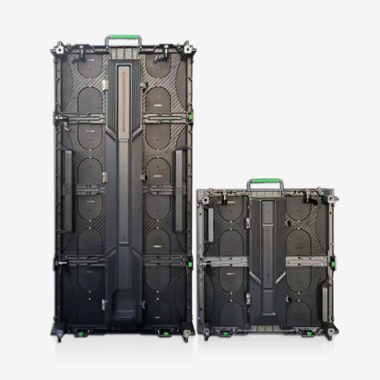
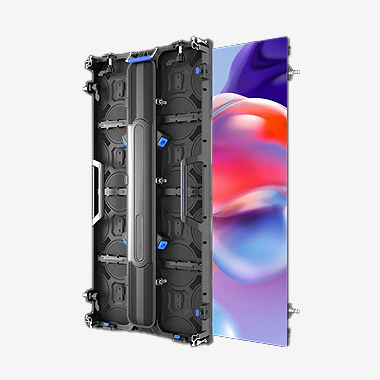
Modules are mounted into a larger, rigid structure called a cabinet. Cabinets are the structural workhorses of the display. Made from die-cast aluminum or other robust, lightweight, and corrosion-resistant materials, they house:
Multiple LED modules arranged in a grid.
A power supply unit (PSU) that converts AC mains power to the low-voltage DC required by the LEDs and electronics.
A receiving card, the brain of the cabinet, which processes the data signal from the main controller and distributes commands to the modules.
Advanced thermal management systems. This is crucial. LEDs generate heat, and excessive heat reduces their lifespan and color accuracy. Outdoor cabinets use large, passive heat sinks, and often incorporate powerful, silent fans for active convection cooling. They are designed to create a constant flow of air to dissipate heat without letting in external moisture or dust.
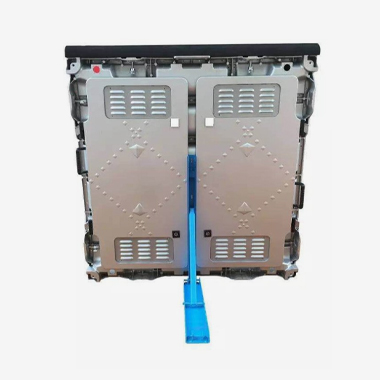
Weatherproofing. Cabinets are sealed with gaskets to achieve an Ingress Protection (IP) rating of at least IP65, meaning they are "dust-tight" and protected against water jets from any direction.
C. The Overall Display Structure:
Multiple cabinets are mechanically locked together on a custom-built support structure, often a steel truss or framework, to form the complete video wall. This structure must be engineered to withstand local environmental loads, primarily high winds and seismic activity. It includes provisions for safe and easy access for maintenance from the rear.
D. The Control System:
This includes both hardware and software. The sending card (a PC-based controller) takes a video input (e.g., HDMI from a media player) and processes it, dividing the image into sections corresponding to each cabinet. This data is sent via CAT5/6 or fiber optic cables to the receiving cards in each cabinet. Sophisticated software allows for content scheduling, brightness adjustment based on ambient light sensors, remote monitoring of each cabinet's status (temperature, power usage), and diagnostics for troubleshooting.
This meticulous, layered design—from the nanometer scale of the LED chip to the macro scale of the steel framework—ensures the display can deliver brilliant visuals while enduring the relentless challenges of the outdoor environment for years.
The operation of an exterior LED display is a sophisticated dance of data transmission, power regulation, and precise light control, all happening in real-time to recreate a video signal across thousands or millions of individual points of light.
1. Data Input and Processing:
The process begins with a video source, such as a media player, computer, or live camera feed. This source outputs a standard video signal (e.g., HDMI, DVI, SDI). This signal is fed into the display's central controller, the sending card. The sending card's primary job is to act as a translator and distributor. It captures the incoming video frame and processes it, matching the native resolution of the LED wall. It then divides this complete image into smaller segments, each destined for a specific cabinet or group of modules within the display.
2. Data Transmission:
The processed data is packaged and sent from the sending card to the individual receiving cards housed within each cabinet. For the large distances and high data rates required, this transmission typically uses high-speed differential serial communication protocols like Ethernet (e.g., ART-NET, sACN) or specialized protocols over CAT5/6 cables. For very large displays or those requiring extreme noise immunity, fiber optic cables are used due to their high bandwidth, immunity to electromagnetic interference, and ability to transmit over long distances without signal degradation.
3. Pixel Driving and Control:
Upon receiving its portion of the video data, the receiving card on each cabinet's PCB further distributes the commands to the specific driver ICs (Integrated Circuits) that are connected to rows and columns of LEDs on the modules. The driver ICs are the muscles of the operation. They control the two critical factors for each LED:
Constant Current Supply: LEDs are current-driven devices. The driver ICs provide a constant current to ensure uniform brightness and color across all LEDs, compensating for variances in the forward voltage of individual diodes.
Pulse-Width Modulation (PWM): This is the key to controlling brightness and color gradation. Instead of varying the analog current level (which would shift color), the driver IC rapidly switches each LED on and off thousands of times per second. The ratio of "on" time to "off" time within each cycle (the duty cycle) determines the perceived brightness. A 50% duty cycle appears half as bright as a 100% duty cycle. By independently applying PWM to each red, green, and blue LED in a pixel, the driver IC can create the precise color and intensity required for that specific point in the image.
4. Refresh Rate and Grayscale:
The refresh rate is how many times per second the entire display is redrawn. A high refresh rate (e.g., 1920Hz or higher) is essential to eliminate flickering, especially when viewed through cameras, and to ensure smooth motion portrayal. Grayscale refers to the number of intensity levels for each color—often 16-bit, allowing for over 65,000 levels of intensity per color. This high grayscale depth is what enables the smooth color gradients and deep blacks that prevent the "banding" effect in shadows and skies.
In summary, the working principle is a top-down, highly synchronized process: a video signal is deconstructed, distributed via a robust network, and then reconstructed on the LED wall through the precise, rapid switching of millions of microscopic red, green, and blue lights, all powered and controlled by a network of sophisticated electronics.
Exterior LED displays offer a compelling set of advantages over traditional static signage and other digital options, but their deployment and operation come with a unique set of challenges that must be carefully managed.
Advantages:
Superior Brightness and Visibility: The most critical advantage. High-brightness LEDs (often 5,000 to 10,000 nits) ensure the content is clearly visible even under direct sunlight, a feat impossible for LCD screens.
Dynamic and Engaging Content: Unlike static billboards, LED displays can show full-motion video, animations, and real-time information (scores, news, weather), making them far more effective at capturing and holding audience attention.
High Reliability and Long Lifespan: LEDs are solid-state devices with no filaments to burn out. A well-manufactured and properly maintained LED display can operate for 100,000 hours or more before brightness degrades significantly.
Energy Efficiency: Modern LED technology, coupled with smart control systems (e.g., automatic brightness adjustment based on ambient light), has dramatically reduced power consumption compared to older lighting technologies like incandescent or neon signs.
Seamless Large-Scale Format: LED cabinets can be assembled to create massive, seamless video walls of almost any size or shape without the bezels that break up tiled LCD video walls.
Operational Flexibility and Remote Management: Content can be updated instantly from anywhere in the world via network connections. Schedules can be created to show different content at different times of day, maximizing the value of the screen.
Durability: Built to IP65 standards, they are resistant to rain, dust, and wind. Their modular nature also means individual faulty modules can be replaced quickly without taking the entire display offline.
Challenges:
High Initial Investment: The upfront cost for a high-quality exterior LED display, including the structure, control system, and installation, is significant, though the ROI through advertising revenue can be substantial.
Ongoing Maintenance: While reliable, these are complex electronic systems exposed to the elements. They require periodic maintenance to clean filters, check connections, and replace any failed modules, drivers, or power supplies. This necessitates specialized technicians and safe access systems.
Power Consumption and Heat Management: Despite improvements, a large display still consumes considerable electricity, contributing to operational costs. This power draw also generates substantial heat that must be effectively managed to prevent premature failure.
Light Pollution and Community Regulations: The intense brightness can be a source of light pollution, leading to complaints from residents and businesses. Many municipalities have strict regulations governing brightness levels, operating hours, and content to mitigate nuisance.
Potential for Obsolescence: Technology evolves rapidly. A display purchased today may have a lower resolution or lack features (like HDR support) that become standard in a few years. However, the long physical lifespan often means displays are used long after newer tech is available.
Content Creation Demands: To truly leverage the screen, high-quality content must be produced. This requires investment in creative design and video production tailored to the large, public format, which is an additional cost beyond the hardware itself.
Managing these challenges through careful planning, quality equipment selection, and proactive maintenance is essential to realizing the full benefits of an exterior LED display.
The application landscape for exterior LED displays is vast and expanding, driven by their ability to command attention and communicate dynamically. Concurrently, technological innovation is pushing the boundaries of what these displays can do.
Applications:
Digital Out-of-Home (DOOH) Advertising: The largest application. Used in high-traffic areas like city centers, highways, and shopping districts for brand advertising. Their ability to change ads based on time of day, weather, or even real-time data (e.g., promoting umbrellas when it rains) makes them incredibly valuable.
Sports and Entertainment Venues: A staple in stadiums and arenas for showing live action replays, player statistics, advertisements, and crowd-engaging animations, dramatically enhancing the live event experience.
Corporate and Brand Building: Headquarters of major companies often feature large LED displays as architectural elements to showcase their brand identity, display company information, or simply create an iconic building facade.
Public Information and Wayfinding: Used by governments and transportation hubs to display news, emergency alerts, weather warnings, traffic information, and wayfinding directions to the public.
Religious and Cultural Institutions: Churches, mosques, and temples use them to display hymns, prayers, and event announcements to large congregations. They are also used on stage backdrops for concerts and theatrical performances.
Retail and Hospitality: Shopping malls, casinos, and hotels use them for promotional content, directing foot traffic, and creating an atmosphere of luxury and excitement.
Future Trends:
Higher Resolution and Finer Pixel Pitches: As LED chip sizes shrink, "Fine Pitch" and "MicroLED" technology is moving outdoors. Displays with sub-P2.5 pitch are becoming viable for closer viewing distances, challenging direct-view LCDs.
MicroLED Technology: This next-generation technology uses microscopic, self-emissive LEDs that are transferred onto a backplane. It promises incredible brightness, perfect blacks, higher efficiency, longer lifespan, and greater stability than current SMD technology, albeit at a currently prohibitive cost.
Improved HDR (High Dynamic Range): Future displays will support wider color gamuts and higher contrast ratios, delivering more realistic and visually stunning images that can better compete with premium televisions.
Integration with IoT and AI: Displays will become smarter nodes in the Internet of Things (IoT). AI algorithms will optimize content in real-time based on audience demographics (via anonymous cameras), traffic flow, and other data streams. Predictive maintenance, where the system alerts operators to impending failures before they happen, will become standard.
Transparent and Flexible LED: Transparent LED films that can be applied to windows and flexible LED panels that can conform to curved architectural surfaces will open up new, innovative application possibilities, blending digital content with the physical building in seamless ways.
Sustainability Focus: The drive for lower power consumption will continue. This will be achieved through more efficient LED chips, better power supplies, and smarter management systems. The use of recyclable materials in cabinets and a focus on end-of-life recycling will also become more prominent.
The future of exterior LED displays is one of seamless integration, smarter operation, and ever-higher visual fidelity, transforming them from simple billboards into intelligent, interactive architectural elements.
Conclusion
The exterior LED display screen stands as a testament to the powerful convergence of optoelectronics, software, and robust engineering. It has evolved from a novel technological curiosity into a dominant and indispensable medium in the outdoor communication landscape. Its journey has been marked by relentless innovation, overcoming initial hurdles of brightness, durability, and cost to become a viable, long-term investment for advertisers, venues, and cities alike.
The core value proposition of this technology is its unmatched ability to deliver dynamic, high-impact visual content to a mass audience, 24 hours a day, in almost any environmental condition. It has redefined outdoor advertising from a static, one-dimensional medium to a flexible, programmable, and deeply engaging platform. Beyond commerce, it has become a critical tool for public information, a enhancer of spectator experiences, and a defining feature of modern architectural design.
However, as with any powerful tool, its deployment requires careful consideration. The challenges of initial cost, ongoing maintenance, energy use, and community impact through light pollution are not insignificant. Success hinges on a commitment to quality—from selecting the right product with the appropriate specifications for its intended use to implementing a robust plan for maintenance and content management.
Looking forward, the trajectory of exterior LED technology is exceptionally bright. The trends toward higher resolution, MicroLED adoption, smarter IoT integration, and more sustainable design promise to further expand its applications and effectiveness. These displays will become more than just screens; they will evolve into interactive, data-driven portals that blend digital information with the physical world in real-time.
In conclusion, the exterior LED display is more than just a sign; it is a dynamic canvas. It is a platform for storytelling, a tool for connection, and a symbol of a vibrant, technologically advanced society. As the technology continues to mature and innovate, its role in shaping our visual environment and facilitating communication in public spaces will only grow more profound and immersive.


Copyright © 2026 Shenzhen Cogo Technology Co.,Ltd.
All Rights Reserved

 Previous article