




 Chat Now
In the dynamic world of temporary events—from pop-up markets and community fairs to mobile marketing campaigns and emergency response scenarios—portability and quick deployment of visual solutions are paramount. Portable LED hire display panels emerge as a versatile, user-friendly answer, combining the visual impact of LED technology with the mobility required for on-the-go setups. Unlike fixed installation or even standard rental LED panels, these models prioritize ultra-lightweight construction, compact storage, and tool-free assembly, making them accessible to users with minimal technical expertise—whether they’re small business owners, event organizers, or emergency services personnel.
At their core, portable LED hire display panels are modular or all-in-one LED display units designed for easy transport and rapid setup. They typically feature lightweight frames (often made of aluminum alloy or high-strength plastic), built-in power sources (like rechargeable batteries), and simplified connectivity (Wi-Fi, Bluetooth, or HDMI). Screen sizes range from compact 32-inch units (ideal for small booths) to larger 100-inch+ modular setups (suitable for outdoor events), with resolution options spanning HD (1920x1080) to 4K, ensuring clarity for both close-up and medium-distance viewing. The “hire” (rental) focus means these panels are built to withstand repeated use across diverse environments—from indoor conference rooms to outdoor parking lots—while remaining easy to pack, ship, and store.
The demand for portable LED hire display panels has surged in recent years, driven by the growth of pop-up events, mobile marketing, and remote work. According to industry data, the global portable LED display market is projected to grow at a CAGR of 14% through 2030, with hire models accounting for a significant share. This growth is fueled by advancements in battery technology (longer runtimes, faster charging) and LED miniaturization (lighter panels with higher brightness), making portable units more capable than ever before. For example, modern portable LED hire panels can deliver 500-1500 nits of brightness—enough to remain visible in outdoor shade—and run on battery power for 4-8 hours, eliminating the need for external power sources at temporary events.
Key use cases for portable LED hire display panels span personal, commercial, and public sectors. Small businesses use them for pop-up shop promotions, displaying product videos or sale announcements. Event organizers rent them for weddings (photo slideshows), community festivals (schedule displays), or outdoor movie nights. Mobile marketers deploy them in food trucks, trade show booths, or street marketing campaigns to attract passersby. Emergency services even use ruggedized portable LED hire panels for disaster response, displaying evacuation routes or safety instructions in affected areas. Their versatility stems from their portability: a single person can often transport and set up a compact unit, while larger modular setups require just 2-3 people—no professional installation team needed.
Notably, portable LED hire display panels bridge the gap between performance and accessibility. Unlike heavy rental video walls that require trucks and crew to transport, portable units fit in the trunk of a car or a small storage case. Unlike consumer-grade projectors (which struggle in bright light), portable LEDs deliver consistent brightness and color accuracy. For hire companies, these panels offer high asset utilization: they can be rented out daily to different clients, from individuals hosting backyard parties to corporations hosting mobile activations. As technology evolves, portable LED hire panels are becoming smarter, with integrated apps for content management and remote monitoring—further simplifying their use for non-technical users. In essence, they represent a democratization of LED display technology, making high-quality visuals accessible to anyone, anywhere, for any temporary need.
The design and construction of portable LED hire display panels are engineered to prioritize three non-negotiable goals: portability (lightweight, compact storage), durability (for repeated hire use), and ease of use (tool-free setup, simplified connectivity). Every component—from the frame to the power system—is carefully selected to balance these priorities, ensuring the panels can withstand the rigors of transport, adapt to diverse event environments, and be operated by users with minimal technical skills.
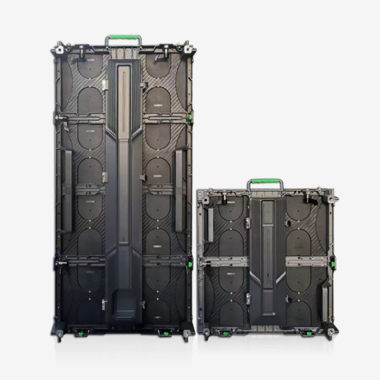
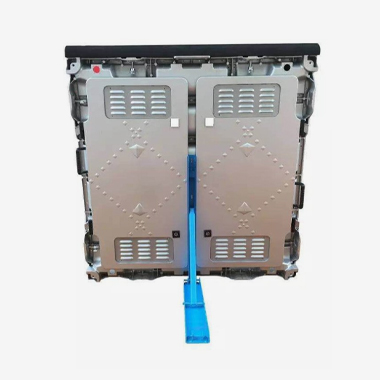
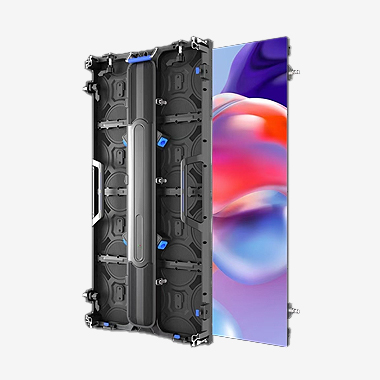
At the foundation of the design is the frame and housing, which dictates the panel’s portability and durability. Unlike fixed installation panels (heavy steel frames) or standard rental video walls (aluminum frames), portable LED hire panels use ultra-lightweight materials: aircraft-grade aluminum alloy (for strength and lightness) or high-impact polycarbonate (for budget-friendly models). The frame is typically slim—often 20-50mm thick—and features built-in handles or carrying straps for easy transport. For modular portable panels (which connect to form larger displays), the frame includes alignment guides and quick-lock mechanisms to ensure panels snap together seamlessly without tools. The housing is also designed for compact storage: individual panels stack or nest inside custom cases, reducing storage space by up to 50% compared to non-portable rental units. For outdoor-use models, the housing has an IP54 or IP65 rating (waterproof and dustproof), with sealed ports and rubber gaskets to protect internal components from rain, dust, or splashes.
The LED panel and pixel structure are optimized for balance between brightness, resolution, and weight. Portable LED hire panels use surface-mount device (SMD) LEDs, which are smaller and lighter than traditional through-hole LEDs. Pixel pitches range from P2.5 (for high-resolution indoor use, e.g., wedding slideshows) to P6 (for outdoor use, e.g., festival schedules), ensuring clarity for the intended viewing distance (1-10 meters). Brightness levels are tailored to environment: indoor models deliver 500-800 nits (to avoid eye strain), while outdoor models reach 1000-1500 nits (to cut through ambient light). The LED panel is bonded to a thin, lightweight backplate (often made of aluminum or fiberglass) that provides structural support without adding weight. For all-in-one portable units (non-modular), the LED panel is integrated into a single housing with a built-in stand—further simplifying setup.
The power system is a defining feature of portable LED hire panels, enabling off-grid use. Most models include a built-in rechargeable lithium-ion battery, which provides 4-8 hours of runtime on a single charge (depending on brightness: lower brightness extends runtime). The battery is designed to be lightweight (adding 2-5 kg to the panel) and fast-charging (full charge in 2-4 hours via AC power or portable chargers). For longer events, panels include an AC power input (100-240V) to run continuously while charging the battery. Some advanced models also support solar charging via optional solar panels—ideal for outdoor events in remote areas. The power system includes safety features like overcharge protection, short-circuit protection, and low-battery alerts (via LED indicators or app notifications), ensuring safe operation during hire.
Connectivity and control systems are designed for user-friendliness. Portable LED hire panels avoid complex wiring by offering wireless connectivity: Wi-Fi and Bluetooth for streaming content from smartphones, tablets, or laptops, and optional 4G/5G for remote content updates (e.g., a marketing team updating a promotion in real time). Wired options (HDMI 2.0, USB-C) are also included for reliable connections to cameras, media players, or laptops. The control system is accessible via a simple on-panel keypad or a dedicated mobile app (available for iOS and Android). The app allows users to adjust brightness, switch between content sources, and schedule playlists—no specialized software or training required. For modular setups, a single app can control all connected panels, ensuring synchronized content across the display.
Mounting and setup features eliminate the need for tools or professional expertise. All-in-one portable panels include built-in stands (adjustable height, foldable) that set up in 1-2 minutes—users simply unfold the stand, lock it in place, and power on the panel. Modular panels use magnetic or quick-lock connections: panels attach to each other with strong magnets (no screws) and connect to a lightweight, foldable truss or frame (included with hire). The truss is often telescopic, allowing users to adjust the display’s height and width to fit the event space. Some models also include wall-mounting brackets (for indoor use) or ground stakes (for outdoor use), adding versatility to setup options. For transportation, panels come with custom padded cases that protect against bumps and scratches—critical for hire models that are shipped between clients.
Durability enhancements ensure longevity for repeated hire use. The front of the panel is protected by a scratch-resistant 钢化 glass (for high-end models) or polycarbonate sheet (for budget models), which can withstand minor impacts (e.g., a dropped water bottle). The frame edges are reinforced with rubber bumpers to absorb shocks during transport. Internal components (LED drivers, batteries) are secured with shock-absorbing foam to prevent damage from vibrations (e.g., during car transport). For outdoor models, the housing is UV-resistant to prevent fading or cracking from sun exposure. These durability features reduce maintenance costs for hire companies and ensure the panels remain in good condition for hundreds of rentals.
In summary, the design and construction of portable LED hire display panels are a masterclass in practicality. Every component—from the lightweight frame to the user-friendly app— is optimized to make high-quality LED visuals accessible, mobile, and durable, meeting the unique needs of hire companies and their diverse clients.
Portable LED hire display panels operate on core principles that balance performance, portability, and ease of use—addressing the unique demands of temporary events where quick setup, off-grid operation, and user-friendly control are essential. Unlike fixed or standard rental LED panels, which prioritize long-term stability or high resolution, portable hire models leverage simplified yet effective technology to deliver reliable visuals in any environment. Understanding these principles reveals how they achieve the seemingly contradictory goals of being lightweight, durable, and capable of delivering bright, clear content.
At the most basic level, the operation of SMD LED chips drives the panel’s visual performance. Portable LED hire panels use surface-mount device (SMD) LEDs—small, lightweight chips (typically 0.5-2mm in size) mounted directly onto a thin circuit board. Each LED chip emits light when an electric current passes through it, with pixels composed of red, green, and blue (RGB) chip trios. By adjusting the current to each RGB trio, the panel produces millions of colors: increasing current boosts brightness, while varying the ratio of red, green, and blue light creates different hues. For portable models, the LED chips are selected for low power consumption (to extend battery life) and moderate brightness (500-1500 nits)—enough to be visible in most event environments without draining the battery too quickly. The chips are arranged in a grid with a pixel pitch (distance between pixels) of P2.5-P6, which balances resolution (sharp enough for text and videos) and weight (fewer chips reduce weight).
The power management system is critical for off-grid operation, a key requirement for portable hire panels. Most models include a built-in lithium-ion battery (capacity 10000-50000 mAh) that supplies DC power (5V or 12V) to the LED chips and control electronics. The power management system regulates the current flow to ensure stable performance: it converts the battery’s voltage to the precise level needed by the LEDs, prevents overcurrent (which can damage chips), and monitors battery charge level. When the battery reaches a low threshold (typically 10-20% remaining), the system triggers a low-battery alert (via LED indicators or app notification) and may automatically reduce brightness to extend runtime. For AC-powered operation (e.g., all-day events), the system switches to external power while charging the battery, ensuring uninterrupted use. Some advanced models use “smart power mode,” which adjusts brightness based on battery level—further optimizing runtime for events where power access is limited.
Connectivity and content delivery principles prioritize simplicity for non-technical users. Portable LED hire panels support multiple content sources, with wireless connectivity (Wi-Fi, Bluetooth) as the primary method for ease of use. When connected to a smartphone or laptop via Wi-Fi/Bluetooth, the panel receives digital content (videos, images, presentations) in real time. The panel’s built-in media player decodes the content—supporting common formats like MP4, JPEG, and PDF—and maps it to the LED pixel grid. For wired connections (HDMI, USB-C), the panel acts as an external display, receiving uncompressed content for higher-quality playback (ideal for live video or high-resolution images). Modular portable panels use a “daisy-chain” data system: a single content source connects to one panel, which then transmits the content to all other connected panels via internal cables. This eliminates the need for multiple cables and ensures synchronized playback across the entire display.
Brightness and color control adapt to diverse event environments. Portable LED hire panels include ambient light sensors (in mid-to-high-end models) that measure surrounding light levels and adjust brightness automatically. For example, an outdoor panel might increase brightness to 1500 nits on a sunny day and reduce it to 800 nits in shade, preserving battery life while ensuring visibility. Users can also manually adjust brightness via the on-panel keypad or app, making it easy to adapt to indoor lighting (e.g., dimming for a wedding slideshow). Color control is simplified to pre-set modes (e.g., “Vivid” for marketing, “Natural” for photos, “Cinema” for movies), which optimize color temperature and contrast for different content types. This eliminates the need for manual color calibration—critical for hire users who lack technical expertise but still want high-quality visuals.
Durability and reliability mechanisms support repeated hire use. The panel’s internal components are protected by shock-absorbing foam and a rugged housing, which prevent damage from vibrations during transport or minor impacts at events. The LED chips are encapsulated in a moisture-resistant coating, and the housing’s IP rating (IP54/IP65) keeps out dust and water—ensuring reliable operation in outdoor or dusty environments (e.g., construction site safety displays). The control system includes “fault detection,” which monitors for issues like pixel failure or connectivity drops and alerts the user via the app. For hire companies, some models include remote diagnostic tools: the panel sends performance data (battery health, pixel status) to a cloud-based platform, allowing the company to proactively address maintenance needs between rentals.
Setup and mounting principles enable quick deployment. All-in-one portable panels use foldable stands with quick-lock mechanisms: users unfold the stand, lock it at the desired height, and secure the panel—no tools required. Modular panels use magnetic or mechanical quick-lock connections: panels snap together in seconds, and the foldable truss (included) assembles in minutes without screws. The mounting system is designed to be stable yet lightweight: stands have wide bases to prevent tipping, while ground stakes (for outdoor use) anchor the panel to grass or dirt. This simplicity ensures that even first-time users can set up a portable LED hire panel in 5-10 minutes—far faster than standard rental video walls, which require hours of professional installation.
In conclusion, the working principles of portable LED hire display panels are centered on accessibility and adaptability. By simplifying power management, connectivity, and setup while maintaining reliable visual performance, these panels deliver on the promise of “anytime, anywhere” LED visuals—making them an indispensable tool for hire companies and their clients.
Portable LED hire display panels offer a unique set of advantages that make them ideal for temporary events and on-the-go visual needs, but they also face distinct challenges that hire companies and users must navigate. Understanding these pros and cons is critical for making informed decisions about when to use portable hire panels, how to maximize their value, and how to mitigate potential issues.
Advantages
1. Unmatched Portability and Quick Deployment
The most significant advantage of portable LED hire display panels is their ease of transport and rapid setup—addressing the core need of temporary events. Compact all-in-one models (32-65 inches) weigh just 5-15 kg, fitting in the trunk of a car or a small storage case, while modular setups (up to 100+ inches) break down into lightweight panels (3-8 kg each) that can be transported in a wheeled bag. Setup requires no tools or professional skills: users unfold the built-in stand, power on the panel, and connect a content source (smartphone, laptop) via Wi-Fi or HDMI—all in 5-10 minutes. This contrasts sharply with standard rental video walls, which require trucks for transport, 2-3 hours of setup by a crew, and specialized equipment. For events like pop-up shops, street fairs, or last-minute promotions, this portability is a game-changer, allowing users to deploy visuals quickly and adapt to changing locations.
2. Off-Grid Operation with Built-In Batteries
Unlike fixed or standard rental LED panels, which rely on external power sources, portable LED hire models include built-in rechargeable batteries that provide 4-8 hours of runtime. This enables off-grid use in locations without power access—such as outdoor markets, remote wedding venues, or disaster response sites. For example, a food truck can use a portable panel to display its menu all day without plugging into a generator, while emergency services can set up a panel in a disaster zone to show evacuation routes. The batteries also serve as a backup during power outages at indoor events (e.g., conferences, weddings), ensuring uninterrupted content playback. Most models support fast charging (2-4 hours) and can run while charging, making them suitable for all-day events with access to occasional power.
3. Versatility Across Environments and Use Cases
Portable LED hire display panels adapt to diverse environments, from indoor conference rooms to outdoor parking lots. Indoor models deliver 500-800 nits of brightness, avoiding eye strain in dim spaces, while outdoor models reach 1000-1500 nits and have IP54/IP65 ratings (waterproof, dustproof), withstanding rain, dust, and mild splashes. Their small to medium size (32-100 inches) makes them suitable for a wide range of use cases: personal events (wedding slideshows,birthday videos), commercial events (trade show booths, food truck menus), and public services (emergency response, community fair schedules). This versatility means hire companies can rent the same panel to diverse clients—from a small business owner hosting a pop-up to a local government organizing a disaster drill—maximizing asset utilization. For users, it eliminates the need to rent specialized displays for different events; a single portable panel can adapt to most temporary visual needs.
4. Cost-Effectiveness for Short-Term Use
Renting portable LED panels is far more cost-effective than purchasing them or renting larger, non-portable display solutions. Purchasing a high-quality portable LED panel can cost \(1,500-\)5,000, a significant investment for users who only need it for a weekend wedding or a one-day trade show. Hiring, by contrast, typically costs \(50-\)200 per day (depending on size and features), making high-quality visuals accessible to budget-conscious users. Additionally, portable hire panels avoid the hidden costs of non-portable rentals—such as delivery fees, setup/teardown labor, or equipment storage. For example, a standard rental video wall may cost \(500 per day plus \)200 for delivery and setup, while a portable panel of similar size costs $100 per day with no extra fees (users transport and set it up themselves). This cost-effectiveness makes portable LED hire panels a top choice for small businesses, individuals, and organizations with limited event budgets.
5. User-Friendly Operation for Non-Technical Users
Unlike complex rental video walls that require trained technicians to operate, portable LED hire panels are designed for users with no technical expertise. The control system—accessible via a simple on-panel keypad or mobile app—offers intuitive features: one-touch brightness adjustment, easy content source switching (Wi-Fi/HDMI/USB), and pre-set color modes. The app also includes step-by-step setup guides and troubleshooting tips, reducing the need for hire company support. For example, a bride-to-be can easily upload and play a wedding photo slideshow via her smartphone, while a food truck owner can update the menu on the panel in seconds using the app. This user-friendliness expands the panel’s appeal to a wide audience, from individuals hosting private events to small business owners running mobile marketing campaigns.
Challenges
1. Limited Size and Resolution Compared to Non-Portable Displays
The portability of these panels comes with a trade-off: limited size and resolution. Most portable LED hire panels top out at 100 inches (modular setups) or 65 inches (all-in-one models), which is smaller than standard rental video walls (which can span 200+ inches). Resolution is also constrained: while most models offer HD (1920x1080), 4K portable panels are rare and expensive, and pixel pitches (P2.5-P6) are larger than those of high-end fixed installation panels (P0.9-P2). This limits their use for large-scale events (e.g., music festivals, large conferences) where a massive, ultra-sharp display is needed. For example, a portable panel may be too small to be visible to a crowd of 500+ people at an outdoor festival, requiring a larger non-portable rental instead.
2. Battery Runtime Limitations for All-Day Events
While built-in batteries are a key advantage, their runtime (4-8 hours) can be insufficient for all-day events (e.g., 10-hour trade shows, day-long community fairs). Users must either have access to AC power to recharge the battery (which limits portability) or rent additional batteries (adding cost and weight). For example, a food truck operating from 10 AM to 8 PM would need to recharge the panel’s battery mid-day, requiring access to a power outlet or a portable generator. Cold weather can further reduce battery life: lithium-ion batteries lose up to 30% of their capacity in temperatures below 0°C, making portable panels less reliable for winter outdoor events (e.g., holiday markets).
3. Vulnerability to Extreme Weather (Outdoor Use)
While outdoor-rated portable LED hire panels have IP54/IP65 ratings (waterproof/dustproof), they are still vulnerable to extreme weather conditions. Heavy rain, strong winds, or extreme temperatures (above 40°C or below -10°C) can damage the panel or degrade performance. For example, a panel left in heavy rain for hours may suffer water damage to internal components, even with an IP65 rating. Strong winds can tip over lightweight portable stands, while extreme heat can cause the panel to overheat and shut down. Users hosting outdoor events must invest in additional protection (e.g., waterproof covers, wind barriers, shade tents), adding cost and setup time. In severe weather, the panel may need to be taken down entirely, disrupting the event.
4. Connectivity Issues in Crowded or Remote Areas
Portable LED hire panels rely on wireless connectivity (Wi-Fi/Bluetooth) for easy content updates, but this can be problematic in crowded or remote areas. In busy event spaces (e.g., trade shows, concerts), Wi-Fi networks are often overcrowded, causing slow content streaming or dropped connections. Bluetooth has a limited range (10-30 meters), requiring users to stay close to the panel to control it—unideal for events where the user needs to move around (e.g., a wedding planner managing multiple areas). In remote areas (e.g., rural wedding venues, disaster zones), Wi-Fi and cellular service may be unavailable, making it impossible to update content remotely or stream from online sources. Users must plan for these issues by preloading content onto the panel’s internal storage or using wired connections (HDMI/USB), which reduces the panel’s flexibility.
5. Wear and Tear from Repeated Hire Use
Portable LED hire panels are designed for durability, but repeated transport, setup, and teardown can lead to wear and tear over time. Common issues include: scratched front panels (from improper storage), damaged battery connectors (from frequent charging), loose stand components (from repeated folding), and dead pixels (from minor impacts). For hire companies, this means higher maintenance costs—replacing scratched panels, repairing batteries, or calibrating color to fix inconsistencies between panels. For users, a worn panel can reduce visual quality (e.g., scratches making content hard to see) or cause setup delays (e.g., a loose stand requiring extra time to secure). Hire companies must implement strict maintenance protocols (e.g., inspecting panels after each rental, using protective cases) to mitigate this, but it still adds to operational costs.
Portable LED hire display panels have already established themselves as a versatile solution for temporary visual needs, but their applications continue to expand as technology evolves. From personal events to commercial campaigns and public services, these panels are adapting to diverse user needs. Looking ahead, emerging trends will further enhance their capabilities, making them even more valuable for hire companies and their clients.
Current Applications
1. Personal and Social Events
Personal events are a major market for portable LED hire panels, as they add a professional, personalized touch without the cost of permanent displays. Weddings use 32-65 inch all-in-one panels to show photo slideshows of the couple, live feeds of the ceremony (for guests in other rooms), or custom animations (e.g., the couple’s names or wedding date). Birthday parties and anniversary galas use them to play video tributes from friends and family, while backyard movie nights rely on larger modular panels (80-100 inches) to project films—offering a cinema-like experience at home. For these events, portability is key: users can transport the panel to a backyard, wedding venue, or community hall, and set it up without professional help. The user-friendly app also makes it easy to adjust content in real time—e.g., switching from a slideshow to a live feed during a wedding reception.
2. Small Business and Mobile Marketing
Small businesses and mobile marketers rely on portable LED hire panels to attract customers and showcase products in temporary locations. Food trucks use compact 32-43 inch panels to display dynamic menus (with photos of dishes and prices), updating them quickly if ingredients run out. Pop-up shops—whether in malls, street fairs, or markets—use 43-65 inch panels to play product videos, highlight sale announcements, or collect customer feedback via interactive polls. Trade show booths, especially small 10x10ft booths, use portable panels instead of heavy posters or banners: the panel can display high-resolution product demos, and its portability eliminates the need for expensive booth shipping. Mobile marketing campaigns (e.g., a brand promoting a new product at a festival) use modular panels to create eye-catching displays that draw crowds, with the ability to move the panel to different locations within the event.
3. Community and Public Service Events
Community organizations and public services use portable LED hire panels to communicate with residents and ensure safety at temporary events. Local governments host community fairs, farmers markets, or holiday events where panels display schedules, vendor information, or safety tips (e.g., “Stay hydrated” at summer fairs). Emergency services—police, fire departments, and disaster response teams—use ruggedized portable panels (IP65-rated) for disaster drills or real emergencies. For example, during a flood evacuation, a panel can be set up at a shelter to show evacuation routes, emergency contact information, or updates on the disaster. Schools and universities use them for outdoor events like graduation ceremonies (displaying student names) or sports games (showing scores and player stats), as they can be easily moved between campus locations.
4. Indoor Corporate and Educational Events
Small-scale corporate and educational events benefit from the portability and ease of use of these panels. Corporate meetings and workshops use 43-55 inch panels to display presentations, with the ability to connect to a laptop via Wi-Fi for wireless slideshows. Training sessions use them to play instructional videos or share real-time notes, and the interactive features (e.g., touch-enabled panels) allow participants to annotate content during discussions. Schools and universities use portable panels in classrooms for temporary setups—e.g., a science class using a panel to show a 3D video of a cell, or a language class playing foreign films. Unlike fixed classroom projectors, portable panels work in bright light (no need to dim the room) and are easy to move between classrooms, making them ideal for schools with limited AV resources.
5. Sports and Recreational Events
Local sports events and recreational activities use portable LED hire panels to enhance the participant and spectator experience. Youth sports leagues (e.g., Little League baseball, soccer) use 32-43 inch panels to display team lineups, scores, and game schedules at the field. Outdoor fitness classes (e.g., yoga in the park, bootcamps) use them to play instructional videos or show workout timers, with the panel’s brightness ensuring visibility even in sunlight. Recreational events like charity runs or bike races use panels at the finish line to display real-time results, congratulate participants, or thank sponsors. For these events, the panel’s battery runtime is critical—most can operate for the 4-6 hour duration of a typical sports event without recharging.
Future Trends
1. Longer Battery Life and Alternative Charging Methods
Battery technology will be a key focus in future portable LED hire panels, with runtime extending to 10-12 hours on a single charge—eliminating the need for mid-event recharging. Manufacturers will use higher-capacity, lighter lithium-polymer batteries (which offer more energy density than traditional lithium-ion) to achieve this without adding weight. Alternative charging methods will also emerge: integrated solar panels on the panel’s frame will allow it to recharge during outdoor events, while wireless charging pads (compatible with standard event tables) will enable easy recharging indoors. Some models may even support kinetic charging—generating power from the panel’s movement during transport—though this will be more niche. These advancements will make portable panels more reliable for all-day events and remote locations.
2. Higher Resolution (4K) and Improved Visual Quality
4K resolution will become standard in portable LED hire panels, even in compact models (32-43 inches). This will be made possible by advancements in micro-LED technology—smaller, brighter LEDs that allow higher pixel density (e.g., P1.8-P2.5 pixel pitches) without increasing weight. Improved color accuracy will also be a focus: panels will support wider color gamuts (e.g., DCI-P3, used in cinema) and offer manual color calibration tools (via the app), making them suitable for professional events like small film screenings or product launches. High dynamic range (HDR) will be integrated into mid-to-high-end models, enhancing contrast and making content (e.g., photos, videos) more realistic. These visual improvements will expand the panel’s appeal to professional users (e.g., filmmakers, designers) who need precise color reproduction.
3. Enhanced Interactivity and Smart Features
Future portable LED hire panels will become more interactive, with touch-enabled screens (supporting 10+ simultaneous touches) and gesture control becoming standard. Users will be able to interact with content directly on the panel—e.g., a trade show booth visitor tapping the panel to view product details, or a wedding guest signing a digital guestbook on the screen. Smart features will include AI-powered content optimization: the panel’s app will analyze content (e.g., a slideshow, video) and adjust brightness, contrast, and color to optimize visibility for the environment (e.g., brightening text for outdoor use). Integration with voice assistants (e.g., Alexa, Google Assistant) will allow users to control the panel via voice commands—e.g., “Play the wedding slideshow” or “Update the menu to remove the burger.” These features will make the panel even more user-friendly and engaging.
4. Ultra-Lightweight and Foldable/Rollable Designs
Portability will be taken to the next level with ultra-lightweight panels (weighing 3-5 kg for 43-inch models) made from advanced materials like carbon fiber or graphene. These materials offer strength and lightness, making the panel even easier to transport—e.g., a single person carrying a 55-inch panel in a backpack. Foldable and rollable designs will also emerge: foldable panels will fold like a book for storage (reducing size by 50%), while rollable panels will roll up into a tube (similar to a poster) for transport. These designs will be ideal for users with limited storage space (e.g., small business owners) or those who need to transport the panel in tight spaces (e.g., narrow stairwells in old buildings). Despite their flexibility, these panels will maintain durability—with scratch-resistant, flexible front panels made from polymer materials.
5. Sustainability and Eco-Friendly Design
Sustainability will be a key driver in future portable LED hire panel development, as hire companies and users increasingly prioritize eco-friendly technology. Manufacturers will use recycled materials for frames and housings (e.g., recycled aluminum, biodegradable plastic), and panels will be designed for easy disassembly—allowing components (batteries, LEDs) to be recycled or reused at the end of the panel’s lifespan. Energy efficiency will improve: next-generation LEDs will consume 20-30% less power than current models, and the panel’s app will include an “Eco Mode” that reduces brightness and disables unused features to save energy. Hire companies will also adopt circular economy models—repairing and upgrading old panels (e.g., replacing batteries, upgrading to 4K resolution) instead of replacing them, and offering “green hire” packages that offset carbon emissions from transport and use. These sustainable practices will align with global environmental goals and appeal to eco-conscious users.
Conclusion
Portable LED hire display panels have transformed how we deliver visual content for temporary events, offering a unique blend of portability, ease of use, and cost-effectiveness that traditional display solutions cannot match. Throughout this series, we have explored their core strengths—from their lightweight design that fits in a car trunk to their built-in batteries enabling off-grid use, and their user-friendly controls that require no technical expertise. Their design and construction prioritize practicality for hire use, while their working principles balance performance with mobility, making them accessible to a wide range of users—from individuals hosting weddings to small businesses running pop-up shops.
While they face challenges—such as limited size, battery runtime constraints, and weather vulnerability—these are being addressed by ongoing technological advancements. As we look to the future, longer battery life, 4K resolution, enhanced interactivity, and sustainable design will further expand their capabilities, making them even more versatile and valuable. Their applications will continue to grow, from personal events to public services, and their role in mobile marketing and small business promotion will become even more critical as the demand for flexible, temporary visual solutions increases.
For hire companies, portable LED panels offer a high-return investment: their versatility allows them to be rented to diverse clients, maximizing asset utilization, while their durability reduces long-term maintenance costs. For users, they democratize high-quality visuals—making professional-grade displays accessible to those with limited budgets or temporary needs. Whether it’s a bride-to-be showing a wedding slideshow, a food truck owner updating a menu, or an emergency team displaying evacuation routes, portable LED hire panels deliver on the promise of “anytime, anywhere” visual communication.
In a world where events are increasingly temporary, mobile, and personalized, portable LED hire display panels are not just a convenience—they are a necessity. They bridge the gap between professional visual quality and practicality, enabling users to create memorable, engaging experiences without the constraints of fixed or heavy display solutions. As technology evolves, their importance will only grow, solidifying their place as a cornerstone of the hire and events industry. For anyone seeking flexible, affordable, and high-quality visual solutions for temporary needs, portable LED hire display panels are the clear choice.


Copyright © 2026 Shenzhen Cogo Technology Co.,Ltd.
All Rights Reserved

 Previous article