




 Chat Now
In the high-stakes, fiercely competitive environment of a trade show or exhibition, the primary challenge for any brand is to cut through the noise and capture the attention of a constantly moving audience. In this arena of first impressions and fleeting engagements, the LED hire display panel has emerged as a preeminent tool for achieving stand-out visibility, immersive storytelling, and dynamic engagement. Unlike static banners and printed graphics, a dynamic LED display is a living, breathing centerpiece that commands the eye and communicates a brand's message with unparalleled impact and modernity.
An LED hire display panel for exhibitions is a modular, high-resolution screen system specifically designed for short-term rental use within convention centers, exhibition halls, and indoor event spaces. The concept of "hire" (or "rental") is central to its value proposition. It allows exhibitors to access cutting-edge visual technology without the significant capital expenditure of ownership, the long-term commitment, or the logistical burdens of storage, maintenance, and transportation. This on-demand model provides the flexibility to scale visual impact to the size and budget of a specific show, to experiment with new technologies, and to always present a technically flawless, state-of-the-art image.
The core function of these displays transcends simple video playback. They are strategic engagement assets used for:
Brand Theater: Creating a large-scale, visually stunning backdrop that defines the stand's atmosphere and reinforces brand identity.
Product Demonstration: Showcasing high-resolution videos, 3D animations, and live software demos on a grand scale, allowing features and benefits to be seen clearly by groups.
Content Dynamism: The ability to change content instantly throughout the day—from a keynote presentation in the morning to looping product videos in the afternoon to social media feeds in the evening—keeps the stand fresh and encourages repeat visits.
Experience Creation: LED technology enables interactive experiences, such as touch-screen walls, interactive floors, and immersive environments powered by VR/AR integration, transforming passive viewers into active participants.
The evolution of exhibition LED hire has been driven by the advent of "fine-pitch" technology. Earlier LED displays, with large pixel pitches (e.g., P10 or higher), were unsuitable for the close viewing distances typical of exhibitions, where attendees might be just a few meters away. The development of fine-pitch (P4 to P2.5) and ultra-fine-pitch (below P2.5) SMD and COB LEDs has been a game-changer. These panels offer pixel densities high enough to display crisp, clear images and even text from a very short distance, finally making LED a viable replacement for traditional LCD video walls in high-end applications.
Key characteristics that define modern exhibition hire panels include:
High Resolution & Fine Pixel Pitch: Essential for close-proximity viewing and sharp image quality.
Superior Color Fidelity: Wide color gamut and high contrast ratio for vibrant, true-to-life imagery that accurately represents products and brand colors.
Elegant Design: Cabinets are designed to be sleek, lightweight, and often feature front-serviceability for easy access in cramped booth spaces.
Ease of Deployment: Systems are engineered for rapid, tool-less assembly by hire crew technicians, minimizing costly setup time on the exhibition floor.
Seamless Viewing Experience: Minimal bezel width or true bezel-free design to maintain a continuous, uninterrupted canvas for content.
In essence, the LED hire panel for exhibitions is a powerful convergence of marketing strategy and visual technology. It is a temporary asset deployed for maximum effect, designed to elevate a brand's presence, communicate its narrative with compelling clarity, and ultimately, drive measurable ROI by attracting more leads, creating more memorable experiences, and solidifying a market position as an innovative and forward-thinking leader.
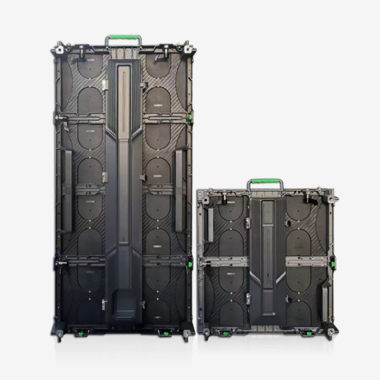
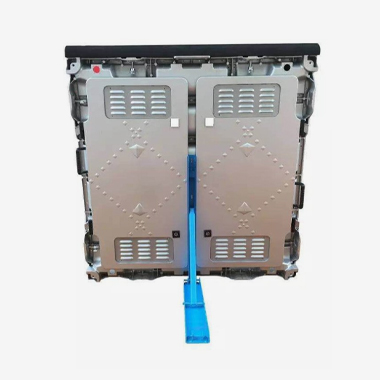
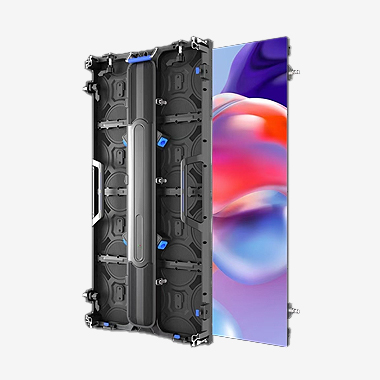
The design and construction of an LED panel destined for the exhibition hire market are meticulously engineered to meet a unique set of demands: they must deliver broadcast-quality visuals at close range, be incredibly robust to withstand constant shipping and handling, and be remarkably simple and quick to install and configure. The philosophy is one of "commercial-grade robustness meets consumer-grade aesthetics."
1. The Cabinet: Lightweight, Rigid, and Elegant
The foundation of the system is the cabinet, which must strike a perfect balance between strength and weight.
Materials: While outdoor rental cabinets use heavy die-cast aluminum for weatherproofing, exhibition cabinets prioritize lightweight materials like precision-machined aluminum alloys or even high-strength carbon fiber composites for the largest sizes. This reduces shipping costs and makes handling safer for crews on the show floor.
Form Factor: The trend is towards ultra-thin and narrow bezel designs. Many modern exhibition panels have a cabinet depth of less than 100mm, allowing for a sleek, flush-mounted appearance that looks custom-built for the stand. The magnetic or quick-lock joining mechanisms are designed to be completely hidden from the front view, preserving the seamless visual effect.
Mounting Versatility: Cabinets are designed with multiple mounting options. They can be assembled into a traditional rigid wall, built into a custom stand structure, or mounted onto a versatile "goalpost" or "truss" framework provided by the hire company. For high-end applications, panels can be fitted with specialized hardware for creative curved configurations.
2. The LED Module: Fine-Pitch Precision
The module is where visual performance is paramount.
Pixel Pitch: For exhibitions, the sweet spot is typically between P1.9 and P3.9. This provides excellent resolution for viewing distances as close as 2-3 meters. The highest-end booths may use sub-P1.9 technology for truly breathtaking detail.
LED Packaging: Surface-Mounted Device (SMD) technology is standard. For the finest pitches, Chip-on-Board (COB) technology is increasingly popular. COB packages the LED chips directly onto the substrate and then encapsulates them with a protective phosphor layer. This makes the surface completely flat, more durable against physical contact (e.g., from attendees), and offers better heat dissipation and a wider viewing angle.
Color Calibration: Each module is factory-calibrated to ensure perfect color uniformity. For a hire fleet, this is critical. Panels from different batches or even different manufacturers must be able to be mixed and matched to form a wall with zero visible color or brightness discrepancies.
3. Front Serviceability: A Non-Negotiable Feature
In a crowded exhibition hall, access to the rear of a display is often impossible. Therefore, every single component must be serviceable from the front.
Modules: They are secured by strong magnets or quick-release latches. A technician can remove a faulty module in seconds without tools.
Power Supplies and Receiving Cards: These are also mounted on trays that can be slid out from the front of the cabinet for replacement. This design ensures that any technical issue can be resolved quickly during brief pre-show hours or even during show open, minimizing downtime.
4. Thermal and Power Management
Silent Operation: Exhibition environments require silent operation. Unlike outdoor displays that might use fans, indoor exhibition panels rely entirely on passive cooling. The cabinet itself acts as a large heat sink, efficiently dissipating heat through convection without any audible noise.
Power Efficiency: The displays are designed to run on standard single-phase power available in exhibition halls. Efficient power supplies and low-voltage LED drivers are used to maximize light output per watt, reducing heat generation and power consumption—a key consideration for exhibitors who pay for utilities.
5. Integrated Connectivity and Control
Simplified Cabling: Modern systems use locking connectors that combine power and data in a single, robust cable between cabinets, reducing clutter and potential points of failure.
Built-in Processors: Many hire systems now utilize "all-in-one" cabinets that have the video processing circuitry embedded within them. This eliminates the need for a large, external video processor and its associated rack, cables, and setup complexity. Control is then managed via a simple network cable from a laptop.
6. Transportation Packaging
A crucial but often overlooked aspect of construction is the custom flight case. Each cabinet is housed in a shock-absorbent, foam-lined hard case designed to protect the sensitive electronics from the inevitable shocks and vibrations of road transport. This packaging is as much a part of the hire product as the panel itself, ensuring reliability show after show.
In summary, the construction of an exhibition hire panel is an exercise in precision engineering for a specific mission: to deploy a visually flawless, incredibly reliable, and easily serviceable visual canvas in a time-sensitive, logistically complex environment, all while presenting a sleek, modern aesthetic that complements the brand it serves.
The magic of a seamless, vibrant LED display in an exhibition booth is the result of a sophisticated, yet highly streamlined, workflow. The working principles involve not just the technology of the panel itself, but the entire process of content management, signal handling, and control that is tailored for the fast-paced, temporary nature of the exhibition environment.
1. Core Image Creation: PWM and Color Mixing
At the pixel level, the principle remains the same as all LED displays: Pulse-Width Modulation (PWM). Each red, green, and blue sub-pixel is controlled by a driver Integrated Circuit (IC) that switches the LED on and off thousands of times per second. The human eye integrates these rapid pulses into a perceived level of brightness. By independently controlling the duty cycle (on/off time) of each of the three colors in a pixel, the display can create millions of distinct colors through additive color mixing.
2. The Simplified Signal Path for Exhibitions
The signal chain for an exhibition is often designed for simplicity and reliability over the extreme redundancy of a live concert.
Content Source: This is typically a standard laptop or a dedicated media player located within the exhibition stand. The content is usually pre-rendered video loops, PowerPoint presentations, or image slideshows.
Video Output: The source device outputs a standard video signal, most commonly via HDMI.
Video Processing:
External Processor: For larger or more complex walls, an external video processor is used. This device takes the HDMI input, maps it to the unique resolution of the LED wall (which is almost never a standard 16:9 ratio), and applies the essential calibration data to ensure color uniformity. It then outputs the processed signal via DVI or HDBaseT to the display.
Internal Processor: In modern "all-in-one" systems, each cabinet has a built-in receiver card that handles processing. The source laptop sends a standard video signal to a "sender" box, which converts it into a network-based protocol (like ART-NET or HD-NET). This network signal is then daisy-chained from cabinet to cabinet. Each cabinet's receiver decodes the part of the image it is responsible for. This greatly simplifies cabling and setup.
Data Distribution on the Wall: The processed signal is sent to the first cabinet in the array. From there, it is passed along a daisy chain to all subsequent cabinets via locking data cables. Each cabinet's receiving card strips out the data for its own pixels and forwards the rest.
3. Calibration: The Key to Uniformity
This is perhaps the most critical operational principle for hire. A rental company's inventory consists of panels from various production batches. The calibration file—a set of correction coefficients for the color and brightness of every single module—is what makes a wall built from disparate panels look like a single, uniform screen.
During setup, the technician loads the specific calibration file for that particular set of panels into the video processor (or uploads it to each receiver card via software).
In real-time, the processor adjusts the output signal for each pixel based on this file, compensating for any minor variations between modules. This ensures perfect color consistency across the entire display.
4. Control and Monitoring
Control software is running on a technician's or exhibitor's laptop. This software allows the user to:
Adjust basic parameters like brightness and contrast to suit the ambient light of the hall.
Switch between different input sources.
Layout and manage content if using a more advanced media server.
Monitor the status of the wall, checking for any failed modules or overheating components.
5. The "Hire" Workflow Principle
The working principle extends beyond electronics to the operational workflow:
Pre-Show: The hire company tests all panels and prepares the exact configuration in their warehouse, including generating the master calibration file.
On-Site: The crew assembles the wall, connects the cables, powers on the system, and loads the calibration file.
Show-Time: The exhibitor or a hired technician simply controls the content playback from a laptop.
Post-Show: The wall is disassembled, packed into its flight cases, and returned to the warehouse for inspection, maintenance, and recalibration before its next hire.
The entire system is designed for operational elegance. The complex technological underpinnings are hidden behind a user-friendly interface, allowing the exhibitor to focus on their content and audience, confident that the technology will perform flawlessly as a window to their brand.
The decision to use a hired LED display is a significant one for an exhibitor. Understanding the full spectrum of its advantages and the potential challenges is crucial for effective planning and maximizing return on investment.
Advantages:
Unmatched Visual Impact and Stand-Out Ability: In a sea of static stands, a large, dynamic, bright LED display is irresistibly eye-catching. It creates a "halo effect," positioning the brand as innovative, successful, and technologically advanced. The moving imagery and vibrant colors naturally draw attendees from across the hall.
Content Flexibility and Dynamism: An LED wall is the ultimate digital canvas. An exhibitor can change their message instantly. They can run a product demo video in the morning, switch to a live social media feed during peak hours, and display a closing-day special promotion in the afternoon. This agility is impossible with printed graphics.
Superior Image Quality Over Alternatives:
vs. Projection: No issues with ambient light washing out the image. No need for careful alignment or "keystoning." Offers superior brightness, contrast, and color saturation.
vs. LCD Video Walls: Completely seamless with no visible bezels breaking the image. Offers higher brightness and better viewing angles. More flexible in creating large sizes and non-standard shapes.
Cost-Effectiveness of the Hire Model:
No Capital Outlay: Exhibitors can access top-tier technology without a large upfront purchase.
No Maintenance or Storage Costs: The rental company bears the costs of maintaining, storing, and updating the equipment.
Access to Expertise: The hire includes the expertise of the rental company for setup, operation, and troubleshooting, ensuring a professional result.
Professional Perception and Brand Enhancement: The quality of the display directly reflects on the brand. A high-resolution, flawlessly operating screen subconsciously communicates quality, reliability, and market leadership to potential clients.
Durability and Reliability: Designed for the rigors of rental, these panels are built to be incredibly robust and reliable for the duration of the show, providing peace of mind.
Challenges:
Cost of Hire: While avoiding capital expenditure, the rental fee for a high-end fine-pitch LED display can still be a significant line item in an exhibition budget. This includes not just the panel hire, but also the costs for delivery, installation, and dismantle (D.I.D.) by skilled crew.
Logistical Coordination: Integrating the hire into the exhibition timeline requires meticulous planning. The rental crew has specific time slots for installation (often during limited move-in hours) and dismantle. Delays or miscommunication can be costly and stressful.
Content Creation Demands: To justify the investment, the content must be exceptional. Standard-definition or poorly designed content will look terrible on a high-resolution screen. Exhibitors must budget for and produce high-resolution (often 4K) content that is specifically tailored to the unique aspect ratio and resolution of their LED wall.
Technical Complexity and Reliance on Experts: While operation can be simple, anything beyond basic playback requires a technician. An exhibitor must either have a trained staff member or factor in the cost of having a technician on standby. Technical glitches, though rare, can be devastating if not resolved quickly.
Power and Environment Requirements: Large LED walls consume substantial power and generate heat. The exhibitor must ensure their stand has adequate power allocation from the venue and that the display's heat output is considered in the booth's ventilation.
Viewing Distance Limitations: This is a critical planning factor. Choosing a pixel pitch that is too large for the expected viewing distance will result in a visible pixel grid, making the image look unprofessional and difficult to read. Expert advice from the rental company is essential to select the right technology for the space.
In conclusion, the advantages of hired LED displays—primarily their unparalleled ability to attract and engage and their operational flexibility—make them a powerful tool for achieving exhibition goals. The challenges are primarily financial, logistical, and content-related. Success lies in recognizing these challenges early, partnering with a reputable rental provider, and investing in high-quality content to fully leverage the technology's potential.
The application of hired LED technology in exhibitions has expanded far beyond a simple backdrop screen. It has become a versatile architectural and experiential element. Concurrently, technological and creative trends are continuously pushing the boundaries of how this technology can be used to create memorable brand experiences.
Applications:
The Central Branding Backdrop: The most common application. A large, seamless wall behind the stand's reception or demo area that displays high-impact brand films, product visuals, and company messaging. It sets the tone for the entire stand.
Product Demonstration Stations: Instead of small monitors, products are demonstrated on large, high-resolution LED screens, allowing groups to gather around and view software, interfaces, or product features in detail.
Interactive Experiences:
Touch-Overlay Walls: LED walls fitted with infrared touch frames become massive interactive surfaces for product catalogs, games, or configurators.
Interactive Floors: LED panels built into the floor react to footfall, creating engaging and shareable experiences that draw crowds.
Gesture Control: Using sensors like Kinect, content on the LED wall can be controlled by a user's gestures, creating a "wow" factor.
Immersive Environments and Tunnels: By wrapping LED panels around walls and even ceilings, exhibitors can create fully immersive "caves" or tunnels that transport attendees into a virtual world related to their product, such as a car interior, a architectural walkthrough, or a natural landscape.
Architectural Integration and Signage: LED panels are used as dynamic architectural elements—as a glowing reception desk, a product plinth, or overhead hanging signs that can change messaging throughout the day.
Hybrid Event Broadcasting: For exhibitors streaming their presence to a remote audience, the LED wall serves as a perfect, professional backdrop for presenters. It eliminates the need for a green screen and provides a dynamic, brand-consistent environment for online viewers.
Future Trends:
Even Finer Pixel Pitches and Micro-LED: The push towards pitches below P1.0 will continue. Micro-LED technology, with its superior brightness, contrast, and potential for transparency, will become more accessible for rental. This will allow for even larger screens to be viewed from incredibly short distances, further blurring the line between screen and reality.
Transparent LED Technology: Transparent LED screens allow for see-through displays. This trend will see them used as dynamic window displays within a booth, allowing sightlines through the stand while still overlaying digital information, creating an intriguing and modern aesthetic.
XR Virtual Production for Exhibitions: The technology pioneered by film and broadcast is coming to exhibitions. Using a high-resolution LED wall as a backdrop, exhibitors can place their physical product into a photorealistic virtual environment. A car, for example, could be displayed "driving" through a cityscape, all in real-time and viewable from any angle without the need for VR headsets.
Integration with Data and AI:
Personalization: Cameras (used ethically and with privacy in mind) could use AI to anonymously gauge demographic data of viewers and change the content on the screen to better suit the audience in front of it.
Data Visualization: For B2B companies, massive LED walls will be used to display live data feeds, global network maps, or real-time analytics in a compelling, graphical way.
Sustainability in Hire: The hire industry will focus on a circular economy model.
Energy Efficiency: Panels will become even more power-efficient, reducing the carbon footprint of exhibitions.
Longevity and Repair: Designing products for easier repair and longer lifespans to reduce electronic waste.
Logistics Optimization: Using AI to optimize truck packing and routing to minimize fuel consumption.
Simplified Control and SaaS Platforms: Control will move towards cloud-based Software-as-a-Service (SaaS) platforms. An exhibitor could manage their content via a web portal days before the show, and the rental technician would simply need to connect the wall to the internet for it to auto-configure with the correct content and settings.
The future of exhibition LED hire is one of deeper immersion, greater interactivity, and smarter integration. It will evolve from a display screen into an intelligent, responsive canvas that is central to creating personalized, memorable, and highly effective brand experiences.
Conclusion
The LED hire display panel has firmly established itself as a cornerstone of effective modern exhibition marketing. It is far more than a simple audio-visual tool; it is a strategic asset that empowers brands to transcend the limitations of traditional physical stands and create dynamic, narrative-driven environments that actively engage the contemporary audience.
Its value proposition is undeniable. In the context of an exhibition—where capturing attention is the primary currency—the moving, bright, and seamless canvas of an LED wall offers an unrivalled advantage. It provides the flexibility to tell a evolving brand story, the visual fidelity to showcase products with stunning clarity, and the scale to create a memorable presence that dominates the competitive landscape. The rental model democratizes access to this technology, making it a scalable and financially prudent option for businesses of all sizes to leverage world-class visual impact.
The journey to successful implementation, however, requires careful navigation. The challenges of cost, content, and logistics are real and must be met with strategic planning. The choice of pixel pitch, the design of high-resolution content, and the partnership with a reputable, expert rental provider are all critical factors that separate a successful deployment from an expensive misstep. The technology is only as powerful as the strategy behind it.
Looking forward, the trajectory of this technology is aligned with the broader trends in marketing and experiential design. As audiences crave more personalized and immersive experiences, LED technology is evolving to meet that demand. The emergence of finer pitches, transparent displays, and XR integration points towards a future where the digital and physical environments of an exhibition stand are not just connected, but fused into a single, cohesive experience. The display will shift from being a passive billboard to an interactive portal and a responsive storytelling engine.
In conclusion, the LED hire display panel for exhibitions is a powerful testament to the principle that in a crowded marketplace, the most powerful voice belongs to those who can show, not just tell. It is an investment in perception, engagement, and ultimately, conversion. By providing a temporary window into a brand's world with unparalleled brilliance and flexibility, it has become an indispensable tool for any exhibitor serious about making a lasting impression and achieving a tangible return on their investment. It is the definitive visual technology for defining a brand's presence in the dynamic theatre of trade shows.


Copyright © 2026 Shenzhen Cogo Technology Co.,Ltd.
All Rights Reserved

 Previous article