




 Chat Now
Outdoor media LED display walls are versatile digital out-of-home (DOOH) solutions that have revolutionized outdoor advertising, public communication, and brand engagement. Unlike traditional static billboards or neon signs, these dynamic displays leverage light-emitting diode (LED) technology to deliver high-brightness, full-color content—from video ads and live streams to public service announcements and event promotions—across diverse outdoor environments. Ranging in size from compact 5m² units for storefronts to massive 500+m² installations in city centers or stadium perimeters, they are designed to thrive in harsh outdoor conditions while capturing the attention of pedestrians, motorists, and event attendees.
A defining feature of outdoor media LED walls is their adaptability to varied viewing scenarios. For high-traffic urban areas (e.g., Times Square, Shibuya Crossing), they prioritize high pixel density (P2.5–P6) for close-range clarity, allowing pedestrians 1–5 meters away to view detailed graphics or short videos. In contrast, highway or suburban installations use larger pixel pitches (P8–P16) to ensure readability from 50–200 meters, catering to motorists traveling at 60–120 km/h. All models share core technical traits: brightness levels of 5,000–12,000 nits (to overcome sunlight glare), IP65+ ingress protection (resisting rain, dust, and humidity), and wide viewing angles (120°+ horizontal/vertical) to ensure content visibility across multiple lanes or crowded plazas.
The growth of outdoor media LED walls is driven by three key industry shifts. First, advertisers increasingly demand measurable engagement: unlike static billboards (where impressions are estimated), LED walls integrate analytics tools to track metrics such as view counts (via traffic sensors), dwell time (how long audiences pause to watch), and even conversion rates (e.g., a restaurant ad driving nearby foot traffic). Second, urbanization and smart city initiatives have positioned these displays as critical communication hubs—cities use them to share real-time data (traffic updates, weather alerts) or emergency messages, blending functionality with media. Third, technological advancements have reduced barriers to entry: high-efficiency LEDs cut energy costs by 30–50% compared to early models, while cloud-based content management systems enable remote updates in minutes, eliminating the need for on-site graphic swaps.
Today, outdoor media LED walls are ubiquitous across global landscapes: they line city streets, anchor shopping malls, adorn stadium exteriors, and stand at highway exits. Market research firm Statista projects the global DOOH market, dominated by LED displays, to reach $35.1 billion by 2027, with outdoor media LED walls accounting for over 70% of this growth. As brands and cities prioritize dynamic, data-driven communication, these displays have become more than just advertising tools—they are integral components of the modern outdoor media ecosystem, bridging digital content with physical spaces to create immersive, engaging experiences.
The design and construction of outdoor media LED display walls are engineered to balance three non-negotiable priorities: environmental durability, visual performance, and operational reliability. Every component—from LED modules to structural supports—is selected and tested to withstand outdoor stressors (extreme temperatures, moisture, physical impact) while delivering consistent, high-quality content for 7–10 years (the industry’s standard lifespan).
Core Design Principles
Two foundational principles guide development:
Environmental Resilience: Outdoor media walls face daily exposure to temperature swings (-30°C to 70°C), heavy rain, UV radiation, and even vandalism. Designs must incorporate corrosion-resistant materials, waterproof seals, and UV-stabilized components to prevent degradation.
Viewing-Centric Optimization: Performance is tailored to the target audience. Urban pedestrian-focused walls use small pixel pitches (P2.5–P6) and high contrast ratios (10,000:1+) for detailed content, while highway or large-venue walls prioritize large pixel pitches (P8–P16) and high brightness (8,000–12,000 nits) for long-distance visibility.
Key Components and Construction Details
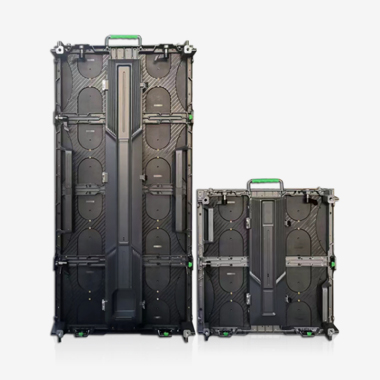
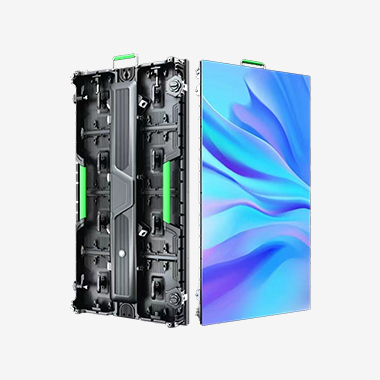
LED Modules: The building blocks of the display, each module (typically 320x160mm, 500x500mm, or 640x320mm) contains a grid of surface-mount device (SMD) RGB LEDs. For outdoor use, SMD 2835 or 3535 LEDs are preferred—they offer luminous efficacy of 150–200 lm/W (reducing energy use) and are coated with UV-resistant silicone to prevent fading. The module’s printed circuit board (PCB) is made of FR4 glass-reinforced epoxy with a thick copper layer (2oz+) to enhance heat dissipation and corrosion resistance (critical in coastal areas with salt spray). A scratch-resistant, anti-glare polycarbonate or tempered glass front cover protects LEDs from impact and reduces reflection.
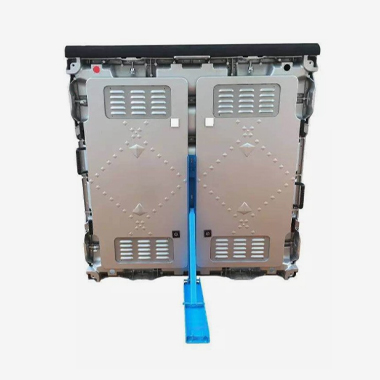
Enclosure and Housing: The enclosure acts as a barrier between internal components and the elements. It is constructed from aluminum alloy (6061-T6) for most applications—aluminum is lightweight (reducing structural load), corrosion-resistant, and recyclable. For high-vandalism areas (e.g., subway entrances), stainless steel (304 grade) is used for added durability. All seams are sealed with EPDM rubber gaskets rated IP65+ (dust-tight and protected against low-pressure water jets), and the enclosure features sloped tops and drainage holes to channel rainwater away from modules. Some advanced models include a “breathable” membrane that allows moisture vapor to escape, preventing condensation buildup inside.
Structural Support: Depending on the installation location, supports vary:
Free-Standing Poles: Used for highway or suburban installations, these galvanized steel poles (10–20m tall) have concrete foundations (1.5–3m deep) to anchor them to the ground. Engineers calculate wind loads (up to 150 km/h) and weight capacity (1.5x the wall’s weight) to ensure stability.
Wall-Mounted Brackets: For urban storefronts or building exteriors, aluminum brackets are bolted to load-bearing walls. Brackets include vibration dampeners to absorb shock from traffic or wind, preventing damage to the display or building.
Trussing Systems: Temporary outdoor events (e.g., music festivals) use lightweight aluminum trussing to support LED walls, enabling quick assembly and disassembly.
Cooling and Power Systems:
Cooling: LEDs generate heat, which reduces brightness and lifespan. Passive cooling (aluminum heat sinks attached to module backs) is standard for most climates, using natural convection to dissipate heat. In hot regions (e.g., the Middle East, Southwest U.S.), low-power axial fans (consuming <10W each) or heat pipes are added—fans activate automatically when internal temperatures exceed 40°C, maintaining optimal LED performance.
Power: High-efficiency switch-mode power supplies (SMPS) with 90%+ efficiency convert 110V/220V AC grid power to 5V/12V DC for LEDs. Redundant power supplies (one backup for every 4–5 primary units) ensure the display stays operational if a supply fails. Power cables are routed through underground PVC conduits (for permanent installations) or weatherproof cable trays (for temporary setups) to protect against damage.
Manufacturing and Testing
All components undergo rigorous testing before deployment:
Environmental Testing: Modules are exposed to 1,000-hour salt spray tests (simulating coastal corrosion), 500-hour temperature cycle tests (-30°C to 70°C), and 100-hour water immersion tests (verifying IP65+ compliance).
Performance Testing: Brightness and color uniformity are calibrated using spectroradiometers (e.g., Konica Minolta CS-2000), ensuring variation across the display is <5%. Refresh rates are tested to confirm flicker-free operation (300Hz+), critical for camera compatibility and viewer comfort.
Structural Testing: Supports are evaluated in wind tunnels and load-testing facilities to confirm they can withstand extreme weather without deformation or collapse.
Compliance with global standards—such as the U.S. FHWA (for highway displays), EU EN 12966 (for outdoor advertising), and ISO 9001 (quality management)—ensures consistency and reliability across installations.
Outdoor media LED display walls operate through four interconnected systems—LED illumination, power distribution, content processing, and environmental adaptation—each optimized to deliver dynamic, high-visibility content while withstanding outdoor conditions. Understanding these principles is key to appreciating how the display balances performance, efficiency, and durability.
1. LED Illumination: Generating Bright, Vivid Outdoor Visuals
At the core of every outdoor media LED wall is the SMD RGB LED chip, a tiny semiconductor device (typically 2.8mm x 3.5mm for SMD 2835) that produces light via electroluminescence. Each chip contains three separate semiconductor dies—one red (emitting light at a wavelength of 620–660nm), one green (520–560nm), and one blue (440–480nm)—mounted on a single PCB. When a low-voltage DC current (5V or 12V) is applied to the dies, electrons in the semiconductor material are excited to higher energy levels. As these electrons return to their ground state, they release energy in the form of photons (light), creating the visible glow of the LED.
The RGB configuration enables full-color control: by adjusting the intensity of the current flowing to each die, the display can produce over 16.7 million color combinations. For example, increasing the current to the red and green dies while dimming the blue die creates a bright yellow hue, ideal for brand logos or attention-grabbing ads. For outdoor use, LEDs are optimized for high brightness (5,000–12,000 nits) to overcome sunlight glare—this is achieved by using high-luminous-efficacy dies (150–200 lm/W), which produce more light per watt of power, reducing energy consumption.
Heat management is critical to maintaining LED performance. LEDs convert only 20–30% of electrical energy into light; the remaining 70–80% is lost as heat. If the die temperature exceeds 80°C, the LED’s brightness decreases by 10–20% (a phenomenon called “thermal droop”), and its lifespan shortens by 50% (from 50,000 hours to 25,000 hours). To prevent this, aluminum heat sinks are attached to the back of each LED module—heat sinks have large surface areas (2–3x the module’s size) that draw heat away from the dies and dissipate it into the air via convection. In hot climates, fans or heat pipes enhance heat transfer, keeping the dies at a stable 40–60°C.
2. Power Distribution: Efficient Energy Delivery for 24/7 Operation
Outdoor media LED walls often run 12–24 hours a day, so power distribution must be efficient, reliable, and safe. The system converts AC grid power to DC power for the LEDs, minimizes energy loss, and includes redundancies to avoid downtime (which costs advertisers \(100–\)500 per hour in lost impressions).
The process begins with a dedicated power circuit connected to the local grid—this avoids voltage fluctuations from other outdoor equipment (e.g., streetlights, traffic signals) that could disrupt the display. Power flows to switch-mode power supplies (SMPS), which convert the 110V/220V AC grid power to 5V or 12V DC (the voltage required by the LEDs). SMPS are chosen for their high efficiency (90%+), meaning only 10% of the input power is lost as heat (compared to 20–30% for older linear power supplies). For example, a 100m² display with a power density of 100W/m² consumes 10,000W (10kW) of AC power, but the SMPS delivers 9,000W (9kW) of usable DC power to the LEDs.
To ensure reliability, redundant SMPS are installed—one backup for every 4–5 primary supplies. If a primary supply fails, the backup automatically activates, preventing the entire display from shutting down. Power is distributed to LED modules via low-resistance copper cables (16–24 AWG), which minimize energy loss through heat (known as “I²R loss”). Cables are routed through weatherproof conduits or trays to protect against moisture and physical damage, and each module has a built-in fuse to prevent short circuits from affecting the entire wall.
3. Content Processing: Turning Digital Files into Visible Content
Content processing converts digital files (videos, images, text) into signals that control individual LEDs, ensuring seamless, uniform playback across the entire display. The process is managed by two key components: sending cards and receiving cards.
The sending card (connected to a content source, such as a laptop, media player, or cloud server) acts as a “traffic controller”: it splits the digital content into smaller segments, one for each LED module. For example, a 1920x1080 video played on a 10x5m display with P10 modules (10mm pixels) is divided into 100 segments (20 modules wide x 5 modules tall), ensuring each module displays only its portion of the image. This segmentation prevents data overload and ensures smooth playback, even for high-resolution content (4K or 8K).
The sending card transmits these segments to receiving cards (one per module or per 2–4 modules), which translate the digital signals into analog current adjustments for each LED. Receiving cards store calibration data (brightness, color temperature) for their assigned modules, ensuring consistency across the display—this eliminates “hot spots” (brighter areas) or “dead spots” (dimmer areas) that would disrupt the viewer experience.
Content management is simplified via cloud-based software (e.g., Pixelink, Adomni, Novastar NovaLCT). Users can upload content, schedule playback times (e.g., run a breakfast ad from 6–10 AM, a dinner ad from 5–9 PM), and monitor display status (e.g., check if a module is faulty) from a web browser or mobile app. For live content (e.g., sports streams, concert feeds), low-latency protocols (e.g., NDI, SRT) are used to ensure content is displayed in real time (latency <100ms), avoiding delays that would frustrate audiences.
4. Environmental Adaptation: Adjusting to Outdoor Conditions
Outdoor media LED walls automatically adapt to changing environmental conditions to maintain performance and save energy. This is enabled by sensors integrated into the display:
Light Sensors: Photodiodes measure ambient light levels in real time (updating every 1–5 seconds). On sunny days, the display increases brightness to 8,000–12,000 nits to cut through glare; at dusk or night, it dims to 1,000–2,000 nits to avoid light pollution and save energy (reducing power use by 70–80% after dark).
Temperature Sensors: Thermistors monitor internal and external temperatures. If the internal temperature exceeds 40°C (common in hot climates), the display activates fans or heat pipes to cool down; if temperatures drop below -10°C (in cold climates), it heats the LED modules slightly to prevent component damage from freezing.
Vibration Sensors: Accelerometers detect excessive vibration (e.g., from strong winds or nearby construction). If vibration exceeds safe levels, the display reduces brightness temporarily to minimize stress on components, preventing damage.
These adaptive features ensure the display operates reliably in any weather while minimizing energy waste—a critical balance for outdoor media walls that must perform 24/7 while aligning with sustainability goals.
Outdoor media LED display walls offer compelling benefits for advertisers, cities, and event organizers, but they also present unique challenges tied to their outdoor deployment and technical complexity. Understanding these pros and cons is essential for making informed decisions about investing in or using this technology.
Advantages
High Engagement and Brand Impact: Outdoor media LED walls deliver dynamic, high-brightness content that captures attention far better than static billboards. Studies by the Outdoor Advertising Association of America (OAAA) show that digital outdoor displays generate 3x more views than static signs, and 70% of consumers report noticing digital ads more often. The ability to display videos, animations, or live feeds increases engagement further—for example, a short 15-second video ad is 50% more likely to be remembered than a static image. For brands, this translates to higher brand recall: a 2023 study by Nielsen found that DOOH ads on LED walls boost brand awareness by 22% compared to traditional outdoor media.
Flexibility and Real-Time Updates: Unlike static billboards, which require physical graphic replacement (costing \(500–\)2,000 per update and taking 1–2 days), outdoor media LED walls enable remote content updates in minutes. Cloud-based software allows users to adjust campaigns on the fly—for example, a retail brand can promote a flash sale during a rainstorm, or a city can issue an emergency weather alert within seconds of a forecast update. This flexibility is ideal for time-sensitive content: sports teams can display live scores, concert venues can promote last-minute ticket sales, and restaurants can highlight daily specials. For advertisers, this means no wasted ad space—campaigns can be tweaked to align with market trends
or audience behavior. For cities, this flexibility turns LED walls into multi-purpose tools—shifting from advertising during peak hours to public safety messages during emergencies.
Cost Efficiency Over Time: While the upfront cost of outdoor media LED walls is higher than static billboards ( 1,500–3,000 per square meter vs. 300– 800 per square meter for static), they deliver long-term savings. Their lifespan of 7–10 years (vs. 1–2 years for static billboard graphics) eliminates frequent graphic replacement costs (500–2,000 per update). Energy efficiency further reduces operational expenses: high-efficiency LEDs and adaptive brightness control cut energy use by 30–50% compared to early LED models. For example, a 50m² LED wall operating 12 hours a day uses approximately 21,900 kWh annually, costing
2,628at
0.12/kWh—half the cost of a non-energy-saving LED wall. Additionally, the ability to monetize the display (e.g., selling ad space to multiple brands) creates a revenue stream that offsets initial investments, making LED walls financially viable for cities and media operators.
Data-Driven Insights: Unlike static billboards, where engagement is estimated, outdoor media LED walls integrate analytics tools to provide actionable data. Traffic sensors count the number of vehicles or pedestrians passing the display, while dwell-time sensors measure how long audiences pause to watch content. Some advanced systems even use computer vision to analyze demographic trends (e.g., age or gender of viewers) without compromising privacy. This data helps advertisers optimize campaigns—for example, a coffee brand might discover that morning commuters respond best to 10-second ads, while evening audiences engage more with 15-second videos. For media operators, this data allows them to set competitive ad rates based on real view counts, attracting more brands and increasing revenue.
Challenges
High Upfront Investment: The initial cost of purchasing and installing an outdoor media LED wall is a significant barrier, especially for small businesses or local advertisers. A 50m² wall (common for urban locations) can cost
75,000–150,000, plus installation fees (10,000–30,000) and structural modifications (e.g., reinforcing a building facade or pouring a concrete foundation). For many, this requires long-term financing, which adds interest costs and increases the total investment burden.
Regulatory and Zoning Restrictions: Most cities have strict regulations governing outdoor advertising, including limits on display size, brightness, and operating hours. For example, the U.S. Federal Highway Administration (FHWA) restricts highway LED displays to avoid distracting motorists, limiting brightness to 5,000 nits and requiring a minimum distance from roadways. In urban areas, zoning laws may ban large LED walls in residential neighborhoods to prevent light pollution. Obtaining permits can take 2–6 months, involving public hearings and environmental impact studies—delaying project timelines and increasing costs. Violations of these regulations can result in fines ( 1,000– 10,000 per offense) or even display removal.
Maintenance and Environmental Risks: Outdoor media LED walls require regular maintenance to ensure performance. Quarterly cleaning ( 500–1,500 per session) is needed to remove dust, dirt, and bird droppings that obscure content. Over time, components like LEDs or power supplies may fail, requiring replacement (100– 500 per module). Environmental factors add to maintenance challenges: coastal areas face corrosion from salt spray, which can damage PCBs and enclosures; extreme temperatures (below -30°C or above 70°C) can cause component failure or thermal droop. In regions with frequent storms or high winds, structural inspections are required annually ( 1,000– 3,000 per inspection) to ensure the display remains safe.
Content and Technical Expertise Requirements: Creating effective content for outdoor media LED walls requires specialized skills. Content must be optimized for viewing distance (e.g., large text and simple graphics for highways, detailed visuals for urban pedestrians) and short attention spans (10–15 seconds per ad). Poorly designed content—such as small text or complex animations—will fail to engage audiences, wasting ad budgets. Additionally, operating the display’s control system and analytics tools requires technical expertise. Small businesses or local advertisers may lack the resources to hire graphic designers or IT professionals, forcing them to rely on third-party services (50– 150 per hour), which adds to costs.
Outdoor media LED display walls are versatile across industries, and their future will be shaped by technological advancements that enhance interactivity, sustainability, and integration with smart city ecosystems.
Key Applications
Urban Advertising and Branding: The largest application area, urban LED walls transform city centers into dynamic advertising hubs. In high-traffic locations like Times Square (New York) or Shibuya Crossing (Tokyo), massive 100+m² walls display video ads for global brands (e.g., Coca-Cola, Apple) and local businesses alike. These walls prioritize high pixel density (P2.5–P6) for close-range viewing, allowing pedestrians to see detailed visuals and short animations. Retail storefronts use smaller 5–10m² walls to promote products or attract foot traffic—for example, a clothing brand might display a live stream of its latest fashion show, encouraging passersby to enter the store.
Highway and Transit Hubs: Highway LED walls target motorists traveling at 60–120 km/h, using large pixel pitches (P8–P16) and high brightness (8,000–12,000 nits) for long-distance readability. They are often located near exits, promoting nearby services like gas stations, restaurants, or hotels—content is timed to reach motorists 1–2 kilometers before the exit, giving them time to decide to stop. Transit hubs (airports, train stations, bus terminals) use LED walls to display real-time travel updates (flight delays, train schedules) and targeted ads (e.g., hotel ads for airport passengers, coffee ads for commuters). Some airports, like Dubai International Airport, have integrated LED walls into their architecture—wrapping them around terminal pillars to create immersive brand experiences.
Public Spaces and Smart Cities: Cities use outdoor media LED walls as core components of smart city initiatives. Town squares and plazas feature walls that display public service announcements (e.g., vaccine drives, recycling campaigns), live event streams (concerts, parades), or real-time data (air quality, traffic congestion). During emergencies—such as natural disasters or public safety threats—the walls become critical communication tools, broadcasting evacuation routes or safety instructions to large crowds. For example, during the COVID-19 pandemic, many cities used LED walls to share social distancing guidelines and vaccine site information, reaching audiences who may not have access to digital devices.
Stadiums and Entertainment Venues: Sports stadiums and concert venues use outdoor media LED walls to enhance the fan experience and generate revenue. Stadium exteriors feature large walls that display game highlights, player interviews, or sponsor ads for fans outside the venue—expanding the event’s reach beyond ticket holders. Concert venues use LED walls to promote upcoming shows or stream live performances to crowds waiting to enter. These walls are often integrated with the venue’s audio system, creating synchronized audio-visual experiences that build excitement. For example, a football stadium might display a live feed of the pre-game warm-up on its exterior wall, encouraging fans to arrive early and engage with sponsor content.
Future Trends
Increased Interactivity and Immersion: Advancements in sensor technology and AI will make outdoor media LED walls more interactive. Motion sensors will allow audiences to control content with gestures—for example, a pedestrian could wave their hand to change the ad displayed on a city wall, or a motorist could honk their horn to trigger a special offer from a nearby restaurant. Augmented reality (AR) integration will take immersion further: users can scan the wall with their smartphones to overlay digital content (e.g., a 3D model of a product or a virtual tour of a hotel) onto the real world. This interactivity will turn passive viewing into active engagement, increasing ad recall and audience satisfaction.
Sustainability Innovations: As cities and brands prioritize carbon neutrality, outdoor media LED walls will adopt eco-friendly technologies. Solar-powered models will become more common—integrating thin-film solar panels into the display’s enclosure to generate electricity, reducing reliance on the grid. Manufacturers will use 100% recyclable materials (e.g., bio-based plastics for enclosures, recycled aluminum for frames) and develop modular designs that allow individual components to be replaced or upgraded without discarding the entire wall. Some advanced systems will even capture and reuse heat generated by LEDs, converting it into energy to power the display’s cooling system. These innovations will lower the carbon footprint of LED walls, aligning them with global sustainability goals.
AI-Driven Personalization and Optimization: Artificial intelligence will revolutionize how content is delivered on outdoor media LED walls. AI algorithms will analyze real-time data (traffic patterns, weather, audience demographics) to deliver personalized content—for example, displaying a cold drink ad on a hot day, or a family-friendly restaurant ad near a park. AI will also optimize content length and format: for high-traffic highway areas, it will shorten ads to 5–10 seconds, while for urban plazas, it will extend content to 15–20 seconds to match longer dwell times. Additionally, AI will predict maintenance needs (e.g., identifying a failing LED module before it causes a visible issue) and schedule repairs proactively, reducing downtime and maintenance costs.
5G and Cloud Integration: The rollout of 5G networks will enable faster, more reliable content updates for outdoor media LED walls. 5G’s low latency (1–10ms) will allow for real-time content streaming—such as live sports, breaking news, or interactive polls—without delays, enhancing audience engagement. Cloud-based content management will become more advanced, allowing media operators to manage thousands of LED walls across multiple locations from a single dashboard. This centralized control will simplify content scheduling, brightness adjustment, and performance monitoring, making it easier for small businesses and cities to operate LED walls without specialized IT teams.
Conclusion
Outdoor media LED display walls have redefined the landscape of outdoor communication, evolving from simple advertising tools into versatile, data-driven hubs that bridge digital content with physical spaces. Their ability to deliver dynamic, high-visibility content—while adapting to harsh outdoor conditions and aligning with sustainability goals—has made them indispensable for advertisers, cities, and entertainment venues worldwide.
The advantages of these displays—high engagement, flexibility, long-term cost efficiency, and data-driven insights—far outweigh the challenges of upfront investment and regulatory restrictions. As technology advances, these challenges are being mitigated: modular designs reduce installation costs, AI simplifies content creation and maintenance, and solar integration lowers energy expenses. For example, the development of micro-LED technology promises even higher brightness and efficiency, while 5G and cloud integration will make LED walls more accessible to small businesses and local governments.
Looking ahead, outdoor media LED walls will play a central role in the future of smart cities and digital out-of-home media. They will become more interactive, personalized, and sustainable—turning urban landscapes into immersive, connected environments that engage audiences, enhance public safety, and drive economic growth. Whether displaying a brand’s latest ad, a city’s emergency alert, or a stadium’s live game feed, these walls will continue to adapt to the changing needs of society, proving their value as a long-term investment in the future of outdoor communication.
In essence, outdoor media LED display walls are not just a technological innovation—they are a catalyst for transforming how we interact with the world around us. As they become more integrated into our daily lives, they will redefine what is possible in outdoor media, creating experiences that are more engaging, informative, and sustainable for generations to come.


Copyright © 2026 Shenzhen Cogo Technology Co.,Ltd.
All Rights Reserved

 Previous article