




 Chat Now
The high-resolution LED rental display wall represents the pinnacle of temporary visual technology, a sophisticated and mobile canvas engineered to create breathtaking experiences for a defined moment in time. Unlike their permanently installed counterparts, these systems are designed for agility, resilience, and flawless performance under the intense demands of the rental and staging industry. They are the technological heart of live events, transforming concerts, corporate conferences, television broadcasts, and theatrical productions into immersive spectacles. The "high-resolution" aspect is paramount; it signifies a pixel pitch fine enough to deliver crystal-clear, razor-sharp images even at close viewing distances, making the technology suitable for the most discerning audiences and camera close-ups.
At its core, a rental LED wall is a modular system of interlocking panels that can be rapidly assembled into a seamless video surface of virtually any size or shape. The term "rental" defines its entire ethos: it is built not for permanence, but for repeated transportation, installation, operation, and dismantling. This lifecycle demands an extraordinary focus on durability, weight reduction, and ease of handling. The market for these systems is driven by a vibrant ecosystem of rental houses that invest millions in cutting-edge technology, which they then provide to event producers, creatives, and brands who require top-tier visual impact without the capital expenditure of ownership.
The evolution of rental LED has been a journey toward invisibility. The goal is to make the technology itself disappear, leaving the audience with only the content—the emotion, the information, the story. This has been achieved through relentless innovation in miniaturization, yielding ever-smaller pixel pitches (now commonly down to P1.2mm for ultra-close-range applications), and in weight reduction, allowing for larger, more ambitious installations that are still practical to rig and transport. The technology has enabled a paradigm shift in stage design, moving from static physical sets to dynamic, digital environments that can change in an instant, from a realistic backdrop to an abstract animation to a live video feed.
The applications are vast and critical. On a concert tour, a high-resolution LED wall is the visual identity of the artist, displaying bespoke content that amplifies the music's emotional arc. In a corporate keynote, it builds brand authority and ensures every audience member can see the presentation clearly. On a television show, it functions as a virtual set, placing hosts within fantastical digital worlds in real-time. For each of these use cases, the rental model is essential. It provides access to the latest technology, expert technical support, and the flexibility to scale the production up or down based on the specific needs of each event.
This overview establishes the high-resolution rental LED wall as a fundamental tool in the creator's arsenal. It is a fusion of optical engineering, industrial design, and software intelligence, all dedicated to the pursuit of visual perfection in a transient context. The following sections will delve into the specific design and construction that makes these walls so robust yet lightweight, the intricate working principles that enable their stunning image quality, the compelling advantages and inherent challenges of the rental model, their diverse and demanding applications, and the future trends that will continue to push the boundaries of the possible.
The design and construction of a high-resolution LED rental display wall is a masterclass in balancing conflicting engineering priorities: it must be incredibly robust to survive the rigors of constant travel, yet lightweight enough for efficient rigging and transportation; it must offer a fine pixel pitch for high resolution, yet be power-efficient and bright; it must assemble into a perfectly seamless canvas, yet break down into compact, manageable cases. Every component is optimized for the rental cycle: rig, strike, truck, and repeat.
Core Components Built for Durability and Speed:
The LED Panel (or Module): This is the fundamental unit, and its design is critical.
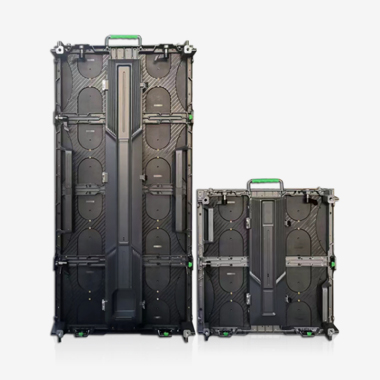
Lightweight Materials: Panels use lightweight aluminum alloys for the frame and often carbon fiber or advanced composites for the substrate to minimize weight without sacrificing rigidity.
Magnetic Attachment: The industry standard for high-end rental is quick-assembly magnetic locking systems. Instead of screws, powerful neodymium magnets embedded in the panel frame allow technicians to "snap" panels into place on the support structure in seconds, drastically reducing installation and de-rigging time.
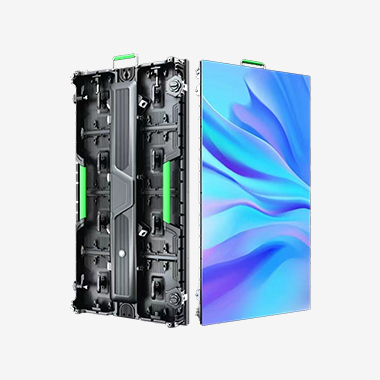
Front Serviceability: All critical components—LED modules, power supplies, receiving cards, and fans—are accessible and replaceable from the front of the panel. This is a non-negotiable feature for rental, as it eliminates the need to access the rear of the wall, which is often impossible once the structure is built.
Integrated Design: Modern rental panels are highly integrated. The PCB, LEDs, power supplies, and data connectors are all designed as a cohesive unit to ensure reliability and simplify troubleshooting.
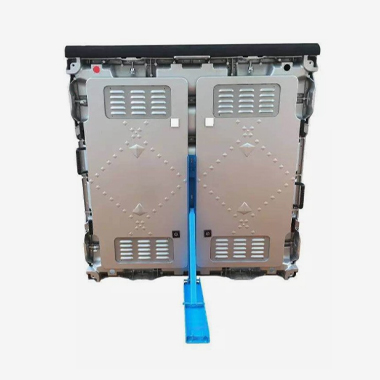
The Cabinet and Support Structure: Rental systems typically use a lightweight, modular frame that accepts the individual panels.
Truss-Based Systems: Panels are mounted onto light-duty, modular aluminum trussing that is quick to assemble and provides a rigid framework for flying or ground-supporting the wall.
Self-Contained "Magic" Frames: Many systems use a proprietary lightweight frame that panels magnetically attach to. These frames often have integrated handles and quick-lock mechanisms for connecting frames together.
Creative Shapes: Beyond flat walls, the rental market offers flexible LED panels (for curves and draping), hexagons, triangles, and other creative shapes that can be assembled into 3D video sculptures.
Robust Connectivity: The constant plugging and unplugging of cables is a major point of wear and tear.
Locking Connectors: Data lines use robust, locking Ethernet connectors like EtherCON, which feature a metal shell that screws into the panel, preventing accidental disconnection. Power inputs use locking connectors like PowerCON to ensure a secure connection.
Redundant Data Paths: High-end systems often feature redundant data loops. If a cable or receiving card fails, the data can re-route through an alternative path, preventing a large section of the wall from going dark.
Protective Transportation: The investment is protected by custom-designed, shock-absorbing flight cases. Each panel has its own dedicated space in a wheeled case, with foam padding that perfectly contours to the panel's shape, protecting the fragile LEDs and connectors during transit. These cases are stackable, weather-resistant, and designed for the rough handling of airport cargo holds and truck loading bays.
The "Rig-able, Strike-able, Truck-able" Philosophy:
This mantra guides every design decision:
Rig-able: The system must be easy and fast to install. Magnetic panels, color-coded cables, and intuitive locking mechanisms allow a skilled crew to build a massive wall in hours, not days.
Strike-able: It must be just as quick and safe to dismantle. The same magnetic systems allow for rapid deconstruction.
Truck-able: The system must pack down into a compact, durable, and logical footprint to minimize truck space, which is a major cost in event production. The weight and size of the packed cases are meticulously calculated.
The construction of a rental LED wall is therefore a testament to practical engineering. It prioritizes the well-being of the crew and the equipment throughout the entire lifecycle of the product, ensuring that the technology can deliver peak performance show after show, year after year, despite a life on the road.
The working principles of a high-resolution rental LED wall are engineered for one ultimate goal: to deliver a broadcast-quality, visually perfect image in the unpredictable, high-pressure environment of a live event. This demands not just the basic functionality of an LED display, but exceptional speed, precision, and reliability to avoid any visible glitches during a performance.
The High-Speed, Redundant Data Chain:
Signal Acquisition and Management: A live event involves multiple high-bandwidth video sources: media servers playing back pre-rendered content, live camera feeds for IMAG (Image Magnification), graphics machines for lower-thirds, and presentation laptops. These signals are fed into a video switcher, where a director or vision engineer selects the source to be sent to the LED wall. The output is then routed to the dedicated LED video processor.
The Video Processor: The Intelligent Core: This is the technological brain of the operation. An event-grade video processor (from manufacturers like Brompton, NovaStar, or Christie) is a specialized supercomputer that performs several critical functions in real-time:
Advanced Scaling: It scales the incoming video signal to match the native, and often non-standard, resolution of the LED wall (e.g., scaling a 4K signal to a wall that is 5120x2160 pixels).
Calibration Application: It applies a complex calibration file that performs per-pixel correction for color and brightness. This ensures absolute uniformity across the entire display, making thousands of individual panels appear as one seamless canvas.
Warping and Blending: For curved walls or multi-surface installations, the processor uses advanced algorithms to geometrically warp the image so it looks perfectly correct from the audience's sightlines. It can also blend content across multiple processor outputs.
HDR and Color Management: It manages high dynamic range (HDR) content and converts color spaces to ensure the content looks as the creator intended on the specific LED technology.
Data Transmission and Redundancy: The processed data is sent from the processor to the LED panels via CAT6 or fiber optic cables. Redundancy is paramount. A common setup is a primary and a backup processor running in sync. The LED panels can be configured to automatically switch to the backup signal if the primary signal is lost, ensuring the show continues without interruption.
Pixel Driving: The Imperative of High Refresh Rate: Inside each panel, receiving cards and driver ICs take the data and control the LEDs. For rental, two metrics are crucial:
High Refresh Rate: This is the number of times per second the display redraws the image. A low refresh rate (e.g., 60Hz) causes flickering, which may be invisible to the naked eye but is captured brutally by professional video cameras as rolling black bars. Rental walls feature very high refresh rates (≥3840Hz) to ensure completely flicker-free performance for both live audience and broadcast, a non-negotiable requirement for television.
High Gray Scale Depth: 16-bit or higher processing provides over 65,000 levels of brightness per color. This is essential for producing smooth gradients and eliminating "color banding"—visible stepping in what should be a smooth blend of color, such as in a sunset sky.
Monitoring and Control: Throughout the event, a video engineer monitors the system from a console. Specialized software provides a real-time dashboard showing the status of every panel in the wall—temperature, voltage, and signal integrity. This allows for proactive intervention before a minor issue becomes a major failure.
The working principle, therefore, is about creating a robust, intelligent, and incredibly fast pipeline that takes multiple sources of video, perfects them, and distributes them with flawless reliability to millions of individual pixels, all operating in perfect synchrony to create a single, stunning, and uninterrupted visual experience.
The rental model for high-resolution LED walls offers a compelling set of advantages that have made it the dominant solution for high-end events. However, these advantages are counterbalanced by significant technical, logistical, and financial challenges that must be expertly managed by rental companies and production teams.
Advantages:
Access to Cutting-Edge Technology: This is the primary advantage for clients. The rental model allows productions to use the latest, highest-resolution technology without the massive capital investment and risk of obsolescence. Rental houses continuously refresh their inventory to stay competitive, meaning clients always have access to the best available technology for their project.
Unmatched Flexibility and Scalability: A production can scale its visual canvas up or down for each event. A corporate client might need a large wall for a major product launch and a smaller one for a roadshow. A tour can adjust its production based on venue size. The rental model provides this flexibility effortlessly, something ownership cannot.
Professional Expertise and Support: When you rent a LED wall, you are not just renting equipment; you are renting expertise. The rental company provides highly trained crews for installation, operation, and dismantling. They provide technical directors, video engineers, and content programmers who ensure the technology performs flawlessly, freeing the creative team to focus on the show.
Cost-Effectiveness for Temporary Needs: For one-off events or tours, renting is vastly more economical than purchasing. It converts a large capital expenditure (CapEx) into a manageable operational expenditure (OpEx). It also eliminates costs associated with storage, insurance, maintenance, and depreciation of the assets.
Reliability and Reduced Risk: Rental companies maintain their equipment to the highest standards. Their business depends on reliability. They carry extensive spares and have the expertise to troubleshoot and solve problems quickly. This significantly reduces the technical risk for the production company, which is paramount for live events with no room for error.
Challenges:
High Cost of Rental: While cheaper than buying, renting high-resolution LED is still a significant expense. The cost includes not just the equipment, but also the labor, transportation, and insurance. This can put it out of reach for smaller-budget productions.
Extreme Logistical Complexity: Coordinating the transportation, installation, and operation of a large LED wall is a major logistical undertaking. It requires precise scheduling, specialized trucks, and a large, skilled crew. Any delay in the schedule can have cascading effects and incur massive overtime costs.
Technical Complexity and Integration: Integrating an LED wall into a live event is technically complex. It requires seamless coordination between the video, lighting, and audio departments. Content must be created at the exact resolution of the wall and often needs to be programmed with precise cueing. A deep understanding of signal flow, networking, and calibration is essential.
Content Creation Demands: The resolution and impact of a high-resolution wall demand equally high-quality content. Low-resolution or poorly designed graphics will look worse on a great screen than on a poor one. This creates an ongoing need and cost for professional motion graphics and content creation tailored to the specific canvas.
Physical Logistics and Rigging: The wall, its structure, and all the associated cases are heavy and bulky. They require significant truck space and freight costs. Rigging a large wall overhead requires certified riggers and a thorough understanding of weight loads and safety factors, adding another layer of complexity and risk.
For those who can manage the cost and complexity, the advantages of the rental model are undeniable. It provides a risk-managed, expert-driven pathway to achieving the highest level of visual production value, making it the backbone of the modern event industry.
The application of high-resolution rental LED walls has expanded far beyond the concert stage, becoming the visual foundation for a vast array of experiences that demand impact, flexibility, and reliability. Concurrently, the technology is evolving at a breakneck pace, driven by the relentless demands of creators and the innovations of manufacturers.
Diverse Applications:
Concert Touring and Music Festivals: The classic application. LED walls provide the dynamic visual backdrop that defines an artist's tour, displaying bespoke content, live IMAG feeds, and interactive graphics that sync perfectly with the music.
Corporate Events: Product launches, annual meetings, and sales conferences use LED walls to build brand presence, ensure clear visibility for presentations, and create a "wow" factor that reinforces a company's image as innovative and authoritative.
Broadcast Television and Virtual Production: This is a rapidly growing area. LED walls are used as in-studio backgrounds for news and talk shows. Most significantly, they are the core of "virtual production" (as seen in The Mandalorian), where photorealistic, real-time-rendered environments are displayed on massive LED volumes, allowing actors to perform within the scene and cameras to capture the final shot in-camera, eliminating green screens.
Theatre and Performing Arts: Broadway and West End productions use fine-pitch LED to create moving, digital scenery that can transform the stage from a literal location to an abstract emotional space in seconds, enhancing storytelling in powerful new ways.
Experiential Marketing and Trade Shows: Brands use rental LED to create immersive, eye-catching booths at expos, using the technology for product demos, interactive experiences, and social media walls to engage attendees.
Future Trends:
The Rise of Virtual Production Volumes: The use of LED walls for film and high-end broadcast will become more widespread and accessible. This will drive demand for larger volumes, higher brightness (to combat on-set lighting), and better performance for in-camera visual effects (VFX), such as improved color accuracy and reflectance handling.
Adoption of MicroLED Technology: MicroLED, which uses microscopic inorganic LEDs, is the holy grail. It promises higher brightness, better efficiency, finer pixel pitches, and improved reliability. As manufacturing costs decrease, MicroLED will become the standard for high-end rental, enabling even more seamless and breathtaking visuals.
Increased Integration with XR (Extended Reality): LED walls will be combined with real-time game engines and camera tracking to create Extended Reality sets. This allows for the seamless blending of physical and digital elements, where graphics can appear to extend beyond the physical boundaries of the screen, creating immersive illusions for both live and broadcast audiences.
Lighter, Thinner, and More Flexible Designs: The pursuit of lower weight and greater creative flexibility will continue. We will see thinner panels with higher pixel density and more robust flexible/curved options that allow for easier creation of immersive environments like tunnels and domes.
Smarter Panels and Simplified Workflows: Panels will become more intelligent, with built-in system-on-chip (SoC) technology that simplifies control and reduces the need for external processors for basic functions. Automated calibration and setup via AI and machine learning will further reduce setup time and technical complexity.
Sustainability Focus: The industry will increasingly focus on reducing its environmental footprint through more energy-efficient panels, the use of recyclable materials, and logistics optimization to reduce transportation emissions. The rental model itself is inherently sustainable by maximizing the use and lifespan of each asset.
The application landscape for rental LED is one of constant expansion and deepening integration. It is moving from being a tool for display to being a fundamental infrastructure for creating entire realities, pushing the boundaries of what is possible in live and recorded entertainment.
Conclusion
In conclusion, the high-resolution LED rental display wall has cemented its role as the indispensable engine of modern experiential production. It is far more than a simple display; it is a sophisticated, mobile, and incredibly powerful tool that has redefined the visual vocabulary of live events, broadcasting, and storytelling. Its development has been a triumph of engineering, overcoming the immense challenges of durability, image quality, and logistical complexity to deliver reliable brilliance night after night, on stages across the globe.
We have explored the specialized design and construction that prioritizes speed, weight, and resilience—a philosophy built around the relentless "rig, strike, truck" cycle of the rental world. The working principles reveal a commitment to flawless, broadcast-ready performance, governed by high-speed data processing, rigorous calibration, and redundant systems that ensure there is no room for error. The advantages of the rental model are compelling: access to top-tier technology, expert support, and ultimate flexibility. Yet, these are tempered by the challenges of high costs, immense complexity, and demanding logistics.
The applications continue to multiply, from creating the iconic looks of world tours to building the virtual worlds of next-generation filmmaking. And as we look to the future, the trends point toward even more integration, intelligence, and immersion. The convergence of LED with real-time rendering, camera tracking, and AI will further blur the lines between the physical and digital, opening new creative frontiers.
Ultimately, the high-resolution rental LED wall is a testament to a collaborative industry dedicated to the pursuit of spectacle. It empowers artists, technologists, and brands to create shared moments of wonder, emotion, and awe. It is a technology that serves the story, then packs away into its cases, ready to help tell the next one. In a world of ephemeral experiences, it has become the most vital and vibrant canvas of all.


Copyright © 2026 Shenzhen Cogo Technology Co.,Ltd.
All Rights Reserved

 Previous article