




 Chat Now
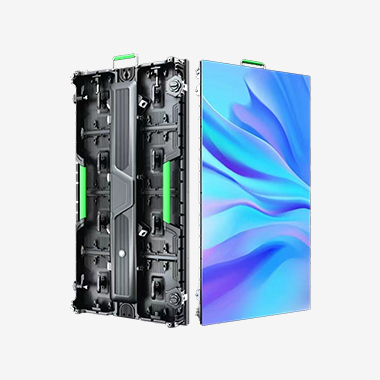
High resolution outdoor media LED display walls represent a advanced segment of digital out-of-home (DOOH) technology, defined by pixel pitches of P1.2–P6 (far smaller than standard outdoor LED walls’ P8–P16). This tight pixel density delivers ultra-clear visuals—4K or even 8K resolution for large installations—enabling detailed content (e.g., high-definition videos, intricate graphics) visible to audiences 1–10 meters away, making them ideal for dense urban areas, pedestrian plazas, and retail districts.
Unlike lower-resolution counterparts, these walls balance high clarity with outdoor durability: they maintain IP65+ ingress protection (resisting rain/dust), 5,000–8,000 nits brightness (cutting sunlight glare), and 120°+ viewing angles (ensuring visibility across crowds). Key traits include high refresh rates (600Hz+ for flicker-free camera compatibility) and energy-efficient SMD RGB LEDs (reducing power use by 25–40% vs. older high-res models).
Adoption is driven by urban densification—cities seeking to enhance public spaces with immersive visuals—and brand demand for premium advertising. For example, luxury brands use them to display high-def product close-ups, while museums deploy them for outdoor art projections. Market data shows the high-res outdoor LED segment growing at 18% annually, with Asia-Pacific and North America leading adoption due to smart city investments. These walls are no longer just ads—they’re cultural and commercial hubs, blending technology with urban life.
Design prioritizes three pillars: pixel density optimization, outdoor durability, and thermal management—critical for balancing clarity with harsh environmental conditions.
Core Design Choices:
Pixel Pitches: P1.2–P6 (e.g., P2.5 for 4K resolution in a 2x1.1m wall) use micro-SMD LEDs (0.5–1mm die size) to fit more pixels per square meter. These LEDs have 180–220 lm/W efficacy, ensuring brightness without excessive power use.
Substrates & PCBs: Thin, flexible FR4 PCBs (0.8–1mm thick) with 3oz copper layers enhance heat dissipation and corrosion resistance (critical for coastal areas). Some models use ceramic substrates for better thermal conductivity, ideal for high-density setups.
Durability Components:
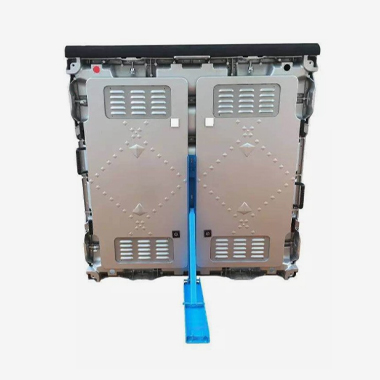
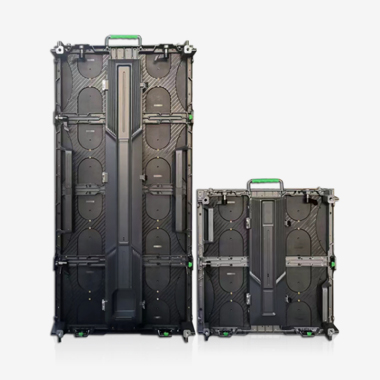
Enclosures: Aluminum alloy (6061-T6) frames with double-layer EPDM gaskets (IP65+ rated) prevent water/dust ingress. Front panels use 4–6mm anti-reflective tempered glass (AR coating reduces glare by 30%) and scratch-resistant polycarbonate for high-traffic zones.
Structural Support: Wall-mounted brackets (for building exteriors) or low-profile trussing (for plazas) handle weight (8–12kg/m², lighter than standard LEDs) and wind loads (up to 120 km/h). Vibration dampeners absorb traffic or crowd shocks.
Thermal Management:
Passive cooling (aluminum heat sinks with micro-fins) is standard; hot climates add low-noise fans (5–8W) or heat pipes. Temperature sensors trigger cooling at 35°C, preventing thermal droop (which degrades resolution).
Manufacturing includes 500-hour temperature cycle tests (-20°C to 65°C) and pixel uniformity checks (variation <3%) to ensure consistent clarity.
Functionality relies on four integrated systems, optimized for high pixel density and outdoor performance:
1. LED Illumination: Micro-SMD RGB LEDs (0.5–1mm) use electroluminescence—red (620–660nm), green (520–560nm), blue (440–480nm) dies emit light when 5V DC current passes through. Current adjustment (via PWM, pulse-width modulation) creates 16.7M colors. High efficacy (180–220 lm/W) delivers 5,000–8,000 nits brightness, while AR glass ensures clarity in sunlight.
2. Power Distribution: 92%+ efficient SMPS with PFC (power factor ≥0.98) convert AC to DC. Daisy-chained power cables (24AWG copper) minimize voltage drop (≤2%) across large walls. Redundant supplies (1 backup/3 primaries) prevent downtime—critical for 24/7 operations.
3. Content Processing:
Sending Cards: 10Gbps Ethernet sending cards split 4K/8K content into pixel-specific signals, avoiding data bottlenecks.
Receiving Cards: Per-panel receiving cards (with 16-bit color depth) calibrate brightness/color, ensuring uniform resolution. Some use FPGA chips for real-time pixel correction (masking dead pixels).
4. Environmental Adaptation:
Light sensors adjust brightness (1,000–8,000 nits) based on ambient light, saving 30–40% energy at night. Humidity sensors trigger dehumidifiers in high-moisture areas, preventing PCB corrosion. Cloud-based software enables remote resolution tweaks (e.g., lowering to 1080p during low-traffic hours) to reduce power use.
Advantages:
Superior Visual Clarity: 4K/8K resolution enables detailed content—luxury brands display fabric textures, museums show art brushstrokes—driving 50% higher audience engagement vs. standard LEDs (per OAAA studies).
Flexible Branding: High resolution supports multi-zone content (e.g., split a 10m wall into 3 ads with no clarity loss), increasing ad revenue for operators.
Energy Efficiency: Micro-SMD LEDs and adaptive brightness cut power use by 25–40% vs. older high-res models. A 20m² 4K wall uses ~18,000 kWh/year (\(2,160 at \)0.12/kWh), 30% less than a non-efficient equivalent.
Camera Compatibility: 600Hz+ refresh rates eliminate flicker in photos/videos—critical for events or social media sharing, expanding brand reach.
Challenges:
Higher Upfront Costs: \(3,000–\)6,000/m² (vs. \(1,500–\)3,000 for standard LEDs) due to micro-LEDs and precision components. A 20m² wall costs \(60k–\)120k, limiting small businesses.
Maintenance Complexity: Dead pixels (common in high density) require specialized tools to replace; repairs cost \(200–\)500 per module. Quarterly cleaning (\(800–\)1,500) is needed to preserve clarity.
Heat Management Risks: Poor cooling degrades resolution—hot climates need extra fans, adding \(500–\)1,000 to installation costs.
Content Requirements: 4K/8K content creation needs professional tools (\(1,000–\)5,000 per video), a barrier for local advertisers.
Applications:
Urban Pedestrian Zones: City centers (e.g., Singapore’s Orchard Road) use 4K walls (P2.5–P4) for immersive ads—fashion brands stream runway shows, cafes display food close-ups. Plazas deploy curved high-res walls for art installations, attracting tourists.
Retail Exteriors: Luxury stores (e.g., Louis Vuitton, Apple) use P1.2–P2 walls to showcase product details—watch mechanics, smartphone screens—driving 35% higher foot traffic (per retail studies).
Cultural & Event Venues: Museums (e.g., Louvre Abu Dhabi) project high-res art replicas outdoors; concert venues use 8K walls for live stream close-ups, enhancing fan experience.
Transport Hubs: Airports (e.g., Seoul Incheon) use P3–P4 walls for 4K flight updates and brand ads, ensuring clarity for crowds 5–10 meters away.
Future Trends:
Micro-LED Adoption: Sub-P1 micro-LEDs (0.1–0.5mm) will enable 16K resolution, with 250+ lm/W efficacy—reducing power use by 50%.
AI Content Optimization: AI will upscale 1080p content to 4K/8K, lowering creation costs. It will also adjust resolution based on crowd density (e.g., 8K during peak hours, 4K off-peak).
Solar Integration: Thin-film solar panels on enclosures will power small walls (5–10m²), ideal for remote plazas.
Touch & AR Integration: Transparent high-res walls with touch sensors will let pedestrians interact—e.g., a retail wall where users “try on” clothes via AR.
Conclusion
High resolution outdoor media LED display walls have redefined outdoor visual communication, merging ultra-clear 4K/8K visuals with rugged outdoor design. Their ability to deliver detailed, engaging content in dense urban spaces has made them a staple for luxury brands, cities, and cultural venues—turning ordinary walls into immersive hubs.
While higher upfront costs and maintenance complexity exist, advancements like micro-LEDs and AI content optimization are lowering barriers. For example, micro-LEDs will cut costs by 30% by 2027, making high resolution accessible to more users. Energy efficiency and camera compatibility further enhance their value, aligning with sustainability goals and social media-driven branding.
Looking ahead, these walls will be central to smart cities—integrating with IoT for real-time data (e.g., 4K traffic feeds) and AR for interactive experiences. They are not just displays but catalysts for urban innovation, proving that clarity and durability can coexist to create meaningful connections between brands, communities, and public spaces. As technology evolves, high resolution outdoor LED walls will remain at the forefront of DOOH media, shaping the future of outdoor communication.


Copyright © 2026 Shenzhen Cogo Technology Co.,Ltd.
All Rights Reserved

 Previous article