




 Chat Now
Outdoor full-color LED display signage represents a revolutionary leap in visual communication, advertising, and public information dissemination. These dynamic, eye-catching screens have transformed city skylines, sporting arenas, retail spaces, and public squares, replacing static billboards and printed posters with vibrant, moving, and interactive digital content. An outdoor LED sign is not merely a screen; it is a sophisticated piece of electronic and structural engineering designed to withstand the elements while delivering stunning visual performance 24/7.
At its core, an outdoor LED display is a flat panel display that uses an array of light-emitting diodes (LEDs) as pixels to create a video screen. The "full-color" capability is achieved by combining red, green, and blue (RGB) LEDs into a single pixel. By varying the intensity of these three primary colors, the display can produce millions of hues, enabling it to show high-fidelity images, videos, animations, and text. The transition from monochrome and dual-color signs to full-color technology marked a paradigm shift, turning signs from simple message boards into powerful, engaging media platforms.
The proliferation of this technology is driven by its undeniable impact. For advertisers, it offers unparalleled flexibility; a single digital billboard can host multiple ads, can be updated instantly from a remote location, and can run time-sensitive campaigns. For venues like stadiums, it enhances the spectator experience with instant replays, live feeds, and interactive content. For municipalities, it serves as a critical tool for broadcasting emergency alerts, public service announcements, and community news.
The market for outdoor LED displays is vast and diverse, encompassing everything from massive, freeway-dominating digital billboards to more modest-sized signage for storefronts, gas stations, and banks. The technology has become more accessible and reliable over the years, leading to its widespread adoption across the globe. However, creating a display that performs brilliantly in broad sunlight, torrential rain, gusty winds, and freezing temperatures requires a meticulous integration of hardware, software, and mechanical design.
This overview sets the stage for a deeper exploration of what makes these technological marvels tick. From the intricate design and robust construction to the underlying working principles, and from their significant advantages to the challenges they must overcome, outdoor full-color LED displays are a testament to human ingenuity in the digital age. They are more than just signs; they are the dynamic, pulsating heart of modern urban visual culture.
The design and construction of an outdoor full-color LED display are feats of engineering that balance optical performance with extreme environmental durability. Unlike their indoor counterparts, outdoor displays must be built to resist moisture, dust, UV radiation, wide temperature fluctuations, and physical impacts. Every component, from the smallest LED to the largest structural beam, is selected and designed with this harsh operating environment in mind.
Core Components:
LED Modules: These are the fundamental building blocks of the display. A module is a printed circuit board (PCB) populated with a precise array of RGB LED pixels, drive ICs (integrated circuits), and other necessary components. The LEDs used are high-brightness types, capable of producing over 5,000 nits (a unit of luminance) to ensure visibility even in direct sunlight. The modules are designed with a specific pixel pitch—the distance (in millimeters) between the centers of two adjacent pixels. For outdoor applications, pixel pitches typically range from P10 (10mm) for very large, viewing-distance billboards to as fine as P4 (4mm) for closer-viewing applications. A lower pixel pitch means higher resolution but also significantly higher cost.
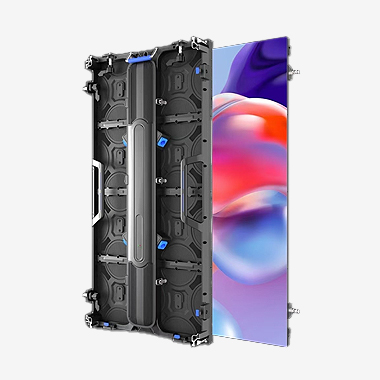
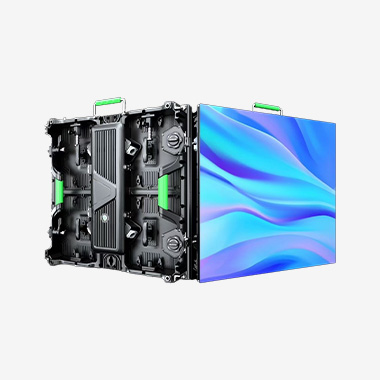
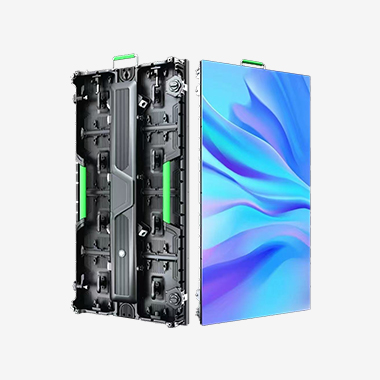
Cabinet Structure: Multiple LED modules are mounted into a rigid, weatherproof cabinet. These cabinets, typically made of die-cast aluminum or heavy-gauge steel, are engineered for strength, lightness, and corrosion resistance. They house the modules, power supplies, and control systems. Critical to the cabinet design is its IP (Ingress Protection) rating, such as IP65 or IP67. This rating certifies that the cabinet is completely dust-tight (6) and protected against powerful jets of water (5) or even temporary immersion (7). Cabinets feature gaskets, seals, and special drainage systems to prevent water ingress.
Power Supply Units (PSUs): LEDs require low-voltage direct current (DC), but they are powered from high-voltage alternating current (AC) mains. Therefore, each cabinet contains robust, switching power supplies that convert AC to DC. These PSUs are designed for high efficiency to minimize heat generation and are built to handle voltage spikes and fluctuations common in outdoor settings. Redundancy is often built-in, with multiple PSUs per cabinet to ensure the display remains operational if one unit fails.
Control System: This is the "brain" of the display. It consists of:
Sending Card: A hardware card installed in a PC or dedicated video controller that processes the input video signal and prepares the data for transmission to the display.
Receiving Card: Mounted inside each cabinet, these cards receive data from the sending card and control a specific section of the display, driving the LEDs by sending precise signals to the scan drivers and constant current ICs on the modules.
HUB Boards: These distribute power and data from the receiving cards to the individual LED modules.
Structural Support and Frame: The individual LED cabinets are mounted onto a strong, custom-engineered support structure. This structure, often made of steel, must be designed to withstand local wind loads, seismic activity, and the sheer weight of the display itself. Engineering calculations are critical to ensure the structure's integrity and safety over decades of service.
Advanced Design Features:
Auto-Dimming Sensors: To optimize power consumption and viewing comfort, outdoor displays are equipped with ambient light sensors. These sensors automatically adjust the brightness of the screen—ramping it up to maximum during bright daylight and dimming it significantly at night.
Heating and Cooling Systems: Temperature management is vital. In cold climates, cabinet heaters prevent condensation, which can short-circuit electronics. In hot climates, efficient cooling systems, such as axial fans and heat sinks, are essential to dissipate the heat generated by the LEDs and PSUs, preventing overheating that can reduce LED lifespan.
Front Serviceability: Modern designs often allow for "front-service" access. Technicians can replace modules, power supplies, and fans from the front of the display, eliminating the need for dangerous and expensive access behind the sign, especially on large billboard structures.
The construction process is a precise operation involving the assembly of cabinets, meticulous wiring, calibration of modules for color consistency, and rigorous testing before final installation. The result is a seamless, monolithic visual canvas that is as rugged as it is brilliant, capable of delivering its message come rain, shine, or storm.
The operation of an outdoor full-color LED display is a complex but elegant symphony of data processing, electronic control, and optoelectronics. The process can be broken down into a sequence of steps that transform a standard video signal into the dazzling light show we see on the screen.
Step 1: Signal Input and Processing
The process begins with a video source—a laptop, media player, or live feed—sending a video signal (e.g., HDMI, DVI, SDI) to a video controller or sender card. This controller is a specialized computer whose primary job is to "map" the incoming video signal to the specific physical dimensions and resolution of the LED display. Since the native resolution of an LED wall (e.g., 1920x1080 pixels) often doesn't match the input signal perfectly, the controller performs real-time scaling. It also processes the color data, converting it into a format optimized for LED control.
Step 2: Data Transmission
The processed video data is packetized and transmitted from the sender card to the array of receiving cards mounted on the display cabinets. This transmission typically happens over high-speed, noise-resistant cabling like CAT5e/6 (using protocols like Ethernet) or fiber optic cables, the latter being essential for long-distance runs between the control room and the display, as they are immune to electromagnetic interference.
Step 3: Data Distribution and Pixel Driving
Each receiving card is responsible for controlling a specific section of the display (e.g., 64x32 pixels). The card takes its packet of data and distributes it to the driver ICs (Integrated Circuits) located on the individual LED modules. The two most critical types of driver ICs are:
Constant Current Drivers: These ensure that each LED receives a consistent, precise current regardless of fluctuations in voltage or temperature. This is paramount for maintaining uniform brightness and color across the entire display and for protecting the LEDs from current spikes that can burn them out.
Scan Drivers: To reduce the number of required driver ICs, most LED displays use a multiplexing technique called "scanning." Instead of driving each pixel row individually all the time, the rows are scanned (activated) sequentially at a very high speed. A common configuration is 1/16 scan, meaning 16 rows are grouped, and each is activated for 1/16th of the time. The human eye's persistence of vision blends this rapid switching into a stable, flicker-free image.
Step 4: Color Creation (PWM)
An LED's brightness is not controlled by varying the voltage (which would change its color); it is controlled by Pulse-Width Modulation (PWM). This technique rapidly switches the LED on and off. The ratio of "on" time to "off" time (the duty cycle) determines the perceived brightness. A 50% duty cycle appears half as bright as a 100% duty cycle. Each red, green, and blue sub-pixel has its own PWM control. By independently adjusting the PWM for each color in a pixel, the driver IC can mix them to create any desired color. The "color depth" (e.g., 16-bit processing) defines how many gradations of brightness are available for each color, enabling smooth color gradients and eliminating "color banding."
Step 5: Calibration and Correction
A raw LED display would suffer from color and brightness inconsistencies due to minor variations in LED manufacturing. To achieve a perfectly uniform image, a sophisticated calibration process is employed. A high-precision camera measures the color output (chromaticity and luminance) of every single pixel on the display. This data is used to create a correction file that is loaded onto the controller. For every frame of video, the controller adjusts the output signal for each pixel to compensate for its unique characteristics. This ensures that a command to display "pure white" results in the exact same shade of white across the entire screen.
This entire process—from signal input to light emission—happens in a fraction of a second, repeated for every frame of video (typically 60 times per second or more). The seamless coordination of thousands of components, governed by precise electronic principles, is what allows these giant digital canvases to deliver such compelling and reliable visual performances.
Outdoor full-color LED displays offer a compelling array of advantages that have cemented their status as the premier medium for modern outdoor advertising and communication. However, their deployment is not without significant challenges that must be carefully managed.
Advantages:
Unmatched Visibility and Impact: The high brightness (≥5000 nits) ensures 24/7 operation, cutting through glare to grab attention day and night. The dynamic nature of moving video and animation is far more engaging than static imagery, leading to higher recall rates and a greater emotional impact on the audience.
Unprecedented Flexibility and Agility: Content can be changed instantly and remotely from anywhere in the world. This allows advertisers to run dayparting (showing coffee ads in the morning and dinner specials in the evening), respond to real-time events, launch flash sales, and display live social media feeds. A single digital sign can host multiple advertisers, maximizing revenue potential.
Superior ROI and Environmental Benefits: While the initial investment is high, the long-term return on investment is strong. The costs of printing, shipping, and installing physical vinyl billboards are eliminated. This also translates into an environmental benefit, reducing material waste, chemical use, and transportation emissions associated with traditional print campaigns.
Enhanced Interactivity and Integration: LED displays can be integrated with live data feeds, cameras, and sensors to create interactive experiences. They can show live news, weather, sports scores, or traffic information. Touchscreens and motion sensors can allow passersby to interact with the content, deepening engagement.
Reliability and Long Lifespan: Modern LED technology is incredibly robust. High-quality LEDs have a long operational lifespan (often 100,000 hours to half-brightness). With proper construction and thermal management, an outdoor LED display can provide reliable service for a decade or more.
Challenges:
High Initial Capital Investment: The upfront cost of a high-resolution outdoor LED display, including the structure, electronics, and professional installation, is substantial. This can be a significant barrier to entry for smaller businesses.
Content Management Demands: The power of a digital sign is only realized with high-quality, frequently refreshed content. This creates an ongoing need for creative content production, a media scheduling strategy, and dedicated personnel or services to manage the system, adding to the operational cost.
Technical Maintenance and Downtime: While reliable, these are complex electronic systems with thousands of components that can fail. LEDs can degrade, power supplies can burn out, and connectors can corrode. Maintaining a team of skilled technicians for troubleshooting and repairs is essential to minimize downtime. Front-serviceable designs have helped, but maintenance remains a critical consideration.
Regulatory and Community Concerns: The bright, dynamic nature of these signs has led to regulations in many municipalities governing their size, brightness (especially at night), placement, and content (e.g., limiting animation cycles to reduce driver distraction). There is also ongoing debate about "light pollution" and "visual pollution," with some communities arguing that prolific digital signs contribute to a cluttered and overly commercialized urban environment.
Energy Consumption: Despite improvements in efficiency, a large-format LED display is a significant consumer of electricity. While better than the energy footprint of constantly printing and shipping vinyl, the operational carbon footprint is still a consideration, though it can be mitigated with auto-dimming features and the use of renewable energy sources.
Balancing these powerful advantages against the very real challenges is key to a successful deployment. For most major brands, venues, and municipalities, the benefits of engagement, flexibility, and long-term value overwhelmingly justify the investment and effort required to overcome the hurdles.
The applications for outdoor full-color LED displays have expanded far beyond their original use in advertising, permeating nearly every aspect of public and commercial life. Concurrently, the technology itself is rapidly evolving, pointing toward an even more integrated and immersive future.
Diverse Applications:
Advertising & Branding: The core application. From Times Square's iconic brand spectacles to digital billboards along highways and dynamic signage on retail stores and gas stations, this remains the largest market.
Sports and Entertainment Venues: Jumbotrons and ribbon boards in stadiums and arenas are indispensable. They enhance the live experience with instant replays, live camera feeds, player stats, Kiss Cams, and interactive games for the audience.
Public Information and Wayfinding: Airports, train stations, and bus terminals use LED displays for real-time schedule updates, gate information, and emergency announcements. Cities use them for traffic management, Amber alerts, and public service announcements.
Broadcast and Stage Backgrounds: Television studios and live concert stages use high-resolution LED walls as dynamic backdrops, allowing for virtual sets and breathtaking visual effects that can be changed in an instant between scenes or songs.
Architectural Integration and Art: "Media facades" are becoming increasingly common, where LED elements are integrated into the exterior of buildings, turning architecture into a dynamic canvas for artistic expression, light shows, and cultural events.
Future Trends:
Higher Resolution with Finer Pixel Pitches: As LED chip technology advances and becomes more affordable, the trend is toward smaller pixel pitches for outdoor applications. We are now seeing "Fine-Pitch" and even "Ultra-Fine-Pitch" (e.g., P2.5 to P1.2) LEDs being used in semi-outdoor and fully outdoor environments where viewing distances are shorter, enabling incredibly detailed images.
Transparent LED Technology: Transparent LED screens, which offer a see-through effect, are a game-changer for retail storefronts and building lobbies. They allow people to see into the store while overlaying dynamic digital content onto the glass, blending the physical and digital worlds seamlessly.
Curved, Flexible, and Irregular Shapes: The development of flexible LED modules allows for curved screens, cylindrical columns, and even波浪-shaped displays. This breaks the mold of the traditional flat rectangle, allowing for more creative and architecturally sympathetic installations.
Integration with Augmented Reality (AR) and AI: The future lies in interactivity and context-awareness. Displays will use integrated cameras and AI to analyze their audience—demographics, gaze, engagement—and tailor content in real-time. AR apps could allow users to point their phones at a display to unlock additional content, participate in games, or make purchases.
Improved Sustainability: The drive for lower power consumption will continue. This will be achieved through more efficient LED chips, better power supplies, and smarter management systems that can put sections of the display into low-power sleep mode when not in active use. The use of recyclable materials in construction will also increase.
Standardization and Simplified Control: As the market matures, more plug-and-play systems and standardized control protocols (like HDMI 2.1 and SDI) will make installation, configuration, and operation simpler and more accessible to a wider range of users.
The outdoor LED display is evolving from a standalone broadcast device into an intelligent node within a larger network of urban data and experience. It is becoming a interactive, context-aware, and beautifully integrated medium that will continue to redefine our visual and urban landscape.
Conclusion
In conclusion, the outdoor full-color LED display is far more than a simple technological product; it is a dynamic and powerful medium that has fundamentally reshaped the aesthetics and economics of visual communication in public spaces. Its journey from a novel gadget to an indispensable tool for advertisers, entertainers, and city planners is a story of relentless innovation in optics, electronics, materials science, and software engineering.
We have explored the intricate design and rugged construction that allow these displays to defy the elements, the sophisticated principles of pulse-width modulation and data handling that bring them to life, and the double-edged sword of their immense advantages and accompanying challenges. Their applications are vast and growing, from dominating commercial advertising to enriching public life and artistic expression.
Looking forward, the trajectory is clear. The pixel will continue to shrink, the forms will become more fluid and integrated, and the intelligence embedded within will become more profound. The future outdoor LED display will not just broadcast; it will listen, analyze, and interact. It will be a seamless, responsive, and sustainable component of the smart city infrastructure, capable of delivering personalized and contextually relevant information in the most engaging way imaginable.
While challenges related to cost, regulation, and light pollution require ongoing dialogue and thoughtful management, the value proposition of this technology is undeniable. It offers an unmatched combination of impact, flexibility, and longevity. As the technology continues to advance and become more accessible, its role as a central pillar of our shared visual experience will only solidify. The outdoor full-color LED display has earned its place as the luminous, dynamic heartbeat of the modern urban landscape, and its light is only getting brighter.


Copyright © 2026 Shenzhen Cogo Technology Co.,Ltd.
All Rights Reserved

 Previous article