




 Chat Now
The urban and suburban landscape is continuously evolving, and one of the most dominant visual features of the 21st-century streetscape is the outdoor fixed installation LED display screen. These colossal digital canvases have revolutionized the out-of-home (OOH) advertising industry, transforming static billboards into dynamic, captivating, and data-driven communication powerhouses. An outdoor fixed installation LED display is a permanent, weatherproof structure designed to operate 24/7 in all environmental conditions, primarily for the purpose of displaying advertising content, public information, and entertainment to a vast, mobile audience. This overview explores the essence of this technology, its seismic impact on the advertising world, and its role as a premier medium for brand storytelling.
Unlike its predecessor, the printed billboard, the digital LED display is not a passive poster but an active, programmable digital device. It is composed of hundreds of thousands or even millions of individual Light Emitting Diodes (LEDs) assembled into modular panels that are then integrated into a single, seamless large-format screen. These installations are engineered from the ground up to withstand the relentless assault of the elements: rain, snow, wind, dust, and extreme temperature fluctuations, all while maintaining brilliant visibility both day and night.
The value proposition of outdoor LED advertising is immense and multifaceted. Its primary advantage is unmatched impact and dominance. In a world of fragmented media consumption, where consumers skip TV ads and block online pop-ups, outdoor advertising offers a guaranteed impression. It commands attention through sheer scale, brightness, and motion. A well-placed digital billboard on a major highway or in a bustling city center cannot be turned off, skipped, or ignored. It creates a larger-than-life brand experience that etches itself into the memory of passersby.
Furthermore, these displays introduce unprecedented flexibility and dynamism to the OOH industry. The days of crews manually hanging printed vinyl for a monthly campaign are over. Advertisers can now change their creative in seconds, from anywhere in the world. This enables dayparting—showing coffee ads in the morning, lunch specials at noon, and entertainment ads in the evening. It allows for real-time advertising, such as promoting a flash sale on a rainy day or reacting to live sports events. This agility makes advertising spend more efficient and responsive than ever before.
The technology also enables superior audience targeting and accountability. When integrated with data sources, digital billboards can tailor content based on time, weather, traffic flow, and even anonymous data from mobile devices. Furthermore, unlike traditional billboards, their performance can be measured. Operators can provide advertisers with verified proof of performance, confirming that their ads ran as scheduled. Some advanced systems can even use cameras (in a privacy-compliant way) to gauge audience demographics and engagement, providing valuable analytics that were previously impossible with static media.
The evolution of outdoor LED technology has been driven by the need for greater reliability and visual fidelity. Early digital billboards were low-resolution, consumed vast amounts of power, and were prone to failures. Today, advancements in LED chip efficacy, cabinet design, and video processing have resulted in displays that are brighter, sharper, more energy-efficient, and incredibly reliable. Pixel pitches (the distance between LEDs) have shrunk, allowing for higher-resolution displays that can be viewed from closer distances, thus expanding potential installation sites to include building sides in dense urban corridors.
In essence, the outdoor fixed installation LED display is more than just a billboard; it is a landmark. It defines the visual identity of a location, provides a vital revenue stream for property owners, and offers advertisers the closest thing to a "real-world" digital ad network. It represents the perfect marriage of robust physical engineering and digital networking, creating a medium that is both physically imposing and intelligently connected. As we delve into its construction, workings, and applications, it becomes clear that this technology has not just replaced the static billboard; it has created an entirely new and dominant advertising channel.
The ability of an outdoor LED display to operate flawlessly for years on end, braving scorching sun, torrential downpours, and freezing gales, is no accident. It is the result of meticulous, purpose-driven design and construction where every component is selected and engineered for one primary goal: absolute resilience. This section deconstructs the anatomy of an outdoor fixed installation LED screen, exploring the heavy-duty materials, robust systems, and architectural considerations that transform fragile electronics into an industrial-grade advertising asset.
1. The Foundation: The Structural Steel Framework
Before a single LED is powered on, a massive and engineered structural support system must be erected. This is the skeleton of the entire installation. For ground-based monuments, this involves deep concrete foundations and a powder-coated steel framework designed to withstand specific wind load requirements (often exceeding 120 mph). For building-mounted installations, this requires a custom-engineered steel truss system that bolts directly into the building's primary structural members, not just its façade. This structure must account for the immense weight of the display (which can be tens of tons), its wind profile, and seismic activity requirements. It also provides safe access ladders and platforms for maintenance.
2. The Heart: Ruggedized LED Cabinets
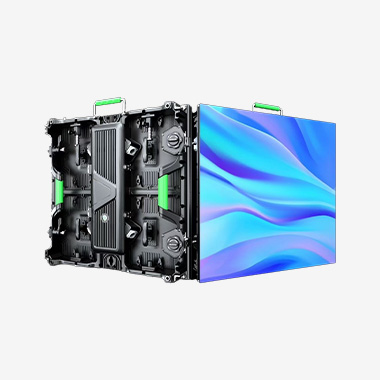
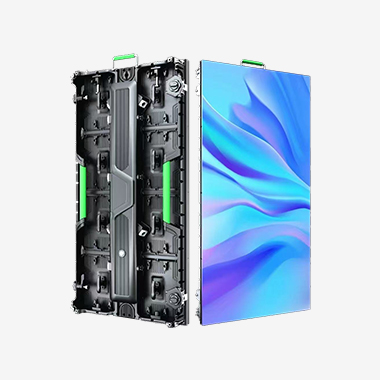
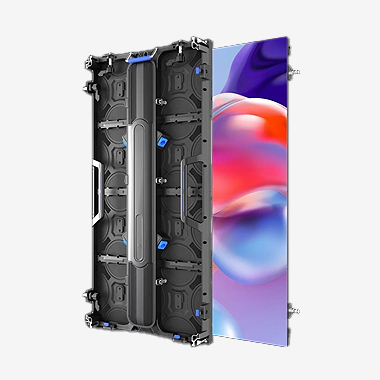
The display itself is built from modular metal cabinets, each acting as a self-contained unit. These are not mere containers; they are engineered systems.
Material and Finish: Cabinets are constructed from heavy-gauge aluminum or carbon steel, treated with anti-corrosion coatings and finished with weather-resistant powder coating. This protects against rust and degradation from UV exposure and pollution.
Ingress Protection (IP Rating): Outdoor cabinets must have a minimum rating of IP65. The "6" means they are completely dust-tight. The "5" means they can withstand low-pressure water jets from any direction, making them resistant to rain and snow. Some designs aim for IP67, meaning they can be temporarily immersed in water, providing an extra layer of security against driving storms.
Thermal Management: This is a critical design challenge. The sun can heat the cabinets, while the LEDs themselves generate significant internal heat. Passive cooling (relying on heat sinks) is insufficient. Outdoor cabinets use active cooling systems with IP65-rated fans that create an internal airflow to exhaust hot air, while filtered vents allow cool air to enter without letting in dust or moisture. In very cold climates, thermostatically controlled heaters are also installed inside the cabinets to prevent condensation from forming on the internal electronics when the display is off.
3. The Face: Weatherproof LED Modules
The LED modules that fit into the cabinets are the first line of defense. They are potted with a special silicone or epoxy resin that encapsulates the LEDs, driver ICs, and wiring. This potting process:
Protects from Moisture: Creates a waterproof seal around sensitive components.
Prevents Condensation: Eliminates air pockets where condensation could form.
Provides Vibration Resistance: Secures components against wind-induced vibrations and transportation shocks.
Enhances Heat Dissipation: Some potting compounds are thermally conductive, helping to draw heat away from the LEDs.
4. The Power and Data Infrastructure: Industrial-Grade Reliability
Power Supplies: These are high-efficiency, industrial-grade switching power supplies designed for continuous operation. They are typically rated for operation in wide temperature ranges (-40°C to +70°C) and are often redundant within a cabinet. If one power supply fails, others can share the load to keep the display operational until maintenance is performed.
Data Distribution: Data is sent from a control room to the display via fiber optic cables, which are immune to lightning-induced electrical surges that can travel on copper cables. At the display, the data is distributed to receiving cards in each cabinet via robust, weatherproofed CAT5e/6 cables with sealed connectors.
Lightning and Surge Protection: A comprehensive system of lightning arrestors and surge protectors is installed at the power input and data lines to shunt catastrophic voltage spikes safely to the ground, protecting the sensitive electronics within.
5. The Architectural Integration: Permitting and Aesthetics
The design phase extends beyond engineering to encompass aesthetics and community integration. Designers must often work within strict permitting guidelines that dictate:
Size and Setback: The physical dimensions of the sign and its distance from property lines.
Brightness Limits: Maximum allowable brightness levels, especially for nighttime operation.
Appearance: Some jurisdictions require decorative elements, like "cabinetry" or trims, to make the digital sign conform to a certain aesthetic.
The design must also consider serviceability. Cabinets are designed for front-service access, allowing technicians to replace a module or power supply from the front using a lift, without having to go behind the sign.
In conclusion, the design and construction of an outdoor fixed installation LED display is a discipline of industrial engineering. It is a process of taking highly sensitive electronic components and encasing them in a fortress of metal, seals, and sophisticated cooling systems. Every gasket, every coat of paint, and every bolt is a calculated part of a system built not for a trade show, but for a decade or more of uninterrupted service in the harshest of environments. It is this relentless focus on durability that makes the digital revolution in outdoor advertising possible.
The seamless operation of an outdoor LED display—presenting vibrant, flawless motion video in the pouring rain or blazing sun—is a feat of coordinated electronic and software control. The working principles behind these digital giants combine the core technology of light emission with robust data management and intelligent environmental adaptation to ensure reliable performance around the clock. This section breaks down the functional layers that allow these displays to perform their duty as relentless advertising engines.
1. The Core Light Emission: High-Brightness LEDs and PWM
At the most fundamental level, light is produced by High-Brightness Surface-Mount Device (SMD) LEDs. These are specialized LEDs designed to produce thousands of nits of brightness to overcome direct sunlight. Each pixel is typically a cluster of red, green, and blue (RGB) diodes sealed under a single lens.
The intensity of each color diode is controlled not by varying its voltage, but by Pulse Width Modulation (PWM). The driver Integrated Circuit (IC) switches each LED on and off at a very high frequency (several thousand times per second). The human eye perceives this rapid cycling as a steady glow. The ratio of "on" time to "off" time (the duty cycle) within each cycle determines the perceived brightness. A 50% duty cycle results in 50% brightness. By independently controlling the PWM for the red, green, and blue diodes, the driver IC can create millions of color combinations with precise intensity.
2. The Data Flow: From Content to Cabinet
The journey of a video signal to the wall is a process of distribution and delegation.
Content Input and Scheduling: Content is created off-site and uploaded to a content management system (CMS), often cloud-based. The advertiser or sign operator uses the CMS to create a playlist, scheduling which ads run at specific times of day. This schedule is pushed to an on-site media player located in a control box at the base of the sign.
Video Processing: The media player outputs a standard video signal (e.g., HDMI). This signal is fed into an outdoor-rated video processor. This processor is the brain of the operation. It performs several critical tasks:
Scaling: It maps the input resolution (e.g., 1920x1080) to the native, non-standard resolution of the LED wall (e.g., 5120x1440).
Color Calibration: It applies a uniform color profile across the entire display to ensure a red on one cabinet matches a red on another perfectly.
Correction and Monitoring: It continuously monitors for failed components and can sometimes compensate for them to avoid a black spot on the screen.
Data Distribution: The processed signal is converted into data packets and sent to the display structure. Due to the long distances and electrical noise outdoors, this is primarily done via fiber optic cable. At the display, a fiber receiver converts the light signal back into an electrical signal, which is then distributed to the individual cabinets via robust, shielded Ethernet cables.
Cabinet-Level Control: Each cabinet contains a receiving card. This card takes the portion of the overall image data meant for its cabinet and distributes it to the driver ICs on each LED module. The driver ICs are the muscle, executing the PWM commands that physically turn the LEDs on and off.
3. The Environmental Adaptation: Auto-Dimming and Monitoring
A key intelligent feature is automatic brightness adjustment. An ambient light sensor mounted on the display constantly measures the surrounding light levels. This data is fed back to the video processor.
During a bright sunny afternoon, the processor commands the display to operate at 100% brightness (e.g., 8,000+ nits) to ensure visibility.
At dusk, it gradually dims the display.
On a dark night, it may operate at only 20-25% of its maximum brightness. This is more than enough for visibility, drastically reduces energy consumption, minimizes light pollution, and ensures compliance with local community brightness ordinances.
4. The Diagnostic and Protection Systems
The display operates with a constant feedback loop for health monitoring. The system can track:
Temperature: Sensors inside cabinets monitor heat levels. If temperatures get too high, the system can automatically reduce brightness to lower the thermal load and prevent damage.
Component Failure: The receiving cards can detect failures in power supplies, driver ICs, or individual LED modules. These faults are reported back to the control system, which can alert maintenance crews via email or SMS, enabling proactive repair before the failure becomes noticeable to the public.
Power Integrity: The system monitors input voltage and can safely shut down if it detects a dangerous power surge, preventing damage.
In principle, the outdoor LED display is a networked, intelligent device. It is not a dumb screen but a system that ingests content, processes it for a specific canvas, distributes it with precision, adapts to its environment to optimize performance and efficiency, and constantly self-diagnoses to ensure maximum uptime. This sophisticated orchestration of hardware and software is what allows it to function as a reliable, "set-and-forget" advertising workhorse in the most demanding conditions imaginable.
The adoption of outdoor fixed installation LED displays offers a powerful value proposition for advertisers, media companies, and property owners, but it is a significant undertaking fraught with its own set of challenges. A clear assessment of both sides is crucial for making an informed investment.
Advantages:
Unmatched Revenue Potential and Yield Optimization: For media companies and property owners, this is the primary driver. A single digital structure can host multiple advertisers throughout the day, effectively generating 6, 8, or even 10 times the revenue of a static billboard that hosts one advertiser per month. The ability to daypart and sell time slots unlocks unprecedented yield management opportunities.
Dynamic and Timeless Advertising for Brands: For advertisers, the advantages are transformative. Creativity is unleashed with motion video, animation, and the ability to tell a sequential story. Campaigns can be updated instantly from anywhere in the world, allowing for real-time marketing that reacts to current events, weather, inventory levels, or social media trends. The medium feels modern and high-impact, enhancing brand perception.
Superior Measurability and Accountability: Digital displays move OOH advertising from an impression-based model to a verifiable performance-based model. Advertisers receive proof-of-performance reports, confirming their ads ran at the specified times and for the correct duration. When integrated with third-party data, advertisers can begin to measure reach and frequency, bringing OOH closer to the accountability standards of digital media.
Community and Public Service Value: Beyond advertising, these displays can serve as powerful tools for the public good. They can instantly broadcast Amber Alerts, severe weather warnings, traffic information, and emergency evacuation routes. This functionality provides immense value to the community and can be a powerful point in favor of the display during the often-contentious permitting process.
Long-Term Cost Efficiency and Environmental Benefits: While the initial investment is high, the long-term operational costs compared to static billboards are lower. There are no recurring costs for printing, shipping, and manually installing vinyl, which also eliminates the waste associated with discarded printed materials. The shift to more energy-efficient LED technology and auto-dimming features has also significantly reduced their power consumption.
Challenges and Considerations:
Prohibitive Initial Capital Investment (CAPEX): The single greatest barrier to entry is the cost. A large-format digital billboard represents a multimillion-dollar investment encompassing structure, display hardware, sophisticated software, and complex installation. Securing financing and achieving a return on investment requires a solid business plan and prime location.
Complex and Often Contentious Permitting Process: Obtaining a permit for a new digital billboard is arguably the most difficult part of the process. It involves navigating a maze of zoning laws, sign codes, aesthetic reviews, and public hearings. Opposition from community groups concerned about visual clutter, light pollution, and driver distraction is common and can delay or derail projects for years.
Technical Maintenance and Downtime Risk: These are complex electronic systems operating in harsh conditions. While designed for reliability, components will fail over time. Maintaining a skilled technical crew for routine maintenance and emergency repairs is essential. Any downtime directly translates to lost advertising revenue and potential contract penalties. A single failed component can create a visible black spot on the screen, damaging professional appearance.
Brightness and Light Pollution Concerns: Managing the display's brightness is a constant balancing act. It must be bright enough to be seen by day but not so bright at night that it becomes a nuisance to residents or a hazard to drivers. Adhering to local ordinances and using smart auto-dimming technology is critical to maintaining a good relationship with the community and avoiding violations.
Content Liability and Cybersecurity: The ability to change content remotely introduces risks. A hacked display could show inappropriate or offensive content, causing severe reputational damage. Robust cybersecurity protocols for the CMS and network are non-negotiable. Furthermore, the operator is liable for ensuring that the content displayed does not violate any laws (e.g., false advertising).
In conclusion, the advantages of outdoor LED displays are compelling and have cemented their dominance in the OOH industry. The challenges, however, are significant and are primarily financial, regulatory, and operational in nature. Success in this field requires not just capital, but also expertise in navigating local politics, maintaining complex hardware, and managing a dynamic advertising network. The rewards are great, but so are the hurdles.
The application of outdoor fixed installation LED displays has expanded far beyond the standard rectangular billboard format, driven by technological advancements and creative market demands. Simultaneously, the future promises even deeper integration with data and technology, transforming these displays from simple advertising conduits into intelligent urban fixtures.
Current Applications:
The Digital Bulletin (Bulletin Board): The classic large-format billboard located along highways and major roads. It is the workhorse of the industry, designed for long-distance, high-speed viewing.
The Digital Poster (30-Sheet Equivalent): Smaller digital displays located in urban areas, pedestrian zones, and on retail premises. They have a finer pixel pitch for closer viewing and are used for more targeted, dwell-time advertising.
Spectaculars and Superboards: Massive, often uniquely shaped displays in iconic locations like Times Square or Piccadilly Circus. These are architectural landmarks in their own right, designed for maximum brand impact and tourism appeal.
Building-Wraps and Media Façades: Utilizing the entire side of a building as a canvas. This involves installing LED panels across vast sections of a building's exterior, turning architecture into dynamic art and offering an unparalleled scale of advertising.
Sports Venues and Arenas: While often used for live video and scoring, the advertising panels surrounding the field and within the stadium are prime digital real estate, targeting a captive and engaged audience.
Future Trends:
Programmatic OOH (pOOH) Buying: The biggest trend is the automation of ad buying. Advertisers will be able to purchase available digital billboard inventory in real-time through automated platforms, much like they buy online display ads today. This will be driven by data triggers—e.g., an airline automatically buying ad space on billboards near the airport when a flight is delayed.
Hyper-Contextual and Data-Driven Content: Displays will become more responsive to their environment. Using real-time data feeds (traffic, weather, sports scores, social media trends), content will automatically adapt. A billboard could show a coffee ad when a traffic jam is detected, or a sunscreen ad when the UV index is high.
Integration with Mobility and Autonomous Vehicles: As vehicles become more connected, a new realm of interaction opens up. Billboards could broadcast digital coupons directly to the infotainment systems of passing cars. For autonomous vehicles, which will rely heavily on external data, digital signs could provide critical information about road conditions, detours, and services.
Enhanced Measurement and Attribution: The holy grail of OOH advertising is directly linking a billboard view to a consumer action. Future systems will use better anonymized mobile data and other technologies to track metrics like foot traffic to a store or website visits following an exposure, providing advertisers with concrete ROI figures.
Improved Sustainability: The push for greener technology will continue. This will include:
Higher Efficacy LEDs: Producing more light with less energy.
Solar Integration: Installing solar panels on or near the structure to offset energy consumption.
Recyclable Materials: Designing cabinets and components for easier disassembly and recycling at end-of-life.
Higher Resolution and Curved Designs: As pixel pitches continue to shrink, higher-resolution displays will become viable for larger formats, enabling more detailed creative. Furthermore, manufacturing techniques will allow for more curved and custom-shaped displays that blend more artistically with their surroundings.
The future of the outdoor fixed installation LED display is not just as a billboard, but as a connected, intelligent, and interactive node in the urban data network. It will evolve from a one-way broadcast medium into a responsive environmental element that interacts with its audience, leverages vast datasets, and provides value far beyond its core function of advertising.
Conclusion
The outdoor fixed installation LED display screen has irrevocably transformed the landscape of advertising and urban environments. It is a technology that has proven its value, resilience, and capacity for evolution over the past two decades. From its early days as a novel, low-resolution curiosity, it has matured into the dominant force in out-of-home media, a testament to its powerful combination of physical presence and digital agility.
The conclusion is clear: the digital billboard is not a fleeting trend but a permanent and foundational element of modern marketing and cityscapes. Its advantages are simply too compelling to ignore. For advertisers, it offers an unskippable, high-impact canvas that can be tailored and updated with an efficiency that static media could never provide. For media companies and property owners, it represents a massive step-change in revenue potential and asset value. And for the public, when managed responsibly, it can provide not only entertainment but also critical life-saving information.
The challenges it faces—high initial cost, regulatory hurdles, and technical maintenance—are significant but are characteristic of any major infrastructure investment. They are not insurmountable barriers but rather factors that demand expertise, careful planning, and responsible management. The industry has developed robust solutions to these challenges, from more reliable hardware and sophisticated software to specialized firms that navigate the complex permitting process.
Looking forward, the trajectory of this technology is one of increasing intelligence and integration. The shift towards programmatic buying, data-driven content, and deeper audience measurement will further solidify its value proposition, bringing the accountability of online advertising to the impact of offline media. It will become less of a standalone "sign" and more of an integrated component of the smart city ecosystem, interacting with connected vehicles and providing a data-rich platform for public and commercial communication.
In final analysis, the outdoor fixed installation LED display is more than just a tool for selling products; it is a cultural and commercial icon. It reflects the dynamism of the digital age while retaining the tangible impact of physical presence. It has successfully modernized the ancient practice of outdoor advertising without losing its power to awe and captivate. As it continues to evolve, it will undoubtedly remain at the forefront of the advertising world, a brilliant and enduring symbol of how technology can redefine a medium while amplifying its core purpose: to command attention and deliver a message that resonates.


Copyright © 2026 Shenzhen Cogo Technology Co.,Ltd.
All Rights Reserved

 Previous article