




 Chat Now
An LED fixed installation display screen is a permanent, purpose-built electronic visual communication system designed for long-term, continuous operation in a specific, controlled location. Unlike mobile or rental LED solutions built for portability and frequent reconfiguration, fixed installations are engineered from the ground up for reliability, seamless integration, and optimal performance within a predefined environment. These displays have become the cornerstone of modern information dissemination, advertising, and artistic expression in public, corporate, and commercial spaces, representing a significant investment in a permanent digital infrastructure.
The core philosophy of a fixed installation is permanence and performance. This foundational principle influences every aspect of its design, from the selection of components to the method of installation. While rental walls prioritize lightweight and quick assembly, fixed installations prioritize durability, visual perfection, and long-term stability. They are the "built-in" televisions of the architectural world, moving beyond being mere equipment to become an integral part of a building's fabric and function. Their rise parallels the digital transformation of urban landscapes and interior spaces, where dynamic content has superseded static signage as the medium of choice for engagement.
The technology's evolution is a story of moving from novelty to necessity. Early fixed installations were often cumbersome, low-resolution systems with visible bezels and poor color consistency. They were typically found in stock exchanges and sports stadiums, where their function outweighed their aesthetic shortcomings. The pivotal advancements came with the maturation of Surface-Mount Device (SMD) LED technology, which enabled finer pixel pitches and better color mixing, and the development of robust calibration and control systems. This allowed displays to move from large-format, long-distance applications to finer-pitch, close-viewing installations in corporate lobbies, control rooms, and high-end retail, where image quality and seamless appearance are paramount.
A modern fixed installation LED system is a complex ecosystem of integrated components:
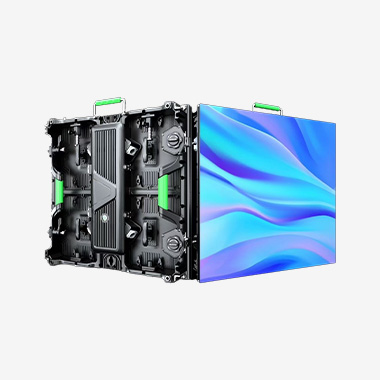
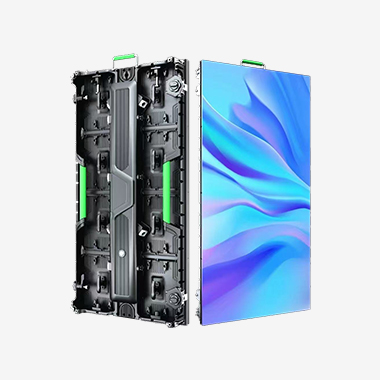
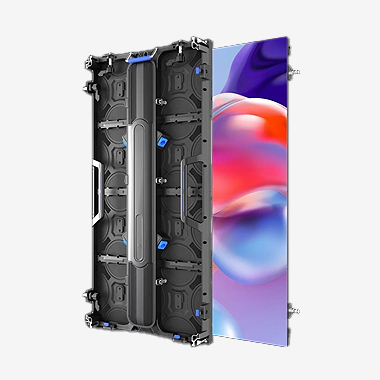
LED Modules and Cabinets: The building blocks. For fixed installations, these are often designed for ultra-narrow bezels or are bezel-less, creating a near-seamless canvas. The cabinets are typically made from heavy-duty aluminum or steel for stability.
Structural Support System: This is a custom-engineered framework, either freestanding or building-mounted, designed to support the significant weight of the display for decades. It is often bolted or welded into the building's superstructure.
Advanced Video Processing and Control: The brain of the operation. Fixed installations often use high-end processors that offer superior scaling, color uniformity calibration, and advanced features like built-in redundancy for 24/7 operation.
Integrated Cooling Systems: While rental units may use noisy fans, fixed installations often employ quiet, efficient convection cooling or even liquid cooling systems for critical environments like broadcast studios, ensuring silent operation.
Purpose-Built Content Management System (CMS): Software tailored for continuous operation, allowing for automated scheduling, remote monitoring, and seamless integration with data feeds (news, weather, social media, etc.).
The applications for fixed installations are vast and critical to modern infrastructure. They are the giant video walls in broadcast studios that serve as dynamic backdrops for news and weather presentations. They form the iconic large-scale displays in sports stadiums and arenas, providing replays, statistics, and crowd engagement content. In corporate command and control centers, they visualize complex data networks and global operations in real-time. They are the centerpiece of luxury retail stores and automotive showrooms, creating immersive brand experiences. Furthermore, they are used in public transportation hubs for wayfinding and schedules, and in theaters and concert halls as permanent stage elements.
In summary, the LED fixed installation display screen is the workhorse of the digital signage world. It represents a commitment to quality, reliability, and architectural integration. It is a technology that has matured from a flashy gimmick into an essential tool for communication, operation, and experience creation, permanently embedded into the spaces where we work, play, and gather.
The design and construction of an LED fixed installation display is a meticulous process that blends electronic engineering, structural mechanics, thermal dynamics, and architectural integration. The overarching goal is to create a system that delivers flawless visual performance year after year, with minimal downtime and maintenance, seamlessly embedded into its environment. This demands a holistic approach where every component is selected and engineered not for portability, but for perpetual stability and reliability.
The process begins with the most critical decision: pixel pitch. This choice is fundamental and is driven by the average and minimum viewing distance of the audience. A control room where operators sit a few meters away requires a fine pitch (e.g., P1.2 to P1.8), while a stadium scoreboard viewed from hundreds of meters away can use a much coarser pitch (e.g., P10 to P20). For fixed installations, the trend is toward finer pitches even in larger venues, as audiences expect higher fidelity imagery. The selected LED modules are then chosen for their color consistency, brightness (with a focus on wide viewing angles rather than just peak nits), and long-term reliability.
The cabinet design is where fixed installations diverge sharply from rental products. Instead of lightweight, quick-lock designs, fixed installation cabinets are built for rigidity and precision. They are often constructed from die-cast aluminum, which provides exceptional dimensional stability and heat dissipation. The modules are mounted into these cabinets with precision machining to ensure a perfectly flat display surface with virtually invisible seams—often less than 0.5mm. This eliminates the "tiling effect" and creates a truly seamless canvas, which is critical for applications like broadcast, where on-screen talent must appear against a uniform backdrop without visible grid lines.
These cabinets are then mounted onto a custom-engineered support structure. This is a critical and often underestimated element. Structural engineers design this framework based on:
Dead Load: The total weight of the LED cabinets, which can be immense for a large video wall.
Live Load: The potential weight of personnel and equipment during installation and maintenance.
Seismic Load: In earthquake-prone zones, the structure must be designed to absorb energy and sway without collapsing.
Building Integration: For wall-mounted displays, a structural analysis of the host building is mandatory. Engineers must determine how to anchor the support framework to the building's primary steel or concrete structure, often requiring custom brackets and reinforcements. The design must also account for access behind the wall for maintenance, either through a dedicated corridor or via service panels.
Thermal management is engineered for quiet, efficient, and continuous operation. While rental displays use audible fans to move air, fixed installations in quiet environments like corporate lobbies or broadcast studios often utilize passive convection cooling. The cabinets are designed with large internal heat sinks and ventilation channels that allow hot air to rise naturally and be replaced by cooler air, creating a silent cooling cycle. For high-brightness displays or denser fine-pitch installations, liquid cooling is increasingly adopted. This involves circulating a coolant through micro-channels in the cabinets, transferring heat to a remote radiator. This method is incredibly efficient, silent, and prevents dust from entering the cabinets, a key factor in long-term reliability.
Electrical and data infrastructure is designed for robustness and cleanliness. Dedicated high-amperage power circuits are installed, often with Uninterruptible Power Supplies (UPS) to protect against power surges and outages. Power is distributed through professional PDUs (Power Distribution Units) within the framework. Data is run through high-quality, shielded CAT6 or fiber optic cables to avoid electromagnetic interference, which can cause flickering or data loss. All cabling is meticulously routed through the support structure and concealed behind trunking or panels, resulting in a clean, professional installation with no visible wires.
Finally, the design incorporates serviceability. Even the most reliable systems require maintenance. Fixed installations are designed for front-serviceability, allowing technicians to safely remove and replace modules, power supplies, and receiving cards from the front using a lift or scaffolding, without needing to dismantle the wall or access the rear. This is a crucial feature for large, building-mounted displays where the rear may be inaccessible.
In conclusion, the design and construction of an LED fixed installation is an exercise in foresight and precision. It is about creating a unified system where the display, the structure, the cooling, and the infrastructure are all co-engineered to work in harmony for a decade or more. It is this rigorous, holistic approach to design that transforms a collection of LED panels into a permanent, reliable, and visually stunning architectural asset.
The working principles of an LED fixed installation display share a common foundation with all LED technology but are optimized and enhanced for the demands of continuous, reliable operation. The process is a tightly controlled pipeline of data and power, managed by sophisticated systems that ensure consistency, stability, and longevity. Understanding this workflow reveals the engineering behind the seemingly effortless delivery of brilliant, stable imagery, 24 hours a day, 7 days a week.
The journey of a single frame of video begins with content sourcing. For a fixed installation, content can originate from multiple, often simultaneous, inputs:
Media Players: Dedicated hardware players storing and playing back scheduled video loops and presentations.
Live Feeds: SDI or HDMI signals from cameras (e.g., in a stadium or broadcast studio) or satellite receivers.
Data Feeds: Networked computers outputting desktops for control room visualization or data-driven graphics from a CMS pulling in real-time information (news tickers, social media feeds, weather maps).
These diverse inputs are fed into a video processor or an advanced video wall controller. This device is the central nervous system of a fixed installation and is far more powerful than a standard controller used for rental. Its critical functions include:
Input Management and Scaling: Accepting multiple input signals of different resolutions and formats, and scaling them appropriately to fit the native resolution of the LED wall, which is often non-standard and very large.
Video Wall Mapping: Precisely defining the layout of the video wall (e.g., 4x5 array, curved, L-shaped) and mapping the input signal across the individual cabinets without distortion.
Color and Brightness Uniformity Calibration: This is paramount for fixed installations. During the commissioning process, a technician uses a colorimeter to measure the output of every single module on the wall. The processor stores a unique calibration file that applies minute corrections to each module's red, green, and blue output. This ensures that a single shade of red appears identical on every part of the display, eliminating the "patchwork" effect and creating a perfectly uniform image.
Advanced Features: High-end processors offer features like redundant input backup (automatic switching to a backup source if the primary fails), built-in scaling for live PIP (Picture-in-Picture) layouts, and ambient light sensors that automatically adjust the screen's brightness to save energy and ensure optimal visibility day and night.
The processor outputs a processed data signal, typically using specialized video wall protocols or standard network protocols like HDBaseT or SDVOE over a CAT6 or fiber optic network. This signal is distributed to receiving cards housed within each LED cabinet. Each receiving card is responsible for a specific section of the display—often one or two modules.
The receiving card's job is to translate the video data into commands for the individual LEDs. It does this using Pulse-Width Modulation (PWM). The card rapidly switches each red, green, and blue LED on and off thousands of times per second. The human eye perceives the rapid cycling as a stable level of brightness. By independently varying the duty cycle (the on/off ratio) for each color, the card can create the millions of colors required to form an image. The precision and stability of this PWM signal are crucial for eliminating flicker and maintaining color accuracy over years of operation.
Power delivery is engineered for unwavering stability. The AC power from the building is converted to the low-voltage DC power required by the LEDs via robust, high-efficiency power supplies. These are often hot-swappable units located within the display's framework. They are designed to operate within a wide temperature range and have a high Mean Time Between Failure (MTBF) rating, a key metric for 24/7 systems. Power is distributed through thick, high-grade copper bus bars within the cabinets to minimize voltage drop across the large display area.
A defining feature of a fixed installation's operation is its monitoring and diagnostic systems. Sophisticated software constantly polls every cabinet and key component (power supplies, fans, temperature sensors). It monitors for:
Temperature: Ensuring cooling systems are functioning and the display is operating within its safe thermal envelope.
Component Health: Tracking the performance of power supplies and predicting failures before they occur.
LED Performance: Advanced systems can detect individual failed LEDs or sub-pixels, logging their location for scheduled maintenance.
Alerts can be sent via email or SMS to technical staff, enabling proactive maintenance that prevents minor issues from escalating into major outages.
In essence, the working principle of a fixed installation is defined by precision, monitoring, and redundancy. It is a closed-loop system that not only generates light but also constantly verifies its own health. This self-aware, managed approach is what separates a professional fixed installation from a simple collection of LED panels, ensuring it delivers reliable, broadcast-quality performance throughout its entire operational lifespan.
The decision to invest in an LED fixed installation is a significant one, driven by a clear set of powerful advantages that mobile solutions cannot match. However, these benefits are counterbalanced by a unique set of challenges and long-term commitments. A thorough understanding of this balance is crucial for stakeholders to make an informed decision and ensure a successful project outcome.
Advantages
Superior Image Quality and Seamlessness: Fixed installations are the pinnacle of LED visual performance. The ability to calibrate every module during installation and the use of precision-machined, rigid cabinets result in a perfectly uniform image with no visible color shifts, bezel lines, or physical inconsistencies. This creates a truly seamless "window" of content that is essential for broadcast, high-end corporate, and luxury retail applications.
Unmatched Reliability and Stability: Engineered for 24/7 operation, these systems are built with industrial-grade components. The robust support structure, advanced thermal management, and clean power infrastructure protect the sensitive electronics from vibration, heat, and power fluctuations. This leads to significantly higher uptime and a longer operational lifespan compared to rental-grade equipment that is frequently transported and reconfigured.
Customization and Perfect Integration: This is a paramount advantage. A fixed installation can be designed to fit any space perfectly. It can be curved, built into unusual shapes, integrated around architectural features, and finished with custom fascias to match the surrounding décor. It becomes a bespoke architectural element rather than a piece of off-the-shelf equipment placed in a room.
Optimized Performance for the Environment: The system can be precisely tuned for its specific location. Brightness can be set to ideal levels for indoor ambient light, eliminating eye strain and saving energy. The viewing angles and pixel pitch are chosen specifically for the audience's position. This results in a viewing experience that is perfectly tailored and consistently superior.
Lower Total Cost of Ownership (TCO) for Long-Term Use: While the initial capital expenditure (CapEx) is high, the long-term operational expenditure (OpEx) can be lower. There are no costs associated with repeated rental, transportation, storage, or labor for setup and tear-down. The high reliability also reduces maintenance costs and lost revenue from downtime over a 5-10 year lifespan.
Challenges and Disadvantages
Very High Initial Investment and Capital Expenditure: The cost of high-quality LED modules, the custom engineering and fabrication of the support structure, and the professional installation labor represent a substantial upfront financial commitment. This is often the single biggest barrier to adoption.
Permanence and Lack of Flexibility: Once installed, the display is fixed in place. It cannot be easily moved, resized, or repurposed for another location or event. This lack of flexibility means the initial design must be absolutely future-proofed for the intended application, as changes down the line are complex and expensive.
Complex Installation Process: Installation is not a simple task. It requires a coordinated effort between structural engineers, electricians, IT specialists, and AV integrators. It often involves significant construction work, such as reinforcing walls, running dedicated electrical circuits, and installing heavy-duty rigging points. This process can be disruptive to ongoing operations within the building.
Specialized Maintenance Requirements: While designed for reliability, when maintenance is required, it must be performed by technicians trained on the specific system. For complex installations, this may require specialized lifting equipment (e.g., scissor lifts) and can be time-consuming. Sourcing replacement parts for a specific model years later can also be a challenge.
Technological Obsolescence Risk: Display technology advances rapidly. A pixel pitch that is considered fine today may seem coarse in 5-7 years. While the physical structure may last a decade, the owner faces the dilemma of living with outdated technology or undertaking a costly and wasteful refurbishment project to replace the LED modules and electronics.
Dependence on Building Infrastructure: The display's reliability is tied to the building's infrastructure. Power outages, poor HVAC leading to high ambient temperatures, or network issues can all impact the performance and lifespan of the installation, adding another layer of dependency.
In conclusion, an LED fixed installation offers an unparalleled combination of performance, reliability, and integration for those who need a permanent digital canvas. However, it is a long-term partnership that requires a significant upfront investment and a commitment to ongoing care and maintenance. The decision hinges on a clear-eyed evaluation of whether the superior quality and permanence outweigh the lack of flexibility and high initial cost for the specific application.
LED fixed installation displays have found their way into a vast array of applications, becoming critical tools in sectors where reliability and integration are non-negotiable. As the technology continues to mature, its applications are expanding, and new trends are shaping the next generation of these permanent digital fixtures, pushing them towards greater intelligence, sustainability, and seamless integration.
Current Applications
Broadcast and Television Studios: This is a benchmark application. Fixed installations are used as virtual sets and dynamic backdrops for news, weather, and talk shows. Their superior color uniformity and seamless appearance are essential for creating a believable on-air environment. Their reliability is critical for live, 24-hour news operations.
Corporate Command and Control Centers: In security, network, and financial trading centers, large-format video walls are mission-critical. They visualize complex data, network topologies, and real-time global operations, enabling teams to make rapid, informed decisions. Reliability and the ability to display multiple high-resolution data sources simultaneously are key.
Sports Arenas and Stadiums: From massive main scoreboards and endzone displays to ribbon boards encircling the arena, fixed installations are central to the modern sports experience. They provide instant replays, statistics, player close-ups, and crowd-energizing graphics, enhancing fan engagement dramatically.
Corporate Lobbies and Headquarters: Large companies use elegant, fine-pitch video walls in their lobbies to communicate their brand story, showcase products, welcome visitors, and display real-time company information. They project an image of innovation and success.
High-End Retail and Brand Experience Centers: Luxury brands in automotive, fashion, and electronics use fixed installations to create immersive, theatrical product reveals and brand environments. The seamless, high-quality image is a reflection of the brand's premium quality.
Public Spaces and Transportation Hubs: Airports, train stations, and museum lobbies use them for wayfinding, scheduling, emergency announcements, and advertising. Their durability and ability to operate continuously make them ideal for these high-traffic environments.
Theaters and Performing Arts Centers: Fixed installations are increasingly being built into proscenium arches and as permanent stage backdrops, replacing painted scenery with dynamic, programmable digital environments that can change in an instant.
Future Trends
The Rise of MicroLED and Chip-on-Board (COB) Technology: The adoption of MicroLED and COB packaging will dominate the future of fixed installations. These technologies offer superior reliability, higher brightness, better contrast ratios (by eliminating the reflective "well" of SMD LEDs), and a more seamless surface that is resistant to damage and moisture. This is particularly beneficial for 24/7 control rooms and broadcast environments.
Integration with IoT and Smart Building Systems: LED walls will evolve from standalone displays into intelligent nodes within a building's IoT network. They will automatically pull data from building management systems to display energy usage, occupancy levels, and security status. They will respond to environmental cues, adjusting content based on the time of day or the audience present.
Advanced Interactivity and Touch Capability: Fixed installations will become interactive canvases. The integration of infrared touch frames or capacitive touch overlays will turn them into giant collaborative tools for boardrooms and design studios, allowing users to manipulate data and images directly on the screen.
XR (Extended Reality) and Virtual Production: The line between display and environment will blur. Fixed installations will form the core of "Volumes" – stages surrounded by LED walls that display real-time, photorealistic CGI backgrounds. This technology, pioneered for film and TV, will trickle down to corporate events, training simulations, and advanced broadcast studios.
Sustainability Focus: The drive for energy efficiency will intensify. This will be achieved through more efficient LED driver technology, smart power management that dims the screen during low-ambient light conditions, and the use of recyclable materials in cabinets and components. Liquid cooling will also gain traction for its efficiency and dust-free operation, which extends component life.
Standardized Management and AI-Driven Analytics: Centralized cloud-based platforms will manage networks of fixed installations across multiple locations. Artificial Intelligence will be used for predictive maintenance, analyzing performance data to flag components likely to fail before they do. AI could also optimize content placement and scheduling based on audience analytics.
The future of the LED fixed installation is one of deeper embedding and intelligence. It will become less of a "screen" and more of a "smart visual interface"—an integral, responsive, and efficient part of the architectural fabric, capable of not only displaying information but also interacting with its environment and the people within it.
Conclusion
The LED fixed installation display screen has evolved from a technological spectacle into a fundamental and indispensable pillar of the modern visual and communicative landscape. Its journey reflects a broader maturation of LED technology from a mobile novelty to a trusted, industrial-grade solution for environments where performance, reliability, and integration are paramount. It represents not just a purchase of equipment, but an investment in a permanent digital infrastructure designed to deliver value and impact for a decade or more.
The true significance of the fixed installation lies in its ability to transcend the role of a simple display. It is an architectural statement, a mission-critical operational tool, and an immersive experience platform. Its value is derived from its permanence; because it is designed for a specific place and purpose, it can be optimized to a degree that temporary solutions can never achieve. This optimization results in the flawless image quality, seamless appearance, and unwavering reliability that define high-end applications in broadcasting, corporate command, and luxury branding. It is the chosen medium when failure is not an option and when visual compromise is unacceptable.
However, this excellence comes with a covenant of commitment. The decision to install a fixed LED wall is a long-term partnership. It requires thorough upfront planning, a significant capital outlay, and a dedicated strategy for ongoing maintenance and eventual refresh. Its permanence is both its greatest strength and its most significant constraint, locking the owner into a specific technology and configuration for its operational life. This necessitates a forward-looking design philosophy that anticipates future content needs and technological trends as much as possible.
Looking ahead, the trajectory of fixed installation technology is clear. It is moving towards even greater integration, intelligence, and invisibility. The emergence of MicroLED and seamless COB technologies will further erase the boundaries between the display and its environment. The integration of IoT connectivity and interactive capabilities will transform these walls from passive broadcasters into active, collaborative interfaces. They will become the central nervous system for data visualization in command centers and the creative canvas for immersive experiences in media and retail.
In conclusion, the LED fixed installation is the bedrock upon which the most demanding visual applications are built. It is a testament to the power of engineering focused on the long term. While mobile and rental displays provide vital flexibility for a changing world, the fixed installation provides the foundation—a permanent, powerful, and perfectly integrated canvas that enables organizations to communicate, operate, and create at the highest level. It has cemented its place not as a temporary fixture, but as a lasting landmark in our increasingly digital world.


Copyright © 2026 Shenzhen Cogo Technology Co.,Ltd.
All Rights Reserved

 Previous article