




 Chat Now
Outdoor exterior LED display signage for advertising represents the most dynamic and impactful evolution in out-of-home (OOH) marketing since the advent of the printed billboard. These colossal digital canvases have transformed urban and suburban landscapes, turning static advertising spaces into vibrant, high-resolution portals for brand storytelling, real-time messaging, and immersive visual experiences. Unlike any medium before it, digital LED signage combines the broad, inescapable reach of traditional billboards with the flexibility, immediacy, and captivating power of television and digital media.
At its core, an advertising LED display is a self-illuminated panel composed of a dense array of light-emitting diodes (LEDs) that act as pixels. By combining red, green, and blue (RGB) LEDs into a single pixel unit and controlling their intensity with extreme precision, these displays can generate millions of colors, enabling them to render high-fidelity images, fluid video, animations, and crisp text. The transition from printed vinyl, which could take hours to install and remained unchanged for months, to digital displays that can be updated instantly from anywhere in the world, marks a revolutionary shift in the economics and strategy of outdoor advertising.
The proliferation of this technology is driven by its undeniable effectiveness. For advertisers, it offers an unprecedented level of agility. A single digital billboard can host advertisements for multiple brands, cycling through them in a pre-programmed playlist every 6 to 10 seconds. This "dayparting" capability allows for hyper-contextual advertising: a coffee brand can dominate the morning commute, a fast-food chain can promote lunch specials at noon, and a restaurant can advertise dinner deals in the evening. This maximization of inventory drastically increases the revenue potential for sign owners while providing advertisers with more targeted opportunities.
Furthermore, the scale and brilliance of these displays command attention. Their high brightness levels (often exceeding 7,000 nits) ensure visibility 24 hours a day, cutting through the glare of direct sunlight and standing out vividly against the night sky. This always-on, high-impact presence makes them an invaluable tool for building brand awareness and launching mass-market campaigns.
The market encompasses a wide spectrum, from towering, freeway-dominating digital billboards that become local landmarks to more modest but equally important digital signages on retail storefronts, gas station canopies, and shopping malls. The technology has matured to become remarkably reliable, but creating a display that can deliver brilliant performance while enduring years of punishing weather—from scorching heat and UV radiation to torrential rain, high winds, and freezing temperatures—requires a masterful integration of optical engineering, electronics, software, and rugged industrial design.
This overview establishes outdoor LED advertising signage as a dominant force in modern marketing. It is a medium that is both a technical marvel and a powerful business tool. The following sections will delve into the specific design and construction that make these signs so resilient, the intricate working principles that bring them to life, the compelling advantages they offer alongside the challenges they present, their diverse applications, and the future trends that will continue to shape this dynamic industry.
The design and construction of an outdoor exterior LED display for advertising is a discipline of extremes. It demands a perfect, and often conflicting, balance of optical excellence and brute-force environmental durability. Every component, from the microscopic LED chip to the massive steel support structure, is engineered to achieve one primary goal: flawless performance in the harshest conditions, 24 hours a day, 365 days a year.
The Core Building Blocks:
The LED Module - The Heart of the Display: This is the fundamental unit. A module is a printed circuit board (PCB) populated with a precise grid of LED pixels, driver integrated circuits (ICs), and connectors. Key considerations include:
Pixel Pitch: The distance (in millimeters) from the center of one pixel to the center of the next. For advertising, pitches typically range from P10mm to P40mm for very large, high-viewing-distance billboards, down to P4mm-P6mm for closer-viewing applications like retail. A larger pitch means lower resolution but also significantly lower cost.
LED Quality: High-brightness, outdoor-grade LEDs are used. They are specifically manufactured to withstand high operating temperatures and intense drive currents while resisting UV degradation. Their luminous intensity is measured in millicandelas (mcd), and they are binned for color and brightness to ensure consistency across the entire display.
SMT Technology: Modern modules use Surface-Mount Technology (SMT), where LEDs are machine-placed directly onto the PCB. This allows for a more compact, robust, and reliable design compared to older through-hole technology.
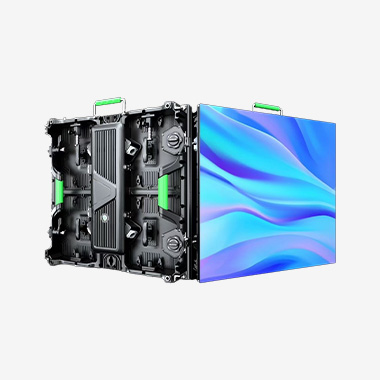
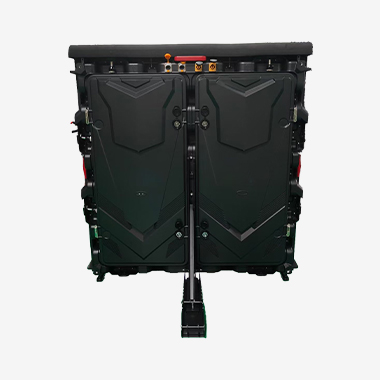
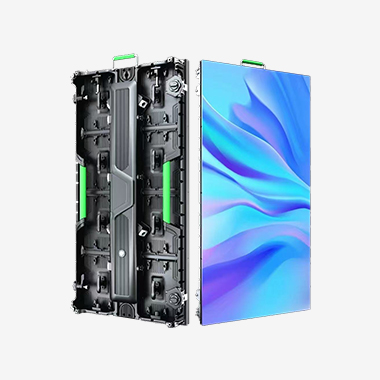
The Cabinet - The Protective Shell: Modules are mounted into a heavy-duty cabinet, which is the structural backbone of the display. Cabinets are typically constructed from die-cast aluminum or heavy-gauge, corrosion-treated steel.
IP Rating: The cabinet's Ingress Protection (IP) rating is critical. A rating of IP65 is standard, meaning it is "Dust-tight" (6) and protected against "Water jets from a nozzle" (5). Some designs aim for IP67, offering protection against temporary immersion. This is achieved through silicone gaskets, labyrinthine seals, and passive or active drainage systems.
Thermal Management: Heat is the enemy of LEDs. Effective heat dissipation is paramount. Cabinets are designed with massive aluminum heat sinks that draw heat away from the LEDs and driver ICs. Many designs are fully front-ventilated and front-serviceable, utilizing convection and specially designed fans that maintain airflow while preserving the IP rating. In colder climates, integrated cabinet heaters prevent condensation, which can cause short circuits.
Power Supply System: These displays are power-hungry beasts. They require robust, highly efficient switching power supplies (PSUs) that convert AC mains power (110V/220V) to the low-voltage DC power required by the LEDs. Redundancy is a key design feature; cabinets often contain multiple PSUs so that if one fails, the others can keep the display operational until repairs are made.
Control System: This is the nervous system of the display. It consists of:
Sending Card: A card installed in a control PC or dedicated video processor that takes the input video signal, processes it, and packets the data for transmission.
Receiving Card: Mounted inside each cabinet, these cards receive data packets and are responsible for driving a specific section of LEDs. They communicate with the driver ICs on the modules to control each pixel.
HUB Boards: These act as intermediaries, distributing data and power from the receiving cards to the individual LED modules.
Structural Support and Frame: The LED cabinets are bolted to a custom-engineered steel support structure. This structure is not an afterthought; it is a critical engineering project. It must be designed to withstand the maximum wind loads, seismic activity, and snow loads for its geographic location, as stipulated by local building codes. Professional engineering stamps are required for permits. The structure also includes safe access for maintenance, often via integrated ladders and catwalks.
Advanced Design Features for Advertising:
Auto-Dimming Sensors: To optimize energy consumption and reduce light pollution (and comply with local ordinances), displays are equipped with ambient light sensors. These sensors automatically adjust the brightness of the screen—from full intensity at noon to a significantly dimmed level at midnight.
Front-Serviceability: Modern designs allow all critical components—modules, power supplies, and fans—to be replaced from the front of the display. This eliminates the need for technicians to access the rear of the sign, which is often dangerous, expensive, or impossible on a large billboard structure.
Curved Designs: For maximum impact on curved roads or architectural integration, displays can be constructed with a slight curvature, ensuring optimal viewing angles for approaching traffic.
The construction process is a precise operation of assembling these hardened components into a seamless, weatherproof, and structurally sound system. It is a testament to engineering that creates a brilliant and reliable visual instrument capable of withstanding the relentless test of time and nature.
The operation of an outdoor advertising LED display is a complex, real-time symphony of data processing, electronic control, and optoelectronics. The process transforms a standard video signal into the dazzling, sunlight-visible imagery that captivates audiences, and it does so through a meticulously coordinated sequence of events.
The Signal Pathway from Source to Light:
Content Creation and Scheduling: The process begins not with hardware, but with software. Advertisements are created as video files or animations. These are then uploaded to a cloud-based or on-premise content management system (CMS). Here, a playlist is built, scheduling which ads play at specific times of the day. This playlist is then pushed to the display's on-site controller.
Input and Video Processing: The on-site control computer, equipped with a video sending card, receives the content from the CMS. Its first job is processing. The native resolution of the content (e.g., 1920x1080) rarely matches the native resolution of the LED wall (e.g., 1600x1200 pixels). The controller must scale the video in real-time to fit the display perfectly without distortion. It also performs color correction and gamma adjustment to ensure the output is optimized for the specific characteristics of the LEDs.
Data Transmission: The processed video data is packetized and transmitted from the sending card to the array of receiving cards mounted in the display cabinets. This is typically done over robust, shielded CAT5e/6 cables or, for longer distances and better noise immunity, fiber optic cables. The data protocol is often a specialized, high-speed serial communication designed to handle the massive bandwidth required for video.
Pixel Driving - The Pulse-Width Modulation (PWM) Magic: This is the most critical electronic principle at play. An LED's brightness cannot be effectively controlled by varying its voltage (this would change its color); it is controlled by switching it on and off at a very high speed.
PWM Explained: The driver ICs on the LED modules use PWM. They send a rapid series of pulses to each LED. The duty cycle—the percentage of time the pulse is "on" versus "off"—determines the perceived brightness. A 50% duty cycle looks half as bright as a 100% duty cycle. This switching happens thousands of times per second (a high frequency, e.g., >1000Hz), making it imperceptible to the human eye.
Color Creation: Each red, green, and blue sub-pixel in a pixel has its own PWM control. By independently and precisely adjusting the duty cycle for each color, the driver IC can mix them to create any color in the spectrum. Modern systems use deep color processing (e.g., 16-bit) to generate millions of smooth color gradients, eliminating "banding" (visible stripes in gradients).
Calibration and Uniformity: A raw display would be a mess of inconsistent colors due to minor manufacturing variations in the LEDs. To achieve visual perfection, a sophisticated calibration process is essential. A high-precision camera measures the color output (chromaticity and luminance) of every single pixel on the display. This data is used to create a unique correction coefficient for each pixel. This correction file is loaded onto the controller, which then adjusts the output signal for every pixel in real-time to ensure that a command to display "Dell Blue" or "Coca-Cola Red" is perfectly uniform across the entire screen.
Monitoring and Control: The entire system is constantly self-monitoring. Sensors track cabinet temperature, humidity, power supply health, and fan operation. This data is reported back to the controller and can be accessed remotely by technicians. If a component fails or operates outside its parameters, the system can send automatic email or SMS alerts, enabling proactive maintenance before a failure leads to downtime.
This entire process—from content scheduling to light emission—happens seamlessly and in real-time. It is a breathtaking feat of coordination, where data, electricity, and light are orchestrated to create one of the most powerful and flexible advertising mediums ever invented.
The shift from static to digital outdoor advertising is driven by a powerful set of advantages that offer compelling value to advertisers, media companies, and consumers. However, these advantages are counterbalanced by significant challenges that require careful consideration and management.
Advantages:
Unparalleled Impact and Attention: Digital LED displays are impossible to ignore. Their dynamic motion, vibrant colors, and high brightness create a level of engagement that static billboards cannot match. This commands higher viewer attention and leads to significantly greater recall rates for advertised brands.
Unprecedented Flexibility and Timeliness: This is the single biggest advantage. Content can be changed instantly and remotely from anywhere with an internet connection. This enables:
Dayparting: Showing contextually relevant ads at different times of the day.
Real-Time Marketing: Reacting to live events, weather, traffic, or news. A sports bar can congratulate a local team minutes after a win, or a retailer can promote umbrellas during a sudden downpour.
Flash Campaigns: Running short-term, high-impact promotions.
Multiple Advertisers: One digital billboard can host 6-8 advertisers, rotating their spots every 8-10 seconds, maximizing revenue for the operator.
Superior Return on Investment (ROI): While the initial capital outlay is high, the long-term ROI is strong. The costs of printing, shipping, and installing physical vinyl are completely eliminated. The ability to host multiple advertisers on a single structure turns a cost center into a profit center. The agility also allows for sold-out inventory, as last-minute ad space can be sold and fulfilled instantly.
Enhanced Creativity and Storytelling: The video format unlocks creative possibilities far beyond a single image. Brands can tell short stories, demonstrate products in action, and use animation and sound (where applicable) to create a more emotional and memorable connection with the audience.
Measurability and Integration: Digital displays can be integrated with data analytics. While not as trackable as online ads, they can be part of a broader campaign measured by lifts in foot traffic, website visits, or social media engagement during the campaign period. They can also display QR codes to bridge the gap between the physical and digital worlds.
Challenges:
Prohibitive Initial Capital Investment: The cost to manufacture, install, and permit a large-format digital billboard is extremely high, often running into hundreds of thousands of dollars. This creates a significant barrier to entry and requires a solid business plan to achieve a return.
Regulatory and Community Hurdles: Digital signs face intense scrutiny from municipalities and community groups. Regulations often govern:
Brightness: Mandating dimming curves, especially at night, to prevent light pollution and driver distraction.
Dwell Time: Requiring a minimum time (e.g., 8 seconds) for each message to avoid overly rapid transitions.
Zoning and Permitting: Restrictions on location, size, and even the total number of digital signs allowed in a community.
Content: Some areas prohibit animation or certain types of advertising.
High Operational and Maintenance Costs: The displays consume significant electricity. While LED technology is efficient, the sheer size of the displays means power costs are a major ongoing expense. Furthermore, maintaining a complex electronic system exposed to the elements requires a skilled technical crew and a budget for replacing failed components like power supplies and modules.
Public Perception and "Visual Pollution": Some citizens and advocacy groups argue that bright, moving digital signs contribute to light pollution, driver distraction, and a cluttered, overly commercialized visual environment. Managing this perception and being a good community partner through responsible operation is crucial for the industry's social license to operate.
Content Management Demands: The need for a constant stream of high-quality, professional video content is an ongoing challenge and expense for advertisers. A poorly designed ad on a high-resolution screen will look worse than a well-designed static billboard.
Navigating these advantages and challenges is key to success. For those who can manage the high costs, regulatory landscape, and technical demands, outdoor LED advertising offers a powerful, profitable, and dominant medium for the modern age.
The application of outdoor LED displays in advertising is vast and continues to grow, moving beyond the traditional billboard to permeate the entire urban fabric. Simultaneously, the technology is on a rapid evolutionary path, becoming smarter, more efficient, and more integrated into the data-driven marketing ecosystem.
Diverse Applications:
Digital Billboards: The most iconic application. Large-format, free-standing structures located along highways, major roads, and in urban centers. They are the workhorses of brand awareness campaigns, targeting high-volume traffic.
Retail and Point-of-Sale (POS): Supermarkets, gas stations, convenience stores, and shopping malls use smaller format LED signs on their exteriors and canopies to promote daily specials, fuel prices, and brand messages, effectively capturing customers at the critical point of purchase.
Sports Venues and Arenas: The exterior facades of stadiums are increasingly being clad in LED displays. These serve dual purposes: generating advertising revenue and enhancing the fan experience by building excitement with content, player stats, and promotions before events.
Transportation Hubs and Urban Centers: Airports, bus terminals, and iconic locations like Times Square or Piccadilly Circus use massive, often curved and complex LED installations to create landmark advertising spaces that command premium rates due to their huge, captive audiences.
Architectural Branding: Corporate headquarters use LED technology to turn their buildings into giant brand statements, often lighting up with corporate colors or campaigns at night.
Future Trends:
Programmatic Buying and Data Integration: The future is automated and data-driven. Programmatic platforms will allow advertisers to buy digital outdoor ad space in an automated auction, much like online advertising. This will be fueled by anonymized, aggregated data from sources like traffic patterns, weather, mobile device location, and vehicle type, enabling hyper-contextual and audience-targeted advertising in real-time.
Higher Resolution with Finer Pixel Pitches: As LED chip technology becomes cheaper and more efficient, the trend is toward smaller pixel pitches for outdoor applications. This will allow for higher-resolution displays at closer viewing distances, opening up new applications in urban pedestrian areas and retail environments where viewers are closer to the screen.
Interactivity and Audience Engagement: Displays will become more interactive. Integration with smartphones via Bluetooth or WiFi will allow users to interact with the ad, download coupons, or get more information. Camera-based systems (with strict privacy safeguards) could enable gesture control or demographic analytics (e.g., counting viewers, estimating age and gender) to measure an ad's reach and effectiveness.
3D and Holographic Effects: Without the need for glasses, new LED technologies with advanced shading algorithms and high refresh rates are creating convincing 3D illusions on flat screens. This "glasses-free 3D" effect is a major attention-grabber and will become a powerful tool for creative campaigns.
Sustainability Focus: The drive for lower power consumption will intensify. This will be achieved through more efficient LED chips, better power supplies, and smarter management systems that can power down sections of the display or enter deep low-power modes during off-peak hours. The use of recyclable materials and solar power integration will also grow.
Transparent LED Technology: Transparent LED screens, which offer a see-through effect, will be used in more innovative outdoor applications, such as on building facades without blocking the view from inside, or on bus shelters, creating dual-purpose structures that provide shelter and advertising.
The application landscape is expanding from simple billboards to integrated, intelligent urban communication nodes. The future of outdoor LED advertising is not just about showing ads; it's about delivering the right message, to the right audience, at the right time, in the most engaging and contextually relevant way possible.
Conclusion
In conclusion, outdoor exterior LED display signage has irrevocably transformed the advertising industry. It is far more than a digital replacement for printed billboards; it is a dynamic, agile, and profoundly impactful medium that has redefined the possibilities of mass-market communication. Its journey from a novel technological curiosity to the dominant force in out-of-home marketing is a testament to its undeniable effectiveness and its ability to deliver superior value to advertisers, media owners, and even consumers through relevant messaging.
We have explored the rigorous engineering and robust construction that make these displays resilient enough to serve as permanent fixtures in the urban landscape. The sophisticated working principles, centered on precise pulse-width modulation and real-time data processing, reveal the complex technology required to achieve seemingly simple brilliance. The advantages are compelling: unmatched flexibility, superior engagement, and strong financial returns. Yet, these are tempered by the significant challenges of high costs, regulatory complexity, and ongoing content demands.
The applications continue to multiply, from dominating highway skylines to influencing decisions at the point of sale. And as we look to the future, the trends point toward a more intelligent, interactive, and integrated ecosystem. The convergence of programmatic data, finer resolution screens, and immersive technologies like 3D will further solidify the value proposition of digital outdoor advertising.
Ultimately, the LED display has become the luminous heartbeat of modern advertising. It offers a powerful blend of the scale and reach of traditional outdoor with the flexibility and impact of digital media. It has created a new language of brand storytelling—one that is dynamic, immediate, and visually spectacular. While challenges remain, the direction of travel is clear. The static billboard is a relic of the past. The future of outdoor advertising is bright, dynamic, data-driven, and undoubtedly digital. The revolution is not coming; it is already illuminating our cities and highways, and its glow will only intensify in the years to come.


Copyright © 2026 Shenzhen Cogo Technology Co.,Ltd.
All Rights Reserved

 Previous article