




 Chat Now
Outdoor media LED display panels have emerged as a dominant force in the modern advertising and information dissemination landscape. These panels, leveraging the advanced technology of light - emitting diodes (LEDs), have transformed the way cities and public spaces communicate with the masses. In an era where visual impact and real - time information are highly valued, outdoor LED display panels offer a dynamic, high - visibility solution that stands out amidst the hustle and bustle of urban environments.
The growth of outdoor media LED display panels can be attributed to several key factors. Technological advancements in LED manufacturing have led to significant improvements in brightness, color accuracy, and energy efficiency. Modern panels can achieve extremely high luminance levels, ensuring that the displayed content remains clearly visible even in direct sunlight or other bright ambient light conditions. The ability to produce vivid, high - resolution images and videos has made these panels a preferred choice for advertisers aiming to capture the attention of passersby and convey their messages effectively.
Another driving factor is the shift towards digital advertising. Outdoor LED display panels offer unparalleled flexibility compared to traditional outdoor advertising media such as billboards or posters. Advertisers can update the content displayed on the panels in real - time, allowing for targeted marketing campaigns, promotion of time - sensitive offers, and quick adaptation to market trends. This digital nature also enables the integration of interactive elements, such as QR codes or social media feeds, which can enhance audience engagement.
The market for outdoor media LED display panels has expanded rapidly in recent years, fueled by the increasing demand for effective outdoor advertising solutions across various industries. From large - scale commercial brands to local businesses, more and more entities are investing in these panels to increase brand visibility, drive customer traffic, and boost sales. Additionally, municipalities and public institutions are using outdoor LED displays to share important information, such as traffic updates, public announcements, and cultural event details, enhancing the functionality of urban spaces.
However, the outdoor environment presents unique challenges for LED display panels. Exposure to harsh weather conditions, including rain, snow, extreme temperatures, and strong sunlight, requires these panels to be designed with robust durability and weather - resistance in mind. Moreover, factors such as vandalism, theft, and potential electrical hazards in outdoor settings add to the complexity of ensuring the reliable operation of these display systems.
The design and construction of outdoor media LED display panels are engineered to meet the rigorous demands of the outdoor environment while delivering high - quality visual performance.
LED Module Design
The LED module is the fundamental building block of an outdoor media LED display panel. High - performance LEDs are carefully selected for each module to ensure optimal brightness, color accuracy, and longevity. Specialized LEDs with high luminous efficacy and excellent color - rendering properties are preferred, as they can produce vivid and consistent colors even under varying outdoor lighting conditions.
In recent years, the advent of mini - LED and micro - LED technologies has also influenced the design of outdoor LED modules. Mini - LEDs, with their smaller size, allow for higher pixel densities, enabling more detailed and sharp visuals on the display. Although micro - LED technology is still in the process of widespread adoption due to cost and technical challenges, it holds great promise for future outdoor displays, offering even better brightness uniformity, contrast ratios, and power efficiency.
The layout of LEDs within the module is optimized to achieve uniform light distribution across the entire display surface. For full - color displays, red, green, and blue (RGB) LEDs are typically arranged in a specific pattern. The distance between the LEDs, known as the pixel pitch, is determined based on the intended viewing distance of the display. Larger pixel pitches are often used for outdoor displays viewed from a distance, while smaller pixel pitches are suitable for closer - viewing applications to ensure a clear and sharp image.
Effective heat dissipation is crucial for LED modules in outdoor environments, where exposure to sunlight can increase the operating temperature. Advanced heat - sink materials, such as aluminum with high thermal conductivity, are used to efficiently dissipate the heat generated by the LEDs. Some modules may also incorporate forced - air cooling or liquid - cooling systems for better heat management, especially in high - power and high - brightness applications.
Panel Structure and Frame
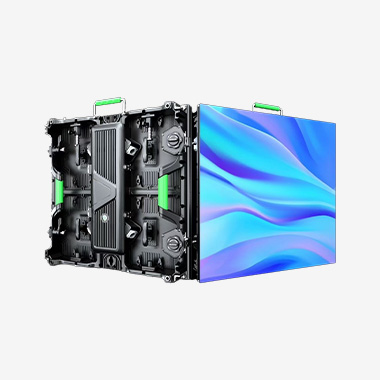
The panel structure of outdoor media LED display panels is designed to be sturdy and weather - resistant. A heavy - duty metal frame, usually made of aluminum or steel, provides the structural support for the entire display. Aluminum is a popular choice due to its high strength - to - weight ratio, corrosion resistance, and ease of fabrication, making it suitable for withstanding the harsh outdoor elements.
The front of the panel is protected by a high - quality, optically clear cover. This cover is typically made of tempered glass or polycarbonate, which not only offers excellent light transmission but also provides protection against impacts, scratches, and UV radiation. Anti - glare coatings are often applied to the cover to reduce reflections and improve the visibility of the display content, especially in bright sunlight.
The back of the panel houses the electrical components and control systems. These areas are enclosed in a waterproof and dust - proof enclosure to protect the sensitive electronics from moisture, dust, and other contaminants. Specialized gaskets and seals are used to ensure an airtight and watertight seal, preventing water ingress and maintaining the reliability of the panel in rainy or humid conditions.
Electrical and Control Systems
The electrical system of outdoor media LED display panels is designed to provide a stable and reliable power supply to the LEDs. High - capacity power supplies are required to drive the large number of LEDs in the panel, especially for high - brightness and large - format displays. These power supplies are equipped with built - in protection mechanisms against overvoltage, overcurrent, and short - circuits to safeguard the panel and connected equipment from electrical failures.
The control system is responsible for managing the display content and ensuring its smooth operation. Control cards receive digital image and video data from external sources, such as media servers, computers, or content - management systems. These control cards convert the data into electrical signals that control the brightness, color, and timing of each LED in the panel. Advanced control systems support features like real - time content updating, multi - source input switching, and synchronization with other display panels or external devices. They also enable remote monitoring and control of the panel, allowing operators to manage and update the display content from a centralized location, enhancing operational efficiency.
The working principles of outdoor media LED display panels are based on the fundamental properties of LEDs and digital signal processing, enabling the creation of dynamic and engaging visual content in outdoor settings.
LED Emission
At the heart of the outdoor media LED display panel is the light - emitting diode (LED), a semiconductor device that emits light when an electric current passes through it. When a voltage is applied across the LED, electrons from the n - type semiconductor material combine with holes in the p - type semiconductor material. This recombination process releases energy in the form of photons, resulting in the emission of light. The color of the light emitted depends on the energy bandgap of the semiconductor material; red, green, and blue LEDs are commonly used in combination to create a full - color spectrum through additive color mixing.
In each pixel of the display panel, multiple RGB LEDs work together. By precisely controlling the current flowing through each of the red, green, and blue LEDs, the display can produce a vast array of colors. The intensity of the current determines the brightness of the LED, and through careful adjustment of the brightness of each primary color, the panel can accurately reproduce the colors of the visual content, whether it's an advertisement, a public message, or a video clip.
Digital Signal Processing
The display panel receives digital image and video data from various sources, such as a computer running advertising - creation software, a media server storing pre - recorded content, or a live - streaming device. This data is typically in a digital format, such as a video file in a standard format like MP4 or a digital image file in formats like JPEG or PNG.
The control system of the display panel first decodes the incoming digital data. This involves extracting relevant information, such as pixel color values, frame - rate, and synchronization signals, from the data stream. The control cards then convert this decoded data into a series of electrical signals that can be understood by the LED drivers in the individual modules. These electrical signals are transmitted to the LED modules at a very high frequency, usually several hundred times per second. The signals control the precise timing of when each LED should turn on, off, and at what intensity, effectively creating the illusion of continuous images and videos on the display panel.
To ensure smooth playback of video content and accurate display of static images, the display panel's control system also handles frame synchronization. It matches the frame rate of the incoming video data with the refresh rate of the display panel. A mismatch between these rates can result in visual artifacts, such as stuttering, tearing, or dropped frames, which can degrade the quality of the displayed content and reduce its effectiveness in communicating the intended message.
Pulse - Width Modulation (PWM)
Pulse - width modulation (PWM) is a key technique used in outdoor media LED display panels to achieve precise brightness control. PWM works by rapidly turning the LEDs on and off at a high frequency. The duty cycle of the PWM signal, which is the proportion of time the LED is on within a given period, determines the average brightness of the LED.
For example, if the PWM signal has a duty cycle of 70%, the LED is on for 70% of the time and off for 30% of the time, resulting in an average brightness that is 70% of its maximum. By precisely adjusting the duty cycle for each LED in the pixel, the display can achieve fine - grained control over the brightness and color. This is especially important in outdoor applications, where the display may need to adapt to different lighting conditions throughout the day, from bright sunlight to dim evening light. PWM also helps to reduce power consumption by operating the LEDs at the minimum necessary brightness levels to achieve the desired visual effect, contributing to the energy - efficiency of the display panel.
Advantages
High Visibility and Impact
Outdoor media LED display panels offer exceptional visibility, making them highly effective in capturing the attention of a large audience. Their high - brightness LEDs, accurate color reproduction, and high contrast ratios enable the display of vivid, eye - catching images and videos even in bright outdoor environments. Whether it's a large - scale billboard along a busy highway or a digital signage in a crowded city square, these panels can convey messages clearly and leave a strong impression on passersby, significantly enhancing the reach and impact of advertising and informational content.
Flexibility and Adaptability
These panels provide unparalleled flexibility in terms of content management. Advertisers and operators can easily update the displayed content in real - time, allowing for targeted marketing campaigns, promotion of time - sensitive offers, and quick responses to changing market conditions. The ability to customize the size, shape, and installation location of the panels also makes them suitable for a wide range of outdoor applications, from small - scale local advertisements to large - format city - wide digital display networks.
Cost - Effectiveness in the Long Run
While the initial investment in outdoor media LED display panels can be significant, they offer long - term cost - savings. Their long lifespan, typically lasting up to 100,000 hours or more under normal operating conditions, reduces the frequency of replacement. Additionally, LEDs are energy - efficient, consuming less power compared to traditional display technologies, which helps to lower electricity bills over time. The low maintenance requirements, mainly involving periodic cleaning and basic system checks, further contribute to the overall cost - effectiveness of these panels.
Enhanced Audience Engagement
The dynamic nature of LED display panels, with the ability to show videos, animations, and interactive content, enhances audience engagement. Incorporating elements such as QR codes, social media feeds, or interactive touch - screen features (in some advanced models) can encourage passersby to interact with the display, increasing the time they spend engaging with the content and potentially leading to higher conversion rates for advertising campaigns.
Data - Driven Marketing
Outdoor media LED display panels can be integrated with data analytics tools, enabling advertisers to measure the effectiveness of their campaigns. By tracking metrics such as audience reach, engagement rates, and conversion rates, advertisers can gain valuable insights into the performance of their advertisements and make data - driven decisions to optimize future campaigns, ensuring a higher return on investment.
Challenges
High Initial Cost
The purchase, installation, and setup of outdoor media LED display panels require a substantial upfront investment. The cost includes the panels themselves, which can be expensive due to the use of high - quality LEDs and advanced manufacturing processes, as well as the control systems, installation labor, and any necessary infrastructure upgrades. For small and medium - sized businesses or organizations with limited budgets, this high initial cost can be a significant barrier to entry.
Technical Complexity
Operating and maintaining outdoor media LED display panels demand a certain level of technical expertise. Ensuring proper electrical connections, calibrating the display for accurate color and brightness, and troubleshooting any technical issues require specialized knowledge. The complexity of the control systems, which involve handling high - speed digital data and precise LED - driving signals, adds to the technical challenge. Finding and training qualified technicians who are proficient in working with these systems can be difficult, especially in regions with limited access to advanced technical resources.
Environmental and Weather - Related Issues
The outdoor environment poses numerous challenges to the performance and durability of LED display panels. Exposure to direct sunlight can cause overheating, which may lead to reduced brightness, color degradation, and even premature failure of the LEDs. Harsh weather conditions such as rain, snow, strong winds, and extreme temperature fluctuations can also damage the panel's structure and electrical components. Additionally, outdoor panels are vulnerable to vandalism, theft, and accidental damage, requiring additional security measures and maintenance efforts.
Content Creation and Management
Creating high - quality content that is suitable for outdoor media LED display panels is a complex task. The content needs to be designed to be easily visible and engaging from a distance, with large, bold text, high - contrast graphics, and simple, clear images. Moreover, managing and scheduling the content across multiple panels in different locations requires a reliable and efficient content - management system and trained operators. Coordinating the display of various types of content, such as live video feeds, pre - recorded advertisements, and real - time information updates, can also be challenging.
Regulatory and Permitting Hurdles
Outdoor media LED display panels are subject to various regulations and permitting requirements. Different municipalities and regions have specific rules regarding the size, location, brightness, and operating hours of outdoor displays to prevent light pollution, ensure public safety, and maintain the aesthetic appearance of urban areas. Obtaining the necessary permits and complying with these regulations can be a time - consuming and costly process, adding to the overall complexity of implementing outdoor LED display projects.
Future Trends
Sustainable and Energy - Efficient Solutions
As environmental concerns grow globally, the future of outdoor media LED display panels will focus on sustainability and energy efficiency. Manufacturers will develop more energy - efficient LED chips, reducing power consumption without sacrificing brightness or visual quality. Smart power management systems will become more sophisticated, automatically adjusting the panel's brightness based on ambient light conditions, time of day, and audience presence. For example, during the daytime when sunlight is strong, the panels will increase their brightness to ensure visibility, while at night, they will dim to save energy and reduce light pollution.
The use of recyclable and environmentally friendly materials in panel construction will also become standard. From the LED modules to the frame and packaging, every component will be designed with recyclability in mind. Some companies may explore circular economy models, where used panels are collected, refurbished, and reused, minimizing waste and reducing the environmental impact of outdoor LED displays. Additionally, the integration of renewable energy sources, such as solar panels, will become more prevalent, especially for remote or off - grid locations. This will not only make the displays more sustainable but also reduce operational costs in the long run.
Flexible and Adaptive Display Forms
The future of outdoor media LED display panels will break free from traditional rectangular shapes. Flexible and stretchable LED displays will become more common, allowing for unique and eye - catching installations. These panels can be wrapped around curved surfaces, such as the exteriors of buildings, creating seamless and dynamic advertising canvases. Adaptive displays, which can change their shape, size, or configuration, will also emerge. For instance, a series of small LED panels could be programmed to form different patterns or shapes based on the advertising content, adding an element of surprise and novelty. This flexibility in design will enable advertisers to create more creative and memorable outdoor displays that stand out in a crowded marketplace.
Enhanced Interactivity and Immersive Experiences
Outdoor LED display panels will increasingly incorporate technologies to create more interactive and immersive experiences. Augmented reality (AR) and virtual reality (VR) will play a significant role in this evolution. AR - enabled displays will allow passersby to use their smartphones or AR glasses to interact with the content on the panel. For example, an outdoor advertisement for a new product could offer an AR experience where users can virtually try out the product or explore its features in a 3D environment. VR - integrated displays could create immersive brand experiences, such as virtual tours of a resort or a factory, captivating the audience and increasing brand engagement.
In addition, touch - screen capabilities and gesture - control technologies may be integrated into outdoor LED displays in certain applications. This would enable direct interaction with the display, allowing users to access more information, play games, or participate in promotional activities, further enhancing the interactivity and user experience of outdoor media.
Conclusion
Outdoor media LED display panels have revolutionized the way information is communicated and advertising is conducted in outdoor spaces. Their high visibility, flexibility, cost - effectiveness in the long term, and ability to engage audiences have made them an indispensable tool for advertisers, businesses, and public institutions. With applications ranging from advertising billboards and digital signage in urban areas to sports venues, event promotion, and public information dissemination, these panels have significantly enhanced the visual landscape of cities and public spaces.
However, the widespread adoption of outdoor media LED display panels is not without challenges. High initial costs, technical complexity, environmental and weather - related issues, content creation and management difficulties, and regulatory hurdles all pose significant obstacles. Overcoming these challenges requires continuous innovation in technology, design, and operational processes, as well as collaboration between manufacturers, advertisers, and regulatory bodies.
Looking ahead, the future of outdoor media LED display panels is promising, with exciting trends on the horizon. Higher resolutions, integration with smart technologies, sustainable and energy - efficient solutions, flexible display forms, and enhanced interactivity will redefine the capabilities of these panels. These advancements will not only address existing challenges but also open up new opportunities for more impactful, targeted, and engaging outdoor media experiences. As technology continues to evolve, outdoor media LED display panels will undoubtedly remain at the forefront of the outdoor advertising and information dissemination industry, shaping the way we interact with urban environments and consume information in the public sphere.


Copyright © 2026 Shenzhen Cogo Technology Co.,Ltd.
All Rights Reserved

 Previous article