




 Chat Now
Indoor advertising LED display panels have become a transformative tool for the retail sector, revolutionizing how shops communicate with customers, enhance brand identity, and drive sales. Unlike traditional static signage or printed posters, these dynamic digital canvases allow retailers to create engaging, adaptable, and high-impact visual experiences within their stores. Designed specifically for the controlled environment of a shop floor, these displays blend high-resolution imagery with reliability and ease of use, making them an essential component of modern retail marketing strategy.
The core function of an indoor LED panel in a shop is to capture attention and convey information in the most compelling way possible. In a competitive retail environment, where attracting and retaining customer interest is paramount, dynamic content—vibrant videos, animated promotions, and real-time information—proves far more effective than static alternatives. These displays can be strategically placed in store windows to lure passersby, mounted on walls to serve as brand statement pieces, or integrated into shelving to provide product information and pricing, effectively guiding the customer journey from entrance to point-of-sale.
The adoption of this technology is driven by the need for agility in marketing. For a shop owner, the ability to change promotions, prices, or featured products instantly from a central computer is a monumental advantage. A coffee shop can promote pastries in the morning and salads at lunch. A clothing store can instantly update a display to show that a new collection has arrived or that a specific item is on sale, responding to inventory levels in real-time. This flexibility eliminates the cost and waste associated with printing and installing new physical signage for every campaign.
Furthermore, these displays are designed with aesthetics in mind. Modern indoor LED panels are sleek, with ultra-narrow bezels that create a nearly seamless look when tiled together. Their ability to produce rich, saturated colors and deep contrasts makes them perfect for showcasing products in their best light, literally and figuratively. Whether displaying the intricate detail of a piece of jewelry, the vibrant colors of fresh produce, or the sleek design of electronics, LED technology enhances the visual appeal of the merchandise itself.
In summary, indoor advertising LED displays are no longer a luxury for shops; they are a critical investment in customer engagement and operational efficiency. They represent a shift from passive advertising to active communication, enabling retailers to create a responsive, immersive, and modern brand environment that resonates with today's consumers.
The design and construction of an indoor LED panel for shop advertising prioritize aesthetics, image quality, and seamless integration into the retail environment. Unlike their outdoor or rental counterparts, the emphasis is less on brute-force durability and more on achieving a sophisticated, visually pleasing appearance that complements store decor.
A. Core Design Philosophy: Slim, Silent, and Seamless
The guiding principles for these panels are:
Slim Form Factor: Displays must be thin and lightweight to allow for flexible mounting options, including flush against walls or hanging from ceilings, without being obtrusive.
Minimal Bezels: The physical border (bezel) around the screen is minimized, often to less than 1mm. This allows multiple panels to be tiled together into a larger video wall with an almost seamless appearance, crucial for a high-end, uninterrupted visual experience.
Silent Operation: Shops are quiet environments. Therefore, passive cooling is mandatory. The displays must dissipate heat without noisy fans that would disrupt the customer experience.
Aesthetic Integration: The panels are designed to look like a permanent fixture of the shop's design language, often with options for custom frames or finishes to match interior decor.
B. Key Components and Materials:
LED Modules: The building blocks of the display.
LED Type: Surface-Mount Device (SMD) technology is universal, with -in-1 packages being the standard. The trend is towards smaller LED chips to enable finer pixel pitches for closer viewing distances.
Pixel Pitch: This is the most critical specification for indoor shops. It refers to the distance (in millimeters) from the center of one LED cluster (pixel) to the next. For shops where customers may be standing very close (1-3 meters), a fine pixel pitch (P1.9 to P2.9) is essential to prevent the image from looking pixelated. For larger stores where viewing distance is greater, a P3.9 or P4.8 may be sufficient and more cost-effective.
Face Mask: A matte black mask surrounds each LED to absorb ambient light and dramatically improve contrast ratios, making colors pop even in well-lit stores.
Cabinet Design:
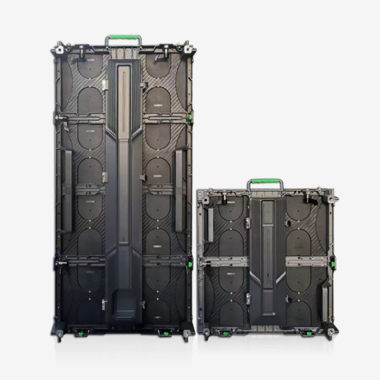
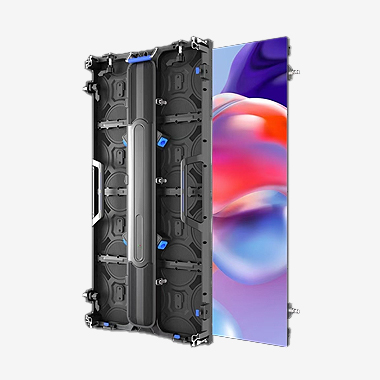
Material: Lightweight aluminum or magnesium alloy is used for the frame and cabinet back, providing strength and acting as a heat sink.
Profile: Cabinets are incredibly slim, often with a depth of less than 100mm for front-service models, allowing for a sleek, wall-mounted appearance.
Mounting System: Magnetic or quick-lock mechanisms are often used for tool-less installation and maintenance, allowing store staff or technicians to easily replace modules if necessary.
Thermal Management:
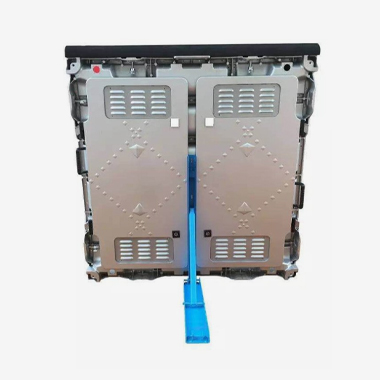
Passive Cooling: This is the hallmark of a quality indoor panel. The entire metal structure of the cabinet acts as a heat sink, dissipating the heat generated by the LEDs through natural convection. Vents are strategically placed to allow hot air to rise out and cool air to be drawn in silently.
Connectivity and Control:
Integrated System: Many modern indoor displays are "all-in-one," with the power supply, receiving card, and sometimes even a media player built directly into the cabinet. This drastically simplifies installation, reducing it to just mounting the screen, plugging in power, and connecting a single network cable.
Cable Management: Design includes channels and covers for neat routing of power and data cables, maintaining a clean and professional installation look.
The construction of an indoor shop display is a exercise in precision engineering focused on the viewer's experience. Every design choice is made to make the technology itself disappear, leaving only the stunning, vibrant content to engage the customer.
The working principle of an indoor LED display is a symphony of digital precision and optical science, engineered to deliver flawless image quality in a retail environment. The process involves generating light, controlling it with immense precision, and managing the entire system for reliability.
A. Image Creation: Additive Color Mixing and PWM
At the most fundamental level, each pixel on the display is a cluster of red, green, and blue (RGB) micro-LEDs.
Additive Color Mixing: By varying the intensity of these three primary colors, the display can create millions of distinct hues. When all three are off, the pixel is black. When all three are at full intensity, the pixel is perceived as white.
Pulse-Width Modulation (PWM): The intensity of each LED is not controlled by reducing voltage (which would alter the color). Instead, it is controlled using PWM. The driver ICs switch each LED on and off thousands of times per second. The human eye perceives a longer "on" pulse within each cycle as a brighter light. This allows for exquisite control over brightness and grayscale, enabling smooth color gradients and deep, realistic blacks.
B. The Signal Chain: From Content to Light
Content Source & Management: Content is typically created on a computer and managed through user-friendly Content Management Software (CMS). This can be a local software on a PC or a cloud-based platform. The shop owner can schedule playlists—e.g., morning promotions, afternoon highlights, and evening closing messages—all remotely.
Media Player: A small media player (either an external box or an integrated chip inside the display) stores the content and plays it back. It outputs a standard video signal (usually HDMI) to the LED display's processor.
Video Processing: The heart of the display is its sending card or integrated processor. This device performs several critical tasks:
Scaling: It takes the input resolution (e.g., 1920x1080) and maps it perfectly to the native, non-standard resolution of the LED wall.
Color Calibration: It applies calibration data to ensure every module and every panel displays colors uniformly, so the entire screen looks like one cohesive image without color shifts.
Data Distribution: It packetizes the image data and sends it over a network cable (e.g., CAT5e/6) to the receiving cards in the display.
Panel-Level Control: Each cabinet or module has a receiving card. This card takes its specific portion of the overall image data and drives the driver ICs on the LED modules. These driver ICs are the final link, executing the PWM commands that physically turn each individual LED on and off with precise timing.
C. Adaptive Performance:
Brightness Control: While not as extreme as outdoor displays, many indoor panels feature ambient light sensors. The display can automatically slightly dim its brightness during evening or low-light hours to conserve energy and ensure the content is not glaringly bright for customers, maintaining visual comfort.
This entire process happens in real-time, resulting in a brilliantly sharp, vibrant, and dynamic visual display that is perfectly suited to captivate shoppers and enhance the retail atmosphere.
Implementing LED advertising displays in a shop offers a powerful set of advantages that can significantly enhance retail operations, but it also presents specific challenges that require careful consideration.
Advantages:
Dynamic and Engaging Customer Experience: Moving images and video capture far more attention than static signs. This increased engagement translates to longer dwell times in the store, higher brand recall, and ultimately, increased sales conversion rates.
Unparalleled Operational Flexibility and Agility: The ability to change content instantly is a game-changer. Stores can:
Update pricing and promotions in real-time.
Respond to inventory levels (e.g., promote overstocked items).
Implement dayparting (show breakfast menus in the morning, dinner specials at night).
Easily align marketing with current events, holidays, or social media trends.
Enhanced Brand Image and Perception: A high-quality digital display projects an image of innovation, modernity, and success. It elevates the perceived value of the brand and the products it sells, allowing a store to position itself as a leader in its category.
Cost Savings on Physical Signage: Over time, LED displays eliminate the recurring costs of printing, shipping, and installing physical posters, banners, and sale signs. This reduces operational waste and leads to a strong return on investment.
Potential for Integration and Interactivity: Displays can be integrated with other systems. For example, they can connect to a point-of-sale (POS) system to automatically update prices or show live social media feeds. Adding touchscreens or QR codes can create interactive experiences, allowing customers to explore products in depth.
Challenges:
Initial Investment Cost: The upfront cost of purchasing and professionally installing a high-resolution LED display is significant. This can be a barrier for small businesses, though financing options and decreasing technology costs are making it more accessible.
Content Creation and Management: The effectiveness of the display is 100% dependent on the quality of its content. Retailers must either develop in-house expertise or hire an agency to create professional, engaging video content, which is an ongoing cost and effort.
Technical Complexity and Maintenance: While generally reliable, LED displays are complex electronic systems. Shop owners need a basic understanding of the technology or a reliable service partner to handle troubleshooting, software updates, and potential repairs (e.g., replacing a single failed module).
Viewing Distance and Pixel Pitch Selection: Choosing the wrong pixel pitch for the viewing distance is a common mistake. A pitch that is too large will appear pixelated to close viewers, ruining the effect. Careful planning is required to balance cost with image quality.
Ambient Light Management: The shop's lighting must be considered. Intense spotlights or sunlight from windows falling directly on the screen can wash out the image, reducing its effectiveness. Optimal placement and sufficient display brightness are key.
Despite these challenges, the advantages of dynamic communication, brand enhancement, and long-term cost savings make indoor LED displays a highly compelling investment for forward-thinking retailers.
The applications for indoor LED displays in retail are vast and varied, limited only by creativity. Simultaneously, technological advancements are continuously opening new doors for how this technology can be used.
Applications:
Window Displays: To create captivating "digital storefronts" that stop pedestrians in their tracks. Animated content can tell a story, showcase products in use, or promote flash sales, effectively working 24/7 to attract foot traffic.
Wall-Sized Branding and Video Walls: Large-format video walls behind the checkout counter or on a feature wall create a powerful brand statement and immersive atmosphere. They can show lookbooks, brand heritage videos, or artistic content that defines the store's identity.
Point-of-Sale (POS) and Endcap Displays: Smaller, strategically placed displays near the checkout or at the end of aisles to promote impulse buys, cross-sell items, or highlight special offers at the moment of purchase decision.
Product Information and "Smart Shelves": Replacing paper price tags with small LED displays integrated into shelving. These can not only show dynamic pricing but also product specifications, origin stories, inventory levels, or QR codes for more information.
In-store Navigation and Wayfinding: Large, overhead displays can help customers navigate a large department store or supermarket, improving the shopping experience and reducing frustration.
Future Trends:
Finer Pixel Pitches and MicroLED: The push towards smaller LEDs will continue. MicroLED technology will enable pixel pitches below 1mm, making 4K and 8K resolution on large video walls a reality, even for viewers standing just inches away. This will be ideal for luxury retail where every detail counts.
Transparent LED Displays: This technology will see wider adoption in shops. Transparent LED screens can be installed in store windows, allowing shoppers to see both the physical products inside and the digital overlays of pricing or information, creating a "magic glass" effect.
Integration with AI and Data Analytics: Displays will become smarter. Using cameras (with privacy-focused anonymization), AI can analyze customer demographics (age, gender) and engagement in real-time. The content on the screen can then automatically adapt to the audience in front of it, showing relevant products and offers.
Interactive and Personalized Experiences: Touchscreens will become more robust and integrated. Shoppers will be able to browse entire catalogs, check inventory, customize products, and even place orders directly from the display. NFC and mobile integration will allow customers to "pull" information from the screen to their phone.
Sustainability Focus: Energy efficiency will be a major driver. Future displays will use even more efficient LED drivers and low-power chips to reduce operational costs and environmental impact. Recyclable materials and longer-life components will also be a focus.
The future of in-store LED advertising is hyper-personalized, interactive, and seamlessly integrated into the physical retail space. It will shift from being a broadcast tool to a conversational interface between the brand and the customer.
6. Conclusion: The Indispensable Tool for Modern Retail Engagement
Indoor advertising LED display panels have unequivocally evolved from a novel luxury to an indispensable tool in the modern retailer's arsenal. They represent a fundamental shift in how shops communicate, moving from a static, one-way monologue to a dynamic, responsive, and captivating dialogue with customers. In an era where e-commerce offers convenience, these displays are a key weapon for physical stores to offer an experience—an environment that is engaging, immersive, and impossible to replicate online.
The core strength of this technology lies in its unique fusion of flexibility and impact. The agility to change messaging instantly empowers retailers to operate with unprecedented efficiency and relevance, while the sheer visual power of high-resolution video ensures that the message is not just seen but felt. This combination drives tangible business outcomes: increased foot traffic, longer dwell times, enhanced brand perception, and higher sales conversions.
While the initial investment and content creation demands present challenges, they are increasingly outweighed by the long-term benefits and decreasing costs of technology. The ROI is measured not just in sales lifts but also in significant savings on printed materials and the invaluable data and customer engagement insights that digital platforms can provide.
Looking forward, the trajectory is clear. LED displays will not remain simple broadcast screens. They are on a path to becoming intelligent, interactive nodes within the connected retail ecosystem. Integrated with AI, IoT, and data analytics, they will deliver personalized experiences that blur the line between the physical and digital worlds.
In conclusion, the indoor LED advertising display is more than just a sign; it is the dynamic heart of the modern retail environment. It is a critical investment for any shop that aims to thrive in the experience economy, offering a proven way to captivate audiences, empower employees, and build a brand that is perceived as innovative and customer-centric. For the future of retail, the message is clear: it's dynamic, it's digital, and it's illuminated.


Copyright © 2026 Shenzhen Cogo Technology Co.,Ltd.
All Rights Reserved

 Previous article