




 Chat Now
The evolution of visual display technology represents one of the most significant threads in the tapestry of modern innovation, moving from cathode-ray tubes to plasma, liquid crystal, and finally, to the technology that is now dominating both specialized and mass markets: the Light Emitting Diode (LED) display. A full-color LED display is a flat-panel screen that utilizes a dense array of individually controllable light-emitting diodes (LEDs) to generate a dynamic visual output capable of reproducing the entire spectrum of visible color. This technology has transcended its niche applications to become the gold standard for large-scale, high-impact visual communication, fundamentally altering our urban environments, entertainment experiences, and commercial landscapes.
The principle behind a full-color display is additive color mixing. By combining three primary-colored light sources—red, green, and blue (RGB)—in varying intensities, it is possible to simulate a vast array of hues perceived by the human eye. Each cluster of red, green, and blue LEDs functions as a single pixel, the fundamental unit of a digital image. The precise control of the intensity of each of these sub-pixels allows the display to render millions of colors with stunning fidelity. This core principle, while simple in concept, requires immense engineering sophistication to execute on a massive scale with reliability and precision.
The journey of the LED display began with monochromatic and limited-color signs, often used for simple text-based information like stock tickers or transportation schedules. The development of ultra-bright blue LEDs in the early 1990s (a breakthrough earning the Nobel Prize in Physics in 2014) was the final, crucial piece that enabled the creation of practical and vibrant white light and, by extension, full-color RGB displays. This breakthrough catalyzed an exponential growth in the technology's capabilities, leading to the high-resolution, incredibly bright, and energy-efficient screens we see today.
The applications of full-color LED technology are now virtually limitless. They form the dazzling digital canvases of Times Square and Piccadilly Circus. They are the colossal video walls behind concert stages that create immersive environments for audiences of tens of thousands. They are the transparent screens in retail store windows, the cutting-edge direct-view televisions in luxury homes, and the indispensable tools in corporate boardrooms and command-and-control centers. In stadiums, they bring fans closer to the action with instant replays; in airports, they guide millions of passengers; and on highways, they deliver critical safety alerts.
The dominance of this technology is driven by its unique and compelling advantages over alternative solutions like LCD or projection. LEDs offer unparalleled brightness, allowing them to remain visible even in direct sunlight—a feat impossible for other technologies. They possess superior longevity and durability, with lifespans often exceeding 100,000 hours. Their modular nature allows them to be scaled to virtually any size or shape, from a small retail sign to a building-sized media façade. Furthermore, as a direct-emissive technology (each pixel produces its own light), they offer perfect black levels, infinite contrast ratios, wide viewing angles, and fast response times, eliminating the motion blur and color shift associated with LCDs.
In essence, the full-color LED display is more than just a product; it is a platform for innovation. It represents the convergence of materials science, electrical engineering, software development, and creative design. It has democratized large-format visual experiences, making them more accessible, reliable, and impactful than ever before. As we delve into the intricacies of its design, operation, and future potential, it becomes clear that this technology is not merely a way to show images; it is a transformative medium that is actively shaping how we communicate, entertain, and perceive the world around us.
The creation of a full-color LED display is a masterclass in interdisciplinary engineering, balancing optical performance, structural integrity, thermal management, and environmental protection. Unlike consumer electronics designed for a controlled indoor setting, many LED displays must perform flawlessly while exposed to the elements, physical stress, and constant operation. This demands a robust, modular, and serviceable architecture from the pixel level up.
The Pixel: SMD vs. DIP
The heart of the display is the pixel. There are two primary packaging technologies, though one has become overwhelmingly dominant:
Dual In-Line Package (DIP): An older technology where individual, bullet-shaped LED lamps are inserted into a PCB. Each red, green, and blue LED is a separate component, making the pixel large and the resolution low. DIP is extremely robust and bright, making it suitable for very large, long-viewing-distance outdoor screens like those on stadiums, but it is incapable of producing fine-pitch, high-resolution images.
Surface-Mounted Device (SMD): This is the current industry standard. All three RGB LED chips are packaged together onto a single substrate to form a single, compact, integrated component that is then soldered directly onto the surface of a PCB. This allows for a dramatically reduced pixel size and pitch (the distance between pixels). SMD technology enables high-resolution displays, better color mixing and consistency, a wider viewing angle, and a more seamless surface. Virtually all indoor and most modern outdoor displays use SMD technology.
The Module: The Building Block
Multiple SMD pixels are mounted onto a printed circuit board to form an LED module. This is the fundamental, replaceable unit of the display. A typical module might be 16x16 or 32x32 pixels. The PCB contains the circuitry to distribute power and data to each pixel. Modules are designed for front-serviceability, meaning they can be installed and removed from the front of the display, which is crucial for maintenance, especially on large installed screens.
The Cabinet: The Fortress
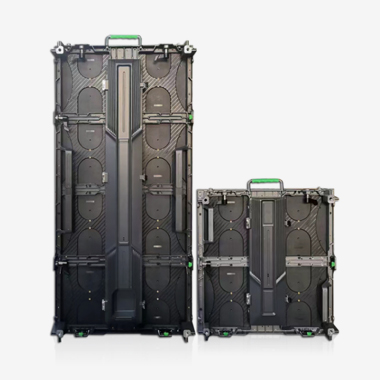
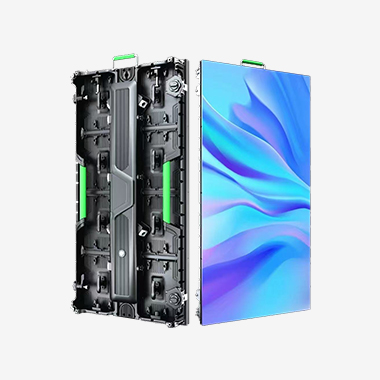
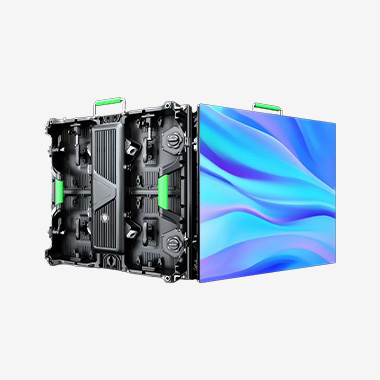
Modules are mounted into a heavy-duty structure called a cabinet or panel. Cabinets are typically made of die-cast aluminum or steel for strength and lightweight properties. They are engineered to perform several critical functions:
Environmental Protection: Outdoor cabinets are rated at least IP65 (Ingress Protection), meaning they are completely dust-tight and protected against low-pressure water jets from any direction. This rating ensures the delicate electronics inside are safe from rain, snow, dust, and humidity.
Thermal Management: LEDs generate heat, and excessive heat is their primary enemy, leading to accelerated brightness degradation (lumen depreciation) and color shift. Cabinets incorporate sophisticated cooling systems. For outdoor units, this is typically achieved through passive heat sinks and forced convection using fans and vents that are baffled to maintain the IP rating. For high-brightness indoor displays or demanding outdoor environments, fully sealed cabinets with integrated air conditioning or liquid cooling systems are used.
Structural Integrity: Cabinets are designed to lock together with precision to form a large, seamless, and flat video wall without visible gaps or bezels. They include mounting points for the support structure.
The Support Structure: The Skeleton
The cabinets are attached to a support structure, which can be a free-standing frame, a truss system, or a building-integrated framework. This structure must be engineered to handle the significant weight of the entire display (which can be many tons) and withstand environmental loads like wind, snow, and seismic activity. Safety is the paramount concern in this design phase.
The Internal Components: The Nervous System
Within each cabinet resides the vital electronics that bring the display to life:
Power Supplies: Convert AC mains power to the low-voltage DC power required by the LEDs. Redundancy is key, with N+1 power supply configurations being common to ensure a single failure doesn't cause a blackout.
Receiving Cards: Act as the local controllers for each cabinet, receiving data from the main video processor and distributing it to the specific rows and columns of modules within their domain.
Hubs and Cabling: A complex network of data and power cables runs throughout the display, ensuring perfect synchronization. High-quality, shielded cables are essential to prevent data corruption and electromagnetic interference.
Materials Science: The Unsung Hero
The performance and longevity of an LED display are deeply tied to materials. The epoxy resin encapsulating the LED chip must be resistant to UV yellowing. The PCB substrates must have high thermal conductivity to draw heat away from the LEDs. Solder joints must withstand thermal expansion and contraction over thousands of cycles. The choice of materials directly impacts the display's resistance to color shift, pixel failure, and overall lifespan, making materials science a critical field in the ongoing advancement of LED display technology.
The operation of a full-color LED display is a complex, real-time orchestration of data processing, power management, and precise optoelectronic control. It transforms a standard video signal into a breathtaking visual experience through a meticulously coordinated process.
1. Content Creation and Input:
The journey begins with digital content—a video file, animation, or live feed. This content is created or formatted to match the native resolution of the LED display, which is often a custom aspect ratio and pixel count (e.g., 3840x2160 for 4K, though many large walls have non-standard resolutions). This content is fed into a Content Management System (CMS), software that schedules playlists, manages multiple zones on a screen, and can integrate live data feeds (news, weather, social media).
2. Data Transmission and the Video Processor: The Brain
The CMS sends the scheduled content data to the display's video processor via a high-bandwidth connection (HDMI, DVI, SDI, or network protocols like HDBaseT). The video processor is the intellectual core of the entire system; its role is far more complex than a simple relay. It performs several critical real-time functions:
Resolution Scaling: It takes the incoming video signal and scales it to match the native, often non-standard, resolution of the LED wall. Advanced processors use sophisticated algorithms to do this without introducing artifacts, preserving image sharpness.
Color Calibration and Uniformity Correction: This is perhaps the processor's most vital task. Due to microscopic variations in LED manufacturing, no two LEDs are perfectly identical in color output. The processor applies a complex calibration matrix to each individual pixel, compensating for these variations. This ensures that a command to display "pure white" results in the exact same shade of white across the entire display, from corner to corner, eliminating splotches or discolorations.
Brightness Management: The processor is connected to an ambient light sensor (photocell). It automatically adjusts the overall brightness of the screen based on the surrounding light conditions. This is crucial for viewer comfort, energy savings, and regulatory compliance (e.g., dimming at night to reduce light pollution and driver distraction).
Image Enhancement: High-end processors can perform advanced tasks like noise reduction, contrast enhancement, and frame-rate interpolation to optimize the source material for public viewing.
3. Pixel Driving: Pulse-Width Modulation (PWM)
The processed video data is broken down and distributed to the individual receiving cards in each cabinet. These cards then send the data to the driver integrated circuits (ICs) on the modules themselves. These driver ICs are the workhorses that control the light output of each individual sub-pixel (red, green, and blue). They do not use variable voltage to control brightness (which would alter the LED's color); instead, they use a technique called Pulse-Width Modulation (PWM).
PWM works by turning the LED on and off at an extremely high frequency—thousands of times per second. The human eye cannot perceive this rapid flickering; it integrates the light pulses into a perception of steady light. The "duty cycle" refers to the percentage of time the LED is on during each cycle.
A 100% duty cycle means the LED is on continuously, resulting in maximum brightness.
A 50% duty cycle means the LED is on half the time and off half the time, resulting in perceived half brightness.
A 10% duty cycle results in very dim light.
By independently controlling the PWM duty cycle for each red, green, and blue sub-pixel, the driver IC can create any combination of color and brightness for that pixel. A 16-bit driver IC can control 65,536 levels of intensity per color, enabling the display to produce over 281 trillion possible color shades.
4. Refresh Rate and Gray Scale: The Illusion of Fluidity
The refresh rate (how many times per second the entire screen is redrawn) and gray scale (the number of brightness levels, controlled by PWM) are interconnected. A high refresh rate (e.g., 3840Hz or higher) is essential to eliminate flicker—both perceptible to the human eye and for cameras, which would otherwise show black bars rolling across the screen. A high gray scale (e.g., 16-bit) is necessary to produce smooth color gradients, especially in dark areas of the image, preventing "color banding" where distinct lines appear between similar shades.
This entire pipeline—from data processing to PWM control—happens in a continuous, real-time loop, creating the vibrant, fluid, and captivating imagery that defines the modern full-color LED display.
The widespread adoption of full-color LED technology is a direct result of its overwhelming advantages over competing display solutions. However, like any powerful technology, it presents significant challenges that must be acknowledged and managed.
Advantages:
Superior Visual Performance:
Brightness: LED displays can achieve extreme brightness levels (5,000+ nits for outdoor, 1,500+ for indoor), making them viewable in direct sunlight, where LCDs and projectors appear washed out.
Contrast Ratio: As a direct-emissive technology (each pixel is its own light source), LEDs can turn off completely to produce true, deep blacks. This creates an infinite contrast ratio, far surpassing the limited performance of LCDs that rely on a always-on backlight.
Viewing Angle: LEDs maintain color fidelity and brightness across ultra-wide viewing angles (often 160°+ vertically and horizontally), unlike LCDs, which suffer from color shift and dimming when viewed off-axis.
Response Time: LEDs have a microsecond response time, eliminating the motion blur and ghosting effects associated with slower LCD liquid crystals. This is critical for fast-action sports and gaming.
Scalability and Form Factor: The modular nature of LED technology means displays can be built to virtually any size or aspect ratio without a visible bezel or seam. They can also be curved, folded, or built into non-rectangular shapes, offering unparalleled design flexibility for creative installations like cylindrical columns or immersive tunnels.
Reliability and Longevity: LEDs are solid-state devices with no moving parts and are incredibly durable. High-quality displays are rated for 100,000 hours of operation (over 11 years of continuous use). Their modular design also means individual components can be easily replaced, extending the display's functional life indefinitely.
Consistency and Seamlessness: Unlike video walls made of multiple LCD panels, which have visible bezels that break the image, an LED video wall is perfectly seamless. Advanced calibration ensures perfect color and brightness uniformity across the entire surface.
Operational Efficiency: While power consumption can be high, LEDs are inherently energy-efficient light sources. Furthermore, their ability to dim based on ambient light and their long lifespan (eliminating frequent bulb replacements required in projection) contribute to a lower total cost of ownership over time.
Challenges:
Cost: The initial capital investment for a high-quality LED display, especially one with a fine pixel pitch, is significantly higher than for a comparable LCD video wall or projection system. This includes not just the screen itself, but also the video processor, mounting structure, and installation labor.
Power Consumption and Thermal Management: Large-format displays consume a substantial amount of electricity, leading to high operational costs and a large carbon footprint. This energy is converted primarily into heat, which must be actively managed with cooling systems that themselves consume energy and can be a point of failure.
Pixel Pitch and Resolution Limitations: While fine-pitch technology is advancing rapidly, achieving resolutions comparable to a 4K/8K consumer television on a very large scale remains prohibitively expensive. The required pixel pitch for such resolutions on a large wall is extremely fine, pushing the boundaries of manufacturing and driving costs astronomically high.
Complexity of Maintenance: While modules are replaceable, maintaining a large display requires specialized technical knowledge and a stock of spare parts. Diagnosing and replacing a single failed component among millions can be like finding a needle in a haystack, though modern systems have sophisticated diagnostics to identify exact failure locations.
Moiré Patterns and Camera Compatibility: The discrete pixel structure of an LED display can interfere with the pixel grid of a digital camera sensor, creating unwanted wavy patterns known as moiré. This is a major challenge for broadcasters and live event producers. Mitigating it requires technical adjustments like using optical low-pass filters on cameras, slightly defocusing the lens, or carefully matching the camera's resolution to the display's pitch.
Perceived Image Quality: At very close viewing distances, the space between pixels (the "pitch") becomes visible, and the image can appear pixelated. The concept of "optimal viewing distance" is therefore critical to the user experience and must be carefully considered during the design phase of any installation.
The application landscape for full-color LED displays has exploded, moving far beyond traditional advertising into nearly every facet of modern life. Concurrently, several transformative trends are poised to redefine the capabilities and roles of this technology in the coming years.
Expanding Applications:
Cinema and Direct-View LED Walls: The ultimate validation of the technology's quality is its adoption in digital cinema. LED screens like Samsung's "Onyx" and others are replacing traditional projectors in premium cinemas, offering superior brightness, contrast, and color for a more immersive viewing experience. This is rapidly extending into high-end home theaters.
Corporate and Control Rooms: In boardrooms and mission-critical environments like network operation centers (NOCs) and security command centers, LED walls provide seamless, reliable platforms for data visualization, video conferencing, and monitoring complex systems in real-time.
Virtual Production and XR Stages: This is one of the most revolutionary applications. LED walls are used as dynamic, photorealistic backdrops for film and television production. Actors can perform in front of these screens, with the environment reflected realistically on them, eliminating the need for location shooting and enabling incredible creative flexibility. This merges into Extended Reality (XR), where the live camera feed is composited with the CGI background on the LED wall in real-time.
Retail and Experiential Marketing: Transparent LED screens are integrated into store windows, allowing for dynamic advertisements without completely obscuring the view inside. Interactive LED floors and walls create engaging brand experiences in flagship stores and at trade shows.
Architectural Media Facades: Buildings are no longer static structures; they are becoming dynamic canvases. LED technology is integrated into architectural elements, transforming skylines into public art displays that can celebrate events, display information, or simply create an ever-changing aesthetic.
Future Trends:
MicroLED and Mini-LED: This is the holy grail of display technology. MicroLED involves using microscopic, inorganic LEDs that are transferred onto a substrate. Each pixel is self-emissive and can be made incredibly small, enabling resolutions that rival OLED but with higher brightness, better efficiency, and no risk of burn-in. While still facing massive manufacturing and cost challenges, it promises to revolutionize everything from wearables to massive video walls. Mini-LED is a transitional technology, using smaller LEDs as the backlight for LCD screens, offering improved contrast as a stepping stone to true MicroLED.
Integration with AI and IoT: Displays will become intelligent nodes in the Internet of Things (IoT). Artificial Intelligence will be used for:
Predictive Maintenance: AI algorithms will analyze performance data to predict component failures before they happen, scheduling maintenance proactively to avoid downtime.
Content Optimization: AI will analyze real-time data (e.g., weather, traffic flow, audience demographics from anonymized sensors) to automatically select and display the most relevant content.
Enhanced Interactivity: Displays will interact with viewers through gesture control and personalized content, driven by AI interpretation of audience behavior.
Transparency and Flexibility: The development of more transparent and flexible LED substrates will continue. We will see wider adoption of displays on glass curtains of skyscrapers, in car windshields for augmented reality, and on curved, free-form surfaces that currently seem impossible.
Sustainability Focus: The industry will be driven towards greater energy efficiency through the development of new LED chip architectures, more efficient driver ICs, and smart power management systems that minimize consumption without compromising performance. The use of recyclable materials and designs for easier end-of-life disassembly will also become a priority.
Holographic and 3D Effects: While true holography remains elusive, advances in lenticular lens technology and high-refresh-rate LEDs are enabling autostereoscopic 3D displays (glasses-free 3D) for niche applications. This could open up new frontiers in advertising, design visualization, and entertainment.
The future of the full-color LED display is not just as a dumb screen, but as an intelligent, connected, and adaptive visual interface that seamlessly integrates into our built environment and our digital lives.
Conclusion
The ascent of the full-color LED display from a specialized novelty to a ubiquitous and transformative technology is a narrative of relentless innovation and market validation. It stands as a definitive answer to the growing demand for larger, brighter, more reliable, and more engaging visual experiences in an increasingly digital and visual world. This technology has not merely replaced its predecessors; it has created entirely new categories of communication, art, and entertainment that were previously unimaginable.
Its success is rooted in a fundamental superiority of core performance characteristics. The ability to command attention with unparalleled brightness, to render images with breathtaking contrast and color fidelity, and to do so reliably on a massive scale for years on end, has made it the undisputed champion for high-impact applications. The modular architecture of LED technology has broken the size barrier, freeing visual experiences from the constraints of glass panels and projector throw distances, and allowing them to scale to the limits of engineering and ambition.
However, the journey is far from over. The technology continues to evolve at a blistering pace. The challenges of cost, power consumption, and ultra-fine pitch are being aggressively addressed through advancements in manufacturing, materials science, and electronics design. The emergence of MicroLED looms on the horizon, promising to further blur the line between consumer electronics and professional-grade displays, bringing this luminous quality into our living rooms and onto our desks.
Perhaps the most significant evolution is the transition from a passive display to an intelligent surface. The integration of sensors, data networks, and artificial intelligence is transforming the LED screen from a simple broadcast tool into a responsive and interactive medium. It is becoming a two-way interface that can perceive its environment and adapt its content in real-time, creating a dynamic dialogue with its audience.
In conclusion, the full-color LED display is more than a product category; it is a foundational technology of the 21st-century visual landscape. It has redefined urban advertising, revolutionized live events and broadcasting, and is now poised to transform filmmaking and architectural design. Its glow is not just that of semiconductors; it is the glow of human creativity and technological progress, illuminating our path toward a more connected and visually rich future. As the pixels grow smaller, the screens become brighter and more efficient, and the intelligence behind them grows sharper, one thing is certain: the age of light is just beginning.


Copyright © 2026 Shenzhen Cogo Technology Co.,Ltd.
All Rights Reserved

 Previous article