




 Chat Now
The LED (Light - Emitting Diode) display RGB screen has emerged as a revolutionary force in the world of visual display technology. In an era where visual communication is paramount, from digital signage in bustling city centers to high - definition screens in homes, the RGB LED display has become an indispensable part of our visual experience.
At its core, the RGB in LED displays stands for Red, Green, and Blue, the three primary colors of light. By combining these three colors in varying intensities, an LED display can generate a vast spectrum of colors, enabling the creation of vivid and realistic images. This technology has replaced many traditional display methods, such as cathode - ray tubes (CRTs) and early - generation liquid - crystal displays (LCDs), due to its superior performance in terms of energy efficiency, brightness, contrast, and lifespan.
The global market for LED RGB displays has been experiencing exponential growth. Driven by the increasing demand for high - quality visual displays in various sectors, including advertising, entertainment, education, and healthcare, the market continues to expand. According to industry reports, factors such as the growing popularity of digital billboards, the increasing adoption of LED screens in smart cities, and the rising demand for immersive home entertainment systems are fueling the growth of the LED RGB display market. Additionally, the development of new applications, such as virtual reality (VR) and augmented reality (AR) devices, is also contributing to the increasing need for advanced LED RGB displays.
The design and construction of an LED RGB screen involve a complex interplay of electrical engineering, material science, and optical design. The first step in the design process is to define the purpose and requirements of the display, such as its size, resolution, viewing angle, and environmental conditions.
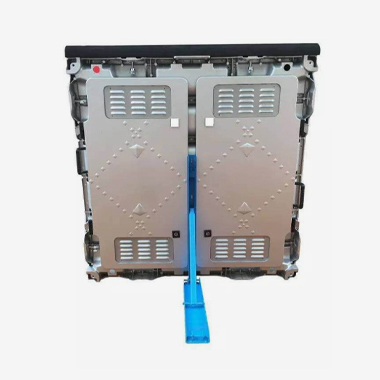
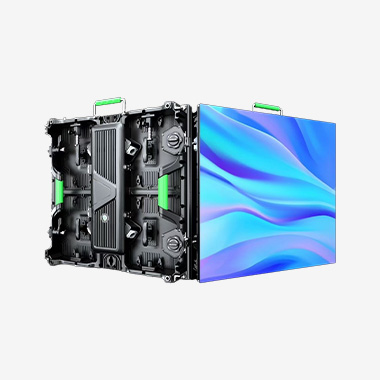
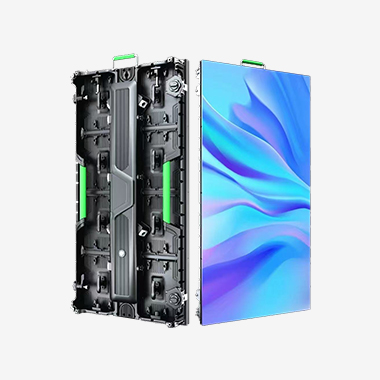
For the structure of the LED RGB screen, it typically consists of several key components. The LED modules are the building blocks of the screen, each containing an array of individual RGB LEDs. These modules are usually mounted on a printed circuit board (PCB), which provides the electrical connections and mechanical support for the LEDs. The PCB is designed to ensure efficient heat dissipation, as LEDs generate heat during operation, and proper heat management is crucial for maintaining the performance and lifespan of the display.
The frame of the LED RGB screen is another important component. It provides structural integrity and protection for the internal components. Frames are often made of materials such as aluminum or steel, which offer a balance between strength and weight. In some cases, especially for large - scale outdoor displays, additional support structures, such as steel trusses, may be required to ensure stability and withstand environmental forces like wind and rain.
The optical design of the LED RGB screen focuses on optimizing the light output and distribution. Lens arrays or diffusers may be used to control the direction and uniformity of the light emitted by the LEDs. This is essential for achieving a consistent and high - quality visual experience across the entire screen, regardless of the viewing angle.
In terms of the electrical system, it includes power supplies, control circuits, and data transmission interfaces. The power supply is responsible for providing the appropriate voltage and current to the LED modules. Control circuits manage the operation of the LEDs, including adjusting their brightness, color, and refresh rate. Data transmission interfaces, such as HDMI, DisplayPort, or Ethernet, are used to receive the video and image data from external sources, such as computers, media players, or cameras, and transmit it to the LED modules for display.
The working principles of an LED RGB screen are based on the fundamental properties of LEDs and the science of color mixing. LEDs are semiconductor devices that emit light when an electric current passes through them. In an RGB LED, there are three separate semiconductor regions, each corresponding to one of the primary colors: red, green, and blue.
When an electric current is applied to the red - emitting region of an RGB LED, it excites the electrons within the semiconductor material, causing them to recombine with holes and release energy in the form of red light. Similarly, applying current to the green and blue regions produces green and blue light, respectively. By precisely controlling the amount of current flowing through each of these regions, the intensity of the red, green, and blue light can be adjusted.
The process of creating an image on an LED RGB screen involves a matrix of these RGB LEDs. Each pixel on the screen is made up of a group of RGB LEDs. For example, in a standard full - color LED display, a single pixel may consist of one red, one green, and one blue LED. To display a particular color at a pixel, the control circuit adjusts the intensity of the red, green, and blue LEDs in that pixel according to the color information in the input video or image data.
The refresh rate of an LED RGB screen is an important parameter that determines the smoothness of the displayed image. It refers to the number of times per second that the screen updates its image. A higher refresh rate results in a more fluid and natural - looking motion, which is especially important for displaying fast - moving objects, such as in video games or sports broadcasts. Modern LED RGB screens typically have refresh rates ranging from 60 Hz to 240 Hz or even higher in some high - end models.
LED RGB screens offer numerous advantages that have contributed to their widespread adoption. One of the most significant advantages is their energy efficiency. Compared to traditional display technologies like CRTs, LED RGB screens consume significantly less power. This not only reduces electricity costs but also makes them more environmentally friendly, as they generate less heat and require less energy to operate.
Another key advantage is their long lifespan. LEDs have a much longer operational life compared to other light - emitting devices. A typical LED RGB screen can last for tens of thousands of hours, reducing the need for frequent replacements and maintenance. This is particularly beneficial for applications where the display is in continuous use, such as digital billboards or public information displays.
LED RGB screens also provide excellent color accuracy and a wide color gamut. They can reproduce a vast range of colors with high precision, resulting in vivid and realistic images. Additionally, they offer high brightness and contrast ratios, making the displayed content clearly visible even in bright ambient light conditions, which is ideal for outdoor applications.
However, LED RGB screens also face several challenges. One of the main challenges is the high initial cost. The manufacturing process of LED RGB screens involves advanced technologies and high - quality materials, which drive up the production cost. This makes them relatively expensive compared to some other display options, especially for large - scale or high - resolution displays.
Another challenge is the issue of color uniformity. As the number of LEDs in a screen increases, ensuring consistent color output across all pixels becomes more difficult. Variations in the manufacturing process of LEDs can lead to differences in color temperature and brightness, resulting in visible color gradients or hotspots on the screen. This requires careful calibration and quality control during the manufacturing process.
Environmental factors also pose a challenge to LED RGB screens. Outdoor screens are exposed to harsh weather conditions, such as sunlight, rain, snow, and extreme temperatures. These conditions can cause degradation of the screen materials, affect the performance of the LEDs, and reduce the overall lifespan of the display. Special protective measures, such as waterproof enclosures, UV - resistant coatings, and temperature - controlled environments, are needed to mitigate these effects.
The applications of LED RGB screens are diverse and far - reaching. In the advertising industry, LED RGB screens are widely used for digital billboards, storefront displays, and promotional signage. Their high - brightness, vivid colors, and ability to display dynamic content make them highly effective in attracting the attention of passers - by.
In the entertainment industry, LED RGB screens play a crucial role in concerts, theaters, and live events. They are used to create immersive visual experiences, display live video feeds, and showcase special effects. In sports stadiums, large LED RGB screens provide spectators with a better view of the game, display replays, scores, and advertisements.
In the education and corporate sectors, LED RGB screens are used for presentations, training sessions, and meetings. They offer high - resolution displays, making it easier for audiences to view detailed content. In healthcare, LED RGB screens are used in medical imaging applications, such as displaying X - rays, MRIs, and CT scans, where accurate color representation is essential.
Looking to the future, the LED RGB screen industry is expected to witness several exciting trends. One of the major trends is the development of higher - resolution displays. As the demand for more detailed and immersive visual experiences grows, we can expect to see the widespread adoption of 8K and even higher - resolution LED RGB screens.
Another trend is the integration of LED RGB screens with emerging technologies, such as artificial intelligence (AI) and the Internet of Things (IoT). AI can be used to optimize the display settings in real - time, adjust the color and brightness based on the ambient light conditions, and enhance the overall visual quality. IoT integration allows for remote monitoring and control of LED RGB screens, enabling more efficient management and maintenance.
The development of flexible and transparent LED RGB screens is also an area of active research and development. Flexible LED screens can be bent, curved, or rolled, opening up new possibilities for unique and creative display designs. Transparent LED screens, on the other hand, can be used in applications such as window displays, architectural facades, and retail showcases, providing a more seamless and integrated visual experience.
Conclusion
In conclusion, LED RGB screens have revolutionized the field of visual display technology with their numerous advantages, including energy efficiency, long lifespan, high - quality visuals, and versatility. They have found wide applications in various industries, enhancing visual communication and user experiences.
However, challenges such as high cost, color uniformity issues, and environmental factors still need to be addressed. As technology continues to advance, we can expect to see significant improvements in LED RGB screen technology. The future holds great promise, with the development of higher - resolution, more energy - efficient, and more versatile LED RGB screens that will further transform the way we interact with visual content in our daily lives, in business, and in entertainment.


Copyright © 2026 Shenzhen Cogo Technology Co.,Ltd.
All Rights Reserved

 Previous article