




 Chat Now
In the relentless competition for consumer attention, the urban landscape has become the ultimate battleground for brands. Towering over this arena is the Large Outdoor Media LED Display Wall—a dynamic, monumental, and unignorable force that has redefined the very concept of outdoor advertising. More than a simple billboard, these digital titans are powerful broadcasting platforms that merge the spectacle of Times Square with the precision of targeted digital marketing. This overview explores the essence of this medium, its evolution from static signs to dynamic content hubs, and its pivotal role in building and asserting brand identity in the public consciousness.
A Large Outdoor Media LED Display Wall is a high-brightness, weatherproof, monumental-scale digital sign designed for permanent installation in high-traffic public spaces. Its primary function is branding: to capture attention, communicate a message, and create a powerful and memorable impression of a company, product, or service. Unlike other forms of advertising, it does not ask for attention; it commands it through sheer scale, luminosity, and motion. These displays transform building facades, rooftops, and dedicated structures into colossal canvases for digital art, video, and interactive storytelling.
The evolution of this medium marks a shift from passive to active advertising. The traditional printed billboard was static, unchanging for weeks or months, and ultimately passive. The digital LED wall is alive. It can run a cycle of multiple advertisements, showcase high-definition video, react to real-time events like sports scores or the weather, and even interact with consumers via their smartphones. This dynamism is its greatest strength; a single display can host multiple advertisers, deliver day-parting (showing coffee ads in the morning and cocktail ads in the evening), and keep content fresh and engaging, thereby maximizing its revenue potential for the media owner.
The core value proposition for branding is multi-faceted. First, it offers unprecedented impact. The combination of massive size and vibrant, moving imagery creates a "wow" factor that is impossible to achieve with any other medium. It projects an image of innovation, power, and modernity for the brands that advertise on it. Second, it provides unmatched visibility. Positioned in iconic locations like city centers, major highways, or sporting arenas, these walls guarantee a massive number of impressions from a diverse audience of pedestrians, drivers, and public transport users.
The ecosystem surrounding these media giants is complex. It involves:
Media Owners: Real estate companies, outdoor advertising firms, or building owners who invest in the display and sell advertising space.
Brands and Ad Agencies: The clients who rent space to run their campaigns, often creating bespoke, high-production-value content specifically for the medium.
Technology Providers: Manufacturers who engineer the displays for extreme durability and performance.
Regulatory Bodies: City planners and councils who govern the size, location, brightness, and content of these structures to balance commercial interests with urban aesthetics and public safety.
From a branding perspective, securing space on a premier LED wall is as much about the context as the content. Advertising on a display in Piccadilly Circus or Shinjuku is a strategic statement in itself, associating the brand with prestige, global reach, and cultural centrality. It's not just about showing an ad; it's about planting a flag in the heart of a city.
In conclusion, the Large Outdoor Media LED Display Wall is the apex predator of out-of-home (OOH) advertising. It represents the complete fusion of real estate, technology, and marketing strategy. It has moved beyond merely displaying a brand to becoming a landmark in its own right—a digital monument that plays a definitive role in shaping the visual identity of a city and the perceptual identity of the brands it hosts. In the quest for brand dominance, it is the ultimate weapon of mass impression.
The design and construction of a Large Outdoor Media LED Display Wall is a feat of civil, electrical, and mechanical engineering on a monumental scale. It is not merely an electronic product; it is a permanent architectural structure that must withstand a perpetual assault from the elements while delivering a brilliant, reliable visual performance 24 hours a day, 365 days a year. This section deconstructs the anatomy of these rugged behemoths, exploring the components and philosophies that prioritize durability, performance, and safety above all else.
The Foundation: Structural Integrity and Mounting
The entire system begins with a custom-engineered support structure. This is the skeleton that must bear the immense weight of the display, often tens of thousands of kilograms, and resist environmental loads like wind, seismic activity, and ice.
Building-Integrated Mounting: The most common approach involves anchoring a heavy-duty steel framework directly to the building's structural elements (columns, beams, or shear walls). This requires detailed knowledge of the building's architecture and often involves significant structural reinforcement. The framework must allow for thermal expansion and contraction of the materials.
Free-Standing Structures: For standalone installations (e.g., alongside highways), the display is mounted on a purpose-built steel or concrete pylon. This requires deep foundational work, akin to building a small skyscraper, to ensure absolute stability.
Access and Maintenance: The structure must incorporate safe and compliant access for maintenance, including catwalks, ladders, and anchor points for harness systems behind the display surface.
The Building Block: The Outdoor LED Cabinet
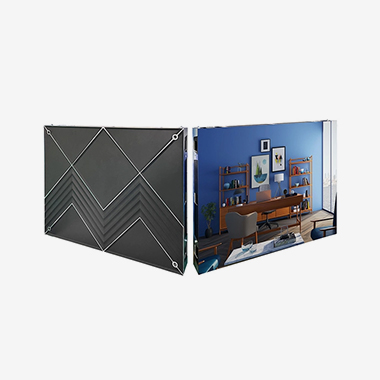
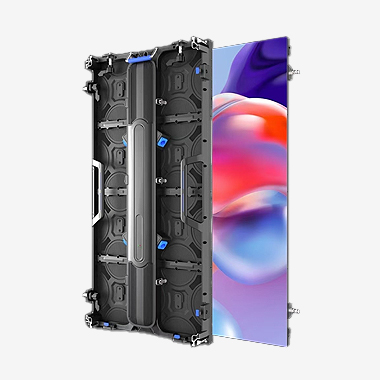
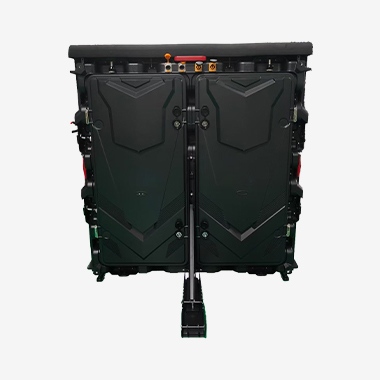
The LED cabinet is the heart of the display, engineered for a harsh life outdoors.
Materials and Durability: Cabinets are constructed from heavy-gauge, marine-grade aluminum or powder-coated steel. These materials offer exceptional corrosion resistance, structural rigidity, and thermal conductivity.
Ingress Protection (IP Rating): Outdoor cabinets are typically rated IP65 or higher. The "6" means they are completely dust-tight. The "5" means they are protected against water jets from any direction. This sealing is achieved through high-quality silicone gaskets and precisely machined joining surfaces.
Thermal Management: This is a critical challenge. The combination of direct sunlight and the heat generated by the LEDs themselves can be immense. Outdoor cabinets employ powerful, robust active cooling systems with multiple high-CFM (Cubic Feet per Minute) fans and dedicated HVAC systems for larger installations. Conversely, they must also manage condensation and cold weather operation, often featuring automatic heating systems to prevent ice buildup and ensure startup in sub-zero temperatures.
Weight and Rigging: These are the heaviest cabinets in the LED industry, often weighing over 50 kg per square meter. They feature industrial-strength locking mechanisms to create a solid, vibration-resistant wall.
The Visual Engine: LEDs and Optics
High-Brightness LEDs: To compete with direct sunlight, which can exceed 100,000 nits (nits are a unit of luminance), outdoor displays require extremely high-brightness LEDs, typically ranging from 6,000 to 10,000 nits. These are specialized LEDs designed to operate at high drive currents without premature degradation.
Pixel Pitch: The choice of pitch is a strategic balance between resolution and viewing distance. For large-format outdoor branding, pitches typically range from P10mm to P20mm. A P10 screen offers a sharper image for closer viewing (e.g., in a pedestrian-heavy area), while a P20 screen is more cost-effective and suitable for longer viewing distances (e.g., highway signs).
SMD vs. DIP Technology: Modern outdoor displays primarily use SMD (Surface-Mount Device) technology for its better color consistency, wider viewing angles, and higher resolution potential. Older DIP (Dual In-line Package) technology, where individual LED lamps are mounted, is still used for very large-pitch, ultra-long-distance applications due to its superior brightness and weather resistance.
Power and Data Infrastructure:
Massive Power Requirements: A large outdoor wall can draw hundreds of kilowatts of power, equivalent to dozens of residential homes. This requires a dedicated high-voltage electrical service from the utility company, with professional-grade distribution panels, circuit breakers, and power conditioners on-site.
Data Distribution: Given the vast size and resolution, data is distributed via a network of fiber optic cables to avoid signal degradation over long runs. The system is often divided into zones, each managed by its own video processor or receiving card to handle the massive data load.
Redundancy: Critical systems, including power supplies, processors, and cooling fans, are often configured in a redundant (N+1) setup. If one component fails, a backup automatically takes over, ensuring the multi-million dollar asset continues to operate.
Safety and Compliance:
Every aspect of the design is governed by stringent international and local codes: structural wind load calculations, electrical safety (NEC, IEC), and fire safety. The materials used are often required to be non-combustible or have high flame-retardant ratings.
In summary, the design and construction of an outdoor LED media wall is an exercise in over-engineering for resilience. There is no room for compromise. Every component, from the massive steel framework to the smallest silicone gasket, is selected and assembled to create a single purpose: an indestructible, brilliant, and reliable visual beacon that can withstand the test of time and the fury of nature, all to serve the singular goal of dominant branding.
The operation of a Large Outdoor Media LED Display Wall is a masterclass in robust, automated, and high-fidelity performance under demanding conditions. While it shares the basic working principles of all LED displays, its scale, outdoor environment, and commercial function impose unique requirements for brightness management, content scheduling, and remote monitoring. This section breaks down the continuous workflow that transforms a power feed and a data signal into a captivating public spectacle.
The Core Challenge: Conquering the Sun
The overarching principle governing the wall's operation is the need to be visible in all ambient light conditions. This is a dynamic, not static, challenge.
High Luminance Output: The LEDs are driven at high power levels to achieve the necessary brightness (6,000-10,000 nits). This requires robust power supplies and drive ICs capable of handling significant electrical loads and dissipating the resulting heat.
Automatic Brightness Control (ABC): This is the most critical operational feature. A calibrated light sensor (photocell) continuously measures the ambient light levels in the environment.
At noon on a sunny day, the sensor commands the display to operate at 100% brightness.
On an overcast day, it might dial back to 60%.
At night, it reduces brightness to as low as 20-25% of its maximum.
This automated system serves three vital purposes: 1) It ensures optimal visibility at all times, 2) It significantly reduces energy consumption, and 3) It minimizes light pollution and community glare, which is often a regulatory requirement.
The Content Delivery and Management System:
For branding, content is king, and its delivery is a sophisticated process.
Content Creation: Advertisers create content specifically mastered for the display's unique resolution and aspect ratio. This often involves ultra-high-resolution video and bold, simple graphics that can be understood at a glance from a distance.
Content Scheduling and Playback: A dedicated Content Management System (CMS) is the brain of the operation. This cloud-based or on-premise software allows media owners and advertisers to:
Schedule Campaigns: Upload and slot content into specific time and date ranges (e.g., a car ad from 6-10 PM, a restaurant ad from 11 AM-2 PM).
Implement Dayparting: Automatically play content relevant to the time of day.
Manage Multiple Displays: Control a network of walls from a single interface.
Enable Real-Time Triggers: Play specific content based on a trigger, such as a sports score update or a weather change (e.g., showing an ad for umbrellas when it starts to rain).
Playback Device: A ruggedized, high-performance media player is installed on-site. It receives the playlist from the CMS and decodes the video files, outputting a signal to the video processor.
The Video Processing and Data Distribution Chain:
Video Processor: The player's signal is fed into a professional-grade outdoor video processor. This unit performs several key functions:
Scaling: It maps the input resolution to the native, often non-standard, resolution of the LED wall.
Color Calibration: It applies calibration data to ensure color uniformity across the entire display, correcting for minor variations between thousands of individual modules.
Basic Enhancement: It may apply sharpening or noise reduction to optimize the image.
Data Distribution: The processed signal is split and sent to multiple sending cards. The data is then distributed across the vast surface of the display via a network of fiber optic and Ethernet cables. Given the size, the display is always broken down into manageable zones, each with its own receiving cards and power regulation.
Monitoring, Diagnostics, and Maintenance:
Operational principles for a 24/7 system must include proactive health management.
Remote Monitoring Software: The system is continuously monitored by software that tracks a vast array of parameters: temperature inside each cabinet, power supply voltage, fan operation, and LED health.
Predictive Alerts: The system can send automatic email or SMS alerts to maintenance crews if a parameter falls outside its normal range (e.g., a fan fails, causing a temperature rise). This allows for repairs to be scheduled before a failure causes a visible blackout on the screen.
LED Failure Management: While individual LED failures are often unnoticeable from a distance due to the large pitch, the monitoring software can pinpoint the exact location of failed components for efficient repair.
The Power Cycle:
The entire system is designed for continuous operation. However, the control system often initiates a daily "soft reboot" cycle, typically in the early hours of the morning when viewer traffic is lowest. This clears the memory of the processors and players, preventing software glitches that can accumulate from weeks of uninterrupted operation.
In essence, the working principle of an outdoor media wall is one of automated, resilient, and intelligent performance. It is a system that constantly self-adjusts to its environment, self-monitors its health, and obediently executes a complex content schedule with broadcast-level reliability. It functions as a largely autonomous digital signpost, a tireless workhorse that demands minimal human intervention to perform its primary function: delivering brilliant, impactful branding messages to the masses around the clock.
The deployment of a Large Outdoor Media LED Display Wall for branding is a significant strategic decision, offering a set of powerful advantages that are unmatched by any other outdoor medium. However, these benefits come with a corresponding set of formidable challenges and costs that must be carefully navigated. Understanding this balance is crucial for media owners investing in the infrastructure and for brands planning their advertising campaigns.
Advantages:
Unparalleled Impact and Dominance: This is the single greatest advantage. The sheer size, brightness, and dynamic nature of an LED wall make it impossible to ignore. It commands attention in a way that static billboards, print, or even digital mobile ads cannot. For a brand, advertising on such a platform projects an image of power, success, and industry leadership.
Dynamic and Flexible Content: Unlike a printed billboard, which is fixed for weeks, an LED wall can change its message in an instant. This allows for:
Multiple Advertisers: A single structure can host dozens of brands throughout the day, maximizing revenue potential.
Timely and Relevant Messaging: Content can be updated in real-time to reflect sales, current events, weather, or time of day (dayparting). A coffee brand can run in the morning, a fast-food chain at lunch, and a movie studio in the evening.
High-Engagement Formats: The ability to play full-motion video creates a storytelling capability that fosters a much deeper emotional connection with the audience than a static image.
Superior Audience Reach and Frequency: Positioned in high-traffic iconic locations, these displays generate an enormous number of impressions from a diverse cross-section of the population. The combination of vehicular and pedestrian traffic ensures both broad reach and high frequency, as commuters pass by the same display daily.
Potential for Integration and Interaction: Modern outdoor walls can be integrated with other technologies to create interactive experiences. This includes using cameras (anonymously) to measure audience engagement, triggering content based on weather APIs, or using QR codes displayed on the screen to bridge the gap between the OOH ad and a user's mobile device, driving immediate action.
Enhanced Measurability: While not as precise as online advertising, outdoor media is becoming more measurable. Using data from mobile devices (in an aggregated and privacy-compliant way), advertisers can now estimate the number of people exposed to a campaign, their demographic profiles, and even measure subsequent foot traffic to a nearby store, providing a much clearer ROI than traditional billboards.
Challenges and Considerations:
Extremely High Capital and Operational Costs: The initial investment is monumental. Costs include the physical structure, the LED technology itself, professional installation by certified engineers, and the legal/permitting process. Operationally, the massive power consumption results in staggering electricity bills, and ongoing maintenance contracts are essential and costly.
Regulatory and Permitting Hurdles: This is often the biggest obstacle. Cities have strict zoning laws, sign codes, and aesthetic guidelines. obtaining a permit can be a years-long process involving public hearings, traffic impact studies, and negotiations with city planning departments. Concerns about light pollution, driver distraction, and urban aesthetics are significant hurdles to clear.
Community and Environmental Opposition: "Sign blight" is a common concern. Residents and community groups may oppose large digital signs, arguing they are visually intrusive, contribute to light pollution, and degrade the character of a neighborhood. Navigating this opposition requires careful community engagement and often, compromises on operating hours or brightness levels.
Maintenance and Reliability Concerns: Operating 24/7 in all weather conditions subjects the display to immense stress. Components will fail. Ensuring a rapid response maintenance team is on call is critical, as downtime directly translates to lost revenue and a damaged reputation for the media owner. Repairing a panel 100 feet in the air is a complex and dangerous task.
Content Production Costs and Complexity: The canvas is vast and unique. Creating content that looks good on a giant, often very wide, screen requires a specialized skill set and can be expensive. Simply scaling up a TV commercial will not work; content must be designed with large formats and quick viewer comprehension in mind.
Potential for Negative PR: If not managed responsibly, the display can become a source of negative attention. This could be due to excessive brightness disturbing residents, technical failures during a paid campaign, or the content itself being deemed inappropriate for a public space.
In conclusion, Large Outdoor Media LED Walls offer a unique and powerful set of advantages for brands seeking the ultimate impact. However, they represent a high-stakes, high-investment game. Success requires not only significant financial resources but also the ability to navigate a complex web of regulatory, community, and technical challenges. For those who can successfully manage these hurdles, the reward is a branding platform of unmatched dominance and prestige in the public arena.
The application of Large Outdoor Media LED Display Walls has solidified their role as premier branding tools in specific, high-value contexts. Simultaneously, technological advancements and shifting consumer expectations are driving new applications and future trends that will further integrate these displays into the urban fabric and enhance their marketing effectiveness. This section explores the current key applications and the innovations poised to redefine the medium.
Current Applications:
Iconic Urban Advertising Locations: This is the classic application. Times Square in New York, Piccadilly Circus in London, and Shibuya Crossing in Tokyo are the epitome of this use case. Here, the LED walls are not just advertisements; they are tourist attractions and symbols of global commercial culture. Brands advertise here primarily for the prestige and mass exposure, often creating spectacular, artistic content specifically for these locations.
High-Density Commercial and Retail Districts: Major city centers and shopping districts worldwide are dotted with large-format displays. They serve to create a vibrant, high-energy atmosphere and are highly effective for targeting consumers who are already in a commercial mindset. Retailers, automotive brands, and tech companies use them for product launches and brand building.
Major Transportation Hubs: Highways, airports, and major train stations represent captive audiences. Highway displays target commuters and long-distance travelers, while airport and station displays reach a demographic that is often affluent, mobile, and has dwell time to absorb a longer message.
Sports and Entertainment Venues: The exterior of stadiums, arenas, and concert halls are prime real estate. These displays build excitement for events, show live footage to draw in passersby, and provide a powerful branding platform for the venue itself and its sponsors, targeting a highly engaged audience.
Corporate Identity and Headquarters: Increasingly, large corporations are installing these displays on their own headquarters buildings. This serves as a dynamic monument to their brand, used for corporate messaging, showcasing company values, celebrating achievements, and even displaying public art, thereby blending advertising with architectural identity.
Future Trends:
Higher Resolution and Finer Pixel Pitches: As LED technology becomes more efficient and affordable, the standard for outdoor pitch will continue to drop. We will see more P6, P4, and even P2.5mm screens outdoors, enabling closer viewing distances and more detailed, cinematic content. This will allow for installations in a wider variety of urban locations beyond just major highways and squares.
Integration with Smart City Infrastructure: LED walls will evolve from isolated advertising islands into connected nodes within a smart city data network. They could display:
Real-time public information: traffic updates, transit schedules, emergency alerts, and air quality data.
Community-focused content: local news, cultural event promotions, and public service announcements.
This dual function of commercial and public service can help mitigate community opposition and integrate the displays more positively into urban life.
Hyper-Targeting and Programmatic Buying: The future of OOH advertising is data-driven.
Audience Targeting: Using anonymized, aggregated data from mobile devices and IoT sensors, displays could discern the demographic profile of the current audience in real-time and serve the most relevant ad from a playlist (e.g., showing a luxury car ad when a high-income demographic is detected, and a snack ad when a younger crowd is present).
Programmatic Transactions: Ad space will be bought and sold in an automated, auction-based manner, much like online advertising today. This will allow for more efficient, real-time, and data-informed ad placements.
Advanced Interactivity and Augmented Reality (AR): The line between the physical and digital worlds will blur.
Mobile Interaction: QR codes and NFC will become standard, allowing instant engagement (e.g., "scan to get a coupon" or "tap to learn more").
AR Overlays: Viewers could point their smartphone cameras at the display to unlock immersive AR experiences, games, or additional product information, creating a deeply engaging "phygital" (physical + digital) experience.
Sustainability Focus: The enormous energy consumption of these displays will come under greater scrutiny. Future trends will include:
Improved Energy Efficiency: Adoption of more efficient LED chips, driver ICs, and power supplies to reduce the carbon footprint.
Solar Integration: Exploring the feasibility of integrating photovoltaic cells to offset a portion of the power consumption.
Sustainable Design: Using recycled materials in construction and designing for full end-of-life recyclability of components.
3D and Holographic Effects: Without the need for glasses, new LED technologies and content techniques are creating convincing 3D illusions on flat screens. This "autostereoscopic" technology is the next frontier in capturing audience attention and creating truly viral, memorable branding moments.
The Large Outdoor Media LED Display Wall is evolving from a blunt instrument of mass advertising into a sophisticated, connected, and interactive medium. Its future lies in becoming more integrated into the urban experience, more targeted in its messaging, and more responsive to its audience, ensuring its continued relevance and power as the ultimate canvas for urban branding.
Conclusion
The Large Outdoor Media LED Display Wall has irrevocably transformed the landscape of advertising and urban identity. It is a technology that commands not just attention, but awe. Its journey from a novel digital curiosity to the dominant force in out-of-home (OOH) branding is a testament to its unparalleled effectiveness in an increasingly cluttered media environment. As we reflect on its role, it becomes clear that its significance extends far beyond its function as a mere screen; it is a cultural and commercial landmark, a symbol of corporate ambition, and a permanent fixture in the future of urban storytelling.
The conclusion of its story is that it represents a winning trifecta of value. For brands, it offers the ultimate platform for impact, prestige, and flexible, dynamic storytelling. It is the physical manifestation of "go big or go home," allowing companies to project an image of power and innovation directly into the public sphere. For media owners and cities, it represents a lucrative revenue stream and a tool for urban revitalization, transforming blank building facades into vibrant, dynamic elements of the cityscape that can also serve public information needs. For the audience, while sometimes contentious, it provides a source of spectacle, information, and the undeniable energy that defines the world's great cities.
The challenges it faces are substantial, but they are not insurmountable. The high costs are a barrier to entry that ensures the medium remains premium. The regulatory and community hurdles necessitate a responsible approach—one that involves collaboration with cities, sensitivity to light pollution concerns, and a commitment to being a good neighbor. The future of the industry depends on this responsible stewardship, ensuring that these digital titans enhance rather than detract from the urban experience.
Technologically, the trajectory is clear: walls will become sharper, brighter, and more efficient. But the true evolution will be in their intelligence and connectivity. The shift from a static broadcast model to an interactive, data-driven, and responsive medium will unlock new levels of targeting and engagement, blurring the lines between physical and digital advertising in ways we are only beginning to imagine.
In the final analysis, the Large Outdoor Media LED Display Wall is more than an advertising medium; it is a statement. It is a brand's statement that it has arrived and demands to be seen. It is a city's statement that it is modern, commercial, and vibrant. And it is a statement about our society itself: our appetite for information, our love of spectacle, and our endless fascination with technology that transforms the world around us. Despite the rise of personal screens and targeted digital ads, the primal power of a shared, large-scale, public experience remains undiminished. As long as brands strive to make a lasting impression and cities pulse with energy, these digital titans will continue to tower over us, the enduring kings of the urban brandscape.


Copyright © 2026 Shenzhen Cogo Technology Co.,Ltd.
All Rights Reserved

 Previous article