




 Chat Now
The modern highway is more than just a conduit for vehicles; it is a dynamic commercial and informational corridor. Towering over these ribbons of asphalt and concrete, large outdoor media LED display screens have become iconic landmarks of the 21st-century travel experience. These colossal digital canvases represent a specialized and highly engineered subset of the broader LED display market, designed explicitly for the unique challenges and opportunities presented by the high-speed highway environment.
A large outdoor media LED display for highways is a modular, high-brightness digital billboard system engineered for long-distance viewing by a fast-moving audience. Its primary function is commercial advertising, allowing brands to deliver targeted, dynamic messages to a captive audience of motorists and passengers. However, their role often extends into public service, providing critical alerts for traffic conditions, Amber alerts, weather warnings, and other vital safety information, making them a unique hybrid of commercial and civic infrastructure.
The strategic value of these placements is immense. Highways aggregate a vast, diverse, and economically valuable demographic. Commuters, long-haul truckers, families on vacation, and commercial travelers all represent distinct market segments that can be reached with unparalleled reach and frequency. Unlike urban digital signs that compete with a clutter of visual stimuli, highway billboards often stand in relative isolation, commanding a driver's field of view for a precious few seconds, making their impact intense and direct.
The evolution of this medium is a story of technological adaptation. Early attempts at highway advertising relied on static printed billboards, which were limited to a single message for extended periods. The transition to digital represents a quantum leap. It introduced the power of rotation—a single structure can now host dozens of advertisers throughout a day, dramatically increasing revenue potential for the media owner. More importantly, it introduced motion and video, which are proven to be far more effective at capturing attention than static imagery, a critical advantage when the viewer's attention is divided by the complex task of driving.
The placement of these units is not arbitrary. It is a science that involves careful analysis of traffic flow patterns, average vehicle speeds, sight lines, and local zoning regulations. The design of the screen itself—its size, resolution, and height—is meticulously calculated based on these factors. The goal is to ensure that a message is legible for a long enough "dwell time" for a driver to comprehend it without it becoming a distraction that compromises safety.
Furthermore, these displays are part of a larger networked ecosystem. They are rarely standalone units. Media companies operate vast networks of digital billboards, all connected via cellular, fiber, or satellite links to a central control system. This allows for real-time management of content. An advertiser can launch a nationwide campaign simultaneously, or a traffic authority can post an alert about a jammed highway segment miles ahead, enabling drivers to reroute.
In essence, the highway LED display is a masterpiece of applied marketing and engineering. It is a platform that turns vehicular traffic into a measurable audience, transforming the passive act of driving into an engagement opportunity. It has created a new out-of-home (OOH) advertising currency based on impressions and demographics, while also serving as a crucial node in intelligent transportation systems. As we explore its design and workings, it becomes clear that this technology is a defining feature of the modern mobility landscape.
The seemingly simple facade of a highway LED billboard belies an incredibly robust and purpose-built internal structure. Its design is a rigorous exercise in balancing optical performance for long-distance viewing with the brute-force durability required to survive decades of exposure to the elements, all while ensuring absolute structural integrity for public safety. Every component is over-engineered for reliability.
The Core Building Block: The Outdoor-Rated LED Module
The fundamental unit is the LED module, but not just any module. These are specifically designed for the highway environment:
Pixel Pitch and Viewing Distance: The single most important design factor is the pixel pitch. For highway billboards, where the typical viewing distance is several hundred feet, a coarser pitch is not only acceptable but optimal. Pitches typically range from P10 to P20 (10mm to 20mm between pixels). This achieves the perfect balance: it provides sufficient resolution for image and text legibility from a distance while keeping costs, power consumption, and weight manageable. A finer pitch would be wasteful and create unnecessary technical challenges.
High-Brightness LEDs: Highway screens must be visible in direct sunlight, which can exceed 100,000 nits of ambient light. Therefore, the LEDs used are ultra-high-brightness models, capable of achieving 8,000 to 10,000 nits. This ensures the content cuts through the glare and remains vivid throughout the day. Crucially, these systems feature automatic brightness sensors that adjust the output from full power at noon to a significantly dimmed, less intrusive level at night.
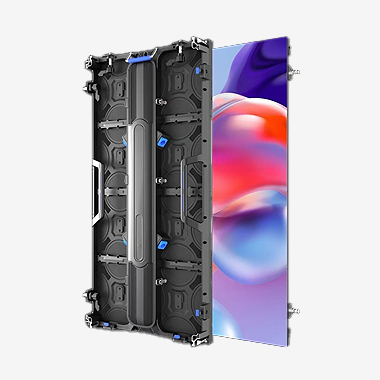
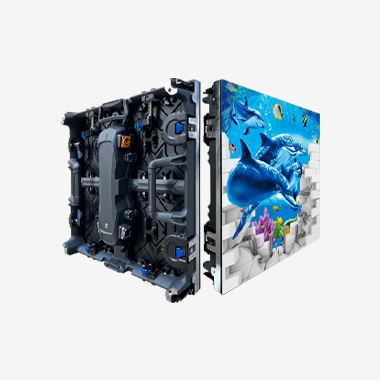
Ruggedized Cabinet Design: Modules are housed in massive, die-cast aluminum cabinets. Aluminum is chosen for its excellent strength-to-weight ratio and, most importantly, its superior thermal conductivity. These cabinets are not just boxes; they are heat sinks. Their design includes large internal surface areas to dissipate the immense heat generated by the high-power LEDs and drivers. This passive cooling is preferred over active fans for reliability, as fans are mechanical parts that can fail.
IP65+ Ingress Protection: Every cabinet is sealed to an IP65 rating or higher. This means it is completely dust-tight and protected against water jets from any direction. This level of sealing is non-negotiable to protect the internal electronics from rain, snow, dust, humidity, and even insect infiltration.
The Structural Framework: The Monopole and Foundation
The supporting structure is as critical as the display itself. Unlike urban signs mounted on buildings, highway billboards are typically mounted on freestanding monopoles.
The Monopole: This is a large, single, tapered steel tube that can range from 60 to over 100 feet in height. It is engineered to specific wind load and seismic requirements for its location. The design must account for the weight of the display (which can be several tons) and the wind force acting upon its large surface area, which can be enormous during a storm.
The Foundation: The monopole is anchored into a massive concrete foundation buried deep underground. The size and depth of this foundation are calculated by structural engineers to create a countermoment that prevents the entire structure from tipping over in high winds. This is one of the most costly and critical aspects of the installation.
Internal Components Built for Reliability:
Industrial-Grade Power Supplies: The power supplies used are not consumer-grade components. They are industrial-grade, high-efficiency switching power supplies designed for 24/7 operation. They are often configured in a redundant N+1 configuration, meaning if one power supply fails, the load is automatically distributed to the others without interrupting the display's operation.
Weatherized Receiving Cards and Data Distribution: The control electronics on the back of each cabinet are conformally coated—a process that applies a protective polymer layer to the PCB to shield it from moisture and corrosion. Data is distributed via weatherproofed network cables and connectors to prevent corrosion-induced signal loss.
The Enclosure and Access:
The entire array of cabinets is mounted within a strong steel frame that is then clad with aluminum or steel trim. This gives the billboard its finished, rectangular appearance. The structure is designed with integrated catwalks and ladders, providing technicians with safe access for maintenance from the rear. Large rear access doors allow for the easy removal and replacement of entire cabinets if necessary.
Ancillary Systems:
Lightning Protection: A comprehensive lightning protection system is installed, with lightning rods on the top of the monopole and a grounding system that directs any strike safely into the earth, protecting the sensitive electronics.
Remote Monitoring System: Modern highway displays are equipped with remote monitoring software. This system can track the status of every cabinet, power supply, and temperature sensor. It can automatically alert operators to a failed component, often before it leads to a visible blackout, enabling proactive maintenance.
In summary, the design and construction of a highway LED display prioritize resilience above all else. It is a fortress of electronics, built to operate unattended for years on end, braving sun, storm, and temperature extremes, all to deliver a crystal-clear message to the stream of traffic flowing past it 24 hours a day.
The ability of a highway LED display to deliver a clear, stable, and bright message to a driver traveling at 70+ miles per hour is a feat of precision timing and robust data management. The working principles are tailored to overcome the specific challenges of high-speed viewing and relentless outdoor operation.
The Optical Foundation: Luminance and Contrast
The primary challenge is overcoming ambient sunlight. The working principle starts with immense luminous intensity. The ultra-bright LEDs are driven at high currents to produce enough photons to compete with the sun. However, this is only half the battle. Contrast—the difference between the brightest white and the darkest black—is equally important. To achieve a true "black," the LEDs must turn off completely. This is managed by the driver ICs through Pulse-Width Modulation (PWM), ensuring that when a pixel is meant to be dark, it is truly off, creating a deep black that makes the lit colors pop.
The Control Mechanism: Pulse-Width Modulation (PWM)
PWM is the fundamental technique for controlling LED brightness. Instead of varying the analog voltage to an LED (which is inefficient and causes color shift), the driver ICs switch the full current to the LED on and off at a very high frequency.
The ratio of "on" time to "off" time within each cycle (the duty cycle) determines the perceived brightness. A 50% duty cycle equals 50% brightness.
This allows for precise digital control over the intensity of each red, green, and blue sub-pixel, enabling the creation of millions of colors through additive color mixing.
The Data Pathway: From Studio to Highway
The journey of an advertisement to the screen is a multi-stage process:
Content Creation and Scheduling: An advertiser provides a digital video file or a series of images. This content is uploaded to a central network management software platform. A scheduler is used to assign specific ads to specific time slots on specific billboards across the entire network.
Central Control and Distribution: The network operations center uses the scheduling software to "push" the content packages to individual billboards via secure internet connections (often cellular 4G/5G or dedicated fiber lines). This content is stored locally on a media player housed in a weatherproof cabinet at the base of the monopole.
The On-Site Media Player: This ruggedized computer is the local source. It plays the scheduled content loop, outputting a standard video signal (e.g., 1920x1080 resolution).
The Video Processor: This is the crucial "brain" of the display. The processor takes the standard signal and performs several critical functions:
Scaling: It maps the input resolution to the native, non-standard resolution of the LED wall (e.g., 1024x512 pixels). For a highway screen with a coarse pitch, the native resolution is surprisingly low.
Color and Brightness Calibration: It applies a unique calibration file to ensure color consistency across every module. This compensates for slight variations between LEDs and cabinets, creating a uniform image.
Protocol Conversion: It converts the video data into a data stream that can be transmitted over long cables to the display, typically using a network protocol.
Data Transmission and Cabinet Control: The processed data is sent via CAT5e or fiber optic cables up the monopole to the display's cabinets. Each cabinet contains a receiving card that acts as a local controller for its section of the screen, distributing commands to the numerous driver ICs on the modules.
The Driver ICs and LEDs: The driver ICs receive the serial data and execute the commands, using PWM to switch each individual LED at the exact microsecond required. This coordinated effort across millions of LEDs creates the final image.
Optimizing for High-Speed Viewing: Dwell Time and Legibility
The content itself must be designed around the principle of "dwell time"—the brief 5- to 10-second window a driver has to see and comprehend the message. This dictates a specific content philosophy:
The "5-5-5" Rule: A common industry guideline suggests that effective highway creative should have 5 words or less of bold, easy-to-read text, a strong, simple image, and be comprehensible in 5 seconds.
High Refresh Rates: While the viewer may not consciously perceive flicker, a low refresh rate can cause strobing and eye strain for drivers. High refresh rates (>3000Hz) ensure a stable, flicker-free image that is comfortable to view, even subconsciously, at high speed.
Simplified Motion: Full-motion video can be too complex to digest quickly. Effective ads often use slower, purposeful motion or quick cuts between simple, bold scenes rather than long, complex video sequences.
In essence, the working principle is a seamless integration of robust hardware and intelligent software, all fine-tuned to deliver a high-impact message with maximum efficiency and legibility to a unique audience that is moving at high velocity. It is a perfect example of technology adapting to human factors and environmental constraints.
The proliferation of digital displays along highways is driven by a compelling value proposition for advertisers, media owners, and the public. However, this value is counterbalanced by a set of significant technical, economic, and social challenges that shape the industry.
Advantages
Unmatched Reach and Audience Targeting: Highways deliver a massive, captive audience. Advertisers can target based on geography, reaching specific regional markets, commuter corridors, or tourist routes. The audience is diverse but can be broadly targeted based on the nature of the highway (e.g., a route to a business park targets professionals, a route to a beach targets families).
Dynamic Content and Maximum Revenue Potential: This is the core advantage over static billboards. A single digital structure can host 6, 8, or even 10 different advertisers in a rotating loop throughout the day. This multiplies the revenue potential for the media owner exponentially. It also allows for dayparting (showing coffee ads in the morning, fast-food ads at lunch, and car dealership ads in the evening).
Immediacy and Relevance: Content can be changed in minutes from a remote location. This allows for incredible relevance. A brand can run a "Now Open" message for a new store, a restaurant can promote a daily special, or a public authority can post urgent traffic, weather, or safety alerts. This real-time capability transforms the billboard from a passive poster into an active information system.
High Impact and Recall: The combination of large scale, bright colors, and motion creates a memorable impression. The lack of competing media on the open highway means the message has a much higher chance of being seen and remembered compared to urban advertising, which fights against visual clutter.
Measurability and Accountability: Digital networks introduce a level of accountability previously unknown in billboard advertising. Advertisers can receive proof-of-performance reports confirming their ad ran at the specified times. When combined with traffic count data, this allows campaigns to be bought based on a cost-per-thousand-impressions (CPM) model, similar to online advertising.
Challenges
Extremely High Capital and Operational Costs: The initial investment is enormous. Costs include land acquisition or leasing, structural engineering, municipal permitting, the concrete foundation, the steel monopole, the LED display system itself, and professional installation. Operationally, the electricity consumption of a large, high-brightness display is significant, representing a ongoing major expense.
Stringent Regulatory and Zoning Hurdles: The placement of highway billboards is heavily regulated at the federal, state, and local levels. Regulations govern size, height, spacing, location (e.g., proximity to interchanges or scenic areas), and lighting. The permitting process can be long, complex, and expensive. Many areas, citing driver distraction and aesthetic concerns, have outright bans on new billboard construction.
Driver Distraction and Public Safety Concerns: This is the most significant social challenge. The primary task of a driver is to drive. There is an ongoing debate about the potential for these bright, dynamic signs to divert attention away from the road. The industry argues that the brief, simple messages are no more distracting than other elements of the roadside environment, but the perception remains a key regulatory hurdle.
Technical Maintenance and Reliability: Operating 24/7 in harsh conditions takes a toll. While designed for reliability, components do fail. Maintenance requires highly trained technicians to work at significant heights, often requiring lane closures on the highway for safety, which is complex and costly. A failure can lead to lost revenue and, if it involves a public alert system, a loss of critical functionality.
Public Perception and "Visual Pollution": Many communities and environmental groups view large billboards as a form of visual pollution that detracts from the natural landscape and the aesthetic character of an area. This has led to " beautification" acts and strong opposition to new installations, framing them as commercial intrusions on public space.
Content Creation Challenges: Creating effective creative for a high-speed audience is a specialized skill. Ads must be incredibly simple and bold. A creative designed for a website or social media will be completely ineffective on a highway billboard. This requires advertisers to invest in specific asset creation for the medium.
In conclusion, the advantages of dynamic messaging, high revenue, and immediacy make highway LED displays a powerful medium. However, their deployment is a constant negotiation between commercial interests and public concerns over safety, aesthetics, and regulation. The industry's future depends on its ability to address these challenges through technology, self-regulation, and demonstrating its value as a public information tool.
While commercial advertising is the primary economic engine for highway LED displays, their applications are expanding into broader roles within intelligent transportation ecosystems. Simultaneously, technological and societal trends are shaping their future evolution, pushing them towards greater integration, intelligence, and public utility.
Expanding Applications
Programmatic Digital Out-of-Home (pDOOH) Advertising: This is the automated, data-driven buying and selling of ad space. Advertisers can now purchase available time slots on highway billboards in real-time through digital platforms, much like they buy online ads. This allows for hyper-targeting based on time of day, weather, and even data from passing traffic. For example, a car brand could target ads for a 4x4 vehicle specifically during a snowstorm.
Integrated Public Safety and Traffic Management: This is a critical growth area. Highway agencies are increasingly partnering with media companies to use these displays for official purposes. They become part of the Intelligent Transportation System (ITS), displaying:
Dynamic Message Signs (DMS): Real-time traffic congestion warnings, accident alerts, and suggested alternate routes.
AMBER Alerts and Emergency Information: Disseminating crucial public safety messages instantly to a vast audience.
Travel Times: Displaying estimated travel times to key destinations, helping drivers make informed decisions.
Hyper-Localized Advertising and Promotions: For advertisers with businesses located near a specific billboard, the messaging can be intensely localized. Phrases like "Exit Now," "Next Right," or "2 Miles Ahead" coupled with a promotional offer are highly effective at driving immediate foot traffic.
Tourism and Wayfinding: State tourism departments and local visitor bureaus use highway displays to promote attractions, historical sites, and services to the large tourist population on the road, providing a modern form of wayfinding and destination marketing.
Weather and Environmental Information: Displays can show real-time weather warnings (fog, high winds, ice) or even air quality indices, providing valuable information for traveler safety and well-being.
Future Trends
Integration with Connected Vehicles (V2I): The most transformative future trend is the integration of digital billboards with connected and autonomous vehicle (CAV) ecosystems. This is known as Vehicle-to-Infrastructure (V2I) communication.
The display could broadcast a standardized data signal (e.g., via DSRC or C-V2X protocols) that is read by a car's computer, not the driver.
The car could then display a simplified, less distracting version of the alert (e.g., "ACCIDENT AHEAD") on the driver's dashboard or heads-up display.
For autonomous vehicles, the car itself could process the information and adjust its route accordingly.
This technology could potentially resolve the distraction debate by taking the message off the big screen and putting it directly into the vehicle's interface in a safe, integrated manner.
Enhanced Sustainability: The industry will focus heavily on reducing its environmental footprint.
Solar Power Integration: While currently not sufficient to power a full-sized billboard alone, solar panels are being installed on the large, unused land areas around monopoles to offset grid power consumption.
Energy-Efficient Technologies: Adoption of more efficient LED chips, driver ICs, and power supplies will continue to reduce the total kilowatt-hour consumption.
Recyclability: Designing cabinets and components for easier disassembly and recycling at end-of-life.
Advanced Audience Analytics: Beyond simple traffic counts, future systems will use anonymous, privacy-compliant sensors (e.g., radar, lidar) to gather more sophisticated data. This could include classifying vehicle types (car vs. truck), estimating speed, and understanding overall engagement metrics without using personally identifiable information like license plate recognition.
Adaptive Content and Context Awareness: Displays will become more responsive to real-time conditions. Using data feeds from traffic sensors and weather stations, the content could adapt automatically. For example, an ad for a coffee shop could only appear when traffic speed drops below 35 mph (indicating congestion), or a message could change to warn of icy bridges when temperatures drop below freezing.
Improved Visual Comfort: To address light pollution and distraction concerns, future displays will feature more advanced ambient light sensors and dimming curves to ensure nighttime brightness is perfectly tuned to be visible yet non-intrusive. New technologies like flicker-free drivers will also enhance visual comfort for drivers.
The future of the highway LED display is not just as a billboard, but as a smart, connected node in the transportation infrastructure. It will evolve from a broadcast medium into an interactive data exchange point, enhancing both commercial messaging and public safety while striving for greater harmony with its environment and its audience.
Conclusion
The large outdoor media LED display screen for highways has firmly established itself as a resilient and powerful fixture in the landscapes of both advertising and transportation. It is a technology that successfully straddles two worlds: the commercial drive for consumer engagement and the public need for timely information and safety. Its journey from a novel digital replacement for printed paper to an intelligent, networked infrastructure component is a testament to its inherent adaptability and value.
The core of its success lies in its fundamental value proposition. For advertisers, it offers an unskippable, mass-reach medium in an era of fragmented digital media and ad-blocking technology. For media owners, it represents a dynamic asset that maximizes revenue potential from a single physical location. And for the public and authorities, it has evolved into a vital channel for disseminating critical information that can save lives, reduce congestion, and improve the travel experience. This multi-faceted value has ensured its survival and growth despite significant economic and regulatory headwinds.
The challenges it faces are substantial but not insurmountable. The high costs demand a robust business model and long-term investment horizon. The concerns over driver distraction and visual pollution require the industry to engage in responsible practices, proactive self-regulation, and continuous technological innovation to mitigate these issues. The future path involves a delicate balance of pursuing commercial objectives while demonstrating tangible public benefit.
The most exciting prospect for this technology is its convergence with the future of mobility. The potential for V2I communication represents a paradigm shift. By transitioning from a visual medium for human eyes to a data medium for vehicle computers, the highway LED display could shed its controversial role as a potential distractor and assume a new, safer role as a seamless part of the automotive data ecosystem. This would secure its relevance in the age of autonomous vehicles, where traditional visual advertising may have limited effect.
In conclusion, the highway LED display is far more than a simple billboard. It is a sophisticated piece of engineering, a node in a vast communications network, and a platform for both commerce and public service. Its story is one of continuous evolution, driven by technological advancement and shaped by societal needs. As it moves forward, its success will be measured not just in advertising impressions, but in its ability to integrate safely and usefully into the transportation infrastructure, enhancing the journey for all who pass by it. It remains a defining symbol of the open road, now equipped for the digital age.


Copyright © 2026 Shenzhen Cogo Technology Co.,Ltd.
All Rights Reserved

 Previous article