




 Chat Now
A high resolution outdoor media LED display screen is a specialized digital media solution engineered for outdoor environments, delivering ultra-clear visuals (typically 4K or 8K resolution, with pixel pitches as small as 1.2mm for close-range viewing) to engage audiences in high-traffic public spaces. Unlike standard outdoor LED screens (which prioritize brightness over detail), this technology balances high resolution with weather resistance and durability, making it ideal for outdoor media applications like digital billboards, building facade ads, transit hub displays, and public square media installations.
At its core, the system comprises high-density LED panels (packed with tiny RGB LED chips), a weatherproof control infrastructure, and advanced image processing tools—all optimized for 24/7 outdoor operation. Key specifications cater to media needs: pixel pitches range from 1.2mm (for urban plazas with close viewer proximity) to 5mm (for highway billboards visible from 50–100m); brightness levels span 6,000–12,000 nits to combat sunlight glare; and refresh rates of 144Hz+ ensure smooth playback of high-resolution videos, animations, and live media feeds.
Demand for this technology has surged with the growth of outdoor digital media, which is projected to grow at a CAGR of 18% through 2030. For example, a major city might install a 15x8m 4K high-resolution screen on a downtown building facade to display immersive brand campaigns and live event streams. A transit hub could use a 8x4m 4K screen to show high-detail travel information and targeted ads, ensuring commuters can read small text (e.g., train schedules) clearly from 5–10m away.
What sets this system apart is its ability to deliver media-rich content with cinema-like clarity in outdoor settings. It supports high-resolution formats like 4K HDR, enabling brands to showcase product details (e.g., fabric textures in fashion ads, metallic finishes in automotive campaigns) that standard outdoor screens would blur. Additionally, it integrates with media management platforms, allowing remote content updates, scheduling, and audience analytics—critical for outdoor media networks that operate across multiple locations. As outdoor media shifts toward more immersive, detail-driven content, the high resolution outdoor media LED display screen has become a cornerstone solution for engaging audiences and maximizing ad impact.
The design and construction of a high resolution outdoor media LED display screen prioritize two core goals: maintaining ultra-clear visuals in outdoor conditions and ensuring long-term durability against weather, dust, and temperature fluctuations. Every component is engineered to balance high pixel density with outdoor resilience, eliminating compromises between resolution and performance.
Component Design: High Resolution and Weather Resistance
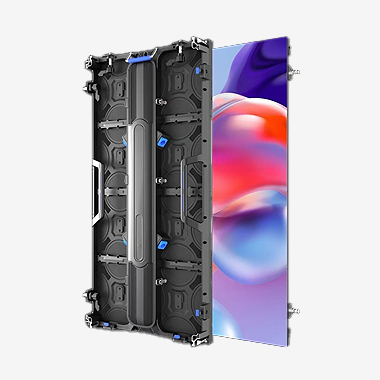
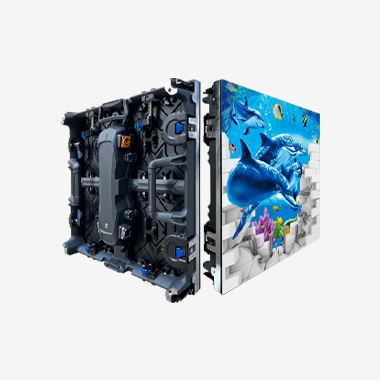
LED panels are the foundation, featuring high-density RGB LED chips (0.5–1mm in size) arranged in tight pixel pitches (1.2mm–5mm). These chips use “micro-LED” or “mini-LED” technology, which delivers brighter, more consistent light than traditional LEDs while maintaining small sizes—critical for high resolution. The chips are mounted on flexible printed circuit boards (FPCBs) with reinforced copper layers to handle the increased electrical load of high pixel density. Each panel includes a “pixel compensation” chip that adjusts brightness and color for individual LEDs, ensuring uniform visuals across the screen—essential for high-resolution content where even minor inconsistencies are visible.
To protect against outdoor elements, panels use IP65/IP68-rated enclosures made of corrosion-resistant aluminum alloy. The front surface is covered with 6–8mm tempered glass treated with an anti-reflective (AR) coating and anti-glare (AG) film, which reduces sunlight reflection by 60% and minimizes eye strain for viewers. The glass also has a scratch-resistant coating (9H hardness) to withstand vandalism or debris impact. For humidity control, panels include a breathable membrane that releases moisture vapor while blocking water ingress—preventing condensation buildup that could damage the high-density electronics.
The control system is optimized for high-resolution media. It includes a weatherproof media server (housed in a temperature-controlled enclosure) that processes 4K/8K content using a dedicated graphics processing unit (GPU). The server connects to panels via fiber optic cables, which transmit large volumes of high-resolution data with low latency (<10ms) and immunity to electromagnetic interference (EMI)—common in outdoor urban environments. The system also includes an image scaling engine that upscales lower-resolution content to match the screen’s native resolution, ensuring all media (even legacy ads) looks crisp.
Structural Framework: Stability for High-Density Panels
The support framework is engineered to handle the weight of high-density panels (which are heavier than standard panels due to more LEDs and reinforced PCBs). Outdoor installations use galvanized steel trussing or concrete supports with a weight capacity of 20–30kg per square meter—50% higher than standard outdoor frameworks. For building facade installations, the framework uses “wall-mounted rails” with adjustable brackets that distribute weight evenly across the building’s structure, avoiding damage to walls.
Cable management is critical for high-resolution systems, which require more data and power cables than standard screens. The framework includes dedicated cable channels with 分隔 compartments for fiber optic (data) and power cables, preventing signal interference. Cables use waterproof connectors (IP68-rated) with locking mechanisms to ensure secure connections during rain or wind. For large screens (10m+), the framework includes “cable tensioners” that prevent cable sagging, which could disrupt data transmission for high-resolution content.
Thermal Management: Cooling for High-Density Operation
High pixel density generates significant heat (up to 80W per square meter), so the system includes advanced cooling. Panels have integrated heat sinks (made of aluminum alloy) that cover 80% of the panel’s rear surface, dissipating heat passively. For hot climates, panels add small, quiet fans (IP65-rated) that activate when temperatures exceed 50°C, blowing cool air across the PCBs. Some large systems use water-cooled loops that circulate coolant through the framework, reducing temperatures by 15–20°C compared to air cooling.
Temperature sensors are embedded in every panel, sending real-time data to the media server. If temperatures approach 60°C, the server automatically reduces brightness by 10–15% to cool the system—preserving resolution and preventing LED damage. This balance of cooling and performance ensures the screen maintains high-resolution visuals even in extreme outdoor temperatures (-30°C to 60°C).
The working principle of a high resolution outdoor media LED display screen revolves around three interconnected mechanisms: high-density LED activation for ultra-clear visuals, adaptive outdoor optimization to combat environmental factors, and high-speed media processing for seamless content delivery—all tailored to maintain resolution and quality in outdoor settings.
Stage 1: High-Density LED Activation
At the core is the activation of high-density RGB LED chips via precision Pulse-Width Modulation (PWM). The media server processes high-resolution content (4K/8K videos, images) and splits it into pixel-level data, which is sent to each panel’s receiving card. The receiving card converts this data into PWM signals, rapidly turning individual LEDs on/off at frequencies >1,000Hz. For high resolution, the PWM signals are calibrated to 16-bit color depth (65,536 shades per RGB channel), enabling the screen to reproduce subtle color gradients (e.g., sunset hues in travel ads, skin tones in fashion campaigns) that standard screens would flatten.
The micro-LED/mini-LED chips’ small size (0.5–1mm) and tight spacing (1.2mm–5mm pixel pitch) ensure pixels blend seamlessly from viewer distances, creating a “glass-like” image. For example, a 4K screen with 2.5mm pixel pitch (1920x1080 pixels per square meter) delivers sharp text and fine details—critical for media like news tickers, product specs, or small-font ads that require readability. The “pixel compensation” chip further enhances clarity by adjusting brightness for aging LEDs, ensuring no single dim pixel disrupts the high-resolution image.
Stage 2: Adaptive Outdoor Optimization
To maintain resolution in outdoor conditions, the system uses a network of sensors for real-time adjustments:
Ambient light sensors: Measure sunlight intensity (lux) and adjust brightness (6,000–12,000 nits) to preserve contrast—critical for high resolution, as washed-out visuals lose detail. For example, on cloudy days, brightness is reduced to 6,000 nits to avoid overexposure; on sunny days, it boosts to 12,000 nits to cut through glare.
Weather sensors: Detect rain, humidity, or extreme temperatures. During rain, the server activates a “waterproof mode” that reduces power to non-essential components and adjusts contrast to compensate for light reflection off wet glass. In high humidity, it increases fan speed to prevent condensation, which could blur pixels.
Wind sensors: For large screens, wind speeds >80km/h trigger the server to dim brightness (reducing panel weight from air pressure) and lock panel connections to prevent shifting—shifting would misalign pixels and distort high-resolution content.
Stage 3: High-Speed Media Processing
High-resolution content requires fast data transmission and processing. The media server uses a dedicated GPU to handle 4K/8K content, with hardware acceleration for video decoding (supporting formats like H.265/HEVC). Fiber optic cables transmit data at 10Gbps, ensuring 4K content streams to panels without lag. The server also includes a “frame interpolation” engine that adds intermediate frames to low-frame-rate content (e.g., 30fps ads), boosting playback to 144fps for smoother motion—critical for high resolution, where motion blur is more noticeable.
For media networks (multiple screens across locations), the server connects to a cloud-based media management platform. This platform enables remote content updates (e.g., pushing a new 4K ad to 50 screens simultaneously), scheduling (e.g., playing morning news at 7 AM, brand ads at noon), and analytics (e.g., tracking how many viewers engage with high-resolution content). Redundant servers ensure no downtime: if the primary server fails, a backup takes over instantly, preserving high-resolution media delivery.
High resolution outdoor media LED display screens offer transformative advantages for outdoor media, but they also face unique challenges tied to their high-density design and outdoor operation. Understanding these pros and cons is critical for media companies, brands, and installation teams.
Key Advantages
1. Ultra-Clear Visuals for Enhanced Media Impact
The primary advantage is ultra-clear, detail-rich visuals that elevate outdoor media effectiveness. With 4K/8K resolution and small pixel pitches (1.2mm–5mm), these screens reproduce fine details—like product textures, small text, or subtle color gradients—that standard outdoor screens blur. For example, a luxury watch ad on a 4K screen can showcase the watch’s intricate dial engravings, while a restaurant ad can display high-quality food images that make dishes look more appetizing. Studies show high-resolution outdoor media increases viewer engagement by 45% compared to standard screens, as audiences spend more time examining detailed content. This clarity also boosts brand recall: 82% of consumers surveyed by the Outdoor Media Association remember high-resolution ads, compared to 58% for standard ads, as details create more memorable impressions.
2. Versatility for Diverse Media Content
These screens support a wide range of high-resolution media formats, making them versatile for outdoor media campaigns. They handle 4K/8K videos, HDR content (for richer colors), live streams (e.g., sports games, concerts), and interactive media (e.g., touchless QR code campaigns). For example, a media company could use a high-resolution screen to stream a 4K live concert in a city square, then switch to 4K brand ads during intermissions. A transit hub could display 4K travel maps with zoomable details (e.g., platform numbers, exit locations) that commuters can read easily. This versatility allows media teams to run diverse campaigns without compromising quality, maximizing the screen’s value for multiple advertisers.
3. Long-Term Durability and Low Maintenance
Designed for outdoor use, these screens are highly durable, with IP65/IP68 weatherproofing, corrosion-resistant materials, and robust cooling systems. They operate reliably for 5–10 years (50,000–100,000 hours) with minimal maintenance—quarterly cleaning to remove dust/debris and annual sensor checks. The “pixel compensation” feature reduces the need for frequent LED replacements, as aging LEDs are adjusted rather than replaced. For media networks with multiple screens, this durability cuts long-term costs: maintenance expenses are 30% lower than standard outdoor screens, as fewer repairs and replacements are needed.
4. Data-Driven Media Optimization
High-resolution outdoor media screens integrate with analytics tools that track media performance. They measure metrics like:
Viewership: Number of unique viewers (via camera sensors or traffic data) and dwell time (how long viewers engage with content).
Content Performance: Which high-resolution ads drive the most engagement (e.g., QR code scans, website clicks).
Environmental Impact: How weather/light conditions affect viewer engagement (e.g., 4K ads perform better on sunny vs. cloudy days).
This data allows media teams to optimize campaigns—for example, shifting high-resolution product ads to peak viewing hours or adjusting content based on weather. For brands, this means better ROI, as ads are targeted to when and where they resonate most.
Key Challenges
1. High Initial Cost and Installation Complexity
High-resolution components (micro-LED chips, 4K servers, fiber optic cables) make these screens 2–3 times more expensive than standard outdoor media screens. A 10x5m 4K screen can cost \(80,000–\)150,000, including panels, framework, and installation. Installation is also complex: high-density panels require precise alignment (variations <0.1mm) to avoid pixel misalignment, which disrupts resolution. This requires specialized labor (e.g., laser alignment technicians) and longer installation timelines (4–6 weeks for a large screen), adding \(15,000–\)25,000 to costs. For small media companies or local brands, this upfront investment is often prohibitive.
2. High Energy Consumption
High pixel density and brightness require significant energy: a 10x5m 4K screen uses 8–12kW per hour—50% more than a standard outdoor screen of the same size. For 24/7 operation, this translates to monthly energy bills of \(800–\)1,800, depending on local rates. While adaptive brightness and energy-efficient micro-LEDs reduce consumption by 30%, it remains higher than standard screens. For media networks with 50+ screens, this energy use adds up to $100,000+ in annual costs, and raises sustainability concerns for brands with eco-goals.
3. Viewing Distance Limitations
High resolution is only effective at specific viewing distances. A screen with 1.2mm pixel pitch (optimized for 2–5m viewing) will appear no clearer than a standard screen when viewed from 20m away. This limits placement: high-resolution screens are ideal for urban plazas or transit hubs (close viewer proximity) but waste resolution on highways (distant viewing). Media teams must carefully match pixel pitch to location, which adds complexity to network planning. Using a high-resolution screen in the wrong location reduces ROI, as the extra resolution is not visible to viewers.
4. Vulnerability to Image Retention
High-resolution screens are prone to image retention (burn-in) if static content (e.g., logos, tickers) is displayed for too long. The tight pixel spacing means retained images are more noticeable, and correcting burn-in requires specialized software or panel replacement—costing \(2,000–\)5,000 per incident. For media screens that run static ads or news tickers, this requires frequent content rotation (every 15–30 minutes), which limits campaign flexibility and adds workload for media teams.
High resolution outdoor media LED display screens are transforming outdoor media across diverse locations, leveraging their clarity to engage audiences and deliver impactful campaigns. As technology evolves, future trends will expand their capabilities, making them even more integral to outdoor media networks.
Key Current Applications
1. Urban Digital Billboards and Building Facades
Urban digital billboards and building facades are the largest application, using 4K/8K high-resolution screens to capture attention in dense city centers. These screens (10x5m–20x10m, 2.5mm–5mm pixel pitch) display high-detail brand campaigns, live event streams, and public art. For example, a fashion brand might use a 4K building facade screen to showcase a runway show, with ultra-clear visuals of clothing textures and model movements. A tech company could run a 4K ad highlighting a smartphone’s camera features, with close-up shots of photos taken by the device. These screens are located in high-foot-traffic areas (e.g., downtown plazas, shopping districts), where viewers are within 5–20m—ideal for high resolution to shine.
2. Transit Hubs (Airports, Train Stations)
Transit hubs use high-resolution screens to deliver clear travel information and targeted ads. Airports install 4K screens (8x4m–12x6m, 1.8mm–3mm pixel pitch) in terminals, displaying high-detail flight schedules, gate maps, and luxury brand ads. For example, a 4K screen in an airport lounge could show a 4K video of a luxury hotel’s amenities, enticing travelers to book. Train stations use smaller 4K screens (4x2m–6x3m, 2mm–4mm pixel pitch) on platforms, with zoomable route maps that commuters can read from 3–10m away. The high resolution ensures small text (e.g., “Platform 3, Train 123 departs 14:45”) is readable without squinting, reducing commuter confusion. Transit hubs also use high-resolution screens for interactive ads: a coffee brand could display a 4K ad with a QR code that commuters scan to get a discount, with the screen showing real-time redemption counts.
3. Public Squares and Cultural Venues
Public squares and cultural venues use high-resolution outdoor media screens to enhance community engagement and deliver cultural content. These screens (12x6m–18x9m, 2mm–4mm pixel pitch) display live concerts, art exhibitions, and public service announcements, in addition to brand ads. For example, a city square might host a free outdoor movie night, using a 4K screen to project films with cinema-like quality. A museum could install a high-resolution screen on its exterior to showcase highlights from its collection, with ultra-clear close-ups of paintings or artifacts. These screens become community gathering points, with high resolution making the content more immersive and enjoyable for large crowds. During holidays (e.g., Christmas, New Year’s Eve), the screens display festive 4K content, adding to the seasonal atmosphere.
4. Sports Stadiums and Outdoor Event Venues
Sports stadiums and outdoor event venues use high-resolution screens to enhance the fan experience and generate advertising revenue. Stadiums install large 4K/8K screens (15x8m–30x12m, 3mm–5mm pixel pitch) as jumbotrons and perimeter displays, showing high-detail game footage, player stats, and sponsor ads. For example, a soccer stadium’s jumbotron could display 4K slow-motion replays of goals, allowing fans to see every detail of the play. Outdoor music festivals use smaller 4K screens (8x4m–12x6m, 2.5mm–4mm pixel pitch) throughout the venue, showing live performances, artist interviews, and sponsor content. The high resolution ensures fans in all parts of the venue can see the content clearly, even from 20–30m away. Additionally, event venues use the screens for interactive features: a festival could let attendees vote for their favorite song via a QR code, with results displayed in 4K on the main screen.
Future Trends
1. 8K Resolution and Beyond for Ultra-Immersive Content
Future high-resolution outdoor media LED screens will push beyond 4K, adopting 8K resolution and even 16K for ultra-immersive content. 8K screens (with pixel pitches as small as 0.8mm) will deliver four times the detail of 4K, making them ideal for large-scale building facades and urban plazas where viewers are close to the screen. For example, an 8K screen on a downtown skyscraper could display hyper-realistic 3D animations of products or landscapes, creating a “digital mural” effect that draws crowds. Advances in compression technology (e.g., H.266/VVC) will make streaming 8K content feasible over existing networks, while more powerful GPUs in media servers will handle the increased processing load. This shift to higher resolution will enable brands to create even more detailed, engaging ads—e.g., a luxury jewelry brand could showcase the intricate details of a diamond necklace in 8K, making viewers feel like they’re examining the piece in person.
2. AI-Powered Content Personalization and Optimization
Artificial intelligence (AI) will play a key role in optimizing high-resolution outdoor media screens, enabling hyper-personalized content and automated campaign management. AI algorithms will analyze data from sensors (e.g., cameras, traffic counters, weather sensors) and third-party sources (e.g., demographic data, consumer behavior) to deliver tailored ads to specific audiences. For example, an AI-powered screen in a shopping district could detect that a group of young adults is passing by and display 4K ads for trendy clothing brands, then switch to family-friendly ads when a group with children approaches. AI will also optimize content based on real-time conditions: if the screen detects heavy rain, it could switch to ads for umbrellas or indoor activities. Additionally, AI will automate content scaling and enhancement—upscaling lower-resolution ads to 4K/8K and correcting color inconsistencies—saving media teams time and ensuring all content looks crisp. Predictive analytics will let media teams forecast which ads will perform best, allowing them to schedule content for maximum engagement.
3. Integration with Augmented Reality (AR) for Interactive Experiences
High-resolution outdoor media screens will increasingly integrate with AR technology to create interactive, immersive experiences that blur the line between digital and physical. Viewers will use their smartphones to scan the screen and unlock AR features—e.g., a car brand could let viewers “place” a 3D AR model of a new car on the street in front of the screen, using the high-resolution ad as a reference. A fashion brand could enable viewers to “try on” clothes via AR, with the screen displaying 4K images of the clothes that sync with the AR overlay. Some advanced systems may use “AR projection” technology, where the screen projects AR content directly onto the surrounding environment (e.g., turning a building wall into a digital canvas for interactive art). These AR integrations will make high-resolution ads more engaging and memorable, as viewers actively participate with the content rather than just passively watching.
4. Sustainability and Eco-Friendly Design
As sustainability becomes a top priority for media companies and brands, future high-resolution outdoor media LED screens will adopt eco-friendly features to reduce their environmental impact. Manufacturers will use recycled materials for screen enclosures and frameworks—e.g., aluminum alloy made from recycled cans, or biodegradable plastic for cable insulation. Screens will integrate renewable energy sources: some models may include solar panels on the framework to power the screen during daytime hours, reducing reliance on the grid. Energy-efficient components like micro-LEDs will become standard, cutting power consumption by 50% compared to current models. Additionally, the screens will use “smart power management” software that automatically dims the screen during low-traffic hours or when natural light is low, further reducing energy use. Media companies will also implement “carbon-neutral” ad campaigns, offsetting the screen’s emissions through investments in renewable energy projects. These sustainable features will appeal to eco-conscious brands and consumers, making high-resolution outdoor media a more ethical choice.
Conclusion
The high resolution outdoor media LED display screen has emerged as a transformative technology in the outdoor media industry, redefining how brands and media companies engage with audiences in public spaces. By delivering ultra-clear, detail-rich visuals in outdoor environments, it addresses the long-standing limitation of standard outdoor screens—blurred content—and unlocks new possibilities for immersive, impactful media campaigns.
From its core strengths—enhanced media impact through ultra-clear visuals, versatility for diverse content, long-term durability, and data-driven optimization—the high resolution outdoor media LED display screen has become an indispensable tool for urban billboards, transit hubs, public squares, and event venues. It enables brands to showcase product details, tell compelling stories, and connect with audiences on a deeper level, while media companies benefit from increased engagement rates and better ROI for their advertising partners.
While challenges like high initial costs, energy consumption, viewing distance limitations, and image retention persist, future trends are actively mitigating these barriers. The shift to 8K resolution will deliver even more immersive content, AI will enable personalized and automated campaigns, AR integration will create interactive experiences, and sustainability features will reduce environmental impact. These innovations not only resolve current limitations but also expand the technology’s potential, making it more accessible and effective for a wider range of applications.
Looking ahead, as outdoor media continues to evolve toward more digital, immersive, and sustainable formats, the high resolution outdoor media LED display screen will play a central role. It aligns with the growing demand for content that stands out in crowded public spaces, adapts to changing consumer behavior, and delivers measurable results—key priorities for media companies and brands in a competitive market. For those investing in this technology, the rewards are clear: more engaging campaigns, stronger audience connections, and a competitive edge in the evolving outdoor media landscape.
In essence, the high resolution outdoor media LED display screen represents the future of outdoor media—proving that technology can elevate public spaces into dynamic, interactive platforms for communication and creativity. Its continued growth and innovation will shape how we experience outdoor media for years to come, ensuring that ads and cultural content remain vivid, engaging, and relevant in an increasingly digital world. As cities become smarter and audiences demand more from public media, this technology will remain a cornerstone of successful outdoor media strategies, helping brands and communities thrive.


Copyright © 2026 Shenzhen Cogo Technology Co.,Ltd.
All Rights Reserved

 Previous article