




 Chat Now
Large advertising RGB LED display signage represents a revolutionary leap in out-of-home (OOH) advertising and public communication. It is a dynamic, digital canvas constructed from a matrix of light-emitting diodes (LEDs) that combine red, green, and blue colors to produce vibrant, full-motion visuals capable of captivating audiences on a massive scale. Unlike static billboards or printed signage, these are programmable, networked systems that can change content instantly, manage multiple campaigns, and deliver unparalleled impact in high-traffic environments.
The fundamental principle behind this technology is additive color mixing. Each pixel on the display is composed of clusters of red, green, and blue LEDs. By independently varying the intensity of each of these three primary colors, the pixel can produce a vast spectrum of hues. When viewed from a distance, the human eye blends these tiny points of light into a seamless, full-color image. This core principle allows for the reproduction of video, animations, graphics, and text with stunning clarity and brilliance.
The scale of these displays is a key part of their identity. They are not merely large screens; they are often architectural elements in their own right. They adorn the facades of skyscrapers in global metropolises like Times Square, Piccadilly Circus, and Shinjuku, transforming cityscapes into dynamic digital environments. They are also ubiquitous in sports stadiums, along highways, on shopping malls, and at transportation hubs. Their primary purpose is to command attention in competitive visual landscapes, making them the most powerful tool for brand advertisers seeking maximum visibility and engagement.
The evolution of this technology has been dramatic. Early iterations were low-resolution, energy-inefficient, and prone to failure due to their exposure to harsh outdoor elements. They were often characterized by a "dot matrix" look, where individual pixels were easily discernible. Today, advancements in LED chip design, surface-mount device (SMD) packaging, manufacturing precision, and structural engineering have yielded displays with incredibly fine pixel pitches, exceptional brightness (often exceeding 8,000 nits to combat direct sunlight), robust weatherproofing (typically IP65 or higher), and significantly improved energy efficiency.
A modern large-format LED signage is not a single unit but a complex system. It integrates several core components:
The LED Array: The heart of the display, consisting of modules and cabinets housing millions of individual LEDs.
The Structural Support: A heavy-duty framework, often made of steel or aluminum, engineered to withstand wind loads, seismic activity, and its own weight.
The Control System: The "brain," including sending cards, receiving cards, and software for content management, scheduling, and real-time monitoring.
The Power System: A distributed network of switching power supplies that convert AC mains power to the low-voltage DC required by the LEDs, often with redundancy.
The Content Delivery System: Media players and network infrastructure that feed high-resolution video signals to the display controller.
In essence, large advertising RGB LED signage is a fusion of art and science. It is a medium that merges the creative potential of digital video with the physical permanence of architecture. It has redefined urban advertising, turning city centers into immersive brand experiences and providing a platform for public art, information dissemination, and cultural expression. Its ability to be updated remotely, targeted for specific times of day, and integrated with live data feeds makes it a uniquely flexible and powerful advertising channel for the digital age.
The design and construction of a large advertising RGB LED display are feats of engineering that balance extreme environmental durability with the precise requirements of high-fidelity visual output. Every aspect, from the microscopic LED chip to the macro-scale steel support structure, is meticulously planned and executed to ensure reliability, performance, and longevity in demanding outdoor conditions.
A. The Pixel: The Fundamental Unit
At the most basic level is the pixel. For outdoor advertising, the dominant technology is the Surface-Mounted Device (SMD). In an SMD configuration, tiny LED chips (the die for red, green, and blue) are mounted onto a single substrate package, which is then soldered directly onto a printed circuit board (PCB). This design offers superior color mixing, wider viewing angles (often exceeding 160 degrees horizontally and vertically), higher potential resolution, and better overall reliability compared to the older DIP (Dual In-line Package) technology. The specific combination of LEDs within a pixel (e.g., 2R1G1B, meaning two red, one green, and one blue) is engineered to achieve optimal brightness and color balance.
B. The Pixel Pitch: Defining Resolution and Viewing Distance
The single most critical design specification for an advertising display is the pixel pitch—the distance, in millimeters, from the center of one pixel to the center of the adjacent pixel. This measurement directly dictates the resolution and the minimum optimal viewing distance.
Larger Pitches (e.g., P10 - P20): Used for very large signs intended for viewing from hundreds of feet away (e.g., highway billboards, super-sized stadium screens). Lower resolution but more cost-effective per square meter.
Medium Pitches (e.g., P4 - P10): The workhorses of urban advertising, suitable for most roadside and building-mounted applications where viewers are tens to hundreds of feet away.
Fine Pitches (e.g., P2.5 - P4): Becoming increasingly common for high-end, close-viewing applications where a sharper image is required, challenging traditional LCD video walls.
The choice of pixel pitch is a fundamental trade-off between image clarity, viewing distance, and project budget.
C. The Module and Cabinet: The Building Blocks
Pixels are arranged in a grid on an LED module. This is a small, rectangular PCB, typically around 320mm x 320mm, that contains a defined array of pixels (e.g., 32x32), along with the necessary driver ICs and connectors. Modules are the replaceable units for maintenance.
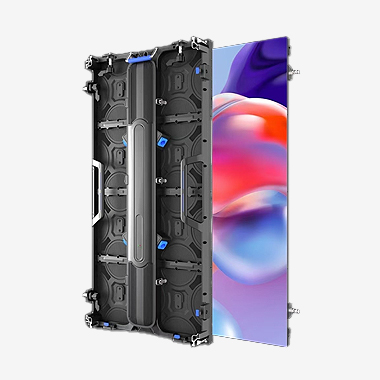
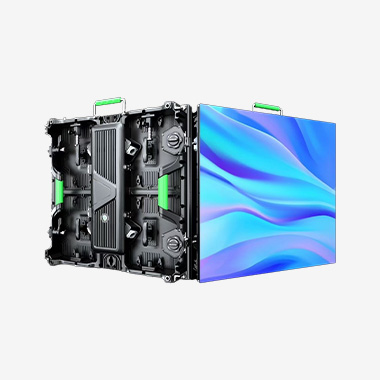
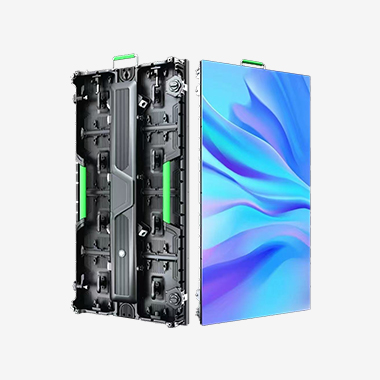
These modules are then installed into a cabinet—a robust, weatherproof metal housing (usually die-cast aluminum for its strength, light weight, and corrosion resistance). A single cabinet might hold a matrix of, for example, 4x4 modules. The cabinet is far more than a box; it is an integrated subsystem containing:
Power Supplies: Convert incoming AC power to low-voltage DC for the modules. Redundant supplies are common for critical applications.
Receiving Card: The main processor for the cabinet, which receives data from the central controller and drives the modules.
Thermal Management System: This is paramount. LEDs generate heat, and excessive heat shortens their lifespan and causes color shift. Outdoor cabinets employ massive aluminum heat sinks and arrays of high-CFM, waterproof fans to create forced convection, actively pulling cool air in and expelling hot air through vents protected by insect screens and hydrophobic filters. Passive cooling (relying only on heat sinks) is insufficient for most high-brightness outdoor applications.
Weatherproofing: Gaskets, seals, and special coatings are used to achieve an IP65 or IP66 rating, ensuring complete protection against dust ingress and low-pressure water jets from any direction. This makes the cabinet dust-tight and able to withstand heavy rain.
D. The Display Structure: Strength and Safety
Multiple cabinets are mechanically interlocked to form the complete video wall. This entire assembly is mounted onto a custom-designed support structure. This structure is typically made from galvanized steel or aluminum and must be engineered by a certified structural engineer to withstand the specific environmental loads of its location:
Wind Load: The single greatest force acting on the display. The structure must resist wind speeds as dictated by local building codes, often equivalent to a Category 4 hurricane.
Dead Load: The weight of the entire system itself, including cabinets, structure, and any ancillary equipment.
Seismic Load: In earthquake-prone zones, the structure must be designed to flex and absorb energy without collapsing.
Access and Maintenance: The structure must include safe and easy access for technicians, typically in the form of catwalks, ladders, and rear-access platforms, allowing for the replacement of any cabinet or module without dismantling the entire sign.
E. The Control and Power Infrastructure
The design extends beyond the visible screen. A distributed power distribution system delivers electricity to various points on the structure. The control system, often located in an onsite cabinet, includes the video processor (sending card) and network switches. Content is delivered via media players and can be managed remotely over a network connection, allowing for real-time updates and scheduling from anywhere in the world.
In summary, the construction of a large LED sign is a multi-disciplinary endeavor involving electronic, mechanical, structural, and software engineering. Its design is a holistic process where visual performance is inextricably linked to ruggedness, safety, and long-term reliability.
The operation of a large RGB LED display is a sophisticated, real-time process of data distribution, power modulation, and precise optoelectronic control. It transforms a standard video signal into a brilliant, large-format image through a coordinated symphony of hardware and software.
1. Data Input and Processing:
The process begins with a video source. This could be a dedicated media player (storing video files), a computer running presentation software, or a live feed from a camera or broadcast source. This source outputs a standard video signal, such as HDMI, DVI, or SDI.
This signal is fed into the display's central nervous system: the controller (or "sending card"). The controller's first job is to scale the incoming video signal to match the native resolution of the LED wall. For example, if the input is a 1920x1080 Full HD signal but the LED wall has a physical resolution of 3840x2160 pixels, the controller must upscale the image to fit properly.
Next, the controller performs a critical task: image segmentation. It digitally divides the complete full-frame image into smaller tiles, each corresponding precisely to a specific cabinet or group of modules within the display array. It also adds necessary control data for synchronization and brightness.
2. Data Transmission:
The processed data packets are then transmitted from the controller to the individual receiving cards located inside each cabinet on the display. Given the large distances, high data rates, and electrically noisy outdoor environment, this transmission requires robust protocols:
CAT5e/CAT6 Cable: Often used with differential signaling protocols like TCP/IP or proprietary standards. Suitable for shorter distances.
Fiber Optic Cable: The preferred method for large, high-resolution displays. Fiber is immune to electromagnetic interference (EMI), can transmit data over much longer distances without signal degradation, and is much lighter and thinner than copper bundles.
3. Data Distribution and Pixel Driving:
Inside each cabinet, the receiving card acts as a local brain. It takes its assigned portion of the video image and further distributes the commands to a series of specialized driver integrated circuits (ICs) that are directly connected to the rows and columns of LEDs on the modules.
The driver ICs are the muscle of the operation. They perform two essential functions:
Providing Constant Current: LEDs are current-driven devices. Their brightness is a function of the current flowing through them, not the voltage. Driver ICs provide a precise, constant current to each LED or each string of LEDs. This is crucial for maintaining uniform brightness and color across the entire display, compensating for minor variances in the electrical characteristics of individual LEDs.
Pulse-Width Modulation (PWM): This is the genius behind grayscale and color control. Instead of varying the analog current level to change brightness (which would alter the color wavelength of the LED), the driver IC rapidly switches each LED on and off thousands of times per second. The ratio of the "on" time to the total time of a cycle (the duty cycle) determines the perceived intensity of the light.
A 100% duty cycle is maximum brightness.
A 50% duty cycle appears half as bright.
A 10% duty cycle appears very dim.
By independently applying PWM to each red, green, and blue LED within a pixel, the driver IC can create any combination of color and intensity with extreme precision. Modern displays use 14-bit or 16-bit PWM control, allowing for over 65,000 levels of intensity per color, resulting in exceptionally smooth color gradients and deep blacks.
4. Key Performance Metrics:
Refresh Rate: The number of times per second the entire screen is redrawn. A low refresh rate (<1000Hz) causes visible flickering, especially when recorded on camera. High-end advertising displays boast refresh rates of 3840Hz or higher, ensuring flawless, flicker-free viewing and perfect camera compatibility.
Grayscale Depth: As mentioned, the number of intensity levels per color, directly enabled by the bit-depth of the PWM control. Higher grayscale eliminates "banding" in gradients and allows for more realistic image reproduction.
Color Calibration: Sophisticated systems use color sensors to measure the output of each cabinet over time. Software can then automatically adjust the PWM output to compensate for any color drift, ensuring the entire display maintains perfect color uniformity throughout its lifespan.
In essence, the working principle is a high-speed, distributed network. A video image is deconstructed, its parts are sent to various nodes (cabinets) via a robust data highway, and then reconstructed flawlessly by millions of microscopic LEDs switching on and off with nanosecond precision, all synchronized to create a seamless, stunning visual experience.
The adoption of large RGB LED signage has skyrocketed due to a compelling set of advantages that offer a significant return on investment. However, deploying and operating such a complex system in an outdoor environment presents a distinct set of challenges that must be carefully managed.
Advantages:
Unmatched Visual Impact and Attention-Commanding Brightness: This is the paramount advantage. LED displays can achieve brightness levels of 8,000 nits or higher, making them clearly visible even in direct, bright sunlight. This ensures the advertising message cuts through visual clutter, a feat impossible for any other medium, including printed billboards or LCD screens.
Dynamic, Flexible Content: Unlike static signage, an LED display can show full-motion video, animations, and real-time information. Advertisers can run multiple campaigns throughout the day, promote time-sensitive offers, and instantly update creative. This flexibility maximizes the value of the advertising space.
Superior Engagement and Recall: Moving, bright, colorful content is inherently more engaging than static images. Studies consistently show that digital LED signage achieves higher recall rates and brand awareness compared to traditional static billboards.
Potential for High Return on Investment (ROI): While the initial investment is high, the ability to sell advertising time to multiple advertisers, change campaigns frequently, and command premium rates for high-traffic locations can lead to a very attractive ROI. The screen becomes a perpetual revenue-generating asset.
Durability and Long Lifespan: Built to IP65 standards, these displays are designed to withstand rain, snow, dust, high winds, and extreme temperatures. High-quality LEDs have a long operational lifespan (often rated at 100,000 hours to L70—meaning they will still be at 70% of their original brightness after 100,000 hours of use).
Remote Management and Monitoring: Entire networks of displays can be managed from a central location. Content can be scheduled, updated, or changed instantly via an internet connection. Advanced monitoring systems can provide real-time alerts on performance issues, such as a failed power supply or module, allowing for proactive maintenance.
Seamless, Large-Format Scaling: LED technology is modular by nature, allowing for the creation of massive, seamless video walls of virtually any size or shape without the bezels that break up tiled LCD video walls.
Challenges:
High Initial Capital Expenditure: The upfront cost is significant. It includes not just the display itself, but also the custom structural engineering, fabrication, installation by specialized crews, permitting, and electrical work. This high barrier to entry can be prohibitive for some advertisers.
Ongoing Operational and Maintenance Costs: These are complex electronic systems exposed to the elements. They consume substantial electricity, contributing to operational costs. They also require periodic professional maintenance: cleaning filters, inspecting components, and replacing failed parts (modules, power supplies, fans). This necessitates a long-term maintenance budget and contract.
Technical Complexity and Expertise: Operating the system requires understanding its technical aspects—resolution management, content formatting, network configuration, and basic troubleshooting. Diagnosing and repairing faults requires highly trained technicians with specific expertise.
Light Pollution and Community Relations: The intense brightness, if not properly managed, can be a source of light pollution, leading to complaints from residents and motorists about glare and visual intrusion. This has led to increasing regulatory scrutiny in many municipalities.
Regulatory and Permitting Hurdles: Obtaining a permit for a large digital sign can be a lengthy and complex process. Cities often have strict zoning laws governing size, location, brightness levels, and even content (e.g., prohibiting flashing animations near roads). Navigating this regulatory landscape is a major challenge.
Content Creation Demands: To leverage the medium effectively, high-quality content must be produced. This requires investment in video production, motion graphics design, and content strategy tailored for the large format and short viewer attention spans. Poor content on a great screen will yield poor results.
Risk of Obsolescence: Technology evolves rapidly. While the physical hardware may last 10+ years, its technology may become outdated within 5 years, being surpassed by displays with higher resolution, better efficiency, or new features like HDR.
Successfully deploying an LED signage project requires a clear-eyed view of these challenges. A thorough business plan must account for the total cost of ownership, a strategy for content creation, and a proactive approach to community relations and regulatory compliance to fully harness the immense advantages of the medium.
The application of large RGB LED displays has expanded far beyond its roots in pure advertising, permeating various sectors of the economy and culture. Concurrently, relentless technological innovation is continuously shaping its future, opening new possibilities and markets.
Applications:
Digital Out-of-Home (DOOH) Advertising: This remains the dominant application.
Urban Advertising: Iconic digital towers and building wraps in major cities, targeting pedestrians and vehicular traffic.
Roadside Billboards: Replacing traditional printed billboards along highways and major arteries with dynamic digital versions that can rotate multiple advertisers.
Retail and Point-of-Sale: Used in shopping malls, auto dealerships, and storefronts to promote products, drive foot traffic, and enhance brand image.
Transportation Hubs: In airports, train stations, and bus terminals, they serve a dual purpose: displaying advertising and providing essential passenger information, schedules, and safety alerts.
Sports and Entertainment Venues:
Stadium Jumbotrons: Massive center-hung scoreboards and end-zone displays that show live action, instant replays, player statistics, advertisements, and crowd-engagement content (kiss cams, animations).
Perimeter LED Boards: Surrounding the playing field, these dynamic boards have replaced static signage, allowing for animated ads and league-wide sponsorship campaigns.
Concert and Event Backdrops: Used as dynamic stage scenery for concerts, theater productions, and award shows, creating immersive visual environments that change in sync with the performance.
Corporate and Architectural Integration:
Corporate Branding: Company headquarters use LED displays as architectural elements to showcase their brand, display mission statements, or communicate with employees and the public.
Architectural Lighting and Media Facades: Entire building facades are clad in LED modules, turning structures into dynamic canvases for public art, light shows during festivals, or cultural expressions, transforming the night-time identity of a city.
Public Information and Wayfinding:
Government agencies use them for AMBER alerts, emergency broadcasts, and public service announcements.
They provide directions and information at large public complexes, university campuses, and hospital grounds.
Religious and Cultural Institutions: Churches, mosques, and temples use large LED displays to show hymns, prayers, and sermon notes, enhancing the experience for large congregations.
Future Trends:
Finer Pixel Pitches and MicroLED Adoption: The relentless drive for higher resolution continues. "Fine Pitch" (P2.5-P1.2) and "MicroLED" (sub-P1.0) technology is becoming more viable for outdoor applications. This will enable sharper images and closer viewing distances, allowing LED to compete directly with LCD video walls in more settings.
Higher Dynamic Range (HDR): Future displays will support wider color gamuts (rec2020) and much higher contrast ratios. This means brighter brights, darker darks, and more vibrant, realistic colors, significantly enhancing visual impact and moving closer to the quality of premium consumer televisions.
Integration with AI and Data:
Programmatic Advertising: Displays will be integrated into digital ad buying platforms, allowing advertisers to purchase and display ads in real-time based on audience data, time of day, and weather conditions.
Audience Measurement: Anonymous cameras and sensors will use AI to analyze audience demographics (age, gender), dwell time, and engagement, providing valuable analytics to advertisers to prove ROI and optimize campaigns.
Contextual Content: AI will enable displays to automatically adapt their content. For example, a display could show an ad for umbrellas when it starts to rain or a coffee ad on a cold morning.
Transparent and Flexible LED Technology: Transparent LED films allow for installation on windows, creating displays that can be seen from outside while allowing people inside to see through them. Flexible LED modules enable curved, cylindrical, and even wave-like displays, breaking free from the flat panel and enabling new architectural forms.
Sustainability Focus: Energy consumption is a major concern. Future trends include:
More Efficient LED Chips and Drivers: Generating more light per watt of energy consumed.
Smart Brightness Sensors: Automatically dimming the display to the optimal level based on ambient light conditions, saving energy and reducing light pollution.
Solar Power Integration: Exploring the use of integrated solar panels to offset grid power consumption.
Recyclability: Designing cabinets and components for easier disassembly and recycling at end-of-life.
Improved Serviceability and Reliability: Features like front-serviceable cabinets (allowing maintenance from the front of the display) and more modular, hot-swappable components will reduce downtime and maintenance costs. Predictive maintenance, using IoT sensors to forecast failures before they happen, will become standard.
The future of large LED signage is intelligent, interactive, and immersive. It will evolve from being a one-way broadcast medium into a responsive, data-driven platform that seamlessly integrates with the urban environment and the people within it.
Conclusion
Large advertising RGB LED display signage has irrevocably transformed the landscape of out-of-home media and urban communication. It is far more than a simple replacement for the printed billboard; it is a dynamic, powerful, and versatile medium that represents the successful marriage of advanced electronic engineering with the timeless desire for public expression and commercial promotion. Its journey from a novel technological spectacle to a mainstream advertising powerhouse is a story of continuous innovation overcoming significant technical and environmental challenges.
The core strength of this technology lies in its unique ability to command attention through brilliant, dynamic visuals in the most competitive environments. Its advantages—unmatched brightness, content flexibility, high engagement, and potential for strong ROI—have made it the premier choice for brands seeking to make a significant impact. It has created new revenue streams, enhanced public spaces with information and art, and revolutionized the live event experience.
However, its deployment is not without complexity. The substantial initial investment, ongoing maintenance demands, technical expertise required, and navigating the regulatory environment present real challenges that necessitate careful planning and long-term management. A successful LED signage project is not just about purchasing hardware; it is about committing to a comprehensive strategy encompassing content, maintenance, and community relations.
Looking forward, the trajectory of this technology is exceptionally promising. The trends towards finer pixel pitches, MicroLED, HDR, and, most importantly, the integration of artificial intelligence and data analytics, are poised to unlock unprecedented levels of functionality and effectiveness. These displays are evolving into intelligent network nodes that can see, analyze, and respond to their environment, enabling hyper-targeted and contextually relevant communication.
In conclusion, the large RGB LED display is a defining technology of the 21st-century urban experience. It is a canvas for brands, a tool for cities, and a spectacle for the public. As the technology continues to become more efficient, more intelligent, and more seamlessly integrated into our built environment, its role as a central nervous system for public communication and advertising will only grow more profound. It stands as a testament to human ingenuity—a brilliant fusion of light, data, and steel that continues to push the boundaries of what is possible in visual communication.


Copyright © 2026 Shenzhen Cogo Technology Co.,Ltd.
All Rights Reserved

 Previous article