




 Chat Now
The large advertising LED display billboard screen is a dominant force in the modern Out-of-Home (OOH) advertising landscape. These colossal digital canvases have transformed city skylines and highways from static environments into dynamic, illuminated showcases of commercial and sometimes public information. Unlike their static printed predecessors, these billboards are essentially giant television screens designed for extreme brightness, durability, and long-distance viewing, capable of displaying full-motion video, animations, and rapidly changing advertisements.
The core technology is based on Light Emitting Diodes (LEDs), semiconductor devices that emit light when an electric current passes through them. A large LED billboard is not a single monolithic screen but a modular system composed of hundreds or thousands of individual LED modules or panels that are meticulously assembled to form a seamless, large-format display. The most critical specification for these billboards is the pixel pitch—the distance in millimeters between the centers of two adjacent pixels. For large-scale outdoor billboards, this pitch is relatively large (e.g., P10mm, P16mm, P20mm) because the intended viewing distance is hundreds of feet away. A larger pitch means fewer LEDs per square meter, reducing cost while still providing a coherent image from afar.
The adoption of digital LED technology revolutionized the billboard industry. For advertisers, it unlocked unprecedented creative flexibility. A single digital spot can host multiple advertisers, with ads rotating every 8 to 10 seconds, maximizing revenue potential for the billboard owner. Campaigns can be updated instantly via the internet—a process that involves no physical labor, printing costs, or weather-related delays. This allows for dayparting (showing coffee ads in the morning and restaurant ads in the evening), real-time marketing (responding to live events or weather), and more precise measurement of campaign performance.
For consumers and the urban environment, these displays are a double-edged sword. They provide vibrant, entertaining content and can be used for Amber Alerts or other critical public service announcements. However, they also contribute significantly to light pollution and are often criticized as visual clutter or potential distractions for drivers, leading to strict regulations regarding their placement, brightness, and dwell time (the time an ad is displayed before changing) in many municipalities.
The largest and most famous concentrations of these billboards, such as Times Square in New York City or the Shibuya Crossing in Tokyo, have become global icons and tourist destinations in their own right. They represent the pinnacle of brand exposure, where the cost for a single spot can reach astronomical figures. In these environments, the technology is pushed to its limits, often utilizing finer pixel pitches to accommodate closer viewing distances and higher brightness levels to compete with direct sunlight.
In essence, the large advertising LED billboard is a powerful marriage of advertising and technology. It is a scalable, programmable, and highly impactful medium that has redefined the economics and aesthetics of outdoor advertising. Its pervasive presence is a testament to its effectiveness in capturing the attention of a mobile and increasingly digital society.
The construction of a large outdoor LED billboard is a feat of industrial engineering, designed to withstand harsh environmental conditions while delivering reliable, high-impact visual performance 24/7. Its design is modular, robust, and highly functional.
1. The LED Module: The Fundamental Building Block
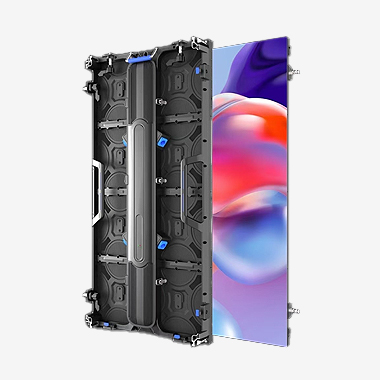
The entire display is constructed from individual LED modules, typically ranging from 16x16 inches to 32x32 inches in size. Each module is a self-contained unit consisting of:
PCB (Printed Circuit Board): The foundation onto which the LEDs and driver ICs are mounted. It contains the circuitry for power and data transmission.
LED Lamps: Historically, older billboards used discrete LED lamps (DIP LEDs), but modern displays almost exclusively use Surface-Mount Device (SMD) LEDs. SMD technology packages the red, green, and blue diodes into a single tiny housing, allowing for a higher pixel density, better color mixing, wider viewing angles, and a more robust physical profile resistant to damage.
Driver ICs (Integrated Circuits): These chips are the "local brain" of the module. They receive data signals and control the precise current flowing to each individual LED, determining its brightness through Pulse Width Modulation (PWM).
Mask and Cavity: The module is covered by a mask that defines the pixel layout. The cavity behind the LEDs is often painted black to improve contrast by reducing light reflection from the sun.
2. The Cabinet: The Structural chassis
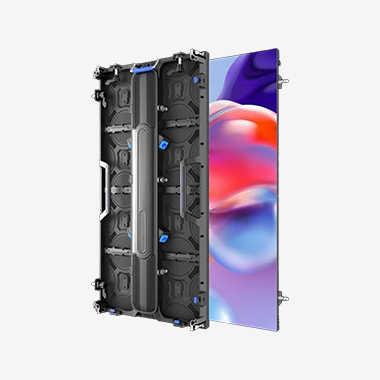
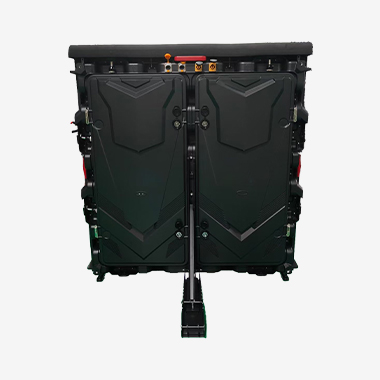
Modules are not mounted individually to the structure. Instead, they are installed into rugged aluminum or steel cabinets. A single cabinet might hold 4, 6, 8, or more modules.
Function: Cabinets provide the rigid structural framework that ensures all modules are aligned in a perfectly flat plane. They house critical infrastructure:
Power Supplies: Convert incoming AC power to the low-voltage DC power required by the LEDs.
Receiving Cards: Act as the communication hub for a set of modules, receiving data from the main controller and distributing it.
Cooling System: Essential for longevity. Outdoor billboards generate immense heat. Cabinets are equipped with powerful fans for active ventilation, plus louvers and heat sinks for passive cooling. High-end designs feature climate control systems with heaters and air conditioners to operate in extreme cold or heat.
IP Rating: Cabinets are sealed to a high Ingress Protection rating (typically IP65 for outdoor use), meaning they are completely dust-tight and protected against water jets from any direction.
3. The Structural Support: The Backbone
The assembled cabinets are mounted onto a heavy-duty steel structure, which is either freestanding (on its own foundation) or attached to a building's roof or wall. This structure is engineered to withstand the billboard's significant weight (which can be tens of thousands of pounds) and, most critically, maximum wind load calculations for the region (e.g., 130 mph winds). It includes safe access ladders and catwalks for maintenance.
4. The Peripherals: The Support System
Video Controller/Processor: The brain of the operation. It is a high-performance computer that takes a video input source, processes it (scaling it to the billboard's native resolution, color calibrating), and sends the data to the sending cards.
Sending & Receiving Cards: The nervous system. Sending cards, connected to the controller, break the image data into chunks and transmit it over network cables (CAT5/6 or fiber optic) to the receiving cards housed in each cabinet on the billboard.
Content Management System (CMS) Software: Allows operators to schedule playlists, manage advertisers, monitor performance, and remotely control the billboard via an internet connection.
Light Sensor: An automatic brightness control sensor that continuously adjusts the screen's intensity based on ambient light, ensuring viewability by day and preventing excessive glare and light pollution at night.
The entire design philosophy is centered on durability, serviceability, and performance. Modules and components are designed for front-serviceability, allowing technicians to safely replace parts from the front using a lift or crane, even while the rest of the billboard remains operational.
The operation of a massive LED billboard is a complex orchestration of data transmission, power management, and optical physics, all working in unison to create a cohesive image from vast distances.
1. Pixel Composition and Color Creation:
Each pixel on the screen is a cluster of three (or sometimes more) miniature LEDs: one red, one green, and one blue (RGB). This is the foundation of additive color mixing. By independently varying the intensity of each colored LED, the pixel can produce a vast spectrum of colors. For example, activating red and green at full intensity while keeping blue off produces yellow. Varying the intensities of all three creates millions of possible hues.
2. Controlling Brightness: Pulse Width Modulation (PWM)
LEDs are digital devices; they are effectively either on or off. To create the perception of varying brightness (and thus shades of color), they are controlled using Pulse Width Modulation. Instead of reducing the power to dim an LED, the driver IC rapidly switches it on and off thousands of times per second. The ratio of the "on" time to the total time of a cycle (duty cycle) determines the perceived brightness. A 50% duty cycle makes the LED appear half as bright as a 100% duty cycle. The human eye perceives this rapid blinking as a steady glow due to persistence of vision.
3. Data Flow and Image Processing:
The journey of an image to the screen is a multi-stage process:
Content Creation & Input: A video file or animation is created or fed into the system from a media player or PC.
Video Processing: The video processor is the critical hub. It is pre-configured with the exact pixel dimensions and layout of the billboard. Its tasks include:
Scaling: Resizing the input video to match the billboard's native, often non-standard, resolution.
Color Correction & Gamma Calibration: Ensuring colors are accurate and consistent across the entire display.
Data Segmentation: Breaking the complete image frame into smaller segments that correspond to the areas controlled by each sending card.
Data Transmission: Sending cards transmit this segmented data over robust network cables to the receiving cards mounted in each cabinet on the billboard itself. For long distances, fiber optic cables are used for their immunity to electrical interference.
Pixel Addressing: Each receiving card takes the serial data stream and converts it into parallel commands for the driver ICs on its assigned modules. These drivers then execute the PWM commands for every single red, green, and blue LED under their control.
4. Power Delivery and Thermal Management:
A large billboard requires a massive amount of power, often supplied via a dedicated three-phase connection. This high-voltage AC power is distributed to cabinets, where switching power supplies efficiently convert it to low-voltage DC (e.g., 5V). This conversion generates significant heat, which is managed by the active cooling systems (fans) within the cabinets. Effective heat dissipation is paramount, as excessive heat drastically shortens the lifespan of LEDs and electronic components.
5. Automatic Regulation:
An ambient light sensor continuously measures the surrounding light levels. This data is fed to the controller, which automatically adjusts the global brightness of the entire display. This ensures the content is visible under direct sunlight (often requiring 6,000-8,000 nits of brightness) and is appropriately dimmed at night to save energy, reduce light pollution, and comply with local regulations.
In summary, the billboard works by deconstructing a video signal into commands for millions of individual LEDs, controlling their light output with microscopic precision through high-speed switching, and managing the immense power and thermal requirements needed to make it all work reliably in an unforgiving outdoor environment.
The shift from static to digital LED billboards has been transformative for the advertising industry, but it introduces a unique set of advantages and challenges that operators and communities must navigate.
Advantages:
Unmatched Dynamic Impact: The ability to display full-motion video, animation, and vivid graphics makes digital billboards far more attention-grabbing than static signs. This dynamic nature leads to higher recall rates and greater engagement from viewers.
Operational Flexibility and Revenue Maximization: A single digital billboard can host multiple advertisers, rotating ads every 8-10 seconds. This allows owners to sell many more advertising slots, dramatically increasing revenue potential compared to a single static ad that might be leased for months.
Real-Time Content Management: Ads can be changed instantly, remotely, and without cost from a central office anywhere in the world. This enables:
Dayparting: Showing relevant ads based on time of day (e.g., breakfast, lunch, dinner, rush hour).
Real-Time Marketing: Reacting instantly to news, weather, sports scores, or traffic conditions.
Efficiency: Eliminating the costs and risks associated with printing and physically installing large vinyl sheets.
High Brightness and 24/7 Operation: Designed for sunlight readability, these billboards are effective day and night, in rain or shine, ensuring the message is always visible.
Potential for Public Service: They can be integrated into public alert systems to broadcast Amber Alerts, emergency weather information, and other critical messages immediately, serving a valuable community function.
Challenges and Limitations:
Very High Initial Capital Investment: The cost of a large-format digital billboard is extremely high, encompassing the physical structure, all LED modules, cabinets, controllers, and installation. The ROI is based on selling enough advertising to recoup this large upfront cost.
Significant Operational Costs: Beyond the initial investment, operational expenses include:
High Energy Consumption: The powerful LEDs and cooling systems are electricity-intensive.
Ongoing Maintenance: Requires regular, specialized technical maintenance to replace failed modules, power supplies, and fans. Technicians often need to work at height, adding complexity and cost.
Regulatory Hurdles and Community Opposition: The placement of digital billboards is heavily regulated by local and federal authorities (e.g., the Highway Beautification Act in the US). Common restrictions govern:
Brightness: Mandates for automatic dimming at night.
Dwell Time: Minimum time an ad must be displayed (to prevent rapid changes that could distract drivers).
Location: Zoning laws often prohibit them in certain areas due to concerns over aesthetics and driver safety.
Potential for Driver Distraction: This is the most significant public safety concern. The dynamic, bright nature of the displays can potentially draw a driver's attention away from the road. The industry vigorously debates this issue, citing studies that show minimal impact, but it remains a primary focus of regulatory bodies.
Light Pollution and Visual Blight: The intense light emitted, particularly at night, contributes to skyglow and is often a source of complaints from nearby residents who feel it disrupts the nighttime ambiance and intrudes into their homes.
In conclusion, the advantages of digital LED billboards are primarily economic and creative for advertisers and owners, while the challenges are largely financial, regulatory, and societal. Their proliferation represents a constant balancing act between commercial interests and public welfare, making them a perennial topic of discussion in urban planning and advertising.
While the primary application of large LED displays is commercial advertising, their use has expanded into diverse sectors. Simultaneously, the technology is continuously evolving, driven by demands for greater efficiency, integration, and intelligence.
Applications:
Roadside Advertising: The most common application. Positioned along highways, freeways, and major arterial roads to capture the attention of a high-volume, mobile audience of drivers and passengers.
Urban Centers and High-Traffic Areas: Iconic locations like Times Square, Piccadilly Circus, and Las Boulevard are defined by their dense concentrations of massive, high-resolution LED billboards, targeting pedestrians and tourists.
Sports Venues and Arenas: Both exterior and interior digital displays are used for advertising, live game action replays, scoring information, and fan engagement activities.
Retail and Point-of-Sale (POS): Large retailers use them on store exteriors to promote sales and brands, often with content synchronized with internal promotions. They create a "digital storefront."
Corporate Branding: Headquarters of major corporations often feature large LED displays for brand showcasing, shareholder information, or as architectural elements.
Public Information and Emergency Broadcasting: Government agencies and transportation departments use them for traffic management (showing congestion, accidents, travel times), AMBER alerts, and emergency weather warnings.
Future Trends:
Higher Resolution with Smaller Pixel Pitches: As LED technology (like SMD and COB packaging) advances, the cost of smaller, more efficient LEDs decreases. This will allow for finer pixel pitches in large-format billboards, enabling higher-resolution content and closer viewing distances, even expanding into smaller, "out-of-home" formats like bus shelters.
Integration of Programmatic Advertising: The OOH industry is moving towards programmatic buying—the automated, real-time auction of advertising space. Advertisers will be able to purchase and deploy ads on digital billboards through digital platforms in real-time, based on data triggers like weather, traffic flow, or event triggers, making advertising more targeted and efficient.
Enhanced Interactivity and Data Integration: Future billboards will become more interactive and context-aware.
Audience Measurement: Using anonymized, aggregated data from mobile devices (via Bluetooth or WiFi signals) to measure audience size, demographics, and dwell time in front of a sign, providing valuable analytics for advertisers.
Mobile Integration: Using QR codes or NFC technology to allow viewers to instantly interact with an ad using their smartphones, bridging the gap between out-of-home and digital marketing.
Improved Sustainability: A major focus will be on reducing the massive power draw. This will be achieved through:
More Efficient LED Technology: New chip designs and materials that produce more light per watt of energy consumed.
Advanced Power Supplies: Higher efficiency PSUs that waste less energy as heat.
Smart Management Systems: Sophisticated software that optimizes brightness and powers down unused sections of the display.
Transparent and Curved LED Technology: Following the trend in architectural integration, transparent LED technology will allow for billboards that don't completely obscure the building behind them. Furthermore, curved and flexible LED panels will enable more creative, organic shapes that blend with modern architecture rather than being simple rectangular screens.
The future of the large LED billboard is not just as a dumb screen for looping videos, but as an intelligent, connected, data-driven node in the urban network. It will become a responsive medium that delivers contextually relevant messages, provides valuable public services, and does so with increasing efficiency and reduced environmental impact.
Conclusion
The large advertising LED display billboard screen is far more than a simple upgrade from printed vinyl; it represents a fundamental shift in the philosophy of outdoor media. It has transformed a static, slow-moving medium into a dynamic, programmable, and instantly adaptable platform that is deeply integrated into the digital ecosystem. Its impact is measured not just in its dazzling visual presence on the skyline, but in its reshaping of advertising economics, urban aesthetics, and public communication.
Its success is rooted in its powerful value proposition: the ability to command attention in an increasingly cluttered media landscape. For advertisers, it offers the reach of traditional billboards combined with the creative flexibility of digital video. For media owners, it unlocks a powerful revenue model built on yield management and operational efficiency. This economic engine has driven the rapid proliferation of these screens across the globe.


Copyright © 2026 Shenzhen Cogo Technology Co.,Ltd.
All Rights Reserved

 Previous article