




 Chat Now
In the realm of modern conferences—where clear communication, immersive presentations, and audience engagement are paramount—large LED wall display panels have emerged as a transformative visual solution. Unlike traditional projection screens (which struggle with brightness, resolution, and ambient light) or small standalone displays (which fail to serve large audiences), these expansive, modular LED walls deliver vibrant, high-definition visuals that command attention and elevate the overall conference experience. Designed specifically for the unique demands of conference spaces—from auditoriums and ballrooms to breakout rooms—large LED wall panels combine scalability, flexibility, and performance to meet the diverse needs of speakers, organizers, and attendees.
At their core, large LED wall display panels for conferences are modular assemblies of light-emitting diodes (LEDs) that can be combined to form screens of virtually any size—ranging from 100 square feet (smaller breakout rooms) to 1,000+ square feet (large auditoriums). Their defining features include high resolution (often 4K or 8K, achieved through small pixel pitches of P1.2 to P3), high brightness (1,000-2,000 nits) to overcome conference hall lighting, and wide viewing angles (170°+ horizontal and vertical) to ensure visibility for every attendee—even those seated in the back rows or off to the sides. Unlike fixed installation LED walls, conference-focused models prioritize quick assembly and disassembly, as conferences often require rapid venue transformation between sessions or events.
The global market for large LED wall display panels in the conference industry has grown significantly in recent years, driven by the post-pandemic recovery of in-person events and the increasing demand for interactive, immersive presentation tools. According to industry reports, the market is projected to grow at a CAGR of 12% through 2030, fueled by advancements in LED technology (smaller pixels, lower power consumption) and the rise of hybrid conferences (events that combine in-person and virtual attendance). These panels have become a staple in premium conference venues, corporate events, and industry trade shows, as they enable speakers to showcase complex data, high-quality videos, and interactive content that resonates with audiences.
Key use cases for large LED wall display panels in conferences span every stage of the event lifecycle. Main auditoriums use them as primary presentation screens, where speakers display slides, videos, or live demos—with 4K resolution ensuring that even small text (e.g., data tables, graphs) is legible from a distance. Breakout rooms use smaller LED walls for more intimate sessions, such as workshops or panel discussions, where interactive features (e.g., touch control, audience polling) foster engagement. Hybrid conferences leverage these walls to display live streams of virtual speakers or feed back comments from online attendees, creating a seamless connection between in-person and remote audiences. Additionally, large LED walls are used in conference lobbies or networking areas to display event schedules, sponsor messages, or highlight reels of previous sessions—keeping attendees informed and engaged throughout the event.
Notably, large LED wall display panels for conferences are not just about size—they are about versatility. They support a wide range of content formats, from static slides and high-definition videos to real-time data visualizations and interactive applications. Many models integrate with conference technology ecosystems, such as audio systems, presentation software (e.g., PowerPoint, Keynote), and audience response tools, ensuring a cohesive experience. As technology evolves, these panels are becoming smarter—with features like AI-powered content optimization and remote monitoring—further solidifying their role as an essential tool for modern conference organizers and speakers.
The design and construction of large LED wall display panels for conferences are engineered to balance three critical priorities: scalability (to form large, seamless screens), performance (high resolution, brightness, and color accuracy), and practicality (quick assembly, portability, and compatibility with conference venues). Every component—from the LED modules to the mounting system—is optimized to meet the unique demands of conference environments, where time is limited, space is variable, and reliability is non-negotiable.
At the heart of the design is the LED module and pixel structure, which dictates the wall’s resolution and visual quality. Conference-focused LED walls use surface-mount device (SMD) LEDs arranged in dense arrays with small pixel pitches (P1.2-P3). Pixel pitch refers to the distance between adjacent pixels, and smaller pitches deliver higher resolution: a P1.2 module, for example, has over 700,000 pixels per square meter, enabling 4K resolution in a 10x6 foot screen. These LEDs are grouped in red-green-blue (RGB) trios per pixel, with advanced color calibration to support industry-standard color gamuts like Rec. 709 (for video) and DCI-P3 (for cinema), ensuring that presentations, videos, and images look true-to-life—critical for conferences where brand colors or data visualization accuracy matter. The LED modules are typically small (500x500mm or 500x1000mm) to facilitate flexible assembly; they can be combined in any configuration to fit the venue’s dimensions, whether it’s a narrow vertical screen for a lobby or a wide horizontal screen for an auditorium stage.
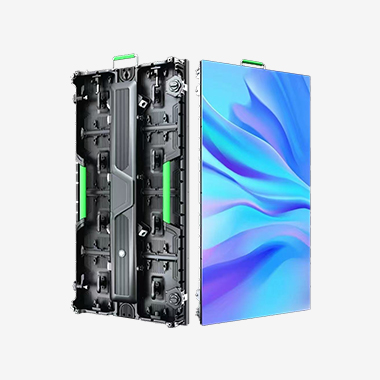
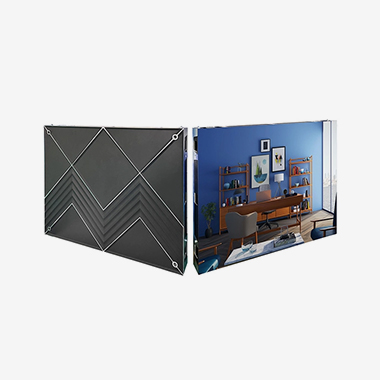
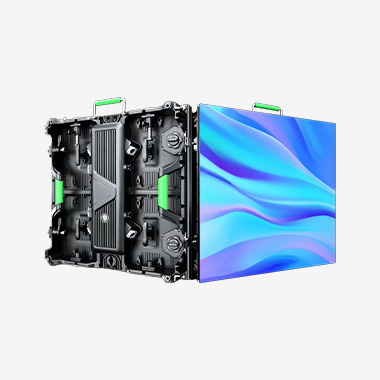
The panel cabinet and housing are designed for durability, light weight, and quick assembly. Unlike heavy fixed installation cabinets, conference LED wall modules use lightweight aluminum alloy frames (weighing 3-5 kg per module) that are easy to transport and handle. The cabinet features a “quick-lock” system—magnetic or mechanical latches that allow modules to be attached to each other in seconds, eliminating the need for screws or tools. This reduces assembly time significantly: a 50-square-foot LED wall can be set up by a team of two in under an hour, a critical advantage for conferences with tight setup windows between sessions. The front of each module is protected by a thin, scratch-resistant tempered glass or polycarbonate cover that shields the LEDs from dust, spills, or minor impacts (e.g., a misplaced laptop or stage equipment). The back of the cabinet includes ventilation slots for passive cooling, as conference venues often prohibit noisy fans that could disrupt presentations.
The mounting system is tailored to the flexibility of conference spaces. Large LED walls for conferences use one of three primary mounting options:
Floor-standing trussing: Lightweight aluminum trusses that support the LED modules from the floor, ideal for temporary setups in auditoriums or ballrooms. The truss is adjustable in height and width, allowing the wall to be customized to the stage size.
Wall-mounted brackets: Low-profile brackets that attach the LED modules directly to existing walls, suitable for smaller breakout rooms or permanent conference spaces. The brackets include fine-tuning knobs to ensure the modules are perfectly aligned, creating a seamless screen.
Suspension systems: Ceiling-mounted rails or cables that hang the LED wall from above, used in venues with high ceilings or limited floor space. This option keeps the stage floor clear, making it easier for speakers to move around during presentations.
All mounting systems are designed to be non-invasive, meaning they do not damage the venue’s walls or floors— a key requirement for conference centers that host multiple events throughout the year.
The power and data distribution system is optimized for reliability and ease of use. Conference LED walls use a “daisy-chain” configuration, where power and data are passed from one module to the next via built-in cables. This reduces the number of wires needed, simplifying setup and minimizing the risk of cable tangles or disconnections. The power supply is external but compact, with each module drawing power from a centralized power distribution unit (PDU) that can be mounted discreetly behind the wall. The data system supports high-speed interfaces like HDMI 2.1, DisplayPort 2.0, and fiber optic cables, enabling 4K/8K video transmission without lag—critical for live presentations or video playback. Many models also include redundant power and data paths, so if one cable or PDU fails, the wall continues to operate using a backup connection—ensuring no interruptions during a conference session.
The control and calibration system is integrated to ensure seamless operation. Each LED wall includes a dedicated controller (often a small, rack-mounted device) that processes content and distributes it across the modules. The controller supports common presentation software (PowerPoint, Keynote, Zoom) and includes tools for calibrating color, brightness, and alignment. For large walls composed of multiple modules, the controller uses “edge blending” and “color matching” to eliminate visible seams between modules and ensure uniform brightness across the entire screen. The control system can be operated via a laptop, tablet, or smartphone app, allowing conference technicians to adjust the wall’s settings from anywhere in the venue—whether they’re backstage or in the audience.
In summary, the design and construction of large LED wall display panels for conferences are a masterclass in practicality and performance. Every component is optimized to create a scalable, reliable, and easy-to-use visual solution that meets the unique demands of conference environments.
Large LED wall display panels for conferences operate on a set of core principles that enable them to deliver high-quality, seamless visuals while adapting to the dynamic needs of conference environments. Unlike fixed installation LED walls or small displays, conference-focused models prioritize quick content delivery, reliable performance, and compatibility with conference technology—ensuring that presentations run smoothly and attendees remain engaged. Understanding these principles reveals how they overcome the traditional limitations of conference visuals (e.g., poor visibility, limited interactivity) and deliver an elevated experience for speakers and audiences alike.
At the most fundamental level, the operation of high-density LED arrays drives the wall’s resolution and visual clarity. Conference LED walls use SMD LEDs arranged in small pixel pitches (P1.2-P3), with each pixel consisting of three RGB LEDs. When an electric current passes through an LED, it emits light, and the intensity of the current determines the brightness of the pixel. By adjusting the current to each RGB trio, the wall can produce over 16 million colors—enabling accurate reproduction of brand colors, high-quality videos, and detailed data visualizations. For conference presentations, this precision is critical: a P1.5 LED wall, for example, can display a 4K slide with text as small as 12pt, ensuring legibility for attendees seated 50+ feet away. The LED arrays are also designed for fast refresh rates (1,920Hz or higher), eliminating flicker that can cause eye strain during long conference sessions—a common issue with older projection systems.
The power management system ensures stable operation during extended conference use. Large LED walls for conferences draw significant power (500-1,500 watts for a 50-square-foot wall), so the system uses a centralized PDU to distribute power evenly across all modules. The PDU converts AC power (110V/220V) to low-voltage DC power (5V/12V) that is safe for the LEDs, and it includes surge protection to shield the wall from voltage spikes—common in conference venues with shared electrical systems. Redundant power paths are integrated: if one power cable or PDU port fails, the affected modules automatically switch to a backup power source, preventing blackouts during critical presentations. The system also includes power monitoring tools that track energy usage in real time, allowing conference technicians to avoid overloading the venue’s electrical system—especially important for large events with multiple pieces of equipment (e.g., audio systems, stage lighting).
Content delivery and processing principles prioritize compatibility with conference workflows. When a speaker connects their laptop or presentation device to the LED wall, the wall’s controller processes the content in three key steps:
Signal reception: The controller receives the content signal via HDMI, DisplayPort, or USB, supporting formats like 4K video, PowerPoint slides, and live camera feeds.
Scaling and mapping: The controller scales the content to fit the wall’s dimensions (e.g., stretching a 1080p slide to fill a 4K wall) and maps it to the LED modules—ensuring that every pixel of the content aligns with a physical pixel on the wall, eliminating distortion.
Distribution: The controller sends the processed content to each LED module via a daisy-chain data connection, synchronizing playback across all modules to create a seamless image. For hybrid conferences, the controller also integrates with video conferencing software (e.g., Zoom, Teams), allowing virtual speakers to appear on the LED wall in real time—with low latency (less than 100ms) to ensure natural conversation between in-person and remote attendees.
The controller also supports “multi-window” functionality, which splits the LED wall into multiple sections to display different types of content simultaneously—e.g., a speaker’s slides on the left, a live feed of the audience on the right, and a timer at the bottom. This is especially useful for panel discussions or Q&A sessions, where multiple content sources need to be visible at once.
Brightness and color control adapt to conference hall lighting. Large LED walls for conferences include ambient light sensors that measure the brightness of the venue (e.g., sunlight coming through windows, stage lights) and adjust the wall’s output accordingly. If the hall is brightly lit, the wall increases brightness to 1,500-2,000 nits to ensure visibility; if the hall is dimmed for a video playback, it reduces brightness to 500-1,000 nits to avoid eye strain. Color control is equally important: the wall’s controller uses color calibration tools to match the color temperature of the LEDs to the venue’s lighting (e.g., warm white for a cozy breakout room, cool white for a modern auditorium), ensuring that presentations look consistent throughout the day. For brand-focused conferences, the controller also supports custom color profiles—allowing companies to pre-set their brand colors (e.g., Coca-Cola red, IBM blue) to ensure accurate reproduction across all presentations.
Reliability and fault tolerance principles ensure uninterrupted conference sessions. Conference LED walls include built-in diagnostic tools that monitor the performance of each module in real time—tracking metrics like LED health, temperature, and data connectivity. If a module fails (e.g., a dead pixel cluster), the controller automatically “masks” the faulty area by stretching the surrounding content to cover it, preventing a distracting black spot on the wall. The system also sends alerts to the conference technician’s tablet or laptop, notifying them of the issue so it can be repaired between sessions. For long conferences (e.g., multi-day trade shows), the wall includes a “sleep mode” that turns off non-essential modules during breaks, reducing wear and extending the lifespan of the LEDs.
In conclusion, the working principles of large LED wall display panels for conferences are a synergy of high-performance LED technology, reliable power management, flexible content processing, and adaptive control. By optimizing each of these principles, these walls deliver the seamless, engaging visuals that modern conferences demand—making them an indispensable tool for speakers and organizers.
Large LED wall display panels offer a range of advantages that have made them a preferred visual solution for conferences, but they also present unique challenges related to cost, setup, and venue compatibility. Understanding these pros and cons is critical for conference organizers, venue managers, and speakers to make informed decisions about investing in or using these panels, ensuring that they align with the event’s goals, budget, and logistical constraints.
Advantages
1. Superior Visual Quality and Visibility for All Attendees
The most significant advantage of large LED wall display panels for conferences is their ability to deliver high-quality, visible content for every attendee—regardless of their seat. With small pixel pitches (P1.2-P3) and 4K/8K resolution, these walls display crisp text, detailed graphs, and smooth videos that are legible even from the back rows of large auditoriums. Their high brightness (1,000-2,000 nits) overcomes ambient light in conference halls—whether it’s sunlight streaming through windows or stage lighting—eliminating the need to dim the room (a common issue with projectors that can make note-taking difficult). Wide viewing angles (170°+) ensure that attendees seated off to the sides can see the content clearly, preventing the “side-of-screen glare” that plagues traditional displays. For example, a 4K LED wall in a 500-seat auditorium will ensure that every attendee can read a data table on the screen, even those seated in the far corners—something a projector could never achieve.
2. Flexibility and Scalability for Any Conference Space
Large LED wall display panels are highly flexible, making them suitable for any conference venue—from small breakout rooms to massive convention centers. Their modular design allows them to be assembled in any size or shape: a 10x5 foot wall for a workshop, a 20x10 foot wall for a main stage, or even a curved wall for a unique auditorium layout. This scalability means that the same set of LED modules can be reused for different events, reducing the need to purchase multiple displays. Additionally, the walls support multiple aspect ratios (16:9, 4:3, custom) to match different presentation formats—whether a speaker is using standard slides, wide-screen videos, or square product images. For conference organizers, this flexibility is invaluable: it allows them to adapt the visual setup to the venue’s constraints and the event’s specific needs, rather than being limited by fixed display sizes.
3. Enhanced Engagement and Interactive Capabilities
Large LED wall display panels transform passive conference presentations into interactive experiences that keep attendees engaged. Many models support touch control (via integrated touch sensors or external touch overlays), allowing speakers to interact with their slides directly on the wall—zooming in on data, drawing annotations, or navigating between slides with a tap. For audience engagement, the walls integrate with polling or Q&A tools: attendees can submit questions via their smartphones, and the answers are displayed on the LED wall in real time, fostering conversation. Hybrid conferences benefit from the wall’s ability to display live streams of virtual attendees or feed back comments from online platforms (e.g., Twitter, LinkedIn), creating a sense of connection between in-person and remote audiences. Studies show that interactive presentations using LED walls increase attendee retention by 35% compared to traditional slide shows, as they encourage active participation.
4. Reliability and Minimal Downtime
Conferences cannot afford display failures—especially during criticalsessions like keynote speeches or product launches. Large LED wall display panels are designed for maximum reliability, with features that minimize downtime. As mentioned earlier, redundant power and data paths ensure the wall continues operating even if a component fails. Additionally, the LED modules have a long lifespan (50,000-100,000 hours of operation), meaning they rarely need replacement—unlike projector bulbs, which burn out every 2,000-5,000 hours and require 紧急更换 mid-conference. The wall’s built-in diagnostic tools also allow technicians to identify and resolve issues quickly (e.g., replacing a faulty module between sessions) before they escalate into major problems. For conference organizers, this reliability translates to peace of mind: they can focus on managing the event rather than worrying about display failures.
5. Seamless Integration with Conference Technology Ecosystems
Large LED wall display panels are designed to work seamlessly with the technology already used in conferences, eliminating compatibility issues. They integrate with popular presentation software (PowerPoint, Keynote, Google Slides) via standard interfaces like HDMI and USB, allowing speakers to connect their laptops and start presenting in minutes—no specialized software required. For hybrid conferences, the walls sync with video conferencing platforms (Zoom, Microsoft Teams, Webex) to display virtual speakers or share the in-person presentation with remote attendees. They also connect to audio systems, ensuring that audio from videos or virtual speakers is synchronized with the visual content. Some advanced models even integrate with room control systems, allowing technicians to adjust the LED wall’s brightness, volume, and content alongside other venue equipment (e.g., stage lights, microphones) from a single dashboard. This integration streamlines the conference setup process and ensures a cohesive experience for both in-person and remote attendees.
Challenges
1. High Initial Cost and Budget Constraints
The most significant challenge of large LED wall display panels for conferences is their high upfront cost. A small 10x5 foot LED wall (4K resolution, P2 pixel pitch) can cost \(20,000-\)30,000, while a large 20x10 foot wall (8K resolution, P1.5 pixel pitch) can exceed \(100,000—plus installation costs (which add \)5,000-\(15,000 for labor, trussing, and calibration). This cost is prohibitive for small conference organizers, community groups, or startups with limited event budgets. Even for large organizations, purchasing multiple LED walls for different conference spaces (e.g., main auditorium, breakout rooms, lobby) can strain budgets. Rental options are available (typically \)1,000-\(5,000 per day, depending on size), but these costs add up for multi-day conferences—e.g., a 3-day conference renting a large LED wall could spend \)3,000-$15,000, which may still be too expensive for some users.
2. Complex Setup and Technical Expertise Requirements
While large LED wall display panels are designed for quick assembly, they still require specialized technical expertise to set up and operate correctly. Calibrating the wall to ensure uniform brightness and color across all modules, configuring multi-window displays, and integrating with video conferencing software all require knowledge of LED technology and conference AV systems. Most conference organizers do not have in-house technicians with this expertise, so they must hire external AV companies to manage the setup and operation—adding \(1,000-\)3,000 per day to the event’s cost. Even with professional help, setup can be time-consuming for very large walls: a 1,000-square-foot LED wall may take 4-6 hours to assemble and calibrate, which can be a problem for conferences with tight venue access windows (e.g., setting up in a hotel ballroom that is used for another event the night before).
3. Venue Space and Weight Limitations
Large LED wall display panels require significant space and can be heavy, which may be a problem for smaller or older conference venues. A 50-square-foot LED wall (including trussing) can weigh 200-300 pounds, and larger walls can exceed 1,000 pounds. Many older conference halls or hotel ballrooms have weight restrictions on floors or walls, meaning they cannot support the weight of a large LED wall. Additionally, the wall requires space behind it for cables, cooling, and access for technicians—typically 2-3 feet of clearance—which may not be available in narrow venues. For example, a small breakout room with limited wall space may not be able to accommodate even a medium-sized LED wall, forcing organizers to use a smaller display or projector instead. Venue height can also be a constraint: a tall LED wall may not fit in a room with low ceilings, limiting the wall’s size and impact.
4. Power Consumption and Venue Electrical Capacity
Large LED wall display panels consume significant power, which can strain the electrical capacity of some conference venues. A 50-square-foot 4K LED wall uses 500-1,000 watts of power—equivalent to 4-8 household light bulbs—but larger 8K walls can use 2,000 watts or more. Many older conference venues have outdated electrical systems that cannot handle this additional load, especially if the event also uses other power-hungry equipment (e.g., stage lighting, audio systems, projectors). This can lead to tripped circuit breakers or power outages during the conference. To mitigate this, organizers may need to hire an electrician to upgrade the venue’s electrical system or bring in a portable generator—adding \(2,000-\)5,000 to the event’s cost. Even with these measures, power management can be complex: technicians must carefully balance the load across multiple circuits to avoid overloading any single one.
5. Transportation and Storage Challenges
Large LED wall display panels consist of multiple modules, trussing, and controllers, which require specialized transportation and storage. The modules are fragile (especially the glass front covers) and must be transported in padded, custom cases to prevent damage—adding to the cost and complexity of moving the wall between venues. For organizations that own their LED walls, storage is another issue: the wall’s components take up significant space (e.g., a 50-square-foot wall may require a 10x10 foot storage room), and the modules must be stored in a climate-controlled environment to prevent damage from humidity or extreme temperatures. Rental companies face similar challenges: transporting large LED walls to different conferences requires large trucks and trained staff, and storage facilities must be maintained to keep the equipment in good condition. For small organizations or conferences held in remote locations, these transportation and storage challenges can make using a large LED wall impractical.
Large LED wall display panels have already become an integral part of modern conferences, but their applications continue to expand as technology evolves. From main stage presentations to interactive breakout rooms, these walls are adapting to diverse conference needs. Looking ahead, emerging trends will further enhance their capabilities, making them even more valuable for conference organizers, speakers, and attendees.
Current Applications
1. Main Auditorium Keynotes and Headline Sessions
The main auditorium is the centerpiece of most conferences, and large LED wall display panels are the ideal visual solution for keynote speeches, headline presentations, and product launches. These walls—typically 15x8 feet or larger with 4K/8K resolution—serve as the primary visual backdrop, displaying the speaker’s slides, videos, or live demos. The high resolution ensures that even small text (e.g., data points, quotes) is legible to attendees in the back rows, while the high brightness cuts through stage lighting to maintain visibility. For example, a tech conference’s keynote speech might use an 8K LED wall to showcase a new smartphone’s features, with close-up videos of the device’s screen and camera that are visible to every attendee. The wall also enhances the stage’s visual appeal: many conferences use dynamic backgrounds (e.g., branded animations, live data visualizations) on the LED wall to keep attendees engaged during transitions between speakers.
2. Hybrid Conference Integration for Remote Attendees
The rise of hybrid conferences (combining in-person and remote attendance) has made large LED wall display panels more important than ever. These walls serve as a bridge between in-person and remote audiences: they display live streams of virtual speakers on the main stage, allowing in-person attendees to see and interact with remote presenters. Conversely, the wall’s content (e.g., the in-person speaker’s slides, audience Q&A) is streamed to remote attendees via video conferencing platforms, ensuring they have the same experience as those in the room. For example, a global business conference might have a keynote speaker presenting from London, displayed on a large LED wall in a New York auditorium, with in-person attendees asking questions that are relayed to the remote speaker. The wall’s low latency (less than 100ms) ensures that conversations between in-person and remote attendees feel natural, eliminating the awkward delays that plague traditional video conferencing.
3. Breakout Room Workshops and Interactive Sessions
Breakout rooms—smaller spaces for workshops, panel discussions, or hands-on training—use medium-sized LED walls (10x5 feet or smaller) to foster engagement. These walls support interactive features like touch control and audience polling, making them ideal for collaborative sessions. For a workshop on data analysis, the speaker might use a touch-enabled LED wall to draw annotations on a graph or let attendees take turns manipulating data visualizations. For a panel discussion, the wall can display audience questions submitted via smartphones, ensuring that all attendees (even those in the back of the room) can read the questions. Some breakout rooms also use the wall to display live notes or summaries of the session, which attendees can access later via a QR code—reinforcing key takeaways and improving retention.
4. Conference Lobby and Networking Area Branding
Conference lobbies and networking areas use large LED walls to set the tone for the event and keep attendees informed. These walls—often placed near the entrance or registration desk—display event branding (e.g., logos, taglines), schedules, and sponsor messages. They may also show highlight reels of previous sessions or social media posts tagged with the conference’s hashtag, encouraging attendees to share their experience online. For example, a marketing conference’s lobby might use a curved LED wall to display a looping video of past keynote speeches and attendee testimonials, building excitement for the current event. The wall can also be used to direct attendees to different areas of the venue (e.g., “Breakout Room A: 2nd Floor, Turn Left”), reducing confusion and improving the overall attendee experience.
5. Trade Show and Exhibition Booths Within Conferences
Many conferences include trade show or exhibition components, where vendors showcase their products or services. Large LED walls are a popular choice for these booths, as they attract attention and allow vendors to demonstrate their offerings in detail. A software company might use a 4K LED wall to show a live demo of its new platform, with the high resolution highlighting the software’s user interface and features. A hardware company could use the wall to display 3D models of its products, allowing attendees to see every detail without handling the physical item. The wall’s flexibility also allows vendors to customize their booth’s visual setup: a small startup might use a single 10x5 foot wall, while a large corporation could use multiple walls to create an immersive booth experience.
Future Trends
1. AI-Powered Content Optimization and Personalization
Artificial intelligence (AI) will transform how large LED wall display panels deliver content at conferences, enabling personalized, data-driven experiences. AI-powered cameras mounted near the wall will analyze the audience in real time—tracking factors like attendance levels, attention spans, and demographic data (e.g., age, gender). This data will be used to optimize the content displayed on the wall:
If the AI detects that attendees are losing interest (e.g., checking their phones frequently), it can suggest the speaker switch to a more engaging format (e.g., a video instead of slides).
For hybrid conferences, the AI can tailor the content to remote and in-person attendees separately: remote attendees might see additional context (e.g., links to resources) on their screens, while in-person attendees see interactive polls on the LED wall.
AI can also generate content automatically: for example, it can transcribe a speaker’s speech in real time and display key quotes on the wall, or create a summary of a panel discussion that updates as the conversation progresses.
This personalization will make conferences more engaging for attendees and more valuable for organizers, who can use the AI-generated data to improve future events.
2. 8K Resolution and Micro-LED Technology for Ultra-Sharp Visuals
As 8K content becomes more accessible (e.g., 8K cameras, streaming services), large LED wall display panels will shift from 4K to 8K resolution as the industry standard. 8K walls will offer four times the pixel density of 4K, delivering ultra-sharp visuals that are ideal for large auditoriums or detailed presentations (e.g., medical conferences showing high-resolution images of cells, engineering conferences displaying complex blueprints).
Micro-LED technology will also become more common in conference LED walls. Micro-LEDs are tiny (less than 100 micrometers) LED chips that offer higher brightness (up to 3,000 nits), better color accuracy, and lower power consumption than traditional SMD LEDs. For conferences, this means:
Brighter visuals that are visible even in brightly lit auditoriums without dimming the room.
More accurate color reproduction, which is critical for brand-focused conferences or events where color accuracy matters (e.g., fashion shows, design conferences).
Lower power consumption, reducing the wall’s impact on the venue’s electrical system and lowering energy costs.
3. Flexible and Transparent LED Walls for Creative Conference Design
Future large LED wall display panels will become more flexible and even transparent, opening up new creative possibilities for conference design. Flexible LED walls—made with bendable substrates like polycarbonate—can be curved around stage pillars, wrapped around the edges of a room, or even shaped into custom forms (e.g., a circular wall for a product launch). This flexibility allows conference designers to create unique, immersive environments that stand out from traditional flat displays.
Transparent LED walls will also gain popularity, especially in conference lobbies or exhibition areas. These walls are made with transparent substrates that allow light to pass through, meaning they can be mounted on windows or glass partitions without blocking the view. For example, a conference lobby with a large window could use a transparent LED wall to display event branding or schedules, while still allowing natural light to enter the space. Transparent walls can also be used in exhibition booths, where vendors can display products behind the wall while the wall shows promotional content—creating a seamless blend of physical and digital visuals.
4. Enhanced Interactivity with AR/VR and Gesture Control
Augmented reality (AR) and virtual reality (VR) will be integrated with large LED wall display panels to create more immersive, interactive conference experiences. AR-enabled walls will let attendees use their smartphones to interact with the display:
A product conference might let attendees scan a QR code on the wall to “place” a 3D model of a new product in the room (via AR), allowing them to walk around and inspect it from all angles.
A training workshop could use AR to overlay step-by-step instructions on the wall, guiding attendees through a hands-on task (e.g., assembling a product).
Gesture control will eliminate the need for touch interaction, making the wall more hygienic (important for post-pandemic conferences) and accessible. Attendees or speakers can wave their hand in front of the wall to navigate slides, zoom in on content, or activate interactive features—no physical contact required. This technology will be especially useful for large auditoriums, where the speaker may be too far from the wall to use touch control.
5. Sustainability and Eco-Friendly Design
Sustainability will be a key focus in future large LED wall display panels for conferences, as organizers and venues increasingly prioritize eco-friendly practices. Manufacturers will:
Use recycled materials for the wall’s frame and housing (e.g., recycled aluminum, biodegradable plastics), reducing the panel’s carbon footprint during production.
Design the wall for easy disassembly and recycling, ensuring that components like LEDs and controllers can be reused or recycled at the end of the wall’s lifespan.
Integrate energy-saving features like solar panels (for outdoor or well-lit conference spaces) or energy-storage batteries that store excess power for use during peak demand.
Some conference venues may even offer “green AV” packages, where the rental cost of the LED wall includes carbon offsets to compensate for the energy used during the event. This sustainability focus will align with the growing demand for eco-friendly conferences and help organizers reduce their event’s environmental impact.
Conclusion
Large LED wall display panels have revolutionized the way conferences deliver visual content, offering a level of quality, flexibility, and engagement that traditional displays like projectors or small screens cannot match. Throughout this series, we have explored their core strengths: from their superior visual quality that ensures every attendee can see content clearly, to their flexibility that adapts to any conference space, and their reliability that minimizes downtime during critical sessions. Their design and construction prioritize conference-specific needs—quick assembly, non-invasive mounting, and seamless integration with AV systems—while their working principles balance performance with practicality, making them an indispensable tool for modern conferences.
While challenges remain—high initial costs, technical expertise requirements, and venue limitations—these are being addressed by ongoing technological advancements. The future of large LED wall display panels for conferences is bright, with trends like AI-powered personalization, 8K resolution, flexible designs, and sustainability set to enhance their capabilities even further. These innovations will not only make the panels more accessible and efficient but also open up new creative possibilities for conference design, helping organizers create events that are more immersive, engaging, and eco-friendly.
For conference organizers, investing in large LED wall display panels is an investment in the attendee experience. These panels help speakers communicate more effectively, keep attendees engaged, and bridge the gap between in-person and remote audiences—critical in an era where hybrid events are becoming the norm. For venue managers, offering LED wall technology can attract more high-profile conferences and differentiate their space from competitors. For speakers, the panels provide a platform to showcase their content in the


Copyright © 2026 Shenzhen Cogo Technology Co.,Ltd.
All Rights Reserved

 Previous article