




 Chat Now
High resolution LED wall display panels represent the pinnacle of visual technology, offering unprecedented image quality and immersive viewing experiences across countless applications. These advanced display systems combine microscopic LED technology with sophisticated processing capabilities to create seamless, ultra-high-definition visual canvases that redefine how we perceive digital content. Unlike conventional displays that struggle with bezels, pixel visibility, and resolution limitations, high resolution LED walls deliver flawless imagery that appears as a continuous visual field rather than a technological artifact.
The defining characteristic of these display systems is their exceptionally fine pixel pitch—typically ranging from P0.9 to P2.5 millimeters—enabling resolutions that meet or exceed 4K and 8K standards even on large format displays. This pixel density eliminates the "screen door effect" completely, allowing viewers to approach remarkably close to the screen without detecting individual pixels. The technological achievement here is profound: packing millions of individually controlled light sources into a manageable form factor while maintaining brightness, color accuracy, and reliability represents one of the most significant advancements in display technology of the past decade.
The market for high resolution LED walls has expanded dramatically beyond their traditional broadcasting and control room applications. Today, they serve as the centerpiece in corporate boardrooms, luxury retail environments, museums, and high-end residential installations. The driving force behind this expansion is the growing recognition that visual quality directly impacts communication effectiveness, brand perception, and user engagement. In an era where content consumption has been dominated by high-resolution personal devices, there is increasing demand for large-format displays that match the pixel density and clarity people experience on their smartphones and tablets.
Technologically, these displays represent a convergence of multiple innovations. MicroLED and MiniLED technologies have enabled the manufacturing of microscopic light-emitting elements that maintain high brightness and color saturation despite their minute size. Advanced surface mount technology (SMT) processes allow for the precise placement of these tiny components at densities previously unimaginable. Sophisticated driver integrated circuits (ICs) can independently control thousands of LEDs from a single chip, while advanced image processing algorithms ensure perfect color uniformity and gamma correction across the entire display surface.
The applications for high resolution LED walls are as diverse as they are impressive. In command and control environments, they provide operators with crystal-clear visualization of complex data systems. In corporate settings, they create immersive presentation environments that enhance decision-making and collaboration. In luxury retail, they serve as breathtaking brand statement pieces that showcase products with photographic realism. In entertainment venues, they create immersive environments that transport audiences into other worlds. The common thread across all these applications is the need for flawless visual reproduction that engages viewers without technological distraction.
As we move further into the digital age, high resolution LED walls are becoming the standard for premium visual experiences. Their ability to scale seamlessly from intimate conference rooms to vast auditoriums while maintaining exceptional image quality makes them uniquely suited to the evolving needs of modern visual communication. The technology continues to advance at a rapid pace, with each generation offering improved performance, higher reliability, and more accessible pricing, ensuring that these incredible visual tools will become increasingly prevalent across all sectors of society.
The design and construction of high resolution LED wall display panels represent a marvel of modern engineering, requiring unprecedented precision in manufacturing, innovative thermal management solutions, and sophisticated electronic architecture. These displays push the boundaries of what's physically possible in terms of component density while maintaining the reliability and performance expected from professional-grade visual equipment.
The foundation of these displays lies in their LED modules, which are miracles of miniaturization. Each module contains thousands of individually addressable RGB LEDs mounted on precision PCBs using advanced surface mount technology. The manufacturing process for these modules occurs in cleanroom environments using automated optical inspection systems that verify component placement accuracy to within microns. The LEDs themselves utilize advanced semiconductor materials and packaging technologies that maximize light output while minimizing thermal generation—a critical consideration given the incredible density of these components. The PCBs feature high-layer-count designs with sophisticated power distribution networks that ensure stable voltage delivery to every component despite the extremely high current demands.
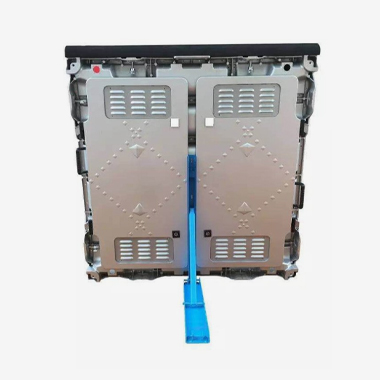
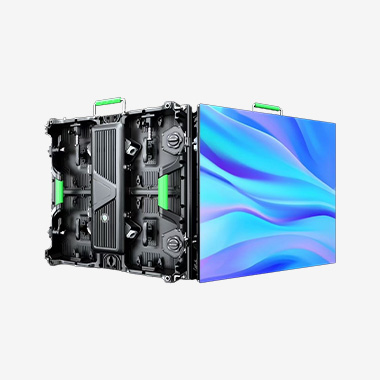
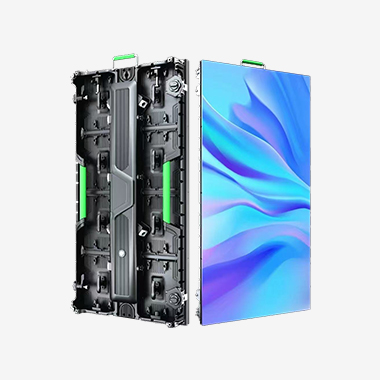
The mechanical architecture of these panels is equally impressive. To achieve the necessary structural rigidity while maintaining minimal depth, manufacturers employ advanced materials including magnesium-aluminum alloys, carbon fiber composites, and precision-machined aluminum extrusions. The panel frames incorporate sophisticated locking mechanisms that ensure perfect alignment between adjacent panels while allowing for thermal expansion and contraction. The front surface typically features a matte anti-reflective treatment that preserves contrast ratio while eliminating specular highlights that would degrade image quality. The overall construction prioritizes serviceability, with front-access designs that allow for module replacement without disassembling the entire display wall.
Thermal management represents one of the most challenging aspects of high resolution LED wall design. The incredible density of LEDs generates substantial heat that must be efficiently dissipated to prevent performance degradation and ensure long-term reliability. Traditional cooling methods are insufficient for these applications, leading to innovative solutions such as vapor chamber cooling systems, phase-change materials, and advanced heat spreaders that utilize thermally conductive composites. Many high-end systems employ active cooling systems with precisely calibrated airflow patterns that maximize heat transfer while maintaining silent operation—a critical requirement for environments like boardrooms and control rooms.
The electronic systems within these panels are marvels of integration. Driver ICs have evolved to unprecedented levels of sophistication, with single chips capable of controlling thousands of LEDs with individual 16-bit grayscale control. These drivers incorporate advanced algorithms for gamma correction, refresh rate optimization, and power management. The power delivery systems utilize high-frequency switching regulators with efficiency ratings exceeding 95%, minimizing heat generation while providing stable power to the demanding LED arrays. Data distribution networks employ high-speed serial interfaces that can handle the enormous bandwidth requirements of ultra-high-resolution content while maintaining signal integrity across large display installations.
The optical system design is equally critical to achieving high resolution performance. Each LED features precision micro-lenses that control light distribution patterns, maximizing on-axis brightness while minimizing cross-talk between pixels. Anti-reflective coatings on all optical surfaces reduce light loss and preserve contrast ratio. Color conversion materials ensure consistent chromaticity across the entire display, while advanced binning processes guarantee perfect color matching between modules. The overall optical stack is engineered to provide wide viewing angles (typically 160° or more) without color shift or brightness degradation, ensuring consistent image quality for viewers across a wide area.
Quality control processes for these displays are exceptionally rigorous. Each module undergoes automated optical inspection that verifies the position, orientation, and functionality of every individual LED. Full-color calibration is performed using spectrophotometers that measure and correct color variations at multiple brightness levels. The calibration data is stored in non-volatile memory on each module, ensuring perfect uniformity across the entire display wall. Environmental testing subjects completed panels to thermal cycling, vibration, and humidity exposure to verify reliability under real-world operating conditions.
The resulting product represents the pinnacle of display technology—a seamless visual canvas that delivers breathtaking image quality while operating reliably in demanding professional environments. The construction quality ensures years of continuous operation with minimal maintenance, making these displays worthy investments for applications where visual perfection and reliability are non-negotiable requirements.
The operation of high resolution LED wall display panels involves a sophisticated orchestration of optical physics, electronic control systems, and image processing algorithms that work in concert to produce flawless visual experiences. Understanding these working principles requires examining how these systems manage the incredible complexity of controlling millions of individual light sources with precision and consistency.
At the most fundamental level, these displays operate on the principle of additive color mixing through electroluminescence. Each pixel consists of red, green, and blue micro-LEDs that emit light when current passes through their semiconductor junctions. The color of emitted light is determined by the bandgap energy of the semiconductor materials used in each LED type. What distinguishes high resolution systems is the precision with which they control these microscopic light sources. Advanced pulse-width modulation (PWM) techniques operating at frequencies exceeding 4,000 Hz enable 16-bit or higher grayscale control for each color channel, resulting in over 281 trillion possible colors with smooth gradients and exceptional color accuracy.
The control architecture for these displays is hierarchical and distributed to manage the enormous data requirements. At the highest level, a master controller receives video input and processes it for display. This processing includes resolution scaling to match the native resolution of the LED wall, color space conversion, and advanced image enhancement algorithms. The processed video data is then packetized and distributed to individual panel controllers via high-speed data networks, typically using proprietary protocols optimized for low latency and high bandwidth. Each panel controller manages a section of the display, further distributing data to driver ICs that directly control the LEDs.
The driver ICs represent the workhorses of the system, implementing the precise current control required for consistent LED operation. These sophisticated chips incorporate constant-current sinks that maintain stable current flow through each LED regardless of voltage fluctuations or temperature variations. Advanced driver ICs feature built-in gamma correction, dot correction, and temperature compensation algorithms that ensure consistent brightness and color across the entire display. The PWM generation occurs within these drivers, with timing precision measured in nanoseconds to eliminate visible artifacts and ensure smooth motion reproduction.
Thermal management systems operate continuously to maintain optimal operating conditions. Temperature sensors distributed throughout the display provide real-time data to management systems that adjust cooling performance and, if necessary, implement brightness limiting to prevent overheating. Advanced systems employ predictive thermal management algorithms that anticipate temperature changes based on content characteristics and ambient conditions, proactively adjusting cooling systems to maintain stable temperatures without compromising image quality.
The optical systems work to maximize the efficiency and quality of light output from the LEDs. Micro-lens arrays positioned over each LED chip optimize light extraction and control emission patterns, ensuring maximum on-axis brightness while minimizing cross-talk between adjacent pixels. Anti-reflective coatings on all optical surfaces reduce light loss and prevent reflections that would degrade contrast ratio. In some advanced systems, quantum dot enhancement films are used to widen color gamut and improve color purity, particularly in the green and red portions of the spectrum where traditional LED materials have limitations.
Content adaptation systems represent another critical aspect of the working principles. These displays typically incorporate ambient light sensors that measure environmental lighting conditions and automatically adjust brightness and contrast to maintain optimal visibility while minimizing power consumption. Advanced content recognition algorithms analyze the displayed content and optimize processing parameters in real-time—increasing sharpness for text content, enhancing motion smoothing for video, and optimizing color saturation for graphical content. These adaptive systems ensure that the display always delivers the best possible image quality regardless of content type or viewing conditions.
The reliability systems implemented in these displays are equally sophisticated. Built-in self-test routines continuously monitor LED performance, detecting and compensating for failed elements through redundant circuitry and error diffusion algorithms. Power management systems monitor energy consumption and efficiency, optimizing performance based on usage patterns and power quality. Remote management capabilities allow for proactive maintenance and troubleshooting, with systems reporting their status and performance metrics to centralized management platforms.
Together, these working principles enable high resolution LED walls to achieve their remarkable performance characteristics. The seamless integration of advanced electronics, sophisticated algorithms, and precision optics creates displays that not only meet but exceed human visual capabilities, delivering experiences that are limited only by the content itself rather than the display technology.
High resolution LED wall display panels offer transformative advantages that have made them the preferred choice for demanding visual applications, but these benefits come with specific challenges that must be carefully managed throughout the specification, installation, and operational lifecycle.
Advantages:
The most significant advantage of these displays is their unparalleled image quality. The combination of extremely fine pixel pitch, high brightness levels (typically 800-1500 nits), exceptional contrast ratios (often exceeding 5000:1), and wide color gamut coverage (frequently exceeding 90% of DCI-P3) creates visual experiences that are simply impossible with other display technologies. This image quality remains consistent across virtually unlimited sizes, as the modular nature of LED walls allows for seamless scaling without bezels or resolution limitations that plague other display technologies. The ability to create perfectly seamless displays of any size or aspect ratio provides creative freedom that is unmatched by alternative technologies.
Another major advantage is the viewing experience. Unlike projection systems that suffer from hot-spotting and require controlled lighting, or LCD video walls that have visible bezels and limited viewing angles, high resolution LED walls provide consistent image quality across wide viewing angles (typically 160° or more) with no color shift or brightness degradation. This ensures that every viewer has an optimal experience regardless of their position relative to the display. The emissive nature of LED technology also means that image quality is unaffected by ambient light conditions, making these displays suitable for environments with challenging lighting that would compromise other technologies.
Reliability and longevity constitute another significant advantage. LED technology offers exceptional operational lifespan, typically rated at 100,000 hours to half-brightness. The solid-state construction lacks moving parts and is resistant to vibration and environmental factors that affect other display types. The modular design ensures that any failures are localized and easily addressed through module replacement rather than requiring complete display replacement. This reliability is crucial for mission-critical applications where display downtime is not an option.
Operational flexibility represents another key advantage. These displays can operate continuously without image retention or burn-in issues that plague OLED technology. They offer incredibly fast response times (microsecond level) that eliminate motion blur completely, making them ideal for fast-moving content and data visualization. The high refresh rates (typically 3840Hz or higher) ensure compatibility with camera-based applications without rolling shutter artifacts. Advanced control systems allow for zoning capabilities, enabling different content to be displayed on different parts of the screen simultaneously.
Challenges:
The primary challenge is cost, particularly for the finest pitch displays. The manufacturing complexity, component density, and precision required for high resolution LED walls result in significantly higher prices than alternative technologies. This cost extends beyond the displays themselves to include supporting infrastructure, installation, and content creation systems. While prices have decreased dramatically in recent years, these displays still represent a substantial investment that requires careful economic justification based on specific use cases and expected benefits.
Power consumption and thermal management present ongoing challenges, particularly for indoor installations. The high density of LEDs generates substantial heat that must be efficiently dissipated to prevent performance degradation and ensure long-term reliability. While modern systems incorporate sophisticated thermal management solutions, this remains a consideration for installation planning and operational costs. Power requirements can be substantial for large installations, necessitating dedicated electrical circuits and potentially affecting facility energy consumption metrics.
Content requirements represent another significant challenge. The ultra-high resolutions of these displays demand specially prepared content that maximizes their capabilities. Standard definition content appears soft and unimpressive, requiring investment in 4K, 8K, or custom-resolution content creation. The aspect ratio flexibility of LED walls also means that content often needs to be created specifically for the unique dimensions of each installation, increasing content production costs and complexity.
Installation and maintenance require specialized expertise that may not be available in all markets. The precision alignment required for seamless appearance demands experienced installers with specialized tools and knowledge. While module replacement is straightforward in principle, accessing displays in some installations can be challenging, and maintaining spare modules represents an additional cost consideration. The rapid pace of technological development also means that specific modules may become obsolete, potentially complicating long-term maintenance for installations with expected lifespans of 5-10 years.
Finally, the perception of LED technology among some users presents a challenge. Despite dramatic improvements in recent years, some decision-makers still associate LED displays with the low-resolution, high-brightness applications typical of outdoor advertising. Educating stakeholders about the capabilities of modern high resolution LED technology is often necessary to overcome preconceptions and secure approval for these investments.
Despite these challenges, the advantages of high resolution LED walls make them the superior choice for applications where visual quality, reliability, and impact are paramount. The key to successful implementation lies in careful planning that addresses these challenges during the specification and design phases, ensuring that the selected solution delivers maximum value throughout its operational lifecycle.
High resolution LED wall display panels have enabled revolutionary applications across numerous sectors while continuing to evolve toward increasingly sophisticated capabilities. Their unique combination of seamless scalability, exceptional image quality, and reliability has created new possibilities for visual communication while driving trends that will shape the future of display technology.
Current Applications:
In corporate environments, these displays have transformed boardrooms and executive briefing centers into immersive decision-making environments. The ability to display complex data visualizations, video conferences, and business intelligence dashboards with crystal clarity enhances understanding and collaboration. In trading floors and command centers, they provide mission-critical visualization that operators can view from any angle without compromising image quality. The corporate lobby application has evolved into brand statement pieces that communicate company values and capabilities to visitors through stunning visual experiences.
The entertainment industry has embraced high resolution LED walls for virtual production stages, revolutionizing film and television production. These "volume" stages use curved LED walls as dynamic backdrops that provide realistic lighting and reflections while allowing directors to see final composites in real-time rather than working with green screens. This technology has been pioneered by productions like "The Mandalorian" and is rapidly becoming standard practice for high-end film and television production. In live events and concerts, these displays create immersive environments that enhance performances and create shared experiences for audiences.
In retail and hospitality, these displays serve as breathtaking brand experience tools. Luxury retailers use them as dynamic window displays that stop foot traffic and as in-store brand statements that showcase products with photographic realism. Hotels and casinos employ them as architectural elements that create ambiance and provide information while maintaining sophisticated aesthetics. The high resolution ensures that even viewers in close proximity experience perfect image quality, making them suitable for applications where engagement occurs at intimate distances.
Educational and cultural institutions have found valuable applications for this technology. Museums use them for immersive exhibits that transport visitors to other times and places, while universities employ them in visualization labs for scientific research and data analysis. The ability to create seamless displays of任意 size makes them ideal for planetariums and simulation environments where immersion is critical to the educational experience.
Future Trends:
The future development of high resolution LED walls will be characterized by several key trends. First, continued miniaturization will push pixel pitches below P0.6, enabling 8K resolution on smaller displays and making the technology suitable for applications where viewers are exceptionally close to the screen. This will open new applications in retail product displays, museum exhibits, and high-end residential installations.
Second, the integration of sensing technologies will transform these displays from passive presentation devices to interactive environmental elements. Built-in cameras with privacy-focused computer vision will enable audience analytics and gesture control. Environmental sensors will automatically adjust display settings based on ambient conditions and viewer position, optimizing both experience and energy efficiency.
Third, advancements in form factors will enable new application scenarios. Flexible substrates will allow for curved and shaped displays that follow architectural forms. Transparent LED technologies will create see-through displays that maintain outward visibility while overlaying digital information. These developments will further blur the line between digital displays and architectural elements, enabling truly integrated digital environments.
Fourth, improvements in efficiency and sustainability will address operational concerns. MicroLED technology will deliver higher brightness with lower power consumption and heat generation. Recyclable materials and modular designs will support circular economy principles, while wireless data and power technologies will simplify installation and reduce material use.
Fifth, artificial intelligence will revolutionize content management and optimization. AI systems will automatically adapt content based on audience demographics, environmental conditions, and business objectives. Machine learning algorithms will optimize display settings in real-time based on content characteristics and usage patterns, extending lifespan while maintaining optimal performance.
Finally, the convergence of LED walls with extended reality technologies will create new hybrid experiences. displays will serve as shared visualization platforms that interact with personal AR/VR devices, creating seamless transitions between personal and shared visual experiences. This convergence will be particularly valuable in collaborative environments, educational settings, and entertainment applications.
These trends collectively point toward a future where high resolution LED walls become increasingly integrated, intelligent, and sustainable—functioning not as technological appliances but as natural elements of the built environment that enhance communication and experience without calling attention to themselves as technology.
Conclusion
High resolution LED wall display panels represent more than merely an incremental improvement in display technology—they constitute a fundamental transformation in how we create and experience visual content. By eliminating the traditional compromises between size, resolution, and image quality, these displays have enabled new forms of communication, entertainment, and collaboration that were previously impossible. Their impact extends beyond technical specifications to encompass aesthetic, operational, and experiential dimensions that collectively redefine the role of visual technology in professional and public environments.
The transformative power of these displays is most evident in their ability to create truly immersive experiences. The combination of seamless scalability, exceptional image quality, and wide viewing characteristics enables visual environments that engage viewers on an emotional level rather than simply presenting information. This emotional engagement is crucial for effective communication in an era of information overload, where capturing and maintaining attention requires experiences that transcend traditional media. The applications in virtual production, immersive exhibitions, and brand experiences demonstrate how this technology is reshaping entire industries by providing new tools for storytelling and engagement.
The operational advantages of high resolution LED walls extend beyond their visual performance to include reliability, flexibility, and longevity that provide compelling economic benefits despite higher initial investment. The solid-state construction and modular design ensure years of maintenance-free operation with minimal downtime, while the technology's immunity to ambient light conditions eliminates the need for expensive environmental controls. The ability to reconfigure content instantly and dynamically adapt to different用途 provides operational flexibility that static displays cannot match, maximizing the value of visual real estate in dynamic environments.
Looking forward, the ongoing evolution of this technology promises even greater integration and intelligence. Developments in MicroLED technology will push pixel densities to levels where individual pixels become indistinguishable to human vision at any viewing distance, creating the illusion of perfect reality. Advances in form factors will enable displays that conform to任意 surface, transforming entire environments into dynamic visual canvases. Integration with artificial intelligence will create displays that understand their context and audience, delivering increasingly relevant and engaging experiences automatically.
The convergence of high resolution LED technology with other emerging technologies points toward a future where the boundaries between physical and digital environments become increasingly blurred. As displays become higher resolution, more seamlessly integrated, and more intelligent, they will cease to be visible technology and become invisible interfaces—natural elements of our surroundings that provide information, enhance experiences, and facilitate communication without calling attention to themselves as devices.
In conclusion, high resolution LED wall display panels have established themselves as the gold standard for applications where visual quality and impact are paramount. Their combination of technical excellence, operational reliability, and creative flexibility makes them uniquely suited to the needs of modern visual communication. As the technology continues to evolve and become more accessible, it will undoubtedly enable even more innovative applications and experiences, further solidifying its position as an essential tool for effective communication in the digital age. The journey from early LED technology to these sophisticated visual systems represents not just technical progress, but a fundamental expansion of how we use visual technology to communicate, create, and connect.


Copyright © 2026 Shenzhen Cogo Technology Co.,Ltd.
All Rights Reserved

 Previous article