




 Chat Now
In the highly competitive and dynamic realm of retail, large LED TV display panels have emerged as indispensable tools for retailers seeking to enhance the shopping experience, drive sales, and strengthen brand presence. These panels represent a convergence of advanced display technology and strategic marketing, revolutionizing the way retailers communicate with their customers.
Large LED TV display panels are typically defined by their expansive screen sizes, often ranging from 65 inches to well over 100 inches. Unlike consumer - oriented LED TVs, those designed for retail stores are engineered to meet the unique demands of commercial environments, such as continuous operation, high - visibility in various lighting conditions, and the ability to display targeted and dynamic content.
The growth of large LED TV display panels in the retail sector can be attributed to several key factors. Firstly, the increasing importance of visual merchandising has led retailers to invest in more impactful display solutions. In a crowded retail space, a large, vibrant LED panel can effectively capture the attention of shoppers, draw them to specific products or promotions, and create a memorable brand experience. For example, in a high - end fashion store, a large LED panel can showcase runway shows, product catalogs, and brand stories in high - definition, immersing customers in the brand's world.
Secondly, the digital transformation of the retail industry has driven the adoption of these panels. With the proliferation of digital content, such as videos, animations, and interactive media, large LED TV display panels provide an ideal platform for retailers to display this content in a visually appealing manner. They can be used to display real - time product information, customer reviews, and social media feeds, enhancing the interactivity and engagement of the shopping experience.
The market for large LED TV display panels in retail is highly competitive, with major manufacturers constantly innovating to offer panels with better performance, durability, and functionality. Key players in the market are focused on developing features such as high brightness, wide viewing angles, and seamless 拼接 capabilities to meet the diverse needs of retailers across different sectors, from supermarkets and department stores to specialty boutiques.
The design and construction of large LED TV display panels for retail stores are carefully tailored to meet the specific requirements of commercial use. The design process begins with a thorough understanding of the retail environment, including the store layout, lighting conditions, and the intended placement of the display panel.
Screen size is a crucial design consideration. Retailers need to balance the available space with the desired visual impact. In large - scale department stores or shopping malls, extremely large panels, even up to 150 inches or more, can be used to create a grand and immersive visual experience. However, in smaller retail spaces, a more modestly sized panel, such as 65 - 85 inches, may be more appropriate to avoid overwhelming the space.
Resolution is another important aspect. High - resolution panels, such as 4K and 8K, are becoming increasingly popular in retail as they can display detailed images and videos, ensuring that the content is clear and sharp even from a distance. A higher resolution also allows for more creative and detailed visual merchandising, such as showcasing intricate product details or high - quality brand imagery.
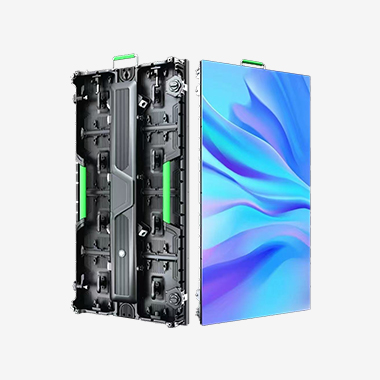
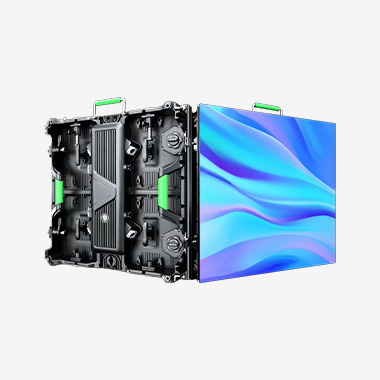
In terms of construction, large LED TV display panels for retail are often composed of multiple LED modules. These modules are carefully assembled to form a seamless display surface. The use of modular designs offers several advantages, including ease of installation, maintenance, and repair. If a single module malfunctions, it can be easily replaced without having to disassemble the entire panel.
The frame of the display panel is typically made of sturdy materials, such as aluminum or steel, to provide structural support and protection for the internal components. Special attention is paid to heat dissipation, as these panels are often required to operate continuously for long hours. Advanced heat - sinking technologies, such as heat pipes and large - surface - area heat sinks, are employed to ensure that the panel remains at an optimal operating temperature, preventing overheating and extending the lifespan of the components.
For applications where a truly seamless display is required, such as video walls, manufacturers use techniques like bezel - less designs and precise alignment of the modules. This allows for a continuous and uninterrupted visual experience, making the display more suitable for large - scale visual merchandising and advertising.
The working principles of large LED TV display panels for retail stores are based on the same fundamental concepts as other LED - based display technologies but are optimized for commercial use. At the core of these panels are the light - emitting diodes (LEDs), which are semiconductor devices that emit light when an electric current passes through them.
In a large LED display panel, the LEDs are arranged in a matrix - like structure. Each LED can be individually controlled to emit light of different intensities and colors. By combining red, green, and blue (RGB) LEDs, a wide spectrum of colors can be created through the principle of additive color mixing. This enables the display panel to reproduce a rich and vibrant range of colors, essential for eye - catching visual merchandising.
The control system of the display panel plays a crucial role in its operation. It receives digital video or graphic data from various sources, such as media players, computers, or content management systems. This data is then processed and converted into electrical signals that are sent to the individual LEDs on the panel. The control system precisely regulates the current flowing through each LED, determining its brightness and color, and thus creating the desired image or video on the display.
For large - scale display panels, especially those used in video walls, additional technologies are employed to ensure seamless operation. Video wall controllers are used to divide the input video signal into smaller segments and distribute them to the individual panels in the video wall. These controllers also handle tasks such as image scaling, alignment, and synchronization, ensuring that the final image displayed on the video wall is coherent and of high quality.
In addition, many large LED TV display panels for retail are equipped with features such as high refresh rates. A high refresh rate, typically 120Hz or higher, helps to eliminate motion blur and ensure smooth playback of videos and animations, which is important for displaying dynamic content such as product demonstrations or promotional videos.
Large LED TV display panels offer numerous advantages that make them highly valuable assets for retail stores. One of the most significant advantages is their ability to attract and engage customers. The large, bright, and high - resolution displays can showcase products, promotions, and brand stories in a visually stunning manner, immediately capturing the attention of shoppers as they enter the store. This increased visibility can lead to higher footfall in specific areas of the store and ultimately drive sales.
Another advantage is the flexibility of content display. Retailers can easily update the content on the LED panels in real - time, allowing them to adapt to changing market trends, seasonal promotions, and customer preferences. For example, during a holiday season, a retailer can quickly switch the display content to feature holiday - themed products and promotions. This real - time content update capability also enables retailers to display targeted advertising based on customer demographics and shopping behavior, increasing the effectiveness of their marketing efforts.
Durability is also a key advantage of large LED TV display panels for retail. Designed to withstand the rigors of continuous operation in a commercial environment, these panels are built with high - quality components and robust construction. They are resistant to factors such as dust, humidity, and temperature fluctuations, ensuring reliable performance over an extended period.
However, there are also several challenges associated with the use of large LED TV display panels in retail stores. One of the main challenges is the cost. Purchasing, installing, and maintaining large LED panels can be a significant investment for retailers, especially for small and medium - sized businesses. The cost includes not only the price of the display panel itself but also associated equipment such as media players, video wall controllers, and installation services.
Another challenge is content creation and management. To make the most of these display panels, retailers need to produce high - quality, engaging content. This requires significant resources in terms of time, creativity, and technical expertise. Additionally, managing the content across multiple display panels in a large retail store can be complex, requiring efficient content management systems and trained staff.
Technical issues can also pose challenges. Ensuring the proper functioning of the display panel, especially in large - scale video wall installations, requires regular maintenance and technical support. Any malfunction, such as a faulty LED module or a problem with the control system, can disrupt the display and impact the shopping experience.
Large LED TV display panels have a wide range of applications in retail stores, each contributing to enhancing the shopping experience and driving business growth. One of the most common applications is product promotion. Retailers can use these panels to showcase new products, highlight special offers, and display product features and benefits. For example, in an electronics store, a large LED panel can be used to demonstrate the latest features of a new smartphone or camera, attracting customers and encouraging them to make a purchase.
They are also widely used for brand building. By displaying brand videos, logos, and brand stories on large LED panels, retailers can strengthen brand identity and create a more memorable brand experience for customers. In a luxury retail store, the use of large, high - quality LED panels can enhance the brand's premium image, reinforcing the brand's value proposition.
In - store navigation is another important application. Large LED panels can be used to display store maps, product locations, and directional signs, helping customers to find their way around the store more easily. This improves the overall shopping experience and can reduce customer frustration, leading to increased customer satisfaction.
Looking towards the future, several trends are likely to shape the development and use of large LED TV display panels in retail stores. One of the key trends is the integration of artificial intelligence (AI) and machine learning (ML). AI and ML algorithms can be used to analyze customer behavior, preferences, and demographics in real - time, enabling retailers to display highly targeted and personalized content on the LED panels. For example, if a customer spends a long time looking at a particular product category, the LED panel can display related products or promotions.
The development of transparent LED display panels is another emerging trend. These panels can be used to create unique and eye - catching visual displays, such as showcasing products within a transparent screen. This technology has the potential to revolutionize window displays and in - store product presentations, creating a more immersive and interactive shopping experience.
Energy - efficiency will also be a major focus in the future. As retailers become more environmentally conscious and seek to reduce operating costs, there will be a growing demand for large LED TV display panels that consume less power without sacrificing visual quality. Manufacturers are likely to develop more energy - saving technologies, such as improved LED chips and more efficient power management systems.
Conclusion
Large LED TV display panels have become an essential part of the modern retail landscape, offering retailers powerful tools for visual merchandising, customer engagement, and brand building. Through their advanced design, construction, and working principles, these panels can create highly impactful and dynamic visual displays that enhance the shopping experience and drive business growth.
Despite the challenges associated with cost, content creation, and technical management, the numerous advantages of large LED TV display panels make them a worthwhile investment for retailers. Their wide range of applications in product promotion, brand building, and in - store navigation demonstrate their versatility and importance in the retail environment.
As technology continues to evolve, trends such as AI integration, the development of transparent displays, and improved energy - efficiency are set to further enhance the capabilities of large LED TV display panels in retail stores. These developments will not only improve the effectiveness of retail marketing and customer experience but also open up new opportunities for innovation and differentiation in the highly competitive retail industry.


Copyright © 2026 Shenzhen Cogo Technology Co.,Ltd.
All Rights Reserved

 Previous article