




 Chat Now
In the rapidly evolving landscape of visual technology, large immersive LED visual screens have emerged as a revolutionary force, redefining the boundaries of visual experiences. These screens are not merely display devices; they are gateways to immersive worlds that captivate audiences, whether in entertainment, education, business, or other sectors. By leveraging advanced LED technology, large immersive LED visual screens create a sense of presence and engagement, making viewers feel as if they are part of the content being displayed.
At their essence, large immersive LED visual screens are expansive displays composed of numerous high - performance light - emitting diodes meticulously arranged to form a seamless visual canvas. Their size is a defining characteristic, often spanning large areas, from the walls of an entire room to the facades of buildings. This large - scale nature, combined with high - resolution capabilities, enables the creation of incredibly detailed and vivid visuals. The immersive aspect comes from the ability to surround the viewer with visuals, eliminating distractions and drawing them into the content through a combination of wide viewing angles, high - contrast ratios, and synchronized audio - visual effects.
The growth of large immersive LED visual screens can be attributed to multiple factors. Technological advancements have made it possible to produce larger, more energy - efficient, and higher - resolution LED panels at more affordable costs. Additionally, the increasing demand for immersive experiences across various industries has fueled their adoption. In the entertainment industry, for example, audiences now expect more than just passive viewing; they seek immersive experiences that engage all their senses. Similarly, in corporate settings, large immersive LED visual screens are used to create impactful presentations and training sessions that leave a lasting impression on stakeholders.
However, while these screens offer unparalleled visual experiences, they also come with challenges. The high cost of production, installation, and maintenance, along with the technical complexity involved in ensuring seamless operation, are significant hurdles that need to be addressed. Despite these challenges, the potential of large immersive LED visual screens to transform how we interact with visual content continues to drive their development and integration into diverse applications.
The design and construction of large immersive LED visual screens are intricate processes that demand a harmonious blend of creativity, engineering expertise, and technological know - how. The design phase begins with a thorough assessment of the intended use, venue characteristics, and budget constraints.
Determining the size and shape of the screen is a critical first step. For a virtual reality (VR) or augmented reality (AR) experience room, a 360 - degree cylindrical or spherical screen might be designed to fully immerse users. In a large - scale event venue, such as a concert hall or convention center, a flat, wide - format screen that spans the width of the stage or a curved screen that wraps around the audience area could be more appropriate. The choice of shape also impacts the viewing angles and the overall immersive effect, so careful consideration is given to how viewers will interact with the screen.
Pixel pitch is another crucial design consideration. For large immersive LED visual screens, a relatively small pixel pitch is often preferred, especially when viewers will be close to the screen. A smaller pixel pitch ensures higher resolution, allowing for detailed visuals that can withstand close inspection. However, smaller pixel pitches come at a higher cost, so a balance must be struck between image quality and budget. Additionally, factors such as brightness uniformity, color accuracy, and contrast ratio are optimized during the design process to ensure a consistent and high - quality visual experience across the entire screen.
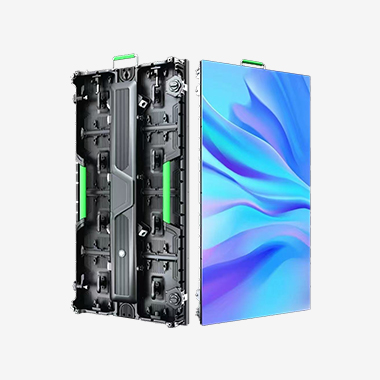
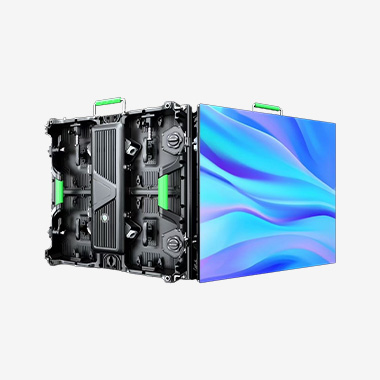
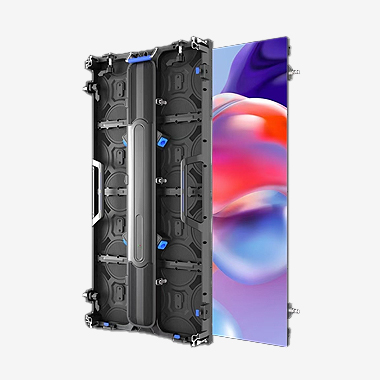
In the construction process, high - quality LED modules are carefully selected and assembled. These modules are the building blocks of the screen, and their quality directly impacts the overall performance. The modules are mounted on a sturdy framework, which provides structural support and ensures a flat surface for optimal visual display. In the case of curved or irregular - shaped screens, custom - made frames are fabricated to achieve the desired curvature.
The electrical and signal connections between the LED modules are also meticulously implemented. Advanced cabling and connection technologies are used to ensure reliable signal transmission and power supply, minimizing the risk of visual glitches or disruptions. Furthermore, a cooling system is integrated into the screen to manage the heat generated by the LED modules, especially during long - term operation. This helps to extend the lifespan of the screen and maintain its performance.
The design and construction also involve the integration of control systems and software. These systems are responsible for driving the LED modules, processing video signals, and enabling features such as content playback, image manipulation, and synchronization with audio systems. High - end control systems offer real - time processing capabilities, allowing for seamless transitions between different visual content and interactive elements.
The working principles of large immersive LED visual screens are based on the fundamental concept of electroluminescence, with additional features tailored to enhance the immersive experience. Each LED in the screen acts as a pixel, capable of emitting light of varying intensities and colors.
When an electrical current passes through an LED, it emits photons, a phenomenon known as electroluminescence. In a large immersive LED visual screen, each pixel typically consists of three sub - pixels: red, green, and blue (RGB). By controlling the intensity of these three primary colors, a vast spectrum of colors can be created through additive color mixing. The control system of the screen receives video signals from various sources, such as media servers, computers, or cameras. These signals are first digitized and then processed to determine the appropriate color and brightness values for each LED pixel.
The processed information is then sent to the LED driver circuits, which are responsible for controlling the current flowing through each LED. By precisely adjusting the current, the driver circuits can control the brightness of each LED, enabling the creation of detailed and vibrant images. To ensure smooth video playback and a seamless visual experience, large immersive LED visual screens often have high refresh rates, typically 60Hz or higher. A high refresh rate reduces flicker and ensures that fast - moving images are displayed clearly without any blurring.
In addition to basic image display, large immersive LED visual screens incorporate features that enhance the immersive aspect. Multi - screen synchronization technology is used when multiple LED screens are combined to create a larger display area or a more complex immersive environment. This technology ensures that all the screens display the same content in perfect harmony, without any noticeable delays or discrepancies.
Moreover, integration with audio systems is crucial for a truly immersive experience. Sound is carefully synchronized with the visual content to create a multi - sensory experience. Spatial audio technologies can be used to create a sense of direction and depth, making the sound appear to come from different locations within the immersive environment. Additionally, some large immersive LED visual screens are equipped with interactive sensors, such as touch - sensitive surfaces or motion detectors. These sensors allow users to interact with the content displayed on the screen, further enhancing the immersive and engaging nature of the experience.
Advantages
One of the most significant advantages of large immersive LED visual screens is the unparalleled immersive experience they offer. By surrounding viewers with high - quality visuals and synchronized audio, these screens create a sense of presence that traditional displays cannot match. In entertainment applications, such as movies, concerts, or theme park attractions, this immersive experience can transport audiences to different worlds, making them feel as if they are part of the action.
The large size and high - resolution capabilities of these screens also make them ideal for presenting detailed information. In educational settings, large immersive LED visual screens can display complex scientific diagrams, historical reconstructions, or virtual field trips with stunning clarity. This helps students better understand and engage with the subject matter, enhancing the learning experience.
In corporate environments, large immersive LED visual screens can be used for impactful presentations, product launches, and training sessions. They allow companies to showcase their products and services in a more engaging way, leaving a lasting impression on clients, investors, and employees. The ability to display multiple pieces of information simultaneously on a large screen also facilitates group discussions and collaborative decision - making.
Another advantage is the flexibility of large immersive LED visual screens. They can be customized to fit various spaces and requirements, whether it's a small meeting room, a large auditorium, or an outdoor event venue. Their modular design allows for easy expansion or reconfiguration, enabling organizations to adapt the screen to changing needs over time.
Challenges
Despite their numerous advantages, large immersive LED visual screens face several challenges. The high cost is a major obstacle. The production, installation, and maintenance of these screens require significant financial investment. The cost of the LED modules, control systems, mounting structures, and installation services can be prohibitively expensive for many organizations, especially smaller ones.
Technical complexity is another challenge. Ensuring the seamless operation of large immersive LED visual screens requires specialized skills and knowledge. From the initial installation, which involves precise alignment of the LED modules and complex electrical connections, to ongoing maintenance, such as troubleshooting technical glitches and replacing faulty components, the process demands trained technicians.
Content creation for large immersive LED visual screens also poses a challenge. Producing high - quality, immersive content that takes full advantage of the screen's capabilities requires advanced software, skilled designers, and significant time and resources. Additionally, ensuring compatibility between the content format and the screen's technical specifications can be a complex task.
Another challenge is the energy consumption of large immersive LED visual screens. Due to their large size and high - performance requirements, these screens consume a substantial amount of electricity. This not only increases operating costs but also raises environmental concerns. Developing more energy - efficient technologies for these screens is an ongoing area of research.
Applications
Large immersive LED visual screens have a wide range of applications across multiple industries. In the entertainment industry, they are used in cinemas to create more immersive movie - watching experiences, in concert halls to enhance live performances with dynamic visual backdrops, and in theme parks to bring attractions to life. For example, some theme parks use large immersive LED visual screens to create virtual rides, where riders are surrounded by high - quality visuals that simulate movement and action.
In the education sector, these screens are transforming the learning environment. They can be used for virtual classrooms, where students from different locations can participate in a shared immersive learning experience. Additionally, they are used for interactive educational displays, allowing students to explore historical events, scientific concepts, or geographical locations in a more engaging and immersive way.
In the corporate world, large immersive LED visual screens are used for marketing and sales presentations, corporate training, and virtual meetings. A company can use an immersive LED screen to showcase a new product in a virtual showroom, allowing potential customers to explore the product from all angles and interact with its features.
The healthcare industry is also starting to explore the use of large immersive LED visual screens. They can be used for medical training, where students can practice surgical procedures in a virtual, immersive environment. Additionally, they can be used for patient therapy, such as virtual reality - based stress reduction or pain management programs.
Future Trends
The future of large immersive LED visual screens is filled with exciting possibilities. One of the key trends is the continued improvement in resolution. As technology advances, we can expect to see more widespread adoption of 8K and even higher - resolution screens, offering even more detailed and lifelike visuals. This will further enhance the immersive experience, making it even more difficult to distinguish between the virtual and the real.
Another trend is the integration of artificial intelligence (AI) and machine learning (ML) technologies. AI and ML can be used to optimize the performance of the screen, such as automatically adjusting the brightness, contrast, and color settings based on the ambient lighting conditions and the type of content being displayed. They can also be used for content creation, helping to generate more engaging and personalized immersive experiences.
The development of more energy - efficient and sustainable technologies is also likely to be a major trend. As environmental concerns grow, there will be an increasing demand for large immersive LED visual screens that consume less power. Manufacturers will focus on developing new materials and technologies that reduce energy consumption without sacrificing visual quality.
Furthermore, the trend towards greater interactivity and connectivity will continue. Future large immersive LED visual screens are likely to be more integrated with other devices and systems, allowing for seamless interaction between users, content, and the physical environment. For example, they could be connected to smart home devices, enabling users to control the screen and the immersive experience using voice commands or mobile apps.
Conclusion
In conclusion, large immersive LED visual screens represent a significant advancement in visual technology, offering unparalleled immersive experiences across various industries. Their ability to captivate audiences, present detailed information, and facilitate engagement makes them valuable assets in entertainment, education, business, and beyond.
While they face challenges such as high costs, technical complexity, content creation difficulties, and energy consumption, ongoing technological advancements and research are addressing these issues. The future of large immersive LED visual screens looks promising, with trends such as higher resolutions, AI integration, energy efficiency improvements, and increased interactivity set to further enhance their capabilities and expand their applications. As these screens continue to evolve, they will undoubtedly play an even more crucial role in shaping the future of visual experiences, providing users with more immersive, engaging, and unforgettable interactions with digital content.


Copyright © 2026 Shenzhen Cogo Technology Co.,Ltd.
All Rights Reserved

 Previous article