




 Chat Now
The live event industry has undergone a visual revolution, and at the heart of this transformation is the LED stage screen. Gone are the days of simple painted backdrops and static projections. Today, from massive stadium tours for global superstars to intimate corporate product launches and electrifying music festivals, LED technology is the indispensable tool for creating immersive, dynamic, and unforgettable audience experiences. An LED stage screen is more than just a display; it is a dynamic set piece, a narrative device, and an emotional amplifier, seamlessly blending with lighting, pyro, and performance to create a cohesive sensory spectacle.
The evolution of LED for stage use is a story of adaptation and innovation. Early iterations were heavy, low-resolution, power-hungry, and fragile, limiting their use to permanent installations or the most ambitious tours. The critical breakthrough was the development of rental-specific or "road-ready" LED panels. These were engineered not just for visual performance but for the brutal realities of life on the road: constant assembly, disassembly, transportation, and elevated stages. This meant a fundamental redesign towards lightweight yet robust materials like carbon fiber and magnesium alloy, integrated rigging points for safety, quick-release locking mechanisms for rapid deployment, and enhanced durability to withstand vibration, minor impacts, and varying environmental conditions.
The core function of an LED stage screen in a live context is multifaceted. Its primary role is Visual Reinforcement. It ensures that every audience member, from the front row to the very back of a 50,000-seat arena, has a clear view of the performance. Close-up shots of the artist, sweeping shots of the crowd, and dynamic angles of the band members create an intimacy that would be impossible in a large venue without them. Secondly, it serves as a Dynamic Set Design element. Instead of building and striking physical sets between acts, digital environments can be changed in an instant. A performance can transition from a cyberpunk cityscape to a serene forest to abstract, pulsating patterns that sync with the music, all with a click from the video director. This transforms the stage into a living, breathing entity that evolves with the performance.
Furthermore, LED screens are powerful Branding and Storytelling vehicles. For a concert, they can display iconic album artwork, music video visuals, and custom-made content that reinforces the artist's aesthetic and narrative. For a corporate event, they are the prime real estate for displaying logos, product reveals, keynote presentations, and live social media feeds, ensuring brand messaging is consistent and dominant throughout the experience.
The ecosystem of an LED stage setup is a complex operation. It involves a team of specialists: the Video Designer who conceives the visual content and its choreography; the LED Technician who physically builds, configures, and maintains the wall; the Video Engineer who manages the signal flow and processing; and the Video Director (or V1) who switches between live camera feeds and pre-rendered content in real-time during the show, often in sync with the lighting and audio cues. The technology stack includes the LED panels themselves, a powerful video processor, media servers to play and manipulate content, cameras, and a complex web of data and power cables.
In essence, the modern LED stage screen is the digital canvas upon which the story of a live event is painted. It has elevated the audience from passive observers to immersed participants, breaking down the physical barriers of the venue and creating a shared, amplified experience. Its ability to blend the real with the digital, the intimate with the epic, has made it not just a piece of equipment, but a fundamental pillar of contemporary live production.
The design and construction of an LED stage screen for live events is a masterclass in balancing opposing forces: achieving stunning visual fidelity while ensuring brutal physical durability; maximizing pixel density while minimizing weight; and enabling rapid deployment while guaranteeing absolute safety. Unlike fixed installations, these panels are built to survive a punishing cycle of build, play, strike, pack, and transport, often every day for weeks on end.
The journey begins with the LED Module, the fundamental unit of light. For stage use, the choice of pixel pitch is a critical trade-off between resolution and practicality. While a finer pitch (e.g., P2.6, P3.9) offers a sharper image for closer viewing, it comes with higher cost, weight, and power consumption. For large arena shows where the average viewing distance is great, a coarser pitch (e.g., P6.2, P7.8) is often perfectly adequate and far more efficient. The LEDs themselves are almost exclusively Surface-Mount Devices (SMD), where the red, green, and blue chips are mounted directly onto the module's circuit board for robustness and a wider viewing angle. These modules are designed for easy replacement in the field—a crucial feature when a failure occurs minutes before showtime.
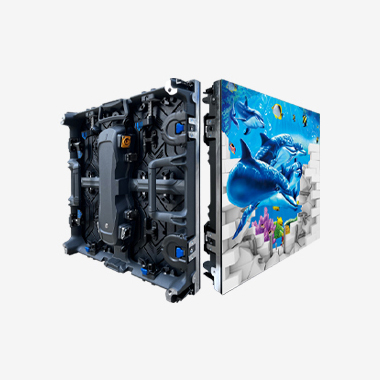
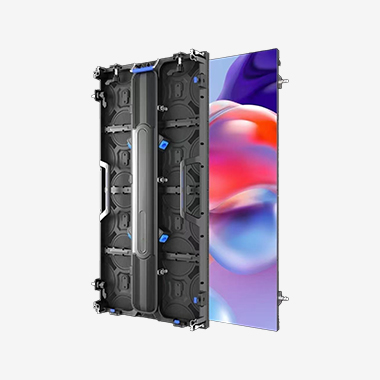
These modules are then mounted into the LED Cabinet (or panel). The cabinet is the heart of the "road-ready" philosophy. Its frame is not made of plastic but from lightweight, high-strength materials like die-cast magnesium alloy or carbon fiber. These materials provide exceptional rigidity to prevent warping (which causes visible lines in the image) while shaving off critical kilograms that add up across a large wall. Cabinets are standardized in sizes, common ones being 500x500mm or 500x1000mm, designed to be handled by a single technician.
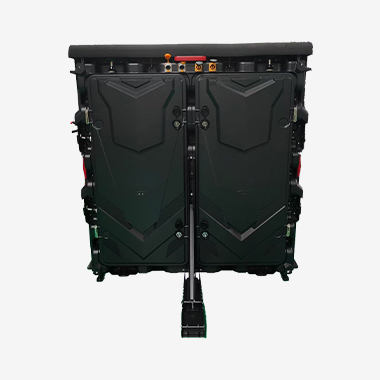
Key to the cabinet's design are its Quick-Lock Mechanisms. These are heavy-duty, tool-free locks—often a robust toggle latch or a cam-based system—that allow technicians to swiftly and securely connect adjacent cabinets both physically and electrically. A well-designed system ensures perfect alignment (maintaining a consistent gap, typically between 0.1mm to 1mm) and a reliable connection for data and power on the first try. The rear of the cabinet hosts Industry-Standard Connectors, such as Harting or Neutrik, for robust, locking data-in/data-out loops and power-in/power-out loops, designed to resist vibration and accidental disconnection.
Rigging and Safety are paramount. Rental cabinets are not simply placed on the ground; they are flown from overhead truss or supported by ground support structures. Integrated into the cabinet frame are dedicated Rigging Points—forged eyebolts or slots for specialized rigging hardware—that are rated for immense loads. These points are engineered to distribute stress through the entire cabinet frame, not just the mounting points. Safety factor is critical; all rigging hardware and points are rated for loads far exceeding the weight of the cabinet itself and the dynamic forces it might experience (like stage vibration from subwoofers).
Thermal Management is another core design challenge. A brightly lit LED cabinet generates significant heat, which, if not dissipated, degrades LED lifespan and color accuracy. Unlike fixed installations that may use fans, rental screens often prioritize Passive Cooling through massive, finned aluminum heat sinks on the rear of the modules and cabinets. This eliminates a common point of failure (fans) and reduces noise, which is crucial during quiet moments of a performance. For high-brightness, fine-pitch screens, ultra-quiet Active Cooling systems may be employed.
Finally, the entire system is designed for Packaging and Logistics. Cabinets must fit efficiently into custom-built, shock-absorbent flight cases. These cases are robust, wheeled, and stackable, protecting the valuable and fragile technology within during the chaotic process of truck loading and unloading. The design of the cabinet, its connectors, and its packaging are all part of a holistic system built for one purpose: to look perfect on stage night after night, while surviving the chaos of life on the road.
The flawless video display during a live concert is a minor miracle of real-time data management and processing. The working principles behind an LED stage screen form a complex signal chain that must be utterly reliable, low-latency, and flexible enough to handle a dynamic mix of pre-recorded content and live camera feeds, all perfectly synchronized to the music.
The process begins with Content Sources, which are typically twofold:
Pre-produced Content: This includes all the custom visuals, animations, and graphics created by the video designer. These are stored and played back from a Media Server—a high-performance computer equipped with specialized software and multiple output graphics cards. Servers like disguise, Green Hippo, or AV Stumpfl are industry standards. They don't just play video; they allow for real-time manipulation—mapping content to unusual screen shapes, applying effects, and triggering clips in sync with timecode from the audio console.
Live Camera Feeds: These are signals from the camera operators around the venue, fed through a vision mixing desk (switcher) where the video director selects the shots to be sent to the screen.
These various HD or 4K signals are fed into the central nervous system of the video wall: the Video Processor (or LED controller). For live events, this device has a Herculean task. Its first job is Synchronization and Scaling. It takes the incoming signals, which may all be different resolutions and frame rates, and scales them to the precise native resolution of the entire LED wall—a massive and non-standard resolution that could be, for example, 4320 pixels wide by 1920 pixels high. It must do this with minimal latency (delay) to ensure that the video on screen matches the live action on stage instantly.
The processor then performs Image Mapping. The technician pre-configures the processor with a detailed map of the wall's physical layout: how many cabinets are used, their arrangement (e.g., a main wall, side wings, and a floor screen), and their individual pixel dimensions. The processor uses this map to slice the single, scaled output image into chunks, each perfectly tailored for a specific section of the LED wall.
This processed data is then Transmitted. The processor outputs the signal via network cables (typically fiber optic for long, noise-free runs from the front-of-house position to the stage). The signal protocol is often a specialized one like HDBASET or managed via SDI over Fiber for robust, long-distance transmission.
At the stage, the data stream reaches the First LED Cabinet. Each cabinet contains a Receive Card, which acts as its local brain. This card takes the portion of the data packet intended for its cabinet and then distributes the commands further to a series of Driver ICs (Integrated Circuits) on the individual modules. These drivers are the final link in the chain, controlling the LEDs themselves through the principle of Pulse-Width Modulation (PWM).
PWM is how brightness is controlled. Since an LED is digital (on or off), the driver IC switches it on and off thousands of times per second. The ratio of "on" time to "off" time within each cycle (the duty cycle) creates the perception of brightness. A 50% duty cycle looks like 50% brightness. By independently controlling the PWM for each red, green, and blue LED in a pixel, the driver can create millions of colors. A critical specification for live events is a high Refresh Rate (e.g., 3840Hz or higher) to ensure a stable, flicker-free image, especially when captured by broadcast or audience cameras, which can otherwise produce distracting rolling shutter effects.
The entire system is often slaved to Timecode, a continuous signal that runs from the audio console throughout the entire show. This timecode synchronizes the media servers, the lighting console, and pyro triggers, ensuring that every visual explosion, content cue, and lighting change happens at the exact millisecond intended in the music, performance after performance. This intricate, real-time dance of data, from the media server to the driver IC, is what transforms a collection of lights into a synchronized visual symphony.
The decision to use an LED screen for a live event is a significant one, involving substantial investment and logistical complexity. Its advantages over previous technologies like projection are profound, but a clear understanding of its challenges is essential for successful execution.
Advantages:
Unmatched Brightness and Viewability: This is the most decisive advantage. LED is an emissive technology—it creates its own light. This allows it to overpower the intense ambient light common in live events, such as stage wash from concert lighting and house lights. Unlike projection, which can appear washed out and requires a dark environment, LED screens remain vibrant, clear, and visible in any lighting condition, ensuring the visuals always have impact.
Design Flexibility and Modularity: LED walls are not limited to a flat, rectangular screen. Their modular nature allows for creative stage design, including curved walls, overhead "ceiling" screens, vertical towers, and even stage floors that performers can walk on (using specially designed transparent panels). This transforms the entire stage into a dynamic visual environment. Furthermore, the same inventory of panels can be reconfigured into different shapes and sizes for different shows or tours, offering great versatility for rental companies.
Reliability and Redundancy: A well-maintained LED system is incredibly reliable. There is no single lamp or bulb to fail catastrophically and black out a large section of the image, a common risk with projectors. While individual LEDs or modules can fail, the modular design means these are localized issues, often appearing as small black or colored dots rather than a complete loss of image. Spare modules can be swapped in quickly, minimizing downtime.
Operational Advantages for Multi-Show Runs: For a touring show, the consistency of an LED wall is a major benefit. Once calibrated on the first day, the image quality—color, brightness, alignment—remains consistent every night, regardless of the venue's architecture. Projection requires tedious re-calibration (keystoning, blending) in every new venue to compensate for different throw distances and screen positions.
Integration with Stage Lighting: Because LEDs are so bright, video content can now be integrated directly into the lighting design. The screen can act as a massive, dynamic light source, bathing the stage and artist in colored light that matches the background visuals, creating a cohesive and immersive look that was previously very difficult to achieve.
Challenges and Considerations:
High Capital and Operational Cost: The upfront purchase or rental cost of a high-quality LED system is significant. This is compounded by the costs of the supporting infrastructure: media servers, video processors, skilled technicians, and extensive transportation. Furthermore, LED walls are power-hungry, often requiring dedicated high-amperage power circuits at the venue, which adds to the cost and complexity.
Logistical and Technical Complexity: Deploying an LED wall is a major technical undertaking. It requires a crew of experienced LED and video engineers to assemble, configure, calibrate, and operate the system. It involves tons of heavy equipment that must be safely rigged, often over the heads of performers and crew. The signal path is complex, with multiple potential points of failure that require meticulous troubleshooting.
Pixel Pitch and Resolution Limitations: The chosen pixel pitch dictates the screen's optimal viewing distance. A screen with a P7.8 pitch will look pixelated and low-resolution to audience members in the front rows. While finer pitch solutions exist, they are exponentially more expensive, heavier, and require more power. There is always a trade-off between resolution, cost, and viewing distance that must be carefully calculated for each event.
Weight and Rigging Demands: Large LED walls are extremely heavy. The trussing and motors used to fly them must be rated for the immense weight, and the entire structure must be signed off by a certified structural engineer. This adds time, cost, and requires highly skilled riggers, making it one of the most safety-critical aspects of the production.
Content Demands: To look its best, content must be created or adapted for the specific, often non-standard, resolution of the LED wall. Simply stretching a standard HD (1920x1080) video file will result in soft, blurry, or distorted imagery. Content creation for large-scale LED is a specialized and costly field in itself.
In summary, the advantages of brightness, flexibility, and reliability make LED the superior choice for most high-profile live events. However, these benefits come with significant challenges in cost, logistics, and technical complexity that demand expert planning and execution to overcome.
The application of LED screen technology in live events has expanded far beyond the classic concert backdrop. Its versatility has made it a critical tool across the entire event spectrum, while ongoing technological trends promise to unlock even more creative possibilities in the near future.
Applications:
Music Tours and Festivals: This remains the core application. From the main stage backdrop to side screens for audience sightlines, LED is ubiquitous. It's used for IMAG (Image Magnification), pre-produced visual content, live social media feeds, and dynamic branding. At festivals, it allows for rapid turnarounds between acts, with each artist's custom visuals loaded and ready to go.
Corporate Events and Product Launches: Here, LED screens are used to convey brand authority and polish. They display keynote presentations, reveal new products with dramatic impact, stream live feeds from other locations, and facilitate interactive Q&A sessions. Their crispness ensures that even the smallest text on a spreadsheet or a complex diagram is clearly visible to the entire audience.
Theatre and Performing Arts: Modern theatrical productions are increasingly incorporating LED screens to create dynamic, evolving sets. They can transport the audience from one location to another instantly, create atmospheric environments with moving textures and light, and provide abstract visual representations of a character's internal state, adding a new layer of narrative depth.
Broadcast and Awards Shows: Shows like the Grammy Awards or the Olympics Opening Ceremony use LED on an epic scale. It creates a consistent and spectacular visual environment for the broadcast audience, seamlessly integrating with stage design, performances, and winner announcements. It allows for virtual sets that appear incredibly deep and realistic on camera.
Stage Floor and Set Integration: A growing trend is the use of LED panels as a stage floor. This turns the entire performance surface into a dynamic visual element. Dancers' movements can trigger visual effects, or the floor can display imagery that complements the main screen, creating a truly 360-degree immersive environment. LED is also being integrated into physical set pieces, like boxes, cubes, and arches, blurring the line between the physical and digital set.
Future Trends:
XR and Virtual Production Live: The virtual production techniques pioneered in film (e.g., The Mandalorian) are moving into live events. By combining LED walls with real-time game engines (like Unreal Engine) and camera tracking, performers can be placed within seemingly infinite digital worlds that move with the camera's perspective. This will revolutionize live broadcast and create entirely new types of hybrid events.
Higher Transparency and New Form Factors: The development of finer pitch and higher transparency LED panels will allow for new applications. "See-through" screens can be flown in front of performers without completely obscuring them, creating layered visual effects. Flexible and conformable LED tiles will allow for organic, non-flat shapes and sculptures, further expanding the designer's palette.
Improved In-Camera Performance: A major focus for manufacturers is optimizing LED screens specifically for broadcast. This includes higher refresh rates to eliminate any flicker or scan lines, better color uniformity, and advanced calibration tools to ensure the screen looks perfect not just to the live audience, but also to the broadcast cameras, which have a much more critical eye.
Sustainability and Efficiency: As environmental concerns grow, the industry is pushing for more energy-efficient LED technology. This includes developing LEDs that provide more lumens per watt and designing power supplies and cooling systems that waste less energy. Reducing the weight of panels also contributes to sustainability by lowering the carbon footprint of transportation.
Simplification and Democratization: While high-end tours will continue to push boundaries, technology is also trickling down. More user-friendly processors, lower-cost, reliable panels, and all-in-one systems are making LED technology accessible for smaller venues, corporate events, and even houses of worship, ensuring its application will continue to grow and diversify.
Conclusion
The LED stage screen has irrevocably transformed the landscape of live events. It has evolved from a novel visual aid into the central nervous system of stage production, an indispensable canvas upon which the narratives of music, brand, and performance are painted. Its journey mirrors the broader technological revolution, becoming more powerful, more adaptable, and more integrated while simultaneously becoming more accessible.
Its value proposition is clear and compelling. By providing unrivaled visual impact through its brightness and scalability, it guarantees that the intended message and emotion reach every single member of the audience, regardless of venue size. Its modular and flexible nature empowers creators to break free from the constraints of the flat screen, enabling stages that are dynamic, responsive, and deeply immersive environments rather than static platforms. Its proven reliability under the demanding conditions of live performance makes it a trusted partner for producers where failure is not an option.
However, harnessing this power is not without its demands. The path to a successful LED deployment is paved with careful technical planning—the critical selection of pixel pitch, the engineering of robust rigging, and the design of a redundant signal path. It requires a significant investment not just in hardware, but in the human expertise of video designers, engineers, and technicians who can orchestrate the technology into a seamless spectacle. Perhaps most importantly, it demands purposeful content; the screen's true potential is only realized when fed with high-resolution, creatively ambitious visuals designed to leverage its unique capabilities.
Looking forward, the future of LED in live events is one of convergence and intelligence. The lines between video, lighting, and physical set design will continue to blur, with LED acting as the unifying medium. The adoption of real-time game engines and XR techniques will create hyper-realistic, reactive environments that were once the domain of science fiction. As the technology becomes simultaneously more powerful and more manageable, its role will only deepen, solidifying its status as the ultimate tool for amplifying human connection and creating shared, unforgettable moments of wonder. The LED screen is no longer just a part of the show; in many ways, it is the show.


Copyright © 2026 Shenzhen Cogo Technology Co.,Ltd.
All Rights Reserved

 Previous article