




 Chat Now
In the realm of live entertainment, from rock concerts and music festivals to theatrical productions and award shows, the backdrop has evolved from simple painted scenery to a dynamic, immersive, and integral component of the performance itself. At the heart of this evolution is the high brightness LED (Light Emitting Diode) display stage screen. These are not merely large televisions; they are specialized, high-performance visual engines designed to withstand the rigors of live production while delivering stunning imagery that can be seen clearly by every member of the audience, even under the harsh glare of stage lighting.
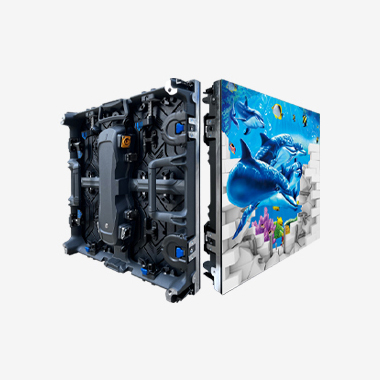
A high brightness LED stage screen is a modular, scalable display system composed of individual panels or "cabinets" that lock together to form a vast canvas of light. Each cabinet contains a dense array of LEDs that act as pixels. The defining characteristic of these screens is their exceptionally high luminance output, typically ranging from 5,000 to over 10,000 nits (candelas per square meter). This is orders of magnitude brighter than a standard television or indoor LED screen, which might be around 300-1,500 nits. This extreme brightness is non-negotiable; it is the feature that allows the screen to compete with and complement the powerful stage lighting, follow-spots, and ambient light present in a live event environment without appearing washed out or dull.
The development of LED technology for stage use parallels its broader evolution but with a specific focus on the demands of touring and live events. Early video walls used in concerts in the 1990s and early 2000s were often based on cathode-ray tube (CRT) projectors or low-resolution LED clusters with large pixel pitches. They were heavy, power-hungry, and offered limited image quality. The breakthrough came with the widespread adoption of Surface-Mount Device (SMD) technology, which allowed for the creation of finer pitch, lighter, and more robust modules. This enabled screens to move from being a peripheral element to the central scenic piece, as seen in groundbreaking tours by artists like U2 and Rolling Stones.
The modern high brightness LED stage screen is a feat of engineering designed for a specific ecosystem. It must be:
Extremely Bright: To be visible under stage lights.
High Contrast: To maintain image depth and pop even in dark theatrical scenes.
Rugged and Reliable: To survive the constant transportation, setup, and teardown of touring.
Lightweight and Quick to Deploy: To meet tight production schedules.
Energy Efficient: Despite its high output, as power is often limited at venues.
These screens are used in a myriad of live event applications. They are the backdrop for concert tours, displaying live camera feeds, pre-produced video content, and interactive visuals that sync with the music. In theater and dance, they create dynamic, changing environments that would be impossible or prohibitively expensive to build physically. Corporate events and product launches use them to amplify branding and presentations, while television broadcasts of award shows and competition finals rely on them to create a glamorous and engaging studio set that looks spectacular on camera.
The overview of a high brightness LED stage screen, therefore, is that of a purpose-built tool. It is the convergence of audiovisual technology and live show craftsmanship, a canvas that empowers artists and designers to break the physical limitations of the stage and create truly unforgettable visual spectacles. It is not just a display; it is a core component of the modern live experience.
The design and construction of a high brightness LED stage screen is a masterclass in balancing conflicting engineering demands: it must be incredibly robust yet lightweight; it must generate immense light output while managing the resultant heat; and it must achieve high resolution while being power-efficient enough to run in venues with limited electrical supply. Every component, from the microscopic LED chip to the heavy-duty flight case, is optimized for the brutal environment of live events.
The LED Package: Built for Luminance
The journey begins with the LED itself. For stage screens, the primary goal is luminous efficacy—achieving the highest possible light output per watt of electrical power. The LEDs used are high-grade, often high-power SMD types or specific packages designed for maximum flux. Unlike indoor screens which prioritize fine pitch above all, stage screens often use a slightly larger pixel pitch (e.g., P3.9, P4.8, P6.6, or higher) as the viewing distances are much longer. This allows for the use of larger, more powerful individual LEDs that can be driven harder to achieve extreme brightness levels. The epoxy resin used to encapsulate the LED chips is formulated for high clarity and UV resistance to prevent yellowing and dimming over time when exposed to outdoor sunlight or intense UV stage lighting.
The Module and Cabinet: The Touring Workhorse
Individual LEDs are mounted onto a printed circuit board (PCB) to form a module. For stage applications, these modules are built to be exceptionally durable. The PCBs are made from high-quality, flame-retardant materials (like FR-4) with thick copper layers to handle high current loads and dissipate heat effectively.
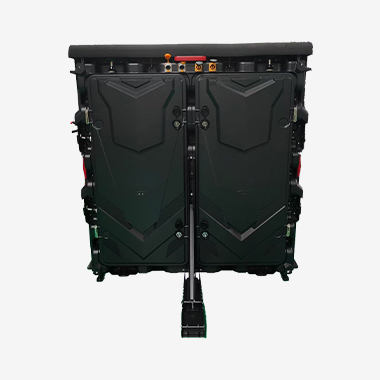
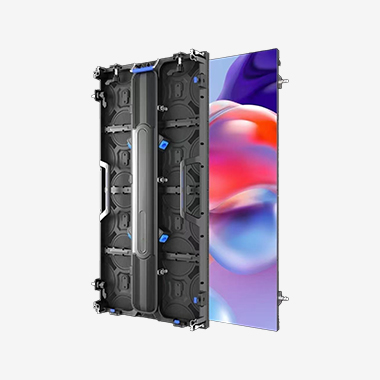
These modules are then integrated into a cabinet, which is the fundamental building block of a touring screen. Stage screen cabinets are engineering marvels distinct from their fixed-installation cousins. They are typically constructed from lightweight yet incredibly strong materials like magnesium alloy or carbon fiber, shaving off critical kilograms that reduce trucking weight and making them easier for crew to handle. The design prioritizes:
Rigidity: To prevent flexing and ensure a perfectly flat wall, even when hung from a few points.
Quick-Release Mechanisms: Modules, power supplies, and receiver cards are designed for tool-less, front-service access. A technician must be able to replace a faulty component in minutes during a show.
Integrated Rigging: Cabinets feature standardized, rated points for flying with truss systems or for ground-stacking. They lock together with precision pins and latches to ensure perfect alignment and structural integrity.
Environmental Protection: While not fully waterproof like outdoor IP65-rated screens, stage cabinets are often designed to be "road-proof," offering some protection against dust, humidity, and the occasional backstage splash. For outdoor festival stages, rental companies will use higher IP-rated cabinets.
Thermal Management: Taming the Heat
The immense brightness of a stage screen generates significant waste heat. If not managed, heat will drastically reduce LED lifespan and cause color shift. Therefore, thermal management is a critical part of the design. Cabinets are essentially large heat sinks, with the entire structure acting to dissipate heat. They are equipped with powerful, yet often quiet, brushless DC fans that create a high-volume airflow across the modules and power supplies. The design of the airflow path is crucial to avoid hot spots. In some high-end designs, passive cooling systems or even liquid cooling are employed for maximum efficiency and silence, which is vital for theatrical applications.
Power Supplies and Data Distribution
The electrical heart of each cabinet is its high-efficiency, switch-mode power supply (SMPS). These are industrial-grade units designed to convert unreliable venue AC power into the stable, clean DC power the LEDs and electronics require. They are designed for a wide input voltage range to handle brownouts and spikes common in live events. Data is typically distributed via robust locking connectors (like EtherCon for network cable) in a daisy-chain topology. The use of fiber optic cables is increasingly common for sending data over long distances from the control booth to the screen without signal degradation or risk of ground loops and electrical noise.
Calibration for Consistency
A signature feature of a high-quality stage screen is its visual consistency. Every module undergoes factory calibration where the output of each individual LED is measured. Correction data is stored on a chip on the module. This data ensures that when the screen is assembled, every cabinet—even those from different production batches—displays the exact same color and brightness, creating a perfectly uniform image. This is paramount for camera work, where color inconsistencies are immediately obvious on broadcast.
In conclusion, the design and construction of a high brightness LED stage screen is a discipline of extremes. It is a product born from the uncompromising demands of the live event industry, where failure is not an option. Every material choice, every structural calculation, and every electronic component is selected for one ultimate purpose: to create a reliable, brilliant, and manageable visual canvas that can withstand the chaos of a world tour and deliver flawless performance, night after night.
The ability of a high brightness LED stage screen to transform digital data into a dazzling, coherent image under the demanding conditions of a live event is a complex feat of real-time engineering. The working principles involve a sophisticated chain of command that ensures synchronization, manages immense data loads, and drives the LEDs to their maximum potential without compromising stability. It is a process built for speed, precision, and absolute reliability.
1. The Command Center: Video Processing and Control
The process originates at the video control booth. One or more high-performance media servers act as the content source. These are specialized computers equipped with powerful GPUs that store and play back high-resolution video files, generate real-time graphics, and often composite multiple layers of content. The media server outputs a standard video signal (e.g., 4K, 8K, or a custom resolution).
This signal is fed into the brain of the LED system: the video processor or controller. For stage screens, this device has several critical, high-stakes functions:
Scaling and Resolution Mapping: The processor takes the input signal and maps it perfectly to the unique native resolution of the entire LED wall. This is a non-standard resolution that is the sum of all the cabinets. The processor uses advanced scaling algorithms to do this without introducing blur or lag.
Color Management and Calibration Apply: The processor applies the pre-loaded calibration data for every single module in the wall. In real-time, it adjusts the output signal to compensate for the slight variations in each LED, ensuring perfect color and brightness uniformity across the entire massive canvas.
Synchronization (Genlock): This is perhaps its most important role. The processor genlocks the entire wall to the master sync of the show—often the video master clock or even the audio timecode. This ensures that every cabinet updates its image at the exact same microsecond, eliminating any tearing or rolling effects, especially critical when the screen is being filmed by broadcast cameras whose shutter speed must be perfectly matched to the screen's refresh rate.
Input Handling and Layering: It can handle multiple input sources (e.g., a live camera feed, a graphics feed from a switcher, and content from the media server) and allow them to be windowed or layered on the screen.
2. Data Transmission: The High-Speed Highway
The processed video data is a massive digital stream. This data is sent from the processor to the LED wall via high-bandwidth cabling. Historically, dedicated coaxial cables were used, but modern systems almost universally rely on network-based protocols like Art-Net, sACN, or, more commonly, proprietary protocols running over robust gigabit (or 10-gigabit) Ethernet. These network cables are housed in protective, locking EtherCon shells to withstand the stage environment. For very long throws (e.g., from FOH—Front of House—to the stage), fiber optic cables are used for their immunity to electrical interference and data loss.
3. Cabinet-Level Intelligence: The Receiving Card
The data stream enters the first cabinet in the chain via a network input. Inside each cabinet, a receiving card acts as the local manager. It reads the section of the overall data stream destined for its cabinet and ignores the data for others, which it then passes on to the next cabinet via a daisy-chained output. The receiving card is a dedicated computer that takes the video data and translates it into commands for the individual driver ICs on the modules. It also constantly monitors the health of the cabinet, reporting parameters like temperature, power draw, and LED status back to the control software.
4. Pulse-Width Modulation (PWM): The Art of Creating Light and Color
The receiving card commands the driver Integrated Circuits (ICs). These chips use a technique called Pulse-Width Modulation (PWM) to control the LEDs. Since an LED is a digital device (on/off), PWM creates the illusion of dimming by rapidly cycling the LED on and off. The ratio of "on" time to "off" time within each cycle determines the perceived brightness. A 50% duty cycle looks half as bright as a 100% duty cycle.
For color, this is applied independently to the red, green, and blue sub-pixels within each pixel. By meticulously controlling the PWM for each color, the driver IC can create millions of different color combinations. The refresh rate (how many times per second this cycle repeats) is extremely high on professional stage screens (often 3840Hz, 7680Hz, or higher). A high refresh rate is essential to eliminate perceptible flicker to the human eye and, most importantly, to ensure smooth, strobe-free capture by broadcast and video cameras.
5. Power Delivery: Fueling the Light
Running in parallel to the data network is the power system. Each cabinet has its own robust power supply that converts AC power to the low-voltage DC required by the LEDs. The power supplies in stage screens are designed for high efficiency to minimize heat generation and for power factor correction (PFC) to make the best use of the available venue power. The electrical design ensures stable voltage is delivered to every LED, preventing flicker and ensuring consistent color even as the power demand fluctuates with the content.
In essence, the working principle of a stage LED screen is a masterclass in distributed processing and precision timing. The video processor handles the macro-level creative vision. The receiving cards handle the mid-level distribution and monitoring. The driver ICs handle the micro-level execution of turning electricity into light. And all of it is locked to a single clock, ensuring that this vast, distributed system performs with the unity and reliability required for the world's biggest stages.
The adoption of high brightness LED technology has revolutionized stage design, but it is a significant production decision with a distinct set of benefits and drawbacks. Weighing these advantages against the inherent challenges is crucial for producers, designers, and technical directors to ensure a successful and impactful implementation.
Advantages
1. Unmatched Brightness and Visibility:
This is the paramount advantage. The ability to project stunningly bright and vivid imagery that remains clearly visible under the direct beam of follow spots and stage wash lights is something no other technology—not projection, not LCD—can reliably achieve. This ensures that the visual content is always a key part of the show, never washed out or diminished.
2. Creative Flexibility and Seamlessness:
The modular nature of LED screens provides unparalleled creative freedom. They can be built into virtually any size or shape: massive, sweeping curved walls, overhead ceilings, boxes, columns, and even intricate 3D structures. This allows stage designers to create immersive environments that envelop the performer and the audience. The complete absence of bezels creates a seamless canvas that is essential for immersion and provides a perfect background for camera shots.
3. Superior Reliability and Robustness:
Built for the road, high-quality touring LED screens are incredibly durable. Their solid-state construction (no fragile lamps like in projectors, no glass panels like in LCDs) makes them highly resistant to shock and vibration during transport. Their modularity is a key feature for reliability; if a single module, power supply, or receiving card fails, it can be swapped out in minutes from the front without taking the entire wall offline, minimizing downtime during critical show runs.
4. Instant On/Off and Consistent Performance:
Unlike projectors that require warm-up and cool-down time and can suffer from lamp degradation, LED screens provide full brightness instantly and maintain consistent color and brightness throughout their long lifespan. They are not affected by ambient stage light or fog/haze, which can severely degrade projected images.
5. Integration with Live Production:
LED walls are ideal for integrating live camera feeds. They allow for dramatic "live on LED" moments where performers appear within the screen content. Their high refresh rates and specialized modes (like global shutter emulation) ensure they look perfect on broadcast, without rolling lines or flickering. This seamless integration between live action and pre-recorded content is a cornerstone of modern televised events.
Challenges and Considerations
1. High Initial and Operational Cost:
This is the most significant barrier. The purchase, and especially the rental, cost of a high-brightness LED system is substantial. It includes not just the screen itself, but also the powerful video processors, media servers, and a significant amount of crew time for setup, calibration, and operation. Furthermore, their high power consumption (a large wall can easily draw hundreds of amps) can strain venue power supplies and generate substantial operational costs.
2. Weight and Logistics:
Even with lightweight materials, a large LED wall is extremely heavy. This has major implications for touring: it requires more trucks, more crew, and more time to load in and out. The weight also imposes demands on the venue's rigging infrastructure, requiring certified engineers to calculate points and ensure the roof can support the load. The physical footprint of the cases and the time required for assembly are significant logistical challenges.
3. Pixel Pitch and Viewing Distance:
Choosing the wrong pixel pitch can ruin the visual impact. A pitch that is too coarse for the audience's viewing distance will result in a visible grid or "screen door effect," making the image look low-resolution. The required pitch is a direct function of the average viewer distance. Finer pitches are more expensive and heavier, so there is a constant trade-off between image quality, cost, and weight. The calculation of Minimum Viewing Distance (approximately Pitch in mm x 1000) is a critical first step in any design.
4. Heat and Noise Output:
The immense light output generates significant heat, which must be expelled by cooling fans. While modern cabinets are designed for efficient cooling, a large wall can still output a considerable amount of heat onto the stage, potentially affecting performers and other equipment. The fans, while designed to be quiet, can also generate audible noise, which can be problematic in quiet theatrical performances or during spoken-word segments. Solutions like passive cooling are available but add to the cost and weight.
5. Content Demands:
To look its best, an LED wall requires high-resolution content. The source resolution must match or exceed the native resolution of the wall. Creating content for a massive, often non-standard canvas requires significant artistic and technical resources. Stretching a standard HD (1920x1080) image across a wall that is 8000 pixels wide will result in a blurry, pixelated image that undermines the entire investment.
In conclusion, the advantages of LED stage screens—their breathtaking brightness, creative flexibility, and reliability—make them a powerful tool that can define a modern live production. However, these benefits are counterbalanced by substantial challenges in cost, logistics, technical planning, and content creation. A successful production requires careful planning and a skilled team to navigate these challenges and fully harness the technology's transformative potential.
The application of high brightness LED screens has exploded beyond the concert tour to become the visual backbone of nearly every major genre of live event. Simultaneously, the technology is not standing still; it is evolving rapidly to meet new creative demands and to overcome its own limitations. Exploring both its current uses and future direction reveals a technology that is still very much in its ascendancy.
Current Applications
1. Concert Tours and Music Festivals:
This remains the core application. For artists across all genres, from pop and rock to electronic and country, the LED wall is the central scenic element. It functions as a dynamic backdrop, displaying:
Pre-produced Video Content: Narrative films, abstract visuals, and lyrical content that enhance the song's story.
Live Camera Feeds: Close-ups of the performer, crowd shots, and dramatic angles that create a connection with the audience, especially for those in the back.
Real-Time Graphics: Visualizers that react to the audio feed, creating a direct synesthetic link between music and imagery.
Augmented Reality (AR) Elements: For broadcast feeds, virtual elements are composited over the live shot, appearing to interact with the stage and performer, with the LED wall often providing the tracking baseline.
2. Television and Award Show Broadcasts:
Shows like the Grammy Awards, Eurovision, and major talent competitions use LED screens to create ever-changing, lavish studio environments. They allow for instantaneous set changes between performances, dramatically reducing reset time and costs compared to building physical sets. Their camera-friendly nature is essential, providing a flicker-free, high-resolution background for every shot. The use of curved walls and ceilings creates a truly immersive "volume" for the hosts and performers to interact within.
3. Theatre and Performing Arts:
Theatre has embraced LED technology for its ability to create dynamic, imaginative worlds. It replaces static painted backdrops with moving imagery—showing everything from rolling clouds and driving rain to abstract patterns and realistic locations. This allows for seamless scene transitions and a new level of visual storytelling. Dance productions use it to extend the emotion and energy of the performance into the visual space. Its ability to be precisely controlled via timecode makes it perfect for sync-ing with music, lighting, and automation cues.
4. Corporate Events and Brand Experiences:
At product launches, company meetings, and trade shows, LED walls are used to amplify branding, display keynote presentations with stunning clarity, and create an atmosphere of innovation and scale. They are used for "reveal" moments, live feeds from other locations, and to display social media walls. Their brightness ensures that the corporate message is delivered with impact, even in large, well-lit convention halls.
5. Worship Venues and Mega-Churches:
Large churches have adopted concert-grade technology to enhance the worship experience. LED screens display lyrics for congregational singing, live feeds of the speaker for those in overflow rooms, and supportive imagery and video that complements the sermon's themes. They create a sense of modern community and engagement.
Future Trends
1. Finer Pitches for Closer Viewing:
The relentless drive for smaller pixel pitches will continue. As P2.5, P1.9, and even P1.5 panels become more robust, efficient, and affordable, they will be used on stage even for large venues. This will allow for more creative freedom, such as placing screens closer to performers or using them as scenic elements that actors can approach without the image breaking down into visible pixels.
2. Integration with XR and Virtual Production:
This is the most transformative trend. Extended Reality (XR) stages use high-brightness LED walls as both a backdrop and a key light source for the performers. When combined with a real-time game engine (like Unreal Engine), the perspective on the wall shifts as the camera moves, creating a perfect, photorealistic, and immersive environment that is captured in-camera. This "The Volume" technique, pioneered in film, is now trickling down to live broadcast and corporate events, eliminating the need for green screens and allowing for incredible virtual sets.
3. Lighter, Stronger, and More Efficient Materials:
The pursuit of weight reduction will intensify. We will see wider adoption of advanced composites, carbon fiber, and new magnesium alloys to make cabinets even lighter without sacrificing strength. LED chip efficacy will improve, providing more light per watt, which directly reduces power consumption, heat output, and the load on venue power systems.
4. Simplified Deployment and Automated Workflows:
Technology will focus on reducing setup time and complexity. We will see more "quick-fit" rigging systems and cabinets designed for faster assembly. Software will become more intelligent, with features like auto-alignment (where cameras detect cabinet positions and the processor automatically maps the content) and more sophisticated pre-visualization tools that allow designers to plan the entire show in a virtual environment before a single truck is loaded.
5. Enhanced Interactivity and Connectivity:
Screens will become more reactive. We will see more integration with IoT sensors, allowing the screen content to react to environmental data or audience movement (via phones or sensors). Direct interaction via touch-sensitive overlays or gesture control could turn the screen into a giant collaborative interface for presenters.
In summary, the application of LED stage screens is already vast, but it is far from reaching its peak. The future points towards even more immersive, realistic, and interactive experiences, driven by trends in virtual production, material science, and software intelligence. The LED screen is evolving from a passive backdrop into an active, intelligent participant in the performance itself.
6. Conclusion: The Indispensable Engine of Modern Stagecraft
The high brightness LED display stage screen has irrevocably transformed the landscape of live entertainment and communication. It is no longer a mere accessory or a technological novelty; it has become an indispensable, foundational engine of modern stagecraft. Its journey from a peripheral graphic element to the central scenic protagonist underscores a fundamental shift in how we create and consume live experiences, prioritizing dynamic visual immersion over static physical sets.
The conclusion is clear: the advantages of this technology have proven so compelling that they have redefined industry standards. The unmatched brightness that conquers challenging stage lighting, the seamless and scalable canvas that liberates designers from physical constraints, and the robust reliability that meets the grueling demands of touring have collectively made LED technology the default solution for large-scale visual impact. It has enabled a new language of storytelling where the environment itself can be as fluid and emotional as the performance it frames. The ability to integrate live video, pre-rendered content, and even real-time graphics into a cohesive visual narrative has created a powerful new layer of communication between the performer and the audience.
However, this power is not without its costs and complexities. The significant financial investment, the substantial logistical burden of weight and setup, and the critical need for meticulous technical planning around pixel pitch and viewing distance serve as important reminders that this is a professional tool, not a plug-and-play solution. Its successful implementation demands expertise—from the video designer who creates the content to the crew that assembles and calibrates the wall. The technology is a means to an end, and that end is a compelling audience experience. Without thoughtful creative direction and flawless technical execution, the most expensive LED wall is little more than a very bright monolith.
Looking forward, the trajectory of the LED stage screen is one of convergence and intelligence. It is rapidly converging with the world of virtual production and real-time game engine technology, blurring the lines between the physical and digital stages. This will make photorealistic, interactive environments accessible not just to Hollywood studios but to concert tours and corporate events. Furthermore, the ongoing advancements in efficiency, weight reduction, and automated workflows will gradually lower the barriers to entry, making the technology more manageable and sustainable.
In the final analysis, the high brightness LED stage screen is more than a piece of AV equipment. It is a catalyst for creativity. It has empowered artists, designers, and producers to envision and execute shows that were previously impossible. It has raised audience expectations for what a live event can and should be. By providing a dynamic window into any conceivable world, it has ensured that the stage remains a place of wonder, innovation, and awe in an increasingly digital age. The curtain has not fallen on traditional stagecraft; rather, it has been replaced by a billion points of light, forever changing how we see the show.


Copyright © 2026 Shenzhen Cogo Technology Co.,Ltd.
All Rights Reserved

 Previous article