




 Chat Now
The experience of attending a live sporting event has been fundamentally transformed over the past few decades. While the core appeal remains the raw, unpredictable drama on the field of play, the environment in which this drama unfolds has evolved into a sophisticated, immersive spectacle. At the center of this evolution is the Large-Scale LED (Light Emitting Diode) display system. More than just a scoreboard, the modern stadium LED screen is a multifaceted digital canvas that informs, engages, entertains, and mesmerizes tens of thousands of fans simultaneously, becoming an indispensable feature of the contemporary sports venue.
The journey from the simple, manually operated scoreboards of the early 20th century to today's colossal, high-resolution video walls is a story of rapid technological advancement. Initially, stadiums relied on basic incandescent bulb boards or even magnetic or flip-number boards to display scores and game clocks. The first major leap came with the adoption of monochrome LED technology in the 1970s and 1980s, which offered brighter, more reliable, and remotely controllable displays, typically in red or amber. These were revolutionary for their time but offered limited information and no video capability.
The true game-changer was the development of full-color LED technology. By combining red, green, and blue (RGB) LEDs into a single pixel, manufacturers could create displays capable of reproducing the full spectrum of color and displaying live video footage. This innovation shifted the paradigm entirely. The screen was no longer just a utilitarian device for displaying data; it became a medium for broadcasting instant replays, fan close-ups, advertisements, and elaborate graphics packages, dramatically enhancing the in-stadium narrative and entertainment value.
A modern sports stadium typically features a sophisticated ecosystem of LED displays, each serving a specific purpose:
Main Center-Hung Video Displays: These are the monumental, often multi-faced screens suspended above the center of the playing field. They are the primary focal point for the majority of fans, designed to be viewed from long distances and wide angles. They showcase the main action replays, live broadcast feeds, and key game information.
Ribbon or Dasher Board Displays: These long, narrow screens line the perimeter of the field, often just behind advertising boards. They are highly effective for displaying scrolling statistics, scores from other games, social media feeds, targeted advertisements, and animated graphics that keep the energy level high during breaks in play.
Scoreboard/Out-of-Town Scoreboards: While often integrated into the main display, some venues still have dedicated auxiliary boards that provide a constant, static update of all relevant league standings and concurrent game scores.
Concourse and Concourse Displays: Smaller screens located in concession areas, restrooms, and lounges ensure fans never miss a moment of the action even when they leave their seats. They are crucial for maintaining engagement and for displaying directional and promotional information.
Tunnel and Locker Room Displays: Used for player motivation, team run-out sequences, and operational messaging.
The primary function of these screens is to bridge the "experience gap" between watching a game at home on a high-definition television and being present in the stadium. While the live atmosphere is irreplaceable, early stadiums struggled with fans missing crucial replays or angles that TV viewers took for granted. Modern LED systems eliminate this gap by providing crystal-clear, immediate replays from multiple angles, ensuring the live audience has the best possible view of every pivotal moment.
Furthermore, these screens are powerful revenue drivers. Digital advertising sold on the main screen, ribbon boards, and even branded content integrated into the video presentation represents a significant and highly flexible income stream for teams and venues. They also serve as the central tool for fan engagement, from displaying "Kiss Cam" and "Dance Cam" segments to integrating live social media posts, creating a dynamic and interactive community experience.
In essence, the LED screen has become the digital heartbeat of the stadium. It is the central nervous system that pumps information, emotion, and excitement throughout the venue, synchronizing the crowd and creating a shared, amplified experience. It is a tool for storytelling, a platform for commerce, and an instrument of spectacle, making it arguably the most critical technological investment a modern sports venue can make.
The creation of a massive LED display system for a sports stadium is a feat of engineering that blends optical science, structural mechanics, thermal management, and software integration. These are not simply oversized television sets; they are custom-built, ruggedized systems designed to perform flawlessly in a demanding outdoor environment while delivering breathtaking visual performance to a vast audience. The design and construction process is meticulous, involving several critical stages and components.
1. Fundamental Building Blocks: The LED Module
At the core of every large-format LED display are the modules or panels. These are individual, rectangular units, typically 500mm x 500mm or similar, that are combined like tiles to form the massive screen surface. Each module is a self-contained printed circuit board (PCB) housing thousands of individual components:
LEDs (Light Emitting Diodes): The most crucial choice is the type of LED package. Modern stadium screens primarily use SMD (Surface-Mount Device) technology, where tiny red, green, and blue LED chips are mounted directly onto the substrate in a single package, creating a single pixel. This allows for tighter pixel pitches and a smoother image. For very high-brightness applications, DIP (Dual In-line Package) technology, where larger, individual LED lamps are used, is sometimes still employed for its robustness and luminosity.
Pixel Pitch: This is the distance, in millimeters, from the center of one pixel to the center of the adjacent pixel. It is the single most important factor determining image resolution and, consequently, cost. A smaller pixel pitch (e.g., P6 means 6mm between pixels) means a higher density of pixels, resulting in a sharper image suitable for closer viewing distances. A larger pixel pitch (e.g., P20) is more economical and is used for screens intended to be viewed from farther away. Stadiums often use a mix, with a tighter pitch on premium, close-range sideline displays and a wider pitch on the massive center-hung displays viewed from the opposite stands.
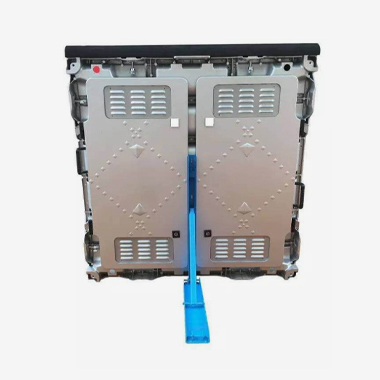
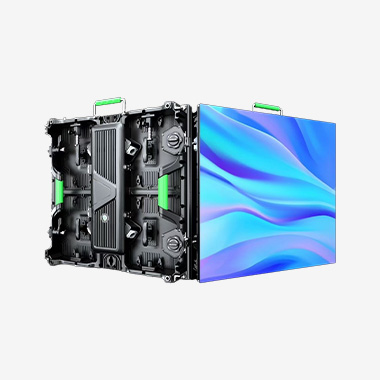
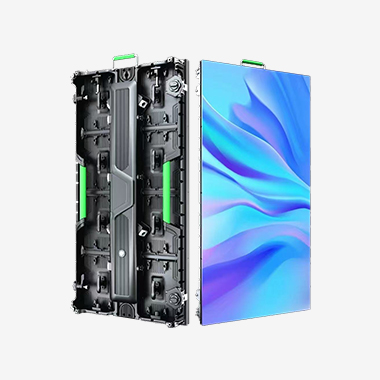
Cabinet: The modules are mounted into heavy-duty, aluminum alloy cabinets. These cabinets provide the structural rigidity for the entire array. They house the critical ancillary systems:
Power Supplies: Convert incoming AC power to the low-voltage DC power required by the LEDs.
Receiving Cards: Act as the brains of the cabinet, taking the video signal from the controller and distributing the data to the specific modules.
Cooling Systems: Essential for longevity. High-brightness LEDs generate significant heat. Active cooling with fans or passive cooling with large heat sinks is integrated to prevent overheating, which can lead to color shift and component failure.
2. Structural and Environmental Engineering
Suspending a structure weighing tens or even hundreds of thousands of pounds over a field requires meticulous structural engineering. The design must account for:
Dead and Live Loads: The weight of the display itself (dead load) and dynamic loads like wind shear, seismic activity, and the weight of maintenance personnel (live load).
Rigging and Support Systems: Custom steel frameworks are designed to integrate with the stadium's existing architecture. For center-hung displays, this involves massive cables and support arms attached to the stadium's primary roof structure. The entire system must be certified by structural engineers to ensure absolute safety.
Environmental Protection: Stadium screens are exposed to rain, humidity, dust, and extreme temperatures. Therefore, cabinets and modules are rated to high Ingress Protection (IP) standards, such as IP65, which signifies they are completely dust-tight and protected against water jets from any direction. They are also treated with conformal coatings to protect against moisture and corrosion.
3. The Visual Performance Trinity: Brightness, Contrast, and Color
Brightness: To be visible in direct sunlight, stadium LEDs must be incredibly bright, measured in nits (candelas per square meter). While a home TV might be 500 nits, a stadium display can range from 6,000 to over 10,000 nits. This ensures the image remains vibrant and clear even under the brightest conditions.
Contrast Ratio: This is the difference between the brightest white and the darkest black. High contrast is vital for image depth and clarity, especially for seeing details in replays. Modern screens use black-faced LEDs and cabinet materials to absorb ambient light and improve perceived contrast.
Color Gamut and Calibration: Achieving accurate and consistent color across thousands of modules is a huge challenge. Displays are calibrated to standard color spaces (like Rec. 709 or DCI-P3) to ensure skin tones and team colors look natural. Advanced calibration systems can adjust each individual module to ensure perfect color and brightness uniformity across the entire video wall, eliminating the "tiled" look.
4. System Integration and Control
The hardware is only one part of the system. It is useless without the sophisticated software and hardware that drives it:
Video Processors: The heart of the system. These powerful dedicated computers take multiple video feeds (broadcast, instant replay, graphic overlays, advertising) and process, layer, and blend them in real-time. They also handle the critical task of mapping the content to the unique, often non-rectangular, shape of the display (e.g., a curved or circular center-hung board).
Control Room Software: Operators use specialized software to create playlists, trigger content (like a replay or a graphic), schedule advertisements, and monitor the health of the entire display system, receiving alerts for any failed components.
In conclusion, the design and construction of a stadium LED screen is a complex symphony of electrical, software, and structural engineering. Every component, from the microscopic LED chip to the massive steel support beam, must work in perfect harmony to create a reliable, stunning, and safe visual experience for millions of fans over many years.
The operation of a massive stadium LED display is a complex, real-time data processing ballet. It involves capturing live action, processing vast amounts of visual information, distributing it across a unique digital canvas, and commanding millions of individual lights to switch on and off at immense speeds to create a coherent image. Understanding this process reveals the remarkable engineering behind the spectacle.
1. The Signal Chain: From Camera to Cabinet
The journey of a single frame of video to the display follows a precise pathway:
Content Acquisition: The process begins with high-speed, high-definition cameras positioned around the venue. Their feeds are sent to the broadcast truck and the stadium's central control room (CCR). In the CCR, a video switcher selects the desired feed—be it the live game broadcast, an isolated camera shot, or a pre-recorded highlight.
The Video Processor: The Brain: The most critical hardware component is the specialized video processor. This is a high-powered computer designed for one task: handling massive video resolutions in real-time. Its functions are multifaceted:
Input Handling: It accepts multiple input sources—SDI, HDMI, IP streams—simultaneously.
Scaling and Resolution Management: The native input signal (e.g., 1080p or 4K) is almost always a lower resolution than the native resolution of the giant LED wall, which can be equivalent to 8K, 16K, or beyond. The processor must upscale the source material to fit the pixel-perfect dimensions of the LED canvas without introducing lag or visual artifacts.
Layering and Compositing: The processor layers different sources on top of each other. For example, it can place a live video feed on the bottom layer, a semi-transparent scorebug graphic on a middle layer, and a flashing advertisement on a top layer. An operator can then switch between these layers or show them simultaneously in different screen zones.
Mapping and Warping: Stadium screens are rarely perfect rectangles. The processor uses mapping software to "warp" the output image to fit the physical layout of the LEDs, whether it's a curved screen, a circular ring, or an odd-shaped auxiliary board. It ensures that a straight line in the source appears straight on the non-standard display.
Data Distribution: The processed video signal, now a massive data stream, is sent from the processor to the display's data distribution system. This is typically done via fiber optic cables, which are immune to electromagnetic interference and can carry huge amounts of data over long distances with no signal degradation. The data is fed to sending cards, which then distribute it to the receiving cards mounted in each LED cabinet.
2. Pixel-Level Control: How an LED Creates an Image
At the module level, the magic happens through precise electronic control:
The Pixel: Each pixel on the screen is a cluster of three (or sometimes four) sub-pixels: a red LED, a green LED, and a blue LED (RGB). By varying the intensity of light from each of these three colored LEDs, the human eye perceives a single color. This is the additive color model. For instance, activating red and green at full intensity while blue is off creates yellow.
Pulse-Width Modulation (PWM): LEDs are digital devices; they are either on or off. They cannot be "dimmed" by reducing voltage in an analog fashion. Instead, brightness is controlled using a technique called Pulse-Width Modulation (PWM). The LED is switched on and off at a very high frequency—thousands of times per second. The ratio of "on" time to "off" time within each cycle (the duty cycle) determines the perceived brightness. A 50% duty cycle makes the LED appear half as bright as a 100% duty cycle. This rapid switching is imperceptible to the human eye, which sees only a steady level of light.
IC Drivers: Each LED or group of LEDs is driven by an integrated circuit (IC) driver chip. The receiving card sends data instructions to these driver ICs, telling them exactly what PWM value to assign to each red, green, and blue sub-pixel in their control. This happens for every single pixel on the entire display, refreshed typically 50-60 times per second (the refresh rate) to create smooth, flicker-free motion.
3. Calibration and Control: Ensuring Uniformity
A critical behind-the-scenes process is calibration. Because LEDs can have slight variations in color and brightness output from the factory, and because modules are replaced over time, a perfect image requires constant software correction. A spectrophotometer is used to measure the output of each module. The control software then creates a unique correction file that adjusts the output of every single pixel on the screen to ensure that a command for "Yankees Navy Blue" results in exactly the same color on the far left of the screen as it does on the far right. This calibration is what gives these massive, tiled displays the appearance of a single, seamless image.
In summary, the working principle is a high-speed, digital data pipeline. It starts with a video source, is intelligently processed and formatted by a powerful computer, is distributed via a robust network, and is executed at the micro-level by millions of individually addressable LEDs controlled by precise pulse-width modulation. This entire chain operates with minimal latency to ensure that what happens on the field is reflected on the screen in near real-time, preserving the synchronicity and excitement of the live event.
The adoption of large-scale LED technology has become the undisputed standard for major sports venues, but the path to a flawless fan experience is paved with both significant advantages and formidable technical and operational challenges.
Advantages
Unmatched In-Stadium Experience: The primary advantage is the radical enhancement of the live fan experience.
Superior Visibility: High brightness ensures perfect viewability in all lighting conditions. High refresh rates eliminate motion blur during fast-paced action, making it ideal for tracking a hockey puck or a baseball.
Instant Replay and Multiple Angles: Fans no longer miss crucial moments. They can see controversial calls, spectacular goals, and key plays from multiple angles immediately, making the in-arena experience as informative as watching on broadcast TV.
Enhanced Engagement: LED screens are the platform for all fan interaction segments—Kiss Cams, dance-offs, crowd reactions, and live social media integrations. This transforms passive spectators into active participants, building a stronger emotional connection to the event and the team.
Major Revenue Generation: LED walls are powerful financial assets.
Dynamic Advertising: Unlike static signage, digital ads can be sold to multiple advertisers, changed instantly, and targeted to specific moments or demographics. Animations and video ads command higher premiums and are far more attention-grabbing.
Content Partnerships: The screen itself becomes a valuable real estate for presenting sponsors, with integrated branded content segments, sponsored replays, and product placements woven seamlessly into the broadcast.
Operational Flexibility and Control: The digital nature of the system offers unparalleled versatility.
Real-Time Content Management: Operators can change messaging, graphics, and promotions on the fly to react to the game's flow, weather delays, or other unforeseen events.
Multi-Purpose Venue Use: Modern stadiums host concerts, conferences, and other events. The LED system can be completely reconfigured for each use—displaying lyrics for a concert, presentations for a corporate event, or creating immersive visual environments for eSports.
Durability and Long-Term Value: While the initial investment is high, a well-maintained LED system offers a long lifespan (typically 100,000 hours to half-brightness) and lower long-term operating costs compared to maintaining older technologies like projection systems or bulb boards. LEDs are also highly energy-efficient compared to their luminosity output.
Challenges
Extremely High Initial Capital Investment: The single biggest barrier is cost. A complete, state-of-the-art center-hung display system for a major league stadium can cost several million dollars. This includes not just the screens themselves but also the structural modifications, video processing equipment, control room integration, and installation labor.
Technical Complexity and Maintenance: These are complex electronic systems operating in a harsh environment.
Component Failure: With millions of LEDs, power supplies, and data connections, failures are inevitable. A single failed LED can create a dark pixel, and a failed power supply can black out an entire cabinet.
Rigorous Maintenance Regime: Requires a dedicated team and specialized equipment for routine cleaning, inspection, and repair. Accessing modules on a center-hung display often involves skilled technicians using rigging systems or long-reach boom lifts, which is time-consuming, expensive, and must be scheduled around a packed event calendar.
Calibration Drift: Over time, LEDs can degrade at different rates, causing color and brightness uniformity to drift. Re-calibrating the entire system is a complex and periodic necessity.
Performance in Environmental Extremes: Despite high IP ratings, extreme conditions pose problems.
Sunlight and Heat: Direct sunlight can heat cabinet surfaces to temperatures that challenge the cooling systems, potentially leading to overheating and accelerated wear. The incredible brightness required to beat the sun also increases power consumption and heat generation.
Cold Weather: In freezing climates, the thermal stress of heating up from a cold start can affect components. Moisture ingress that freezes can cause physical damage.
Content Management and the "Second Screen" Competition: The stadium screen is no longer the only screen in the building. Fans are constantly on their smartphones.
Content Relevance: The challenge is to provide content on the big screen that is compelling enough to pull attention away from personal devices. This means providing exclusive angles, stats, and interactions that cannot be accessed anywhere else.
Information Overload: There is a risk of cluttering the screen with too much information—ads, stats, scores, social feeds—which can detract from the primary viewing experience of the game itself. Striking the right balance is an ongoing creative challenge.
In conclusion, the advantages of LED technology in creating a superior, engaging, and profitable fan experience are overwhelming, which is why it has become ubiquitous. However, teams and venues must enter into these projects with a clear understanding of the substantial financial commitment and the ongoing operational demands required to maintain these technological marvels at their dazzling best.
The application of LED technology in sports stadiums has moved far beyond its original purpose of showing scores and replays. It has become a versatile tool for entertainment, commerce, and operational efficiency. Furthermore, the technology is continuously evolving, promising even more immersive and integrated experiences in the near future.
Expanding Applications
Immersive Fan Experiences and Storytelling: Teams are using LED systems to build narrative and atmosphere. This includes pre-produced video packages with dramatic soundtracks to introduce players, historical highlights to celebrate anniversaries, and coordinated light shows synced with pyrotechnics during player introductions or after a goal. The entire stadium becomes a stage for theatrical production.
360-Degree Ribbon Boards: The evolution of the simple dasher board into a continuous, high-resolution ribbon that encircles the entire lower bowl has created a dynamic "visual baseline" for all fans. It can be used to create flowing waves of color and light during exciting moments, unifying the crowd's reaction and amplifying energy.
Augmented Reality (AR) Integration: Broadcasters have used AR for years (e.g., the virtual first-down line in American football), but now this technology is moving into the live stadium experience. By using precise camera tracking and the LED screen as a backdrop, teams can overlay real-time statistics, player names, and animated graphics onto the live action shown on the big screen, enriching the view with a layer of digital information.
In-Bowl Entertainment and Gambling Integration: With the expansion of legalized sports betting, stadium screens are being used to display real-time betting odds, prop bets, and live wagering statistics, turning the venue into a live sportsbook. This creates a new, highly engaging layer of interaction for a segment of the fanbase.
Player and Official Tool: Screens are also used for operational purposes. In sports like cricket or tennis, they display Hawk-Eye or other ball-tracking technology results for reviews. They can also provide instant feedback and performance data to players and coaches.
Future Trends
Higher Resolution and Finer Pixel Pitches: The relentless march of miniaturization continues. As LED chips become smaller and more efficient, pixel pitches will shrink further. This will enable even larger screens with "4K" and "8K" level clarity to be viewed from increasingly close distances, potentially wrapping entire sections of the stadium in seamless video.
Transparent LED Technology: This emerging technology involves mounting LEDs on a transparent mesh. This could be applied over existing glass facades or railings, allowing fans to see the field through the screen when it's off or displaying semi-transparent graphics when it's on. This opens up new advertising and informational surfaces without obstructing views.
Curved, Flexible, and Conformal Displays: Future displays will not be flat. Screens will be custom-molded to fit the unique architectural curves of modern stadiums, creating more organic and aesthetically integrated designs. Flexible LED substrates could allow for screens on non-flat surfaces, further expanding the canvas for visual storytelling.
MicroLED and COB (Chip-on-Board) Technology: MicroLED is a next-generation technology where microscopic LEDs are transferred directly onto a substrate. It offers superior brightness, contrast, color gamut, and reliability compared to current SMD technology. COB packaging, where multiple LED chips are packaged directly onto the PCB as a single unit, offers improved durability and better thermal performance. These technologies will become the new standard for high-end installations.
Integration with the IoT (Internet of Things) and AI: The LED display will become the central visual output device for a smart stadium's data network.
AI-Powered Content: Artificial intelligence could analyze the live game feed in real-time to automatically select and play the most exciting replay angles or highlight key players without human intervention.
Personalized Content: By connecting to a stadium app, the system could theoretically use data to display personalized messages or offers on concourse screens as fans walk by.
Unified Experience: The big screen experience will be seamlessly integrated with the personal "second screen" experience on smartphones, offering complementary content, different camera angles, and interactive voting that is then displayed live for all to see.
Sustainability Focus: Future developments will heavily emphasize energy efficiency. New LED chemistries and driver technologies will provide more light output per watt of energy consumed. Smart systems will dynamically dim sections of the screen or adjust brightness based on ambient light conditions to conserve power, reducing the operational carbon footprint and costs.
The stadium LED screen is evolving from a passive broadcast tool into an intelligent, connected, and immersive architectural element. The future points towards a fully integrated digital environment where the boundaries between the physical game and the digital augmentation become increasingly blurred, creating ever more spectacular and personalized experiences for the live audience.
Conclusion
The advent and evolution of large-scale LED display technology have irrevocably altered the landscape of live sports entertainment. What began as a utilitarian tool for displaying basic information has matured into the central nervous system of the modern stadium, a dynamic digital canvas that is as vital to the event as the playing field itself. It is no longer an accessory but an essential infrastructure, a critical investment that defines the quality, engagement, and financial viability of a sports venue.
The journey through its overview, design, principles, advantages, and applications reveals a technology of remarkable depth and sophistication. Its success lies in its unique ability to serve multiple masters simultaneously. For the fan, it is a window to enhanced understanding and a catalyst for shared emotion, ensuring they miss none of the nuance and drama of the contest. For the team and venue operators, it is the ultimate tool for narrative control and atmosphere creation, a platform to build tradition and ignite passion. For the business side, it is a powerhouse of revenue generation, offering unprecedented flexibility and value for advertisers and sponsors.
While the challenges are significant—the formidable upfront cost, the relentless demand for maintenance, and the constant battle against technological obsolescence—the benefits overwhelmingly justify the investment. A state-of-the-art LED system directly addresses the historical weaknesses of the live experience compared to the broadcast one, effectively closing the "information gap" and providing unique value that can only be found within the arena. It empowers franchises to create a distinctive brand identity and a memorable spectacle that extends beyond the game itself, encouraging repeat attendance and fostering fan loyalty.
Looking forward, the role of the LED screen is set to expand even further. It is transitioning from a display into an intelligent interface between the physical event and the digital world. Trends like microLED, transparent displays, and deep AI integration promise not just incremental improvements but fundamental shifts in how screens are built and how they interact with fans and the environment. The future stadium will be a seamlessly connected entity, and the LED display will be its most prominent and powerful voice.
In conclusion, the roar of the crowd will always be the soul of a live sporting event. But the glow of the LED screen has become its beating heart. It synchronizes that roar, gives it context, and amplifies its energy. It informs the mind and captivates the eye, weaving together the athleticism on the field with the spectacle in the stands. It is, without a doubt, the indispensable arena of light, and its continued evolution will remain at the forefront of defining what it means to be a fan in the 21st century.


Copyright © 2026 Shenzhen Cogo Technology Co.,Ltd.
All Rights Reserved

 Previous article