




 Chat Now
The evolution of stage production has been a relentless pursuit of more immersive, impactful, and memorable audience experiences. From painted backdrops and simple lighting to complex mechanical sets and projected visuals, each technological leap has expanded the storyteller's palette. In this continuum, the advent and proliferation of Large Format Video Displays, specifically Light Emitting Diode (LED) screens, represent nothing short of a revolution. Hired LED display screens have become the indispensable digital canvas of modern stage events, transforming concerts, corporate conferences, theater productions, and award shows into dynamic, multi-sensory spectacles.
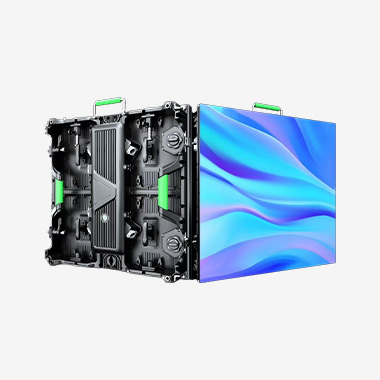
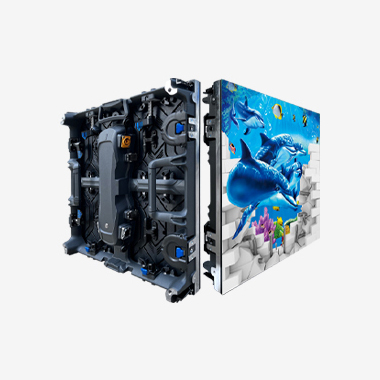
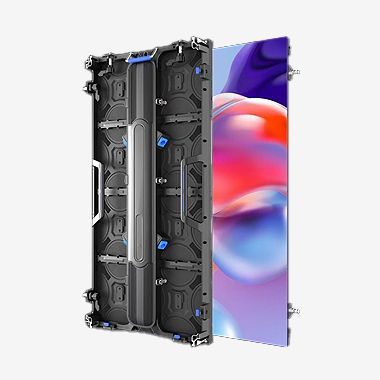
An LED hire display is not a single monolithic unit but a modular system composed of individual panels or "cabinets" that lock together to form a seamless video wall of virtually any size or shape. Unlike consumer televisions or projectors, these systems are engineered for the unique demands of the live event industry: unparalleled brightness to combat ambient light, high durability for frequent transportation and rigging, and exceptional resolution to remain clear even at vast sizes and viewing distances. The "hire" or rental aspect is crucial; it provides event producers and creative directors access to cutting-edge technology on a per-project basis without the prohibitive capital investment and logistical burden of ownership. This business model ensures that a local theater company can, for a weekend, harness the same visual firepower as a global superstar's world tour.
The core function of these screens extends far beyond merely showing a video feed. They are an integral element of the stage design and narrative itself. They can function as:
A Dynamic Backdrop: Replacing static physical sets with moving, animated, or live video environments that change in perfect synchrony with the performance.
An Atmospheric Tool: Generating mood through abstract visuals, color washes, and patterns that respond to music or dialogue.
An Informational Display: Presenting key messages, logos, speaker names, graphics, and live social media feeds at corporate events.
An Augmented Reality (AR) Layer: Serving as a giant green screen (often using LED volumes with camera tracking) to place performers within entirely virtual, photorealistic environments in real-time, visible both live and on broadcast.
An Architectural Element: Shaping the stage itself through curved walls, overhead canopies, towering pillars, and even floor-based screens.
The impact is profound. For a concert, the LED screen becomes a pulsating extension of the artist's energy, amplifying every beat and lyric. For a product launch, it builds hype and clarifies complex ideas with stunning visualizations. For a play, it can transport the audience from a drawing room to a stormy heath without a cumbersome scene change. This versatility has made LED technology the backbone of contemporary event design.
The ecosystem supporting LED hire is complex and global. It encompasses manufacturers designing ever-more-advanced panels, rental houses that invest in and maintain vast inventories of different screen types, skilled technicians who assemble, configure, and operate the systems, and content creators who design the breathtaking visuals that give the technology its soul. The choice of screen—its pixel pitch, brightness, curvature, and weight—is a critical early decision in the production process, influencing everything from creative vision and stage engineering to budget and transportation.
In essence, the hired LED screen has democratized large-scale visual spectacle. It has shifted the paradigm from what is physically built on stage to what can be imagined and displayed. It is a tool that empowers creators to break the constraints of the physical venue and build limitless digital worlds, making every event a unique and unforgettable visual journey. As we delve deeper into its design, functionality, and applications, it becomes clear that the LED screen is not just a piece of equipment; it is the primary medium through which modern stage stories are painted in light.
The seemingly monolithic video wall at a major concert is a masterpiece of engineering, a complex puzzle assembled from hundreds of individual, meticulously designed components. The design and construction of LED panels for the rental market are dictated by a brutal set of requirements: they must produce stunning image quality under challenging conditions, survive the rigors of constant transportation and handling, assemble and disassemble with speed and precision, and integrate seamlessly with other production elements like lighting and sound. This has led to a highly specialized product category far removed from consumer electronics.
The Fundamental Building Block: The LED Cabinet
At the heart of any LED display system is the cabinet (or module/tile). This is a rigid, often aluminum-framed unit, typically ranging from 500x500mm to 1000x1000mm, which houses the core components:
LED Modules: These are smaller subunits mounted within the cabinet. Each module contains a grid of individual pixels.
Pixels: A single pixel on an LED screen is comprised of a cluster of LEDs (Light Emitting Diodes)—usually one red, one green, and one blue (RGB). By varying the intensity of these three colors, the pixel can create millions of hues. The LEDs are mounted on a printed circuit board (PCB).
Drive ICs (Integrated Circuits): These are the chips that control the individual LEDs, receiving data and power and instructing each diode on its brightness level with incredible speed. The quality of the drive ICs is paramount for color accuracy, refresh rate, and overall stability.
Power Supplies: Convert incoming AC power to the low-voltage DC power required by the LEDs and electronics. Redundant and hot-swappable power supplies are common in high-end cabinets to prevent single-point failures during a show.
Receiving Cards: These PCBs are the brains of the cabinet. They receive the video data signal from the master controller, process it, and distribute commands to the various drive ICs across the modules.
Structural Frame: The robust metal frame provides structural integrity, precise mounting points for rigging, and alignment mechanisms for connecting to adjacent cabinets. It also acts as a heat sink to dissipate the significant heat generated by the LEDs.
Key Design Considerations for Rental:
Pixel Pitch (P): This is the center-to-center distance between two adjacent pixels, measured in millimeters (e.g., P2.9, P4.8, P7.6). It is the single most important factor determining resolution. A smaller pixel pitch means more pixels per square meter, yielding a higher resolution suitable for closer viewing distances. Rental companies maintain an inventory of various pitches to suit different events—a fine-pitch screen (e.g., P2.6) for a corporate event where the audience is close, and a wider-pitch screen (e.g., P7.6) for a festival stage where viewers are hundreds of feet away.
Brightness and Calibration: Stage screens must be incredibly bright, typically ranging from 1,500 to over 6,000 nits (cd/m²), to compete with powerful stage lighting and ambient venue light. Furthermore, every panel and every pixel within it must be perfectly calibrated for color consistency and grayscale uniformity. Sophisticated calibration software measures the output of each LED and applies corrective coefficients to ensure that a command for "pure white" looks identical across every cabinet in the wall. Without this, the display would appear as a patchwork of different colors and brightnesses.
Refresh Rate: A high refresh rate (e.g., 3840Hz or higher) is critical to prevent flickering, especially when the screen is captured by broadcast cameras or smartphones. A low refresh rate can cause unsightly black bars or rolling lines to appear on video footage.
Durability and Weight: Rental gear is handled, shipped, and rigged countless times. Cabinets are built to withstand shock, vibration, and minor impacts. The choice of materials, like lightweight magnesium alloys, is crucial to reduce weight for easier handling and to meet rigging weight limits, especially for overhead installations.
Ease of Use: Quick-release locking mechanisms allow technicians to build vast walls rapidly. Front-serviceable designs enable technicians to replace a faulty module or power supply from the front of the screen without having to dismantle the entire structure—a vital feature during a tight show schedule.
IP Rating: Ingress Protection ratings indicate resilience to dust and water. Indoor panels may have a low rating (e.g., IP20), while screens designed for outdoor festivals require a high rating (e.g., IP65 or IP66) to withstand rain and dust.
Form Factors and Shapes:
Beyond flat walls, modern LED technology enables creative freedom:
Curved Screens: Cabinets with special interlocking mechanisms can form smooth, continuous curves, wrapping around the stage for a more immersive environment.
Video Tiles / Cubes: These are individual, often smaller, panels that can be arranged in creative, non-contiguous patterns rather than a single solid wall.
Transparent LED: Using special fine-pitch strips, these screens offer see-through properties, allowing them to be hung in front of performers or set pieces without completely obscuring the view behind.
Flexible LED: Built on a flexible PCB, these panels can conform to gentle curves and undulating shapes, opening up new possibilities for organic stage designs.
The design of an LED hire screen is a constant balancing act between image fidelity, physical robustness, weight, and cost. The result is a product that is both a precision optical instrument and a piece of heavy-duty touring equipment, engineered to deliver flawless performance show after show, in any environment.
The transformation of a digital video file into a coherent, brilliant image on a massive LED wall is a complex process involving a chain of sophisticated hardware and software. Understanding this data pathway is key to appreciating the engineering marvel of these systems. The process can be broken down into four key stages: Content Creation & Management, Signal Processing & Distribution, Data Reception & Control, and Pixel Illumination.
1. Content Creation and Management:
It all starts with the visual content. This can be pre-rendered video files (animation, filmed footage), real-time graphics generated by software like Notch or TouchDesigner, or live camera feeds. For a major event, a dedicated media server is the central brain for content management. Powerful machines like those from disguise, Green Hippo, or AV Stumpfl perform several critical functions:
Playback: They store and play back high-resolution video files, often across multiple output channels.
Compositing: They layer multiple sources—pre-recorded video, live feeds, real-time graphics—into a single, cohesive output.
Mapping: The media server uses a pre-configured "patch" that defines the physical and virtual layout of the LED wall. It knows the exact pixel dimensions, shape (e.g., if it's curved), and any obstructions. It warps and maps the output video signal to perfectly fit the unique canvas of the LED wall, compensating for its non-standard shape and ensuring images appear geometrically correct.
Synchronization: The media server genlocks (synchronizes) with other servers, video switchers, and sometimes even lighting consoles to ensure all visual elements are perfectly timed with audio and lighting cues.
2. Signal Processing and Distribution:
The video signal from the media server is typically output as a standard SDI or HDMI signal. However, a single cable cannot carry enough data to drive a massive LED wall with millions of pixels. This is where the LED processor (or controller) comes in. Its job is to take the high-resolution video signal, process it, and distribute it efficiently to the array of LED cabinets.
Input and Scaling: The processor accepts the video signal and, if necessary, scales it to the native resolution of the entire LED wall.
Data Division: The processor divides the complete video image into smaller sections, each corresponding to a specific group of cabinets or a specific data output port.
Data Transmission: The processor sends this divided data to the individual LED cabinets using specialized, high-bandwidth protocols. The most common standard is HDBaseT, which can send data, power, and control signals over long distances (up to 100m) using standard CAT5e/6 cable. Some systems use fiber optic cables for even longer runs and superior noise immunity.
3. Data Reception and Control at the Cabinet:
Each LED cabinet contains one or more receiving cards. These cards are the "local brains":
They accept the data stream from the processor via the HDBaseT or fiber input.
They decode the data packet intended for their specific section of the wall.
They process this data and distribute precise instructions to the network of drive ICs (integrated circuits) that are directly responsible for controlling the LEDs on the modules.
4. Pixel Illumination: Pulse-Width Modulation (PWM):
This is the final and most crucial step—how an individual LED creates its color and brightness. An LED is a binary device; it's either fully on or fully off. To create varying levels of brightness, it is switched on and off at an extremely high speed, a method called Pulse-Width Modulation (PWM).
The drive IC sends a rapid series of electrical pulses to each red, green, and blue LED within a pixel.
The ratio of "on" time to "off" time within each cycle determines the perceived brightness. A longer "on" pulse within the cycle makes the LED appear brighter; a shorter "on" pulse makes it appear dimmer.
By independently controlling the PWM for the red, green, and blue diodes, the drive IC can mix any color at any desired brightness level. For example, to create a dim yellow, it would send a medium-duty cycle pulse to the red and green LEDs while keeping the blue LED completely off.
The refresh rate of the entire system (how many times per second the image is updated) is tied to this PWM process. A high refresh rate means the on/off cycles are happening so fast that the human eye perceives only a steady, flicker-free image of continuous light.
Calibration's Role: It's important to note that the raw command from the drive IC is just a number. The calibration data stored on each module's chip tells the drive IC exactly how to interpret that number for each specific LED to achieve the desired color and brightness, ensuring perfect uniformity across the millions of diodes in the wall.
In summary, the working principle is a symphony of data management: a high-level video signal is deconstructed by a media server, divided and distributed by a processor, interpreted by receiving cards, and finally executed at the microscopic level by drive ICs using rapid pulses of electricity to command individual LEDs, all happening millions of times per second to create the seamless moving images that captivate audiences.
The adoption of LED technology in live events is not without its complexities. While its advantages are transformative, they introduce a unique set of challenges that production teams must expertly navigate. A successful deployment hinges on understanding and managing this balance.
Advantages:
Unmatched Brightness and Visibility: This is LED's most decisive advantage over projection. LED screens are emissive displays—they generate their own light. This allows them to maintain vivid, saturated colors and deep blacks even under the harsh glare of stage lighting and ambient venue light, where projected images would appear washed out and feeble.
Superior Image Quality and Reliability: Modern fine-pitch LED offers exceptional resolution, high contrast ratios, and wide viewing angles (often up to 160 degrees). There is no single point of failure like a projector bulb; if an individual LED or module fails, it appears as a small dark spot rather than catastrophic image loss (and it can often be replaced during a show break).
Creative Flexibility and Design Freedom: LED is the ultimate chameleon. It can be a backdrop, a set piece, a source of information, or an ambient light source. Its modular nature allows for the creation of non-traditional shapes—curves, arches, tunnels, and overhead ceilings—that are impossible with flat projection surfaces. It enables real-time content changes, making the stage a dynamic participant in the narrative.
Operational Efficiency in Certain Contexts: For large stages, a single LED wall can replace truckloads of physical scenery, reducing load-in and load-out times and simplifying storage and transportation logistics. It eliminates the need for careful projector placement, long throw distances, and the constant worry about performers casting shadows on the screen.
Enabler of Augmented Reality (AR): LED walls, particularly in a volumetric "LED volume" setup, are the foundation of modern in-camera visual effects (ICVFX). They provide the photorealistic, dynamic background that interacts with the live camera's movement, replacing traditional green screens and allowing for breathtaking, real-time compositing that looks authentic to both the live audience and the broadcast camera.
Challenges and Considerations:
Cost: This is the most significant barrier. The capital investment for a high-quality LED screen is substantial. While hiring mitigates this, rental fees for a large, fine-pitch wall, plus the necessary media servers, processors, and skilled crew, represent a major line item in any production budget.
Technical Complexity: Operating an LED system is not plug-and-play. It requires a team of specialized technicians: LED engineers to assemble, configure, and troubleshoot the wall; media server operators to manage and playback content; and content creators who understand the technical specifications and artistic possibilities of the medium. A misconfigured processor or an improperly mapped video signal can lead to distorted images or complete failure.
Resolution and Viewing Distance: The resolution of an LED wall is fixed by its pixel pitch and physical size. Unlike a 4K projector that can be focused on any screen, an LED wall must have a pixel pitch fine enough that the audience cannot distinguish individual pixels at their viewing distance. A screen that looks crystal clear from the back of an arena may appear unacceptably low-resolution to front-row viewers. This requires careful calculation and often a compromise between cost (wider pitch) and quality (finer pitch).
Weight and Rigging Demands: A large LED wall is extremely heavy. Its installation requires significant structural analysis and certified riggers to ensure it is safely hung from venue roof structures or supported by ground-support truss. The weight impacts trucking costs, load-in time, and the physical demands on the crew.
Power and Thermal Management: LED walls are power-hungry systems, often requiring dedicated high-amperage three-phase power distros. All that energy is converted into both light and heat. Large walls generate enormous amounts of heat that must be dissipated through built-in fans and heatsinks. This heat output can affect the venue's ambient temperature and requires careful planning for ventilation.
Content Creation Demands: Content can no longer be a simple 16:9 video. It must be designed or adapted for the specific, often unusual, dimensions and shape of the LED wall. This requires more time, specialized software, and a deeper level of artistic and technical skill from content creators. Poorly designed content can look stretched, pixelated, or simply fail to utilize the canvas effectively.
In conclusion, the advantages of LED technology—its brilliance, flexibility, and impact—are overwhelmingly powerful. However, they come at the price of increased financial cost, technical overhead, and logistical complexity. A successful production does not simply choose "LED"; it makes a conscious decision that the creative benefits outweigh the challenges and commits to deploying the technology with the expertise and planning it demands.
The application of hired LED displays has exploded far beyond the concert mainstage, permeating every facet of the live event industry. Simultaneously, relentless technological innovation is pushing the boundaries of what these digital canvases can do, shaping future trends that promise even greater integration and immersion.
Diverse Applications:
Music Tours and Festivals: The quintessential application. From massive rear-stage walls that serve as the primary visual element to IMAG (Image Magnification) screens flanking the stage, LED is central to the concert experience. It amplifies the artist's brand, creates immersive worlds for different songs, and ensures every attendee has a clear view.
Corporate Events: At product launches, sales conferences, and shareholder meetings, LED screens are workhorses of communication. They display keynote presentations, stream video from remote speakers, show live social media walls, and present data visualizations and product demos with stunning clarity. Their reliability and brightness are essential in well-lit convention halls.
Theater and Performing Arts: Modern theater increasingly uses LED to create dynamic, magical environments. It allows for instant set changes from a realistic interior to a starry sky or a raging ocean. It can be used as a subtle scenic element or a dominant feature of avant-garde productions, offering a modern twist on traditional stagecraft.
Broadcast and Award Shows: Shows like the Oscars, Grammys, and major sporting event ceremonies use LED on an epic scale. They create the iconic looks for these global broadcasts, incorporating complex moving elements, integrated lighting, and interactive features. Floor LEDs have become particularly popular, creating stunning visual patterns from a top-down camera shot.
Exhibitions and Trade Shows: Brands use LED to draw attention to their booths, showcase high-resolution product videos, and create engaging, branded environments that stand out on a crowded exhibition floor. Flexible and transparent LED varieties are particularly popular here for creating unique structures.
Virtual Production and LED Volumes: This is the most rapidly growing and revolutionary application. Pioneered by film and high-end broadcast (e.g., The Mandalorian), LED volumes are now used for live events. Performers are surrounded by a 270-degree LED cave that displays real-time, photorealistic CGI environments. Cameras equipped with tracking systems move through this volume, and the perspective of the background changes perfectly in real-time, creating the illusion that the talent is in a real location. This technology is now being adopted for live television, commercials, and even bespoke corporate events.
Future Trends:
Finer Pixel Pitches: The race for smaller pixels continues. MicroLED and MiniLED technologies are enabling sub-1mm pixel pitches (e.g., P0.9, P1.2) that are beginning to rival the resolution of direct-view consumer TVs. This will allow for massive screens that are viewable from extremely close distances, blurring the line between screen and reality.
Higher Dynamic Range (HDR): Incorporating HDR standards into LED displays will provide a much wider range of brightness and a vastly expanded color gamut. This means incredibly deep blacks and specular highlights that are dazzlingly bright, resulting in an image with more depth, texture, and realism than ever before.
Integration with XR (Extended Reality): The line between the physical and digital will further blur. LED walls will work in tandem with AR graphics overlayed on the broadcast feed, allowing virtual objects to interact seamlessly with the physical stage and the LED background. This will create hybrid experiences that are live for the audience and enhanced for the viewer at home.
Lighter, Thinner, More Efficient Panels: Advancements in materials science and LED efficiency will lead to cabinets that are significantly lighter, thinner, and consume less power. This reduces rigging demands, shipping costs, and thermal output, making large-scale installations more feasible and sustainable.
Smarter Panels and Simplified Workflows: The integration of software and AI will lead to "smarter" displays. Panels will self-diagnose faults, automatically calibrate, and simplify the complex setup process through more intuitive software, reducing the technical barrier and required expertise.
Sustainability: The industry will focus on reducing the environmental footprint through energy-efficient LED drivers, recyclable materials, and longer-lasting products designed for repairability and upgradeability rather than replacement.
The future of LED in stage events is not just about sharper pictures; it's about creating more connected, interactive, and believable digital-physical hybrids. The screen is evolving from a passive surface for displaying video into an active, intelligent component of a unified performance environment, fundamentally redefining the possibilities of live storytelling.
6. Conclusion: The Indispensable Medium of Modern Spectacle
The journey of the LED hire display screen from a novel technological gadget to the cornerstone of modern stagecraft is a testament to its profound impact on live event production. It is far more than a simple upgrade from previous technologies like projection or physical sets; it represents a fundamental shift in the very language of visual storytelling for stage events. Its ability to merge the digital and physical realms into a cohesive, dynamic experience has made it an indispensable medium for creators, artists, and producers worldwide.
The LED screen's triumph lies in its unique convergence of key attributes: visual supremacy through unparalleled brightness and clarity; creative unboundedness through its modular and shapeable nature; and operational practicality through the rental model that makes world-class technology accessible. It has solved perennial production problems—how to be visible under bright lights, how to change scenes instantly, how to create immense scale—while simultaneously opening a universe of new creative questions and possibilities. The stage is no longer a fixed location but a mutable digital space, limited only by the imagination of the content creator.
However, as we have explored, this power does not come without responsibility and challenge. The technology demands respect in the form of meticulous planning, significant investment, and highly skilled human expertise. The roles of the LED technician, the media server operator, and the real-time content artist have become as critical as that of the lighting designer or sound engineer. A successful production is a symphony where the visual technology is not an afterthought but an integral, harmonized section of the orchestra.
Looking forward, the trajectory is clear. The trends towards finer pitches, HDR, deeper integration with XR, and smarter, more sustainable hardware are not mere incremental improvements. They are steps towards the ultimate goal of complete visual immersion—creating digital worlds so seamless and realistic that the audience forgets they are looking at a screen at all. The rise of the LED volume for virtual production is a stark preview of this future, where the stage itself becomes a portal to any conceivable environment.
In conclusion, the hired LED display screen has irrevocably changed the landscape of live events. It has empowered storytellers to craft more emotionally resonant, visually stunning, and narratively complex experiences. It has raised audience expectations and, in doing so, pushed the entire industry to innovate further. It is a tool that embodies the spirit of modern entertainment: dynamic, technological, spectacular, and deeply human in its desire to create wonder. The digital canvas is now woven into the fabric of live performance, and as the technology continues to evolve, so too will the stories we tell upon it. The future of stage events is bright, pixelated, and brilliantly limitless.


Copyright © 2026 Shenzhen Cogo Technology Co.,Ltd.
All Rights Reserved

 Previous article