




 Chat Now
The modern festival experience is a symphony for the senses. While the audio—the pounding basslines, soaring vocals, and roaring crowds—forms the core, the visual component has evolved from a mere accessory into a fundamental pillar of the event's identity and impact. At the heart of this visual revolution is the outdoor LED (Light Emitting Diode) hire display screen. These monumental, dynamic canvases have transformed passive audiences into immersed participants, making them an indispensable tool for festival organizers worldwide.
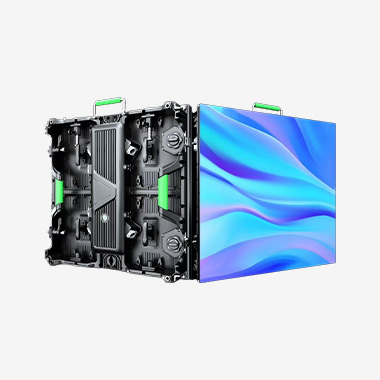
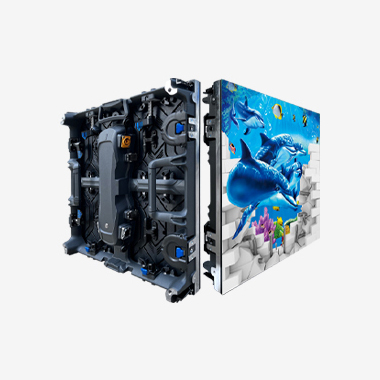
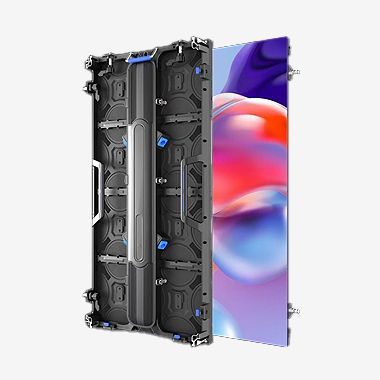
An outdoor LED hire display is a modular, rental-based video wall system specifically engineered for temporary outdoor events. Unlike their fixed-installation counterparts found on skyscrapers or in sports stadiums, hire displays are designed for mobility, rapid deployment, and resilience against the unpredictable elements of an outdoor environment. The industry surrounding them is a sophisticated ecosystem of rental houses, technicians, content creators, and engineers who work in concert to bring breathtaking visuals to life for a weekend before dismantling and moving on to the next event.
The primary function of these screens is to ensure that every attendee, regardless of their position in a vast field or arena, has an intimate and engaging view of the performance. For those at the back, the main stage can be a distant spectacle of moving figures. The LED screen bridges this gap, offering close-ups of the artists, dynamic visualizations synced to the music, and real-time audience shots that foster a powerful sense of collective experience and connection. It democratizes the view, ensuring no one misses a pivotal guitar solo, a drummer's intense focus, or the euphoric expression of a singer.
Beyond mere magnification, these screens have become a central storytelling device. They are the visual voice of the festival and the performing artists. Headlining acts often travel with their own dedicated content, a pre-produced visual show designed to complement each song's mood, rhythm, and lyrics. This content can range from abstract, generative art and hypnotic patterns to narrative film clips and stunning graphic design. The LED screen becomes a chameleon, adapting its aesthetic to each performer, thus enhancing their artistic expression and creating a unique audiovisual signature for their set.
Furthermore, the screens serve critical practical purposes. They are the central nervous system for information dissemination, displaying vital messages: schedule changes, safety announcements, weather alerts, and wayfinding instructions. They are also a powerful revenue-generation tool through high-impact advertising slots for sponsors, whose brands are showcased to a captive and engaged audience in a context that feels more integrated and less intrusive than traditional billboards.
The technology's journey to its current dominance is a story of rapid innovation. Early festival screens were often large-scale projections or low-resolution LED arrays, plagued by poor visibility in daylight, slow response times causing motion blur, and immense weight and power requirements. The advent of high-brightness SMD (Surface-Mounted Device) LED technology, combined with advancements in video processing, ruggedized lightweight materials, and energy efficiency, has enabled the creation of the brilliant, reliable, and colossal screens we see today.
In essence, the outdoor LED hire screen is far more than a big television. It is the central visual organ of the festival. It amplifies performances, unifies the audience, enables artistic expression, provides critical information, and drives commercial value. Its presence is now so expected that a major festival without a high-quality video presence would be perceived as lacking production value. As we delve deeper into its design, workings, and applications, it becomes clear that this technology is not just a part of the show; it is a pivotal force shaping the very nature of large-scale live events.
The formidable visual impact of a festival LED wall belies its intricate and meticulously engineered nature. Its design and construction are a masterclass in balancing opposing demands: achieving stunning visual fidelity while ensuring rugged durability, creating massive scale while maintaining modular portability, and delivering immense brightness while managing power consumption and heat. Every component, from the individual pixel to the massive supporting truss, is purpose-built for the harsh, temporary world of outdoor events.
The Core Building Block: The LED Panel (or Module)
The fundamental unit of any LED display is the panel, typically measuring between 500mm x 500mm and 500mm x 1000mm. These panels are themselves complex assemblies:
LED Clusters: Each pixel on a modern screen is usually composed of a cluster of red, green, and blue (RGB) SMD LEDs. In an SMD configuration, the three diode chips are mounted onto a single small substrate, allowing for tighter pixel pitches and better color mixing and consistency across the screen surface.
Pixel Pitch: This is the most critical specification for image quality, denoting the distance (in millimeters) from the center of one pixel to the center of the adjacent pixel (e.g., P6, P4, P3). A smaller pitch means a higher pixel density and a sharper image, but it also increases cost, weight, and power requirements. For large festival main stages, a pitch between P4 and P10 is common, creating a balance where the image is crisp from a distance without being prohibitively expensive.
Cabinet Structure: The panels are housed in die-cast aluminum or ruggedized plastic cabinets. Aluminum is preferred for its excellent heat dissipation properties, which is vital for maintaining LED lifespan and color accuracy. These cabinets are designed to be lightweight yet incredibly strong, often featuring quick-release locks, built-in handles, and standardized mounting points.
IP Rating: For outdoor use, a high Ingress Protection (IP) rating is non-negotiable. A rating of IP65 is standard, meaning the modules are "dust-tight" and protected against low-pressure water jets from any direction. This ensures the electronics can survive rain, humidity, and the pervasive dust kicked up by festival crowds.
The Structural Framework: Rigging and Trussing
The panels alone are not structural. They must be mounted onto a heavy-duty aluminum truss system. This engineering is paramount for safety. The truss is designed to:
Support Immense Weight: A large LED wall can weigh many tons. The truss must support this static load plus additional dynamic loads from wind.
Provide Rigidity: The structure must be absolutely rigid to prevent any movement or vibration that would cause the separate panels to shift, creating visible gaps or lines in the image.
Enable Configuration: Trussing allows for creative screen shapes beyond a flat wall, such as curved walls, angled wings, or even overhead canopies.
The Nervous System: Power and Data Distribution
Power: LED walls are power-hungry systems. A dedicated, clean, and stable high-amperage power feed is required, often running through heavy-gauge cables to distribution boxes behind the wall. Redundant power supplies within the system are common to prevent a single point of failure from blacking out a large section of the screen.
Data: The video signal follows a daisy-chain path. It starts from a primary video processor, which takes the source signal (e.g., from a vision mixer) and maps it correctly to the unique resolution and layout of the wall. From the processor, data cables run to sending cards, which then distribute the signal to the individual panels via receiving cards. This network must be robust, with backup paths often in place to ensure the show continues even if one data line fails.
The Control Hub: The Video Processor
This is the brain of the operation. It is a specialized computer that performs several vital functions:
Resolution Management: It takes the incoming HD or 4K signal and scales it up to the native, often non-standard, resolution of the entire LED wall (which can be tens of thousands of pixels wide).
Color and Brightness Calibration: It ensures color uniformity across every single module, compensating for slight variations between panels and LEDs to create a seamless, consistent image.
Content Management: Advanced processors allow for layering of multiple sources (e.g., live camera feed, pre-recorded content, real-time graphics) and can handle complex setups like curved surfaces or 3D mapping.
The Complete Package: Transportation and Logistics
The design philosophy extends to logistics. Panels are packed into custom-built flight cases with shock-absorbing foam that protects the delicate LEDs during transit. These cases are stackable, wheeled, and standardized for efficient loading onto trucks. The entire system is designed for rapid deployment and strike; a skilled crew can assemble a massive wall in a matter of hours using the quick-lock mechanisms on the cabinets and trussing.
In summary, the design of an outdoor LED hire screen is a holistic exercise in engineering excellence. It seamlessly integrates optical performance, mechanical robustness, electrical reliability, and logistical practicality into a single, cohesive system that can withstand the rigors of the road while delivering a flawless visual experience to thousands.
To the festival-goer, the LED screen is a magical portal of light and color. To the technician, it is a complex, synchronized system of hardware and software operating on well-defined electronic and optical principles. Understanding how these screens work reveals the intricate choreography required to transform digital data into the vibrant imagery that defines the modern festival.
The Fundamental Physics: How an LED Creates Light
At the most basic level, an LED is a semiconductor diode. When an electrical current is applied to it, electrons within the semiconductor material recombine with electron holes, releasing energy in the form of photons—light. The specific color of the light is determined by the energy band gap of the semiconductor. By using different materials for the red, green, and blue diodes, the three primary colors of light are produced. By varying the intensity of the current flowing through each of these three micro-diodes that make up a single pixel, millions of color combinations can be created through additive color mixing.
From Signal to Screen: The Data Pathway
The journey of a single frame of video to the wall is a multi-stage process:
Source Input: The process begins with video sources. These are typically fed into a vision mixing console. Sources include:
Live camera feeds from operators around the stage and in the crowd.
Pre-recorded video content from media servers (playback computers).
Real-time graphics from character generators (for text) or data visualizers.
The vision mixer's director selects and switches between these sources live, creating the final video feed that is sent to the LED wall.
The Video Processor: This is the critical intermediary. The standard HD (1920x1080) or 4K (3840x2160) signal from the mixer is entirely inadequate for a wall that might be, for example, 10,000 pixels wide. The processor's first job is to scale the image up to the native resolution of the entire LED wall. It then must map this image correctly, knowing the physical layout and configuration of the panels (which may be curved or arranged in a non-rectangular shape). It also performs color calibration, applying correction values to each individual module to ensure a uniform white point and gamma curve across the entire display. Finally, it slices the gigantic processed image into smaller chunks corresponding to the data sending cards.
Data Distribution: The processed data is sent from the processor's output ports via specialized protocols like DVI, HDMI, or SDI to sending cards. These cards are responsible for converting the video data into a serialized data stream that can be transmitted over longer distances to the display itself. From the sending cards, data cables (often CAT5e/6 or fiber optic for very long runs) carry the signal to the receiving cards mounted on the back of each LED cabinet.
Driving the LEDs: The receiving card in each cabinet is the local boss. It takes its portion of the overall image and directs it to the driver integrated circuits (ICs) on the panel itself. These driver ICs are responsible for the precise, rapid switching of the electrical current sent to each individual red, green, and blue sub-pixel. The intensity of the current determines the brightness of the diode.
Overcoming Environmental Challenges: Brightness and Refresh Rate
Two key technical specifications are paramount for outdoor performance:
High Brightness: Indoor TVs operate at around 300-500 nits. An outdoor LED screen must combat direct sunlight, which can exceed 100,000 nits of ambient light. Festival-grade LEDs typically have a brightness range of 5,000 to 10,000 nits. This is achieved by using more powerful LED chips and driving them at higher currents (which requires robust heat management to prevent damage and color shift).
High Refresh Rate: The refresh rate is the number of times per second the image on the screen is redrawn. A low refresh rate (e.g., 60Hz) can cause flickering, especially when captured by video cameras, resulting in distracting black bars rolling across the screen. Professional LED walls operate at high refresh rates (1920Hz, 3840Hz, or higher), which eliminates perceptible flicker for both the live audience and any broadcast cameras, ensuring a smooth, stable image even during fast-moving content.
Calibration and Control: Ensuring Perfection
A critical behind-the-scenes process is calibration. Even LEDs from the same production batch have slight variations in luminance and chromaticity. Using a high-precision spectrophotometer, technicians measure the output of sample pixels from every module. This data is fed into the video processor, which creates a unique compensation profile for each module. This software correction ensures that a command to display "pure white" results in the exact same shade of white on every single panel, creating a perfectly uniform canvas.
In essence, the working principle is a symphony of precision timing, powerful processing, and robust electrical engineering. Millions of individual LEDs act as obedient pixels, their intensity dictated thousands of times per second by a stream of data that has been meticulously prepared and distributed. This complex orchestration happens in real-time, flawlessly translating the creative intent of artists and directors into the spectacular visual spectacle that defines a festival.
Advantages and Challenges
The adoption of LED technology as the standard for festival visuals is a testament to its overwhelming advantages. However, deploying a temporary, building-sized electronic system in an open field is fraught with significant challenges that require expert management and robust technology to overcome.
Advantages
Unmatched Visual Impact and Audience Engagement: This is the primary advantage. LED screens create a larger-than-life visual experience that is impossible to ignore. They ensure every attendee has a "front row" view, fostering a deeper connection with the performer. The ability to show close-ups, crowd reactions, and synchronized visual effects transforms a musical performance into a holistic audiovisual spectacle, dramatically increasing audience immersion and emotional response.
Superior Outdoor Performance: Unlike projection, which is washed out by ambient light, high-brightness LEDs are vibrant and visible even in direct sunlight. They are also effective after dark, creating the brightest and most focused point of light on the festival grounds. Their high contrast ratios ensure that images remain crisp and defined.
Modularity and Scalability: The modular nature of LED panels is a game-changer. A rental company can build a screen to any size or aspect ratio simply by assembling more panels. This allows for incredible flexibility; the same inventory of panels can be configured into a wide wall for a main stage one week and a tall, narrow wall for a side stage the next. They can also be shaped into curves, arches, and other non-traditional forms to create unique stage designs.
Reliability and Redundancy: A well-designed LED system is highly robust. The failure of a single LED, or even a cluster of LEDs, is often unnoticeable from a distance due to the high pixel density. Furthermore, the daisy-chained data and power design often means that a problem in one panel can be isolated without bringing down the entire display. This level of fault tolerance is crucial for live events where there are no second chances.
Energy Efficiency (Comparative): While still significant consumers of power, modern LED technology is far more efficient than the older incandescent or halogen-based lighting and display systems they replaced. They convert a higher percentage of electrical energy directly into light rather than heat, which also reduces the load on cooling systems.
Challenges
Logistical Complexity and Cost: This is the most formidable challenge. Transporting, installing, and operating a massive LED wall requires a small army of specialized crew—riggers, LED technicians, video engineers, and project managers. It requires heavy-duty transportation, large cranes or lifts for installation, and a significant amount of on-site power generation (often massive diesel generators). The capital investment for the rental company is enormous, and the costs associated with labor, transport, and power are passed on to the festival organizer, making it one of the most significant line items in the production budget.
Environmental Vulnerability: Despite high IP ratings, outdoor events are inherently unpredictable. Sudden torrential rain, high winds, extreme heat, or dust storms can threaten the equipment. While the screens are built to withstand standard weather, extreme conditions can force a shutdown to protect the electronics from damage. Wind load is a particular concern for the structural engineers, as a large flat wall acts like a sail.
Technical Complexity and Failure Points: The system has numerous potential points of failure: the video processor, miles of data cabling, hundreds of power supplies, and thousands of individual panel connections. A single loose cable or a corrupted firmware update on a receiving card can cause a section of the screen to go black or display artifacts. This necessitates having highly skilled technicians on-site throughout the event and a stock of spare parts for immediate replacement.
Power and Thermal Management: The power demand is staggering, often requiring a dedicated high-voltage feed from the festival's power grid. All this electricity is converted into both light and waste heat. The cabinets must effectively dissipate this heat to prevent the LEDs from overheating, which can lead to color shifting, reduced brightness, and a drastically shortened lifespan. In hot climates, active cooling systems within the cabinets may be required, adding further complexity and power draw.
Content Demands: An LED wall of that scale demands high-quality content. Standard definition video will look pixelated and blurry. This pushes artists and content creators to produce assets at extremely high resolutions, which requires more powerful computers for playback and more storage. It also requires a content director or vision mixer to operate the show live, adding another layer of artistic and technical responsibility to the production.
In conclusion, the advantages of LED screens in creating an unparalleled audience experience make them worth the formidable challenges they present. The industry has evolved to meet these challenges through engineering excellence, rigorous training, and meticulous planning, ensuring that the show virtually always goes on, brilliantly.
The application of LED hire screens has expanded far beyond simply showing a close-up of the artist on stage. They have become multifaceted tools for experience design, and their evolution continues at a rapid pace, driven by technological innovation and creative ambition.
Expanding Applications
Immersive Stage Design: The most significant trend is moving from a single "jumbotron" to using LED technology as an architectural element of the stage itself. Screens are no longer just at the back; they are on the sides (wings), the floor, and even overhead as ceilings. This transforms the performance space into a 360-degree immersive environment where artists appear to be inside the video content, enabling breathtaking scenography that responds dynamically to the music.
Augmented Reality (AR) and Virtual Set Extension: By precisely tracking the position of cameras and artists, the graphics on the LED screen can be manipulated in real-time to create the illusion of depth and virtual objects that appear to exist in the stage space. For example, a graphic explosion can be rendered to seem as if it's happening behind the band, or virtual structures can extend the physical set far beyond its actual limits. This blends the real and the virtual, offering broadcast and live audiences a unique visual treat that was previously only possible in post-production for films.
Interactive Audience Experiences: Screens are being used to foster direct interaction. Through dedicated apps or social media feeds, audiences can vote on visuals, have their messages displayed on screen, or even see themselves featured in real-time via camera feeds integrated with interactive graphics. This breaks down the fourth wall and makes the audience active participants in the visual spectacle.
Brand Activation and Sponsorship Integration: Brands are moving beyond static logo placements. They are sponsoring entire visual experiences, such as custom-produced intro sequences or interactive segments that align with their marketing campaigns. The high-impact, full-motion nature of LED displays allows for sponsorship integrations that feel organic and premium rather than intrusive.
Beyond Music: Other Festival Types: The technology is ubiquitous across all large-scale outdoor events. Food festivals use them for cooking demonstrations and schedules. Cultural festivals use them for art displays and translations. Sporting events at temporary venues rely on them for instant replays and athlete profiles. Their utility for information, engagement, and spectacle is universal.
Future Trends
Finer Pixel Pitches and Transparent LED: The relentless march towards smaller pixel pitches (P2.5, P1.9, and even lower for rental) will continue, enabling incredibly detailed images even at closer viewing distances. Furthermore, transparent LED technology (which has a see-through mesh-like design) will allow for innovative stage designs where screens can be placed in front of performers or scenic elements without completely obscuring the view, creating layered visual effects.
COB (Chip-on-Board) Technology: COB is a next-generation packaging method where the LED chips are directly mounted onto the substrate, which is then encapsulated with a protective phosphor coating. This makes the panels far more robust (resistant to physical impact, moisture, and dust), improves reliability, and offers better thermal performance and a wider viewing angle. As costs decrease, COB is poised to become the new standard for high-end rental.
Integrated and Curved Formats: Manufacturers are developing pre-curved panels that make building smooth, radiused walls much easier and more seamless than using rigid flat panels. We will also see more modular systems that integrate lighting (like PAR cans or strobes) directly into the LED panel itself, blurring the line between video and lighting and creating even more synchronized environments.
Smarter Panels and IoT Integration: The future LED panel will be intelligent. Imagine panels with built-in sensors monitoring temperature, humidity, and individual LED performance. This data could be streamed via IoT (Internet of Things) protocols to a central dashboard, allowing for predictive maintenance—alerting technicians to a potential power supply failure before it happens—and making calibration and diagnostics fully automated.
Sustainability Improvements: The industry is under pressure to become more sustainable. Future trends will include:
Energy Efficiency: Development of even more efficient LED chips and driver ICs to reduce the massive power draw.
Lightweighting: Using advanced materials and design to further reduce the weight of panels, thereby lowering the carbon footprint of transportation.
Circular Economy: Designing panels for easier repair, upgrade, and ultimately, recycling of valuable materials like aluminum and rare-earth elements.
The future of outdoor LED hire is not just about higher resolution; it is about smarter, more robust, and more integrated systems that offer creators limitless possibilities to build immersive, interactive, and unforgettable experiences, all while moving towards greater operational efficiency and sustainability.
6. Conclusion: The Central Pillar of the Modern Festival Experience
The journey of the outdoor LED hire display screen is a narrative of technological triumph and artistic evolution. From its humble beginnings as a pragmatic solution for audience sightlines, it has ascended to become the central visual pillar of the modern festival, an indispensable medium that is as critical to the event's success as the sound system and the performers themselves.
This technology has fundamentally redefined the live experience. It has democratized visibility, ensuring that an emotional connection with the artist is not a privilege reserved for those in the front rows but a right for every ticket holder. It has elevated musical performance into a holistic art form, a symphony of sound and sight where pre-produced visual art, live camera work, and real-time graphics fuse with the music to create a deeper, more resonant emotional impact. The screen is the canvas upon which the festival's identity is painted and the artist's vision is amplified.
The engineering behind these temporary monuments is a remarkable feat. It represents a perfect balance of opposing forces: stunning optical clarity and rugged durability, immense scale and modular portability, colossal power and managed efficiency. Every component, from the IP-rated panel to the intelligent video processor, is a testament to human ingenuity aimed at conquering the unpredictable challenges of the outdoor environment.
Yet, as we have seen, this power comes with significant challenges. The immense logistical footprint, the technical complexity, the voracious appetite for power, and the constant battle against the elements require a symphony of coordinated expertise from crews, engineers, and creatives. It is a high-stakes endeavor where meticulous planning is the only path to flawless execution.
Looking forward, the role of the LED screen is set to expand even further. It is transitioning from a display to an environment. Through trends like finer pixel pitches, COB technology, immersive 360-stage designs, and interactive AR experiences, these screens are becoming the very architecture of the event. They will cease to be something the audience looks at and will become a world the audience is inside.
In conclusion, the outdoor LED hire display is far more than a piece of rental equipment. It is the beating heart of the festival's visual language. It is a tool for connection, a medium for art, a platform for information, and a driver of value. It has successfully bridged the gap between the intimacy of a small club show and the grandeur of a massive gathering, creating a shared, collective experience that is the very essence of a festival. As technology continues to advance, this canvas will only grow larger, brighter, and more intelligent, ensuring that the live event experience remains an irreplaceable and ever-more magical human ritual.


Copyright © 2026 Shenzhen Cogo Technology Co.,Ltd.
All Rights Reserved

 Previous article