




 Chat Now
In the realm of modern visual communication, few technologies have had as transformative an impact as the Indoor Fixed Installation LED Display Panel. These vibrant, dynamic canvases have become the centerpiece of corporate lobbies, command and control centers, broadcast studios, retail spaces, and entertainment venues worldwide. Unlike their exterior counterparts, which are built to battle the elements, indoor displays are engineered for a different set of priorities: exceptional image fidelity, seamless integration, viewer comfort, and reliable operation in a controlled environment.
An indoor fixed installation LED display is a permanent, high-resolution video wall system composed of individual LED modules or cabinets that are meticulously assembled to form a single, continuous image. The term "fixed installation" distinguishes them from mobile or rental displays, which are designed for frequent assembly, disassembly, and transportation. This permanence allows for a level of design integration, calibration, and performance optimization that is simply not possible with temporary setups.
The core driver behind the adoption of indoor LED technology is its unparalleled ability to command attention and convey information with breathtaking impact. Compared to traditional options like projection or LCD video walls, LED offers superior brightness, contrast, and color saturation. There are no bezels to break the image, creating a truly seamless and immersive viewing experience. This makes them ideal for applications where visual impact, data clarity, and reliability are paramount.
The evolution of indoor LED technology has been largely defined by the relentless pursuit of higher resolution. As LED chip sizes have shrunk from P10 (10mm pitch between pixels) to now commonplace P1.2 and even sub-millimeter pitches (e.g., P0.9), the applications have expanded dramatically. What was once only suitable for large stadium screens viewed from a distance can now be used for boardroom presentations and broadcast backgrounds viewed from just a few feet away. This miniaturization, driven by advancements in Surface-Mounted Device (SMD) packaging and automated manufacturing, has opened up vast new markets.
Key characteristics that define these displays include:
High Resolution and Pixel Density: Measured by "pixel pitch"—the distance in millimeters from the center of one LED pixel to the center of the next. Smaller pitch equals higher density and sharper images, allowing for closer viewing distances.
Superior Brightness and Contrast: Capable of producing high brightness levels (typically 600-1500 nits) to overcome ambient indoor light without washing out the image. True black levels are achieved by turning LEDs completely off, yielding an infinite contrast ratio that LCD technology cannot match.
Wide Color Gamut: Modern indoor LEDs can reproduce a much broader range of colors than standard sRGB, often covering the DCI-P3 color space used in digital cinema, resulting in incredibly vivid and lifelike imagery.
Seamless and Modular Design: The absence of physical bezels is a critical advantage. The modular nature allows for creative, non-standard shapes and sizes (e.g., curved walls, columns, arches) to fit unique architectural spaces.
Reliability and Long Lifespan: Designed for 24/7 operation in critical environments, these displays boast long lifespans (often 100,000 hours to half-brightness) with low failure rates.
From broadcasting the financial markets on a giant wall of data to immersing visitors in a brand story inside a flagship store, the indoor fixed LED display is the ultimate tool for making a powerful visual statement. It represents the convergence of semiconductor innovation, digital content creation, and architectural design, creating new possibilities for how we work, learn, shop, and are entertained.
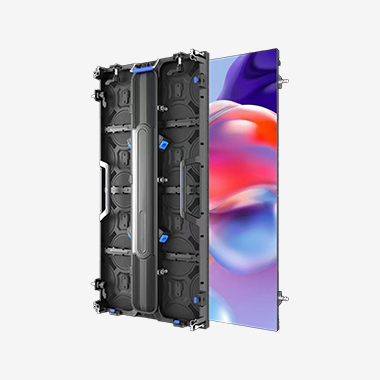
The sleek, monolithic appearance of a high-end indoor LED video wall belies a incredibly complex and meticulously engineered internal structure. The design and construction of these panels are a masterclass in integrating precision optics, advanced electronics, thermal management, and mechanical engineering to achieve a reliable, high-performance visual instrument.
1. The LED Module: The Core Canvas
The fundamental building block is the LED module, a printed circuit board (PCB) populated with a high-density array of RGB LEDs, driver ICs, and other components.
LED Packages: For indoor fixed installations, Surface-Mounted Device (SMD) technology is universally employed. The most common type is the Black Surface-Mounted Device (SMD), where the LED package is housed in a black resin. This dramatically reduces light reflection between pixels, enhancing contrast ratio by making the non-lit areas of the screen appear truly black. For the finest pitches, Chip-On-Board (COB) and Micro-LED technologies are emerging. COB packages the LED chips directly onto the PCB and then encapsulates them with a single protective phosphor layer, offering superior robustness, better heat dissipation, and improved reliability.
PCB Design: The PCB is a multi-layer, high-density interconnect (HDI) board. Its design is critical for signal integrity, power distribution, and heat dissipation. Traces must be meticulously routed to carry data and power to thousands of individual pixels without crosstalk or interference.
2. The Driver ICs: The Precision Nervous System
Located on the back of each module are the driver Integrated Circuits (ICs). These are the workhorses that receive data from the controller and precisely control the current to each individual sub-pixel (red, green, blue). Modern driver ICs for indoor displays feature:
High Gray Scale Depth: 16-bit processing or higher allows for incredibly smooth color gradients and eliminates flicker, which is crucial for camera capture and viewer comfort.
High Refresh Rates: Rates of 3840Hz or higher ensure buttery-smooth motion reproduction and eliminate scanning lines when the display is filmed.
Low Power Consumption: Designed to operate efficiently, minimizing heat generation—a critical factor for indoor environments.
3. The Cabinet: The Structural Foundation
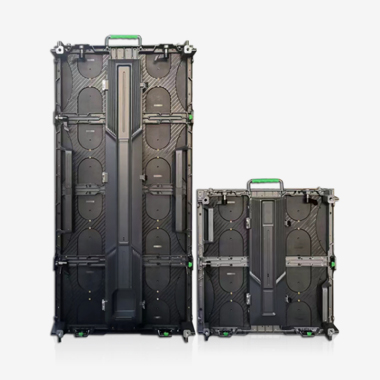
For larger installations, modules are mounted into a rigid, lightweight cabinet (or chassis). These cabinets are typically made from die-cast aluminum or precision-machined magnesium alloy, chosen for their strength, lightweight properties, and excellent thermal conductivity. Cabinets house the power supplies, receive cards (which get data from the video processor), and provide the precision mounting mechanism for aligning modules. For ultra-thin installations, "fine pitch" panels often use a magnetic mounting system without a full cabinet, allowing for a depth of just a few millimeters.
4. Thermal Management: The Silent Guardian
While indoor displays don't face direct sunlight, heat is still the primary enemy of LED lifespan and color consistency. The high density of electronics generates significant heat. However, unlike outdoor displays that may use fans, indoor fixed installations almost exclusively use passive cooling. The design relies on:
Thermal-Conductive PCBs: Using materials like metal-core PCBs (MCPCBs) or ceramics that draw heat away from the LED chips.
Cabinet as Heat Sink: The entire aluminum cabinet acts as a massive heat sink, dissipating heat through natural convection. This makes the display completely silent, a non-negotiable requirement for offices, control rooms, and studios.
5. Calibration and Color Consistency
Perhaps the most critical step in manufacturing is calibration. Due to tiny natural variations in LED bins (manufacturing batches), every single module must be individually calibrated to ensure perfect color and brightness uniformity across the entire video wall. This is done using sophisticated spectroradiometers that measure the output of each module. Correction coefficients are then calculated and stored on a memory chip on the module itself. During operation, the video processor applies these coefficients to the video signal in real-time to ensure every pixel across every cabinet displays the exact same color and luminance. This process is what creates the flawless, seamless image.
6. The Front Serviceable Design
A key feature for fixed installations is front serviceability. Engineers designed the modules to be easily removed and replaced from the front of the display without needing to access the rear. This is vital for displays mounted flush against a wall or in tight spaces, making maintenance quick and minimizing downtime.
In summary, the construction of an indoor LED panel is a harmony of miniaturization, thermal engineering, and precision calibration. Every material and component is chosen to achieve the goals of high resolution, perfect uniformity, silent operation, and unwavering reliability in a permanent installation.
The fundamental working principle of an outdoor fixed LED display is based on electroluminescence and sophisticated electronic control, but its outdoor operation introduces critical layers of complexity related to environmental management and visibility optimization.
A. Image Formation: Electroluminescence and Color Mixing
At its heart, each pixel on the display is a cluster of tiny light-emitting diodes (LEDs)—one red, one green, and one blue (RGB). LEDs are semiconductor devices that emit light when an electric current passes through them, a phenomenon called electroluminescence. The color of the light is determined by the bandgap energy of the semiconductor material.
By independently controlling the intensity of the red, green, and blue LEDs in a single pixel, the display can create a vast spectrum of colors through additive color mixing. For example, activating red and green at full intensity while blue is off creates yellow. Varying the intensity of each diode allows for the creation of millions of colors. The intensity of each LED is controlled through Pulse-Width Modulation (PWM). Instead of varying the voltage (which would change the color), PWM rapidly turns the LED on and off. The ratio of "on" time to "off" time within a very short cycle (thousands of times per second) is perceived by the human eye as a change in brightness. A longer "on" pulse results in a brighter appearance.
B. Data Flow and Control:
Content Source: A video signal is generated from a computer or media player and sent to the display's sending controller.
Signal Processing: The sending controller is a specialized computer. It takes the input signal (e.g., HDMI), scales it to the native resolution of the LED display, and processes the color and grayscale data. It then packetizes this data for the specific columns and rows of the display.
Data Transmission: This packetized data is transmitted over network cables (typically CAT5e/6 or fiber optic for long distances) to the receiving cards located inside each cabinet of the display.
Pixel Addressing: Each receiving card is responsible for a specific section of modules. It takes the data packets, interprets the instructions, and sends precise commands to the driver ICs on each module. These driver ICs are the "local managers" that execute the PWM commands for each individual LED under their control.
C. Environmental Adaptation and Management:
The "working" of an outdoor display is not just about showing an image; it's about maintaining the integrity of that image under changing environmental conditions.
Brightness Control: A critical function is Automatic Brightness Control (ABC). An ambient light sensor continuously measures the sunlight falling on the display. The control system automatically adjusts the LED's power output to ensure optimal visibility. At noon under full sun, the display will operate at 100% brightness (often 8,000+ nits). At night, it will dim significantly to conserve energy and reduce light pollution, ensuring compliance with local ordinances.
Thermal Management: Temperature sensors inside the cabinets feed data to the control system. If internal temperatures exceed a set threshold, the cooling fans or A/C units are activated. If the temperature drops too low, heaters are engaged to prevent condensation. This active climate control is vital for preventing component failure and ensuring consistent color performance.
This continuous loop of video processing, precise electronic control, and proactive environmental management ensures that the display delivers a stable, bright, and vibrant image 24 hours a day, 365 days a year.
The magic of an indoor LED video wall—transforming electrical signals into a breathtaking, seamless moving image—is governed by a sophisticated orchestration of hardware and software. Understanding its working principles reveals the engineering marvel behind the visual spectacle.
1. The Foundation: Additive Color Mixing with PWM
At the most basic level, each pixel uses the additive color model. By combining Red, Green, and Blue (RGB) light at varying intensities, millions of colors can be produced. The intensity of each diode is not controlled by varying its voltage (which would change its color); instead, it is controlled using Pulse-Width Modulation (PWM).
PWM works by switching each LED on and off at an extremely high frequency (e.g., several thousand times per second). The human eye perceives this rapid cycling as a steady level of brightness. The ratio of the "on" time to the "off" time within each cycle (the duty cycle) determines the perceived intensity. A 50% duty cycle results in 50% brightness. This digital method allows for precise, flicker-free control over the brightness of each primary color, enabling the creation of a vast palette of shades.
2. The Data Flow: From Source to Screen
The journey of a video signal is a multi-stage process:
Video Source: Content originates from a computer, media player, camera, or network stream.
Video Processor / Controller: This is the "brain" of the LED wall. It performs several critical functions:
Input Handling: Accepts various video signals (HDMI, DisplayPort, SDI, IP).
Scaling and Processing: Resizes the input source to match the native resolution of the LED wall, which is often a non-standard size.
Calibration Application: In real-time, it applies the color and brightness calibration data stored on each module to ensure absolute uniformity.
Data Distribution: It splits the processed image into sections corresponding to the cabinets and modules of the display. This data is then sent out via high-bandwidth fiber optic or network cables (e.g., HDBaseT) to the display itself.
Receiving Cards: Located in each cabinet, these cards take the data stream for their section of the wall and distribute it to the individual driver ICs on the modules.
Driver ICs: These chips are the "local managers." They receive the data for a specific group of pixels, store it in memory, and then output the precise PWM signals to the LEDs to create the image for their assigned section.
3. The Refresh Rate and Gray Scale
Two key metrics define the quality of the image:
Refresh Rate: The number of times per second the entire screen is redrawn. A high refresh rate (e.g., 3840Hz) is essential for eliminating perceptible flicker, especially when viewed directly or through cameras. A low refresh rate can cause strobing, eye strain, and horrible artifacts when filmed.
Gray Scale (or Grayscale Bit Depth): This defines the number of distinct brightness levels available for each color. A 16-bit system can produce 65,536 levels of intensity per color. This high bit depth is what enables incredibly smooth color gradients, prevents "banding" in areas like skies or shadows, and allows for precise color accuracy.
4. The Calibration System at Work
The calibration is not a one-time factory process; it is an active part of the display's operation. The calibration data (often called the "coefficient file") is loaded into the video processor. For every frame of video, the processor adjusts the output values for each pixel based on this file before sending the data to the display. If a module is replaced, a new calibration file for that module is simply uploaded to the processor, and it immediately blends seamlessly with the rest of the wall.
5. Power Management
Indoor displays are designed for efficiency. The power supplies convert AC mains power to the low-voltage DC required by the LEDs and electronics. Modern systems are highly efficient, minimizing energy loss as heat. Furthermore, displaying a mostly black image will consume significantly less power than a full white screen, as many LEDs are simply off.
In essence, the working principle is a continuous, real-time pipeline of data manipulation. A standard video signal is ingested, resized, corrected for uniformity, segmented, and distributed with extreme precision. This data is then converted into millions of precisely timed on/off pulses that orchestrate a vast array of tiny lights to create a single, flawless image.
4. Advantages and Challenges of Indoor Fixed Installation LED Display Panels
The decision to install a fixed LED video wall is significant. Weighing its profound advantages against its inherent challenges is crucial for planning a successful project.
Advantages:
Seamless, Bezel-Free Image: This is the most significant advantage over LCD video walls. The complete absence of physical barriers between modules creates a perfectly continuous canvas, essential for immersive data visualization, stunning video backdrops, and critical monitoring applications where a bezel could obscure a crucial piece of information.
Superior Visual Performance:
Brightness: High native brightness (600-1500 nits) ensures the image remains vibrant and clear even in brightly lit lobbies, arenas, or rooms with significant ambient light. It eliminates the washout common with projectors.
Contrast Ratio: LEDs can achieve true black by turning off completely, yielding a theoretically infinite contrast ratio. This provides incredible image depth, detail in shadows, and overall picture pop that LCDs, with their always-on backlights, cannot match.
Color Gamut: Capable of displaying a wider range of colors (DCI-P3, Rec.2020) with greater saturation and accuracy than most other display technologies.
High Reliability and Long Lifespan: Designed for 24/7 operation, high-quality indoor LED displays are incredibly robust. With no moving parts, filters to replace (like projectors), or lamps that burn out, they offer exceptional uptime. Lifespans of 100,000 hours are standard.
Flexibility in Shape and Size: The modular nature allows for creative freedom. Displays can be built in large, expansive formats, but also as curved walls, cylindrical columns, overhead arches, and other custom shapes to fit unique architectural spaces.
Lower Long-Term Maintenance (vs. Projection): Compared to a projector-based solution, an LED wall has no bulbs to replace, no filters to clean, and no need for realignment. It is a solid-state solution with predictable performance over time.
Viewing Angle: LED technology offers a near-180-degree viewing angle without any color shift or loss of contrast, ensuring the image looks perfect from almost anywhere in the room.
Challenges:
Higher Initial Investment: The upfront cost of a fine-pitch LED installation is typically higher than that of an equivalent-sized LCD video wall or projection system. The cost is a function of pixel density (smaller pitch = higher cost) and is driven by the expensive components and complex manufacturing involved.
Pixel Pitch and Viewing Distance Limitations: This is the most critical technical consideration. The choice of pixel pitch directly dictates the minimum optimal viewing distance. A screen with a P2.5 pitch cannot be viewed closely without seeing the individual pixels. Choosing too large a pitch for a close-viewing application ruins the immersion. The formula Minimum Viewing Distance (in meters) ≈ Pixel Pitch (in mm) x 1000 is a common rule of thumb.
Power Consumption and Heat Generation: While efficient per pixel, a large, bright video wall is a significant power load. Thermal management is crucial; although passive, the heat output must be considered in the room's HVAC design to avoid overheating the display and the environment.
Complex Installation and Calibration: A fixed installation is not a simple plug-and-play product. It requires skilled technicians for structural mounting, precise alignment of cabinets, electrical wiring, and comprehensive system calibration. This requires careful pre-installation planning and design.
Potential for Pixel Failures: While reliability is high, with millions of pixels, the occasional failure of a single LED or driver IC is a statistical probability. Most displays have redundant circuitry to keep a group of pixels running if one fails, but eventually, module replacement will be needed. Front-serviceability mitigates this challenge.
Content Requirements: To fully leverage the investment, content must be designed at the native resolution of the LED wall. Using low-resolution content can result in a blurry or pixelated image, negating the benefits of the high-resolution canvas.
In conclusion, the advantages of indoor fixed LED—unmatched image quality, seamlessness, and reliability—make it the premium choice for high-impact, mission-critical applications. The challenges, primarily around cost, viewing distance, and installation complexity, are not trivial but can be successfully managed through careful planning, expert design, and a clear understanding of the technology's requirements.
The unique combination of seamlessness, impact, and reliability has cemented the role of fixed indoor LED displays across a diverse spectrum of industries. Meanwhile, technological advancements continue to unlock new applications and redefine existing ones.
Applications:
Corporate Environments: The corporate world is a major adopter. LED walls in lobbies and reception areas serve as dynamic branding tools, welcoming visitors and showcasing company culture. In boardrooms and executive briefing centers, they transform presentations and video conferences, enabling the clear, seamless display of complex data visualizations and high-stakes collaborative sessions.
Broadcast and Media: This was one of the first industries to embrace fine-pitch LED. It is now the standard technology for virtual production stages (popularized by The Mandalorian), where real-time graphics on massive LED walls create immersive, interactive backdrops for actors. In television studios, they serve as dynamic sets for news, weather, and talk shows, allowing for instant changes of scenery and interactive graphics.
Command and Control Centers: In settings where decision-making is critical—such as network operation centers (NOCs), security hubs, military command posts, and emergency response centers—LED walls are indispensable. They provide a seamless, uninterrupted view of vast amounts of real-time data, maps, video feeds, and analytics, allowing operators to see the big picture and spot anomalies instantly.
Retail and Experience Centers: High-end retail stores, automotive showrooms, and brand experience centers use LED to create "wow" moments. They immerse customers in a brand's story, showcase products with stunning clarity on large digital shelves, and create dynamic, changeable environments that can be updated instantly to reflect new campaigns or seasons.
Sports and Entertainment Venues: Inside arenas and stadiums, giant LED scoreboards provide replays, stats, and animations. Concerts and live events use them as breathtaking stage backdrops, enhancing the performance with immersive visuals that are visible from every seat in the house.
Museums and Galleries: Cultural institutions are using LED to create interactive exhibits, display digital art, and provide dynamic information to visitors. Their color accuracy and ability to display true black make them suitable for even high-end art presentation.
Future Trends:
The March Towards Finer Pitches and Micro-LED: The pursuit of smaller pixel pitches will continue, driven by Micro-LED technology. Micro-LED involves transferring microscopic, self-emissive LEDs onto a substrate, enabling pitches below P0.5. This will allow for truly "retina" displays at any size, blurring the line between consumer televisions and professional video walls and enabling new applications in demanding, close-viewing scenarios.
Integration with AI and IoT: Displays will become intelligent nodes in smart buildings. Artificial Intelligence could be used for predictive maintenance, analyzing performance data to flag potential failures before they happen. AI could also optimize content delivery based on audience demographics detected by cameras (anonymously) or adjust brightness with even greater precision based on real-time occupancy and ambient light data.
Transparent and Flexible LED: The development of transparent LED films and flexible substrates will continue. This will allow for innovative applications like interactive retail windows, holographic-like displays, and seamlessly integrated displays in curved architectural elements without the need for a heavy cabinet structure.
Standardization and Simplified Workflows: As the technology becomes more common, industry-wide standards for calibration, control, and content management will emerge, simplifying installation and operation. Plug-and-play solutions will become more robust, making the technology accessible to a wider range of users.
Improved Sustainability: The focus on reducing power consumption will intensify. This will be achieved through more efficient driver ICs, lower-voltage LED chips, and better power supply designs. The use of recyclable materials in cabinets and modules will also become a standard selling point.
The Convergence of Virtual and Physical (XR): Fixed LED walls will be the cornerstone of the metaverse and extended reality (XR) in professional settings. They will act as portals to digital twins, enabling architects, engineers, and planners to visualize and interact with 3D models at 1:1 scale in a collaborative environment.
The future of the indoor fixed LED display is one of deeper integration, higher intelligence, and even more seamless visual experiences. It will move from being a simple output device to an intelligent, interactive canvas that is woven into the very fabric of how we work, communicate, and experience the world.
Conclusion
The indoor fixed installation LED display panel has evolved from a niche technology for stadiums into the undisputed premium solution for large-format visual communication. Its journey is a testament to how relentless innovation in miniaturization, materials science, and electronics can overcome initial limitations of cost and resolution to create a transformative tool.
Its value proposition is clear and powerful. By delivering a seamless, bezel-free canvas with unmatched brightness, contrast, and color performance, it offers a level of visual impact and immersion that alternative technologies cannot achieve. This makes it indispensable for applications where clarity, reliability, and making a strong impression are non-negotiable. From the critical decision-making in a control room to the creative magic on a film set, the LED wall provides the visual foundation for modern enterprise and entertainment.
The challenges associated with this technology—primarily the initial investment and the precise requirements for viewing distance and installation—are real. However, they are increasingly being framed not as barriers, but as considerations for proper planning and design. As prices continue to fall for finer pitches and the technology becomes more accessible, the return on investment becomes ever more compelling, especially when measured against the superior uptime, lower long-term maintenance, and unparalleled visual results.
Looking forward, the trajectory is set for even deeper integration into our professional and personal environments. The emergence of Micro-LED promises to dissolve the last remaining barriers of resolution, while trends in AI, IoT, and XR will transform the display from a passive screen into an intelligent, interactive surface. It will cease to be just a thing we look at and become a window we look through into digital worlds and datasets.
In conclusion, the indoor fixed installation LED display is more than just a product; it is a platform for innovation. It has redefined the possibilities of architectural design, corporate communication, broadcast media, and data visualization. It stands as a powerful symbol of the digital age—a vibrant, dynamic, and intelligent canvas that empowers us to see, share, and experience information in its most compelling form. As the technology continues to advance, its role as a central nervous system for visual information will only become more profound.


Copyright © 2026 Shenzhen Cogo Technology Co.,Ltd.
All Rights Reserved

 Previous article