




 Chat Now
Outdoor fixed installation LED display panels are large-scale, permanent electronic visual communication systems designed to withstand the harsh elements of the external environment while delivering vibrant, high-impact content to a broad audience. Unlike their mobile or temporary counterparts, these displays are engineered for longevity, durability, and continuous operation, becoming integral architectural and commercial features of urban landscapes, sports venues, transportation hubs, and retail centers. They represent the pinnacle of outdoor advertising, public information dissemination, and entertainment, capable of functioning reliably in rain, snow, intense sunlight, and temperature extremes.
The core purpose of an outdoor fixed LED display is to command attention. In the competitive visual arena of a city street or a highway, the display must be bright enough to be visible in direct sunlight and robust enough to operate 24/7 with minimal downtime. Their evolution has been driven by advancements in LED technology, structural engineering, and control software, transforming them from simple monochromatic message boards into gigantic, full-color high-definition digital billboards and spectaculars.
The market for these displays is vast and growing, fueled by the advertising industry's relentless pursuit of higher engagement rates. Advertisers value the ability to dynamically change content remotely, schedule campaigns for specific times of day, and even display real-time information like news, weather, or social media feeds. Beyond advertising, they serve critical functions in public spaces by displaying emergency alerts, transportation schedules, and community announcements, enhancing public safety and information access.
A key differentiator from indoor displays is the concept of "outdoor-rated" or "weatherproof" integrity. An outdoor fixed installation is not merely an indoor panel placed outside; it is a complete system comprising the LED modules, a structural cabinet frame, advanced environmental controls (cooling and heating systems), power supplies, and a sophisticated networking and control infrastructure, all designed to achieve an IP65 or higher protection rating. This rating ensures the unit is completely protected against dust ingress and low-pressure water jets from any direction.
The scale of these installations can be monumental, often covering entire sides of buildings (known as digital building wraps) or standing as massive free-standing structures along highways. The resolution, measured by pixel pitch (the distance between the centers of two adjacent pixels), has dramatically decreased over the years. While once only viewable from great distances, modern outdoor displays now feature fine pixel pitches that allow for clear, sharp images even to viewers in close proximity.
In summary, outdoor fixed installation LED displays are powerful tools of modern communication. They are complex systems that blend advanced electronics with heavy-duty mechanical engineering to create resilient and captivating visual landmarks. They have redefined outdoor media, offering dynamic, measurable, and highly visible digital real estate that is essential for brands, governments, and event venues looking to make a significant impact on their audience.
The design and construction of an outdoor fixed LED display is a feat of engineering that prioritizes durability, reliability, and performance under extreme conditions. Every component, from the smallest diode to the largest structural beam, is selected and designed to create a cohesive system that can operate continuously for years.
A. Core Components:
LED Modules: The building blocks of the display. An outdoor module is a densely populated PCB containing:
LED Lamps (Pixels): High-brightness SMD (Surface-Mount Device) LEDs are the standard. These LEDs are encapsulated with a special epoxy resin to protect them from UV radiation, moisture, and physical impact. A common configuration is the -in-1 package, which houses red, green, and blue chips in a single compact housing for better consistency and protection.
Driver ICs: These chips are mounted on the back of the PCB and control the current to each individual LED, determining their brightness and grayscale.
PCB Substrate: Uses high-quality, weather-resistant FR-4 material with a conformal coating to prevent corrosion of the circuitry from humidity.
Mask and Seal: A black face mask surrounds each LED to improve contrast by absorbing ambient light. A critical step is potting the entire module with silicone or epoxy resin to create a waterproof seal, protecting the sensitive components from moisture.
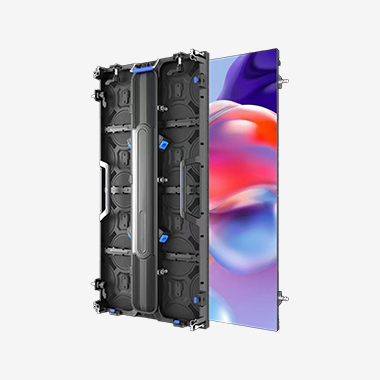
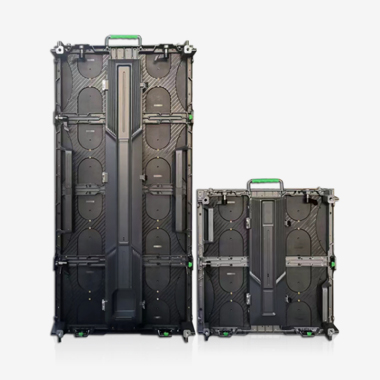
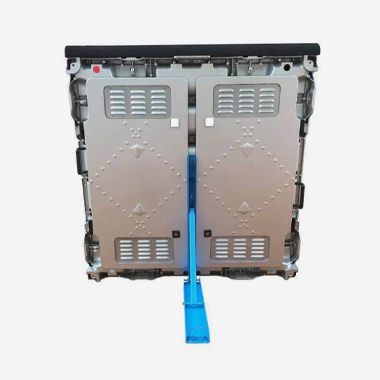
Cabinet Frame: Modules are mounted into heavy-duty aluminum alloy or sometimes steel cabinets. These cabinets are the structural backbone of the display.
IP Rating: Each cabinet is engineered to be independently IP65 (or higher) rated. This involves using silicone gaskets on all seams and robust, corrosion-resistant fasteners.
Thermal Management: This is arguably the most crucial aspect. Outdoor cabinets integrate advanced cooling systems, typically using:
Forced Air Cooling: High-volume, low-speed fans intake air from the bottom and exhaust hot air from the top of the cabinet. Air filters are essential to prevent dust ingress.
Air Conditioning (A/C): For larger, high-brightness displays, especially in very hot climates, integrated split A/C units are used to actively cool the interior of the cabinets.
Heating Systems: Thermostatically controlled heaters are installed to prevent condensation in cold or humid environments, which is critical to prevent electrical short circuits and corrosion.
Structural Integrity: Cabinets are designed to withstand high wind loads (as per local building codes), seismic activity, and the weight of potential snow accumulation.
Power Supply Units (PSUs): Industrial-grade, high-efficiency switching PSUs are used. They are designed to operate on a wide input voltage range and are protected against power surges, lightning strikes, and overloads. Redundant PSUs are often used in critical installations for fail-safe operation.
Receiving Cards and Controller: Each cabinet contains receiving cards that distribute the data signal from a master sending controller to the driver ICs on the modules. The sending controller, often located in a nearby control room, is the brain that processes the video signal and maps it to the display's resolution.
B. Mechanical Structure and Installation:
The cabinets are mounted onto a primary support structure, which is typically a custom-designed steel framework anchored to a building's facade or a dedicated foundation. The design of this structure requires professional engineering analysis to account for dead loads (weight of the display), live loads (wind, snow, maintenance personnel), and dynamic loads (vibration). Accessibility for maintenance is a key design consideration, often incorporating catwalks, ladders, and rear service access.
The entire construction process is a meticulous operation requiring coordination between electricians, structural engineers, riggers, and LED technicians. The result is a robust, weatherproof, and thermally stable electronic system built to provide unwavering performance through seasons and years.
The fundamental working principle of an outdoor fixed LED display is based on electroluminescence and sophisticated electronic control, but its outdoor operation introduces critical layers of complexity related to environmental management and visibility optimization.
A. Image Formation: Electroluminescence and Color Mixing
At its heart, each pixel on the display is a cluster of tiny light-emitting diodes (LEDs)—one red, one green, and one blue (RGB). LEDs are semiconductor devices that emit light when an electric current passes through them, a phenomenon called electroluminescence. The color of the light is determined by the bandgap energy of the semiconductor material.
By independently controlling the intensity of the red, green, and blue LEDs in a single pixel, the display can create a vast spectrum of colors through additive color mixing. For example, activating red and green at full intensity while blue is off creates yellow. Varying the intensity of each diode allows for the creation of millions of colors. The intensity of each LED is controlled through Pulse-Width Modulation (PWM). Instead of varying the voltage (which would change the color), PWM rapidly turns the LED on and off. The ratio of "on" time to "off" time within a very short cycle (thousands of times per second) is perceived by the human eye as a change in brightness. A longer "on" pulse results in a brighter appearance.
B. Data Flow and Control:
Content Source: A video signal is generated from a computer or media player and sent to the display's sending controller.
Signal Processing: The sending controller is a specialized computer. It takes the input signal (e.g., HDMI), scales it to the native resolution of the LED display, and processes the color and grayscale data. It then packetizes this data for the specific columns and rows of the display.
Data Transmission: This packetized data is transmitted over network cables (typically CAT5e/6 or fiber optic for long distances) to the receiving cards located inside each cabinet of the display.
Pixel Addressing: Each receiving card is responsible for a specific section of modules. It takes the data packets, interprets the instructions, and sends precise commands to the driver ICs on each module. These driver ICs are the "local managers" that execute the PWM commands for each individual LED under their control.
C. Environmental Adaptation and Management:
The "working" of an outdoor display is not just about showing an image; it's about maintaining the integrity of that image under changing environmental conditions.
Brightness Control: A critical function is Automatic Brightness Control (ABC). An ambient light sensor continuously measures the sunlight falling on the display. The control system automatically adjusts the LED's power output to ensure optimal visibility. At noon under full sun, the display will operate at 100% brightness (often 8,000+ nits). At night, it will dim significantly to conserve energy and reduce light pollution, ensuring compliance with local ordinances.
Thermal Management: Temperature sensors inside the cabinets feed data to the control system. If internal temperatures exceed a set threshold, the cooling fans or A/C units are activated. If the temperature drops too low, heaters are engaged to prevent condensation. This active climate control is vital for preventing component failure and ensuring consistent color performance.
This continuous loop of video processing, precise electronic control, and proactive environmental management ensures that the display delivers a stable, bright, and vibrant image 24 hours a day, 365 days a year.
Outdoor fixed LED displays offer a powerful medium for communication, but their deployment comes with a distinct set of advantages and significant challenges that must be meticulously managed.
Advantages:
Unmatched Visibility and Impact: Their high brightness (6,000 to 10,000+ nits) ensures content is vibrant and readable even in direct sunlight, a feat impossible for other technologies like projection. Their large scale commands attention and creates a "wow" factor that static billboards cannot match.
Dynamic and Flexible Content: The ability to change content instantly and remotely is a game-changer. Advertisers can run dayparting (showing coffee ads in the morning and restaurant ads in the evening), launch timely promotions, display live social media feeds, or broadcast real-time news and events. This flexibility maximizes the value of the advertising space.
High Reliability and Long Lifespan: Built to industrial standards with robust environmental protection, a well-designed and maintained outdoor LED display can operate reliably for over 100,000 hours. Their solid-state construction (no fragile filaments or glass) makes them highly resistant to vibration and impact.
Superior Return on Investment (ROI): While the initial investment is high, the dynamic nature allows a single digital billboard to host multiple advertisers, generating revenue far exceeding that of a static billboard. The elimination of printing and installation costs for physical vinyl also provides significant long-term savings and operational efficiency.
Enhanced Measurement and Targeting: Digital displays can be integrated with data sources to measure audience reach (using anonymized data) and even interact with mobile devices. This allows for more targeted and measurable advertising campaigns compared to traditional static outdoor media.
Challenges:
High Initial and Operational Costs: The upfront cost is substantial, encompassing the display hardware, the custom structural support, professional installation, and permitting. Operational costs, primarily electricity for powering the LEDs and the cooling systems, are also significant.
Complex Maintenance and Repair: While reliable, components can fail. Replacing a single module on a large display mounted high on a building requires specialized skilled technicians and expensive equipment like boom lifts. Downtime, even for a single module, can be noticeable and costly.
Environmental and Regulatory Hurdles: These displays must comply with strict local regulations concerning size, placement, brightness (especially at night to prevent light pollution), and content. The permitting process can be lengthy and complex. There can also be public opposition on aesthetic or environmental grounds.
Weather-Induced Stress: Despite their ruggedness, they are constantly battling the elements. UV radiation can degrade materials over time, extreme temperature fluctuations cause expansion and contraction, and storms pose a constant threat of physical damage. Lightning protection is an absolute necessity.
Content Management Demands: The effectiveness of the display is entirely dependent on the quality and management of its content. Poorly designed or stale content will fail to engage audiences. This requires either an in-house team or a service contract with a content provider, adding to the ongoing operational expense.
Successfully deploying an outdoor fixed LED display requires carefully weighing these powerful advantages against the substantial challenges, ensuring that the project is technically sound, financially viable, and compliant with all regulations.
The application of outdoor fixed LED displays has expanded far beyond simple advertising, permeating various sectors that require robust, large-scale visual communication. Concurrently, technological trends are pushing these displays towards greater integration, intelligence, and sustainability.
Applications:
Digital Billboards and Spectaculars: The most common application. Located along highways, in Times Square-like districts, and on major urban buildings, they form the backbone of digital out-of-home (DOOH) advertising networks, offering high-value, high-traffic exposure for major brands.
Sports Venues and Stadiums: No modern arena is complete without giant LED scoreboards, ribbon boards encircling the stands, and perimeter advertising. They enhance the fan experience by showing instant replays, statistics, player close-ups, and interactive content, while also generating immense advertising revenue.
Transportation Hubs and Public Information: Airports, train stations, and bus terminals use them for displaying real-time arrival/departure schedules, wayfinding maps, safety announcements, and news. Their reliability and clarity are essential for managing the flow of people and information.
Retail and Corporate Branding: Shopping malls use large outdoor displays to promote retailers and sales events. Corporations install them on their headquarters' exteriors for brand reinforcement, to share company news, or to celebrate achievements, turning the building itself into a statement.
Public Spaces and Live Events: City centers use them for broadcasting public events, festivals, and official announcements. They serve as focal points for community gathering. They are also used as permanent installations at concert venues and fairgrounds.
Future Trends:
Finer Pixel Pitches and Higher Resolution: The relentless march towards smaller LEDs will continue. Fine-pitch (Pitch) and even smaller pixel pitches will become standard for outdoor applications, enabling stunningly detailed images and closer viewing distances, further blurring the line between outdoor and indoor display quality.
Integration of AI and IoT: Artificial Intelligence will revolutionize content delivery and operation. AI algorithms will:
Optimize Content: Analyze real-time traffic, weather, and demographic data to serve the most relevant ad content (e.g., showing umbrellas ads when it rains).
Predictive Maintenance: Monitor component performance and environmental data to predict failures before they happen, scheduling maintenance proactively to avoid downtime.
Audience Measurement: Use anonymized, non-facial recognition video analytics to gauge audience size, dwell time, and demographic breakdown for precise campaign measurement.
Transparent and Flexible LED Technology: The adoption of transparent LED panels for building facades will grow, allowing for digital displays that don't completely obscure the architecture behind them. Flexible LED substrates will enable curved and unconventional shapes, offering architects new design possibilities.
Sustainability Focus: Future developments will prioritize energy efficiency. This includes more efficient LED chips, driver ICs, and PSUs that provide more light output per watt. The use of solar panels to offset energy consumption and smart systems that drastically reduce power usage during low-traffic hours will become more prevalent.
Standardized Interactivity: While currently niche, interactivity via mobile phone sync (QR codes, NFC) will become more standardized. Future displays might directly interact with autonomous vehicles or smart city infrastructure, displaying personalized information or traffic alerts.
The future of outdoor fixed LED displays is one of smarter, sharper, and more seamless integration into the urban fabric, evolving from passive billboards into interactive, data-driven nodes within the smart cities of tomorrow.
Conclusion
Outdoor fixed installation LED display panels have firmly established themselves as an indispensable and enduring medium in the modern communication landscape. They have successfully digitized the world's most valuable advertising real estate, transforming static cityscapes into dynamic, information-rich environments. Their journey from simple, low-resolution monochromatic boards to the gigantic, high-definition full-color spectaculars of today is a testament to incredible technological advancement in semiconductor, material, and thermal engineering.
The success of this technology hinges on its unique ability to solve the core challenge of outdoor visual communication: delivering brilliant, attention-commanding content in the most demanding environmental conditions. This is achieved not by a single component, but by a perfectly engineered system that harmonizes bright LEDs, rugged weatherproof cabinets, active climate control, and intelligent software. The result is a platform of unparalleled reliability, flexibility, and impact.
While the challenges of cost, maintenance, and energy consumption are real, the value proposition they offer—dynamic content, high engagement, and superior ROI—ensures their continued dominance in the outdoor advertising and public information sectors. The ongoing trends point towards a future where these displays are not merely billboards, but intelligent, interactive, and sustainable architectural elements.
They will become integrated sensors within smart cities, responding to their environment and audience in real-time. They will become sharper and more seamless, offering cinematic experiences in public spaces. And they will become more efficient, addressing environmental concerns through technological innovation.
In conclusion, the outdoor fixed installation LED display is far more than a screen; it is a permanent, powerful, and evolving landmark. It has redefined how brands connect with consumers and how cities communicate with citizens. As technology continues to advance, these displays will only become more embedded in our urban experience, continuing to illuminate, inform, and captivate audiences for decades to come, solidifying their status as a cornerstone of digital-out-of-home media.


Copyright © 2026 Shenzhen Cogo Technology Co.,Ltd.
All Rights Reserved

 Previous article