




 Chat Now
Indoor LED event signage rental provides temporary, high-quality LED display systems for indoor events like conferences, trade shows, and weddings, catering to users who avoid permanent ownership costs. It includes diverse display types: modular video walls (customizable via panel assembly), all-in-one floor stands (compact with built-in setups), countertop screens (small for booths), and curved/flexible LEDs (for immersive backdrops). Unlike outdoor models, indoor versions have lower brightness (500–1500 nits) and smaller pixel pitches (0.9mm–4mm) for close-view clarity.
Rental services offer end-to-end support: consultation, delivery, setup/teardown, on-site tech help, and retrieval—ideal for organizers lacking expertise. Market growth stems from experience-driven events (attendees want dynamic content), cost-effectiveness (renting a 100-inch video wall for 3–5 days costs \(500–\)5,000 vs. \(15k–\)30k to buy), and tech advances (lightweight, user-friendly gear). It serves industries: corporates for meetings/launches, hospitality for weddings, and education for seminars. Seasonal demand fluctuations and competition drive providers to add features like touchscreens or content support. Overall, it’s a flexible, growing solution for temporary indoor visual needs.
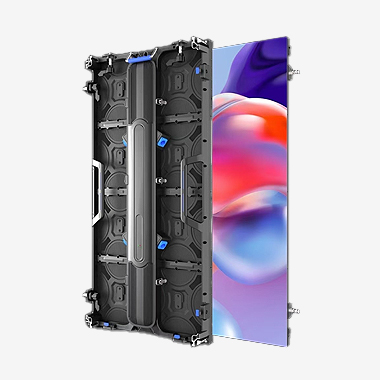
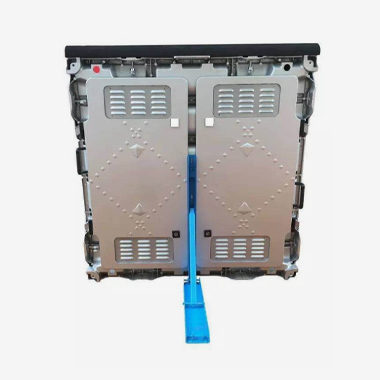
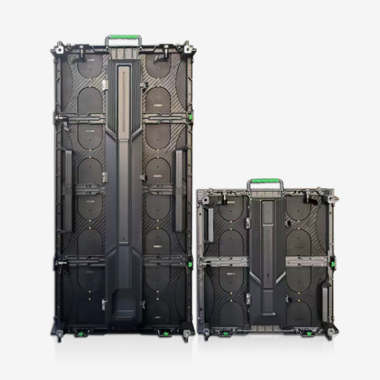
Design and construction focus on portability, durability, and versatility. Modularity is key: standard 500x500mm/500x1000mm LED panels (5–10kg each) assemble into custom video walls, with pixel pitches (1.2mm for high-res, 3mm for cost-saving) matching client needs. All-in-one displays (32–85 inches) have foldable stands, fitting into rolling cases for transport. Flexible/curved models use ultra-thin (<5mm) bendable panels with flexible circuit boards for unique shapes.
Lightweight materials (aluminum alloy frames, plastic back covers) reduce transport costs. Rugged foam-lined cases protect panels, while all-in-one units ship in rolling storage cases. Setup is simplified via magnetic/quick-lock panel connections, plug-and-play wiring (USB-C/Ethernet or wireless), and pre-calibrated panels (no on-site color/brightness tweaks).
Components include high-quality SMD RGB LEDs (encapsulated in scratch-resistant epoxy), driver ICs (e.g., MBI5168 for flicker-free PWM), and user-friendly control systems (NovaLCT software, mobile app support). Power supplies (100–240V) have safety protections, and enclosures (IP30/IP40) use aluminum/plastic with vents. Rigorous testing (drop, vibration, heat, setup speed) ensures durability for repeated use.
It operates via additive color mixing, digital signal processing, and modular synchronization. Additive mixing uses RGB LEDs per pixel: varying intensities create millions of colors (red+green=yellow, all three=white). Driver ICs (8–12-bit resolution) control current for color accuracy, critical for brand consistency. Indoor brightness (500–1500 nits) suits indoor lighting, with ambient sensors adjusting levels to avoid eye strain.
Digital signal processing starts with content input (laptop/media player, prepped in MP4/JPEG or real-time via HDMI/Wi-Fi). The sending card processes content into pixel data, sent to receiver cards in each panel. These distribute data to LEDs, with PWM (1000Hz+) ensuring flicker-free visuals. Modular synchronization uses daisy-chained receiver cards or wireless tech to align panels, preventing gaps/ghosting. Refresh rates (60Hz+) enable smooth videos. This streamlined process ensures quick setup and reliable performance for temporary events.
Advantages include enhanced engagement: dynamic content (videos, interactivity) draws 40% more foot traffic than static displays, with touchscreens letting attendees browse demos. Flexibility allows real-time content updates (e.g., switching promo videos) for multi-day events, and easy setup (1–2 people assemble a 2x2 wall in 30 mins) cuts labor costs. Brand consistency is ensured via accurate color/brightness, and portability simplifies transport.
Challenges involve upfront rental costs (\(500–\)5k per event) and potential recurring fees. Power/connectivity issues (venue outlet limits, spotty Wi-Fi) disrupt use. Transport risks damage (repairs are costly mid-event), and content prep demands time/resources—poor content wastes signage potential. Seasonal shortages may occur during peak times, and technical glitches (e.g., driver IC failures) need on-site fixes. Balancing these factors helps users maximize rental value.
Key applications: booth backdrops (video walls display brand videos), product demos (43–65-inch screens show details, touchscreens enable self-guided browsing), lead generation (QR codes on screens capture attendee info), and event info (large displays in lobbies show schedules). It serves trade shows (exhibitor booths), conferences (stage backdrops), weddings (custom photo displays), and corporate meetings (data presentations).
Future trends: AI personalization (tailoring content via attendee data), 3D/immersive displays (holographic-like visuals for product showcases), sustainability (recycled materials, solar-powered units cutting 30% energy use), and tech integration (connecting to VR or live streams—e.g., streaming booth activities to remote attendees). These innovations will boost engagement, align with eco-goals, and expand signage utility beyond in-person events.
Conclusion
Indoor LED event signage rental transforms indoor events by delivering dynamic, temporary visual solutions. Its core strengths—flexible display types, end-to-end services, cost-effectiveness, and adaptability across industries—address the needs of organizers seeking engaging content without ownership burdens. While challenges like rental costs, transport risks, and content prep exist, they are manageable with proper planning.
Future trends (AI, 3D, sustainability) will enhance its value, making it more immersive and eco-friendly. As events grow more experience-focused, this rental service will remain critical, bridging tech and marketing to help users attract attendees, maintain brand consistency, and maximize event ROI. It’s not just a display tool but a strategic asset for modern indoor events.


Copyright © 2026 Shenzhen Cogo Technology Co.,Ltd.
All Rights Reserved

 Previous article