




 Chat Now
In the dynamic and competitive landscape of modern retail, indoor LED poster display panels have emerged as a revolutionary tool for shops, transforming the way businesses communicate with customers and promote their products and services. These panels combine the traditional concept of posters with the advanced technology of light - emitting diodes (LEDs), offering a dynamic, eye - catching, and highly customizable alternative to static printed posters.
The rise of indoor LED poster display panels can be attributed to several key factors. Firstly, the rapid advancement of LED technology has made it possible to produce high - quality, energy - efficient, and cost - effective display solutions. LEDs offer superior brightness, color accuracy, and longevity compared to traditional lighting sources, making them ideal for creating vivid and engaging visual content. As the cost of LED components has decreased over the years, the affordability of LED poster display panels has increased, making them accessible to a wider range of shops, from small local boutiques to large - scale retail chains.
Secondly, the changing consumer behavior and expectations have also driven the adoption of these panels. In today's digital age, consumers are constantly exposed to a flood of visual information, and they have become more accustomed to dynamic and interactive displays. Static printed posters, while still effective in some cases, may no longer be sufficient to capture the attention of customers in a busy retail environment. Indoor LED poster display panels, with their ability to showcase moving images, videos, and animations, provide a more engaging and immersive experience that can draw customers in and encourage them to explore the products on offer.
Another important factor is the increasing demand for flexibility and adaptability in retail marketing. With indoor LED poster display panels, shop owners can easily update the display content in real - time, allowing for quick and targeted promotions. Whether it's highlighting new arrivals, promoting special offers, or showcasing seasonal products, these panels enable businesses to respond promptly to changing market trends and customer preferences. This flexibility not only enhances the effectiveness of marketing campaigns but also helps shops stay competitive in a constantly evolving retail landscape.
However, the implementation of indoor LED poster display panels in shops also presents some challenges. The initial investment required to purchase and install these panels can be a significant barrier for small - scale businesses with limited budgets. Additionally, ensuring the proper maintenance and calibration of the panels to maintain optimal visual quality over time requires technical expertise and resources. Moreover, creating high - quality, engaging content that stands out in a crowded retail environment can be a daunting task, as shop owners need to balance creativity with the need to convey clear and concise marketing messages.
The design and construction of indoor LED poster display panels are carefully engineered to meet the specific requirements of shop environments, combining functionality, aesthetics, and durability.
LED Module Design
The LED module is the core component of an indoor LED poster display panel, responsible for generating the light and visual content. High - performance LEDs are selected to ensure excellent brightness, color accuracy, and a wide viewing angle, allowing customers to clearly see the display from various positions within the shop. For indoor applications, LEDs with a viewing angle of at least 140° are commonly used to ensure that the content is visible even from the sides of the panel.
In terms of color reproduction, LEDs with high color - rendering indices (CRIs) are preferred. A high CRI, typically above 90, ensures that the colors of products, images, and text displayed on the panel are accurately represented, making them more appealing and realistic to customers. For example, in a clothing store, a high - CRI LED poster display can accurately showcase the true colors of garments, helping customers make more informed purchasing decisions.
The layout of LEDs within the module is optimized to achieve uniform light distribution across the entire display surface. In full - color LED poster displays, red, green, and blue (RGB) LEDs are arranged in a specific pattern to create a wide range of colors through additive color mixing. The pixel pitch, which is the distance between adjacent LEDs, is determined based on the intended viewing distance and the size of the panel. For indoor LED posters that are typically viewed from relatively close distances in shops, pixel pitches ranging from 2mm to 5mm are commonly used to ensure sharp and detailed images.
The advent of mini - LED and micro - LED technologies is also starting to impact the design of LED modules for poster displays. Mini - LEDs, with their smaller size, enable higher pixel densities, resulting in even sharper and more detailed visuals. Micro - LEDs, although still in the early stages of commercialization, offer the potential for even better performance, including higher contrast ratios, faster response times, and lower power consumption. These advancements are expected to further enhance the visual quality of indoor LED poster display panels in the future.
Panel Structure and Frame
The panel structure of indoor LED poster display panels is designed to be sleek, lightweight, and unobtrusive, blending seamlessly with the interior design of the shop. Slim - profile frames made of materials such as aluminum or lightweight plastic composites are commonly used. Aluminum frames are popular due to their high strength - to - weight ratio, corrosion resistance, and modern aesthetic appeal, which can add a touch of elegance to the shop's decor.
The front of the panel is protected by a high - quality, optically clear cover. This cover is usually made of materials like tempered glass or acrylic. Tempered glass offers excellent scratch resistance, high light transmission, and can withstand significant impacts, making it suitable for protecting the LEDs from accidental damage in a busy shop environment. Acrylic, on the other hand, is lighter and more flexible, and it can be easily shaped or molded into different designs, providing more options for customizing the appearance of the panel. Some panels may also feature anti - glare coatings on the cover to reduce reflections from overhead lighting or natural light sources, ensuring optimal visibility of the display content.
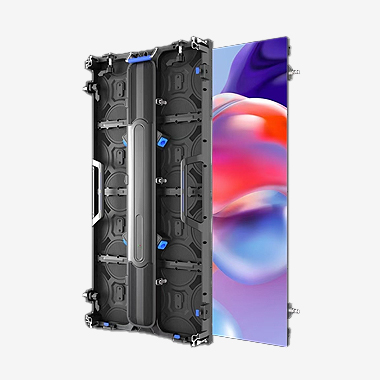
The back of the panel houses the electrical components and control systems. These components are carefully arranged to ensure efficient heat dissipation, as excessive heat can affect the performance and lifespan of the LEDs. Heat - sink materials with good thermal conductivity, such as aluminum fins or copper heat pipes, are often used to dissipate heat effectively. In some cases, passive cooling methods may be sufficient, while for high - power panels, active cooling systems like fans may be incorporated to maintain the optimal operating temperature.
Electrical and Control Systems
The electrical system of indoor LED poster display panels is designed to provide a stable and reliable power supply to the LEDs. High - efficiency power supplies are used to convert the incoming electrical power from the shop's electrical grid into the appropriate voltage and current for the LEDs, minimizing energy loss during the conversion process. These power supplies are equipped with built - in protection mechanisms against overvoltage, overcurrent, and short - circuits to safeguard the panel and connected devices from electrical failures.
The control system is responsible for managing the display content and ensuring its smooth operation. Control cards receive digital image and video data from external sources, such as computers, media players, or content - management systems. These control cards decode the incoming data, extracting relevant information such as pixel color values, frame rates, and synchronization signals. They then convert this decoded data into a series of electrical signals that control the brightness, color, and timing of each LED in the panel.
Many indoor LED poster display panels come with user - friendly control interfaces, allowing shop staff to easily manage and update the display content without the need for extensive technical knowledge. Some panels support wireless connectivity options, such as Wi - Fi or Bluetooth, enabling remote control and monitoring of the display from a central location. This is particularly useful for shops with multiple locations or for those that want to update the content of all panels simultaneously. Additionally, advanced control systems may offer features such as content scheduling, which allows shop owners to set specific times for different advertisements or promotions to be displayed, and multi - source input switching, enabling seamless transitions between different types of content.
The working principles of indoor LED poster display panels are based on the fundamental properties of LEDs and digital signal processing, enabling the creation of vibrant and dynamic visual content.
LED Emission
At the heart of every LED poster display panel are light - emitting diodes (LEDs), which are semiconductor devices that emit light when an electric current passes through them. The operation of an LED is based on the principle of electroluminescence. In an LED, there are two types of semiconductor materials: an n - type semiconductor, which has an excess of electrons, and a p - type semiconductor, which has an excess of holes (absence of electrons). When a voltage is applied across the LED, with the positive terminal connected to the p - type and the negative terminal to the n - type, electrons from the n - type material are drawn towards the p - type material. As the electrons cross the junction between the two materials, they recombine with the holes in the p - type material. This recombination process releases energy in the form of photons, which is perceived as light.
For full - color LED poster displays, red, green, and blue LEDs are used as the primary colors. By varying the intensity of each of these primary colors, a vast array of colors can be created through additive color mixing. In each pixel of the display panel, multiple RGB LEDs work together. The control system precisely adjusts the current flowing through each of the red, green, and blue LEDs to control their brightness. For example, to display the color yellow, which is a combination of red and green in the additive color model, the control system increases the current flowing through the red and green LEDs while keeping the blue LED at a low or off state. By carefully controlling the intensity of each primary color LED, the panel can accurately reproduce a wide spectrum of colors, enabling the display of high - quality images, videos, and text.
Digital Signal Processing
The display panel receives digital image and video data from various sources, such as a computer running graphic design software, a media server storing pre - recorded advertisements, or a live - streaming device. This data is typically in a digital format, such as a video file in MP4, MOV, or AVI format, or a digital image file in JPEG, PNG, or BMP format.
The control system of the display panel first decodes the incoming digital data. The decoding process involves extracting relevant information from the data stream, such as pixel color values, frame rates, and synchronization signals. Pixel color values represent the color information for each individual pixel in the image or video, while the frame rate indicates the number of frames displayed per second, determining the smoothness of the video playback. Synchronization signals are crucial for ensuring that the different components of the display panel, such as the LED modules and the control cards, work in harmony.
Once the data is decoded, the control cards convert the extracted information into a series of electrical signals that can be understood by the LED drivers in the individual modules. These electrical signals are transmitted to the LED modules at a very high frequency, usually several hundred times per second. The signals control the precise timing of when each LED should turn on, off, and at what intensity. By rapidly switching the LEDs on and off in this manner, the display creates the illusion of continuous and smooth visual content. For example, in a video with a frame rate of 30 frames per second, each LED in the panel needs to be controlled 30 times per second to display the video correctly.
Pulse - Width Modulation (PWM)
Pulse - width modulation (PWM) is a key technique used in indoor LED poster display panels to achieve precise brightness control. PWM works by rapidly turning the LEDs on and off at a high frequency. The duty cycle of the PWM signal, which is the proportion of time the LED is on within a given period, determines the average brightness of the LED.
For instance, if the PWM signal has a duty cycle of 30%, the LED is on for 30% of the time and off for 70% of the time, resulting in an average brightness that is 30% of its maximum. By precisely adjusting the duty cycle for each LED in the pixel, the display can achieve fine - grained control over the brightness and color. This is particularly important in indoor shop environments, where the ambient light conditions can vary throughout the day. In well - lit areas during the day, the panels may need to operate at a higher brightness level to ensure visibility, while in dimly lit areas in the evening or at night, the brightness can be reduced to save energy and create a more comfortable viewing experience. PWM also helps to reduce power consumption by operating the LEDs at the minimum necessary brightness levels to achieve the desired visual effect, contributing to the overall energy - efficiency of the display panel.
Challenges
Competition for Attention
In a busy retail environment, shops are constantly competing for the attention of customers. With the increasing popularity of indoor LED poster display panels, many shops are using these displays to promote their products, leading to a crowded visual landscape. To stand out from the competition, shops need to create unique and innovative content that can capture the customer's gaze amidst a sea of digital advertisements. This requires a deep understanding of the target audience's preferences, shopping habits, and the latest marketing trends.
Moreover, as more shops adopt LED poster displays, the risk of content homogenization increases. Similar product promotions, design styles, and messaging can make it difficult for individual stores to differentiate themselves. For example, during a seasonal sale event, multiple fashion shops in a shopping mall might display similar - looking discount posters on their LED panels, resulting in a lack of distinctiveness. Shops must invest in creative content strategies, such as leveraging user - generated content, collaborating with local artists, or incorporating interactive elements, to break through the clutter and engage customers effectively.
To overcome this challenge, some forward - thinking shops are turning to data - driven design. By analyzing customer demographics, purchase history, and in - store behavior, they can tailor the content of their LED poster displays to specific customer segments. For instance, a sports equipment store might use data analytics to identify that a significant portion of its customers are young adults interested in running. The store can then create LED poster content featuring the latest running shoes, training programs, and local running events, specifically targeting this demographic.
Another approach is to use dynamic content that changes based on real - time factors. For example, a coffee shop could display different LED poster content in the morning, promoting breakfast items and coffee blends, and then switch to showcasing afternoon snacks and iced beverages as the day progresses. This real - time adaptation ensures that the content remains relevant and engaging throughout the day.
Compatibility and Integration
Integrating indoor LED poster display panels with existing shop systems and infrastructure can pose significant challenges. Compatibility issues may arise when connecting the panels to the shop's electrical grid, especially if the electrical system is outdated or not designed to handle the power requirements of the LED displays. Additionally, ensuring seamless integration with point - of - sale (POS) systems, inventory management software, and customer relationship management (CRM) tools can be complex.
For instance, synchronizing the display of product availability information on the LED posters with real - time inventory data can be a technical hurdle. Any discrepancies between the advertised products and the actual stock levels can lead to customer dissatisfaction. Moreover, integrating the LED poster displays with the shop's overall digital marketing ecosystem, including social media platforms and email marketing campaigns, requires careful planning and technical expertise to ensure a cohesive and effective marketing strategy.
To address these integration challenges, many manufacturers are developing standardized interfaces and protocols that make it easier to connect LED poster displays with various shop systems. Some panels now come with built - in APIs (Application Programming Interfaces) that allow for seamless integration with popular POS and CRM systems. Additionally, middleware solutions are emerging that act as a bridge between the LED display control systems and other shop software, facilitating data transfer and synchronization.
Product Promotion at the Entrance
Indoor LED poster display panels are highly effective for promoting products right at the shop entrance. They serve as the first point of contact for customers, enticing them to enter the store and explore the offerings. Retailers can use these panels to showcase new arrivals, limited - edition products, or best - selling items. For example, a smartphone store might display high - resolution images and videos of the latest phone models, highlighting their features, specifications, and exclusive offers. Dynamic animations can be used to create a sense of excitement and urgency, encouraging customers to step inside and learn more.
In a beauty store, the entrance LED poster could feature before - and - after makeup transformation videos, demonstrating the effectiveness of the products on different skin types. The use of high - quality visuals and engaging storytelling can pique the curiosity of passersby and draw them into the store. Additionally, the panels can display customer testimonials or social media posts related to the products, adding credibility and influencing purchasing decisions.
In - Store Product Highlights
Inside the shop, LED poster displays are strategically placed near product sections to highlight specific items or product categories. In a grocery store, for instance, panels can be positioned above the fresh produce section to promote seasonal fruits and vegetables, along with recipes and cooking tips. The dynamic displays can showcase the freshness and variety of the produce, encouraging customers to add these items to their carts.
In a bookstore, LED posters can showcase new book releases, best - selling authors, and upcoming book signings. Interactive elements can be added, such as QR codes that customers can scan to read book excerpts, watch author interviews, or pre - order books. This not only increases the visibility of the products but also provides additional value to the customers, enhancing their shopping experience.
Seasonal and Holiday Campaigns
Shops can leverage indoor LED poster display panels to create impactful seasonal and holiday marketing campaigns. During Christmas, for example, a toy store can display festive - themed posters featuring popular toys as perfect gifts for children. The panels can showcase animated holiday scenes, special discounts, and gift - wrapping services. The use of holiday - themed music and sounds can also be integrated into the display, creating a more immersive and festive atmosphere.
Similarly, during the back - to - school season, stationery stores can use the displays to promote school supplies, backpacks, and uniforms, along with offers such as buy - one - get - one - free deals. The LED posters can feature images of happy students and teachers, creating a positive association with the products and encouraging parents to make purchases.
Brand Storytelling
LED poster displays offer an excellent platform for shops to tell their brand stories. Through a combination of images, videos, and text, businesses can communicate their brand values, history, and unique selling propositions. A local artisanal bakery, for instance, can use the panels to showcase the process of making its bread, from sourcing the ingredients to the baking techniques. This not only builds a connection with customers but also differentiates the brand from mass - produced alternatives.
A sustainable fashion brand can use the LED posters to display information about its eco - friendly manufacturing processes, fair - trade practices, and the use of organic materials. By sharing the brand story in an engaging way, shops can foster customer loyalty and enhance their brand image. The panels can also feature customer - generated content, such as photos of customers wearing the brand's products, further strengthening the brand - customer relationship.
Customer Engagement and Interaction
Some advanced indoor LED poster display panels come with interactive features, such as touchscreens or QR codes, which can significantly enhance customer engagement. A beauty store might have a touch - screen LED poster that allows customers to virtually try on different makeup products using augmented reality technology. Customers can experiment with various looks and get instant feedback, making the shopping experience more fun and interactive.
QR codes on the posters can direct customers to online product reviews, additional information, or exclusive discount codes, encouraging them to interact with the brand further and potentially make a purchase. In a furniture store, an LED poster with a QR code could lead customers to a 3D virtual tour of a furniture set in a virtual home environment, helping them visualize how the products would look in their own spaces.
Future Trends
Enhanced Interactivity and Personalization
The future of indoor LED poster display panels will see a significant focus on enhanced interactivity and personalization. With the integration of technologies like artificial intelligence (AI) and machine learning (ML), these panels will be able to analyze customer data in real - time, such as shopping history, browsing behavior, and demographic information. Based on this analysis, the displays can automatically customize the content to match the individual preferences of each customer.
For example, a customer who frequently purchases running shoes in a sports store may be greeted with LED posters featuring new running shoe models, upcoming running events in the area, and personalized discount offers. Interactive elements will also become more sophisticated, with gesture control, voice - activated commands, and haptic feedback becoming more common. This will allow customers to interact with the posters in a more natural and intuitive way, creating a more immersive shopping experience.
Integration with Smart Retail Ecosystems
Indoor LED poster display panels will increasingly integrate with the broader smart retail ecosystem. They will be connected to other smart devices in the shop, such as smart shelves, beacons, and digital price tags, to create a seamless and interconnected shopping environment. For instance, when a customer picks up a product from a smart shelf, the nearby LED poster can automatically display additional information about the product, including reviews, usage tips, and related products.
Integration with the Internet of Things (IoT) will also enable shops to collect and analyze data from multiple sources, providing valuable insights into customer behavior and optimizing the shopping experience. Additionally, these panels will be able to synchronize with online shopping platforms, allowing customers to scan a QR code on the LED poster and continue their shopping journey online, or vice versa, creating an omnichannel retail experience.
Advanced Visual Technologies
Technological advancements will continue to enhance the visual quality of indoor LED poster display panels. Higher resolutions, such as 8K and beyond, will become more common, enabling the display of incredibly detailed and lifelike images and videos. Improved HDR (High Dynamic Range) capabilities will further enhance the contrast, brightness, and color accuracy, making the visuals more vivid and captivating.
The adoption of mini - LED and micro - LED technologies will also accelerate, leading to thinner, lighter, and more energy - efficient panels with even better performance. These advanced visual technologies will not only make the displays more eye - catching but also allow for more creative and innovative content designs, such as 3D animations and holographic - like visuals, that can truly stand out in the retail environment.
Sustainable and Energy - Efficient Solutions
With the growing global emphasis on sustainability, future indoor LED poster display panels will focus on developing more eco - friendly and energy - efficient solutions. Manufacturers will continue to improve the energy efficiency of LED chips, reducing power consumption without sacrificing visual quality. Smart power management systems, driven by AI and ML algorithms, will be able to optimize the energy usage of the panels based on factors such as ambient light levels, foot traffic, and the time of day.
In addition, the use of recyclable and sustainable materials in the production of the panels will increase. From the LED modules to the frames and covers, every component will be designed with environmental impact in mind. Some manufacturers may even explore circular economy models, where used panels are collected, refurbished, and reused, minimizing waste and reducing the overall carbon footprint of the product lifecycle.
Content Generation with AI - Powered Tools
AI - powered tools will revolutionize the process of content generation for indoor LED poster display panels. These tools will be able to automatically create high - quality visual content, including images, videos, and animations, based on predefined templates, product information, and marketing goals. For example, an AI - based content generator can take product images, descriptions, and pricing data and generate a series of engaging posters in different styles and formats within minutes.
AI can also analyze market trends, competitor content, and customer preferences to suggest the most effective content strategies. This will significantly reduce the time and cost associated with content creation, making it more accessible for small - scale shops and independent retailers. Moreover, AI - driven content optimization tools will be able to continuously improve the performance of the displayed content by making real - time adjustments based on customer feedback and engagement metrics.
Conclusion
Indoor LED poster display panels have emerged as a transformative force in the modern retail industry. Their ability to combine the traditional concept of posters with advanced LED technology offers numerous advantages, including enhanced visual appeal, flexibility in content management, long - term cost - effectiveness, data - driven marketing capabilities, and eco - friendliness. These panels have the potential to revolutionize the way shops communicate with customers, promote products, and enhance the overall shopping experience.
However, the widespread adoption of indoor LED poster display panels is not without its challenges. High initial costs, technical complexity, difficulties in content creation and management, intense competition for attention, and compatibility issues need to be addressed. Shop owners and retailers must carefully consider these factors and develop strategies to overcome them.
Looking ahead, the future of indoor LED poster display panels is bright, with exciting trends on the horizon. Enhanced interactivity and personalization, integration with smart retail ecosystems, advanced visual technologies, sustainable and energy - efficient solutions, and AI - powered content generation will redefine the capabilities of these panels. As technology continues to evolve, indoor LED poster display panels will play an increasingly important role in shaping the future of retail, enabling shops to create more engaging, personalized, and efficient shopping experiences that meet the evolving needs and expectations of customers in the digital age.


Copyright © 2026 Shenzhen Cogo Technology Co.,Ltd.
All Rights Reserved

 Previous article