




 Chat Now
The indoor visual landscape has been profoundly transformed by the advent of High-Definition (HD) Full-Color LED display technology. Moving far beyond the simplistic single-color tickers of the past, these sophisticated screens have become the premier medium for dynamic information delivery, advertising, and artistic expression within enclosed spaces. An indoor HD LED display is a modular, flat-panel screen composed of thousands of Light Emitting Diodes (LEDs) that collectively produce vibrant, high-resolution images and video content. Unlike their outdoor counterparts, these displays are engineered for closer viewing distances, prioritizing image fidelity, color accuracy, and seamless integration into controlled lighting environments.
The core differentiator of an indoor LED display is its pursuit of visual perfection under conditions where ambient light is manageable and viewers are often in close proximity. The term "HD" in this context doesn't merely refer to a standard like 1080p; rather, it signifies a high pixel density that results in a crisp, clear image without visible pixilation, even from a few meters away. This is achieved through a very fine pixel pitch—the distance, in millimeters, from the center of one pixel to the center of the adjacent pixel. While outdoor screens might use pitches of P4 to P10 and higher, indoor displays typically range from P1.2 to P3.9, with the most premium installations featuring sub-millimeter pitches (e.g., P0.9, P0.7) for ultra-close viewing.
The applications for this technology are vast and growing. They have become the centerpiece of corporate lobbies, broadcasting high-level mission statements and welcoming visitors. In command and control centers, they provide critical real-time data visualization for decision-makers. The retail industry leverages them to create immersive brand experiences and dynamic promotional campaigns. However, it is in the realms of broadcasting, corporate events, and entertainment that their impact is most dazzling. Television studios use them as virtual backgrounds, enabling presenters to be transported to any digital environment. Live events and concerts employ massive LED walls as stages, creating breathtaking, ever-changing backdrops that are integral to the performance itself.
The shift towards indoor LED displays represents a move away from traditional projection and LCD video walls. While projectors suffer from washed-out images in well-lit rooms and require large, unobstructed throw distances, LED screens are bright, self-emissive, and modular, allowing for creative shapes and sizes. Compared to LCD video walls, LEDs have no bezels (the visible gap between panels), creating a perfectly seamless image. They also offer superior brightness, wider viewing angles, and better reliability, as the failure of a single LED module does not cripple the entire screen like the failure of an entire LCD panel would.
In essence, the indoor HD full-color LED display is more than just a screen; it is a versatile and powerful digital canvas. It empowers organizations to communicate with unparalleled impact, to mesmerize audiences, and to leverage visual technology as a core component of their operational and brand identity. Its ability to deliver stunning, seamless, and scalable visuals makes it the ultimate choice for any indoor setting where making a powerful visual statement is paramount.
The construction of an indoor HD LED display is a masterclass in precision engineering, balancing the demands of high optical performance with the practicalities of indoor installation, maintenance, and aesthetics. Every component is meticulously designed to contribute to the final goal: a flawless, vibrant, and reliable image.
1. The Core Component: LED Modules and Cabinets
The fundamental building block is the LED module. This is a small, typically rectangular PCB (Printed Circuit Board) onto which the LEDs are mounted. For indoor applications, Surface-Mount Device (SMD) technology is universally employed. Here, tiny red, green, and blue LED chips are bundled together into a single package and mounted directly onto the surface of the PCB, forming a single pixel. This allows for the very tight pixel pitches essential for HD viewing.
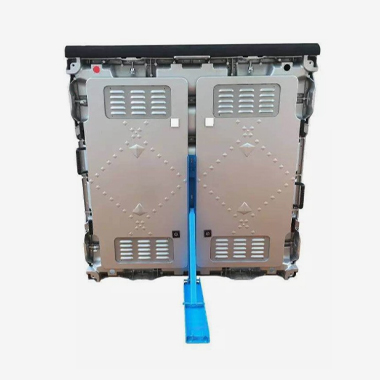
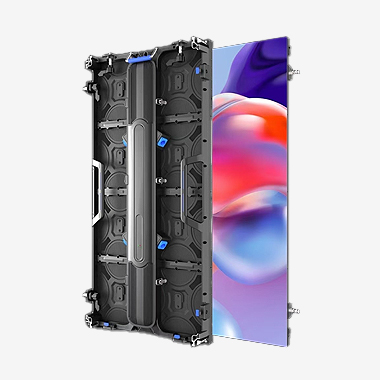
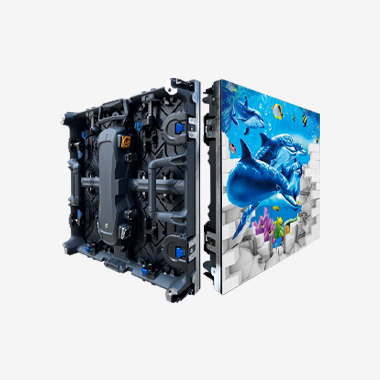
These modules are then mounted into a cabinet, which is the structural frame that holds an array of modules together (e.g., a 16x16 or 32x32 pixel array). Indoor cabinets are designed to be lightweight, slim, and often front-serviceable. This is a critical feature, as rear access is frequently unavailable in indoor settings like lobby walls or retail spaces. Front-serviceable designs allow technicians to replace modules or power supplies from the front without needing to dismantle the entire wall or access the rear.
2. The Critical Metric: Pixel Pitch
As mentioned, pixel pitch is the most crucial specification for an indoor display. The choice of pitch is a direct trade-off between resolution, viewing distance, and cost.
Fine Pitch (P1.2 - P1.9): Used for ultra-high-definition applications where viewers are very close, such as in corporate boardrooms, luxury retail, or broadcast studios. The image is incredibly sharp, but the cost is highest.
Standard HD Pitch (P2.0 - P2.9): The workhorse for most indoor applications—lobbies, control rooms, event venues. It offers an excellent balance of resolution and affordability for a typical viewing distance of 2-5 meters.
Value Pitch (P3.0 - P3.9): Suitable for larger formats where viewers will be farther back, such as in large auditoriums or arenas (for secondary screens). It provides a high-impact image at a more accessible price point.
3. Supporting Systems: Power, Control, and Cooling
Each cabinet contains vital supporting electronics:
Power Supplies: Convert AC mains power to the low-voltage DC power required by the sensitive LED drivers. Reliability and efficiency are key to reducing heat and energy consumption.
Receiving Cards: Act as the local brain of the cabinet. They receive the video data signal from the main controller and distribute the commands to the specific driver ICs on the modules.
Cooling Systems: Unlike outdoor screens that use loud fans, indoor displays prioritize silent operation. They often rely on passive cooling through clever heatsink designs integrated into the cabinet or use very quiet, low-RPM fans. Effective thermal management is essential to prevent color shift and prolong LED lifespan.
4. Structural Design and Calibration
The cabinets are designed to lock together with millimeter precision to form a perfectly flat viewing surface without any "tiling" effect or visible seams. For creative applications, flexible modules are available that can be mounted on curved structures to create cylindrical columns or wave-like shapes.
Finally, a process of calibration is paramount. Even with high-quality manufacturing, there are minor variations in LED color and brightness. Using advanced spectrophotometers, each module is individually measured, and a correction file is created. The display's control system uses this file to adjust the output of every single pixel, ensuring perfect color uniformity and a consistent white balance across the entire screen. This is what gives a professional LED wall its seamless, monolithic appearance.
The operation of an indoor HD LED display is a fascinating process of real-time digital-to-optical conversion. It’s a symphony of data transmission, processing, and microsecond-level control that transforms a video signal into a breathtaking visual experience.
1. The Signal Pathway: From Source to Screen
The process begins with a video source—a computer, media player, or live camera feed. This source outputs a standard video signal (e.g., HDMI, SDI). This signal is fed into the brain of the operation: the video controller or processor. This specialized device performs several critical functions:
Signal Accepting and Decoding: It takes in the incoming signal.
Scaling and Resolving: The input resolution (e.g., 1920x1080) is almost always lower than the native resolution of the large LED wall. The processor upscales the image to fit the exact pixel dimensions of the LED canvas.
Image Processing: It enhances color, sharpness, and contrast in real-time to optimize the image for the specific characteristics of the LED display.
Data Sending: The processed image data is converted into a format the LED modules can understand and is sent out via network cables (typically high-speed CAT6 or fiber optics) to the sending cards, which distribute it to the receiving cards in each cabinet.
2. Pixel-Level Control: Pulse-Width Modulation (PWM)
At the heart of each pixel is a driver Integrated Circuit (IC). Its job is to control the intensity of each red, green, and blue LED. Since LEDs are digital devices (either on or off), their brightness cannot be controlled by varying voltage analogously. Instead, they use Pulse-Width Modulation (PWM).
The driver IC switches each LED on and off at an extremely high frequency—thousands of times per second. The ratio of the "on" time to the "off" time within each cycle (known as the duty cycle) determines the perceived brightness. A 50% duty cycle results in 50% brightness. This switching is so rapid that the human eye perceives only a steady level of light, completely unaware of the flickering. By independently controlling the PWM for each of the three colors in a pixel, the driver IC can create millions of different color combinations.
3. Color Creation and Grayscale
The creation of color follows the additive color model. Each pixel combines red, green, and blue light:
Red + Green = Yellow
Red + Blue = Magenta
Green + Blue = Cyan
Red + Green + Blue = White
By varying the intensity (via PWM) of each color, any shade in the visible spectrum can be produced. The grayscale performance refers to the display's ability to produce smooth transitions from pure black to pure white. Higher quality displays use higher bit-depth drivers (e.g., 16-bit) to achieve incredibly smooth gradients without visible banding, which is essential for displaying photographic and video content accurately.
4. Refresh Rate and Gray Scale
Two other critical performance metrics are:
Refresh Rate: The number of times per second the screen redraws the image. A high refresh rate (≥1920Hz) is crucial for eliminating flicker, especially when viewed under artificial lighting or captured by cameras. A low refresh rate can cause distracting strobing effects and visible scan lines.
Gray Scale: The number of distinct brightness levels between black and white. A higher grayscale (e.g., 65536 levels) results in more detail in shadows and highlights, contributing to a more realistic and depth-filled image.
In summary, the working principle is a high-speed chain of command: video data is processed, distributed with precision, and executed at the micro-level by millions of LEDs blinking in perfect harmony according to the precise instructions of PWM, creating the illusion of a continuous, brilliantly colorful moving image.
The adoption of indoor LED technology offers a compelling set of advantages over alternative solutions, but it is not without its own unique set of challenges that must be carefully considered.
Advantages
Seamless, No-Bezel Display: This is the most significant advantage over LCD video walls. LED walls have zero bezels, creating a perfectly continuous image without any distracting grid lines breaking up the content. This is indispensable for displaying maps, data visualizations, and wide-shot video.
Superior Brightness and Contrast: LED displays are self-emissive, meaning each pixel generates its own light. This allows for extremely high brightness levels (600-1500 nits) that remain clear in well-lit lobbies and under TV studio lights. They also achieve true black by simply turning off LEDs, resulting in a superior contrast ratio and more impactful, deeper images than LCDs, which rely on a always-on backlight.
Wide Viewing Angles: High-quality indoor LEDs offer viewing angles of 160° or more, both horizontally and vertically, with minimal color shift or brightness loss. This ensures a consistent viewing experience for everyone in the room, regardless of their seating position.
High Reliability and Long Lifespan: LED technology is renowned for its durability. With an average lifespan of 100,000 hours, these displays are a long-term investment. Their modular nature means a single failed component (a module or power supply) can be replaced quickly without taking the entire system offline.
Flexibility and Creative Freedom: Modules can be assembled into non-standard shapes and sizes—curves, columns, arches—offering architects and designers creative possibilities that are impossible with rigid LCD panels.
Challenges
Cost: Fine-pitch LED displays represent a significant capital investment. The cost per square meter increases exponentially as the pixel pitch decreases. This often places the highest-resolution screens out of reach for smaller budgets.
Pixelation and Minimum Viewing Distance: If viewers are closer than the recommended minimum viewing distance, the individual pixels can become visible, degrading the image quality. Careful planning based on the chosen pixel pitch is essential.
Complexity of Installation and Maintenance: While designed for easier service, installing a large LED wall still requires professional expertise for assembly, calibration, and integration with control systems. Maintaining color uniformity over time requires periodic re-calibration.
Power Consumption and Heat Generation: A large, bright LED display consumes a considerable amount of electricity and generates heat. While less than outdoor models, this heat must be managed effectively with silent cooling systems to avoid impacting performance and longevity.
Potential for Moiré Patterns: When an LED display is filmed by a digital camera, interference patterns known as moiré can appear if the camera's sensor grid interacts with the LED pixel grid. This requires technical adjustments to the camera's focus or the display's refresh rate to mitigate, a key consideration for broadcast environments.
Applications
Broadcast & Studios: As virtual sets and dynamic backgrounds, replacing static physical sets.
Corporate: In lobbies for branding, in boardrooms for video conferencing, and in command centers for data visualization.
Retail & Hospitality: Creating dynamic advertising in malls, immersive environments in flagship stores, and dazzling installations in hotels and casinos.
Events & Entertainment: As stage backdrops for concerts, conferences, and product launches, providing scalable and dramatic visuals.
Education & Culture: In museums, galleries, and lecture halls for engaging exhibits and presentations.
Future Trends
Smaller Pixel Pitches: The relentless drive towards mini- and micro-LED technology will continue, pushing pitches below P0.6 for "retail" resolution viewing.
MicroLED and COB Packaging: MicroLED technology, which uses microscopic bare-die LEDs, promises even better reliability, higher brightness, and finer pitches. Chip-on-Board (COB) packaging, where LEDs are directly bonded to the PCB, offers improved durability and better thermal performance.
Transparent LED Screens: Allowing for see-through displays in store windows and museum exhibits, blending digital content with the physical environment.
Higher Refresh Rates and Bit Depth: For even smoother motion and more exquisite color gradation, meeting the demands of HDR content.
Integration with IoT and AI: Displays will become smarter, integrating with sensors to adapt content automatically based on audience demographics or environmental conditions, and using AI for automated color calibration and predictive maintenance.
Conclusion
The indoor HD full-color LED display has firmly established itself as the pinnacle of digital visual technology for enclosed spaces. Its unparalleled ability to deliver seamless, bright, and vibrant images offers a level of impact and flexibility that simply cannot be matched by projection or LCD alternatives. While the initial investment and technical complexities are non-trivial, the benefits in terms of viewer engagement, brand prestige, and long-term reliability make it a compelling choice for any organization serious about its visual communication.
As the technology continues to advance, becoming more accessible, higher-resolution, and more seamlessly integrated into our environments, its role will only expand. It is evolving from a passive display into an interactive, intelligent canvas that will shape how we work, learn, shop, and are entertained indoors. The indoor LED screen is not just a tool for showing videos; it is a foundational technology for building the immersive experiences of the future.


Copyright © 2026 Shenzhen Cogo Technology Co.,Ltd.
All Rights Reserved

 Previous article