




 Chat Now
In the ever-evolving landscape of outdoor media, high resolution outdoor media LED display panels have emerged as a transformative force, redefining how brands, cities, and organizations communicate with audiences in public spaces. Unlike standard outdoor LED displays that prioritize basic visibility over detail, these panels combine the ruggedness required for outdoor use with ultra-sharp resolution—typically 4K (3840x2160) or even 8K (7680x4320)—delivering crisp imagery, fine text, and immersive video that captivates viewers even from close distances.
At their core, high resolution outdoor media LED display panels are large-format, self-illuminating systems composed of dense arrays of micro-LED or high-luminance SMD (Surface-Mount Device) LEDs. Their defining attributes include pixel pitches as small as P1.2 to P4 (compared to P10-P20 for standard outdoor displays), high brightness (5,000-12,000 nits) to overcome sunlight glare, and weather-resistant construction (IP65+ ratings) to withstand rain, dust, and extreme temperatures. These features make them ideal for outdoor media applications where detail matters—from digital billboards in busy urban centers to interactive media walls in shopping plazas and informational displays in transportation hubs.
The global market for high resolution outdoor media LED displays has grown rapidly in recent years, driven by two key factors: advancements in LED technology and the rising demand for immersive outdoor media experiences. As micro-LED and mini-LED technologies have matured, manufacturers have been able to pack more pixels into smaller spaces without sacrificing brightness or durability, making high resolution panels more accessible. Meanwhile, brands and media companies are increasingly investing in high resolution outdoor media to stand out in crowded public spaces—studies show that high resolution displays generate 40% more viewer engagement than standard-resolution models, as they allow for more detailed content (e.g., close-up product shots, fine text, or complex animations).
Key use cases for high resolution outdoor media LED display panels span diverse outdoor media segments. Urban digital billboards use 4K panels to display high-definition ads that resonate with pedestrians and nearby motorists—for example, a luxury fashion brand showcasing the intricate stitching of a handbag or a tech company demonstrating the features of a new smartphone. Shopping mall exteriors and plaza media walls use 8K panels to create immersive experiences, such as live-streaming concerts or displaying interactive art installations that draw crowds. Transportation hubs (airports, train stations) use high resolution panels to show real-time flight/train information with legible text, even from a distance, while sports stadium exteriors leverage them to promote games with high-quality player highlights.
Notably, high resolution outdoor media LED panels are not just for advertising. They play a critical role in public communication, serving as digital noticeboards for cities to share emergency alerts, weather updates, or community events. Their ability to switch between media content and public service messages makes them a versatile asset for smart cities. As technology continues to advance, these panels are becoming more energy-efficient and connected, with features like AI-driven content optimization and remote monitoring—further solidifying their position as a cornerstone of modern outdoor media.
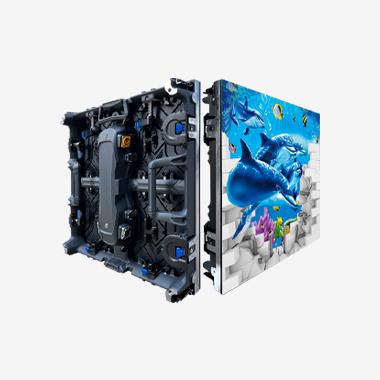
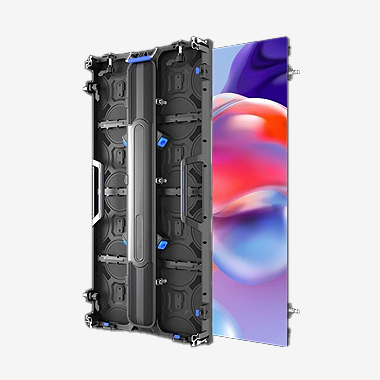
The design and construction of high resolution outdoor media LED display panels are a meticulous engineering balance, tailored to deliver ultra-sharp resolution while withstanding the harsh conditions of outdoor environments. Every component—from the LED chips to the cabinet structure—is optimized to address three core challenges: maintaining high pixel density for resolution, ensuring durability against weather and wear, and preserving brightness for visibility in sunlight. Unlike standard outdoor LED displays, which prioritize ruggedness over detail, high resolution models require precision in both performance and protection.
At the heart of the panel’s design is the LED chip and pixel array, which dictates resolution and visual clarity. To achieve 4K or 8K resolution, manufacturers use either micro-LEDs (smaller than 100 micrometers) or high-density SMD LEDs arranged in tight pixel pitches (P1.2-P4). Micro-LEDs are preferred for ultra-high resolution (8K) panels, as their tiny size allows for pixel densities of 1,000+ pixels per square inch—enabling sharp visuals even when viewed from 1-3 meters away. SMD LEDs (typically 0.5-2mm in size) are used for 4K panels, offering a balance of resolution and cost-effectiveness. Both types are arranged in red-green-blue (RGB) trios per pixel, with advanced color calibration to support wide color gamuts (e.g., DCI-P3 for cinema-like colors), ensuring vibrant, accurate hues that stand out in outdoor light. The LED array is bonded to a thin, heat-conductive backplate (aluminum or graphene) to manage heat—critical for high-density setups, as closely packed LEDs generate more heat than sparse arrays.
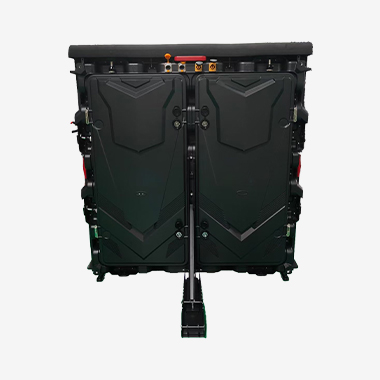
The panel cabinet and housing are engineered for maximum durability and weather resistance. Cabinets are constructed from corrosion-resistant materials: marine-grade aluminum alloy for structural support (to withstand wind loads up to 180km/h) and stainless steel for hardware (to prevent rust in coastal areas). The cabinet design includes a seamless, waterproof seal using EPDM rubber gaskets, achieving an IP65 or IP66 ingress protection rating—meaning the panel is dust-tight and protected against heavy rain or splashes. For high resolution panels, the front cover is a thick (4-6mm) tempered glass with an anti-glare coating: the glass protects the LED array from physical damage (e.g., vandalism, flying debris) while the anti-glare coating reduces reflection from sunlight, ensuring the high resolution content remains visible even in direct midday light. Some models also include a UV-resistant film on the glass to prevent color fading from prolonged sun exposure.
Heat dissipation systems are critical for maintaining resolution and lifespan in high density panels. High resolution arrays generate more heat than standard outdoor displays, and excess heat can cause LED degradation (reducing brightness or causing dead pixels) or color distortion. To address this, manufacturers integrate dual cooling systems:
Passive cooling: A heat-dissipating backplate with ribbed structures increases surface area for heat transfer, while phase-change materials (PCMs) embedded in the backplate absorb heat and release it slowly, stabilizing internal temperatures.
Active cooling: For hot climates (e.g., deserts), the cabinet includes low-noise axial fans or heat pipes. Fans circulate cool air through the cabinet, while heat pipes transfer heat from the LED array to external heat sinks. High-end 8K panels may use liquid cooling systems, which are more efficient than fans and operate silently—critical for urban areas where noise pollution is a concern.
The power supply and electrical system are designed for reliability and energy efficiency. High resolution panels require stable power to maintain uniform brightness across all pixels, so the power supply includes surge protection (up to 8kV) to shield against lightning strikes or grid fluctuations—common in outdoor settings. It also features constant-current driving, which delivers a steady current to each LED chip, preventing brightness inconsistencies that can mar high resolution content. For energy savings, the system includes adaptive brightness sensors that adjust output based on ambient light (e.g., 12,000 nits at midday, 3,000 nits at dusk), reducing power consumption by up to 50% without compromising visibility. Some models integrate solar panels on the cabinet’s top or sides, supplementing grid power with renewable energy—aligning with sustainability goals for media companies and cities.
Mounting and structural support are tailored to the panel’s size and installation location. High resolution outdoor media panels are often large (5m x 3m or larger for 4K, 10m x 5m for 8K), so mounting systems must distribute weight evenly to avoid structural strain. Common options include:
Wall-mounted: Heavy-duty aluminum brackets bolt to building facades, with reinforcement bars to support the panel’s weight (20-50 kg per square meter).
Pole-mounted: Steel poles with concrete foundations, designed to withstand wind loads and seismic activity (critical for earthquake-prone regions).
Ground-mounted: Freestanding steel frames with stabilizing feet, used for plaza media walls or temporary events (e.g., festivals).
Mounting systems also include access platforms or ladders for maintenance, as high resolution panels require regular cleaning (to remove dust or bird droppings that obscure detail) and pixel calibration (to ensure uniform color and brightness).
Finally, the control and connectivity module is integrated to enable high-resolution content delivery. The module supports high-speed interfaces (HDMI 2.1, DisplayPort 2.0, fiber optic) to transmit 4K/8K content without lag—essential for live media like sports or concerts. It also includes a built-in media player with 1TB+ storage for preloading content, and supports wireless connectivity (5G, Wi-Fi 6) for remote updates. Advanced models feature AI-powered content scaling, which optimizes lower-resolution media (e.g., 1080p ads) to fit 4K/8K panels without distortion—ensuring compatibility with existing media libraries.
In summary, the design and construction of high resolution outdoor media LED display panels are a synthesis of precision and durability. Every component is optimized to deliver sharp, vibrant content while thriving in outdoor conditions—making them a reliable, high-impact solution for modern outdoor media.
High resolution outdoor media LED display panels operate on a set of core principles that enable them to deliver ultra-sharp 4K/8K visuals while adapting to the challenges of outdoor environments. Unlike standard outdoor LED displays, which prioritize brightness over detail, these panels leverage advanced semiconductor technology, precision power management, and smart cooling systems to balance resolution, visibility, and durability. Understanding these principles reveals how they overcome the unique trade-offs of outdoor media—from sunlight glare to heat buildup—while delivering the detailed content that defines high resolution performance.
At the most fundamental level, the operation of high-density LED arrays drives the panel’s resolution. High resolution panels use either micro-LEDs or high-density SMD LEDs arranged in pixel pitches of P1.2-P4. Each LED chip is a semiconductor device that emits light when an electric current passes through it, with RGB trios forming individual pixels. For 4K resolution (3840x2160), a 55-inch panel requires a pixel pitch of P0.9; for 8K (7680x4320), a 100-inch panel needs P0.45. The key principle here is pixel density control: the closer the LEDs are spaced, the higher the resolution—but this requires precise manufacturing to ensure uniform spacing (within 0.1mm tolerance) and no dead pixels, as even a single faulty pixel is noticeable in high resolution content. The LED chips are also calibrated individually for brightness and color, ensuring consistency across the entire array—critical for avoiding “hot spots” (brighter areas) or color shifts that would degrade the viewing experience.
The power management system ensures stable performance for high-density arrays. High resolution panels require more power than standard outdoor displays (up to 500W per square meter for 8K models), so the system uses a dual-stage power supply: first converting AC grid power (110V/220V) to high-voltage DC (48V) for efficient distribution, then stepping it down to low-voltage DC (5V) for the LED chips. This reduces power loss during transmission, improving energy efficiency. The system also uses dynamic current adjustment, which varies the current to each LED based on content: brighter pixels (e.g., white areas of an image) receive more current, while darker pixels (e.g., black areas) receive less. This not only saves energy but also reduces heat generation—critical for high-density arrays where heat can damage LEDs. Surge protection (8kV) is integrated to shield the system from lightning or grid spikes, a common risk in outdoor media installations.
Heat management principles are tailored to high-density arrays. Unlike standard outdoor displays, which generate heat evenly across sparse LED arrays, high resolution panels have concentrated heat zones in their dense pixel clusters. To address this, the panel uses a hybrid cooling system:
Passive cooling: A graphene or aluminum backplate with micro-channels transfers heat from the LED array to the cabinet exterior. Graphene is preferred for its high thermal conductivity (20x that of aluminum), enabling faster heat dissipation without adding weight.
Active cooling: For 8K panels or hot climates, the cabinet includes a liquid cooling loop: a non-toxic coolant circulates through micro-tubes embedded in the LED backplate, absorbing heat and releasing it via an external radiator. This system maintains internal temperatures below 45°C, even in 50°C outdoor heat—preventing LED degradation and color distortion.
Temperature sensors throughout the panel monitor heat levels in real time, adjusting the cooling system’s output to match demand. If temperatures exceed a threshold (50°C), the system automatically reduces brightness by 10% to prevent damage—ensuring the panel remains operational without compromising content visibility.
Weather resistance mechanisms protect the high-resolution components from outdoor elements. The panel’s cabinet is sealed with EPDM rubber gaskets, creating an airtight barrier against rain, dust, and humidity (IP65/IP66 rating). The front glass is treated with a hydrophobic coating that repels water, preventing rain droplets from obscuring the high-resolution content. For coastal areas, the cabinet is coated with an anti-corrosion layer (e.g., zinc-nickel plating) to resist saltwater damage, which can degrade metal components over time. UV-resistant materials (e.g., silicone encapsulants for LEDs) prevent color fading from prolonged sun exposure—critical for maintaining the accuracy of high-resolution media, such as brand logos or art installations.
Content delivery and processing ensure high-resolution media is displayed correctly. The panel’s control module uses a high-performance FPGA (Field-Programmable Gate Array) chip to process 4K/8K content in real time. The FPGA handles pixel mapping, which aligns each pixel in the input content (e.g., a 4K video) to the corresponding physical pixel on the panel—correcting for any minor spacing inconsistencies in the LED array. For media walls composed of multiple panels, the FPGA synchronizes content across all units to eliminate seams or lag, creating a single, seamless high-resolution display. The module also supports content upscaling: if the input content is lower than the panel’s resolution (e.g., 1080p), the FPGA uses AI algorithms to enhance detail, reducing pixelation and preserving clarity. This is essential for outdoor media, where not all content is available in 4K/8K.
Visibility optimization ensures high-resolution content is visible in all outdoor conditions. Ambient light sensors mounted on the panel measure sunlight intensity, adjusting brightness between 5,000-12,000 nits to maintain contrast. The anti-glare front glass reduces reflection by 70% compared to standard glass, ensuring text and fine details remain legible even in direct sunlight. For nighttime operation, the panel uses low-blue-light mode, reducing blue light emission to avoid eye strain for nearby residents while maintaining color accuracy—addressing regulatory concerns about light pollution in urban areas.
In conclusion, the working principles of high resolution outdoor media LED display panels are a synergy of precision engineering and environmental adaptation. By optimizing pixel density, power management, heat control, and content processing, these panels deliver the sharp, vibrant visuals that define modern outdoor media—while thriving in the harshest outdoor conditions.
High resolution outdoor media LED display panels offer a range of advantages that make them a transformative tool for outdoor media, from advertising to public communication. However, they also present unique challenges related to cost, maintenance, and environmental adaptation. Understanding these pros and cons is critical for media companies, brands, and cities looking to invest in high resolution outdoor media, as it helps align expectations with practical needs and budget constraints.
Advantages
1. Ultra-Sharp Visuals and Enhanced Audience Engagement
The most significant advantage of high resolution outdoor media LED display panels is their ability to deliver 4K/8K visuals with exceptional detail, far surpassing standard outdoor LED displays. With pixel pitches as small as P1.2, these panels reproduce fine text, intricate product details, and smooth video—even when viewed from close distances (1-3 meters). This clarity is a game-changer for outdoor media: a luxury watch brand can showcase the tiny gears of its timepieces, a restaurant can display mouthwatering close-ups of its dishes, or a city can share emergency alerts with legible text that’s visible from across a plaza. Studies show that high resolution displays generate 40% more dwell time (how long viewers look at the content) than standard-resolution models, as the detail captures attention and encourages engagement. For example, an interactive high resolution media wall in a shopping plaza might draw 3x more pedestrians than a standard wall, as users stop to interact with the detailed content.
2. Versatility for Diverse Media Content
High resolution outdoor media LED panels support a wide range of media formats, making them versatile for outdoor media use. Unlike standard outdoor displays, which struggle with low-resolution or complex content, high resolution models handle:
4K/8K video: Live streams of concerts, sports games, or events with crisp detail.
Interactive content: Touch or gesture-controlled experiences (e.g., a media wall that lets users browse a brand’s product catalog or a city’s tourism guide).
Dynamic data visualization: Real-time information like stock market trends, weather maps, or public transit schedules with clear, readable graphs and text.
Artistic installations: High-quality digital art that transforms public spaces, such as projections of famous paintings or interactive murals that respond to passersby.
This versatility allows media companies to monetize the panels by offering diverse services—from advertising to event streaming—while cities can use them for both public communication and cultural programming. For example, a single high resolution panel in a downtown square can display morning news, afternoon ads, evening art, and emergency alerts at night—maximizing its value.
3. Long-Term Cost-Effectiveness for Media Operations
While high resolution outdoor media LED panels have a higher initial costthan standard outdoor displays, they offer significant long-term cost savings for media operations. Standard displays require frequent content updates (e.g., replacing low-resolution ads with new designs) and may need to be upgraded every 3-5 years to keep up with audience expectations. High resolution panels, by contrast, have a lifespan of 8-12 years—thanks to durable components like micro-LEDs and corrosion-resistant cabinets—and support content upgrades via software, eliminating the need for hardware replacement. Additionally, their energy efficiency (up to 50% less power consumption than standard high-brightness displays) reduces electricity costs over time. For media companies, this translates to lower total cost of ownership (TCO): a 4K outdoor panel may cost $100,000 upfront, but its 10-year TCO (including power and maintenance) is often 30% lower than a standard display that requires replacement twice in the same period.
4. Data-Driven Media Optimization
High resolution outdoor media LED panels enable data-driven optimization of media campaigns, a key advantage over standard outdoor displays. Most models are equipped with built-in sensors and cameras that track:
Audience metrics: Dwell time, demographic data (estimated age, gender), and interaction rates (e.g., how many users scan a QR code on the panel).
Content performance: Which ads or media segments generate the most engagement, and at what times of day.
Environmental data: Ambient light levels, weather conditions, and foot/vehicle traffic around the panel.
This data is sent to a cloud-based analytics platform, where media companies and brands can generate real-time reports. For example, a brand might discover that its 4K ad for a new smartphone has a 25% higher dwell time during evening hours, prompting it to increase the ad’s frequency at night. A media company could use foot traffic data to adjust pricing for ad slots—charging more during peak hours when the panel reaches more viewers. This data-driven approach ensures that media campaigns are more targeted and effective, maximizing return on investment (ROI) for brands and revenue for media companies.
5. Alignment with Smart City Initiatives
High resolution outdoor media LED panels are a natural fit for smart city infrastructure, offering cities a versatile tool for public communication and urban enhancement. Unlike standard outdoor displays, which are limited to advertising, high resolution models can:
Share real-time public information: Emergency alerts, weather warnings, public transit delays, or community event schedules—with legible text that’s visible to all residents.
Enhance urban aesthetics: Display digital art, seasonal visuals (e.g., holiday murals), or live feeds of city landmarks—transforming dull public spaces into engaging, dynamic areas.
Support sustainability goals: Integrate solar panels or energy-storage systems to reduce reliance on grid power, aligning with city-wide carbon reduction targets.
Cities can partner with media companies to install these panels, using advertising revenue to offset the cost of public services. For example, a city might install a high resolution media wall in a downtown plaza: the wall displays ads during the day (generating revenue) and switches to public safety messages at night. This public-private partnership benefits both parties—cities get a free public communication tool, and media companies gain access to high-traffic locations for advertising.
Challenges
1. High Initial Investment and Barrier to Entry
The most significant challenge of high resolution outdoor media LED display panels is their high upfront cost. A small 4K panel (3m x 2m) can cost \(50,000-\)80,000, while a large 8K media wall (10m x 5m) can exceed \(500,000—plus installation costs (which add \)10,000-$50,000 for permits, structural reinforcement, and labor). This high cost is a major barrier to entry for small media companies or independent advertisers, who may not have the capital to invest in high resolution technology. Even for large media companies, the cost of upgrading an entire network of standard displays to high resolution can be prohibitive—requiring millions of dollars in upfront investment. This means that high resolution outdoor media remains dominated by large players, limiting competition in the market.
2. Complex Maintenance and Technical Expertise
High resolution outdoor media LED panels require more complex maintenance than standard displays, as their dense pixel arrays and advanced components demand specialized expertise. Common maintenance tasks include:
Pixel calibration: Regularly adjusting the brightness and color of individual pixels to ensure uniformity—critical for high resolution content, where even minor inconsistencies are noticeable. This requires specialized software and trained technicians, costing \(1,000-\)3,000 per calibration.
Component replacement: Fixing dead pixels, faulty micro-LEDs, or damaged cooling systems. Replacing a single 8K panel module can cost \(5,000-\)10,000, and accessing the panel (e.g., via crane for a high-rise installation) adds to the expense.
Software updates and security: Maintaining the panel’s control system, analytics platform, and content management software—including regular security patches to prevent cyberattacks (a growing risk for connected smart city devices). This requires ongoing investment in IT resources, adding \(5,000-\)10,000 per year per panel to maintenance costs.
For media companies operating in remote areas, finding technicians with the required expertise can be difficult—leading to longer downtime if the panel malfunctions. This downtime translates to lost revenue, as the panel cannot display ads while being repaired.
3. Vulnerability to Extreme Weather and Environmental Damage
While high resolution outdoor media LED panels are designed to withstand harsh weather, their dense pixel arrays and sensitive components make them more vulnerable to environmental damage than standard displays. Common issues include:
Water damage: Even with an IP65/IP66 rating, prolonged heavy rain or flooding can seep into the panel’s cabinet, short-circuiting the LED array or control module. Repairing water damage to a 4K panel can cost \(20,000-\)40,000, and in severe cases, the entire panel may need to be replaced.
Extreme temperatures: In hot climates (e.g., deserts), temperatures above 45°C can overwhelm the cooling system, causing the panel to overheat and dim. In cold climates (e.g., polar regions), temperatures below -20°C can cause the LED chips to freeze, leading to permanent damage.
UV radiation and corrosion: Prolonged sun exposure can fade the panel’s anti-glare coating, reducing visibility of high resolution content. In coastal areas, saltwater spray can corrode the cabinet’s metal components, weakening the structure and increasing the risk of failure.
To mitigate these risks, media companies must invest in additional protection—such as weather shelters, heating/cooling systems, or anti-corrosion coatings—adding 10%-20% to the initial cost of the panel. They must also develop contingency plans for severe weather (e.g., turning off the panel during hurricanes), which can result in lost advertising revenue if the panel is offline for days or weeks.
4. Regulatory Restrictions on Resolution and Brightness
High resolution outdoor media LED panels are subject to strict regulatory restrictions, which vary by city, state, or country. These regulations often target two key aspects of high resolution displays:
Brightness and light pollution: Many cities limit the maximum brightness of outdoor displays at night (e.g., capping brightness at 2,000 nits after 10 PM) to avoid disturbing residents or interfering with traffic signals. For high resolution panels, this can be problematic—reducing brightness may make fine text or details in 4K/8K content unreadable, undermining the panel’s core advantage.
Resolution and content size: Some regions restrict the resolution or pixel density of outdoor displays, fearing that ultra-high resolution content (e.g., 8K) could distract drivers or pedestrians. Others limit the size of text or images in ads, requiring brands to simplify their high resolution content to comply with rules—negating the benefit of using a high resolution panel.
Obtaining the necessary permits to install a high resolution panel can be a time-consuming process. Permit applications often require detailed engineering reports, environmental impact assessments, and public hearings—taking 3-6 months (or longer) to complete. In some cases, permits are denied outright—e.g., a city may reject a proposal for an 8K media wall in a residential area due to light pollution concerns. These regulatory barriers can delay or cancel media projects, costing media companies time and money.
5. Content Creation and Compatibility Challenges
High resolution outdoor media LED panels require high-quality, 4K/8K content to deliver their full value—but creating and managing this content presents significant challenges. For brands and media companies:
Content creation costs: Producing 4K/8K ads or media content is 2-3 times more expensive than creating standard-resolution content, requiring high-end cameras, editing software, and creative teams. A single 30-second 8K ad can cost \(100,000-\)200,000—prohibitive for small brands with limited marketing budgets.
Compatibility issues: Many existing media libraries consist of standard-resolution content (1080p or lower), which looks pixelated or distorted when displayed on a 4K/8K panel. While AI-powered upscaling can improve low-resolution content, it cannot match the quality of native 4K/8K content—leading to a subpar viewing experience.
Content management complexity: Managing a large library of 4K/8K content requires more storage and bandwidth than standard-resolution content. A single 8K video can take up 100GB+ of storage, and streaming it to a panel requires a high-speed internet connection (100Mbps+). For media companies with multiple panels, this means investing in expensive storage servers and dedicated internet lines—adding to operational costs.
These content challenges mean that many brands and media companies struggle to fully leverage the capabilities of high resolution panels, limiting their return on investment.
High resolution outdoor media LED display panels have already transformed outdoor media, but their applications continue to expand as technology evolves. From urban advertising to smart city communication, these panels are adapting to diverse needs. Looking ahead, emerging trends will further enhance their capabilities, making them even more integral to the future of outdoor media and urban life.
Current Applications
1. Urban Digital Billboards and Street-Level Advertising
Urban digital billboards are the most common application of high resolution outdoor media LED display panels, targeting pedestrians and nearby motorists in busy city centers. These billboards use 4K panels with pixel pitches of P2-P4, delivering sharp ads that highlight product details—e.g., a luxury fashion brand showcasing the texture of a cashmere sweater, or a cosmetics brand displaying close-ups of its makeup products. Street-level panels (mounted on building facades or bus shelters) use even smaller pixel pitches (P1.2-P2) for close-up viewing, allowing brands to include fine text or interactive elements—such as QR codes that link to a brand’s website or a mobile app. For example, a coffee chain might use a street-level 4K panel to display a dynamic menu with photos of its drinks, encouraging pedestrians to scan the QR code and order ahead.
2. Shopping Plaza and Mall Media Walls
Shopping plazas and mall exteriors use high resolution outdoor media LED panels to create immersive, crowd-drawing experiences. These media walls are often large (5m x 3m to 10m x 5m) and use 4K or 8K resolution to display:
Brand collaborations: Live streams of fashion shows, product launches, or celebrity appearances—e.g., a mall might partner with a luxury brand to stream its Paris Fashion Week show on an 8K media wall, attracting fashion fans to the plaza.
Interactive art installations: Digital murals that respond to pedestrians’ movements (via gesture sensors) or weather conditions—e.g., a media wall that changes color based on the time of day or displays raindrop animations when it rains.
Wayfinding and promotions: Real-time updates on mall sales, store openings, or parking availability—with legible text that’s visible from across the plaza.
These media walls turn shopping plazas into social hubs, encouraging visitors to stay longer and spend more. For example, a mall’s 8K media wall might draw 50% more foot traffic on weekends, as families stop to take photos with the interactive art or watch live events.
3. Transportation Hubs (Airports, Train Stations, Ports)
Transportation hubs rely on high resolution outdoor media LED display panels to communicate with travelers efficiently. These panels are mounted outside terminals, parking lots, or transit stops, using 4K resolution to display:
Real-time travel information: Flight/train/bus schedules, gate changes, delays, or weather-related disruptions—with clear, readable text that’s visible to travelers from a distance.
Advertising for travel-related brands: Airlines promoting new routes, hotels advertising accommodations near the hub, or rental car companies offering discounts—with high-quality images that showcase destinations or products.
Public safety messages: Emergency alerts, health guidelines (e.g., mask mandates during a pandemic), or directions to safety exits—ensuring all travelers can see and understand critical information.
For example, an airport might install a 4K panel outside its terminal: the panel displays flight departures during the day and switches to public safety messages at night. The high resolution ensures that travelers can read the flight times even from across the parking lot, reducing confusion and improving the travel experience.
4. Sports Stadium and Arena Exteriors
Sports stadiums and arenas use high resolution outdoor media LED display panels to engage fans and generate revenue from sponsorships. These panels are often large (wrapping around the stadium’s facade or mounted above the main entrance) and use 4K resolution to display:
Game promotions: Upcoming matchups, ticket sales information, or live score updates during games—e.g., a football stadium might use a 4K panel to display a highlight reel of the team’s previous win, building excitement for the next game.
Sponsor ads: Brands advertising their products or services to fans arriving at the stadium—e.g., a beverage brand promoting its sports drink, or a car brand showcasing its new SUV.
Fan engagement content: Social media posts from fans (e.g., photos or videos tagged with the stadium’s hashtag), or interactive polls (e.g., “Which Player Will Score the First Touchdown? Vote Now!”).
The high resolution ensures that even fans standing far from the panel can see the content clearly. For example, a baseball stadium’s 4K panel might display a close-up of a player’s swing during a live game, allowing fans in the parking lot to catch the action before entering the stadium.
5. Smart City Public Spaces
Cities use high resolution outdoor media LED display panels to enhance public spaces and improve communication with residents. These panels are installed in plazas, parks, or city centers, using 4K resolution to:
Display public information: Emergency alerts, weather warnings, public transit schedules, or community event calendars—with text that’s legible to all residents, including those with visual impairments.
Showcase digital art: Collaborations with local artists to display rotating art exhibits, seasonal murals (e.g., spring flowers, winter snowscapes), or live feeds of city landmarks (e.g., a fountain or skyline).
Promote sustainability: Real-time data on air quality, energy usage, or recycling rates—encouraging residents to adopt eco-friendly behaviors.
For example, a city might install a 4K media wall in a downtown park: the wall displays digital art during the day and switches to emergency alerts during severe weather. The high resolution ensures that the art is visually stunning and the alerts are easy to read, making the park a more engaging and safe space for residents.
Future Trends
1. 16K Resolution and Micro-LED Dominance
The next frontier for high resolution outdoor media LED display panels is 16K resolution (15360x8640), which will deliver four times the detail of 8K. 16K panels will use ultra-small micro-LEDs (50-80 micrometers) with pixel pitches as small as P0.3, enabling visuals that are indistinguishable from real life—ideal for large media walls or immersive public art installations. For example, a 16K media wall in a city center could display a live feed of a distant landmark (e.g., the Eiffel Tower) with such detail that viewers feel like they’re standing in Paris.
Micro-LED technology will become the standard for high resolution outdoor media, as it offers superior brightness (up to 15,000 nits), durability (15+ year lifespan), and energy efficiency (30% less power than current models) compared to SMD LEDs. Manufacturers will also develop flexible micro-LED panels that can be curved around building facades or wrapped around columns—opening up new design possibilities for urban spaces.
2. AI-Driven Hyper-Personalization
Artificial intelligence (AI) will revolutionize how high resolution outdoor media LED panels deliver content, enabling hyper-personalized experiences for viewers. AI-powered cameras and sensors mounted on the panel will:
Analyze the audience in real time: Identify demographic data (age, gender, approximate income level), behavior (walking speed, attention span), and even emotions (e.g., smiling, frowning) using facial recognition technology.
Optimize content for each viewer: Display ads or media that match the audience’s interests. For example, the panel might show a luxury watch ad to a well-dressed adult, a toy ad to a parent with a child, or a fitness ad to someone wearing athletic clothing.
Adapt to the environment: Adjust content based on weather (e.g., display an umbrella ad during rain), time of day (e.g., show a breakfast ad in the morning), or foot traffic (e.g., increase ad frequency during peak hours).
This hyper-personalization will make outdoor media more relevant and engaging, increasing dwell time and conversion rates for brands. Media companies willalso use AI to automate content scheduling and optimization, reducing the need for manual intervention. For example, an AI system could automatically adjust the order of ads based on real-time engagement data, ensuring the most effective ads are shown during peak hours. This automation will lower operational costs for media companies while improving the performance of their campaigns.
3. Integration with Augmented Reality (AR) and Metaverse
Augmented reality (AR) and metaverse technologies will be integrated with high resolution outdoor media LED display panels to create immersive, cross-reality experiences. Brands and media companies will leverage two key features:
AR-powered interactive content: Panels will display AR markers that users can scan with their smartphones, triggering 3D digital overlays that interact with the physical world. For example, a car brand might let users scan a panel to “place” a 3D model of its new SUV on the street, allowing them to walk around and inspect the vehicle from all angles. A fashion brand could let users scan a panel to “try on” clothing via their phone’s camera, seeing how the outfit looks in real time before visiting the store.
Metaverse connectivity: High resolution panels will serve as “gateways” to the metaverse, allowing users to interact with digital avatars or virtual environments directly from public spaces. For example, a music festival might use an 8K panel to stream a virtual concert, with users able to connect their VR headsets to the panel and “join” the virtual audience. A retail brand could use a panel to showcase its virtual store in the metaverse, encouraging users to visit and shop digitally.
These AR and metaverse integrations will blur the line between physical and digital media, creating new revenue streams for media companies and more engaging experiences for viewers. They will also make high resolution outdoor media more relevant to younger audiences (e.g., Gen Z and millennials) who are increasingly familiar with virtual and augmented reality technologies.
4. Sustainability and Net-Zero Energy Operations
Sustainability will become a defining feature of high resolution outdoor media LED display panels, driven by growing regulatory pressure and consumer demand for eco-friendly technology. Manufacturers and media companies will focus on three key areas:
Net-zero energy panels: Future panels will integrate high-efficiency solar panels (with conversion rates of 30%+), energy-storage batteries (lithium-ion or solid-state), and smart energy management systems. These panels will generate more energy than they consume during the day (storing excess in batteries) and use stored energy at night, achieving net-zero energy operation. Some models may even feed excess energy back into the grid, generating revenue for media companies.
Eco-friendly materials and recycling: Panels will be made from 100% recyclable materials, such as recycled aluminum for cabinets and biodegradable polymers for LED encapsulants. Manufacturers will also design panels for easy disassembly, allowing components like micro-LEDs and power supplies to be recycled or reused at the end of the panel’s lifespan. Media companies will adopt “circular economy” models, repairing and upgrading old panels instead of replacing them.
Carbon footprint transparency: Manufacturers will provide detailed carbon footprint reports for each panel (including production, transportation, and operation), allowing media companies and brands to make informed decisions about their environmental impact. Media companies will also offer “carbon-neutral” ad packages, offsetting the emissions from panel operation by investing in renewable energy projects.
These sustainability features will not only reduce the environmental impact of high resolution outdoor media but also appeal to eco-conscious brands and cities. For example, a brand committed to net-zero carbon emissions might choose to advertise exclusively on net-zero energy panels, aligning its marketing with its sustainability goals.
5. 5G-Enabled Real-Time Content and Remote Management
The rollout of 5G networks will transform how high resolution outdoor media LED display panels deliver content and are managed. 5G’s high speed (up to 10Gbps) and low latency (less than 1ms) will enable:
Real-time 8K/16K streaming: Panels will be able to stream ultra-high resolution content (e.g., live sports, concerts, or breaking news) in real time without lag, improving the quality of live media experiences. For example, a media company could stream a live 8K broadcast of a soccer match to multiple high resolution panels across a city, allowing fans to watch the game in crisp detail from any location.
Remote monitoring and maintenance: Media companies will use 5G to remotely monitor the performance of their panels (e.g., pixel health, temperature, power usage) in real time. They will also be able to perform remote maintenance tasks, such as software updates, pixel calibration, or even minor component repairs (via IoT-enabled tools), reducing the need for on-site technicians. This will lower maintenance costs and minimize downtime for panels in remote or hard-to-reach locations.
Edge computing integration: Panels will be equipped with edge computing devices that process data locally (instead of sending it to a remote server), reducing latency and improving the performance of AI-driven features (e.g., real-time audience analysis). Edge computing will also enhance security, as sensitive data (e.g., audience demographics) is processed locally and not transmitted over the internet.
Conclusion
High resolution outdoor media LED display panels have emerged as a transformative force in outdoor media, redefining how brands, cities, and organizations connect with audiences in public spaces. Throughout this series, we have explored their core strengths: from their ability to deliver ultra-sharp 4K/8K visuals that capture attention and drive engagement, to their rugged design that withstands the harshest outdoor conditions. Their working principles—leverageing high-density LED arrays, precision power management, and smart cooling—enable them to balance resolution, brightness, and durability, while their advantages (versatility, long-term cost-effectiveness, data-driven optimization) make them a valuable asset for modern outdoor media.
While challenges remain—high initial costs, complex maintenance, regulatory restrictions, and content creation hurdles—these are being addressed by ongoing technological advancements. The future of high resolution outdoor media LED panels is defined by innovation: 16K resolution and micro-LEDs will push the boundaries of visual clarity; AI will enable hyper-personalized content; AR and metaverse integrations will create immersive experiences; sustainability will drive net-zero energy operations; and 5G will enable real-time streaming and remote management. These trends will not only enhance the capabilities of high resolution panels but also expand their applications, making them integral to smart cities, virtual media, and eco-friendly advertising.
For media companies, high resolution outdoor media LED panels represent a long-term investment in the future of public communication. They offer the opportunity to stand out in a crowded media landscape, deliver more effective campaigns for brands, and generate new revenue streams through AR/metaverse integrations and sustainability-focused ad packages. For cities, these panels are a versatile tool for enhancing public spaces, improving communication with residents, and achieving sustainability goals—all while generating revenue through advertising partnerships. For brands, high resolution outdoor media provides a way to connect with audiences in meaningful, engaging ways, showcasing products and values with the detail and clarity that modern consumers expect.
In conclusion, high resolution outdoor media LED display panels are more than just advertising tools—they are a catalyst for innovation in public space communication. They have already transformed how we experience outdoor media, and their evolution will continue to shape how we interact with brands, cities, and each other in the years to come. As technology advances and sustainability becomes a global priority, high resolution outdoor media will play an increasingly important role in creating more engaging, connected, and eco-friendly urban environments. For anyone involved in outdoor media, smart cities, or brand marketing, embracing high resolution LED technology is essential to staying ahead of the curve and thriving in a rapidly changing world.


Copyright © 2026 Shenzhen Cogo Technology Co.,Ltd.
All Rights Reserved

 Previous article