




 Chat Now
In the realm of live events, corporate launches, broadcast productions, and immersive experiences, the demand for visual perfection is absolute. The centerpiece meeting this demand is the high-resolution LED rental display screen. This technology represents the pinnacle of temporary visual solutions, offering a combination of breathtaking image quality, modular flexibility, and robust portability that is unmatched by any other medium. A high-resolution LED rental screen is not a single, monolithic unit but a system of lightweight, modular panels designed to be rapidly assembled, disassembled, transported, and reconfigured for a myriad of temporary applications. This overview explores the essence of this technology, its transformative role in the events industry, and why it has become the undisputed standard for creating impactful, memorable moments.
The core value proposition of rental LED technology lies in its ephemeral brilliance. Unlike fixed installations, which are designed for a single, permanent location, rental screens are built for a life on the road. They are the chameleons of the display world, capable of transforming a convention hall into a product launch theater, a concert stage into a digital wonderland, or a television studio into a limitless virtual environment. This versatility is made possible by a relentless focus on three key attributes: resolution, weight, and speed.
"High-resolution" in this context is defined by a very fine pixel pitch—the distance between the centers of two adjacent LEDs, measured in millimeters. For rental applications, this typically ranges from P1.2 to P4.0. A finer pitch (e.g., P1.5) means more pixels per square meter, resulting in a sharper image that can be viewed from extremely close distances without the audience discerning the individual dots. This is paramount for corporate events where detailed graphics, spreadsheets, and high-definition video must be rendered with crystal clarity, even for front-row executives.
The rental industry is driven by logistics. Therefore, every component is engineered for efficiency. Cabinets are constructed from lightweight materials like carbon fiber or magnesium alloy, allowing a single technician to handle them. They feature quick-release, tool-less locking mechanisms that enable a crew to build a massive wall in hours, not days. This speed is critical in the high-pressure, fast-turnaround world of events, where venue rental time is expensive and every minute counts.
Furthermore, the visual performance of these screens is exceptional. They boast high brightness levels to compete with stage lighting, wide viewing angles to ensure a perfect view from every seat, and excellent color consistency and grayscale performance to ensure that skin tones look natural and gradients are smooth. This makes them ideal for hybrid events, where the screen must look flawless both to the live audience and to cameras broadcasting the feed to a remote viewership.
The adoption of high-resolution rental LED has fundamentally changed stage and set design. It has moved the screen from a passive backdrop to an active scenic element. Designers are no longer constrained to rectangular shapes; curved walls, arches, columns, and even overhead ceilings are now common. This allows for the creation of truly immersive "video caves" that surround the performer or speaker, pulling the audience into the narrative. The content itself becomes a character in the show, dynamically interacting with the live performance.
In essence, the high-resolution LED rental screen is the ultimate tool for experiential marketing and entertainment. It provides the visual firepower to tell stories with unparalleled impact, the flexibility to adapt to any creative vision, and the practicality to make it all happen within the tight constraints of live event production. It is a technology that empowers creators to bend reality, if only for a night, and leave a lasting impression on their audience. As we delve into its design, workings, and applications, it becomes clear that this is more than a display; it is the foundational visual layer of the modern event experience.
The ability of a high-resolution LED wall to deliver a flawless, pixel-dense image one night and be packed into flight cases the next morning is a marvel of modern engineering. Its design and construction are a delicate and calculated balance between achieving optical perfection and enduring the rigors of transportation and rapid assembly. Every gram of weight, every locking mechanism, and every electronic connection is optimized for the unique demands of the rental and staging industry.
1. The Lightweight Cabinet: The Building Block
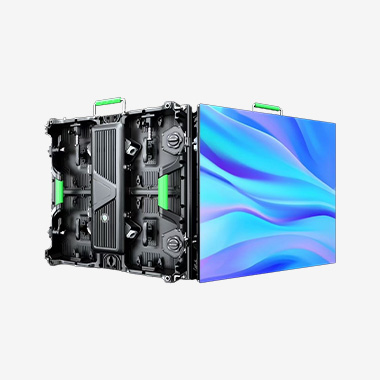
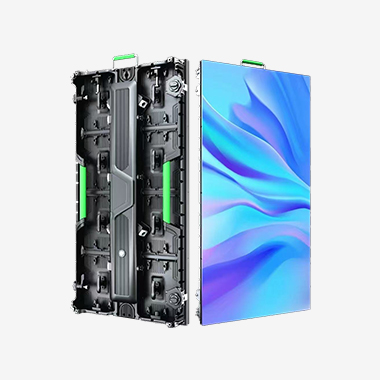
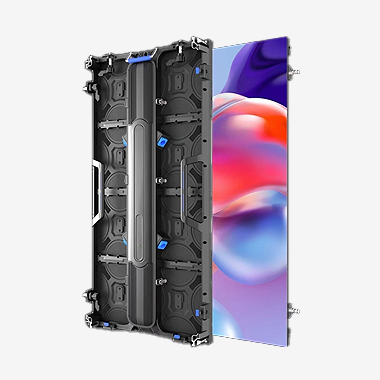
The foundation of any rental LED wall is the individual cabinet or panel. Unlike fixed installation cabinets that prioritize ultimate durability over weight, rental cabinets are designed with a weight-to-strength ratio as the primary metric.
Materials: The use of advanced materials is non-negotiable. Carbon fiber and magnesium alloy are the standards for high-end rental products. These materials offer exceptional rigidity and strength while being remarkably lightweight. A single 500x500mm cabinet with a fine pixel pitch can weigh as little as 6-9 kg, allowing a single technician to handle and install it safely at height.
Form Factor: Cabinets are typically square or rectangular (e.g., 500x500mm, 500x1000mm) to provide maximum configuration flexibility. The design is incredibly slim, often less than 100mm deep, to minimize the visual profile on stage.
2. The Quick-Lock System: The Key to Speed
The most critical mechanical feature of a rental cabinet is its locking system. The goal is to achieve a seamless, flat, and rigid assembly in seconds, without tools.
Magnetic Locking: High-end systems employ powerful neodymium magnets. When two cabinets are brought close together, the magnets pull them into perfect alignment and hold them securely. A secondary manual latch often provides a safety lock. This system is incredibly fast and reduces physical strain on crew.
Mechanical Latches: Other systems use over-center levers or sliding latches that engage hooks on the adjacent cabinet. While slightly slower than magnetic systems, they are highly robust and provide a very secure physical connection.
Seamlessness: Regardless of the mechanism, the result must be a perfectly flush connection with no visible gap between the cabinets, preserving the illusion of a single, seamless canvas.
3. The "Front Serviceable" Design: Maximizing Uptime
In a live event, there is no time to access the rear of a display. Every component must be serviceable from the front.
Module Design: LED modules snap into the cabinet frame from the front using magnetic or mechanical fasteners. If a module fails, a technician can simply unlock the faulty one, disconnect its data/power cable, and snap in a replacement in under a minute.
Integrated Power and Data: Receiving cards and power supplies (often 1:1 redundant) are also accessible from the front or side. Cables are designed for quick-disconnect, often using locking lemo-style connectors to prevent accidental disconnection.
4. The Rigging and Framing System: Structural Integrity
Cabinets alone are not structural. They are installed into a dedicated truss or goalpost support system.
Lightweight Trussing: The LED cabinets bolt onto a lightweight aluminum truss system that is engineered to handle the total weight and wind load of the screen.
Self-Contained Framing: Many rental products have their own dedicated flying frames. Cabinets are pre-assembled into sections on the ground, which are then hoisted into place and connected together. This is faster and safer than building the entire wall in the air.
Ground Support: For smaller walls or where overhead rigging is not possible, versatile ground support structures are used that telescope to the required height.
5. The Pixel Engine and Calibration: The Brain of the Operation
Each cabinet is part of a larger networked system. The video source is fed into a powerful video processor (or "pixel engine"). This device is the mastermind, responsible for:
Scaling: Mapping the input resolution to the native, often irregular, resolution of the LED wall.
Color Calibration: Loading a calibration file that ensures every single cabinet—and every module within it—displays the exact same color and brightness. This is what creates a perfectly uniform image across a wall made of hundreds of individual panels.
Advanced Functionality: Handling tasks like redundant input switching, image cropping, and layer management for Picture-in-Picture (PiP) layouts.
In conclusion, the design and construction of a high-resolution rental LED screen is a masterclass in solving conflicting engineering challenges. It must be incredibly durable yet exceptionally light. It must assemble with pixel-perfect precision yet do so with incredible speed. It must deliver broadcast-quality images yet withstand the bumps and vibrations of life on a truck. The solutions—advanced materials, ingenious locking mechanisms, and a front-serviceable architecture—are what make the magic of modern large-scale events possible. It is technology built not for a permanent home, but for the relentless, creative pace of the event industry.
The flawless operation of a high-resolution rental LED wall during a live event is a carefully orchestrated performance in itself, involving a sophisticated flow of data, power, and control. The principles governing its function are designed for one ultimate goal: reliability under pressure. Understanding these working principles reveals the intricate coordination required to make these complex systems appear effortlessly simple on show day.
1. The Signal Chain: From Source to Screen
The journey of an image to the wall is a high-speed data relay race.
Content Source: The process begins with the video sources. This can be a live camera feed, a graphics machine running presentation slides, a media server playing pre-rendered content, or a combination of all three. These sources output standard signals (HDMI, SDI, or DisplayPort).
The Video Processor (The Conductor): All signals are fed into the central video processor. This specialized computer is the command center. It performs several critical functions in real-time:
Ingestion and Switching: It accepts multiple inputs, allowing the video director to switch between them.
Scaling and Mapping: This is its primary task. The processor takes the incoming signal (e.g., a 1920x1080 feed) and maps it perfectly to the native resolution of the LED wall, which is a non-standard size based on the number of cabinets and their pixel pitch. It handles this scaling with high-quality algorithms to avoid blurring or artifacts.
Color Management: It applies a unique calibration file to the entire display. This file contains compensation values for every module to ensure color and brightness uniformity across the entire wall, correcting for minute manufacturing variances.
Advanced Layouts: It allows the operator to create custom layouts, like a main stage feed with confidence monitors and lower thirds, all on the same canvas.
Data Distribution: The processed output is a massive stream of digital data. This is sent to the LED wall via fiber optic cables for long runs (immune to electrical interference) or robust CATx cables for shorter distances. At the wall, the data is fed into distribution switches or data multipliers, which split the signal to send the correct portion of the image to each row or section of cabinets.
Cabinet-Level Control: Each cabinet contains a receiving card. This small computer takes the data packet meant for its cabinet and distributes it to the driver ICs on each individual LED module.
Pixel Control (PWM): The driver ICs use Pulse Width Modulation (PWM) to control each individual red, green, and blue sub-pixel. They switch the LEDs on and off thousands of times per second. The duty cycle (the ratio of on-time to off-time) determines the perceived brightness, creating the image.
2. Power Distribution: Clean and Redundant
A large LED wall can draw significant power. The system is designed for safety and redundancy.
Power Sequence: Power is distributed to cabinets in a daisy-chain fashion but with a critical protocol: first data, then power. The system must receive a stable data signal before power is applied to the LEDs to prevent them from illuminating incorrectly or at full brightness, which is a safety hazard on stage.
Redundant Power Supplies: Each cabinet typically has two power supplies. If one fails, the other can instantly take over the entire load, preventing a blackout during a show.
3. The Calibration Imperative: Creating a Unified Canvas
The principle of calibration is what separates a professional rental product from a consumer-grade panel. After the wall is built, but before the show, technicians use a dedicated calibration camera. This camera measures the color and brightness output of every single module in the wall. The software then generates a compensation file that the video processor uses to make every module behave identically. This ensures that a specific shade of blue looks exactly the same on the far left of the stage as it does on the far right.
4. Monitoring and Control: Networked Intelligence
The entire system is networked. Using dedicated software on a laptop or tablet, a video engineer can monitor the health of the entire wall in real-time. The software can report on:
Temperature: Monitoring internal cabinet temperatures to prevent overheating.
Power Usage: Tracking total power draw.
Component Failure: Alerting the crew to a failed power supply, receiving card, or LED module before it becomes visible to the audience, allowing for proactive maintenance during breaks.
In principle, the high-resolution rental LED wall operates as a single, intelligent organism. It is a network of individual nodes (cabinets) that receive instructions from a central brain (the processor), report on their status, and work in perfect harmony to create a single, stunning image. This orchestration of data, power, and light, all managed through sophisticated software, is what allows these complex systems to deliver flawless performance show after show, in any location around the world.
The decision to utilize high-resolution rental LED technology is driven by a powerful set of advantages that are essential for modern high-profile events. However, harnessing this power comes with a distinct set of challenges and costs that must be carefully managed. A clear evaluation of both sides is crucial for event producers, technical directors, and clients to ensure successful outcomes.
Advantages:
Unmatched Visual Impact and Immersion: This is the primary advantage. A high-resolution, seamless LED wall provides a level of visual clarity, brightness, and color saturation that projection cannot match. It creates a "window" into any digital world, making it the ultimate tool for captivating an audience and creating a "wow" factor that defines an event.
Creative Flexibility and Configurability: Rental LED is the antithesis of a one-size-fits-all solution. Its modular nature allows it to be configured into virtually any shape or size: curved walls, arches, tunnels, columns, and even 3D structures. This liberates creative directors and set designers from the constraints of a flat, rectangular screen, enabling truly innovative stage designs.
Superior Performance in High-Ambient Light: Unlike projection, which requires a controlled dark environment, LED walls produce their own light. They can operate at high brightness levels (often 1500-2000+ nits for indoor rental), making them perfectly visible under full stage lighting. This allows the presenter or performer to be fully illuminated without washing out the screen behind them.
Rapid Deployment and Strike: The tool-less, quick-lock design of modern rental panels allows a experienced crew to build a massive, complex wall in a matter of hours. Similarly, the strike (dismantling) after the event is equally fast. This speed is critical in the event industry, where venue rental time is expensive and turnaround times between events are tight.
Reliability and Redundancy: Built for the tough rental environment, these systems are designed to be robust. Furthermore, features like redundant power supplies and hot-swappable modules mean that individual component failures do not necessarily take the entire wall down. Technicians can often replace faulty parts during a show break without the audience ever noticing.
Challenges and Considerations:
High Cost: This is the most significant barrier. The technology involved—high-density LEDs, lightweight materials, sophisticated processors—is expensive. This translates to a high purchase price for rental companies and a high rental cost for clients. The budget must account for not just the screen itself, but also for the skilled labor to install and operate it.
Logistical Complexity and Transportation: A high-resolution LED wall is a complex asset to manage. It requires a large inventory of flight cases, a sizable truck fleet, and a sophisticated warehouse management system to track hundreds of panels, cables, and accessories. The physical weight and volume, even with lightweight cabinets, are substantial for large events.
Technical Expertise Requirement: Operating these systems is not plug-and-play. It requires highly trained video engineers who understand signal flow, color science, processor configuration, and troubleshooting. A lack of expertise can lead to incorrect calibration, color shifts, image failures, and ultimately, a failed event.
Content Resolution Demands: The "garbage in, garbage out" principle is magnified on a high-resolution screen. Content that looks good on a 1080p monitor may look soft and pixelated when stretched across a massive, fine-pitch LED wall. Content must be created or mastered at extremely high resolutions to leverage the full potential of the technology, which adds time and cost to the creative process.
Moiré Patterns and Camera Compatibility: A unique challenge for broadcast events is the moiré pattern. This is a distracting wavy pattern that can appear on video feeds when a camera's sensor interacts with the precise grid of the LED wall. Mitigating this requires techniques like using optical low-pass filters on cameras, carefully matching shutter angles to the refresh rate of the LED, and sometimes applying a slight digital blur in post-production—all adding layers of complexity to a broadcast.
In conclusion, the advantages of high-resolution rental LED—its impact, flexibility, and reliability—make it an indispensable tool for top-tier events. However, these benefits come at a premium price and require a high level of logistical and technical sophistication to execute properly. The key to success lies in partnering with an experienced rental provider who can not only supply the technology but also the expert crew and support needed to navigate these challenges and ensure a flawless visual experience.
The application of high-resolution rental LED displays has exploded beyond its initial uses, continuously finding new roles in creating experiences across various industries. Simultaneously, technological advancements are pushing the boundaries of what is possible, promising an even more integrated and immersive future.
Current Applications:
Corporate Events and Product Launches: The premier application. Used for keynote presentations, revealing new products with dramatic effect, displaying high-resolution graphics and data, and creating branded environments that impress shareholders and clients.
Concerts and Music Festivals: The backbone of modern stage design. Used as a dynamic backdrop that changes with each song, creates depth and atmosphere, and provides close-up feeds of performers for the audience. It enables the spectacular visual shows expected by today's concert-goers.
Broadcast Television and Virtual Studios: Revolutionizing studio design. LED walls are used as virtual sets, displaying photorealistic backgrounds that change in real-time with camera movement (using technologies like Unreal Engine), eliminating the need for physical sets and green screens. This creates a limitless and cost-effective production environment.
Exhibitions and Trade Shows: Used to create stunning, high-traffic booths that stand out on a crowded show floor. The ability to show dynamic product videos and animations is far more engaging than static banners.
Live Theater and Award Shows: Bringing digital scenery to the stage, allowing for rapid set changes and magical environments that would be impossible or prohibitively expensive to build physically.
Future Trends:
Even Finer Pixel Pitches and Mini-LED/MicroLED: The race for smaller pixels continues. The adoption of Mini-LED and eventually MicroLED technology will enable pixel pitches below 1.0mm for rental products. This will allow for massive walls that can be viewed from inches away, blurring the line between LED walls and direct-view monitors and opening up new applications in virtual production and ultra-close-range displays.
The Dominance of Virtual Production: The use of LED walls for in-camera visual effects (ICVFX), popularized by shows like "The Mandalorian," will become a standard tool in filmmaking and high-end broadcast. This will drive demand for rental walls with higher refresh rates, better color accuracy for camera matching, and specialized calibration for seamless integration with CGI.
Lighter, Stronger, and Faster: The engineering focus will remain on weight reduction and speed. We will see wider adoption of new composite materials and even more ingenious, faster locking mechanisms to further reduce crew size, setup time, and transportation costs.
Integrated XR and Interactive Experiences: LED walls will become more interactive. By integrating camera tracking and real-time rendering, content on the wall can react to performers or presenters moving in front of it. This will create new forms of interactive entertainment and presentations where the presenter literally interacts with the digital environment.
Smarter Panels and Predictive Maintenance: Panels will become more intelligent, with built-in sensors that can predict failures before they happen. Data on operating hours, temperature history, and performance degradation will be logged and analyzed, allowing rental companies to perform maintenance on their inventory proactively, ensuring maximum reliability for clients.
Sustainability Focus: The industry will face increasing pressure to become more sustainable. This will lead to developments in energy-efficient driver technology, the use of recyclable materials in cabinets, and logistics optimization to reduce the carbon footprint of transporting tons of equipment globally.
The future of high-resolution rental LED is one of deeper integration and intelligence. It will move from being a display to being a core component of a holistic content creation and delivery system. It will be the canvas upon which the blended realities of live performance, broadcast, and digital art converge, creating experiences that are ever more immersive, seamless, and breathtaking.
Conclusion
The high-resolution LED rental display screen has firmly established itself as the indispensable instrument for crafting modern experiences. It is the technological linchpin that has enabled the event, entertainment, and broadcast industries to meet the audience's insatiable demand for greater spectacle, deeper immersion, and higher production values. Its journey from a niche, expensive novelty to a mainstream, albeit premium, tool reflects its undeniable value and transformative power.
The conclusion is unequivocal: for events where visual impact is paramount, there is no substitute. The advantages it offers—unmatched brightness, creative configurability, and the ability to perform under the harsh conditions of stage lighting—render alternative technologies like projection as limited or compromised for high-end applications. It has empowered creators to break free from the flat confines of the screen and build dynamic, three-dimensional worlds that surround and engage the audience on a visceral level.
The challenges it presents, primarily its cost and complexity, are not weaknesses but rather barriers to entry that define a professional market. They necessitate investment, expertise, and meticulous planning. These hurdles ensure that the technology is deployed in contexts where its value can be fully realized and its operation managed by skilled professionals who can ensure its reliability and performance. The high cost is the price of guaranteed impact.
Looking forward, the trajectory of this technology is aligned with the broader trends in media consumption: higher resolution, more immersion, and greater interactivity. As it evolves with finer pitches, lighter materials, and smarter software, its applications will only expand. It will become the standard for virtual production, redefine live performances, and continue to be the centerpiece of corporate storytelling.
In final analysis, the high-resolution rental LED display is more than a product; it is an enabler. It is a blank, pixel-perfect canvas that gives form to the imagination of artists, designers, and technologists. It has redefined the very aesthetics of live events, raising the bar for what audiences expect and what clients are willing to invest in to capture their attention. In the economy of experiences, where the goal is to create a moment that is felt, remembered, and shared, this technology is not just a wise investment; for many, it has become an essential one. It is the definitive visual tool for making a temporary event leave a permanent impression.


Copyright © 2026 Shenzhen Cogo Technology Co.,Ltd.
All Rights Reserved

 Previous article