




 Chat Now
The modern event landscape, from sprawling music festivals and global sporting spectacles to intimate corporate product launches and prestigious award ceremonies, is fundamentally shaped by a single, transformative technology: the high-resolution LED event screen. These are not merely displays; they are dynamic, immersive canvases that have redefined the very essence of audience engagement, information dissemination, and visual storytelling. An LED (Light Emitting Diode) display is a flat panel screen that utilizes an array of light-emitting diodes as pixels to create a video output. Their "high-resolution" characteristic refers to a pixel density (measured in pixels per inch, PPI, or more commonly for large formats, pixel pitch) that is sufficiently fine to deliver sharp, clear, and detailed images even at close viewing distances, effectively eliminating the visible grid-like structure that plagued earlier large-format displays.
The journey to this technological pinnacle began decades ago with simple, monochromatic LED message boards. These evolved into low-resolution, full-color displays primarily used for outdoor advertising and scoreboards, where viewing distances were vast, and image detail was secondary to sheer size and brightness. The pivotal advancement was the miniaturization of the individual LED packages—specifically, the development of Surface-Mounted Device (SMD) technology. Unlike the older, lamp-style LEDs where red, green, and blue diodes were separate components, SMD technology combines the three diodes into a single, miniature package mounted directly onto the surface of the printed circuit board (PCB). This innovation drastically reduced the distance between pixels, enabling a much finer pixel pitch and, consequently, a significantly higher resolution in a given screen area.
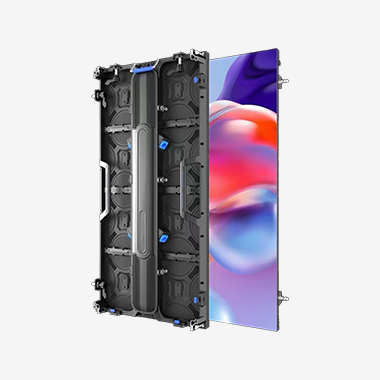
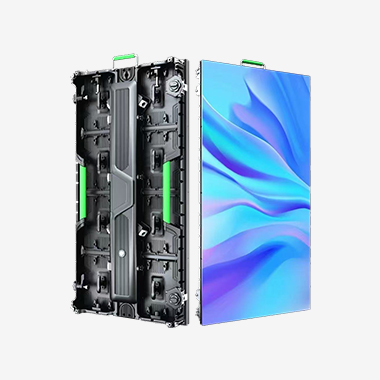
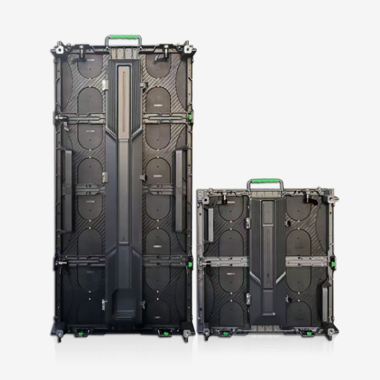
A high-resolution LED screen is a modular system, composed of individual panels or "cabinets" that lock together seamlessly to form a canvas of virtually any size or shape. This modularity is its superpower, offering unparalleled flexibility. A screen for a concert might be a massive, curved backdrop measuring hundreds of feet wide, while a corporate event might utilize a complex, 3D-shaped video wall as a centerpiece. Each panel contains a dense matrix of pixels, the driver electronics (the "brain" that controls the LEDs), and a robust physical structure for support, alignment, and cooling.
The primary metric defining the resolution of an LED screen is pixel pitch—the distance, in millimeters, from the center of one pixel to the center of the adjacent pixel. A smaller pixel pitch means more pixels are packed into a given area, resulting in higher resolution and a sharper image. For event screens, pixel pitches can range from coarse 10mm+ for very large outdoor stadium screens (where viewers are hundreds of feet away) to ultra-fine sub-1.5mm pitches for indoor broadcast studios, press conference backdrops, and high-end corporate events where viewers might be only a few feet from the screen. The selection of the appropriate pixel pitch is a critical decision, balancing the required image clarity with viewing distance, content type, budget, and physical constraints.
The impact of these screens on events is profound. They have transitioned from being a supplementary visual aid to the central protagonist of the experience. They amplify performers on stage, making every subtle expression visible to the furthest attendee. They transform environments with immersive graphics and virtual worlds, breaking the physical limitations of the venue. They provide real-time data, instant replays, and interactive content, making the audience active participants rather than passive observers. In essence, high-resolution LED technology has dissolved the barrier between the digital and the physical, creating a new hybrid space where stories are not just told but are viscerally felt and experienced. It is the cornerstone of the 21st-century event, a testament to how engineering and creativity can converge to elevate human connection and spectacle.
The creation of a high-resolution LED event screen is a feat of precision engineering, electronics, and industrial design. It is far more than a simple collection of light bulbs; it is a complex, integrated system where every component, from the microscopic to the monumental, must work in perfect harmony. The design philosophy is built on a triad of imperatives: achieving the highest possible visual fidelity, ensuring absolute reliability under demanding conditions, and providing the flexibility to adapt to the unique needs of each event.
At the most fundamental level is the LED Module. This is the building block of the entire display, typically a small, rectangular PCB. Populating this board are thousands of the aforementioned SMD pixels. Each pixel is a triad of microscopic red, green, and blue LED chips encased in a single resin package. The quality and binning (sorting by specific performance characteristics like wavelength and luminosity) of these LED chips are paramount, as they directly determine the screen's color accuracy, brightness, and consistency. The module also includes driver ICs (Integrated Circuits) that receive data signals and precisely control the current flowing to each individual LED, dictating its intensity.
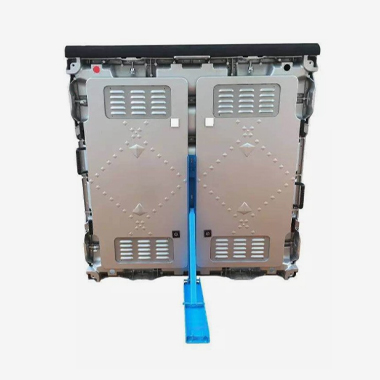
Multiple modules are then mounted and aligned with micron-level precision onto a larger structure known as a Cabinet or Panel. The cabinet is the structural heart of the system. It is a rigid, often aluminum-made frame that provides mechanical stability, ensures the perfect flatness and seamlessness of the multi-panel display, and houses the critical ancillary systems. Inside the cabinet, one finds the power supplies that convert incoming AC power to the low-voltage DC required by the LEDs, and the data processing hardware, often a receiving card that acts as the local command center for all the modules on that panel.
The method of data transmission is a critical part of the design. Modern high-resolution screens use sophisticated serial communication protocols. Data originates from a central video processor (the "master brain") and is daisy-chained from one cabinet to the next via high-speed, locking cables. To manage the immense data rates required for 4K and 8K content across hundreds of panels, designs often incorporate redundancy and high-bandwidth interfaces like HDMI, DVI, or SDI, and increasingly, network-based protocols like HDBaseT.
The physical design is equally ingenious. Cabinets are designed for rapid deployment—a necessity in the fast-paced event industry. They feature quick-lock mechanisms that allow crews to build vast video walls in hours, not days, with automatic alignment pins ensuring a seamless, flush fit. Weight is a constant consideration; designers use lightweight yet strong alloys and composites to minimize the load on venue structures. For outdoor events, the design must account for environmental factors. Cabinets are rated with an Ingress Protection (IP) rating—e.g., IP65—indicating they are dust-tight and protected against low-pressure water jets from any direction, making them resilient against rain and weather.
Another crucial design aspect is cooling. High-density LED arrays generate significant heat, which can reduce LED lifespan and cause color shift. Designs employ passive cooling (e.g., finned aluminum cabinets that act as heat sinks) or active cooling (quiet, internal fans) to maintain a stable operating temperature. Finally, everything is integrated with rigging points compatible with standard trussing systems, allowing screens to be flown, stacked, or shaped into curves and arches. This meticulous, multi-layered design process—from the nano-scale of the LED chip to the macro-scale of the rigging structure—is what transforms a simple concept into a robust, reliable, and breathtaking visual instrument capable of dominating the world's biggest stages.
The magic of a high-resolution LED screen—transforming electrical signals into a brilliant, moving image—is governed by a sophisticated orchestration of hardware and software. The process can be broken down into a coherent chain of command: data generation, processing, transmission, and finally, illumination.
It begins with a Video Source. This could be a live camera feed, a pre-rendered video file playing from a media server, a graphics output from a presentation computer, or real-time data visualization. This source outputs a standard video signal (e.g., HDMI or SDI) containing the complete image data for each frame.
This signal is fed into the most critical component in the chain: the Video Processor or Controller. This dedicated, high-power computer is the central nervous system of the LED display. Its job is far more complex than simply relaying the signal. It performs several vital functions:
Resolution Matching (Scaling): The native resolution of the input source (e.g., 1920x1080) rarely matches the custom, non-standard resolution of the tiled LED wall (e.g., 5760x2160 pixels). The processor scales the source image to fit the exact pixel dimensions of the LED canvas without distorting the aspect ratio.
Color Calibration & Management: The processor applies complex algorithms and Look-Up Tables (LUTs) to ensure the colors displayed on the LED screen are perfectly accurate and consistent across the entire display, matching the director's or designer's intent. It corrects for any variances between individual LED modules.
Image Enhancement: It can sharpen images, adjust brightness and contrast dynamically based on ambient light sensors, and even handle high dynamic range (HDR) content to provide a greater range of luminosity and color.
Data Reorganization: This is its most unique function. The processor takes the conventional, sequential video signal and completely remaps it. It breaks the single image into chunks, each corresponding to an individual LED cabinet in the array. It then packages the pixel data for each cabinet into a serial data stream.
This reorganized data is then sent out from the processor via high-speed data cables (like CAT5e/6 or fiber optic) to the LED Cabinets. The data travels in a daisy-chain fashion from the first cabinet to the last. Each cabinet has a Receiving Card that listens to the data stream. It identifies the portion of the data packet intended for its specific address, grabs it, and then passes the rest of the data along to the next cabinet with virtually zero latency.
The receiving card then distributes the data to the individual Driver ICs on the LED modules. These drivers are the workhorses of pixel control. They use a technique called Pulse-Width Modulation (PWM) to control the brightness of each red, green, and blue sub-pixel. Instead of varying the electrical current (which would change the color of the LED), PWM rapidly turns the LED on and off. The ratio of "on" time to "off" time within a very short cycle (thousands of times per second) determines the perceived brightness. A 50% duty cycle appears half as bright as a 100% cycle. By independently controlling the PWM for each of the three diodes in a pixel, the driver can create millions of color combinations.
This entire process happens for every single frame of video. The refresh rate of the screen—how many times per second the image is redrawn—is extremely high (often 3840Hz or higher for the driver ICs), which eliminates flickering and ensures smooth motion, even for high-speed camera pans and slow-motion replays. The result is a breathtakingly bright, colorful, and seamless moving image, all created through the precise, coordinated blinking of millions of microscopic lights, managed by a cascade of intelligent technology working in perfect sync.
The ascendancy of LED technology in the event industry is no accident; it is driven by a compelling set of advantages over traditional display technologies like projection or LCD video walls. However, deploying these complex systems is not without its significant challenges and considerations.
Advantages:
Superior Brightness and Visibility: This is arguably their greatest strength. LED screens are emissive displays—they generate their own light. This allows them to achieve extremely high levels of brightness (measured in nits or candelas per square meter). Unlike projectors, whose images can be washed out by ambient light, LED screens remain vibrant and clearly visible even under direct stage lighting or bright sunlight, making them ideal for any environment.
Seamless Scalability and Modularity: Their panel-based construction allows for the creation of displays of virtually any size or aspect ratio without a visible bezel or gap, a limitation inherent to tiled LCD walls. They can be configured into standard rectangles, curved surfaces, cylinders, arches, and even complex 3D shapes, offering creative freedom that is simply unmatched.
Exceptional Reliability and Longevity: LEDs have an exceptionally long lifespan (often 100,000 hours to half-brightness). Furthermore, the modular nature means a failure is rarely catastrophic. If an individual module or power supply fails, it can be swapped out quickly without taking the entire screen offline, a critical feature for live events where there is no room for error.
Wide Viewing Angles: High-quality LED screens maintain consistent color, contrast, and brightness across viewing angles of 160 degrees or more. This ensures a perfect view for audience members seated at extreme side angles, unlike LCDs which suffer from color shift and contrast loss off-axis.
Robustness for Live Events: Designed for touring, modern LED cabinets are rugged, often weatherproof, and built to withstand the rigors of transportation and rapid installation/de-installation. Their solid-state construction has no fragile glass components like projectors or LCDs, making them more resistant to vibration and shock.
Challenges and Considerations:
Cost: High-resolution LED remains a significant capital investment. The cost increases exponentially as pixel pitch decreases (finer resolution). This includes not just the screen itself, but also the powerful video processors, rigging hardware, and transportation cases. Operational costs, including specialized crew for installation and operation, also add up.
Power and Thermal Management: A large, high-brightness LED wall is a power-hungry system, requiring substantial electrical infrastructure at a venue. This power draw also generates considerable heat, which must be managed effectively with cooling systems to prevent damage and ensure performance consistency.
Weight and Structural Logistics: While constantly improving, large LED displays are heavy. Deploying a massive screen requires thorough analysis of the venue's structural integrity and often necessitates significant rigging and support systems, which adds to the complexity and cost.
Content Demands: The "garbage in, garbage out" principle is starkly evident. Low-resolution source content will look poor on a massive, high-resolution screen. These displays demand high-bitrate, professionally produced content crafted specifically for their unique resolution and scale to truly shine. This requires additional expertise and budget for content creation.
Technical Complexity: Operating a high-end LED system is not a simple plug-and-play affair. It requires trained technicians for calibration, color matching, and troubleshooting. The integration of media servers, processors, and complex data networks demands a high level of expertise to ensure a flawless outcome.
In conclusion, while the challenges of cost, logistics, and technical demand are real, the advantages of brightness, flexibility, and reliability make high-resolution LED the undisputed champion for creating impactful, memorable, and scalable visual experiences in the modern event industry.
The versatility of high-resolution LED technology has propelled its adoption across a breathtakingly diverse spectrum of applications, fundamentally changing how we experience events. Simultaneously, relentless innovation is pushing the boundaries of what these screens can do, charting a course for an even more immersive and integrated future.
Applications:
Live Music and Festival Productions: This is where LED technology has become synonymous with spectacle. It serves as dynamic stage backdrops, amplifying artists with close-ups and psychedelic visuals. It forms sprawling side screens, ensuring every attendee has a view. "Vanish" screens, with transparent properties, allow for stunning reveals and layered depth, while stage floors and overhead "ceiling" displays create fully immersive 360-degree environments.
Corporate and Trade Show Events: Here, LED screens are tools of communication and brand elevation. They form the central backdrop for keynotes, displaying polished presentations, graphics, and live video feeds. Product launches use them for dramatic reveals and to display intricate product details. At trade shows, they are indispensable for attracting attention to booths and demonstrating software and services with stunning clarity.
Broadcast and Studio Environments: The use of ultra-fine-pitch LED panels has revolutionized television production. They serve as virtual sets, displaying photorealistic or entirely fantastical environments that can be changed in an instant, eliminating the need for physical set construction and storage. This technology, popularized by shows like "The Mandalorian," allows for in-camera visual effects with realistic lighting and reflections, saving vast amounts of post-production time and cost.
Sporting Events: Beyond the iconic giant scoreboards, LED technology rings arenas as digital signage for advertising, stats, and instant replays. It is integrated into the playing field itself (e.g., hockey rink boards) for dynamic advertising. Tunnel and entranceways use them to create electrifying player introductions, building atmosphere and fan engagement.
Fixed Installations and Architectural Use: While focused on events, the line is blurring with permanent installations. Concerts halls, theaters, and worship venues are permanently installing LED walls for production flexibility. Furthermore, LED technology is merging with architecture in the form of media façades, turning entire buildings into massive, dynamic canvases for public art and advertising.
Future Trends:
Transparent and Flexible LED: Transparent LED screens, which offer see-through properties when not active, will become more mainstream for creating layered visual effects without completely obscuring stages or venues. Flexible panels that can conform to complex curved shapes will enable even more organic and innovative stage designs.
Higher Resolution and MicroLED: The relentless drive for finer pixel pitches will continue. MicroLED technology, which uses microscopic, individual inorganic LEDs that are transferred to a substrate, represents the next frontier. It promises the perfect combination of OLED-like perfection (true blacks, incredible contrast) with the brightness, longevity, and modularity of traditional LED, all without any risk of image burn-in.
Integration with XR and Interactive Tech: The future is interactive and immersive. LED walls will be increasingly paired with XR (Extended Reality) technology. By tracking the camera's position in real-time, the content on the LED wall can shift perspective, creating a seamless, infinite virtual environment that blends with real-world elements. Furthermore, the integration of interactive sensors will allow audiences to influence the visuals on the screen in real-time through motion or mobile devices, creating a participatory experience.
Smarter, Lighter, and More Efficient: Panels will continue to become lighter, reducing structural loads and deployment complexity. Built-in intelligence will grow, with features like internal calibration sensors that automatically maintain color uniformity and predictive analytics that alert crews to potential component failures before they happen. Energy efficiency will also improve, reducing power consumption and thermal output through more advanced driver ICs and LED chip technology.
Convergence with Other Technologies: LED will not exist in a vacuum. Its future lies in seamless convergence with other technologies like projection mapping, holography, live performance, and sensory effects (e.g., wind, scent) to create multi-sensory, holistic experiences that are greater than the sum of their parts, pushing the boundaries of live event storytelling into uncharted territory.
Conclusion
The high-resolution LED event screen has transcended its functional role as a mere display device to become the central, defining canvas of modern collective experience. It is a technology that has quietly revolutionized how we gather, how we share stories, how we celebrate athleticism, and how we conduct business. Its journey from a utilitarian information board to a pixel-perfect, shape-shifting marvel of engineering is a testament to human ingenuity and our innate desire to enhance communication through visual spectacle.
The impact of this technology is multifaceted. For creators—artists, designers, and directors—it has unlocked an unprecedented level of creative freedom. Stages are no longer static sets but dynamic, living environments that can transform in an instant from a intimate room to a vast cosmic landscape. For audiences, it has democratized the experience, ensuring that every attendee, regardless of their seat, has a perfect, immersive view that connects them intimately to the action. For event producers and brands, it has become the most powerful tool for engagement, branding, and delivering a memorable message with stunning impact.
The core strengths of LED—its blinding brightness, seamless scalability, rugged reliability, and visual consistency—have made it the undisputed solution for the demanding, unpredictable world of live events. While challenges of cost, complexity, and logistical demands remain, they are continually being mitigated by advancements in manufacturing, efficiency, and user-friendly software. The technology is not standing still; it is charging forward into a future defined by transparency, flexibility, microscopic resolution, and deep integration with virtual and interactive systems.
In essence, the high-resolution LED screen is more than a piece of technology; it is a portal. It is the medium through which digital imagination is made physically palpable. It has reshaped the architecture of events, dissolved the limitations of venue, and amplified the emotional resonance of live performance. As we look to the future of events, whether in-person, broadcast, or a hybrid of both, the LED canvas will undoubtedly remain at the heart of the experience, continuing to evolve and redefine the very possibilities of spectacle, connection, and storytelling.


Copyright © 2026 Shenzhen Cogo Technology Co.,Ltd.
All Rights Reserved

 Previous article