




 Chat Now
The evolution of concert production from simple, utilitarian illumination to a fully immersive, multi-sensory experience is a narrative largely defined by technological advancement. At the heart of this transformation lies the LED (Light Emitting Diode) stage lighting screen, a technology that has fundamentally redefined the visual language of live performance. More than just a tool for visibility, the modern LED screen is the dynamic, digital canvas upon which artists and creative directors paint worlds, convey narratives, and amplify emotional resonance, making it an indispensable pillar of contemporary concert staging.
Historically, concerts relied on physical sets, painted backdrops, and analog lighting rigs to create atmosphere. While effective for their time, these elements were static, limiting the scope for dynamic visual storytelling. The introduction of large-scale video projection was a significant step forward, but it came with inherent limitations: it required darkness to be effective, was susceptible to being washed out by stage lights, and needed precisely calculated throw distances. The advent and subsequent refinement of LED technology for live events shattered these constraints. Initially used for simple text and low-resolution video walls in the 1980s and 1990s, LED screens were bulky, had poor color fidelity, and were prohibitively expensive. However, as with most digital technology, the pace of innovation was rapid.
The core function of a concert LED screen has expanded far beyond merely showing a feed of the performing artist. It is a multifaceted production tool with several key roles. Primarily, it acts as a set piece and environment creator. It can transport an audience from a packed arena to a dystopian cityscape, a serene forest, or the surface of Mars within seconds. This ability to change the entire context of a performance between songs, or even during them, provides a narrative fluidity that physical sets could never achieve. Directors like Es Devlin and Sam Wrench have built legendary careers on their mastery of using LED volumes to create breathtaking, scalable worlds for artists like Beyoncé, U2, and Billie Eilish.
Secondly, it serves as a giant visual amplifier. Close-up shots of the artist, capturing every nuanced expression, sweat droplet, and gesture, create an intimate connection with audience members seated hundreds of feet away. This function democratizes the experience, ensuring that a ticket in the upper balcony still offers a visceral, personal view of the performer. Furthermore, screens are used to display abstract graphics, lyric videos, and pre-produced cinematic content that complements the music’s mood, rhythm, and thematic content. A heavy bass drop can be accompanied by a pulsating geometric pattern; a melancholic ballad can be underscored with flowing, ethereal visuals.
The technical ecosystem of an LED screen system is complex. It is not a single monolithic unit but a modular system comprising thousands of individual panels that lock together to form vast, seamless surfaces—walls, floors, arches, and even 3D structures. These panels are built from modules, which themselves are made of countless individual LEDs, the tiny pixels that form the image. The entire system is managed by a sophisticated control network. A video media server, the brain of the operation, stores and processes the high-resolution content. It takes inputs from live camera feeds, pre-rendered video files, and real-time generative graphics engines, and then outputs the signal to the LED processors. These processors, attached to the screen sections, decode the signal and instruct each individual LED on what color and brightness to display at any given microsecond, synchronized perfectly with the music via timecode.
The impact of LED technology on concert economics and logistics is also profound. While the initial investment is high, its reusability and flexibility across tours reduce long-term costs associated with building and transporting unique physical sets for every show. A single LED wall can represent infinite sets, making tours more sustainable from a logistical standpoint, if not entirely from an energy consumption one.
In essence, the LED screen has evolved from a novel visual aid to the central storytelling device of a live concert. It has broken down the barrier between the performer and the audience, between the physical and the digital, creating a hybrid space where music and visual art fuse into a singular, overpowering experience. It is the reason why modern concerts are often described as "spectacles" – and it is the LED canvas that provides the spectacle its ever-changing form.
The breathtaking visual spectacles witnessed at a concert are the final product of a deeply engineered and meticulously constructed system. The design and construction of an LED stage lighting screen is a fascinating interplay of material science, electronic engineering, software development, and industrial design. It is a process focused on achieving four critical goals: superior image quality, structural integrity and safety, modular flexibility, and operational reliability in the demanding environment of a world tour.
At the most fundamental level, the building block of any LED screen is the LED itself. However, not all LEDs are created equal. A single "pixel" on a modern high-resolution screen is typically not a single diode but a cluster of three or four miniature LEDs housed in a single surface-mount device (SMD): one red, one green, and one blue (RGB). By varying the intensity of these three primary colors, the pixel can produce millions of distinct hues. The latest advancements include adding a fourth, white LED (RGBW) to achieve purer whites and a broader color gamut, crucial for accurate skin tones and vibrant visuals. The quality of the LEDs—their luminance output, color consistency, and longevity—directly dictates the overall performance of the screen.
These LEDs are mounted onto a Printed Circuit Board (PCB) to form an LED module. This small, often rectangular unit (e.g., 320mm x 320mm) is the essential tile of the video wall. A single module can contain hundreds or even thousands of individual pixels, depending on the desired pixel pitch. The PCB not only provides the electrical pathways to control each LED but also incorporates driver ICs (Integrated Circuits) that receive data and power and translate commands into light. The design of the module must ensure efficient heat dissipation, often through aluminum substrates and careful component placement, as excessive heat is the primary enemy of LED lifespan.
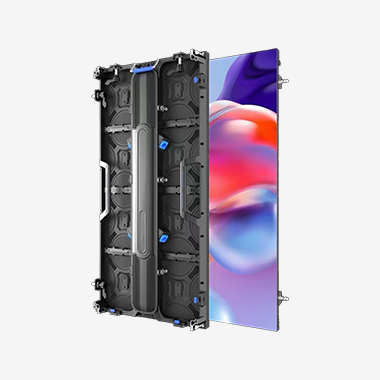
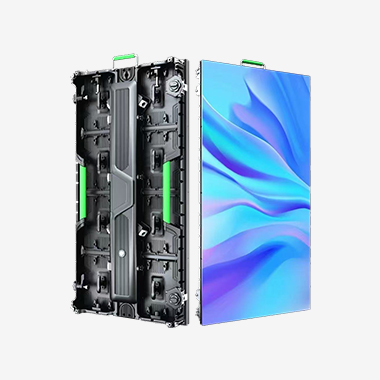
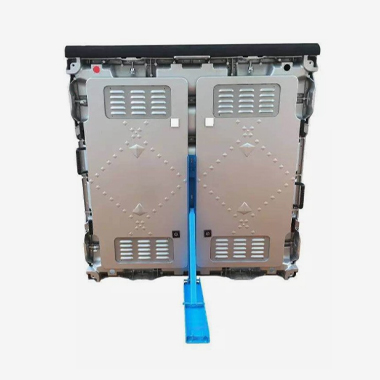
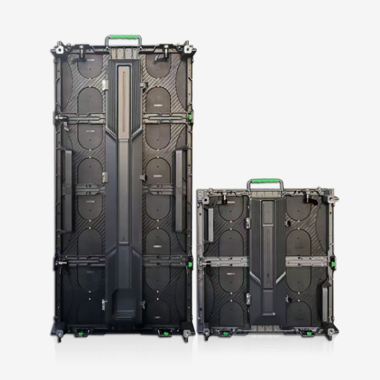
Multiple modules are then mounted into a ruggedized panel or cabinet. This is the structural unit that technicians physically handle and assemble. Cabinets are typically made from die-cast aluminum or reinforced steel for strength and lightness. They house the modules, the necessary (receiving and distributing data and power) hardware, power supplies, and the sophisticated receiving cards that act as the local brain for that section of the screen. Cabinets are designed with quick-release mechanisms, often self-locking latches, for rapid and safe assembly and disassembly. They also feature robust connectors for data (e.g., HDBT or etherCON connectors) and power (e.g, PowerCON TRUE1) that are designed to withstand thousands of mating cycles, resist vibration, and prevent accidental disconnection.
A critical specification born from this construction is pixel pitch. This is the distance, in millimeters, from the center of one pixel to the center of the adjacent pixel. It is the primary determinant of resolution. A smaller pixel pitch (e.g., P2.6) means pixels are closer together, resulting in a higher resolution suitable for close-viewing applications (on-stage screens or front-facing walls). A larger pixel pitch (e.g., P10 or P16) is used for massive background screens where the audience is viewing from a greater distance, balancing image quality with cost and weight. The choice of pixel pitch is one of the first and most crucial decisions in the design process for a specific tour.
The physical form of LED screens has also dramatically evolved. Beyond flat walls, manufacturers now produce curved panels that can create sweeping arcs and cylindrical surfaces. Flexible LED panels, built on a flexible PCB and often using rope-like technology, can be bent into organic shapes, wrapped around columns, or even used to create waving banners. For flooring applications, LED floor tiles are constructed to be incredibly robust, with weight-bearing capacities of thousands of pounds, anti-slip surfaces, and often a protective top layer of tempered glass or polycarbonate to withstand the pounding of dancers and heavy equipment.
The entire system is designed for the brutal reality of touring. This means undergoing rigorous testing for reliability. Cabinets are subjected to shock and vibration tests that simulate thousands of miles in a truck. Connectors are tested for tens of thousands of insertions. LEDs are tested for color consistency and brightness output over tens of thousands of hours. Environmental sealing is rated using an IP (Ingress Protection) rating (e.g., IP65). A rating of IP65 means the cabinet is dust-tight (6) and protected against water jets from a nozzle (5), making it safe for use in outdoor concerts or in environments where fog machines and pyrotechnics might expose it to moisture.
Finally, the design is completed by the control and data infrastructure. Modern LED walls use networked protocols like Art-Net or sACN to transmit vast amounts of data from the media servers to the processors on each cabinet. This network must be high-bandwidth, low-latency, and incredibly stable. Redundancy is often built in, with backup network paths and power supplies to ensure the show will continue even if a single component fails.
In conclusion, the construction of an LED screen is a masterpiece of modern engineering. It transforms fragile electronic components into a rugged, modular, and incredibly powerful visual instrument. Every material choice, from the type of aluminum alloy in the cabinet to the coating on the connectors, is made with the singular purpose of creating a reliable and breathtaking canvas that can survive the road and shine night after night.
The mesmerizing, seamless imagery on a concert LED screen is the result of a perfectly synchronized digital symphony conducted by a complex chain of hardware and software. The working principles behind these systems involve the precise conversion of digital data into physical light, managed across thousands of individual points and synchronized to the millisecond with the performance on stage. Understanding this process reveals the remarkable engineering that makes these modern spectacles possible.
The process begins with content creation and management. Visual content is designed and pre-rendered by a team of video artists and designers using software like Disguise, Notch, TouchDesigner, or traditional applications like Adobe After Effects. This content can be:
Pre-recorded video: Cinematic sequences, abstract motion graphics, or lyrical animations.
Live camera feed: Signals from stage cameras, often with real-time effects or chroma keying (green screen) applied.
Real-time generative graphics: Content created on the fly by software like Notch or TouchDesigner that reacts to audio input (e.g., music frequency, amplitude) or other data sources, ensuring a unique visual response to each live performance.
This content is stored and managed by a powerful video media server, such as those from disguise, Green Hippo, or AV Stumpfl. The server is the brain of the operation. It does not merely play back video; it acts as a powerful compositor. It takes all the different video sources—multiple camera angles, pre-rendered clips, real-time graphics—and layers, masks, and maps them onto the virtual canvas that represents the physical LED screen setup. For complex 3D screen shapes, the server uses a process called projection mapping on a virtual 3D model to correctly warp and distort the video so it appears perfectly proportioned from the audience's perspective.
The next critical step is signal transmission. The media server outputs a high-bandwidth video signal. However, transmitting a single, massive signal for a screen comprised of millions of pixels is impractical. Instead, the overall image is broken down into smaller sections. This is handled by a series of video processors and sending cards. The signal is distributed over a high-speed network, typically using Ethernet protocols like Art-Net or sACN, which package the video data into network packets. This network-based approach allows for scalable, flexible, and robust control over long cable runs.
This network data arrives at the LED screen itself. Each individual LED cabinet contains a receiving card. This card is the local manager for that cabinet's section of the screen. It takes the network data destined for its modules, decodes it, and prepares to instruct the LEDs. The receiving card is connected to the LED modules via ribbon cables.
Within each module, the commands are handled by driver ICs (Integrated Circuits). These chips are the workhorses of the system. They use a communication protocol specifically designed for controlling LEDs, the most common being Constant Current Reduction (CCR) or multiplexing protocols. The driver IC receives data for a specific row and column of LEDs on the module and delivers a constant current to each individual red, green, and blue micro-LED to achieve the exact required brightness and color. This happens at an incredibly high refresh rate (often 3840Hz or higher) to eliminate flickering, even when captured by professional high-speed cameras.
The principle of pixel mapping is crucial here. The media server and processors have a precise digital map of the entire physical screen structure—every cabinet, every module, and every pixel's location. The output signal is precisely addressed so that the data packet for the top-left pixel of the entire screen is sent to the driver IC controlling that exact physical pixel. This coordination ensures a perfectly coherent image across thousands of separate modules.
Synchronization is the final, non-negotiable element. The entire system—media servers, cameras, lighting consoles, and pyrotechnics—runs on a shared timecode signal, often LTC (Linear Time Code) or MIDI Time Code. This means that at the exact moment the song hits the first beat of the chorus, the corresponding video content, lighting cue, and pyro effect are triggered simultaneously. The low latency of the network ensures that the video on the screens is perfectly in sync with the live audio coming from the stage, preventing any disorienting delay for the audience.
In summary, the working principle is a continuous, high-speed loop:
Content Selection: The media server selects and composites the video source based on the timecode.
Data Distribution: The composited image is sliced into sections and sent as network data to the specific processors for each section of the LED wall.
Local Processing: Receiving cards in each cabinet decode their portion of the image data.
Pixel Driving: Driver ICs on each module translate the digital data into precise electrical currents.
Light Emission: Individual RGB micro-LDs illuminate at the commanded intensity and color.
This entire process, from server to light, happens in milliseconds, repeated for every frame of video, creating the dynamic, responsive, and awe-inspiring visual backbone of the modern concert experience.
The adoption of LED screen technology has irrevocably transformed concert production, offering a suite of powerful advantages that have made it the industry standard. However, this powerful tool is not without its significant challenges and drawbacks. A clear-eyed view of both sides is essential to understanding its role and future evolution.
Advantages
Unparalleled Visual Impact and Versatility: This is the most significant advantage. LED screens provide the brightest, most vibrant, and highest-resolution visuals possible in a live setting. They are visible even under direct stage lighting, overcoming the primary limitation of projection. Their versatility is boundless; a single screen can function as a backdrop, a virtual set, a live feed monitor, an abstract art piece, and a narrative device, all within one show. This eliminates the need for multiple, cumbersome physical set pieces.
Dynamic Storytelling and Immersion: Unlike static sets, LED screens create a living, breathing environment. They allow artists to change the entire aesthetic and location of the performance instantly, supporting the emotional arc of the setlist. This dynamic capability fosters a deeper level of audience immersion, making them feel transported rather than just observers.
Scalability and Modularity: LED walls are inherently scalable. The same panel technology can be used to create a small, on-stage screen for a club show or a stadium-sized backdrop for a global tour. Their modular nature means they can be configured into countless shapes—curved walls, arches, tunnels, overhead ceilings, and stage floors—offering endless creative possibilities.
Logistical and Economic Efficiency (Long-Term): While the initial capital outlay is high, LED screens can be a cost-effective solution over time. A single investment in a high-quality LED inventory can be reconfigured and reused for countless different tours and events. This reduces the cost and environmental waste associated with building, painting, transporting, and disposing of traditional wooden and scenic sets for every new production.
Enhanced Audience Connection: The use of live camera feeds on LED screens creates intimacy in a vast space. Fans in the nosebleed seats can see the sweat on the artist's brow and the glint in their eye, creating a personal connection that was previously impossible in large venues. This democratizes the concert experience.
Integration and Synchronization: LED systems integrate seamlessly with the rest of the production ecosystem. Through timecode, the visuals can be perfectly synchronized with lighting, pyro, lasers, and automation, creating a cohesive and precisely timed spectacle where all elements work in harmony to support the music.
Challenges and Drawbacks
High Initial Investment and Maintenance Costs: Top-tier LED screen technology is extremely expensive. The cost per panel, plus the essential infrastructure of media servers, processors, and a vast network of cabling, represents a significant capital investment for a rental house or production company. Maintenance is also costly, requiring skilled technicians and a stock of spare modules, panels, and components to quickly address failures.
Technical Complexity and Failure Points: An LED wall is a complex system with thousands of potential points of failure: a single LED, a driver IC, a power supply, a receiving card, or a network cable. A failure in one pixel can create a distracting "dead pixel," while a failure in a power supply or receiving card can black out an entire cabinet. This demands a highly skilled video crew on-site for troubleshooting and repair.
Weight and Rigging Demands: Despite advancements, large LED installations are incredibly heavy. A full stage backdrop and floor can exert tons of weight on a venue's rigging points. This requires meticulous engineering and certified riggers to ensure the structure is safe and secure, adding to the complexity and cost of the load-in.
Power and Thermal Management: LED walls are power-hungry systems. A large setup can require a dedicated high-amperage power distribution system, sometimes straining older venues. All that electrical energy is converted into both light and heat. Effective thermal management is critical; inadequate cooling can lead to accelerated LED degradation and catastrophic component failure.
The "Uncanny Valley" and Artistic Over-reliance: There is a risk that the technology can overshadow the art. An over-reliance on flashy, pre-produced visuals can sometimes feel impersonal or create a disconnect between the organic nature of a live musical performance and the sterile perfection of digital content. The artist must remain the focal point, with the technology serving to enhance, not replace, their presence.
Environmental Impact: While reusable, the environmental cost of manufacturing LEDs, processing rare earth elements, and the high energy consumption during operation are significant concerns. The industry is grappling with the full lifecycle environmental impact of this technology, from production to eventual electronic waste disposal.
In conclusion, the advantages of LED screens have made them a cornerstone of modern concerts by enabling previously impossible levels of visual creativity and audience engagement. However, their adoption demands significant financial resources, technical expertise, and careful planning to mitigate the challenges of cost, complexity, and reliability. The most successful productions are those that strike a balance, using the technology as a powerful servant to the music, not its master.
The application of LED technology in concerts has moved far beyond the simple "jumbotron" at the back of the stage. It has become a multi-dimensional tool for set design, audience engagement, and even redefining the performance space itself. Concurrently, the technology is advancing at a breakneck pace, pointing toward a future where the line between the physical and digital stage blurs into oblivion.
Current Applications
The Main Backdrop: The most common application remains the large, central video wall behind the stage. This is the primary canvas for displaying thematic content, immersive environments, and live feeds of the performers.
LED Floors and Stages: Perhaps one of the most transformative applications, LED flooring turns the stage itself into a dynamic surface. It can create the illusion of depth, with graphics that appear to drop away into infinity, or provide a responsive surface where the artist's footsteps can trigger visual effects. It is crucial for creating a completely cohesive 360-degree visual environment.
Set Pieces and Scenic Elements: LEDs are now embedded into what were traditionally physical set pieces. Imagine a giant moving robot with LED panels for eyes, or trees with LED leaves that change color with the seasons of a song. Screens are built into risers, ramps, and podiums, making every element of the stage a potential source of light and imagery.
Transparent LED Screens: These screens offer a unique magical effect. Placed in front of the artist, they can display graphics while still allowing the audience to see through to the performer behind them. This allows for stunning layered effects, such as a performer appearing to be inside a digital storm or walking through a virtual landscape.
3D Volumes and "VFX in Camera": The most cutting-edge application, borrowed directly from film and television (e.g., The Mandalorian), is the use of massive, curved LED walls as in-camera backgrounds. Instead of using green screen and adding backgrounds in post-production for live streams or video releases, the performers are filmed directly in front of a photorealistic, real-time rendered environment displayed on the LED wall. This provides realistic lighting reflections on the artists and instruments and gives the camera operators a finished look to frame in real time.
Future Trends
Higher Resolution and Micro-LED Technology: The relentless pursuit of smaller pixel pitches will continue. Micro-LED technology, which uses microscopic, individual inorganic LEDs that are self-emissive, is the holy grail. It promises incredible brightness, perfect black levels (as each pixel can turn off completely), superior color gamut, and reduced power consumption. This will enable massive screens with resolutions indistinguishable from a 4K television, even from very close distances.
Flexible and Conformable Surfaces: The future is curved and organic. We will see an increase in truly flexible, lightweight, and even rollable or foldable LED screens. This will drastically reduce transportation costs and allow for the creation of previously impossible stage designs—flowing digital curtains, costumes integrated with LEDs, and completely enveloping, cocoon-like environments.
Enhanced Interactivity and Real-Time Responsiveness: The future of LED screens is reactive. Using sensors and AI, screens will respond in real-time not just to the audio of the music, but to the actions of the performers and even the audience. Imagine a vocalist's melody generating a matching visual waveform across the screen, or a guitarist's movement triggering a cascade of particles. Audience phones could be integrated via apps to influence the visuals, creating a collective, interactive experience.
Volumetric Displays and True Holography: While still in its infancy for live events, the development of volumetric displays that create true 3D light fields without the need for glasses will be a game-changer. This could allow for the "resurrection" of past artists as holograms that have real depth and volume, or the creation of fantastical 3D creatures that appear to share the stage with the live performers.
Sustainability Focus: The industry will be pushed toward more sustainable solutions. This includes developing LEDs with lower power consumption, using recyclable materials in cabinet construction, creating more efficient cooling systems, and establishing robust recycling programs for old or damaged modules to combat e-waste. Energy-efficient driver technology and the use of local renewable energy sources for powering these massive setups will become a priority.
Convergence with Augmented Reality (AR): For live streams and broadcasts, the future lies in merging the physical LED stage with digital AR overlays. Viewers at home could see effects and elements that aren't physically present on the real stage, creating a unique, enhanced experience tailored for the broadcast audience that complements the live experience rather than merely replicating it.
In essence, the application of LED technology is evolving from displaying video to constructing reality. The future trend is toward more immersive, interactive, and intelligent systems that are also more sustainable. The LED screen will cease to be a thing on the stage and will instead become the stage—a responsive, intelligent environment that is an active participant in the performance itself.
Conclusion: The Indispensable Luminescent Heart of Live Music
From its humble beginnings as a monochromatic message board to its current status as a towering, hyper-realistic digital universe, the LED stage lighting screen has completed a revolutionary journey. It has not merely found a place in the concert production toolkit; it has redefined the very possibilities of what a live musical performance can be. As we have explored, its impact is multifaceted, touching upon artistic expression, technical execution, economic models, and audience experience.
The LED screen's greatest triumph is its democratization of spectacle. It has placed the power of cinematic-scale visual storytelling into the hands of artists and directors, enabling them to craft immersive narratives that travel with the tour. It has broken the fourth wall, using live feeds to forge an intimate connection between performer and fan across vast distances. It has replaced the static, physical constraints of traditional sets with a boundless, dynamic digital realm limited only by imagination. The screen is no longer a backdrop; it is a co-star, an environment, and a shape-shifting character in the show.
Yet, this power comes with a price. The complexity, cost, and sheer physical demands of these systems are profound. They represent a significant investment and require a small army of highly skilled technicians to bring to life and maintain. The industry must also conscientiously address the environmental footprint of manufacturing and powering these technological behemoths, pushing innovation toward greater sustainability.
Looking forward, the trajectory is clear. The convergence of ever-higher resolutions (like Micro-LED), flexible materials, real-time interactivity, and virtual production techniques is pushing us toward a new paradigm. The stage of the future will be an intelligent, responsive volume of light—a canvas that doesn't just display pre-recorded content but actively interacts with the music, the performers, and the audience to create a unique, living performance every night.
In conclusion, the LED screen has cemented its role as the indispensable luminescent heart of the modern concert experience. It is the primary engine for the visual emotion that complements the auditory emotion of music. It has elevated concerts from simple musical performances to holistic, unforgettable theatrical events. While challenges remain, the relentless pace of innovation promises a future where the boundaries between the real and the virtual dissolve completely, ensuring that the live music experience will continue to evolve in ways we are only beginning to imagine. The show will not just go on; it will shine brighter, smarter, and more immersively than ever before.


Copyright © 2026 Shenzhen Cogo Technology Co.,Ltd.
All Rights Reserved

 Previous article