




 Chat Now
In the realm of digital display technology, the high-resolution LED video wall represents the pinnacle of visual performance and immersive experience. It is the ultimate tool for commanding attention, conveying information with crystal clarity, and creating awe-inspiring environments. Unlike their large-format outdoor cousins or transparent mesh counterparts, high-resolution LED video walls are engineered for one primary purpose: to deliver seamless, breathtaking image quality at increasingly close viewing distances. This overview delves into the essence of this technology, exploring its defining characteristics, its evolution, and its fundamental role as the centerpiece of modern command, control, corporate, and entertainment spaces.
The term "high-resolution" in the context of LED video walls is relative and constantly evolving. It is intrinsically linked to pixel pitch—the distance, in millimeters, from the center of one LED pixel to the center of the adjacent pixel. While a P10 pitch might be considered high-resolution for a massive stadium screen viewed from hundreds of feet away, for indoor applications where viewers may be only a few meters away, "high-resolution" now typically encompasses pitches from P2.5 down to an astonishingly dense P0.6 and even finer. This relentless drive towards finer pixel pitches is the central story of this technology's evolution, fueled by advancements in Surface-Mounted Device (SMD) manufacturing, miniaturization of driver integrated circuits (ICs), and sophisticated signal processing.
A high-resolution LED video wall is not a single, monolithic screen but a modular system composed of individual panels or cabinets that are meticulously assembled into a seamless, contiguous canvas. The pursuit of a "tile-free" experience with no visible grid lines or bezels is the holy grail of this industry. This has led to revolutionary manufacturing techniques such as Die-Cast Aluminum cabinets that provide micron-level precision for perfect flatness and alignment, and advanced surface treatments like mask-based or glue-based "blacking" processes that increase contrast by reducing reflected light from the gaps between pixels.
The applications for this technology are diverse yet united by a common need for superior image fidelity. In corporate lobbies and boardrooms, they project an image of innovation and success, displaying data visualizations and video conferences with stunning detail. In broadcast studios, they form the dynamic, virtual backdrops that have become standard in news and weather reporting. In command and control centers for traffic management, network security, and emergency response, they provide the critical visual real estate for operators to monitor complex data feeds without eye strain. And in high-end retail and luxury brand stores, they create immersive brand experiences that captivate customers.
The value proposition of a high-resolution LED video wall is multifaceted. It is, first and foremost, a tool for unparalleled engagement. The combination of large scale, brilliant color, and high brightness creates a visual magnet that is impossible to ignore. Secondly, it is a tool for efficiency, particularly in control room environments, where the ability to visualize multiple streams of information on a single, seamless canvas enhances situational awareness and decision-making speed. Finally, it is a statement. The installation of such a advanced and costly system signifies a commitment to quality, technology, and a forward-thinking mindset.
However, achieving this level of performance is a complex endeavor. It requires a harmonious integration of hardware engineering, thermal management, video processing, and content design. The challenges are significant: managing the heat generated by densely packed electronics, ensuring perfect color uniformity across thousands of individual modules, transmitting vast amounts of data across the wall without latency, and creating content that truly leverages the native resolution of the system.
In essence, the high-resolution LED video wall is the culmination of decades of advancement in display technology. It represents the point where digital signage transcends its functional role and becomes a form of visual art and a critical operational tool. It is the window into complex digital worlds, the canvas for storytelling, and the mirror reflecting the highest standards of technical and creative excellence. As pixel pitches continue to shrink and processing power grows, this technology is redefining what is possible in visual communication, setting a new benchmark for all other display mediums to aspire to.
The creation of a high-resolution LED video wall is a masterclass in precision engineering, thermal dynamics, and optical design. Unlike consumer televisions, which are mass-produced as single units, an LED video wall is a modular system whose final image quality is entirely dependent on the perfection of its individual components and their seamless integration. This section deconstructs the anatomy of these displays, exploring the meticulous design and construction processes that transform thousands of discrete modules into a single, flawless visual canvas.
At the most fundamental level is the LED module itself. This is the true heart of the display, a small, often rectangular printed circuit board (PCB) that serves as the substrate for the light-emitting components. For high-resolution walls, Surface-Mounted Device (SMD) technology is universal. The latest generations involve ultra-fine pitch SMDs where miniature red, green, and blue LED chips are packaged together into a single, tiny housing. The manufacturing of these modules requires a cleanroom environment to prevent dust from contaminating the microscopic components. The PCBs are multilayer and designed with intricate circuitry to deliver power and data to each individual LED with minimal electrical resistance and signal loss.
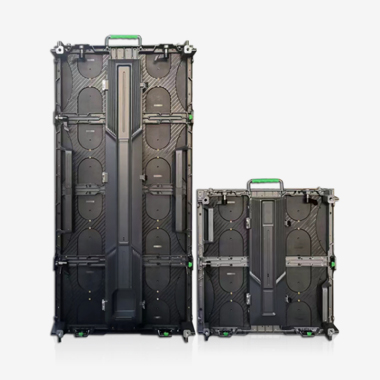
These modules are then assembled into larger structural units known as cabinets or panels. The design of these cabinets is critical to the performance and usability of the wall. For high-resolution applications, die-cast aluminum is the material of choice. Using a precision mold, the cabinet frame is cast as a single piece, ensuring exceptional dimensional stability and flatness. This eliminates the warping or twisting that can occur in sheet metal constructions, which would cause misalignment between adjacent cabinets and create visible lines, breaking the illusion of a seamless image. The cabinets house not only the LED modules but also the critical supporting electronics: the power supplies and the接收卡 (receiving card), which acts as the local brain for that section of the wall.
Heat management is arguably the most critical engineering challenge in a high-resolution LED wall. The LEDs and driver ICs generate significant heat, and in a tightly packed assembly, excessive heat is the primary enemy of longevity and performance. High temperatures cause LEDs to degrade faster, shifting their color and reducing their brightness over time. To combat this, cabinets are designed with integrated active cooling systems. This typically involves multiple, quiet fans that create a directed airflow across the back of the modules, drawing heat away from the components and exhausting it out the back or top of the cabinet. For the most demanding installations, entirely sealed liquid-cooling systems are employed, which are even more efficient and silent, further enhancing the lifespan of the LEDs.
The pursuit of the perfect image goes beyond just pixel density. To achieve superior contrast ratios—especially in environments with ambient light—the "black level" of the display is paramount. If the non-lit areas of the display reflect light, they appear gray, washing out the image. To solve this, manufacturers use several techniques. One is to use LEDs with a black epoxy resin instead of white. Another, more effective method is to apply a black mask over the entire module surface, leaving only the tiny LED lenses exposed. This "blacking" process, often done with a special resin or a glued-on mask, dramatically reduces light reflection, making the black areas of the image appear truly black and significantly boosting perceived contrast and color vibrancy.
The front serviceability of these designs is a key feature for commercial use. High-resolution cabinets are engineered to allow technicians to access and replace every critical component—LED modules, power supplies, and receiving cards—from the front of the display. This is achieved through clever mechanical latches and quick-disconnect cables. This means the wall can be serviced without needing any clearance behind it, which is crucial for permanent installations that are flush-mounted against a wall.
Finally, the physical installation demands precision. The cabinets are mounted onto a custom-built, perfectly leveled support structure. The alignment is fine-tuned using micro-adjustment mechanisms on the mounting points to ensure that every cabinet sits in the same plane with its neighbors. The gap between cabinets is minimized to fractions of a millimeter. The latest "close-connection" technologies allow cabinets to interlock with virtually no gap, and advanced calibration techniques can even compensate for the tiny physical gap by aligning the pixels optically, creating a truly "tile-free" visual experience.
In summary, the design and construction of a high-resolution LED video wall is an exercise in mitigating imperfections at a microscopic level. It is a fusion of materials science for strength and heat dissipation, optical engineering for contrast and clarity, electronic engineering for signal integrity, and mechanical engineering for precision alignment and serviceability. Every aspect is meticulously crafted to ensure that the complex underlying technology disappears, leaving the viewer with nothing but a perfect, immersive image.
The ability of a high-resolution LED video wall to display a flawless, moving image is a feat of high-speed data management and synchronization that borders on the miraculous. The process involves ingesting a massive stream of video data, slicing it into pieces, distributing it across a network of independent processors, and commanding millions of individual light sources to switch on and off in perfect harmony. This section breaks down this intricate process into three core stages: signal intake and processing, data distribution and networking, and pixel-level illumination and control.
Stage 1: Signal Intake and Video Processing
The journey begins with a video source, such as a 4K or 8K media player, a computer desktop, or a live broadcast feed. This source outputs a standard video signal (e.g., HDMI, DisplayPort, SDI). However, a large-format, non-standard resolution LED wall cannot natively display this signal. This is where the specialized video processor, or controller, becomes the indispensable brain of the entire system.
The processor's first task is to accept and often combine multiple input signals. Advanced processors can handle numerous inputs and allow the operator to window them anywhere on the LED wall canvas, much like a video wall controller does for LCD panels, but with even greater flexibility. The next critical step is scaling and resolution matching. The processor must map the incoming source resolution to the native resolution of the LED wall, which is a product of its physical pixel dimensions (e.g., 3840 pixels wide by 2160 pixels high). It performs this scaling with high-quality algorithms to avoid artifacts and maintain image sharpness.
A unique and vital function of the LED processor is calibration and color management. Every LED module has slight inherent variances in color and brightness. The processor applies a complex set of correction coefficients to every single pixel on the wall to ensure absolute uniformity. This means that a command to display "pure white" results in the exact same shade of white from one corner of the wall to the other, with no discolored patches or bright spots. This calibration data is stored in a profile and applied in real-time to all output data.
Stage 2: Data Distribution and Networked Synchronization
Once the video frame is processed, it must be delivered to the physical display. The processed data is sent to a sending device, which is often a card installed in the processor or an external box. This sender is responsible for packetizing the video data for distribution over a network. Modern high-resolution LED walls almost exclusively use network-based protocols instead of older, proprietary coaxial cables.
The sending device transmits the data packets over a high-speed network cable (CAT5e/6 or fiber optic) to the first LED cabinet in the array. The cabinets are connected in a daisy-chain topology. Each cabinet contains a sophisticated receiving card, which acts as a node in this network. The receiving card reads the incoming data stream, extracts the portion of the image data destined for its specific cabinet, and then immediately forwards the entire data stream to the next cabinet in the chain. This process ensures that a single output from the processor can feed an entire wall of dozens or even hundreds of cabinets.
Synchronization is the most critical aspect of this stage. Every receiving card in the entire system must be genlocked (synchronized to a common generator signal) to the master clock from the processor. This ensures that every cabinet updates its pixels at the exact same moment, preventing visible tearing, glitching, or rolling between sections of the screen. This precise timing is managed through synchronization signals embedded within the data protocol itself, such as in Ethernet-based systems like Art-Net or sACN, or proprietary protocols designed for ultra-low latency.
Stage 3: Pixel Illumination and Micro-Control
Within each cabinet, the receiving card passes the decoded image data to the driver ICs located on the individual LED modules. Each driver IC is responsible for controlling a small group of pixels. The technology used to control the brightness of each individual red, green, and blue sub-pixel is Pulse Width Modulation (PWM).
PWM works by rapidly switching each LED on and off at a very high frequency—thousands of times per second. The human eye cannot perceive this flickering and instead integrates the light over time, perceiving a steady intensity. The perceived brightness is determined by the duty cycle: the percentage of time the LED is "on" during each cycle. A 25% duty cycle results in 25% brightness, a 50% duty cycle results in 50% brightness, and so on. By independently and precisely controlling the PWM duty cycle for the red, green, and blue LEDs within a pixel, the driver IC can create millions of different color mixtures.
The refresh rate of the display—how many times per second the entire image is redrawn—is a key performance metric. High-resolution walls feature very high refresh rates (often 3840Hz or higher for the internal driving, resulting in a visual refresh rate of >1920Hz) to eliminate any perception of flickering, especially when viewed through camera lenses, which can produce distracting rolling shutter effects if the refresh rate is too low.
In conclusion, the working principle of a high-resolution LED wall is a symphony of coordinated technology. It involves high-bandwidth data handling, networked distribution with nanosecond-level timing precision, and micro-level current control to manipulate light itself. It is a continuous, real-time loop that transforms a digital video file into a breathtaking physical reality, all happening seamlessly dozens of times every second.
High-resolution LED video walls offer a compelling array of benefits that make them the display technology of choice for mission-critical and high-impact applications. However, achieving this level of performance introduces a unique set of challenges and trade-offs. A clear-eyed evaluation of both sides is essential for making an informed decision about implementing this technology.
Advantages:
Seamless, Large-Format Imaging: This is the paramount advantage. Unlike video walls made of LCD panels, which are plagued by thick, visible bezels that disrupt the image, LED walls are truly seamless. The ability to create a massive, continuous canvas without any dividing lines is transformative for immersion, data visualization, and content impact. It allows for the display of a single, cohesive image without distraction.
Superior Image Quality: Brightness, Contrast, and Color: LED walls outperform other technologies in key image quality metrics. They can achieve extremely high brightness levels (1000-1500+ nits), making them viewable even in sun-lit atriums where LCDs would wash out completely. With advanced black mask technology, they also achieve deep black levels and high contrast ratios, providing image "pop" and vibrancy that LCDs cannot match. Furthermore, they offer a wider color gamut, often exceeding 100% of the DCI-P3 standard, resulting in more saturated and lifelike colors.
High Reliability and Long Lifespan: Well-engineered LED walls are built for 24/7 operation. LEDs have a long lifespan (often rated at 100,000 hours to half-brightness), far exceeding the backlights of LCD panels. Their modular nature also means that failures are localized and easy to repair. If an LED module or power supply fails, it can be replaced quickly from the front without taking the entire wall offline, ensuring high uptime.
Unmatched Flexibility in Aspect Ratio and Size: An LED wall is not confined to standard 16:9 aspect ratios or fixed sizes. It can be built to any custom dimension or shape—very wide for a command center, perfectly square for an art installation, or even curved to fit architectural features. This flexibility allows designers to create displays that perfectly fit the available space and purpose, rather than designing the space around the limitations of the display.
Perfect Viewing Angles and Uniformity: LCD panels suffer from color shift and contrast loss when viewed off-axis. LED technology, however, provides nearly perfect 160-degree viewing angles with consistent color and brightness. This ensures that the image looks correct to everyone in the room, regardless of their position. Additionally, the sophisticated calibration processes ensure perfect color and brightness uniformity across the entire display, eliminating the "panel matching" issues common in LCD video walls.
Challenges and Drawbacks:
High Initial Cost: This is the most significant barrier to adoption. High-resolution LED is a premium technology. The cost per square foot increases exponentially as the pixel pitch decreases. The investment includes not only the LED panels themselves but also the specialized video processors, the custom mounting structure, professional installation, and calibration. The total cost of ownership is often much higher than that of an equivalent-sized LCD video wall.
Complex Installation and Calibration: Installing an LED wall is not a simple task. It requires a team of certified technicians. The process involves building a perfectly level support structure, meticulously hanging and aligning each cabinet to sub-millimeter precision, managing a complex web of power and data cables, and finally, performing a full color and brightness calibration using expensive spectrophotometers. This is a far cry from mounting LCD panels on a wall bracket.
Power Consumption and Heat Generation: The density of LEDs and electronics in a fine-pitch display results in high power consumption. A large wall can draw as much power as several dozen homes, leading to significant operational energy costs and requiring dedicated electrical circuits. This power draw also generates substantial heat, necessitating active cooling systems with fans, which consume additional power and introduce points of failure (though silent, fanless designs are emerging for smaller installations).
Content Demands and the "Resolution Paradox": To justify the investment in a high-resolution wall, the content must be source-native or higher. Feeding a 4K wall with a low-resolution 1080p or, worse, standard-definition signal will result in a soft, blurry image that fails to leverage the wall's capabilities. Organizations must therefore also budget for a content creation strategy that produces ultra-high-resolution assets, which can be time-consuming and expensive.
Potential for Pixel Failures and Maintenance: While individual pixel failures are less common than in the past, they can still occur. A completely dead pixel or a stuck-on sub-pixel can be a noticeable distraction on an otherwise perfect screen, especially on a very fine-pitch wall viewed up close. Maintaining a pristine image requires a proactive maintenance contract to identify and replace faulty modules promptly.
In summary, high-resolution LED video walls offer an unbeatable combination of seamless size, image quality, and reliability for those who need the absolute best visual performance. However, this comes at a premium price, requires expert installation and calibration, and demands a content strategy to match. The decision to invest must be based on a clear understanding that this technology is a premium tool for premium applications where visual impact and performance are non-negotiable.
High-resolution LED video walls have moved far beyond being mere display tools; they have become foundational platforms for innovation across a diverse range of industries. Their unique ability to present vast amounts of seamless visual information makes them indispensable in environments where decision-making, engagement, and immersion are critical. Simultaneously, the technology is evolving rapidly, with new trends pushing the boundaries of what these displays can do.
Current Applications:
Corporate Environments and Boardrooms: In the lobbies of Fortune 500 companies and tech giants, large LED walls project an image of innovation and success, displaying dynamic brand stories and company data. In executive boardrooms, they have replaced traditional projectors and LCD walls for presentations and video conferences, offering brilliant, glare-free images that remain visible even with the lights on, fostering better collaboration and decision-making.
Broadcast and Media Studios: The virtual studio revolution has been powered by LED walls. News channels, weather centers, and film productions use them as photorealistic, dynamic backdrops. This allows for immersive virtual sets that can be changed instantly, reducing production costs and time while enabling presenting to interact with the environment behind them in a way that was never possible with green screens.
Command and Control Centers: This is a mission-critical application. In facilities managing power grids, transportation networks, military operations, and emergency response, LED walls are the central nervous system. They provide operators with a continuous, seamless view of complex data from countless sources—GIS maps, network diagrams, real-time video feeds, and data visualizations—enhancing situational awareness and enabling faster, more informed critical decisions.
Simulation and Training: The military, aviation, and automotive industries use curved, high-resolution LED walls for ultra-realistic simulation and training. They create 360-degree immersive environments for training pilots, drivers, and soldiers, providing a level of realism and detail that is crucial for effective preparation for real-world scenarios.
High-End Retail and Experiential Marketing: Luxury brands in retail, automotive showrooms, and at trade shows use fine-pitch LED to create "wow" moments. They build immersive brand experiences, wrap entire rooms in digital content, and showcase products with incredible detail, captivating customers and creating highly shareable moments on social media.
Future Trends:
The March Towards MicroLED and Mini-LED: The next evolutionary leap is MicroLED technology, where microscopic LEDs are transferred directly to a substrate. This will enable pixel pitches below 0.6mm, making 4K and 8K resolution on smaller, room-sized displays a reality. It promises even higher brightness, better reliability, and lower power consumption. Mini-LED is an interim step, using smaller LEDs as backlights for LCDs, but direct-view MicroLED is the ultimate future for high-end walls.
Integrated Intelligence and IoT Connectivity: LED walls will become smarter nodes in the Internet of Things (IoT). They will integrate sensors and software to automatically adjust brightness based on ambient light via built-in light sensors, analyze audience demographics, and pull data directly from cloud-based APIs to display real-time information without a separate PC. They will become interactive, responding to touch or gesture controls.
Chip-on-Board (COB) and Integrated Package Technology: COB packaging is a growing trend where bare LED chips are directly mounted onto the module substrate and then covered with a protective phosphor layer. This makes the surface more robust and resistant to physical damage and moisture, improves heat dissipation, and allows for even tighter pixel pitches. This technology enhances reliability and is ideal for high-traffic areas.
Virtual Production and the "Volume": A rapidly growing trend in filmmaking is the use of massive, curved LED walls (known as "Volumes") to create in-camera visual effects. Actors perform in front of these hyper-realistic, dynamic environments, which are rendered in real-time using game engines. This eliminates green screen issues like spill light and allows directors to see the final shot live on set, revolutionizing the film and entertainment production pipeline.
Sustainability Focus: Energy Efficiency and New Materials: As energy costs rise, the focus on efficiency will intensify. This will drive the development of more efficient LED chips, driver ICs, and power supplies that deliver more light per watt. We will also see a greater use of recyclable materials in cabinet construction and a push towards designs that are easier to disassemble and repair, supporting a circular economy and reducing electronic waste.
In essence, the future of high-resolution LED walls is one of convergence—where display technology, software intelligence, and creative content merge to create not just a screen, but an intelligent visual interface. They are evolving from passive display devices into active, connected systems that will redefine how we work, how we are entertained, and how we interact with digital information in physical spaces.
Conclusion
The high-resolution LED video wall has firmly established itself as the unassailable standard for visual performance in large-format digital display technology. It represents the culmination of a relentless pursuit of perfection—a pursuit defined by seamless imagery, breathtaking color, and absolute reliability. Through its sophisticated design, precise engineering, and powerful processing capabilities, it has solved the limitations that plagued previous technologies, offering a canvas that is limited only by the imagination of the content creator.
The value of this technology is proven across a vast and growing spectrum of mission-critical and high-impact applications. It is the clear-eyed window into complex data for the command center operator, the dynamic and immersive backdrop for the broadcast journalist, the statement of innovation in the corporate lobby, and the captivating experience in the retail environment. In each case, it provides a tangible competitive advantage, whether through enhanced decision-making, reduced operational costs, strengthened brand perception, or deeper customer engagement.
However, its position at the pinnacle comes with acknowledged responsibilities. The path to achieving this visual nirvana is complex and requires significant investment—not just in the hardware itself, but in the expertise to install, calibrate, and maintain it, and in the strategy to create content that justifies its resolution. It is a premium solution, and its implementation must be driven by a clear understanding of its strengths and a genuine need for its unparalleled performance. It is not a technology for every scenario, but for those where visual fidelity is non-negotiable, it has no equal.
Looking forward, the trajectory is one of both refinement and revolution. The relentless miniaturization of LEDs will continue to push resolutions higher, making stunning clarity available on smaller scales. The integration of intelligence and interactivity will transform these walls from passive display surfaces into active participants in our environments, responding to context and command. Furthermore, its role in pioneering new fields like virtual production hints at a future where the line between the digital and physical worlds is blurred beyond recognition.
In final analysis, the high-resolution LED video wall is more than a product; it is a platform for the future. It is the bedrock upon which new forms of visualization, communication, and storytelling are being built. It has redefined what is possible in visual technology, setting a benchmark that continues to drive the entire industry forward. As the technology becomes more accessible and its capabilities continue to expand, its role as the centerpiece of our digital and physical landscapes will only become more profound, solidifying its legacy as the ultimate canvas for the visual age.


Copyright © 2026 Shenzhen Cogo Technology Co.,Ltd.
All Rights Reserved

 Previous article