




 Chat Now
High brightness full color LED display signage represents the pinnacle of modern outdoor and high-ambient-light visual communication technology. It is a specialized category of digital display engineered explicitly to overcome the most challenging environmental condition: direct sunlight. These are not merely bright screens; they are robust, high-performance systems designed to deliver vibrant, dynamic, and legible content where no other display technology can compete. Their primary function is to command attention, convey information, and advertise in the brightest possible environments, making them indispensable tools in the global out-of-home (OOH) advertising, transportation, and sports industries.
The defining characteristic of this technology is its extraordinary luminosity. While a standard indoor TV might operate at 300-500 nits (candelas per square meter), and a typical digital sign might reach 2,000-3,000 nits, high-brightness LED signage pushes this metric to extremes. These displays routinely achieve brightness levels between 7,500 and 10,000 nits, with some specialized models even higher. This intense output is not for aesthetic enhancement but is a fundamental requirement for visibility. It ensures that white areas of the image remain distinctly white and that color saturation is not washed out by the overpowering glare of the sun, which can exceed 100,000 nits on a clear day.
The core technology enabling this performance is the Light Emitting Diode (LED). A full-color display utilizes a combination of red, green, and blue (RGB) LEDs packed closely together to form pixels. Through the principle of additive color mixing, by independently controlling the intensity of each colored diode within a pixel, the display can produce millions of hues. The evolution from early, rudimentary monochromatic and bi-color LED signs to today's high-resolution, full-color video walls has been driven by advancements in LED chip efficiency, packaging (notably the shift from DIP to SMD technology), and sophisticated electronic control systems.
A high-brightness LED sign is a system of systems. It integrates several critical components:
The Optoelectronic Layer: The heart of the display, comprising millions of individual RGB LEDs arranged on modules and cabinets.
The Structural Layer: A heavy-duty, often custom-engineered framework designed to withstand significant environmental loads like wind, seismic activity, and its own substantial weight.
The Control Layer: The "nervous system," including video processors, sending/receiving cards, and complex software for content management, calibration, and remote monitoring.
The Power and Thermal Management Layer: A distributed network of high-efficiency switching power supplies and an active cooling system (fans, heat sinks) that manages the immense thermal load generated by converting electrical energy into light and heat.
These displays have transformed urban landscapes, turning city centers into dynamic digital canvases. They are the colossal screens wrapping skyscrapers in Times Square and Piccadilly Circus, the massive scoreboards in grand stadiums, the critical information panels along sun-drenched highways, and the eye-catching promotional boards at retail parks. Their ability to be updated instantly, schedule content, and even display real-time data (like news, weather, or social media feeds) makes them the most flexible and powerful medium for large-scale public communication. In essence, high brightness full color LED signage is a fusion of photonic science, materials engineering, and software intelligence, all orchestrated to achieve one goal: visible impact under any lighting condition.
The design and construction of a high-brightness full color LED display is a profound exercise in balancing extreme performance with rugged reliability. Every component, from the microscopic semiconductor die to the macro-scale steel support structure, is meticulously engineered to achieve unparalleled luminosity while surviving years of exposure to harsh outdoor elements. This process is a multi-disciplinary endeavor involving electronic, mechanical, thermal, and structural engineering.
A. The LED Package: The Source of Light
The journey begins with the LED itself. For high-brightness applications, the choice of package is critical. While Surface-Mounted Device (SMD) technology is now the universal standard for its superior color mixing and viewing angles, the LEDs used are specifically binned and selected for high luminous efficacy (more light output per watt of power). The materials used in the package, such as the epoxy resin or silicone lens, are formulated to withstand prolonged exposure to ultraviolet radiation from the sun without yellowing, which would degrade light output and alter color temperature.
B. Pixel Pitch and Configuration: The Resolution Trade-Off
The pixel pitch—the distance from the center of one pixel to the center of the next—is the primary determinant of image resolution and viewing distance. In high-brightness applications, there is a constant tension between resolution and light output.
Larger Pitches (e.g., P10 - P25): Utilize larger, more powerful individual LEDs or clusters. This allows for greater current drive and higher overall brightness, making them ideal for very large formats viewed from great distances (e.g., highway billboards, super-sized stadium screens).
Smaller Pitches (e.g., P4 - P8): Use more, smaller LEDs packed densely. While each individual LED is driven with less current, the overall density can still achieve high aggregate brightness. This is the sweet spot for most urban advertising, providing a good balance of resolution and brightness for closer viewing.
The specific configuration of red, green, and blue chips within a pixel (e.g., 2R1G1B, 3R2G1B) is also optimized to maximize brightness, often skewing towards more red and green LEDs as the human eye is more sensitive to these wavelengths.
C. The Module and Cabinet: The Engineered Enclosure
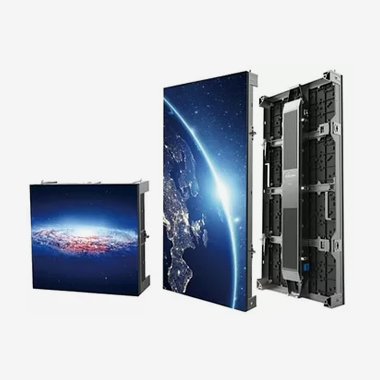
LEDs are mounted onto a Printed Circuit Board (PCB) to form a module. These modules are not simple boards; they are multi-layer designs with thick copper traces to handle high currents and are fabricated with materials like FR-4 or metal-core (MCPCB) for better thermal conductivity. The modules are then housed in a cabinet—the fundamental building block of the display.
The cabinet is a masterpiece of industrial design, typically constructed from die-cast aluminum for its excellent strength-to-weight ratio and corrosion resistance. Its design priorities are:
Thermal Management: This is the most critical engineering challenge. Up to 80% of the energy consumed by an LED is converted to heat, not light. For a high-brightness display, this creates a massive thermal load. Cabinets are equipped with extensive aluminum heat sinks and arrays of high-volume, IP67-rated fans that create forced convection, actively pulling cool air in and expelling hot air. This active cooling is non-negotiable; passive heat sinks are utterly insufficient. The design ensures even heat distribution to prevent "hot spots" that would cause accelerated LED degradation.
Weatherproofing: To achieve an IP65 or IP66 rating, cabinets are sealed with silicone gaskets at every joint. All vents are protected with hydrophobic membranes that allow air to pass but block water and dust. Connectors are waterproof, and the entire assembly is designed to withstand not just rain but also wind-driven dust and moisture.
Integrated Electronics: Each cabinet contains its own localized power supplies (converting AC to low-voltage DC) and a receiving card that acts as a local brain, processing the data signal for its section of the display.
D. The Structural Support System
The collective weight of dozens of cabinets, their electronics, and the steel framework is immense. The support structure must be custom-engineered by a certified structural engineer to withstand:
Wind Load: The greatest force acting on the display. Calculations are based on local building codes, often designed to withstand hurricane-force winds. The structure must not collapse or deform, as this would misalign the cabinets and destroy the seamless image.
Dead Load: The sheer weight of the entire system.
Seismic Load: In relevant zones, the structure must be designed to sway and absorb energy without failing.
Access and Maintenance: The structure must include safe, OSHA-compliant access for technicians via catwalks, ladders, and rear-service platforms, enabling the replacement of any single component without dismantling the entire sign.
This meticulous, layered approach to design and construction transforms delicate electronic components into an industrial-grade product capable of performing flawlessly on the side of a building or in a desert environment for over a decade.
The operation of a high-brightness full color LED display is a complex, real-time orchestration of data processing, power delivery, and optoelectronic control. It is a high-speed, distributed network designed to translate a standard video signal into a brilliantly luminous and coherent image across millions of individual light sources.
1. Signal Acquisition and Processing:
The process initiates with a video source—a media player, computer, or live broadcast feed. This source outputs a standard video signal (e.g., HDMI, SDI) with a defined resolution (e.g., 1920x1080p). This signal is fed into the display's central video processor or "sending card."
The processor's first critical task is scaling. It must match the incoming video resolution to the native physical resolution of the LED wall. For instance, if the LED wall is 3840 pixels wide but the input is only 1920 pixels wide, the processor must intelligently upscale the image, interpolating new pixels to avoid a blurry or pixelated appearance.
Next, the processor performs image segmentation. It digitally chops the complete video frame into smaller tiles, each corresponding exactly to a specific cabinet within the larger display array. It also imbues this data stream with synchronization signals and global commands (e.g., for brightness adjustment).
2. Data Transmission:
The processed data packets are then transmitted from the central processor to the receiving cards housed within each individual cabinet. Given the large distances, high data volumes, and electrically noisy outdoor environment, this step requires robust, high-bandwidth solutions:
Network Cable (CAT5e/CAT6): Used with protocols like Ethernet or proprietary standards. Suitable for shorter runs within a display.
Fiber Optic Cable: The gold standard for large installations. Fiber is immune to electromagnetic interference (EMI from power lines, etc.), has extremely high bandwidth, and can transmit data over long distances (hundreds of meters) with zero signal loss. This ensures a pristine, jitter-free signal arrives at every cabinet.
3. Pixel Driving: The Heart of the Operation
Inside each cabinet, the receiving card acts as a local controller. It takes its assigned segment of the image and distributes the commands to a series of specialized driver Integrated Circuits (ICs) that are directly connected to the LEDs on the modules.
These driver ICs are the workhorses that perform two essential and simultaneous functions:
Constant Current Regulation: LEDs are current-driven devices. Their light output is proportional to the current flowing through them, not the voltage. A small change in voltage can lead to a large change in current, potentially destroying the LED. The driver ICs provide a precise, steady, and consistent current to each string of LEDs. This is paramount for achieving uniform brightness and color across the entire display, compensating for the inherent minor electrical variances between millions of individual LEDs.
Pulse-Width Modulation (PWM): This is the ingenious technique used to control brightness and color. Instead of varying the analog current level (which would be inefficient and would shift the LED's color), the driver IC rapidly switches each LED on and off thousands of times per second.
The duty cycle—the percentage of time the LED is "on" during each cycle—determines its perceived brightness. A 50% duty cycle appears half as bright as a 100% duty cycle.
By independently controlling the PWM duty cycle for each red, green, and blue LED within a pixel, the driver can create any color and any shade with extreme precision. Modern high-end displays use 16-bit PWM control, allowing for 65,536 levels of intensity per color. This high bit-depth is what enables incredibly smooth color gradients, deep blacks, and the elimination of "color banding" in shadows and skies.
4. Achieving and Managing High Brightness:
The phenomenal brightness is achieved through a combination of factors:
High-Efficiency LED Chips: Using semiconductor materials and designs that maximize lumens per watt (lm/W).
Increased Drive Current: Operating the LEDs at higher-than-standard current levels to extract more light. This is carefully balanced against the resulting increase in heat and the reduction in LED lifespan, a trade-off managed by the robust thermal systems.
Advanced Optical Design: The design of the LED lens is optimized to focus as much light as possible directly forward towards the viewer, maximizing on-axis intensity.
5. Synchronization and Performance Metrics:
Refresh Rate: The number of times per second the entire screen redraws the image. A low refresh rate (<1000Hz) causes visible flicker, especially when recorded by cameras. High-brightness displays feature very high refresh rates (often >3840Hz), ensuring perfectly smooth, flicker-free video reproduction under any condition, including slow-motion camera capture.
Color Calibration: Sophisticated systems use spectrophotometers to measure the color output of every module. Software then creates a unique calibration profile, adjusting the PWM output of each individual red, green, and blue LED to ensure perfect color uniformity across the entire display, both at initial installation and over time as LEDs age at different rates.
In summary, the working principle is a high-speed, hierarchical data flow: a video signal is deconstructed, distributed via a noise-immune network, and reconstructed with flawless precision by millions of LEDs pulsating in perfect synchrony, their intensity modulated with microscopic accuracy to create a stunningly bright and cohesive visual masterpiece.
High brightness full color LED displays offer a compelling and unique value proposition, but harnessing their power requires a clear understanding of the significant challenges involved. Their deployment is a strategic decision that weighs immense benefits against considerable operational complexities.
Advantages:
Unrivaled Visibility in High-Ambient Light: This is the singular, defining advantage. The ability to project vibrant, legible content in direct sunlight—where every other display technology fails—makes them the undisputed champion for outdoor advertising and information display. This ensures message delivery 24/7, regardless of weather conditions.
Superior Impact and Audience Engagement: Dynamic, full-motion video and animation are inherently more captivating than static imagery. The sheer scale and brilliance of these displays command attention, leading to significantly higher brand recall, message retention, and audience engagement compared to traditional static billboards or lower-brightness solutions.
Operational Flexibility and Content Agility: An LED sign is a perpetual digital canvas. Content can be changed instantly, remotely, and as frequently as desired. This allows advertisers to run dayparting (showing coffee ads in the morning, dinner specials in the evening), promote time-sensitive offers, respond to current events, and maximize revenue by selling advertising space to multiple clients on a single screen.
Durability and Long-Term Reliability: Engineered to IP65 standards, these displays are built to withstand the harshest environmental assaults: torrential rain, blistering heat, freezing cold, high winds, dust, and salt spray. High-quality LEDs have an extremely long operational lifespan (often rated at 100,000 hours to L70 brightness), making them a long-term capital asset.
Seamless Scalability to Massive Sizes: Due to their modular nature, LED displays can be assembled into vast, seamless video walls of virtually any size or shape without the visible bezels that plague tiled LCD solutions. This enables the creation of truly monumental advertising spectacles and architectural media facades.
Remote Monitoring and Management: Networked control systems allow for real-time monitoring of the entire display's health from anywhere in the world. Operators can receive alerts for issues like failed components, overheating, or power anomalies, enabling proactive maintenance and minimizing downtime. Content scheduling and updates are also managed remotely, drastically reducing operational overhead.
Challenges:
Substantial Capital Investment (CapEx): The upfront cost is significant. It encompasses not just the display modules, but also the custom structural engineering and fabrication, high-power electrical installation, specialized rigging and installation labor, permitting fees, and the control system. This high barrier to entry can be prohibitive for smaller businesses.
Significant Operational Costs (OpEx):
Energy Consumption: Generating such extreme brightness requires substantial power. A large display can easily consume tens of kilowatts of electricity, leading to high ongoing utility costs.
Maintenance: These are complex electromechanical systems. They require regular, professional maintenance: cleaning air filters, inspecting components, and replacing failed parts (modules, power supplies, fans). This necessitates a long-term service contract and budget.
Technical Complexity and Specialized Expertise: Operating and troubleshooting the system requires specific knowledge. Understanding pixel mapping, network configuration, color calibration, and power distribution is essential. Repairs are not DIY; they require trained technicians with specialized skills and tools.
Light Pollution and Community Relations: The intense brightness, if not properly managed, can be a major source of light pollution and glare, leading to complaints from residents, drivers, and adjacent businesses. This has sparked increasing regulatory scrutiny and legal challenges in many municipalities.
Regulatory and Permitting Hurdles: Obtaining a permit for a large, high-brightness sign is often a lengthy, complex, and uncertain process. Zoning laws, sign codes, and community aesthetic guidelines can impose strict restrictions on size, location, brightness levels (often mandating automatic dimming at night), and even content motion (e.g., limiting transitions to prevent driver distraction).
Content Creation Demands: The medium demands high-quality, specially formatted content. Simply stretching a TV commercial to a massive format will look pixelated and unprofessional. Effective content requires investment in professional video production and motion graphics design tailored for large format, high-impact, and often short-duration viewing.
Thermal and Acoustic Output: The active cooling systems, while necessary, generate noise. In quiet urban or residential settings, the hum of dozens of fans can be a nuisance. The significant heat exhaust must also be considered in the design to avoid affecting the building's own HVAC systems or creating a microclimate.
Successfully navigating these challenges requires a holistic approach: a solid business plan that accounts for total cost of ownership, a commitment to professional maintenance, a proactive strategy for community engagement and regulatory compliance, and an investment in high-quality content. When these are managed effectively, the advantages of high-brightness LED signage are overwhelmingly powerful.
The application spectrum for high-brightness full color LED displays is vast and continually expanding, driven by their unique ability to perform where other displays cannot. Simultaneously, technological innovation is relentlessly pushing the boundaries, opening new use cases and enhancing existing ones with smarter, more efficient, and more immersive capabilities.
Applications:
Digital Out-of-Home (DOOH) Advertising: The primary and most visible application.
Iconic Digital Towers & Building Wraps: Transforming skyscrapers in global cities like New York, London, and Tokyo into colossal brand canvases, targeting millions of pedestrians and vehicles.
Roadside Digital Billboards: Replacing static printed billboards along highways and major arteries. Their ability to rotate multiple ads (every 6-10 seconds) dramatically increases revenue potential for land owners.
Retail & Point-of-Purchase: Used at shopping centers, auto dealerships, and gas stations to promote sales, drive foot traffic, and enhance brand presence at the critical moment of consumer decision-making.
Transportation Hubs: In airports, train stations, and bus terminals, they serve a dual purpose: displaying high-value advertising to a captive audience and providing essential passenger information, schedules, and safety alerts.
Sports and Live Entertainment:
Stadium Video Scoreboards: The massive center-hung and end-zone displays are central to the modern live sports experience, showing instant replays, real-time statistics, player profiles, and crowd-engagement features.
Perimeter LED Advertising Systems: Dynamic boards that ring the playing field, replacing static signage. They allow for animated ads, league-wide sponsorship messages, and even interactive fan experiences.
Concert Tours and Festivals: Used as towering stage backdrops, creating immersive, dynamic visual environments that are an integral part of the performance.
Corporate Architecture and Branding:
Corporate Headquarters: Companies use large LED displays as architectural elements on their buildings to showcase their brand, display corporate messages, or stream mission-critical information.
Architectural Media Facades: Entire building exteriors are clad in LED technology, turning structures into dynamic public art installations that can celebrate holidays, support social causes, or simply enhance the city's night-time aesthetic.
Public Information and Critical Communications:
Government and emergency services use them for AMBER alerts, traffic advisories, weather emergencies, and public safety announcements.
They provide wayfinding and information at large public venues like university campuses, hospital complexes, and corporate parks.
Future Trends:
Adoption of MicroLED and Mini-LED Technology: The miniaturization of LED chips will continue. MicroLED technology promises even higher brightness, better efficiency, finer pixel pitches for closer viewing, and improved reliability. This will allow high-brightness displays to move into new applications requiring higher resolution.
Intelligent Brightness and Power Management: Sustainability will be a key driver. Future systems will feature more sophisticated ambient light sensors and AI algorithms to dim the display to the exact minimum level required for visibility, significantly reducing energy consumption and light pollution. Integration with renewable energy sources like solar panels will also be explored.
Hyper-Integration with AI and Data:
Programmatic DOOH (pDOOH): Displays will be fully integrated into automated digital ad buying platforms. Ads will be purchased and served in real-time based on data triggers like weather, traffic flow, time of day, and even anonymized audience demographics.
Audience Analytics: Advanced computer vision (anonymized and privacy-compliant) will provide detailed metrics on audience size, dwell time, and demographic breakdown, offering unparalleled ROI analytics to advertisers.
Contextual and Adaptive Content: AI will enable displays to autonomously adapt content. A display could show an ad for cold drinks on a hot day, promote a nearby restaurant at lunchtime, or switch to a safety message during sudden bad weather.
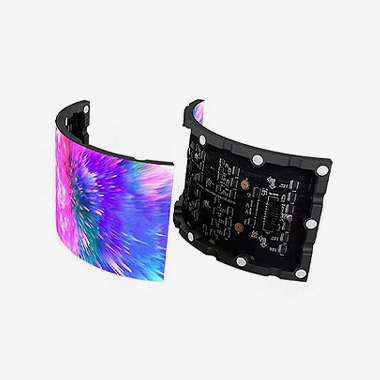
Transparent and Flexible Form Factors: Transparent LED technology will allow for installation on windows and glass facades, creating displays that are visible from outside while maintaining views and natural light from inside. Flexible LED substrates will enable curved, cylindrical, and free-form shapes, breaking the "flat panel" paradigm and enabling new architectural integrations.
Enhanced Visual Performance: HDR and Wider Color Gamut: Future displays will support true High Dynamic Range (HDR) standards, offering a much wider contrast ratio and a broader color gamut (e.g., Rec. 2020). This will result in more realistic, vivid, and visually stunning imagery with deeper blacks and more vibrant colors.
Improved Serviceability and Reliability: "Front-Serviceable" designs that allow technicians to replace modules from the front of the display will become standard, simplifying maintenance for building-mounted installations. Predictive maintenance, powered by IoT sensors that monitor component health and predict failures before they occur, will maximize uptime and reduce repair costs.
The future of high-brightness LED signage is intelligent, responsive, and sustainable. It will evolve from a brilliant but passive broadcast medium into an interactive, data-driven platform that seamlessly integrates with its environment, responds to its audience, and delivers content with unprecedented efficiency and impact.
Conclusion
High brightness full color LED display signage stands as a monumental achievement in optoelectronic engineering and a transformative force in outdoor media. It is a technology born from a specific, demanding need—the need to be seen in the brightest conditions on Earth—and has evolved into the most powerful and flexible tool for large-scale visual communication. Its impact extends far beyond advertising, influencing urban design, live event experiences, and public information systems.
The core of its value proposition is undeniable: the ability to deliver captivating, dynamic content with absolute clarity 24 hours a day, 365 days a year, regardless of environmental challenges. This capability has driven its dominance in the digital out-of-home advertising sector, creating new revenue models and offering advertisers an engagement level that static media simply cannot match. The advantages of operational flexibility, durability, scalability, and remote management make it not just a display, but a long-term, revenue-generating asset.
However, this power comes with significant responsibility and complexity. The journey from concept to a successfully operating sign is fraught with challenges, including high capital and operational costs, technical intricacies, and a complex regulatory landscape. The issue of light pollution necessitates a responsible approach to brightness management and community relations. A successful project is therefore not merely a procurement exercise but a strategic undertaking that requires careful planning, expert partners, and a commitment to ongoing management and high-quality content creation.
Looking forward, the trajectory of this technology is exceptionally bright, driven by trends like MicroLED, AI integration, and a focus on sustainability. These advancements promise to make displays sharper, more energy-efficient, and smarter, capable of understanding and reacting to their context. They will evolve from being monolithic broadcast instruments into integrated, responsive elements of the smart city infrastructure.
In conclusion, the high brightness full color LED display is more than a sign; it is a landmark. It is a testament to human ingenuity's ability to harness light and data on a grand scale. It has redefined city skylines, enhanced how we experience live events, and created a new vibrant layer of public communication. As the technology continues to advance, becoming more intelligent, efficient, and adaptable, its role as a central pillar of public visual culture will only deepen, ensuring its luminous presence for decades to come.


Copyright © 2026 Shenzhen Cogo Technology Co.,Ltd.
All Rights Reserved

 Previous article