




 Chat Now
In the realm of large-format visual display technology, high brightness fixed installation LED display panels stand out as a cornerstone solution for environments where visibility, durability, and long-term performance are non-negotiable. Unlike portable LED displays or low-brightness indoor models, these panels are engineered specifically for permanent mounting in spaces that demand intense light output—often ranging from 2,000 nits to 10,000 nits or more—to overcome bright ambient light, such as direct sunlight in outdoor plazas, stadiums, or large indoor venues like convention centers and shopping malls.
At their core, high brightness fixed installation LED panels are modular assemblies of light-emitting diodes (LEDs) arranged in dense pixel arrays, designed to be permanently integrated into structures like building facades, stadium scoreboards, indoor lobby walls, or concert venue backdrops. The “fixed installation” distinction means they are not intended for frequent relocation; instead, they are built with robust materials and mounting systems to withstand long-term exposure to environmental stressors (for outdoor models) or heavy foot traffic (for indoor models). Their high brightness, measured in nits, is the defining feature that sets them apart: while standard indoor LED displays typically max out at 1,500 nits, high brightness models deliver enough light to ensure content remains vivid and readable even in direct sunlight—a critical requirement for outdoor applications like digital billboards or stadium screens.
The market for these panels has grown rapidly in recent years, driven by urbanization, the rise of smart cities, and the increasing demand for immersive public visual experiences. According to industry reports, the global fixed installation LED display market is projected to grow at a CAGR of over 12% through 2030, with high brightness models accounting for a significant share due to their versatility across indoor and outdoor use cases. This growth is fueled by advancements in LED chip technology, which have reduced power consumption while boosting brightness, making high brightness panels more energy-efficient and cost-effective than ever before.
Key use cases for high brightness fixed installation LED panels span both public and private sectors. Outdoor applications include large-scale digital billboards along highways, stadium video scoreboards, building facade displays for brand storytelling, and public information screens in plazas or transit hubs. Indoor applications include convention center main stages, shopping mall atrium displays, airport terminal information boards, and corporate headquarters lobby branding screens. In each case, the panels’ high brightness ensures content cuts through ambient light—whether it’s sunlight streaming through a mall skylight or the harsh lighting of a convention center—while their fixed design guarantees reliable performance for years.
Notably, high brightness fixed installation LED panels are not a one-size-fits-all solution. They are highly customizable in terms of pixel pitch (from P1.2 for indoor close-up viewing to P20 for large outdoor screens), size (from small wall-mounted units to multi-panel video walls spanning hundreds of square meters), and color accuracy (supporting industry-standard Rec. 709 or DCI-P3 color gamuts for professional applications like broadcast studios). This customization allows them to meet the unique needs of each installation, from a high-resolution indoor video wall for a luxury retail store to a massive outdoor screen for a sports stadium.
As technology continues to evolve, high brightness fixed installation LED panels are becoming more intelligent, with integrated features like ambient light sensors (to auto-adjust brightness and save energy) and remote monitoring systems (to detect issues and enable predictive maintenance). These advancements are solidifying their role as a long-term, future-proof solution for businesses and organizations looking to deliver impactful visual content in high-visibility environments.
The design and construction of high brightness fixed installation LED display panels are a careful balance of three critical priorities: delivering extreme brightness without compromising energy efficiency, ensuring durability for long-term permanent mounting, and optimizing pixel performance for clear, consistent content across large surfaces. Every component—from the LED chips to the mounting hardware—is engineered to meet the unique demands of fixed installations, whether they are exposed to outdoor elements or used in high-traffic indoor spaces.
At the heart of the panel’s design is the LED chip selection and pixel structure. To achieve high brightness (2,000+ nits), manufacturers use high-luminance LED chips, typically based on gallium nitride (GaN) technology, which emit more light per watt than traditional LED chips. These chips are often arranged in red-green-blue (RGB) trios to form individual pixels, with the number of pixels per unit area (pixel pitch) varying based on the intended viewing distance. For outdoor installations (e.g., stadium screens), larger pixel pitches (P10 to P20) are common, as viewers are farther away; for indoor applications (e.g., convention center video walls), smaller pixel pitches (P1.2 to P4) are used to ensure sharpness for close-up viewing. The pixel structure also includes a lens or encapsulant—usually made of high-transmittance silicone—to focus light output and protect the chips from dust, moisture, or physical damage.
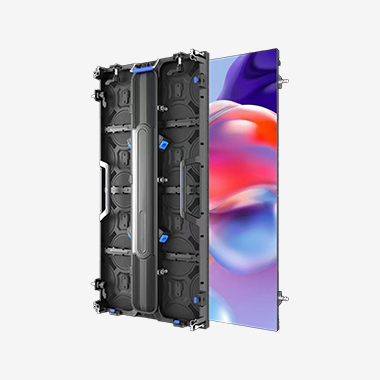
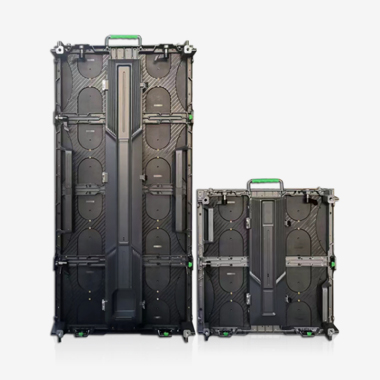
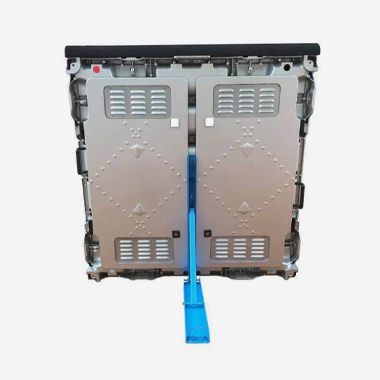
The panel cabinet and housing are designed for durability and easy integration into fixed structures. For outdoor panels, the cabinet is constructed from corrosion-resistant materials like aluminum alloy or stainless steel, with an IP (Ingress Protection) rating of IP65 or higher to prevent water and dust ingress. The housing also includes a heat-dissipating backplate—often made of aluminum with ribbed structures—to manage the heat generated by high-brightness LEDs (excess heat can reduce lifespan and brightness). Indoor panels, while not exposed to weather, still use robust cabinets (usually aluminum) to withstand physical impact and facilitate easy mounting to walls, ceilings, or custom frames. Many indoor models also feature ultra-narrow bezels (as thin as 0.8mm) to create seamless video walls with minimal visible gaps between panels.
The power supply and driving system are critical for delivering stable, efficient power to the high-brightness LEDs. Unlike portable displays, fixed installation panels use external, high-capacity power supplies (often 110V/220V AC to DC converters) that can handle the high current demands of bright operation. The driving system—composed of driver ICs (integrated circuits)—controls the current to each LED chip, ensuring uniform brightness across the panel and preventing pixel burnout. Advanced driving schemes, such as pulse-width modulation (PWM) with high refresh rates (1,920Hz or higher), are used to eliminate flicker, making the panels suitable for broadcast applications (e.g., TV studios) where flicker can cause issues with camera recording.
Mounting systems are tailored to the installation environment and panel size. For outdoor installations like building facades or stadium scoreboards, heavy-duty mounting brackets (made of steel or aluminum) are used to secure the panels to the structure, with reinforcement to withstand wind loads (up to 150km/h for large outdoor screens) and seismic activity in earthquake-prone regions. Indoor mounting options include wall-mounted brackets (for small to medium panels), ceiling-suspended systems (for atrium displays), and floor-standing frames (for temporary fixed installations like trade show booths). The mounting system also includes adjustment mechanisms (e.g., horizontal/vertical fine-tuning) to ensure panels are aligned perfectly, creating a seamless video wall.
Optical and thermal management are key to maintaining high brightness and longevity. Optical components like anti-glare coatings (for outdoor panels) reduce reflection from sunlight, ensuring content remains visible even in direct light. Some models also include color correction filters to maintain accurate color reproduction at high brightness levels. Thermal management systems go beyond heat-dissipating backplates: outdoor panels may include axial fans or heat pipes for active cooling in hot climates, while indoor panels use passive cooling (relying on natural airflow) to avoid noise. Temperature sensors integrated into the panel monitor heat levels and trigger cooling systems or brightness adjustments if temperatures exceed safe limits.
Finally, the control and connectivity module is integrated into the panel to enable easy operation and content management. Fixed installation panels support a range of connectivity options, including Ethernet, HDMI 2.1, and 4K/8K video interfaces, allowing them to receive high-resolution content from computers, media players, or cloud-based platforms. Many models also include built-in software for remote monitoring and control, enabling users to adjust brightness, update content, or troubleshoot issues from a central dashboard—critical for large installations where accessing individual panels is difficult.
In summary, the design and construction of high brightness fixed installation LED display panels are a synthesis of durability, optical performance, and practical integration. Every component is optimized to deliver consistent high brightness, withstand the rigors of permanent installation, and meet the specific needs of indoor or outdoor environments.
High brightness fixed installation LED display panels operate on a set of core principles that enable them to deliver intense, consistent light output while maintaining reliability for long-term permanent mounting. Unlike low-brightness or portable LED displays, these panels leverage advanced semiconductor technology, precise power management, and thermal control to overcome the challenges of high-light environments—whether it’s direct sunlight outdoors or bright indoor lighting. Understanding these principles is key to appreciating how they deliver vivid content in even the most demanding conditions.
At the most fundamental level, the operation of LED chips drives the panel’s high brightness. Each LED chip in the panel is a semiconductor device made of materials like gallium arsenide (GaAs) or gallium nitride (GaN), which emit light when an electric current passes through them. For high brightness panels, manufacturers use high-luminance LED chips—often referred to as “high-power LEDs”—that can produce 50 to 200 lumens per chip (compared to 5 to 20 lumens for standard LEDs). These chips are arranged in RGB trios (one red, one green, one blue) to form individual pixels. By adjusting the current to each RGB trio, the panel can produce millions of colors: increasing current boosts brightness, while varying the ratio of red, green, and blue light creates different hues. This ability to control brightness and color at the pixel level is what enables the panel to display detailed images, videos, and text—even at high brightness levels.
The power management system is critical for delivering the stable, high current needed to drive high-luminance LEDs. Fixed installation panels use external power supplies that convert AC power (110V/220V) to DC power (typically 5V or 12V), which is then distributed to each panel via a power distribution board. The driving ICs (integrated circuits) on each panel regulate the current to individual LED chips, ensuring that each pixel receives the exact amount of power needed to achieve the desired brightness. Advanced driving schemes, such as constant-current driving, prevent voltage fluctuations from affecting pixel performance—this is especially important for large video walls, where inconsistent power could lead to uneven brightness across the screen. Additionally, the power management system includes overcurrent and overvoltage protection to prevent damage to the LEDs or ICs, ensuring the panel remains reliable even during power surges.
Brightness control and optimization are tailored to the installation environment. High brightness fixed installation panels use two key methods to adjust brightness: manual adjustment (via a control panel or software) and automatic adjustment (via ambient light sensors). Ambient light sensors—mounted on the panel’s surface—measure the surrounding light level and send data to the control system, which then adjusts the panel’s brightness accordingly. For example, an outdoor panel might increase brightness to 8,000 nits on a sunny day and reduce it to 2,000 nits at dusk, saving energy while ensuring content remains visible. Some panels also use dynamic brightness control, which adjusts brightness on a pixel-by-pixel basis: darker areas of the content use less power, while brighter areas maintain high output, further improving energy efficiency.
Thermal management is essential to maintaining high brightness and extending the panel’s lifespan. High-luminance LEDs generate significant heat—operating at 8,000 nits can raise the panel’s temperature to 50°C or higher—and excess heat can degrade the LEDs’ performance (reducing brightness over time) or cause premature failure. To address this, fixed installation panels use a combination of passive and active cooling systems. Passive cooling includes heat-dissipating backplates (made of aluminum with high thermal conductivity) that transfer heat from the LEDs to the surrounding air, and ribbed structures on the panel cabinet that increase the surface area for heat dissipation. Active cooling—used primarily in outdoor panels or high-brightness indoor models—includes axial fans or heat pipes that circulate air or transfer heat away from the LEDs. Temperature sensors integrated into the panel monitor heat levels and trigger active cooling systems if temperatures exceed a threshold (e.g., 45°C), ensuring the panel operates within safe thermal limits.
Signal processing and image calibration ensure content is displayed clearly and consistently across large panels or video walls. When a video or image signal is sent to the panel (via HDMI, Ethernet, or other interfaces), the control module processes the signal to map each pixel in the content to a corresponding pixel on the panel. For large video walls composed of multiple panels, the control system synchronizes the signal across all panels to eliminate lag or misalignment, creating a single, seamless image. Image calibration tools—built into the panel’s software—allow users to adjust color accuracy, contrast, and gamma to meet industry standards (e.g., Rec. 709 for broadcast or DCI-P3 for cinema). This calibration is especially important for high brightness panels, as intense light can affect color perception—calibration ensures colors remain true even at maximum brightness.
Durability and reliability mechanisms support the panel’s fixed installation lifecycle. Outdoor panels use waterproof and dustproof enclosures (IP65 or higher) to protect internal components from rain, snow, or dust. The LED chips are encapsulated in silicone or epoxy resin to prevent moisture ingress and physical damage, while the panel cabinet is made of corrosion-resistant materials to withstand outdoor elements like UV radiation or saltwater (for coastal installations). Indoor panels, while not exposed to weather, still include dust-proof designs and impact-resistant glass (for touch-enabled models) to withstand high-traffic environments. Additionally, many panels include redundant components—such as backup power supplies or driver ICs—that take over if a primary component fails, minimizing downtime for critical installations like stadium scoreboards or airport information screens.
In conclusion, the working principles of high brightness fixed installation LED display panels are a synergy of LED technology, power management, thermal control, and signal processing. By optimizing each of these principles, these panels deliver the intense brightness, reliability, and image quality needed for permanent installations in challenging environments—from outdoor stadiums to indoor convention centers.
High brightness fixed installation LED display panels offer a range of advantages that make them a preferred choice for environments requiring durable, high-visibility visual solutions. However, they also present unique challenges that must be considered during planning and installation. Understanding these pros and cons is critical for businesses and organizations looking to invest in these panels, as it helps align expectations with practical needs and budget constraints.
Advantages
1. Exceptional Visibility in High-Light Environments
The most significant advantage of high brightness fixed installation LED panels is their ability to cut through bright ambient light—including direct sunlight—ensuring content remains vivid and readable. With brightness levels ranging from 2,000 to 10,000 nits, these panels outperform other display technologies like LCD or projection screens, which often wash out in sunlight or bright indoor lighting. For example, an outdoor digital billboard using a 6,000-nit LED panel will remain visible even on a sunny afternoon, while a projection screen in the same location would be unreadable. Indoor applications like convention centers or shopping malls also benefit: a high brightness panel near a skylight will maintain clarity without requiring the area to be dimmed, preserving the space’s natural lighting and comfort. This visibility is critical for applications where content must reach a large audience, such as stadium scoreboards or public information screens.
2. Durability and Long Lifespan
High brightness fixed installation LED panels are built for long-term performance, with lifespans ranging from 50,000 to 100,000 hours (5 to 10 years of continuous use)—far longer than LCD screens (30,000 to 60,000 hours) or projectors (2,000 to 5,000 hours for bulbs). This durability stems from their robust construction: outdoor panels feature corrosion-resistant cabinets, waterproof enclosures (IP65+), and UV-resistant materials to withstand weather, while indoor panels use impact-resistant frames and dust-proof designs to handle high traffic. The LED chips themselves are solid-state devices with no moving parts, reducing the risk of mechanical failure. For fixed installations—where replacing a display is costly and disruptive—this long lifespan translates to lower total cost of ownership (TCO) and fewer maintenance headaches.
3. Customization and Scalability
These panels are highly customizable, making them suitable for a wide range of fixed installation sizes and shapes. They are available in various pixel pitches (from P1.2 to P20), allowing users to choose the right resolution for their viewing distance: small pixel pitches for close-up indoor viewing (e.g., P1.5 for a retail store video wall) and large pixel pitches for long-distance outdoor viewing (e.g., P16 for a stadium scoreboard). Additionally, their modular design enables scalability: multiple panels can be combined to create video walls of any size—from a small 2x2 panel setup in a corporate lobby to a massive 50x10 panel display on a building facade. Ultra-narrow bezels (as thin as 0.8mm) for indoor panels ensure seamless integration, with no visible gaps between panels, creating a single, immersive image. This customization makes high brightness fixed installation panels adaptable to almost any fixed space.
4. Energy Efficiency and Cost Savings
Despite their high brightness, modern high brightness fixed installation LED panels are surprisingly energy-efficient. High-luminance LED chips use less power than traditional lighting technologies, and advanced features like ambient light sensors and dynamic brightness control further reduce energy consumption. For example, an outdoor panel might use 300W per square meter at full brightness but only 100W per square meter at dusk, thanks to automatic dimming. Over time, this energy efficiency translates to significant cost savings on electricity bills—especially for large installations that operate 24/7 (e.g., digital billboards). Additionally, theirlong lifespan means fewer replacements, reducing the cost and environmental impact of disposing of old displays. For businesses with tight budgets, these long-term savings often offset the higher initial investment in high brightness fixed installation panels.
5. High Color Accuracy and Dynamic Range
High brightness fixed installation LED panels deliver exceptional color accuracy and wide dynamic range (WDR), making them suitable for professional applications like broadcast studios, art galleries, or luxury retail. Most models support industry-standard color gamuts, such as Rec. 709 (for TV and video) or DCI-P3 (for cinema), ensuring colors are reproduced faithfully—critical for brands that rely on consistent visual identity or for art installations that require accurate color representation. WDR technology allows the panels to display both bright highlights and dark shadows simultaneously, creating more realistic, immersive content. For example, a stadium screen using WDR can show a sunny outdoor game with clear details in both the bright sky and the shaded areas of the stands, enhancing the viewing experience for fans.
Challenges
1. High Initial Cost
The most significant barrier to adopting high brightness fixed installation LED panels is their high upfront cost. Due to the high-luminance LED chips, robust construction, and advanced control systems, these panels are significantly more expensive than standard LED or LCD displays. For example, a 100-square-meter outdoor high brightness LED video wall can cost \(50,000 to \)150,000, depending on pixel pitch and brightness level—far more than a comparable LCD video wall. This cost is further increased by installation expenses, which include professional labor, mounting hardware, and site preparation (e.g., reinforcing a building facade to support the panels’ weight). For small businesses or organizations with limited budgets, this initial investment can be prohibitive, even with long-term savings.
2. Complex Installation and Site Requirements
Installing high brightness fixed installation LED panels requires careful planning and professional expertise, as they have strict site requirements. Outdoor panels, for instance, need to be mounted on structures that can withstand their weight (often 10 to 20 kg per square meter) and wind loads (up to 150 km/h in some regions). This may require reinforcing walls, roofs, or poles, adding to the installation cost and timeline. Indoor panels also have requirements: they need adequate space for cooling systems (especially high-brightness models) and must be mounted on flat, stable surfaces to ensure alignment. Additionally, large video walls require precise calibration to ensure uniform brightness and color across all panels— a process that can take days and requires specialized equipment. For sites with limited access (e.g., historic buildings or narrow corridors), installation becomes even more complex, as panels may need to be transported in smaller sections and assembled on-site.
3. Maintenance Challenges in Hard-to-Reach Locations
While high brightness fixed installation LED panels have a long lifespan, they still require regular maintenance— and this can be challenging if the panels are mounted in hard-to-reach locations. For example, an outdoor panel mounted on the side of a 20-story building requires scaffolding or cherry pickers to access, increasing maintenance costs and downtime. Common maintenance tasks include cleaning the panel surface (to remove dust, dirt, or bird droppings that reduce brightness), replacing faulty LED chips or driver ICs, and calibrating color and brightness. In some cases, a single faulty panel in a large video wall can require taking down the entire display for repairs, disrupting operations for critical applications like stadium scoreboards or airport information screens. Additionally, outdoor panels may need more frequent maintenance due to exposure to weather—for example, replacing damaged waterproof seals after heavy rain or cleaning salt deposits from coastal installations.
4. Heat Management in Extreme Climates
While high brightness fixed installation LED panels include thermal management systems, they can still struggle in extreme climates. In hot regions (e.g., deserts), where temperatures can exceed 45°C, active cooling systems (like fans) may not be sufficient to keep the panels within safe operating limits, leading to reduced brightness or premature component failure. In cold regions (e.g., polar climates), low temperatures can cause the LED chips to dim or the panel’s housing to contract, damaging the waterproof seals. To address these issues, manufacturers offer climate-specific models—for example, panels with enhanced cooling for hot climates or insulated housing for cold climates—but these models are more expensive and may have limited availability. For organizations operating in extreme climates, this adds another layer of complexity and cost to the installation.
5. Content Creation and Management Requirements
To fully leverage the capabilities of high brightness fixed installation LED panels, businesses need to create and manage high-quality, high-resolution content. This requires specialized tools and expertise: for 4K or 8K video walls, content must be produced in ultra-high definition to avoid pixelation, and for large outdoor screens, content must be designed to be visible from long distances (e.g., using large text and bold graphics). Many businesses lack in-house teams with the skills to create this content, so they must outsource to professional agencies—adding to the ongoing cost. Additionally, managing content for multiple panels or large video walls requires a centralized content management system (CMS), which can be expensive to implement and maintain. For organizations with limited technical resources, this content-related workload can be overwhelming, reducing the effectiveness of the panels.
High brightness fixed installation LED display panels have already established themselves as a versatile solution across a wide range of industries, thanks to their exceptional visibility, durability, and color accuracy. As technology advances, their applications will expand further, and emerging trends will unlock new possibilities for delivering immersive, intelligent visual experiences. Understanding these current use cases and future directions is essential for businesses and organizations looking to stay ahead of the curve and maximize the value of their investment.
Current Applications
1. Sports and Entertainment Venues
Sports stadiums and arenas are among the most prominent users of high brightness fixed installation LED panels. Large outdoor scoreboards—often with brightness levels of 6,000 to 10,000 nits—display real-time scores, replays, and advertisements, ensuring visibility for tens of thousands of fans even in direct sunlight. Indoor arenas use smaller, high-resolution panels (with pixel pitches of P2 to P4) for courtside displays, concourse information boards, and luxury suite screens. Concert venues and theaters also use these panels as dynamic backdrops, with high brightness ensuring content remains vivid even under stage lighting. For example, a music festival might use a 100-square-meter high brightness LED video wall as a stage backdrop, displaying synchronized visuals with the performance to enhance the audience’s immersion.
2. Outdoor Advertising and Digital Billboards
Outdoor advertising is a major application for high brightness fixed installation LED panels. Digital billboards along highways, in city centers, and at transit hubs use panels with brightness levels of 5,000 to 8,000 nits to cut through sunlight and attract the attention of passing drivers and pedestrians. These billboards offer advantages over traditional static billboards: they can display multiple advertisements (rotating every 10 to 30 seconds), update content in real time (e.g., promoting a sale that starts that day), and track engagement (via cameras that count how many people view the ad). For example, a retail brand might use a digital billboard in a busy downtown area to display a 4K video ad for its new collection, updating the content weekly to keep it fresh.
3. Corporate and Commercial Spaces
Corporate headquarters, shopping malls, and airports use high brightness fixed installation LED panels to enhance customer and employee experiences. Corporate lobbies often feature large video walls (with pixel pitches of P1.5 to P3) displaying brand messaging, company news, or welcome videos—their high brightness ensures visibility even in well-lit lobbies with large windows. Shopping malls use indoor high brightness panels in atriums or near skylights to display store promotions, event information, or fashion shows, attracting shoppers’ attention without dimming the space. Airports install these panels in terminals to show flight information, wayfinding maps, and advertisements—their durability and long lifespan make them ideal for high-traffic, 24/7 environments.
4. Museums, Galleries, and Cultural Institutions
Museums and art galleries use high brightness fixed installation LED panels to create interactive, non-intrusive exhibits. For historical exhibits, panels with high color accuracy (supporting DCI-P3) can display high-resolution scans of artifacts or historical videos, allowing visitors to see details that may be hidden on the physical artifact. Art galleries use these panels to showcase digital art installations, with high brightness ensuring the art remains visible even in galleries with natural light. Some museums also use touch-enabled high brightness panels to let visitors interact with exhibits—for example, a science museum might let visitors zoom in on a 4K image of a cell to explore its structure.
5. Transportation and Public Infrastructure
Transportation hubs and public infrastructure projects rely on high brightness fixed installation LED panels for communication and safety. Train stations and bus terminals use outdoor panels to display real-time departure and arrival times, while indoor panels show wayfinding information and safety announcements. Highways use large outdoor panels to display traffic updates, weather alerts, or emergency messages—their high brightness ensures visibility even in direct sunlight or heavy rain. Smart city projects also incorporate these panels: for example, a city might install a high brightness LED video wall in a public plaza to display community events, public art, or emergency notifications, serving as a central hub for communication.
Future Trends
1. Integration with AI and IoT for Intelligent Operations
The future of high brightness fixed installation LED panels will see deeper integration with artificial intelligence (AI) and the Internet of Things (IoT), enabling more intelligent, automated operations. AI-powered cameras mounted near the panels will analyze viewer behavior—such as how long people look at the content or which ads generate the most attention—to optimize content delivery. For example, a digital billboard might use AI to display ads for coffee in the morning and restaurants in the evening, based on when most people pass by. IoT integration will allow the panels to sync with other smart devices: a stadium panel could receive real-time data from the game (e.g., player stats, scores) and update content automatically, while a shopping mall panel could sync with store POS systems to display real-time promotions for products that are selling quickly. AI will also enable predictive maintenance: the panel will monitor its own performance (e.g., LED brightness, temperature) and alert technicians to potential issues before they cause a failure, reducing downtime.
2. Advancements in Pixel Density and Resolution
Future high brightness fixed installation LED panels will feature even higher pixel density and resolution, making them suitable for closer viewing distances and more detailed content. Manufacturers are developing panels with pixel pitches as small as P0.9 for indoor applications, enabling 8K resolution in smaller screen sizes—ideal for luxury retail stores or art galleries that require ultra-sharp imagery. Outdoor panels will also see improvements in pixel density, with P4 to P6 panels becoming more common for digital billboards, allowing for more detailed content (e.g., high-resolution videos of products) that is visible even from close distances. These advancements will blur the line between indoor and outdoor panels, making high brightness models suitable for a wider range of viewing scenarios.
3. Sustainability and Eco-Friendly Design
Sustainability will be a key focus in future high brightness fixed installation LED panel development. Manufacturers will use more eco-friendly materials, such as recycled aluminum for cabinets and biodegradable adhesives for mounting, to reduce the panels’ environmental impact. Energy efficiency will also improve: next-generation high-luminance LED chips will consume 20% to 30% less power than current models, and integrated solar panels on the panel’s frame will allow it to generate its own electricity, reducing reliance on grid power. Some models may even include energy-storage systems (e.g., small lithium-ion batteries) to store excess solar energy for use during low-light conditions. Additionally, manufacturers will design panels for easier recycling, with modular components that can be disassembled and reused—reducing e-waste and aligning with global sustainability goals.
4. Flexible and Curved Form Factors
Future high brightness fixed installation LED panels will move beyond traditional flat designs, with more flexible and curved form factors becoming available. Flexible panels—made with bendable substrates like polycarbonate—will allow installation on curved surfaces, such as the rounded walls of a museum exhibit or the curved facade of a modern building. These panels will maintain high brightness and resolution even when bent, opening up new design possibilities for architects and designers. Curved panels will also be used in sports stadiums, where they can wrap around the edges of stands to provide a more immersive viewing experience for fans. Additionally, foldable high brightness panels may emerge, allowing for easier transportation and installation in hard-to-reach locations—though these will still be designed for fixed installation, not frequent relocation.
5. Enhanced Interactivity with AR/VR Integration
Augmented reality (AR) and virtual reality (VR) will be integrated with high brightness fixed installation LED panels to create seamless mixed-reality experiences. AR-enabled panels will overlay digital content onto the real world in real time: a retail store might let customers use their smartphones to “try on” clothing via an AR app that syncs with the high brightness panel, showing how the outfit would look on their body. VR integration will allow users to immerse themselves in digital environments while still seeing the physical space: a corporate training room could use a VR headset synced with a high brightness panel to simulate a business meeting, with the panel displaying digital “colleagues” in the real room. These mixed-reality experiences will make high brightness panels more engaging, opening up new applications in education, training, and entertainment.
Conclusion
High brightness fixed installation LED display panels have solidified their position as a transformative technology in the visual display landscape, offering unmatched visibility, durability, and versatility for permanent installations. Throughout this series, we have explored their core attributes—from their ability to deliver intense brightness (2,000 to 10,000 nits) that cuts through sunlight and bright indoor lighting, to their robust design that ensures longevity (50,000 to 100,000 hours) in harsh environments. Their working principles, which leverage high-luminance LED chips, precise power management, and advanced thermal control, enable them to overcome the traditional limitations of display technology, making them suitable for applications ranging from stadium scoreboards to museum exhibits. While they face challenges—such as high initial costs and complex installation—their long-term advantages, including energy efficiency, color accuracy, and scalability, make them a worthwhile investment for businesses and organizations looking to deliver impactful visual content.
Today, these panels are already integral to industries across the board. Sports venues rely on them to enhance fan experiences with real-time replays and scores; outdoor advertisers use them to create dynamic, engaging billboards that drive brand awareness; and corporate spaces leverage them to communicate brand identity and welcome visitors. Their customization options—from pixel pitch to size—ensure they can meet the unique needs of any fixed installation, whether it’s a small indoor video wall in a retail store or a massive outdoor display on a city skyline.
Looking ahead, the future of high brightness fixed installation LED panels is defined by innovation. Integration with AI and IoT will make them more intelligent, enabling automated content optimization and predictive maintenance. Advancements in pixel density will deliver even sharper resolution, while sustainable design will align them with global eco-friendly goals. Flexible form factors and AR/VR integration will expand their applications, creating new ways to engage audiences and blend digital content with physical spaces. As these trends unfold, high brightness fixed installation LED panels will become even more accessible and versatile, democratizing access to high-quality visual display technology for businesses of all sizes.
For organizations considering adopting these panels, the key is to align the technology with their specific goals and environment. A sports stadium may prioritize high brightness and large size, while a museum may focus on color accuracy and low maintenance. By addressing challenges—such as budgeting for initial costs or partnering with experienced installers—businesses can maximize the value of their investment. Over time, the long-term savings on energy, maintenance, and content relevance will far outweigh the upfront expenses, making high brightness fixed installation LED panels a future-proof solution.
In conclusion, high brightness fixed installation LED display panels are more than just displays—they are a catalyst for creating memorable, immersive visual experiences that connect with audiences in meaningful ways. They represent the pinnacle of display technology, combining performance, durability, and innovation to meet the demands of modern installations. As technology continues to evolve, these panels will remain at the forefront of visual communication, shaping how we engage with brands, art, and information in public and private spaces alike. For businesses and organizations willing to embrace this technology, the rewards—enhanced visibility, improved audience engagement, and long-term value—are substantial.


Copyright © 2026 Shenzhen Cogo Technology Co.,Ltd.
All Rights Reserved

 Previous article