




 Chat Now
In the rapidly evolving landscape of visual display technology, high refresh rate RGB LED display signage has emerged as a transformative force, revolutionizing the way audiences perceive and interact with digital content. The refresh rate of an LED display refers to the number of times the screen updates its image per second, measured in Hertz (Hz). While traditional LED displays typically operate at refresh rates of 60Hz or 120Hz, high refresh rate displays, often starting from 240Hz and going up to 960Hz or even higher, offer a significant leap in visual performance.
This technology has found its niche across a wide range of industries, from entertainment and gaming to corporate communication and digital advertising. In the entertainment sector, especially in live events such as concerts, sports broadcasts, and esports tournaments, high refresh rate RGB LED display signage has become indispensable. It enables the seamless display of fast - paced action, ensuring that every movement, whether it's a musician's energetic performance, a sports player's rapid maneuver, or a gamer's quick - fire actions, is rendered with utmost clarity and fluidity.
In the digital advertising realm, high refresh rate displays have the edge in capturing and retaining viewer attention. The smooth motion and flicker - free visuals make advertisements more engaging, allowing brands to convey their messages more effectively. Moreover, in corporate settings, these displays enhance the quality of presentations, video conferences, and internal communication, providing a more professional and immersive experience for employees and clients alike.
The market for high refresh rate RGB LED display signage is experiencing exponential growth, driven by the increasing demand for high - quality visual experiences and the continuous advancement of LED technology. As consumers become more discerning about visual quality, the adoption of high refresh rate displays is expected to accelerate further in the coming years.
The design and construction of high refresh rate RGB LED display signage involve a meticulous blend of cutting - edge technology and engineering precision. The first step in the design process is to determine the specific requirements of the intended application, such as the viewing distance, ambient lighting conditions, and the nature of the content to be displayed.
For high refresh rate displays, the selection of LED chips is of paramount importance. Specialized LED chips with fast response times are required to support the rapid image updates. These chips are often fabricated using advanced semiconductor manufacturing processes to ensure high - speed electron - hole recombination, which is essential for achieving high refresh rates. Additionally, the RGB color mixing system needs to be finely tuned to maintain accurate color reproduction even at high refresh rates.
The pixel architecture of high refresh rate displays is also optimized. A higher - density pixel arrangement may be used to enhance the overall visual clarity, especially when displaying high - resolution content. The driving circuits for each pixel are designed with high - speed drivers that can rapidly switch the LEDs on and off to match the refresh rate requirements. These drivers must be able to handle the increased data traffic associated with high refresh rate operation without introducing signal delays or artifacts.
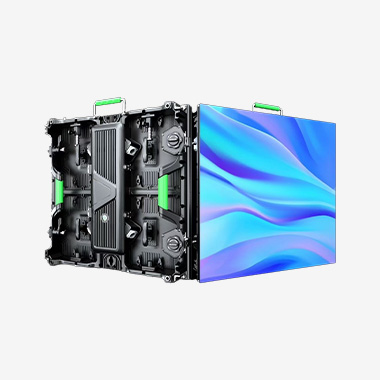
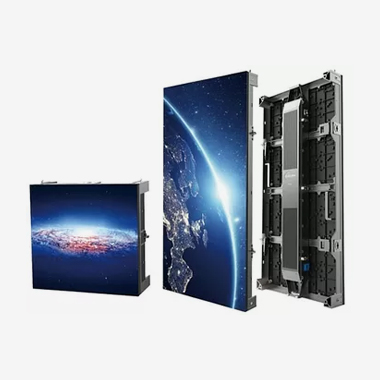
In terms of the structural framework, high refresh rate RGB LED display signage is built to be robust and reliable. The frame is typically constructed from high - strength materials such as aluminum alloys or steel to support the weight of the LED modules and withstand the rigors of installation and operation. Heat dissipation is a critical consideration, as high refresh rate operation can generate more heat. Advanced heat - sink designs, including liquid - cooled systems in some cases, are employed to ensure that the LED chips and other components remain within their optimal operating temperature range.
The control system of high refresh rate displays is highly sophisticated. It includes high - speed data processing units, powerful graphics processors, and high - bandwidth communication interfaces. The data processing units are responsible for receiving, decoding, and formatting the incoming video signals to match the display's refresh rate and resolution. The graphics processors enhance the visual quality by performing tasks such as image enhancement, color correction, and motion compensation. The communication interfaces enable seamless integration with various content sources, such as media servers, computers, and video cameras.
High refresh rate RGB LED display signage operates based on a combination of fundamental principles of electronics, optoelectronics, and digital signal processing. At the core of the operation is the process of electroluminescence, where an electric current passing through the LED chips causes electrons and holes to recombine, resulting in the emission of light.
In a high refresh rate display, the key lies in the ability to rapidly control the switching of each LED pixel. The display's control system receives video signals from an external source, such as a computer or a media player. These signals are first digitized and then processed to extract the relevant color and brightness information for each pixel.
The high - speed drivers connected to each pixel then receive the processed signals and rapidly adjust the current flowing through the LEDs. For example, at a refresh rate of 240Hz, the drivers need to update the state of each pixel 240 times per second. This rapid switching is achieved through advanced digital control algorithms and high - performance semiconductor devices.
To ensure smooth motion and avoid visual artifacts such as ghosting and blurring, high refresh rate displays often employ techniques such as frame interpolation and motion compensation. Frame interpolation generates additional frames between the original video frames, increasing the overall frame rate and making the motion appear more fluid. Motion compensation analyzes the movement of objects in consecutive frames and adjusts the pixel values accordingly to reduce blurring.
In addition, the color management system in high refresh rate RGB LED displays is crucial for maintaining accurate color reproduction. The display uses a combination of color calibration and color correction algorithms to ensure that the colors displayed on the screen match the original source as closely as possible, even at high refresh rates.
High refresh rate RGB LED display signage offers a plethora of advantages that have made it a sought - after technology in various industries. One of the most significant advantages is the superior visual experience it provides. The smooth motion and flicker - free visuals eliminate eye strain, making it ideal for long - duration viewing. In applications such as gaming and sports broadcasts, where fast - paced action is the norm, high refresh rate displays offer a more immersive and engaging experience, allowing viewers to follow the action with greater clarity and detail.
Another advantage is the enhanced advertising effectiveness. In the digital advertising space, high refresh rate displays can showcase dynamic and complex advertisements with seamless motion, attracting more attention from passers - by. The ability to display high - quality video content with smooth transitions also enables advertisers to convey their brand messages more effectively, increasing brand recall and engagement.
High refresh rate displays also offer greater compatibility with modern content sources. With the increasing popularity of high - frame - rate video production, especially in the film and gaming industries, these displays can accurately reproduce the intended visual experience, ensuring that the content is displayed as the creators intended.
However, high refresh rate RGB LED display signage also faces several challenges. One of the major challenges is the high cost. The advanced technology and components required to achieve high refresh rates, such as high - speed LED chips, powerful drivers, and sophisticated control systems, significantly increase the manufacturing cost. This, in turn, results in higher prices for the end - users, making it a less accessible option for some budget - conscious applications.
Technical complexity is another hurdle. Operating and maintaining high refresh rate displays require specialized knowledge and skills. The complex control systems and high - speed data processing units need regular calibration and monitoring to ensure optimal performance. Any malfunction in the system, such as a faulty driver or a data transmission issue, can lead to visual artifacts or display failures, which can be difficult and time - consuming to troubleshoot.
Energy consumption is also a concern. High refresh rate operation typically requires more power compared to lower refresh rate displays. This not only increases the operating costs but also poses challenges in terms of heat management and environmental sustainability. Developing more energy - efficient high refresh rate display technologies is an ongoing area of research and development.
High refresh rate RGB LED display signage has a wide range of applications across multiple industries. In the gaming industry, high refresh rate displays are a must - have for professional gamers and enthusiasts. They provide a competitive edge by enabling smoother gameplay, faster response times, and reduced motion blur, allowing gamers to react more quickly to in - game events.
In the sports and entertainment sectors, high refresh rate displays are used for live event broadcasts and stadium installations. They ensure that the audience, both in - venue and watching from home, can enjoy a high - quality visual experience with smooth motion and clear details, enhancing the overall excitement and engagement of the event.
In the corporate world, high refresh rate displays are increasingly being used for video conferences, training sessions, and internal communication. The high - quality visuals and smooth motion make remote collaboration more effective and engaging, reducing the feeling of distance between participants.
Looking to the future, several trends are likely to shape the development of high refresh rate RGB LED display signage. The continuous miniaturization of LED chips, with the advent of technologies such as Mini - LED and Micro - LED, is expected to further improve the performance of high refresh rate displays. These smaller chips can be packed more densely, resulting in higher resolutions and better contrast ratios, while also potentially reducing power consumption.
The integration of artificial intelligence (AI) and machine learning (ML) is another emerging trend. AI and ML algorithms can be used to optimize the display's performance in real - time, such as adjusting the refresh rate based on the content being displayed or automatically calibrating the color and brightness. This can lead to more efficient operation and a better visual experience for the end - user.
Furthermore, the development of 8K and higher - resolution video standards will drive the demand for high refresh rate displays that can handle the increased data volume while maintaining smooth motion. As the industry continues to strive for more immersive visual experiences, high refresh rate RGB LED display signage will play an increasingly important role in meeting these expectations.
Conclusion
High refresh rate RGB LED display signage represents a significant advancement in visual display technology, offering unparalleled visual quality and enhanced user experiences across a diverse range of applications. While it faces challenges such as high costs, technical complexity, and energy consumption, the numerous advantages it provides have made it an essential tool in industries where high - quality visuals are crucial.
As technology continues to evolve, high refresh rate RGB LED display signage is poised to become even more sophisticated and widely adopted. The ongoing advancements in LED technology, the integration of AI and ML, and the development of higher - resolution video standards will open up new possibilities for creating more immersive, engaging, and interactive visual experiences. Businesses and organizations that embrace these trends and leverage the potential of high refresh rate displays will be well - positioned to stay ahead in the competitive digital landscape and meet the ever - growing demands of their audiences.


Copyright © 2026 Shenzhen Cogo Technology Co.,Ltd.
All Rights Reserved

 Previous article