




 Chat Now
Commercial LED display panels represent a transformative class of digital visualization technology specifically engineered for business and professional applications. Unlike consumer-grade televisions or simple signage, these are modular, high-performance systems designed for reliability, scalability, and continuous operation in environments where visual impact, information clarity, and return on investment are paramount. They serve as the dynamic digital canvas for modern commerce, enabling businesses to communicate, advertise, inform, and engage with their target audiences in the most compelling way possible.
The term "commercial" distinguishes these panels from both consumer products and highly specialized industrial or rental equipment. While they share core LED technology with other types, commercial displays are optimized for a specific set of criteria: long operational lifespans (often rated for 100,000 hours), consistent performance over many years, ease of maintenance, and professional control systems. They are the workhorses of the digital signage world, deployed in settings ranging from corporate lobbies and retail stores to control rooms and conference halls.
The driving force behind the adoption of commercial LED is the undeniable power of dynamic visual communication. In a world saturated with static information, moving images, vibrant videos, and real-time data capture attention, improve message retention, and influence behavior. A commercial LED display is not merely a screen; it is a strategic business tool. It can enhance a brand's image, streamline operations, increase sales, and improve customer experiences. For example, a single display in a fast-food restaurant can function as a menu board, a promotional screen for upselling, and an internal communication tool for staff, all managed remotely and updated instantly.
The market for commercial LED is vast and segmented. It encompasses a wide range of pixel pitches—the distance between the centers of two adjacent pixels—which determines the optimal viewing distance. Fine-pitch LED (P2.5 and below) is used for close-range applications like luxury retail and boardrooms, where image quality rivals that of high-end TVs. Larger pitch displays (P3 to P10) are deployed in larger spaces like airport concourses, shopping malls, and corporate atriums, where viewing distances are greater. This flexibility allows businesses to choose the exact right technology for their specific spatial and budgetary constraints.
Furthermore, commercial LED displays are inherently scalable and customizable. They are built from modular panels that can be assembled to create virtually any size or aspect ratio—from a small video wall next to a reception desk to a massive, curved display wrapping around a building's interior. This modularity also simplifies maintenance, as individual panels or modules can be replaced without taking the entire display offline.
In summary, commercial LED display panels are the backbone of the modern digital signage ecosystem. They represent a mature, robust, and versatile technology that empowers organizations to leverage the power of digital visual communication to achieve concrete business objectives. Their ability to combine stunning visual performance with operational reliability makes them an indispensable asset across countless industries.
The design and construction of a commercial LED display panel are a meticulous balancing act between performance, reliability, aesthetics, and serviceability. Every component is selected and engineered to meet the rigorous demands of professional, often continuous, operation.
A. Core Design Philosophy: Optimized Performance and Longevity
The primary goals are:
Image Fidelity: To produce a bright, vibrant, and uniform image with accurate color reproduction.
Operational Reliability: To ensure 24/7 operation with minimal downtime.
Thermal Management: To effectively dissipate heat, the primary enemy of LED lifespan.
Serviceability: To allow for easy maintenance and repair to minimize operational disruption.
Aesthetic Integration: To offer a clean, professional appearance suitable for corporate environments.
B. Key Components and Materials:
LED Modules: The Image Generation Unit
LED Type: Surface-Mount Device (SMD) technology is the absolute standard. The most common configuration is the -in-1 package, where red, green, and blue diode chips are pre-packaged together. This offers superior color mixing, wider viewing angles (often 160° or more), and better reliability compared to older technologies.
Pixel Pitch: This is the most critical specification. Commercial panels are available in a wide range, from ultra-fine pitch (e.g., P0.9, P1.2) for intimate viewing to larger pitches (P4, P5) for lobby applications. A finer pitch means more pixels per unit area, resulting in higher resolution but also higher cost and power consumption.
PCB Substrate: The LEDs are mounted on a high-quality FR-4 printed circuit board. For commercial applications, these PCBs often feature a black solder mask to improve contrast by reducing light reflection between pixels.
Face Mask: A dark, often matte black, plastic mask is fitted over the PCB. This mask has precisely sized holes for each LED, serving to enhance contrast by absorbing ambient light and providing physical protection for the diodes.
Cabinet Design: The Structural Foundation
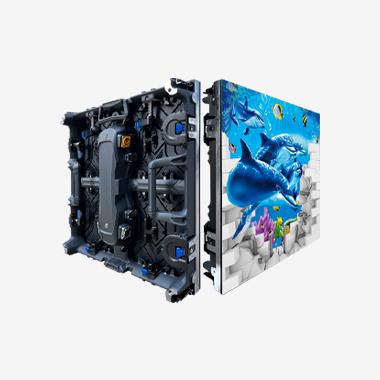
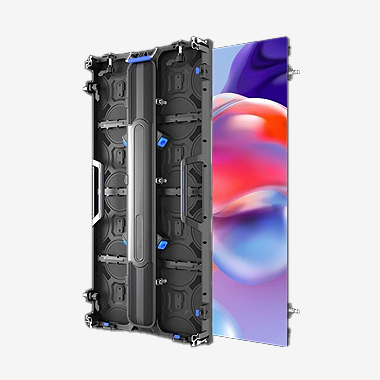
Material: Die-cast aluminum or precision extruded aluminum alloy is the material of choice. It provides an excellent combination of lightweight properties, structural rigidity, and superior heat dissipation. Magnesium alloy is used in some high-end models for even better strength-to-weight ratios.
Form Factor: Commercial cabinets are designed to be slim and sleek. Their depth is minimized to allow for flexible mounting options, including flush against a wall. Standard sizes like 500x500mm or 500x1000mm are common for modularity.
Locking Mechanism: Commercial panels feature robust, tool-less locking systems (e.g., lever-activated latches) that ensure quick, secure, and perfectly aligned connections between adjacent cabinets. This is crucial for creating a seamless large-format video wall.
Thermal Management: The Key to Longevity
Passive Cooling: The majority of commercial indoor displays rely on passive cooling. The large surface area of the aluminum cabinet acts as a natural heat sink, dissipating heat through convection. This is entirely silent, which is a critical requirement for office, retail, and control room environments.
Ventilation: Strategically placed ventilation slots allow hot air to rise and escape while drawing in cooler air from below, creating a natural airflow without the need for fans.
Integrated Electronics: The Built-in Brain
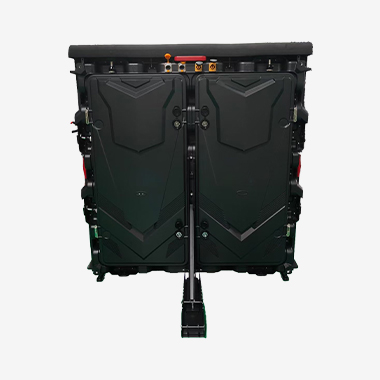
"All-in-One" Design: Modern commercial panels often adopt an integrated design. The power supply units (PSUs), receiving cards, and sometimes even the media player are built directly into the cabinet. This drastically simplifies installation—requiring only a power cable and a network connection—and results in a much cleaner, more professional appearance with no external boxes.
Connectivity: Commercial units feature professional-grade connectors for power (e.g., powerCON) and data (e.g., HDMI, network RJ45). These are designed for secure, reliable connections and are often front-serviceable for easy access.
C. Calibration and Uniformity:
A hallmark of a high-quality commercial display is perfect color and brightness uniformity across the entire screen. Out of the factory, each panel undergoes a rigorous calibration process using specialized colorimetric sensors. Individual calibration data is stored on the panel's receiving card. When multiple panels are combined into a video wall, each one automatically adjusts its output to match its neighbors, ensuring the entire display appears as a single, perfectly uniform canvas.
The construction of a commercial LED panel is a testament to precision engineering, where every detail is optimized for professional performance and seamless integration into the business environment.
The operation of a commercial LED display is a sophisticated process that seamlessly blends hardware execution with software intelligence to convert digital data into a flawless visual experience. The principle hinges on precise control over light emission at a microscopic level.
A. Fundamental Light Emission: Electroluminescence
At the heart of every pixel lies the phenomenon of electroluminescence. Each pixel is a cluster of three (or more) microscopic Light Emitting Diodes (LEDs)—one each for red, green, and blue (RGB). An LED is a semiconductor device. When a forward voltage is applied across its p-n junction, electrons recombine with electron holes, releasing energy in the form of photons (light). The specific wavelength (color) of the light is determined by the energy band gap of the semiconductor material used.
B. Additive Color Mixing and Grayscale
Additive Color Model: By independently controlling the intensity of the red, green, and blue sub-pixels, the display can create the entire spectrum of visible colors. For instance, activating red and green at full intensity creates yellow. Combining all three at full power produces white, while the absence of all three creates black.
Pulse-Width Modulation (PWM): The intensity of each LED is not controlled by varying the analog voltage, which would be inefficient and imprecise. Instead, it is controlled using PWM. The driver Integrated Circuits (ICs) switch each LED on and off at a very high frequency—thousands of times per second. The human eye perceives this rapid cycling as a sustained glow. The ratio of the "on" time to the "off" time within each cycle determines the perceived brightness. A longer "on" pulse results in a brighter light. This method allows for incredibly precise control over the grayscale (shades of grey) of each color, which is essential for producing smooth gradients and realistic images.
C. The Signal Processing and Control Chain:
Content Source and Management: Content is created and managed on a computer using professional digital signage software or a cloud-based Content Management System (CMS). This allows for scheduling playlists, updating content remotely, and even triggering content based on time, data feeds, or external sensors.
Video Processing - The Core Intelligence: The video signal (e.g., HDMI from a media player or PC) is fed into a video processor. This is the brain of the LED display and performs several critical functions:
Scaling and Resolving: It takes the input video resolution (e.g., 1920x1080) and maps it perfectly to the native, non-standard resolution of the entire LED video wall.
Color and Gamma Correction: It applies complex algorithms to ensure color accuracy and consistency across the entire display.
Calibration Data Application: It ensures the unique calibration data for each panel is applied in real-time to maintain uniformity.
Data Distribution: It packetizes the finalized image data and sends it out via network cables to the individual receiving cards in each display cabinet.
Data Transmission and Cabinet Control: The processed data is sent over a standard network (using protocols like Art-Net or proprietary ones) to the receiving card housed within each LED cabinet. This card is responsible for a specific section of the display. It interprets the data packets and drives the driver ICs on the LED modules.
Pixel-Level Execution: The driver ICs are the final link in the chain. They are mounted directly on the LED module's PCB and are responsible for executing the PWM commands for each individual red, green, and blue LED under their control. They translate the digital commands from the receiving card into the precise electrical pulses that physically control the light output.
D. System Monitoring and Management:
Advanced commercial systems include feedback mechanisms. Temperature sensors monitor the health of the cabinet. The system can often report its status—including operational hours, temperature, and any module failures—back to the control software, enabling predictive maintenance and remote diagnostics. This ensures maximum uptime and allows technicians to address issues before they impact the viewing experience.
In essence, the working principle is a flawless, high-speed dance of data and electricity, transforming binary code into a vibrant, dynamic, and impactful visual communication tool.
The adoption of commercial LED technology offers a powerful array of benefits that drive its widespread use, but these are counterbalanced by specific challenges that businesses must carefully consider during planning and implementation.
Advantages:
Superior Visual Impact and Engagement: The combination of high brightness, excellent color saturation, and seamless large format creates an unparalleled visual experience. Dynamic content is proven to capture significantly more attention than static signage, leading to higher message recall, improved brand perception, and increased customer engagement.
Unmatched Flexibility and Content Agility: This is a transformative advantage. Content can be changed instantly and remotely from a central location. A store can update promotions hourly, a corporate office can display real-time performance dashboards, and a hotel can welcome specific guests by name. This eliminates the cost, delay, and waste associated with printing and distributing physical materials.
Scalability and Customization: The modular nature of LED technology means displays can be built to any size or aspect ratio to fit the exact available space and architectural design. They can be configured as flat walls, curved surfaces, columns, or even creative shapes, offering limitless design possibilities.
High Reliability and Long Lifespan: Designed for continuous operation, quality commercial LED panels are built to last for years. With typical lifespans rated at 100,000 hours, they offer a stable, long-term digital signage solution. Their solid-state construction (no fragile glass or filaments) makes them highly resistant to vibration and impact.
Operational Efficiency and ROI: While the initial investment is higher than LCD video walls, LED offers a compelling long-term ROI. They have no recurring material costs (like printing), and their lower maintenance needs and longer lifespan can make them more cost-effective over a 5-7 year period. Their ability to generate revenue through advertising or enhance sales directly further contributes to their ROI.
Challenges:
Higher Initial Investment: The upfront cost of commercial LED displays, especially fine-pitch models, is higher than that of traditional LCD video walls or printed signage. This includes the cost of the panels, professional installation, mounting structure, and content creation.
Content Creation and Management Demands: The display is only as effective as its content. Businesses must invest in creating high-quality, professional motion graphics and video content. This requires either developing in-house expertise or outsourcing to a creative agency, representing an ongoing operational cost.
Technical Complexity and Maintenance: While reliable, the systems are complex. Integrating them with existing networks, ensuring proper cooling, and troubleshooting issues require a certain level of technical proficiency. Although modules can be replaced easily, having a service plan or technical partner is highly recommended.
Power Consumption and Thermal Output: Large-format LED displays consume a significant amount of electricity, contributing to operational costs. This power consumption also generates heat that must be effectively managed by the display's cooling system to prevent premature aging of components.
Viewing Distance Limitations (Pixel Pitch Selection): Choosing the wrong pixel pitch is a common pitfall. A pitch that is too large for the viewing distance will result in a visible grid pattern and a pixelated image, degrading the viewer's experience and the professional image of the business. Careful technical planning is essential.
In conclusion, the advantages of dynamic communication, brand enhancement, and long-term value are profound. Successfully leveraging this technology requires a clear strategy to manage the challenges of upfront cost, content, and technical planning, ensuring the display becomes a valuable asset rather than a underutilized expense.
The application spectrum for commercial LED displays is exceptionally diverse, penetrating nearly every sector of the economy. Simultaneously, relentless innovation is pushing the technology towards new capabilities, shaping exciting future trends that will further expand its utility.
Applications:
Corporate Communications: In office lobbies, annual general meetings, and on trading floors, LED walls reinforce brand identity, communicate company values, and display real-time data dashboards for performance monitoring and decision-making.
Retail and Point-of-Sale: This is a massive application area. LED is used for dynamic menu boards in QSRs, promotional walls in flagship stores, endcap displays, and interactive fitting rooms. It enables price changes, upselling, and brand storytelling at the critical point of purchase.
Control and Command Centers: In fields like transportation, security, energy, and broadcasting, fine-pitch LED video walls provide mission-critical visualization. They display vast amounts of real-time data, video feeds, maps, and graphs with unparalleled reliability and seamless sightlines for operators.
Hospitality and Entertainment: Hotels use LED displays for branding, wayfinding, and event advertising. Casinos deploy them as captivating centerpieces. Museums and galleries use them for immersive exhibits, and entertainment venues use them for enhancing live experiences.
Education and Collaboration: Modern classrooms and corporate boardrooms are replacing traditional projectors with interactive fine-pitch LED displays. They offer brighter images, better collaboration tools, and no shadows, transforming how teams and students work together.
Future Trends:
MicroLED and COB Technology: MicroLED is the next frontier. It involves microscopic, self-emissive LEDs that are transferred to a substrate. This technology promises even finer pitches, higher brightness, better reliability, and improved energy efficiency. Chip-on-Board (COB) packaging, where LED chips are directly mounted and sealed on the PCB, is gaining traction for its superior ruggedness, better heat dissipation, and smoother visual appearance without visible black lines.
Transparent and Flexible LED: Transparent LED film allows for displays to be applied to glass surfaces, creating "see-through" digital signage for store windows and architectural integration. Flexible LED substrates will enable curved, cylindrical, and even free-form display shapes, opening new creative possibilities for architects and designers.
Integration with AI and IoT: Displays will become intelligent nodes in the Internet of Things (IoT).
AI-Powered Analytics: Cameras with privacy-focused computer vision can analyze audience demographics (age, gender, dwell time) and adjust content in real-time to be more relevant.
Predictive Maintenance: AI algorithms will monitor component performance and environmental data to predict failures before they happen, scheduling maintenance to avoid downtime.
Enhanced Interactivity: Touch capabilities will become more advanced and widespread, moving beyond simple infrared to include embedded capacitive technology. Integration with personal devices via QR codes, NFC, and AR will create seamless hybrid experiences between the physical display and the user's smartphone.
Sustainability Focus: The drive for energy efficiency will intensify. This will include the development of LEDs with higher lumens-per-watt ratios, more efficient power supplies, and smart systems that deeply dim the screen during off-hours or when no audience is present. The use of recyclable materials and modular designs that facilitate repair over replacement will also grow.
The future of commercial LED is intelligent, interactive, and immersive. It will evolve from a display into an intelligent visual interface, deeply integrated into the built environment and responsive to its context and audience.
Conclusion
Commercial LED display panels have irrevocably established themselves as the defining visual medium for modern business communication and experience design. They represent a mature yet rapidly evolving technology that has successfully transitioned from a novel spectacle to an essential, strategic tool for organizations across the global economy. Their ability to merge the impact of large-format visuals with the agility of digital content has created a new paradigm for how businesses engage with customers, employees, and stakeholders.
The success of this technology is rooted in its unique value proposition: it is simultaneously a canvas for creativity, a platform for information, and a engine for ROI. It empowers marketers to tell dynamic brand stories, enables operations teams to visualize critical data, and provides retailers with a powerful tool to influence sales. The scalability and modularity of the technology mean it can be tailored to fit any space and purpose, from the intimate boardroom to the vast airport terminal.
However, its effectiveness is not automatic. Realizing the full potential of a commercial LED investment requires careful strategic planning. This includes selecting the correct technical specifications (especially pixel pitch), budgeting for professional-grade content creation, and establishing a plan for ongoing management and maintenance. The technology is a tool, and its power is ultimately determined by the strategy behind its use.
Looking forward, the trajectory of commercial LED is one of convergence and intelligence. The boundaries between display, sensor, and computer are blurring. The future points toward displays that are not only brighter and sharper but also aware of their environment and responsive to their audience. Trends like MicroLED, AI integration, and transparent technologies will further embed LED into the fabric of our built environment, making digital visualization a more seamless, interactive, and sustainable part of everyday business life.
In conclusion, the commercial LED display panel is far more than a product; it is a platform for innovation. It has fundamentally elevated the standard for visual communication in the professional world. As the technology continues to advance, becoming more integrated, intelligent, and accessible, its role as a critical driver of business engagement, efficiency, and brand transformation will only become more profound. It is a cornerstone of the modern, experience-driven economy.


Copyright © 2026 Shenzhen Cogo Technology Co.,Ltd.
All Rights Reserved

 Previous article