Author: sznbone Release date: Oct 13, 2026
The LED video wall has transformed the way businesses and public institutions present information. Whether it is a trading floor showing live market feeds, an airport displaying flight information, a shopping mall running dynamic advertising, or a control room monitoring a city, the LED video wall has become the go-to solution when you need one large, bright, and seamless display. A video wall is constructed by tiling multiple LED display panels edge to edge so that they behave as a single canvas, free of the bezels that divide conventional LCD video walls.
This article explores the technology behind LED video walls, the advantages they offer over other display systems, the applications where they add the most value, and the key decisions you will face when planning your own installation. We also explain how working with an experienced supplier such as Shenzhen Cogo Technology Co.,Ltd can simplify the process and deliver a wall that performs reliably for years.
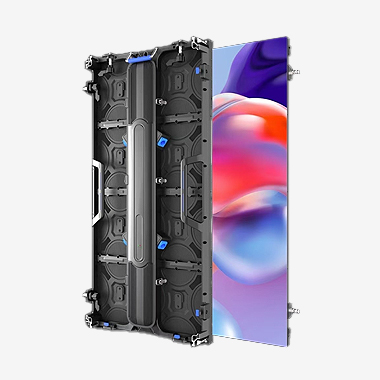
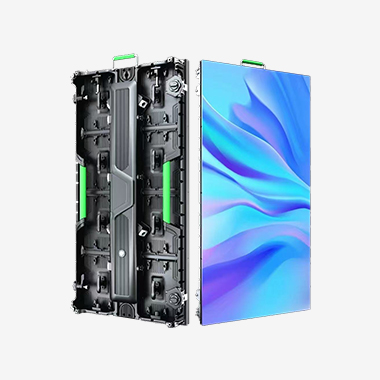
An LED video wall is a large-format display made by arranging individual LED cabinets in a grid to create a single continuous image. Each cabinet holds an array of red, green, and blue LEDs that together reproduce full-motion video, graphics, and text. Because the LED technology lights the pixels directly, there is no need for a backlight and no bezel around each cabinet, so the tiled surface reads as one unbroken picture from any viewing angle.
The terms LED video wall, LED display wall, and LED screen wall are often used interchangeably. In everyday business language they all describe the same family of products. A video wall is distinguished from a single large television by its modular construction: you can assemble any size and aspect ratio you need, from a compact two-by-two arrangement to a multi-storey outdoor facade. This modularity is the core reason organizations choose video walls when a standard display is too small.
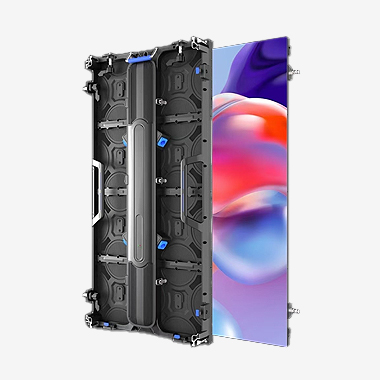
Each LED cabinet is a self-contained unit with a module of LEDs, a receiving card, and power electronics. A sending processor takes the video signal from your source — a computer, media player, video matrix, or network stream — and distributes the correct portion of the image to each cabinet. Every receiving card then drives its own pixels in sync, so the whole wall updates together with no perceptible delay between cabinets.
The pixel pitch defines the distance between adjacent LEDs and therefore the resolution and recommended viewing distance. Smaller pitches, such as 1.2 mm or 1.5 mm, are used for close-viewing indoor applications like control rooms and lobbies. Larger pitches, such as 4 mm to 10 mm and beyond, suit outdoor signage and stadium screens where the audience is farther away. High refresh rates, typically 3840 Hz and above, ensure smooth motion and flicker-free capture on cameras.
Modern control systems also support multi-window management, allowing operators to show several inputs on one wall at the same time — a live feed in one corner, a map in another, and rolling data along the bottom. This is one of the features that makes video walls so valuable in command and control environments. Shenzhen Cogo Technology Co.,Ltd provides such end-to-end control systems with its video wall packages, simplifying integration for the end customer.
Compared with an LCD video wall, an LED video wall has one decisive advantage: it is seamless. LCD panels always have visible frames that break the image into rectangles, which is distracting in high-end applications. LED video walls have no such bezels, giving a perfectly continuous picture. LED walls are also brighter, more energy efficient at high brightness, and do not suffer from the uniformity or backlight-bleed issues common in large LCD panels.
Compared with projection, LED video walls win on brightness, contrast, and reliability. Projectors need controlled ambient light, lose sharpness on curved or very large screens, and require lamp or laser maintenance. An LED video wall works in normal room lighting, holds its brightness for many years, and needs only modular part replacement rather than a full re-lamping. For continuous operation, such as a 24-hour control room or always-on signage, the LED video wall is the more dependable choice.
Corporate environments use LED video walls in lobbies, executive briefing rooms, and conference centers to create impressive presentations and brand showcases. Control rooms — for utilities, security, transportation, and emergency services — rely on them to display multiple live feeds and data sources simultaneously, giving operators a unified operational picture.
Retail and entertainment venues use video walls for advertising, product launches, and immersive customer experiences. Casinos, hotels, stadiums, and arenas install them to create energy and excitement. Houses of worship use them so the whole congregation can see clearly. Education institutions use them in auditoriums and lecture halls. In every case, the video wall turns a wall of a building into a dynamic communication surface that captures attention and delivers information effectively.
The first step is to define the viewing distance and the resolution you need. If you are replacing an existing display, match or exceed its effective resolution. Determine the physical size of the wall, then choose a pixel pitch that gives acceptable sharpness at the closest typical viewing position. Remember that a smaller pitch costs more, so there is no benefit in paying for more pixels than your viewing distance requires.
Consider the environment. Indoor walls prioritize color accuracy and comfortable brightness; outdoor walls prioritize waterproofing, high brightness, and thermal management. Decide whether you need front or rear access for maintenance, and plan for the structural mounting, power supply, and climate control. Finally, verify the control system supports your sources and your multi-window requirements. A full-service manufacturer such as Shenzhen Cogo Technology Co.,Ltd can guide every one of these decisions and provide a complete engineered solution.
A professional video wall installation includes designing and installing the mounting structure, wiring the power and signal, configuring the control system, calibrating the panels, and testing. For outdoor walls, structural certification and waterproofing are critical. Once installed, the wall should be checked periodically for module failures, dust, and temperature issues. Because the design is modular, a failed LED module can be replaced in minutes without removing the whole wall, which keeps downtime and long-term cost low.
Energy consumption is a real operating cost. LED video walls draw the most power when displaying bright, white content. Choosing the right brightness for your environment and using auto-brightness adjustment can reduce running costs considerably. A reputable supplier provides the power-draw figures in advance so you can plan your electrical infrastructure and budget accurately.
Shenzhen Cogo Technology Co.,Ltd is a professional LED display manufacturer specializing in LED video walls for indoor and outdoor applications. The company offers the complete chain: high-quality LED cabinets, advanced control systems, mounting hardware, installation guidance, and after-sales technical support. This one-stop approach means you deal with a single accountable partner rather than coordinating several vendors.
Every Shenzhen Cogo Technology Co.,Ltd video wall is quality-checked, pre-calibrated, and shipped with clear documentation. The team supports you through site survey, design, installation, and commissioning, and remains available for maintenance and spare parts afterward. For a seamless, dependable, long-lived display, Shenzhen Cogo Technology Co.,Ltd is a partner you can trust.
An LED video wall is the most flexible, reliable, and impressive way to create a large-scale display. Its seamless modular design, high brightness, and long service life make it the natural choice for control rooms, corporate spaces, retail, events, and public facilities. By planning carefully around viewing distance, environment, and total cost — and by partnering with an experienced supplier such as Shenzhen Cogo Technology Co.,Ltd — you can build a video wall that delivers clear, vibrant, and uninterrupted imagery for many years to come.


Copyright © 2026 Shenzhen Cogo Technology Co.,Ltd.
All Rights Reserved

 Previous article