Author: sznbone Release date: Oct 13, 2026
When a project demands true scale, nothing matches an LED large screen wall. From stadium scoreboards and airport information displays to corporate showpieces and public square installations, a large screen wall turns an entire architectural surface into a vivid, attention-grabbing display. Because LED technology is modular and scalable, it is possible to build screens of almost any size — a few metres across for a conference room, or an entire building facade for an outdoor advertising landmark.
This article looks at what makes an LED large screen wall different from smaller displays, how size, pixel pitch, and resolution interact, the engineering behind big installations, and how to plan a project that is both spectacular and practical. We draw on the experience of manufacturers such as Shenzhen Cogo Technology Co.,Ltd, which designs and delivers large screen wall solutions for clients in many industries and markets.
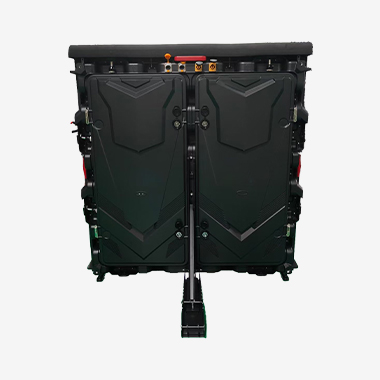
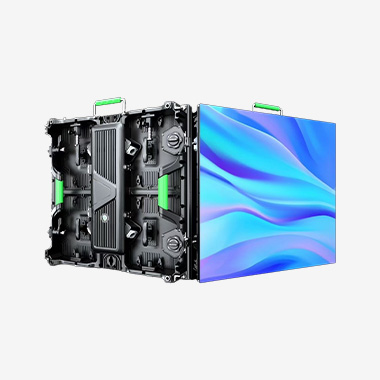
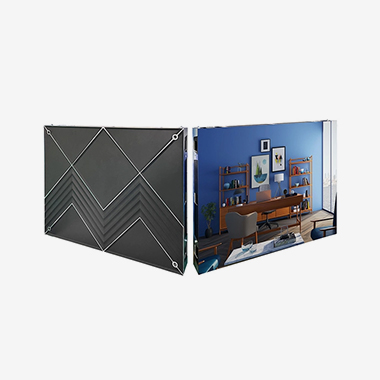
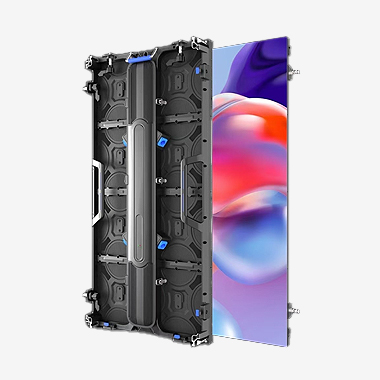
There is no fixed threshold that turns a display into a large screen wall; the term generally refers to installations large enough that a single television or LCD panel would be impractical. Typically these are walls of three or more metres in width, but they can be far larger. What all large screen walls share is that they are built from modular LED cabinets, which allows the size to be scaled to fit the available space and the required viewing distance.
The defining characteristic of a large screen wall is its ability to remain sharp at long viewing distances. As the screen grows, so does the distance from which people view it, and this is what allows the use of larger pixel pitches. A stadium screen viewed from fifty metres away can use a pitch of 8 mm to 16 mm while still looking perfectly clear, whereas a lobby wall viewed from three metres needs a pitch around 1.5 mm to 2.5 mm. Understanding this relationship is essential to designing an effective large screen.
For any LED screen, the total resolution equals the number of pixels along the width multiplied by the number along the height. This is determined by the physical size of the screen and the pixel pitch. A larger screen at the same pitch has more pixels and therefore a higher resolution. Alternatively, a larger screen with a larger pitch can keep the same pixel count and resolution while reducing cost.
When planning a large screen wall, you should first decide the resolution your content requires. Full HD content is 1920 by 1080 pixels; 4K content is 3840 by 2160. If you will show high-resolution graphics, maps, or multiple windows, you need enough pixels for that content to remain legible. Once the required resolution is fixed, the pixel pitch is derived from the physical screen size. Professional suppliers such as Shenzhen Cogo Technology Co.,Ltd perform this calculation for you and recommend a configuration that balances sharpness and budget.
A large screen wall is a significant engineering project. The supporting structure must bear the weight of the cabinets — a large outdoor screen can weigh several tonnes — and withstand wind, rain, and temperature swings. Outdoor installations require IP-rated waterproof cabinets, proper drainage, and thermal management so the LEDs do not overheat in direct sun. Indoor installations still need a stable, precisely aligned frame so the finished surface is flat and the seams invisible.
Power is another major consideration. A large screen draws substantial current, and the power distribution must be engineered correctly with proper cables, breakers, and surge protection. Signal distribution also becomes more complex as the screen grows; the control system must synchronize dozens or hundreds of cabinets with no visible delay. Professional engineering addresses all of these factors, which is why large screens should always be designed and installed by experienced specialists.
Large screen walls are used wherever a message must reach a large audience at a distance. Sports stadiums and arenas use them for live action, replays, scores, and sponsor branding. Outdoor advertising relies on large LED screens to capture the attention of pedestrians and drivers. Airports and railway stations display flight and train information, while transit authorities use them for public information and safety messaging.
Corporate headquarters use large screens in lobbies and experience centers to showcase their brand and products. Concert venues, festivals, and corporate events deploy them as stage backdrops. Exhibition halls and museums use them for immersive presentations. Municipalities install them in public squares for news, events, and community information. In every case, the large screen wall is chosen because nothing else can deliver such a big, bright, and compelling image.
Indoor large screens prioritize color accuracy, comfortable brightness, and fine detail because the audience is usually closer. They use smaller pixel pitches, lower brightness levels around 800 to 1,200 nits, and sleeker cabinets that can be serviced from the front or rear. Outdoor large screens must be far brighter, often 5,000 nits or more, to overcome direct sunlight, and they require waterproof and dustproof construction with robust thermal management.
The choice between indoor and outdoor fundamentally affects the design, cost, and maintenance of the screen. An outdoor screen costs more per square metre because of the rugged construction and higher brightness, and it demands more careful planning for weather protection and servicing. Your supplier should clearly separate these options and help you choose the configuration that matches your environment and budget. Shenzhen Cogo Technology Co.,Ltd manufactures both indoor and outdoor large screen walls and can advise on the right solution.
Start by defining the purpose of the screen, the audience, and the viewing distances. Establish the required resolution and the physical dimensions, then select the pixel pitch. Consider the content you will run: static branding needs fewer pixels than detailed video or multiple data windows. Decide whether you need 4K input, multi-window capability, or remote management, as these affect the control system cost.
Budget for the full project, not just the panels. Include structural steel, power distribution, climate control, installation labor, calibration, and a maintenance plan. A large screen is a long-term asset, so reliability and support matter. A supplier such as Shenzhen Cogo Technology Co.,Ltd can provide a complete itemized proposal, a structural and electrical design, and a clear maintenance schedule, so there are no surprises later.
Shenzhen Cogo Technology Co.,Ltd brings the engineering depth needed for large screen wall projects. The company manufactures high-quality LED cabinets, designs the supporting structure and control system, and manages installation and commissioning. Its experience with both indoor and outdoor large screens means customers get a solution that is engineered for real-world conditions, not a generic display slapped on a wall.
Choosing Shenzhen Cogo Technology Co.,Ltd also means direct manufacturer support. You receive genuine spare parts, clear documentation, and technical assistance throughout the life of the screen. For a large, high-value investment, that level of support protects your project and gives you confidence that your screen will keep performing for many years.
An LED large screen wall is the ultimate tool for communicating at scale. Its modular design allows screens of almost any size, while careful selection of pixel pitch, resolution, and indoor or outdoor construction ensures the image is sharp, bright, and reliable. Because such projects involve significant structural, electrical, and control-system engineering, partnering with an experienced manufacturer such as Shenzhen Cogo Technology Co.,Ltd is the surest path to a spectacular and dependable result.


Copyright © 2026 Shenzhen Cogo Technology Co.,Ltd.
All Rights Reserved

 Previous article