Author: sznbone Release date: Oct 13, 2026
A modern LED display wall is far more than a large television mounted on a wall. It is a modular, high-brightness, seamlessly tiled video surface built from dozens or even hundreds of LED display cabinets, and it has become the defining visual medium for control rooms, corporate lobbies, broadcast studios, retail environments, transportation hubs, stadiums, and event venues around the world. Whether you need to show real-time data, deliver a keynote presentation, broadcast a live event, or build an unforgettable brand experience, an LED display wall delivers the brightness, reliability, and flexibility that traditional projection or LCD-based video walls simply cannot match.
This guide explains what an LED display wall is, how it is assembled, what specifications matter most, where it delivers the greatest value, and how to choose the right configuration for your project. If you are comparing suppliers, the information below will help you ask the right questions and avoid common mistakes. Throughout this guide, we reference the engineering standards and design practices used by leading manufacturers such as Shenzhen Cogo Technology Co.,Ltd, a professional LED display manufacturer that designs and supplies turnkey LED display wall solutions for clients worldwide.
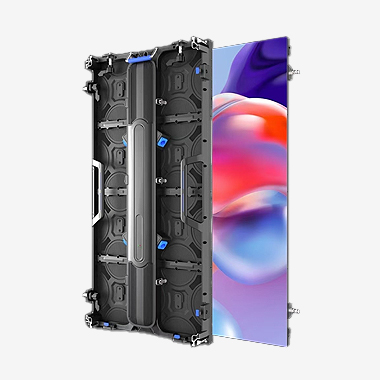
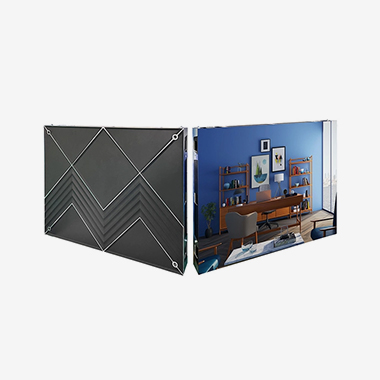
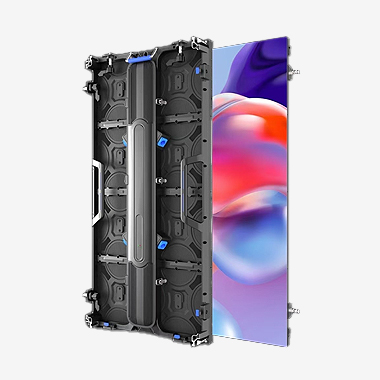
An LED display wall, also called an LED video wall or LED screen wall, is a large-format display composed of multiple LED cabinets tiled together both horizontally and vertically to form one continuous image. Each cabinet contains an array of light-emitting diode (LED) pixels — tiny red, green, and blue light sources — mounted on a PCB module. By controlling the intensity of each pixel, the display reproduces full-color images, video, and graphics. Because the cabinets are joined edge to edge, the seams between them are visually negligible, so the finished wall looks like a single, seamless screen.
The modular nature of an LED display wall is its greatest strength. You can build a screen of virtually any size and aspect ratio by adding or removing cabinets. This makes LED walls ideal for spaces where a fixed-size television would be too small, where the architecture demands a custom shape, or where the viewing distance is too long for a conventional display. LED walls are also extremely bright, easily readable in direct sunlight, and do not suffer from the burned-in ghost images that can affect OLED screens.
At the heart of every LED display wall is the pixel pitch — the distance, measured in millimetres, between the centers of adjacent pixels. A smaller pixel pitch means more pixels per area, higher resolution, and a closer minimum viewing distance. A larger pixel pitch means fewer pixels but a lower cost and is perfectly adequate for long viewing distances. Choosing the correct pixel pitch is the single most important decision in any LED display wall project.
Modern LED display walls combine several mature technologies to deliver sharp, stable, long-lasting images. The first is surface-mount device (SMD) packaging, in which red, green, and blue LED chips are encapsulated into a single component. SMD modules provide high brightness, wide viewing angles, and excellent color consistency, and they are the standard for most indoor and outdoor applications.
The second technology is the receiving card and the control system. Each cabinet contains a receiving card that receives video data from a sending processor, drives the LED matrix, and handles scaling, refresh rate, and grayscale. High-quality control systems support refresh rates of 3840 Hz or higher, which eliminates the on-camera flicker that plagues cheap screens during broadcasts and sports events.
The third technology is color and brightness calibration. Over time, individual LEDs can drift in brightness and color. Professional LED display walls use calibration software and hardware to measure every pixel and apply correction, ensuring a uniform picture across the entire wall even after years of operation. Leading suppliers such as Shenzhen Cogo Technology Co.,Ltd ship pre-calibrated cabinets and provide calibration tools for on-site maintenance.
There are several strong reasons to choose an LED display wall over alternative display technologies. Brightness is the first. A typical LED display wall delivers 800 to 1,200 nits indoors and 5,000 nits or more outdoors, so the content remains visible in brightly lit rooms, near windows, and in full sunlight. Projectors struggle in daylight, and LCD panels rarely exceed 500 to 700 nits.
Seamlessness is the second. Unlike an LCD video wall, which always shows visible bezels between panels, an LED display wall has no frame around each cabinet. The image appears continuous, which matters enormously for control-room data walls, trading floors, and any application where a clean, uninterrupted picture is required.
Scalability and flexibility are the third. Because the wall is built from modular cabinets, it can be reconfigured, expanded, curved, or formed into unusual shapes. If your room layout changes, the wall can be rearranged. This flexibility is impossible with a single large display. Finally, LED display walls have a very long service life, typically 100,000 hours to half-brightness, and individual modules can be replaced without discarding the whole wall, keeping total cost of ownership low.
The versatility of the LED display wall makes it suitable for almost any environment where large, bright, dynamic imagery is needed. In control and command centers, operators rely on LED walls to display maps, cameras, and real-time operational data across multiple sources simultaneously. In broadcast and virtual-production studios, LED walls serve as backdrops and virtual sets, replacing traditional green screens. In corporate lobbies and meeting rooms, they act as brand showcases and presentation displays. Retailers use them for digital signage, product showcases, and immersive storefronts.
Transportation hubs such as airports, railway stations, and metro systems use LED display walls for passenger information, arrival and departure boards, and advertising. Stadiums and arenas use giant LED walls for instant replays, scores, and sponsor content. Museums, exhibitions, and theme parks deploy them for immersive storytelling. Even houses of worship and conference centers have adopted LED walls to make presentations visible to large audiences. Wherever a message must be seen clearly from a distance, an LED display wall is usually the best answer.
Selecting the right LED display wall begins with defining your viewing distance and content. Measure the farthest point from which the audience will view the screen, then select a pixel pitch that delivers acceptable sharpness at that distance. As a general rule, the pixel pitch in millimetres should be roughly one tenth to one fifth of the viewing distance in metres. A control room viewed from two metres needs a pitch of 1.2 mm to 2 mm, while a billboard viewed from twenty metres can use a pitch of 10 mm or more.
Next, decide between indoor and outdoor configurations. Indoor LED walls typically have smaller pixel pitches, lower brightness (which is easier on the eyes and more energy efficient), and do not need weatherproofing. Outdoor walls require higher brightness, IP-rated waterproof cabinets, and better thermal management. You should also consider the refresh rate for camera use, the viewing angle, the contrast ratio, and the color temperature. For mission-critical applications, choose a supplier that offers a complete package — cabinets, controllers, mounting structure, software, installation, and after-sales support.
Budget is another important factor. The total cost of an LED display wall includes not only the panels but also the structural steel, the control system, the power distribution, installation labor, and ongoing maintenance. It is wise to ask for a complete, itemized quotation. A reputable manufacturer such as Shenzhen Cogo Technology Co.,Ltd can provide a full engineering proposal, including heat load, power draw, weight, and installation drawings, so you can budget accurately from the start.
Professional installation is essential for a high-quality LED display wall. The mounting structure must be engineered to bear the weight of the cabinets, which can be significant for large walls, and it must allow for accurate alignment so that the finished surface is perfectly flat and the seams are invisible. Indoor walls are usually mounted on a steel frame or rail system with front or rear access for service. Outdoor walls require structural certification against wind load and must include drainage and weather sealing.
Maintenance is straightforward but should be planned. LED modules can be replaced individually from the front or rear depending on the cabinet design. Regular inspection of power supplies, fans, and the control system keeps the wall running reliably. Because LED walls consume significant power and generate heat, proper ventilation and air conditioning in the surrounding area are important for long life. Many suppliers now offer remote monitoring and diagnostic software that alerts you to failing modules before they become visible.
When you invest in an LED display wall, the quality of the supplier is as important as the quality of the panels. Shenzhen Cogo Technology Co.,Ltd is a professional LED display manufacturer that combines rigorous quality control, competitive pricing, and comprehensive engineering support. From initial consultation and pixel-pitch recommendation to structural design, production, and after-sales service, the company helps customers deliver reliable LED display wall projects on time and on budget.
Shenzhen Cogo Technology Co.,Ltd serves a wide range of industries, including control rooms, retail, education, hospitality, and events, and it supports both indoor and outdoor applications. Its team can advise on the right brightness, refresh rate, and pixel pitch for your environment, and it provides documentation, spare parts, and technical support to keep your wall performing for years. Choosing a dedicated LED display supplier such as Shenzhen Cogo Technology Co.,Ltd reduces risk, simplifies procurement, and ensures your investment is protected by genuine manufacturer support.
An LED display wall is a powerful, versatile, and long-lasting investment for any business or public space that needs to communicate with impact. By understanding pixel pitch, brightness, refresh rate, and total cost, and by choosing a reliable manufacturing partner, you can deploy a seamless, brilliant display that serves your organization for many years. Whether your goal is operational clarity in a control room, brand impact in a lobby, or immersive experiences at an event, the right LED display wall delivers results that justify the investment — and a trusted partner such as Shenzhen Cogo Technology Co.,Ltd can help you achieve it.


Copyright © 2026 Shenzhen Cogo Technology Co.,Ltd.
All Rights Reserved

 Previous article