




 Chat Now
Slim LED poster display panels with high brightness represent the cutting edge of digital signage technology, combining elegant form factor with powerful visual performance. These advanced displays are engineered to serve as direct digital replacements for traditional printed posters and lightboxes while overcoming the limitations of both conventional print media and earlier-generation digital displays. Characterized by their remarkably thin profiles—often less than 50mm deep—and exceptional luminosity capabilities exceeding 2,500 nits, these panels deliver vibrant, attention-grabbing content even in brightly lit environments where standard displays would appear washed out and ineffective.
The fundamental innovation of slim high-brightness LED posters lies in their ability to reconcile seemingly contradictory requirements: minimal physical depth and maximum optical output. This combination makes them ideally suited for space-constrained applications where maintaining aesthetic appeal is equally important as visual impact. Unlike bulky traditional LED displays that require significant mounting depth and structural support, these slim panels can be mounted flush against walls, embedded into architectural elements, or even suspended as hanging displays with minimal visual obstruction. Their sleek, modern appearance transforms them from mere advertising tools into design elements that enhance rather than detract from their surroundings.
The market for these displays has expanded dramatically across multiple sectors, driven by several converging trends. In retail environments, the shift toward experiential marketing demands technologies that can create immersive brand experiences without compromising valuable floor space. In corporate settings, the need for modern communication tools that align with contemporary office aesthetics has created demand for displays that function as both information platforms and design elements. In transportation hubs and public spaces, the requirement for highly visible information displays that can compete with direct sunlight has driven adoption of high-brightness solutions with slim form factors that don't obstruct passenger flow or sight lines.
Technologically, these panels represent a convergence of advancements across multiple disciplines. Breakthroughs in LED packaging have enabled higher pixel densities and improved optical efficiency, allowing for brighter output from smaller physical packages. Innovations in thermal management have solved the fundamental challenge of dissipating significant heat from ultra-thin enclosures. Improvements in power electronics have resulted in more efficient drivers and power supplies that generate less waste heat while delivering more power to the LEDs. These technological advances have collectively enabled the creation of displays that are simultaneously slimmer, brighter, and more energy-efficient than their predecessors.
The applications for slim high-brightness LED posters are virtually limitless. In luxury retail, they serve as elegant brand statement pieces that can showcase products with photographic quality. In quick-service restaurants, they function as digital menu boards that remain clearly visible through sun-filled windows. In corporate environments, they provide sophisticated branding elements that communicate company values and information. In public spaces, they deliver essential information and advertising with unmatched clarity. The versatility of these displays is further enhanced by their compatibility with modern content management systems, allowing for centralized control of distributed networks of displays and enabling real-time content updates based on time of day, audience demographics, or other contextual factors.
As digital signage continues to evolve from a novelty to a necessity across numerous industries, slim LED poster displays with high brightness are positioned at the forefront of this transformation. They represent not merely an incremental improvement over existing technologies, but rather a fundamental reimagining of what digital displays can be—seamlessly integrated, visually stunning, and operationally efficient solutions that bridge the gap between digital functionality and physical space design.
The design and construction of slim LED poster display panels with high brightness represent a remarkable achievement in engineering optimization, requiring innovative solutions to overcome the fundamental challenges of thermal management, optical performance, and structural integrity within severely constrained physical dimensions. These displays typically feature depths of 50mm or less while delivering brightness levels of 2,500-5,000 nits, creating engineering constraints that demand unconventional approaches to traditional display design problems.
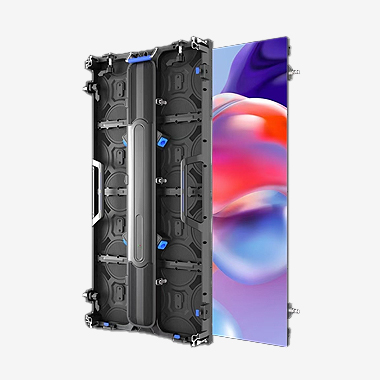
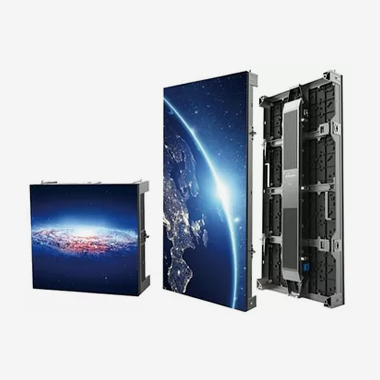
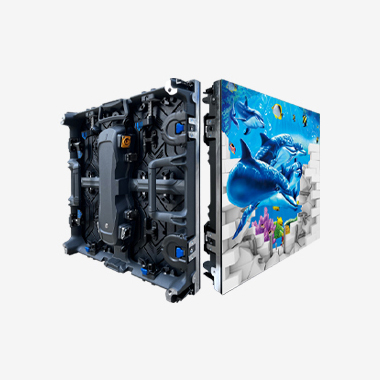
The enclosure design represents the first major innovation. Unlike conventional LED displays that use deep aluminum chassis for heat dissipation, slim panels employ advanced composite materials that provide structural rigidity while facilitating thermal transfer. The rear housing typically incorporates magnesium-aluminum alloys or advanced thermally conductive polymers that serve both as structural elements and heat spreaders. The front bezel is minimized to near-invisibility, often measuring less than 1mm on each side, creating the appearance of a seamless digital canvas when multiple units are tiled together. The overall construction prioritizes weight reduction without compromising durability, with complete assemblies typically weighing 30-40% less than traditional displays of equivalent size.
The optical system represents another area of radical innovation. To achieve high brightness in a slim form factor, manufacturers utilize specially engineered SMD (Surface-Mount Device) LEDs with enhanced luminous efficacy. These LEDs feature advanced semiconductor materials that deliver more lumens per watt while generating less heat. The optical design incorporates micro-lens arrays that precisely control light distribution, maximizing on-axis brightness while minimizing light spillage and improving energy efficiency. The panel surface typically features a matte anti-glare treatment with carefully calibrated reflectance properties that maintain contrast ratio in high-ambient-light conditions without creating specular highlights that would degrade image quality.
Thermal management constitutes the most critical engineering challenge in slim high-brightness displays. Traditional cooling methods using fans or large heat sinks are impossible within the depth constraints. Instead, these panels employ passive cooling systems of remarkable sophistication. The entire rear surface of the display functions as a massive heat spreader, often incorporating vapor chamber technology or advanced graphite thermal interface materials that efficiently transfer heat from the LEDs to the enclosure. The mechanical design ensures optimal airflow through precisely calculated ventilation patterns that leverage natural convection without requiring active components. Some advanced models incorporate phase-change materials that absorb heat during peak operation and gradually release it during lower-power periods.
The electronic architecture is similarly optimized for space efficiency. Instead of traditional separate controller cards, power supplies, and receiving cards, slim panels utilize highly integrated system-on-chip (SoC) designs that combine multiple functions into single compact modules. The power delivery system employs high-frequency switching power supplies with efficiency ratings exceeding 90%, minimizing heat generation while providing stable power to the LEDs. Connectivity is consolidated into a single multifunction port or wireless-only configuration, further reducing component count and physical depth requirements.
The manufacturing process for these displays requires exceptional precision. Automated optical alignment systems ensure perfect registration of LED modules to within micron-level tolerances. Robotic assembly systems handle the delicate components with precision impossible to achieve through manual assembly. Quality control processes include 100% brightness and color uniformity testing, with each panel undergoing individual calibration that creates a unique compensation profile stored in onboard memory. This calibration ensures perfect color matching across multiple displays, even when viewed from extreme angles.
The resulting product represents a triumph of miniaturization and efficiency—a display that delivers outstanding optical performance while occupying minimal space and consuming less power than traditional displays of equivalent brightness. The construction quality ensures reliable operation in continuous 24/7 applications, with mean time between failure (MTBF) ratings typically exceeding 50,000 hours. This reliability, combined with the elegant physical design, makes these panels suitable for the most demanding commercial applications where both performance and aesthetics are critical considerations.
The operation of slim LED poster display panels with high brightness involves a sophisticated interplay of optical physics, electronic control, and thermal management that enables these displays to achieve exceptional performance within their constrained form factors. Understanding their working principles requires examining how they overcome the fundamental challenges of generating intense light output while managing the resultant thermal energy in an ultra-thin enclosure.
At the most fundamental level, these displays operate on the principle of electroluminescence—the phenomenon whereby certain semiconductor materials emit light when electric current passes through them. However, the implementation in slim high-brightness panels involves several critical enhancements over conventional LED technology. The LEDs themselves utilize advanced semiconductor compounds with improved quantum efficiency, meaning a higher percentage of electrical energy is converted directly into light rather than heat. The epitaxial layer structures are optimized for maximum photon extraction, ensuring that light generated within the semiconductor material efficiently escapes rather than being reabsorbed. These improvements are essential for achieving high brightness levels while minimizing heat generation—the primary constraint in slim designs.
The driving methodology for these LEDs represents another area of innovation. While conventional displays might use simple constant-current drivers, slim high-brightness panels employ advanced pulse-width modulation (PWM) schemes with frequencies exceeding 3,000 Hz. This high-frequency PWM allows for precise brightness control while eliminating visible flicker that could cause eye strain or be captured on camera. The drivers incorporate dynamic power management algorithms that optimize current delivery based on content characteristics, reducing power consumption for darker content without compromising brightness capability for brighter content. This intelligent power management is crucial for maintaining thermal stability within the slim enclosure.
The thermal management system operates on principles of conductive heat transfer and natural convection. Heat generated by the LEDs is immediately conducted through specially designed thermal interface materials to the rear enclosure, which acts as a massive heat spreader. The materials and thicknesses are carefully engineered to maximize thermal conductivity while maintaining structural integrity and minimal weight. The exterior surface features precisely calculated fin structures that increase surface area for improved heat dissipation through natural air movement. Some advanced models incorporate phase-change materials that absorb thermal energy during peak operation and gradually release it during lower-demand periods, effectively acting as a thermal buffer that smooths out temperature fluctuations.
The optical system employs principles of total internal reflection and precise light control to maximize on-axis brightness. Micro-lens arrays positioned over each LED chip carefully direct light output toward the viewer while minimizing dispersion that would reduce perceived brightness. Anti-reflective coatings on all optical surfaces reduce light loss while anti-glare treatments maintain contrast in high-ambient-light conditions. The optical stack is engineered to preserve color purity and viewing angle characteristics despite the aggressive light management, ensuring consistent image quality across wide viewing angles.
The control electronics implement sophisticated image processing algorithms that optimize content for high-brightness viewing. These include dynamic contrast enhancement that expands the available contrast ratio based on ambient light conditions, color management systems that maintain accurate color reproduction despite varying brightness levels, and content-adaptive backlight control that adjusts overall panel brightness based on image content characteristics. The systems typically include ambient light sensors that automatically adjust display brightness to maintain optimal visibility while minimizing power consumption—increasing brightness in sunlit conditions and reducing it in darker environments.
The content delivery and management systems represent the final component of the operational principles. These panels typically support both wired and wireless connectivity options, with advanced models featuring integrated media players that can store and schedule content without external devices. The management software employs efficient video compression algorithms optimized for text and graphics content commonly used in digital signage, reducing bandwidth requirements while maintaining image quality. Remote management capabilities allow for centralized control of distributed display networks, with monitoring systems that track operational status, environmental conditions, and performance metrics across all connected displays.
Together, these operational principles enable slim LED poster displays to achieve their remarkable combination of minimal form factor and maximum visual impact. The sophisticated integration of optical science, electronic control, and thermal management creates a system that delivers outstanding performance while operating reliably within the strict constraints of ultra-slim design. This technical achievement represents the culmination of years of research and development in display technology, resulting in products that offer unprecedented capabilities for digital signage applications where both space and performance are at a premium.
Slim LED poster display panels with high brightness offer a compelling array of advantages that have driven their rapid adoption across multiple industries, but these benefits come with specific challenges that must be carefully managed during specification, installation, and operation. Understanding both aspects is crucial for making informed decisions about implementing this technology.
Advantages:
The primary advantage of these displays is their exceptional space efficiency. With depths often less than 50mm, they can be installed in locations where traditional displays would be impractical—flush-mounted on walls, integrated into architectural features, or suspended from ceilings with minimal visual intrusion. This slim profile transforms them from technological appliances into design elements that enhance rather than compromise their surroundings. The space efficiency extends beyond mere physical dimensions to include weight reduction, with these panels typically weighing 30-40% less than conventional displays of equivalent size, simplifying mounting requirements and expanding potential installation scenarios.
The high brightness capability represents another significant advantage. With output levels reaching 2,500-5,000 nits, these displays remain clearly visible even in direct sunlight or brightly lit environments where conventional displays would appear washed out and unreadable. This capability ensures content effectiveness regardless of lighting conditions, making them suitable for storefront windows, sunlit atriums, and outdoor protected installations. The brightness is typically coupled with excellent contrast ratios maintained through advanced optical treatments that suppress reflections and preserve image integrity in challenging lighting environments.
Energy efficiency constitutes a surprising advantage given the high brightness levels. Through advanced LED technology, efficient power management systems, and intelligent brightness control, these panels often consume less power than traditional displays of equivalent output. The passive cooling systems eliminate energy consumption for fans while reducing maintenance requirements and improving reliability. This combination of high performance and efficiency provides excellent operational economics, particularly important for 24/7 applications where energy costs represent a significant portion of total ownership expense.
The aesthetic appeal of these displays represents a qualitative advantage that shouldn't be underestimated. Their minimalist design, narrow bezels, and sleek profiles enable seamless integration into modern architectural environments. When mounted, they appear as digital canvases rather than technological intrusions, making them suitable for high-end retail, corporate, and hospitality applications where visual aesthetics are paramount. This aesthetic quality extends to their operation, with silent performance and absence of visible cooling vents contributing to a premium user experience.
Challenges:
The most significant challenge is thermal management within the constrained form factor. Despite advanced cooling technologies, the fundamental physics of heat dissipation present ongoing design challenges. In high-ambient-temperature environments, displays may need to automatically reduce brightness to prevent overheating, potentially compromising visibility. The thermal constraints also affect maximum achievable brightness levels, with slim designs typically offering slightly lower maximum brightness than deeper displays with more aggressive cooling systems.
Cost represents another challenge, particularly for smaller organizations. The advanced engineering, specialized components, and complex manufacturing processes required for slim high-brightness panels result in higher initial costs compared to conventional displays. While the total cost of ownership may be favorable due to energy efficiency and reliability, the upfront investment can be prohibitive for some applications, requiring careful economic justification based on specific use cases and expected benefits.
Installation and maintenance present unique challenges due to the compact design. The minimal depth leaves little room for error in mounting surface preparation, requiring perfectly flat surfaces for flush mounting. Service access is often limited, with components tightly integrated to save space. While reliability is generally excellent, when service is required, it often demands specialized skills and tools, potentially increasing maintenance costs and downtime compared to more conventional designs with greater service accessibility.
Content optimization represents another challenge that's often underestimated. The high brightness and typically close viewing distances demand specially prepared content that maximizes impact while avoiding visual artifacts. Standard video content often requires adjustment for optimal viewing on these displays, particularly regarding contrast levels, color saturation, and text legibility. This necessitates either content creation specifically for these displays or sophisticated content management systems that can automatically optimize existing materials for the unique characteristics of high-brightness viewing.
Finally, the rapid pace of technological development in this category presents a challenge for long-term planning. Products are frequently updated with improved specifications and features, making it difficult to standardize on a particular model for large deployments that may be implemented over extended periods. This rapid evolution also affects compatibility with mounting systems and control infrastructure, potentially requiring custom solutions that increase complexity and cost.
Despite these challenges, the advantages of slim LED poster displays with high brightness make them an increasingly popular choice for applications where space constraints and visual performance are both critical considerations. The key to successful implementation lies in careful planning that addresses these challenges during the specification and design phases, ensuring that the selected solution meets both technical requirements and operational needs throughout its lifecycle.
Slim LED poster display panels with high brightness have enabled revolutionary applications across numerous industries while continuing to evolve toward increasingly sophisticated capabilities. Their unique combination of minimal depth and maximum visibility has created new possibilities for digital signage while driving trends that will shape the future of display technology.
Current Applications:
In retail environments, these displays have transformed visual merchandising. Luxury brands utilize them as elegant brand statement pieces in store windows, where their slim profiles maintain clean architectural lines while delivering stunning product visuals that remain visible despite bright exterior lighting. Mass retailers deploy them as space-efficient digital shelf edges that dynamically present pricing, promotions, and product information, enabling real-time updates that eliminate the cost and waste of printed labels. Department stores use them as versatile endcap displays that can be rapidly reconfigured for different promotions or seasons, maximizing the value of high-traffic display real estate.
The corporate sector has embraced these displays for modern communication systems. In office lobbies, they serve as sophisticated branding elements that welcome visitors and communicate company values without the visual bulk of traditional displays. Conference centers utilize them as streamlined directional signage that blends seamlessly with architectural elements while providing dynamic updating capabilities for room schedules and event information. Executive briefing centers incorporate them as elegant presentation tools that disappear into the environment when not in use, maintaining the premium aesthetic expected in high-end corporate environments.
In transportation infrastructure, these panels have become essential for passenger information systems. Airports deploy them as gate information displays that remain readable in sun-filled terminals while maintaining the sleek, modern aesthetic expected in these environments. Train and bus stations use them for timetable displays that can be updated in real-time to reflect schedule changes, with their high brightness ensuring visibility in all weather conditions. The slim depth is particularly valuable in transportation settings where space is constrained and protruding displays could impede passenger flow or create safety concerns.
The hospitality industry has found numerous applications for this technology. Hotels use them as digital concierge systems in lobbies, as wayfinding displays that maintain the property's design aesthetic, and as elegant restaurant menu boards that can be updated instantly across multiple locations. Casinos employ them as player information displays that withstand bright gaming floor lighting while maintaining sophisticated appearances appropriate for high-end resort environments. The silent operation of these passively cooled displays makes them particularly suitable for hospitality settings where noise would detract from the guest experience.
Future Trends:
The future development of slim high-brightness LED displays will be characterized by several key trends. First, continued miniaturization will push form factors to even more extreme thinness, with displays approaching the depth of traditional printed posters while maintaining full digital capabilities. This will enable entirely new application scenarios, particularly in retail environments where space is at an absolute premium.
Second, integration of advanced sensing technologies will transform these displays from passive presentation devices to interactive environmental elements. Built-in cameras with privacy-focused computer vision will enable audience analytics and contextual content adaptation based on viewer demographics and engagement. Environmental sensors will automatically adjust display settings based on ambient conditions, optimizing visibility while minimizing energy consumption.
Third, developments in materials science will enable new form factors and installation scenarios. Flexible substrates will allow for curved displays that follow architectural elements, while transparent LED technologies will create see-through displays that maintain outward visibility while overlaying digital information. These advancements will further blur the line between digital displays and architectural elements, enabling truly integrated digital environments.
Fourth, advancements in power efficiency and connectivity will enable increasingly sustainable operation. Solar integration and ultra-low-power modes will reduce energy consumption, while wireless power technologies may eliminate power cables entirely for certain applications. 5G connectivity will enable instant content updates without wired infrastructure, particularly valuable for temporary installations and outdoor applications.
Finally, artificial intelligence will transform content management and optimization. AI systems will automatically create and adapt content based on contextual factors, audience response, and business objectives. Machine learning algorithms will optimize display settings in real-time based on environmental conditions and content characteristics, ensuring optimal performance while extending operational lifespan through intelligent thermal and power management.
These trends collectively point toward a future where slim high-brightness LED displays become increasingly integrated, intelligent, and invisible—functioning not as technological appliances but as natural elements of the built environment that enhance communication and experience without calling attention to themselves as technology. This evolution will continue to expand their applications across increasingly diverse settings while making them more accessible, sustainable, and effective as communication tools.
Conclusion
Slim LED poster display panels with high brightness represent more than merely an incremental improvement in display technology—they constitute a fundamental transformation in how digital signage integrates with physical spaces. By reconciling the previously contradictory requirements of minimal form factor and maximum visual impact, these displays have enabled new applications and experiences that were impossible with earlier technologies. Their significance extends beyond technical specifications to encompass aesthetic, operational, and experiential dimensions that collectively redefine the role of digital displays in commercial environments.
The transformative impact of these displays is most evident in their ability to democratize high-impact digital signage. Previously, the space requirements and visual intrusion of traditional displays limited their use to locations where these compromises were acceptable. The slim profile and elegant design of these new panels eliminate these limitations, enabling effective digital communication in spaces where aesthetics are paramount and physical space is constrained. This has particularly benefited luxury retail, corporate, and hospitality environments where technological elements must enhance rather than compromise design integrity.
The operational advantages of these displays extend beyond their physical characteristics to encompass significantly improved energy efficiency and reliability. The combination of advanced LED technology, efficient power management, and passive cooling results in displays that consume less energy while offering greater brightness than conventional solutions. This improved efficiency, coupled with the exceptional reliability of solid-state design and passive thermal management, results in lower total cost of ownership despite higher initial investment. The economic equation becomes increasingly favorable as energy costs rise and organizations place greater emphasis on sustainability.
The experiential impact of these displays represents perhaps their most significant contribution. By delivering stunning visual performance in virtually any lighting condition while maintaining discreet physical presence, they enable digital signage that feels like a natural element of the environment rather than an technological imposition. This seamless integration is crucial for creating immersive brand experiences and effective communication in settings where audience sensitivity to visual clutter is high. The ability to remain clearly visible in direct sunlight while maintaining color accuracy and contrast ratio ensures message effectiveness regardless of environmental conditions.
Looking forward, the ongoing evolution of this technology promises even greater integration and intelligence. Developments in materials science, particularly in flexible and transparent substrates, will enable new form factors that further blur the line between display and environment. Advances in sensing and artificial intelligence will create displays that understand and respond to their context and audience, delivering increasingly relevant and engaging experiences. Improvements in power efficiency and connectivity will make these solutions more sustainable and easier to deploy across distributed networks.
The convergence of these trends points toward a future where digital displays cease to be visible technology and become invisible interfaces—natural elements of our surroundings that provide information, enhance experiences, and facilitate communication without calling attention to themselves as devices. Slim high-brightness LED poster displays represent a crucial step toward this future, demonstrating that technological advancement need not mean increased visual intrusion or environmental impact.
In conclusion, these displays have established themselves as the new standard for digital signage in applications where both space and performance are critical considerations. Their combination of elegant design, outstanding performance, and operational efficiency makes them uniquely suited to the needs of modern commercial environments. As the technology continues to evolve, it will undoubtedly enable even more innovative applications and experiences, further solidifying its position as an essential tool for effective communication in physical spaces. The journey from bulky, energy-intensive displays to these sleek, efficient solutions represents not just technical progress, but a fundamental improvement in how technology integrates with and enhances our physical world.


Copyright © 2026 Shenzhen Cogo Technology Co.,Ltd.
All Rights Reserved

 Previous article