




 Chat Now
The live event industry has been utterly transformed by the adoption of RGB LED display video walls. From the pulsating heart of a music festival main stage to the dynamic backdrop of a corporate product launch, these brilliant, scalable canvases have become indispensable tools for captivating audiences, conveying information, and creating immersive atmospheres. An event LED wall is more than just a large television; it is a modular, high-brightness visual system engineered for live performance, offering unparalleled flexibility, impact, and reliability where it matters most.
The shift from traditional physical sets and projection to LED-based visuals represents a fundamental change in event production. Projection, while effective, has inherent limitations: it requires a flat, white surface; it is vulnerable to ambient light, often washing out in a well-lit conference hall; and it can be obstructed by performers or speakers walking in front of the beam. LED walls shatter these constraints. They are bright, self-illuminating objects that form their own surface, visible even under the glare of stage lights. They are not a passive screen but an active, luminous set piece that can be shaped, curved, and configured into endless creative forms—from towering pillars and sweeping arches to immersive 360-degree tunnels.
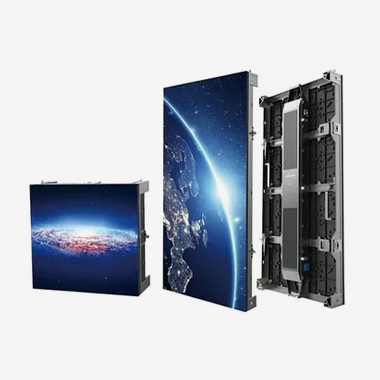
The core technology, the RGB LED, is the engine of this revolution. A Light Emitting Diode (LED) is a semiconductor device that emits light when an electric current passes through it. By clustering three miniature LEDs—one Red, one Green, and one Blue (RGB)—into a single pixel, manufacturers can create the full spectrum of visible colors through additive color mixing. Varying the intensity of each diode allows the pixel to produce millions of hues. For live events, these pixels are packaged into modular panels that can be seamlessly locked together like high-tech LEGO bricks to create a video wall of virtually any size or aspect ratio.
A critical specification for event video walls is pixel pitch—the distance, in millimeters, from the center of one pixel to the center of the adjacent pixel. This metric directly dictates the optimal viewing distance and image clarity. A smaller pixel pitch (e.g., P2.6, P3.9) means more pixels per square meter, resulting in a higher-resolution image suitable for close-viewing applications like corporate events, broadcast studios, or stage backdrops where audiences or cameras are near. A larger pixel pitch (e.g., P6, P8, P10) is used for large-format festival stages or arena screens where the audience is tens or hundreds of meters away, prioritizing impact and brightness over ultra-fine detail.
The ecosystem of an event LED wall extends far beyond the tiles themselves. It encompasses a sophisticated chain of technology: powerful media servers that store and process ultra-high-resolution content, complex control systems that send data to every single pixel across vast distances, and robust structural engineering to safely suspend tons of equipment over performers and audiences. Content is no longer static; it is dynamic, synced to music, interactive, and often generated in real-time, making the screen a live performer in its own right.
In essence, the RGB LED video wall has become the central nervous system of the modern event. It is the primary conduit for storytelling, brand messaging, artistic expression, and audience engagement. It has elevated events from passive viewing experiences to sensory spectacles, setting a new standard for what is possible in live entertainment and communication. Its ability to shape-shift and adapt makes it the most powerful visual tool in an event producer's arsenal.
The design and construction of an LED video wall for events is a masterclass in balancing high-performance visual output with the rigorous demands of portability, durability, and rapid deployment. Unlike fixed installations, event walls are built to be toured, constantly assembled, disassembled, transported, and reassembled, often under tight time constraints. This "road-ready" requirement dictates every aspect of their design, from the internal components to the external frame.
The Modular Panel: The Core Unit
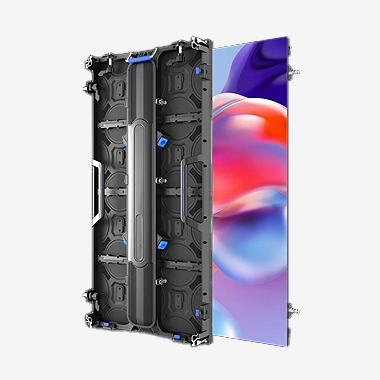
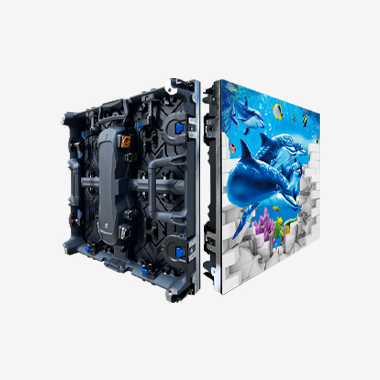
The fundamental building block is the LED panel (or module), typically ranging in size from 500x500mm to 1000x1000mm. This is a self-contained unit consisting of:
LED Modules: The actual array of RGB pixels mounted on a printed circuit board (PCB). The density and quality of these LEDs determine the wall's resolution and color fidelity. For events, high-brightness (1000-6000 nits) LEDs are used to compete with stage lighting.
Cabinet Structure: The panel's housing is a lightweight yet incredibly robust chassis, most often made from magnesium alloy or high-grade aluminum. This material offers an excellent strength-to-weight ratio, crucial for reducing overall weight for shipping and rigging.
Locking Mechanism: Perhaps one of the most critical features for rapid deployment is the quick-lock system. Panels are designed with precision-machined corners and latches that allow technicians to swiftly connect them together with minimal tools, ensuring a seamless, flat surface without visible gaps or misalignment.
Integrated Electronics: Each panel contains its own driver ICs and a receiving card that takes the data signal and translates it into commands for the LEDs. Modern panels are "daisy-chainable," meaning a data and power cable enters one panel and loops out to the next, simplifying cabling.
Rigging and Structural Systems: Safety First
Panels are never hung directly. They are mounted into a structural framework that is engineered to specific safety factors (often 10:1). This framework includes:
Truss or Goalpost Systems: For large stage walls, a heavy-duty aluminum truss structure is built behind the wall. The LED panels are then hung from this truss using specialized flying hardware.
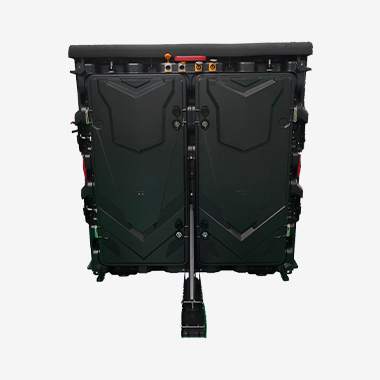
Self-Supporting Frames: For smaller corporate walls or backdrop applications, the panels are often built into a ground-supported, self-standing frame that can be assembled without requiring overhead rigging points.
Quick-Rig Solutions: Innovations like "Kee-clamp" style systems or pre-assembled frames allow for entire walls to be built from the ground up with incredible speed, a vital factor in the fast-paced world of event load-ins and load-outs.
Pixel Pitch and Configurability
The choice of pixel pitch is a primary design decision based on the event's nature:
Broadcast & Corporate (P2.6 - P4): Where cameras and audiences are close, a fine pitch is essential to avoid seeing individual pixels on camera shots, which would create a distracting moiré pattern.
Concert Touring & Theaters (P3.9 - P6): A versatile mid-range pitch that offers a great balance of resolution for both audience sightlines and IMAG (Image Magnification) camera work.
Festivals & Large Arenas (P6 - P10+): Here, viewing distances are vast. The priority is maximum brightness and impactful imagery rather than fine detail, making a larger, more cost-effective pitch the logical choice.
Supporting Infrastructure: The Unseen Heroes
The wall itself is just the visible component. Its operation relies on a suite of critical support gear:
Video Processors/Media Servers: These are the brains of the operation. They handle multiple layers of high-resolution content, manage playback, and, most importantly, "map" the output to the unique and often non-standard resolution and shape of the LED wall. They can handle effects, scaling, and blending.
Power Distribution: LED walls are power-hungry. A large wall can require a dedicated three-phase power feed. Power distribution units (PDUs) are used to safely route and condition power to each section of the wall, often with built-in dimming and remote monitoring.
Data Distribution: Data is sent from the processor to the wall via network cables (CAT5/6 or fiber optic). Fiber is preferred for long runs and large walls due to its immunity to electrical interference from power cables and lighting dimmers. Hubs and switches are used to split the signal to various sections of the wall.
The construction of an event LED wall is therefore a symphony of mechanical engineering, electronic design, and logistical planning. It results in a system that is both a technological marvel and a rugged workhorse, capable of delivering flawless visual performance night after night while enduring the punishing schedule of life on the road.
The magic of an LED video wall lies in its ability to take a standard video signal and faithfully reproduce it across a massive, non-standard canvas composed of millions of individual lights. This process is a complex, real-time digital pipeline involving precise synchronization and control.
The Signal Journey: From Source to Screen
Content Source: The process begins with a video source. This could be a pre-rendered video file playing from a media server (e.g., Green Hippo, disguise, 7thSense), a live camera feed for IMAG, a graphics output from a presentation computer (PowerPoint/Keynote), or a real-time generative content engine (e.g., Notch).
Video Processing (The Brain): The video signal is fed into a dedicated LED video processor or a powerful media server. This is the most critical step. The processor performs several key tasks:
Resolution Mapping: The incoming signal (e.g., 1920x1080) is almost never the same resolution as the LED wall (which could be 3840x2160 or any other custom size). The processor scales the content to fit the wall's native pixel grid perfectly.
Image Correction: It applies color calibration and brightness uniformity data to ensure every panel and every pixel displays the exact same color and intensity, creating a seamless image.
Output Tiling: The processor divides the massive output image into smaller, manageable sections, each corresponding to a specific output port (e.g., Port 1 for top-left section, Port 2 for top-right section).
Data Transmission: The processed video data is sent from the processor's output ports. For modern systems, this is done via network protocols like Art-Net, sACN, or proprietary protocols over Ethernet cables (CAT5/6) or, more reliably for large installations, fiber optic cables. Fiber is immune to the electrical noise that is rampant in event environments.
Data Reception & Pixel Driving: The network cables plug into receiving cards located on the back of the LED panels. These cards are the translators. They take the network data packet, decode it, and send commands to the driver integrated circuits (ICs) on the panel. These driver ICs use a technique called Pulse-Width Modulation (PWM) to control the light output of each individual red, green, and blue sub-pixel.
Pulse-Width Modulation (PWM): The Key to Dimming and Color
PWM is the fundamental technology behind the grayscale and color control of LEDs. Instead of varying the analog voltage to an LED (which would be inefficient and would shift its color), the driver IC rapidly switches the LED on and off at a constant voltage.
The duty cycle (the percentage of time the LED is "on" during each cycle) determines the perceived brightness. A 50% duty cycle results in 50% brightness; a 10% duty cycle results in 10% brightness.
The refresh rate (how many times this on/off cycle occurs per second) is crucial. A low refresh rate (<1000Hz) would be visible as a flicker to the human eye and cameras. High-end event LED walls feature very high refresh rates (≥3840Hz) to ensure a rock-solid, flicker-free image, especially under the strobing effects of stage lights and when captured by professional broadcast cameras.
Synchronization: Locking it All Together
For a video wall to display a single, coherent image, every panel must be perfectly synchronized. This is achieved through genlock (generator lock) and precise data timing. The primary processor acts as the "master clock," and all receiving cards slave their internal clocks to it. This ensures that the data for frame n is displayed on every single panel across the entire wall at the exact same moment, eliminating any tearing or lag between sections.
Calibration: The Pursuit of Perfection
Out of the factory, LEDs have slight variations in color and brightness. To achieve a perfectly uniform canvas, each panel undergoes a meticulous calibration process using specialized colorimeters and software. Correction values are calculated for each individual LED and stored on the panel's receiving card. During operation, the processor applies these values in real-time, ensuring that a command to display "R255, G255, B255" (pure white) produces the exact same shade of white on every module, from one corner of the wall to the other.
In summary, the working principle of an event LED wall is a masterpiece of distributed computing and real-time control. It is a highly coordinated system that transforms a standard video signal into a precisely timed stream of data, which is then converted into millions of microscopic pulses of light, all working in perfect harmony to create a breathtaking visual experience.
The dominance of LED video walls in the event industry is a testament to their profound advantages. However, their implementation is not without significant challenges that production teams must carefully manage.
Advantages:
Superior Brightness and Visibility: This is the most decisive advantage over projection. LED walls are self-illuminating light sources, capable of producing thousands of nits of brightness. This allows them to remain vividly clear and colorful even under the direct beam of stage wash lights, making them ideal for concerts and well-lit conference rooms.
Unmatched Creative Flexibility and Scalability: The modular nature of LED means walls can be built to any size, shape, or configuration. They can form curves, arches, circles, and even 3D structures. This allows set designers to break free from the traditional rectangular screen and integrate video seamlessly into the physical stage design.
Reliability and Redundancy: Modern event-grade LED walls are designed with reliability in mind. If a single LED or even an entire module fails, it only results in a small dark spot or a single "dead pixel," unlike a projector bulb failure, which would take down the entire screen. Many systems also have redundant data paths to prevent catastrophic signal loss.
Space and Sightline Efficiency: LED walls are relatively thin. Unlike projection, which requires a long, unobstructed throw distance from the projector to the screen, an LED wall can be placed directly on the stage as a backdrop, preserving valuable venue space and avoiding issues with performers casting shadows.
High-Impact Visuals for IMAG: For large events, Image Magnification (IMAG) is crucial. Using an LED wall for IMAG provides a incredibly bright, high-contrast image of the speaker or performer, ensuring those in the back of the arena have an intimate view. The high refresh rate eliminates flicker and blur for smooth camera pans and movement.
Operational Efficiency for Touring: While heavy, a complete LED wall system is designed for touring. Quick-lock panels and standardized cases allow a large wall to be dismantled, packed, and shipped efficiently, making it a practical solution for multi-city tours.
Challenges:
High Cost: The initial capital investment for a high-quality, fine-pitch LED wall system is substantial. This includes not just the panels, but also the processing, rigging, flight cases, and control equipment. This cost is often a barrier for smaller production companies or venues.
Logistical and Physical Demands: LED walls are heavy and require significant truck space for transportation. Their deployment demands a skilled crew of video and rigging technicians for safe installation, which adds to labor costs and requires ample time for load-in and load-out.
Power and Thermal Management: A large, bright LED wall consumes a tremendous amount of power, often requiring a dedicated, clean power source from the venue. This power consumption also generates significant heat, which requires built-in fans and cooling systems to prevent overheating and protect the electronics.
Resolution and Viewing Distance Limitations: The principle of pixel pitch is a double-edged sword. If an audience is too close to a wall with a large pixel pitch, the image will appear pixelated and low-resolution. Choosing the wrong product for the application can ruin the viewer experience. There is always a trade-off between resolution, cost, and weight.
Technical Complexity: Operating a large LED system requires specialized knowledge. Troubleshooting can be complex, involving diagnosing issues within a chain of hundreds of panels, kilometers of cable, and sophisticated processors. A problem could lie in the content, the processor settings, the network configuration, or a single faulty module.
Camera Compatibility (Moiré and Scan Lines): While high refresh rates have solved flicker, another issue persists for broadcast cameras: moiré patterns. This is an interference pattern that can appear when the camera's sensor grid interacts with the precise grid of the LED wall. Mitigating this requires careful camera positioning, the use of optical low-pass filters, and sometimes post-production fixes.
In conclusion, the decision to use an LED video wall is a strategic one. Its advantages in creating visually stunning, reliable, and flexible stages are undeniable. However, these benefits must be weighed against the significant costs, logistical hurdles, and technical expertise required to deploy them effectively. A successful deployment hinges on meticulous planning, a skilled team, and selecting the right technology for the specific event context.
The application of LED video walls in events has diversified far beyond the simple backdrop, becoming a foundational element for creating unique experiences across numerous sectors. Furthermore, the technology is in a constant state of evolution, pointing towards a future of even greater integration and immersion.
Diverse Applications:
Music Concerts and Festival Stages: The quintessential application. LED walls form the main stage backdrop, providing dynamic visuals that amplify the music's energy, showcase live IMAG of the performers, and serve as a key part of the artist's brand identity and storytelling.
Corporate Events and Trade Shows: Used for product launches, keynote presentations, shareholder meetings, and exhibition booths. They provide a crisp, professional display for slides, videos, and graphics, reinforcing brand messaging and ensuring visibility in bright convention hall lighting. Configurations often include curved walls and transparent LED for a high-tech aesthetic.
Broadcast and Television Studios: Fine-pitch LED walls have replaced traditional green screens and physical sets. They allow for the creation of dynamic, photorealistic, or entirely virtual environments in real-time (a technology known as Virtual Production, popularized by shows like "The Mandalorian"), which can be perfectly tracked with the camera's movement.
Theatre and Performing Arts: Increasingly used in theatrical productions to create immersive, changing environments that would be impossible or prohibitively expensive to build physically. They can transform a stage from a forest to a cityscape to an abstract space in an instant.
Esports Tournaments: Central to the spectacle of major esports events. Giant walls display the live gameplay for the arena audience, while also showing player stats, sponsor messages, and dramatic effects, creating a visceral, stadium-style experience for fans.
House of Worship (HOW): Large churches and megachurches use LED walls to display lyrics for worship songs, sermon notes, and video illustrations, enhancing congregational engagement and ensuring visibility in large auditoriums.
Future Trends:
Finer Pixel Pitches and COB Technology: The push for smaller pixel pitches will continue, making "invisible" technology a reality even on stage. Chip-on-Board (COB) technology, where the LED chips are directly mounted onto the PCB and encapsulated in a protective resin, will become more prevalent. COB offers superior durability (better resistance to damage from impact or moisture), improved thermal performance, a wider viewing angle, and a smoother visual appearance without the distinct "dots" of traditional SMD LEDs.
XR and Virtual Production: The integration of LED walls with Augmented (AR) and Extended Reality (XR) will deepen. By using camera tracking and real-time rendering engines (e.g., Unreal Engine), the content on the wall can react to the camera's perspective, creating a perfect, seamless blend between the physical stage and digital extensions. This allows performers to interact with virtual elements in real-time.
Transparent and Flexible LED: Transparent LED screens (which offer a see-through effect when off) will allow for more creative staging, enabling video elements to be placed in front of performers without completely obscuring them. Flexible LED tiles will enable the creation of more organic, curved, and unconventional shapes, further breaking the "rectangle" paradigm.
Higher Dynamic Range (HDR) and Better Color Fidelity: As consumer displays improve, so will event technology. LED walls will adopt higher dynamic range standards, offering deeper blacks, brighter highlights, and a much wider color gamut (e.g., Rec. 2020). This will result in more lifelike, vibrant, and contrast-rich images.
Sustainability Improvements: The industry will focus on reducing the massive power consumption of LED walls. This will be achieved through more efficient LED driver technology, intelligent power management that dims the wall during darker content, and the use of lighter, more recyclable materials to reduce shipping weight and environmental impact.
Simplified Control and AI Integration: Control software will become more intuitive and automated. Artificial Intelligence could be used for predictive maintenance (alerting crews to failing modules before they go dark), automated calibration, and even optimizing content for the specific wall configuration and audience sightlines.
The future of event LED walls is one of convergence—where physical set design, video content, and live performance become an indistinguishable, interactive whole. The technology will continue to become more accessible, more intelligent, and more integral to crafting the unforgettable live experiences of tomorrow.
6. Conclusion: The Indispensable Engine of Event Spectacle
The RGB LED video wall has unequivocally established itself as the indispensable visual engine of the modern live event. Its journey from a novel technological curiosity to a mainstream production staple is a story of solving fundamental challenges in audience engagement and creative expression. It has not merely replaced older technologies like projection; it has fundamentally rewritten the rules of what is possible on a stage, in a conference hall, or in an arena.
The core of its success lies in its unique combination of attributes: unparalleled brightness that conquers ambient light, modular flexibility that liberates stage design, and a reliability that gives producers and performers confidence. It has empowered artists to visualize their music, brands to amplify their message, and speakers to connect with their audiences on a grander, more visceral scale. The LED wall is no longer just a screen; it is a chameleonic set piece, a broadcast medium, and an environmental canvas all in one.
However, as we have seen, this power comes with commensurate responsibility. The complexities of cost, logistics, technical expertise, and power management are significant hurdles that require professional oversight and meticulous planning. The choice of technology is never one-size-fits-all; it is a strategic decision based on a careful analysis of viewing distances, budget, creative goals, and venue constraints.
Looking forward, the trajectory of LED technology points towards even greater integration into the fabric of live experiences. The boundaries between the real and the virtual will continue to blur through advancements in XR and virtual production. The screens themselves will become finer, brighter, more efficient, and more malleable, dissolving into the creative process rather than limiting it.
In conclusion, the RGB LED display video wall is more than a piece of AV equipment. It is a transformative tool that has elevated live events from passive observations to immersive spectacles. It has become the primary language of visual storytelling for large audiences, a language of light and motion that is universally understood. As the technology continues to evolve, its role will only deepen, ensuring that the future of live events will be brighter, more immersive, and more spectacular than ever before. It is the luminous heartbeat of the event industry, and its pulse is growing stronger.


Copyright © 2026 Shenzhen Cogo Technology Co.,Ltd.
All Rights Reserved

 Previous article