




 Chat Now
The modern live concert experience is a multi-sensory spectacle, and at its visual core lies the outdoor LED wall display panel. These massive, modular screens have transcended their initial role as simple video amplifiers to become fundamental instruments of artistic expression, stage design, and audience immersion. They are the canvas upon which the visual identity of a live performance is painted, transforming a musical act into a holistic audio-visual journey that resonates long after the final encore.
An outdoor LED wall display panel for concerts is a high-brightness, rugged, and rapidly deployable modular video system designed for temporary installation at open-air live events. Unlike their fixed-installation counterparts, these panels are engineered for a specific lifecycle: transportation, rapid assembly under time pressure, flawless performance during the show, and quick disassembly to move to the next venue. This "road-ready" design philosophy is what separates concert-grade LED from any other type of display.
The evolution of this technology is inextricably linked to the growth of the live music industry. As artists sought to create larger-than-life experiences for growing audiences, the limitations of projection—such as stage lighting interference and low brightness—became apparent. The advent of bright, weather-resistant LED panels in the 1990s revolutionized stage design. It allowed for creative freedom previously unimaginable, enabling video to be integrated into the very architecture of the stage, from the main backdrop to side screens, stage decks, and even overhead structures.
For a concert, the LED wall serves multiple critical functions:
Audience Sightlines: It acts as massive image magnification (IMAG), providing close-up views of the performers for those in the back rows, ensuring every attendee feels connected to the action on stage.
Artistic Storytelling: It displays pre-produced content, abstract visuals, and thematic graphics that complement the music, enhance the mood, and tell a story, turning each song into a distinct chapter of the show.
Dynamic Stage Design: It transforms the stage from a static set into a dynamic, living environment. The video content can change the perceived size, shape, and texture of the stage in an instant.
Branding and Sponsorship: It seamlessly integrates commercial messaging and sponsor logos without disrupting the flow of the performance.
In essence, the outdoor concert LED wall is the ultimate fusion of technology and art. It is a temporary monument to visual engineering that appears for a single night, creates magic for tens of thousands of people, and then disappears onto a truck, ready to do it all again in a new city. It has become an indispensable tool for artists to translate their musical vision into a breathtaking visual spectacle.
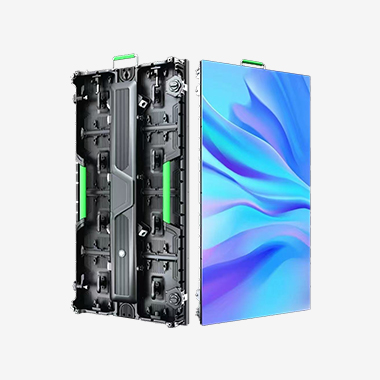
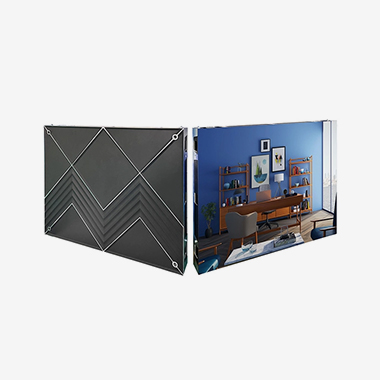
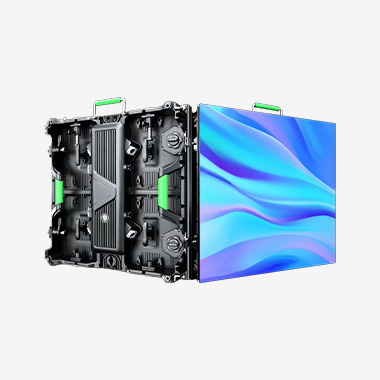
The design and construction of an LED panel built for the concert touring industry are a masterclass in ruggedization, speed, and reliability. Every component, from the smallest fastener to the largest cabinet, is over-engineered to withstand the brutal realities of life on the road while delivering broadcast-quality visuals.
1. The Road-Ready Cabinet: Strength and Speed
The foundation is the rental cabinet, a workhorse designed for endurance.
Material and Construction: Die-cast aluminum is the undisputed material of choice. It offers an exceptional strength-to-weight ratio, crucial for building large, flown structures that are safe and meet rigging load limits. The cabinets are designed to be shock-absorbent and resist twisting during transport and rigging.
Quick-Release Locking Mechanisms: Time is the most valuable currency during load-in and load-out. Cabinets feature robust, tool-less locking systems (often lever-activated or cam-driven) that allow crew members to securely connect panels together in seconds. These mechanisms are designed for thousands of cycles without failure.
Integrated Rigging Points: Each cabinet has certified, load-rated rigging points that interface perfectly with event trussing systems. This allows for safe aerial deployment of massive video walls.
2. Weatherproofing for the Open Air
Despite being "outdoor" panels, they are not fully IP65 rated like fixed installations. Instead, they are built to be weather-resistant (typically IP54 or similar).
Protective Measures: They are designed to handle rain, dust, and humidity for the duration of an event. This is achieved through protective conformal coating on PCBs, gaskets between cabinets, and passive drainage channels. The priority is to allow for rapid cooling rather than create a fully sealed environment.
Weather Covers: For sustained rain, crews deploy large-scale waterproof tarps that cover the entire wall from the top, protecting it while allowing the show to continue.
3. The LED Module: Brightness and Reliability
High-Brightness SMD LEDs: Surface-Mounted Device (SMD) LEDs with a black package are standard. They provide the wide viewing angles and color consistency required for large audiences. Brightness levels are extreme (often 8,000+ nits) to compete with direct sunlight for daytime festivals and powerful stage lighting at night.
Front-Serviceability: This is a non-negotiable feature. During a concert, there is no access to the back of a flown screen. Every component—LED modules, power supplies, and receiving cards—must be removable and replaceable from the front in a matter of minutes, often using simple tools or quick-release latches.
4. Thermal Management: Cooling Under Pressure
The combination of high brightness and stage lighting creates immense heat.
High-Flow Fans: Unlike passively cooled fixed installations, concert panels use powerful, brushless DC fans. These are designed for high airflow and are often redundant (multiple fans per cabinet) to ensure cooling continues even if one fails. They are built to be reliable and resistant to the dust encountered on tour.
Optimized Airflow: Cabinets are designed with large intake and exhaust vents to create a effective airflow path across the hottest components, primarily the LED drivers and power supplies.
5. Power and Data Infrastructure
Redundant Power Supplies: Cabinets often house multiple, hot-swappable power supply units (PSUs). If one fails, the others can keep the cabinet operational until it can be replaced during a set change.
Robust Data Distribution: Data is daisy-chained from cabinet to cabinet using locking connectors. Sophisticated receiving cards can often bypass a fault, ensuring a single failure doesn't black out an entire section of the wall.
In summary, the construction of a concert LED panel is an exercise in designing for the worst-case scenario. It is built to be thrown in a truck, built in a hurry, exposed to the elements, and perform flawlessly night after night. It is the Formula One car of the display world: high-performance, incredibly robust, and designed for a pit crew to maintain at speed.
The operation of a concert LED wall is a high-stakes, real-time orchestration of signal flow, processing, and redundancy. It's a system designed for zero tolerance of failure, where a split-second glitch can be seen by thousands. The working principle is a complex ballet of technology and human expertise.
1. The Core Technology: High-Speed PWM for Capture
The fundamental image creation using Pulse-Width Modulation (PWM) is pushed to its limits.
Ultra-High Refresh Rates: Concert walls require refresh rates of 3840Hz or higher. This is primarily to avoid "rolling shutter" effects and black bars when the screen is filmed by broadcast or audience cameras. The high speed ensures the image is captured perfectly on video, which is crucial for live streams and archival footage.
High Bit Depth: 16-bit or higher processing is standard to achieve incredibly smooth color gradients and eliminate "banding" in areas like sky or lighting effects, ensuring a cinematic quality.
2. The Signal Path: A Redundant Highway
The journey from camera to screen is built on redundancy.
Source Signals: Video sources include:
Live Camera Feeds: From multiple robotic and handheld cameras around the stage.
Media Servers: Powerful computers (e.g., disguise, Hippotizer) that play back pre-produced content, graphics, and effects. These are the heart of the creative visual output.
Video Switcher and Director: A vision mixer live-switches between camera feeds and media server outputs based on the director's commands. This creates the "program feed" that the audience sees.
The LED Video Processor: This is the critical "translator." It takes the program feed (e.g., a 1080p signal) and:
Scales and Maps it: It maps the input to the unique, often non-rectangular or curved, resolution of the LED wall.
Applies Calibration: It uses calibration data to ensure color and brightness uniformity across every panel in the array.
Outputs to the Wall: It sends the processed signal via fiber optic cable to the display.
Redundancy: The entire signal path is mirrored. A backup switcher, backup media server, and backup processor run in sync with the primary systems. An automatic switcher (e.g., a Dual Link Fiber Optic UPS) constantly monitors the primary signal and will switch to the backup instantaneously if a failure is detected—often without the audience noticing.
3. Data Distribution and Control on the Wall
The processed signal is sent to the first cabinet in the array and daisy-chained to all others. Each cabinet's receiving card takes the data for its pixels and forwards the rest. Advanced systems use redundant data loops; if a card fails, the data can route around it.
4. Monitoring and Control
The video engineer operates from a central control point.
Dedicated Software: They use software to monitor the health of the entire wall in real-time, checking temperatures, fan speeds, and power draw across all cabinets.
Pixel Mapping: They can remotely diagnose and pinpoint the exact location of a failed module or power supply, directing crew for a swift repair.
5. Synchronization with Show Control
The LED wall does not operate in isolation. It receives commands from the master show control system (e.g., timecode) to ensure that every video cue, lighting change, and pyro effect is perfectly synchronized with the music.
In essence, the working principle is one of managed, redundant perfection. It's a robust pipeline designed to take creative inputs, ensure their flawless technical execution, and provide multiple layers of protection to guarantee that the show will always go on, regardless of technical gremlins.
The adoption of LED technology has fundamentally enhanced live music production, but its deployment in an outdoor concert setting presents a unique set of intense challenges that require expert management and significant investment.
Advantages:
Unmatched Visual Impact and Immersion: LED walls create a larger-than-life experience that dominates the audience's field of vision. The combination of IMAG and custom visuals draws attendees into the performance, creating a deep emotional connection and a truly immersive environment that is impossible to achieve with static sets or projection.
Creative Freedom and Artistic Expression: They provide an infinite digital canvas. Artists and show designers are no longer limited by physical scenery. They can change the entire look and feel of the stage for each song, transporting the audience to different worlds, creating abstract patterns that move with the music, and telling a visual story that complements the audio narrative.
Superior Sightlines for Large Audiences: The primary practical function. They ensure that every member of the audience, regardless of their distance from the stage, has a clear view of the performers' expressions and actions, democratizing the concert experience for tens of thousands of people.
Reliability in Challenging Conditions: Modern rental LED is built to perform. Its high brightness overcomes ambient light, and its rugged design can handle the vibrations, temperature swings, and minor weather incidents that are part of outdoor events. This reliability is paramount for a show that cannot have an intermission for technical difficulties.
Integration with Stage Design: LED technology is modular and flexible. It can be built into curved walls, hexagonal tiles, stage floors (decks), and even worn by performers, allowing video to be an architectural element of the stage rather than just a backdrop.
Challenges:
Extremely High Cost: The financial outlay is enormous. This includes the cost of renting the LED hardware itself, the extensive crew required for installation/dismantle, the media servers, and the highly skilled operators (video director, engineer, media server programmer). This makes it a tool primarily for major tours and festivals.
Intense Logistical Complexity: Transporting, storing, and assembling a small mountain of fragile, high-value technology is a monumental task. It requires meticulous planning, specialized trucks, and a large, experienced crew working under extreme time pressure during load-in and load-out.
Significant Power and Infrastructure Demands: A large LED wall can have a power requirement equivalent to a small neighborhood. Outdoor venues must be able to provide this massive amount of clean, stable power, often requiring dedicated generators and power distribution systems.
Weather Vulnerability: Despite being weather-resistant, heavy rain or high winds can threaten a show. While covers can help, sustained bad weather can delay setups, damage equipment, or even force show cancellations, representing a huge financial risk.
Technical Expertise and Failure Points: The system is incredibly complex. A failure in any part of the chain—from a faulty data cable to a software glitch in the media server—can bring the visual show to a halt. This requires a team of expert technicians on standby at all times.
Weight and Rigging Safety: Large flown video walls are extremely heavy. Their installation requires certified riggers and structural engineers to calculate load limits and ensure the trussing and roof structures can support the weight, especially in windy conditions. Safety is the absolute priority.
In conclusion, the advantages of LED walls for concerts—their transformative visual power and creative potential—are so profound that the industry has wholeheartedly embraced them. The challenges are primarily financial, logistical, and technical. They are not insurmountable, but they necessitate partnership with professional, experienced rental production companies whose entire business is built to manage these complexities.
The application of LED technology in concerts has expanded far beyond a simple backdrop screen. It is now a versatile tool for creating holistic environments. Meanwhile, technological and creative trends are pushing the boundaries of how this technology can be used to create ever more immersive and unforgettable live experiences.
Applications:
Main Stage Backdrop: The classic application. A massive, often curved, wall behind the performers that serves as the primary visual canvas for IMAG and content.
Side Screens (Wings): Panels flanking the sides of the stage, providing sightlines for audience members with oblique views and extending the visual landscape.
Video Floor (Stage Decks): LED panels built into the stage floor that performers can walk on. This allows for dynamic interactions, such as creating visual effects that emanate from a performer's footsteps or transforming the entire stage into a swirling vortex of color.
Overhead Arrays and Ceilings: Panels hung above the stage or audience to create a sense of enclosure and immersion, making the screen feel like it's surrounding the audience.
Set Piece Integration: Custom-shaped LED elements (e.g., cubes, triangles, arches) that are moved by automation during the show, constantly reconfiguring the stage's architecture.
B-Stage and Runway Extensions: Extending the visual experience from the main stage to smaller satellite stages within the audience, ensuring a cohesive show for fans in those areas.
Future Trends:
XR (Extended Reality) Virtual Production: This is the most significant trend. Using a high-resolution LED wall as a backdrop for broadcast cameras, artists can be placed into photorealistic virtual environments in real-time. This creates stunning, immersive visuals for the live stream and venue screens without the need for post-production, blurring the line between the physical and digital stage.
Higher Resolution with Fine-Pitch Touring Panels: As technology advances, finer pixel pitches are becoming more robust and lighter. This will allow for incredibly detailed, close-up shots on IMAG screens without visible pixels, even for viewers in the front rows.
Greater Interactivity and Real-Time Rendering: Walls will react to the performance in real-time. This could include visuals that react to the audio waveform, the movement of performers (tracked by sensors or cameras), or even crowd noise, creating a unique, responsive experience for every show.
Sustainability and Efficiency: The tour industry is focusing on reducing its environmental footprint. This will drive the development of more energy-efficient LEDs and power systems to reduce generator fuel consumption. lighter materials will also reduce transportation costs and emissions.
Holographic and 3D Effects: Advances in content creation and high refresh rates will make glasses-free 3D effects more viable for large-scale concerts, creating the illusion of depth and objects projecting out from the screen towards the audience.
Audience Participation Integration: LED walls will be used to display live social media feeds, audience photos, and interactive polls, making the crowd a part of the show itself and fostering a deeper sense of community and connection.
The future of the concert LED wall is one of deeper immersion and intelligence. It will evolve from a display surface into an intelligent, reactive component of the performance—a key member of the band that helps create a unique, shared experience that can only be witnessed live.
Conclusion
The outdoor LED wall display panel has irrevocably transformed the live concert from a primarily auditory event into a comprehensive audio-visual spectacle. It has cemented its role not as a mere piece of technology, but as an fundamental and indispensable instrument of modern performance art. Its ability to amplify, immerse, and transcend has redefined the very possibilities of what a live show can be.
Its value proposition is undeniable. By providing unparalleled creative freedom, ensuring inclusive sightlines, and enabling a level of visual storytelling that matches the power of the music, it provides a tangible enhancement to the audience's experience. This, in turn, justifies higher ticket prices and creates a more memorable, shareable event—factors that are crucial for the economic viability of major tours in the digital age.
However, harnessing this power is a feat of immense logistical and technical engineering. The challenges of cost, complexity, and operational risk are substantial. They necessitate a collaborative ecosystem of artists, designers, tour managers, and dedicated rental houses that specialize in turning technological potential into flawless execution. The successful concert LED wall is a testament to this behind-the-scenes expertise as much as it is to the on-stage creativity.
Looking ahead, the trajectory is set for even greater integration and immersion. The convergence of live performance with virtual production, real-time graphics, and interactive technology will push the LED wall from being a backdrop to being a portal. It will become a window into digital worlds that artists can share with their audience, creating a hybrid experience that is both live and virtual, personal and epic.
In conclusion, the outdoor LED wall is more than a screen; it is the beating visual heart of the contemporary concert. It is a symbol of the live industry's commitment to creating unique, unmissable events in an era of streaming and digital content. As technology continues to advance, its role will only become more central, ensuring that the power of live music continues to be felt not just through the ears, but through the eyes and the imagination, for years to come


Copyright © 2026 Shenzhen Cogo Technology Co.,Ltd.
All Rights Reserved

 Previous article